Meet Railgun, lethal, accurate and unbetable: The new form of strategic warfare

War has many things associated with it- politics, strategic alliances, demographics of various countries, conflicts over resources.  But for most people, war is about creating a political statement with the help of arms and ammunition. Considering this, General Atomics is writing a new war statement with the help of its new and futuristic warfare- the Blitzer Electromagnetic Railgun. This new ammunition is soon going to make waves in the war arena.

The railgun is basically an artillery piece which utilises electromagnetic fields in place of the conventional chemical propellants to launch projectiles at hypersonic speeds. Because of using the electromagnetic field, this railgun can achieve far higher speeds and range as compared to the conventional ones.

Test firings were held at the U.S. Army’s annual Maneuver and Fires Integration Experiment (MFIX) and the Blitzer performed successfully in all eleven test firings. The test projectiles contained a Guidance Electronics Unit (GEU), which beamed back telemetry indicating, the shells managed to attain an acceleration of over 30,000 gravities and encouragingly, all the components survived the multi-Tesla magnetic field that powers the launcher.

Nick Bucci, vice president of Missile Defence and Space Systems at General Atomics Electromagnetic Systems said: “We continue to perform risk reduction and technology maturation of projectile designs and components to culminate in an integrated demonstration of a manoeuvring railgun launched projectile.” The next step in this technology is to integrate the system into a mobile, truck based platform. You can get more information on this RAILgun in the following video.

width="560" height="314" allowfullscreen="allowfullscreen">

As a technology lover you may like our daily important technology news series. It’s a playlist and you can retrieve the total day-wise videos. Please consider subscribing our YouTube channel:

Author: Technology and Beyond
Tagged : /

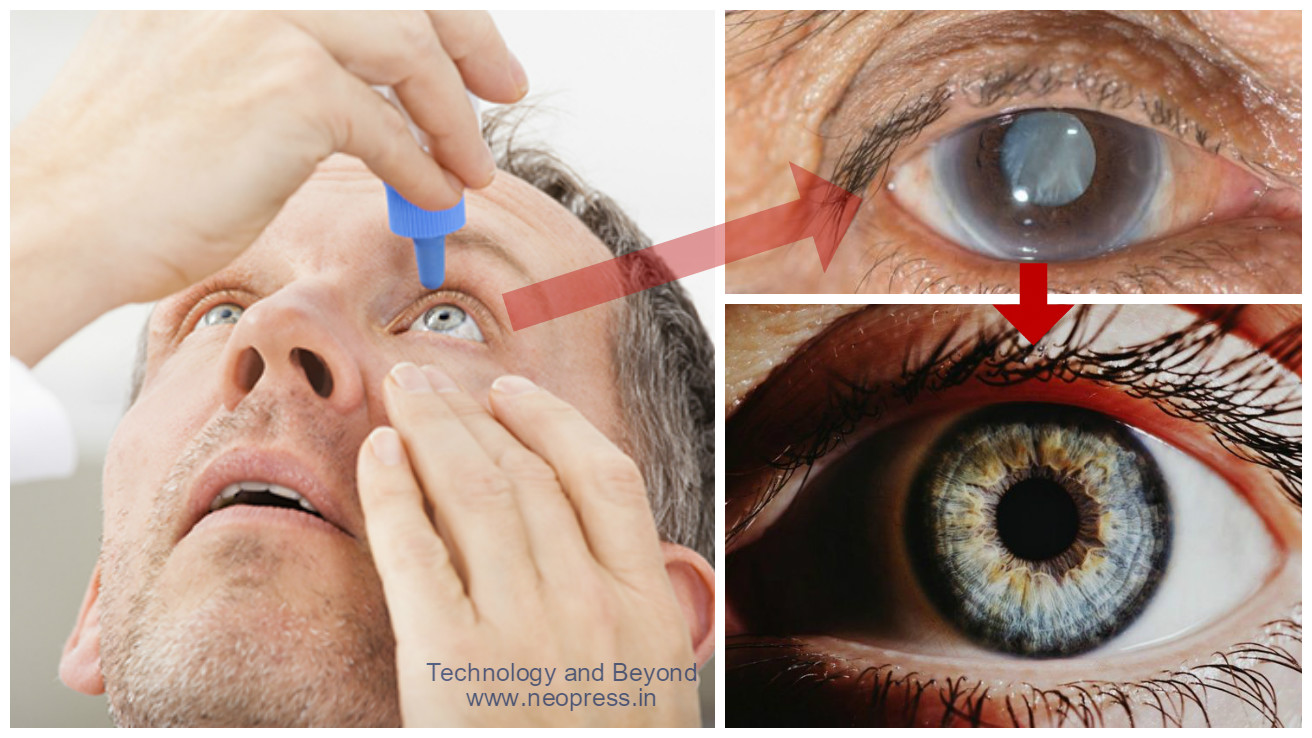
This miracle eye drop will make you say goodbye to cataracts

Cataracts are generally associated with old age though in some cases it develops at quite a young age owing to genetics. These develop when protein in the lens builds up and prevents light from getting through.  This is to be noted that cataracts are one of the leading causes of blindness throughout the world. Currently the only treatment available for cataracts is removing the clouded lens from the eye and then replacing it with an artificial one.

Now in a recent development scientists in California have discovered that the naturally occurring steroid lanosterol possesses the ability to melt away cataracts and prevent them from returning when administered to patients via eye drops. If this gets approval for use in humans, then there is a possibility that it would be available as a non-invasive treatment for individuals with moderate forms of cataracts.

The group of scientists first came to know about this steroid when they came across two children in China who had a hereditary form of this disease. When the team closely observed and examined these two children, they found that the children shared a mutation that blocked the production of the steroid lanosterol. Their parents never developed cataracts though as they lacked this mutation. The team hence deduced that the steroid must have some contribution in the formation of cataracts.

This observation was followed by a series of experiments and an in-depth study which involved testing lanosterol on donated human lenses and live rabbits and dogs. The result obtained from the tests showed that lanosterol contributed significantly in reducing the size of the cataracts. Though this sis till not completely clear as to how this happens, the scientists believe that the steroid prevents the proteins from building up.

It has been reported that if the drops prove to also work on humans, it could pave the way to offering a non-invasive treatment for humans too. If this happens, it would prove to be a good alternative treatment for cataract. The study is already creating quite a stir and everybody is hoping that it may have a very effective treatment in its kitty down the line.

As a technology lover you may like our daily important technology news series. It’s a playlist and you can retrieve the total day-wise videos. Please consider subscribing our YouTube channel:

Author: Technology and Beyond

Tagged : /

Wear this ring and feel the heartbeat of your loved one!

Love is beautiful and it is eternal as it comes in different forms – parents and their kids, siblings, husband-wife, friends, boyfriend-girlfriend, teacher-student. There are different and many beautiful forms of love and each one of them is special. Technology has made it possible to keep you connected to your loved ones, but aren’t there times when you miss the proximity of that person just to hear his or her heartbeat? Fret not because there are super special rings available now which can make you feel your loved one’s heartbeat.

The rings are called HB rings and have been created by TheTouch. These have a minimalist design but there is a solid rose gold variety available. All these HB rings come with a Unibody sapphire crystal surface. This surface makes sure that the rings are un-scratchable. The rings though aren’t easy to use. These rings are connected to an app via Bluetooth. So when you want to hear the heartbeat of your loved one, you just have to tap the ring whenever you are connected to data or Wi Fi.

The ring looks like a simple black band but has many things hidden inside it like charger connector, battery, heartbeat sensor, sensor housing, multidimensional PCB, Sapphire crystal and Rose gold cap. If you have fallen in love with this super cool ring and your loved one’s heartbeat is what you want to listen to sometimes, then you can visit TheTouch’s website where you can pre-order them. For more details, watch the video below:

width="560" height="314" allowfullscreen="allowfullscreen">

As a technology lover you may like our daily important technology news series. It’s a playlist and you can retrieve the total day-wise videos. Please consider subscribing our YouTube channel:

Author: Technology and Beyond
Tagged : /

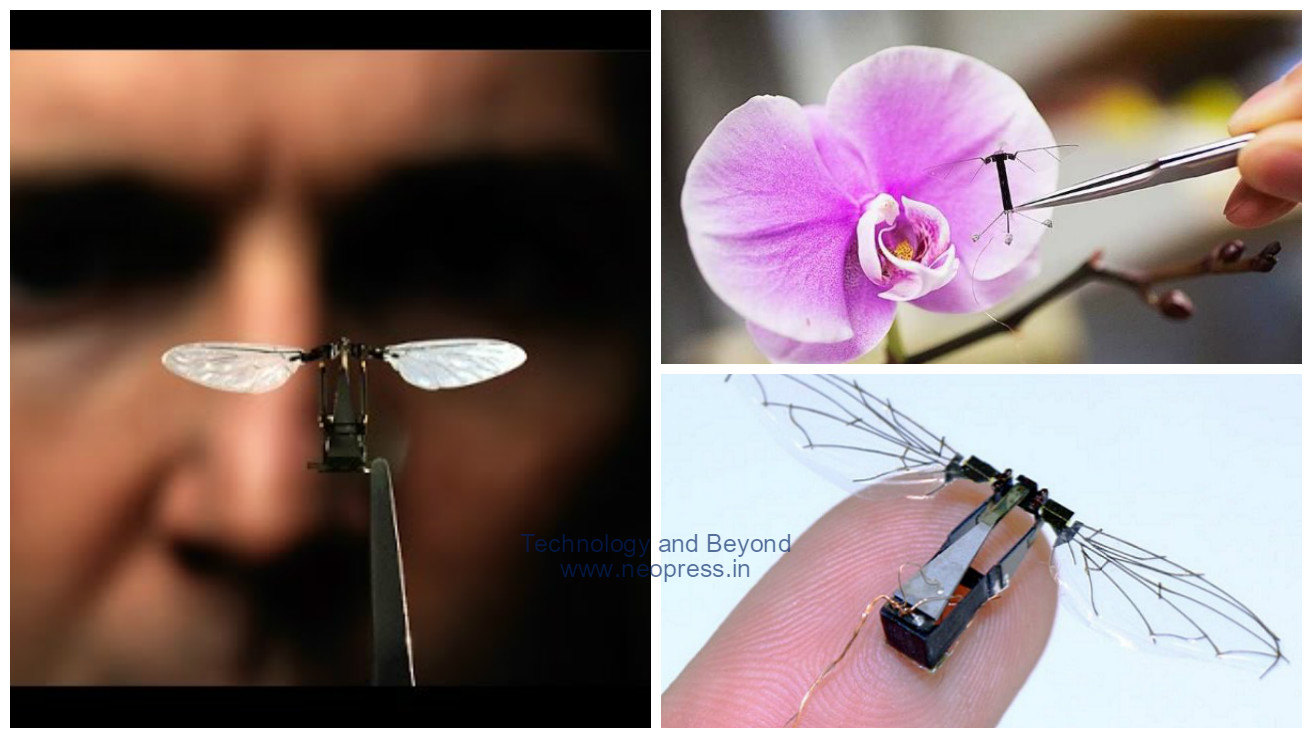
These insect-like Robobees are all set to dominate agricultural, surveillance and environmental industries from now on!

Robotics is the branch of science and technology which is evolving every day. The kinds of robots that are being made are becoming more and more versatile and more and more unique and innovative. Apart from experimenting with their abilities, scientists are also experimenting with the size of the robots. ‘Robobee’ is one such robot. It is a miniature robot which is equals the size of a penny and is inspired by the biology, movement and behaviour of the insects.

A team of researchers from MIT University and Harvard University, in their combined effort, have found a way to copy the way insects perch and they have also succeeded in incorporating it into ‘Robobee’s’ “perching abilities”. This is to note that when someone is making a device so small, due consideration has to be given to energy conservation. The perching of this robot like an insect proved to be difficult in reality.

In order to overcome this big hurdle, the combined team of Harvard and MIT found a way to dramatically extend the ‘Robobee’s’ operational life. They made use of the electrostatic adhesion which means that the Robobee uses a small electrode patch and shock-absorbing foam mount to make the tiny robot latch onto surfaces upside down. If the Robobee wants to let go of a surface, it can do so by simply switching off the power supply to the electrode. By utilising this technique, the Robobee is able to use 1/1000 of the energy required to keep it flying and hence conserve its energy supply considerably.

Robobee might seem very small and people may think that it is of no use. But contrary to this belief, these miniature robots find uses in autonomously pollinating crops, search and rescue operations after a calamity, hazardous environment exploration, military surveillance, high resolution weather and climate mapping and traffic monitoring.

Back in 2000’s The Robobee Project had started off as a mission that originally started as a proposed solution to the mysterious disappearance of honeybees. A team of researchers headed by Gu-Yeon Wei, Radhika Nagpal, and Robert Wood, professors and associate professor at the Harvard School of Engineering and Applied Sciences (SEAS), posed a technological solution to the effects of this strange mass epidemic afflicting the insects.

In 2009, the three of them joined hands with their colleagues at Harvard University and Northeastern University to consider what it would take to create a robotic bee colony. This was what had given birth to the Robobee Project and look how far it has come.

width="560" height="314" allowfullscreen="allowfullscreen">

As a technology lover you may like our daily important technology news series. It’s a playlist and you can retrieve the total day-wise videos. Please consider subscribing our YouTube channel:

Author: Technology and Beyond

Tagged : /
Verified by ExactMetrics