Do You Need To Wash Rice Before Cooking? Why Or Why Not?

Do You Need To Wash Rice Before Cooking? Why Or Why Not?
The humble rice, a staple in many cultures worldwide, is often accompanied by a pre-cooking ritual: washing. But is this step truly necessary, or is it a time-consuming tradition better left behind? Let’s delve into the science behind rice washing to uncover the answer.

The Starch Factor

Rice, particularly short-grain varieties, contains a layer of starch on its surface. This starch, when released during cooking, can lead to a sticky, gummy texture in the cooked rice. Washing rice removes excess starch, resulting in fluffier, separated grains. This is particularly important for dishes like basmati rice or Japanese sushi rice, where distinct grains are desired.

Arsenic Reduction

Rice can contain trace amounts of arsenic, a naturally occurring element found in some soils. While the levels are generally low, washing rice can remove up to 50% of inorganic arsenic, the form most concerning for human health.

Nutritional Considerations

Washing rice does remove some water-soluble nutrients, such as vitamin B1 and iron. However, these losses are minimal, especially if the rice is cooked in the starchy water it is rinsed in. Additionally, many modern rice varieties are fortified with these nutrients.

To Wash or Not to Wash?

The decision of whether or not to wash rice depends on personal preference and the desired outcome. For dishes where fluffy, separated grains are preferred, washing is recommended. However, for dishes that require a sticky texture, like risotto or rice pudding, washing is not necessary.

The Science Speaks

Studies have shown that washing rice does reduce starch content and can remove a portion of inorganic arsenic. However, it also removes some water-soluble nutrients. The nutritional significance of these losses is debatable, especially given modern fortification practices.

The Culinary Verdict

Ultimately, the decision of whether or not to wash rice is a personal one. If you prefer fluffier rice, give it a rinse. But if you’re a fan of sticky rice or concerned about nutrient loss, feel free to skip this step.


Tagged : / / / /

You Are Genuinely Intelligent If You Have These 10 Attributes, Says Psychology

You Are Genuinely Intelligent If You Have These 10 Attributes, Says Psychology
Intelligence is often seen as a fixed trait, something you’re either born with or not. But this isn’t the case. Intelligence is actually a complex and multifaceted concept that can be developed and nurtured over time.

In fact, there are a number of attributes that are common among genuinely intelligent people. Here are 10 of them:

1. You’re constantly curious
Intelligent people are always asking questions and seeking out new information. They’re not afraid to admit what they don’t know, and they’re always looking for new ways to learn and grow.

2. You are open-minded
Intelligent people are willing to consider different viewpoints and perspectives. They’re not afraid to challenge their own beliefs, and they’re always open to new ideas.

3. You are adaptable
Intelligent people are able to adjust to change and new situations. They’re not afraid of the unknown, and they’re always up for a challenge.

4. You enjoy your own company
Intelligent people are comfortable spending time alone. They enjoy their own thoughts and company, and they’re not afraid to be independent.

5. You have a good sense of humour
Studies have shown a strong correlation between humor and intelligence. It takes a sharp mind to understand and create humor that hits the mark. Intelligent people are able to see the humor in life. They’re not afraid to laugh at themselves, and they enjoy making others laugh.

6. You are a good listener
Intelligent people are good listeners. They’re able to pay attention to what others are saying, and they’re able to understand and respond to their points of view.

7. You are a good problem solver
Intelligent people are good problem solvers. They’re able to think critically and come up with creative solutions to problems.

8. You don’t shy away from saying you don’t know things
Intelligent people never shy away from telling people that they do not know a certain thing. Since they lack the false inflated ego of most people, they never hesitate to tell things they might not know or might not have any knowledge about. This way they pave the way for their learning.

9. You are constant learners
Intelligent people know that there are billions of things to learn in this universe that help a person grow. This is why they love learning anything new, anything that they think they might not know, actually challenges their mind and they start working towards acquiring that new knowledge.

10. You have empathy and hence high emotional intelligence
Intelligent people not just know ‘things’, they also know ’emotions’ well too! Psychological investigations have revealed that emotional intelligence requires empathy. This part of intelligence involves recognizing and managing one’s own emotions as well as others’. Emotional intelligence shows when you share others’ joy and sorrow. Deep empathy shows great awareness of human emotions and relationships. This skill improves all communication and relationships, demonstrating intellect.

Tagged : / / / /

Scientists Uncover the Secrets of Cat Communication

Scientists Uncover the Secrets of Cat Communication
For centuries, cats have been known for their enigmatic nature and seemingly aloof demeanor. But beneath their mysterious exterior lies a complex world of communication, one that scientists are now beginning to decipher.

Recent research has revealed that cats have a sophisticated system of communication that goes far beyond meows and purrs. In fact, cats use a variety of sensory modalities, including scent, body language, and vocalizations, to convey a wide range of emotions and messages.

Scent: The Language of Pheromones

Cats have a highly developed sense of smell, which they use to leave behind scent marks that convey information about their identity, territory, and reproductive status. These scent marks are made up of pheromones, which are chemical signals that can trigger specific behaviors in other cats.

For example, a female cat in heat may release pheromones that attract males, while a male cat may leave scent marks to warn other males from approaching his territory.

Body Language: The Art of Nonverbal Communication

Cats also communicate through their body language. A relaxed cat will have a loose, drooping body and a tail held high in the air. A cat that is feeling threatened or defensive may arch its back, flatten its ears, and swish its tail back and forth.

By observing a cat’s body language, we can get a good sense of how it is feeling and what it is trying to communicate.

Vocalizations: The Power of the Meow

While meows are often thought to be a way for cats to get our attention, they can also be used to communicate a variety of other things, such as happiness, contentment, or hunger.

The pitch, duration, and context of a meow can all convey different meanings. For example, a high-pitched meow may be a plea for attention, while a low-pitched meow may be a warning.

A Complex and Rewarding Language

The study of cat communication is still in its early stages, but scientists are constantly learning more about how these fascinating creatures interact with each other and with the world around them.

By understanding the nuances of cat communication, we can better understand our feline companions and build stronger bonds with them.

Tagged : / / / /

5 Discoveries That Prove Einstein Gave Some Terrific Theories About The Universe

5 Discoveries That Prove Einstein Gave Some Terrific Theories About The Universe
Albert Einstein was a brilliant physicist who made many groundbreaking discoveries about the universe. His theories have helped us to understand the universe in a whole new way. Here are 5 discoveries that prove Einstein was right about the universe:

1. Theory of Relativity: Einstein’s theory of relativity revolutionized our understanding of gravity. He showed that gravity is not a force, but rather a curvature of spacetime. This means that massive objects, like stars and planets, warp the fabric of spacetime, causing other objects to move towards them. This theory has been confirmed by many experiments, including the observation of gravitational waves.

2. Shifting Universe: Einstein’s theory of general relativity also showed that the universe is expanding. This means that the distance between galaxies is increasing over time. This discovery was made by Edwin Hubble in the 1920s, and it has been confirmed by many other observations.

3. E=MC2: Einstein’s famous equation, E=MC2, shows that mass and energy are equivalent. This means that mass can be converted into energy, and vice versa. This equation has been confirmed by many experiments, including the detonation of nuclear bombs.

4. Black Holes: Black holes are regions of spacetime where the gravitational pull is so strong that nothing, not even light, can escape. Einstein’s theory of general relativity predicted the existence of black holes, and they have since been observed by astronomers.

5. Atoms in Motion: Einstein showed that atoms are not stationary, but rather are constantly in motion. This discovery was made through the study of Brownian motion, which is the random movement of small particles suspended in a liquid.

These are just a few of the many discoveries that prove Einstein was right about the universe. His theories have had a profound impact on our understanding of the cosmos, and they continue to inspire scientists today.

In addition to the discoveries listed above, Einstein also made many other important contributions to our understanding of the universe. He developed the theory of special relativity, which showed that the speed of light is constant in all frames of reference. He also developed the theory of quantum mechanics, which showed that the universe is governed by probabilities.

Einstein’s work has had a profound impact on our understanding of the universe, and it continues to inspire scientists today. He is one of the most important scientists of all time, and his legacy will live on for centuries to come.

Tagged : / / /

The 7 Hardest Degree Courses In The World! Want To Pursue?

The 7 Hardest Degree Courses In The World! Want To Pursue?
Higher education can open up a world of opportunities, but some degrees are more challenging than others. If you’re looking for a degree that will push you to your limits and reward you with a deep understanding of your chosen field, consider one of the hardest degrees in the world.

Here is a list of the 7 hardest degrees in the world :

1. Theoretical physics
Theoretical physics is the study of the fundamental laws of the universe. It is a highly complex and challenging field that requires a strong foundation in mathematics and physics. Theoretical physicists use mathematics and physics to develop new theories about the universe and to solve complex problems in physics. Theoretical physicists often deal with concepts that are difficult to visualize or understand. They must be able to think abstractly and reason logically to solve problems.

2. Neurosurgery
Neurosurgery is a branch of medicine that specializes in the diagnosis and treatment of disorders of the nervous system, including the brain and spine. Neurosurgeons must have a deep understanding of the anatomy and physiology of the nervous system, as well as the skills to perform delicate surgery on the brain and spine. The nervous system is made up of billions of nerve cells and their connections, and it is responsible for controlling all of our bodily functions, including thought, movement, and sensation. Neurosurgeons must have a deep understanding of this complex system in order to safely and effectively diagnose and treat disorders of the nervous system. Neurosurgeons must be able to perform delicate surgery on the brain and spine, which are two of the most sensitive organs in the body. A small mistake during neurosurgery can have serious and even life-threatening consequences.

3. Linguistics
Linguistics is the scientific study of language. It is a broad field that encompasses many different areas, including phonetics, phonology, morphology, syntax, semantics, and pragmatics. Linguists must have a strong foundation in mathematics and logic, as well as a deep understanding of human language. One of the things that makes linguistics so difficult is the complexity of human language. There are over 7,000 different languages spoken in the world, and each language has its own unique grammar and vocabulary. Linguists must be able to understand and analyze the different features of different languages.

4. Quantum computing
Quantum computing is a new and emerging field of computer science that uses the principles of quantum mechanics to perform calculations. Quantum computing has the potential to revolutionize many different fields, including medicine, materials science, and finance. One of the things that makes quantum computing so difficult is the complexity of the subject matter. Quantum mechanics is a complex and challenging field of physics. Quantum computer scientists must have a strong foundation in quantum mechanics and computer science. Another challenge that quantum computer scientists face is the lack of hardware and software. Quantum computers are still in their early stages of development, and there is a shortage of both hardware and software for quantum computing. Quantum computer scientists must be able to develop new and innovative hardware and software solutions to overcome these challenges.

5. Theoretical Mathematics
Theoretical mathematics is the study of abstract mathematical concepts and theories. It is a highly challenging field that requires a strong foundation in mathematics and logic. Theoretical mathematicians must be able to think critically and solve complex problems. One of the things that makes theoretical mathematics so difficult is the abstract nature of the subject matter. Theoretical mathematicians often deal with concepts that are difficult to visualize or understand. They must be able to think abstractly and reason logically to solve problems.

6. Astronautical engineering
Astronautical engineering is the study of the design, construction, and operation of spacecraft and other spacecraft-related systems. It is a highly demanding field that requires a strong foundation in mathematics, physics, and engineering. Astronautical engineers must also have a broad understanding of space science and astronomy. One of the things that makes astronautical engineering so difficult is the complexity of the spacecraft that astronautical engineers design. Spacecraft are complex systems that must be able to withstand the harsh conditions of space. Astronautical engineers must take into account a wide range of factors when designing a spacecraft, including the mission objectives, the environment, and the budget. Another challenge that astronautical engineers face is the need to be innovative. The field of astronautical engineering is constantly evolving, and astronautical engineers must be able to develop new technologies and solutions to meet the demands of the space industry.


7. Architecture
Architecture is the art and science of designing and building buildings and other structures. It is a highly demanding field that requires a strong foundation in mathematics, physics, and engineering. Architects must also have a creative vision and be able to think outside the box. One of the things that makes architecture so difficult is the complexity of the projects that architects work on. Buildings are complex systems that must be both functional and aesthetically pleasing. Architects must take into account a wide range of factors when designing a building, including the climate, the site, and the needs of the users. Another challenge that architects face is the need to stay up-to-date on the latest technologies and materials. The field of architecture is constantly evolving, and architects must be able to adapt to new trends and developments.

So which one of these do you want to pursue??

Tagged : / / / /

Solved! The Mystery of Where a Starfish’s Head Is

Solved! The Mystery of Where a Starfish’s Head Is
Starfish are some of the most recognizable creatures in the ocean. With their five arms and spiky bodies, they are a common sight in tide pools and aquariums. But for centuries, scientists have been puzzled by a fundamental question about starfish: where is their head?

Most animals have one head, with a brain and other important organs located in a single spot. But starfish are different. They have no centralized brain, and their nervous system is spread throughout their bodies. This has led some scientists to believe that starfish do not have heads at all.

However, a new study published in the journal Nature has finally solved the mystery of where a starfish’s head is. The study, which was conducted by scientists at the University of California, Berkeley, used genetic data to show that starfish have head-like regions in each of their arms.

These head-like regions contain a cluster of genes that are responsible for the development of the starfish’s nervous system. The researchers believe that these genes were originally located in a single head, but they were duplicated and moved to each of the starfish’s arms over time.

The discovery of head-like regions in starfish arms could have a significant impact on our understanding of these animals. It could also lead to new insights into the evolution of other animals, including humans.

Here are some additional details from the study:

  • The researchers used a technique called RNA sequencing to identify the genes that are expressed in different parts of the starfish body.
  • They found that the genes responsible for the development of the nervous system are expressed in clusters in each of the starfish’s arms.
  • The researchers believe that these clusters of genes are the remnants of an ancestral head.

The study’s authors say that their findings are a major breakthrough in our understanding of starfish biology. They say that the discovery of head-like regions in starfish arms could have a significant impact on our understanding of these animals and their evolution.

Tagged : / / /

Electric Planes: Taking Off to a Greener Future

Electric Planes: Taking Off to a Greener Future
Electric planes have long been a dream of aviation enthusiasts, but in recent years they have begun to take off in a more literal sense. With advances in battery technology and electric motor design, electric planes are now becoming increasingly feasible and could revolutionize the aviation industry.

Electric planes have a number of advantages over traditional fossil fuel-powered planes. They are quieter, produce zero emissions, and are cheaper to operate. This makes them ideal for short-haul flights, such as regional flights and air taxis.

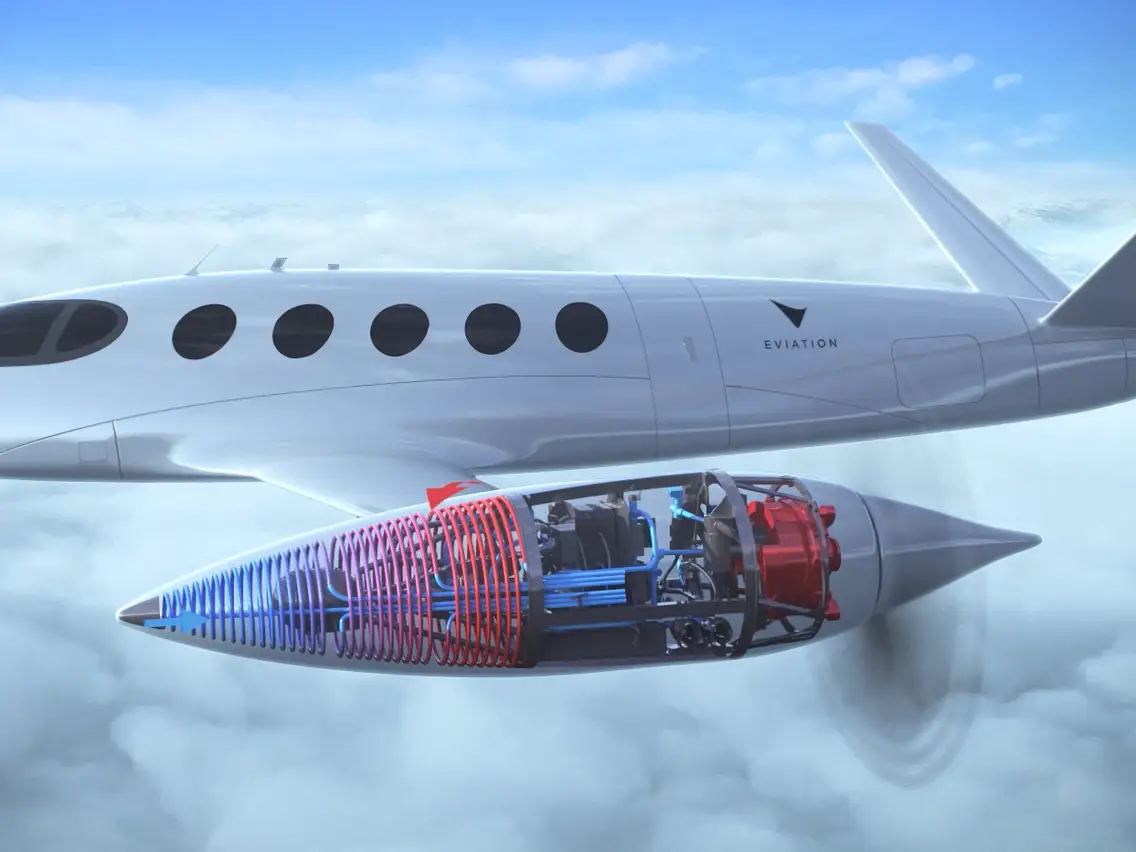
A number of companies are now developing electric planes, and some are even starting to enter commercial service. In September 2023, Eviation Aircraft’s Alice electric plane made its first successful commercial flight. The Alice is a nine-passenger plane that can fly up to 250 miles on a single charge.

Another company, Heart Aerospace, is developing a 19-seat electric plane that is expected to enter service in 2026. United Airlines has already placed an order for 100 of these planes.

In addition to commercial flights, electric planes are also being developed for military and cargo applications. For example, the US Air Force is developing an electric version of its C-130 Hercules transport plane.

The development of electric planes is still in its early stages, but there is a lot of excitement and investment in the sector. As battery technology continues to improve, electric planes are expected to become more common and more affordable.

How electric planes work?

Electric planes work in a similar way to electric cars. They use electric motors to power propellers, which generate thrust to move the plane forward. The electric motors are powered by batteries, which are stored on the plane.

Electric planes are more efficient than traditional fossil fuel-powered planes because they do not have to waste energy converting fuel into heat. This means that electric planes can fly further on a single charge than traditional planes can on a single tank of fuel.

Challenges

One of the biggest challenges facing electric planes is battery technology. Batteries need to be light enough to be practical for use in airplanes, but they also need to be able to store enough energy to power the plane for a significant distance.

Another challenge is the cost of electric planes. Electric planes are more expensive to build than traditional planes, but the cost is expected to come down as the technology matures and economies of scale are achieved.

Future of electric planes

Despite the challenges, the future of electric planes looks bright. As battery technology continues to improve and the cost of electric planes comes down, electric planes are expected to become more common and more affordable.

Electric planes could revolutionize the aviation industry by making air travel more sustainable and accessible. Electric planes could also help to reduce noise pollution and air pollution in airports and cities.

Here are some of the ways that electric planes are expected to impact the aviation industry:

Reduced emissions: Electric planes produce zero emissions, which could help to reduce the aviation industry’s environmental impact.
Lower costs: Electric planes are cheaper to operate than traditional planes, which could lead to lower ticket prices for passengers.
New markets: Electric planes could open up new markets for air travel, such as regional flights and air taxis.
More sustainable tourism: Electric planes could make tourism more sustainable by reducing the environmental impact of air travel.

Overall, the development of electric planes is a promising step towards a more sustainable and accessible aviation industry.

Tagged : / / / /

The Big Bang Theory Of The Universe And The Mysteries Associated With It!

The Big Bang Theory Of The Universe And The Mysteries Associated With It!
The Big Bang Theory is the prevailing cosmological model for the observable universe from the earliest known periods through its subsequent large-scale evolution. The model accounts for the fact that the universe expanded from a very high density and high temperature state, and offers a comprehensive explanation for a broad range of phenomena, including the abundance of light elements, the cosmic microwave background (CMB) radiation, large-scale structure, and Hubble’s law.

While the Big Bang Theory is widely accepted, there are still some mysteries that remain unsolved. Here are a few of the biggest mysteries of the Big Bang:

1. What happened before the Big Bang?

The Big Bang Theory describes the evolution of the universe from a very hot and dense state to the present day. However, it does not explain what caused the Big Bang to happen in the first place. Some scientists believe that the universe has always existed in some form, and that the Big Bang was simply a transition from one state to another. Others believe that the universe was created out of nothing in a single event.

2. What is dark matter?

Dark matter is a mysterious substance that makes up about 85% of the matter in the universe. It is invisible to telescopes, but its presence can be inferred from its gravitational effects on visible matter. Scientists still do not know what dark matter is made of, or how it formed.

3. What is dark energy?

Dark energy is an even more mysterious substance than dark matter. It is thought to be responsible for the accelerating expansion of the universe. Scientists know even less about dark energy than they do about dark matter.

4. What happened to the antimatter?

When matter and antimatter come into contact, they annihilate each other. However, the universe is made up mostly of matter, with very little antimatter. Scientists do not know why there is so much more matter than antimatter in the universe.

5. Are there other universes?

Some scientists believe that our universe is just one of many in a multiverse. A multiverse is a collection of universes, each with its own physical laws and constants. There is no direct evidence for a multiverse, but some scientists believe that it is the best way to explain some of the mysteries of our own universe.

These are just a few of the many mysteries of the Big Bang Theory. As scientists continue to study the universe, they hope to solve these mysteries and gain a better understanding of our cosmic origins.

Conclusion
The Big Bang Theory is a remarkable scientific achievement that has helped us to understand the universe in a whole new way. However, there are still many mysteries that remain unsolved. Scientists are working hard to solve these mysteries, and we can expect to learn even more about the Big Bang in the years to come.

Tagged : / / / /

Science Behind Food Preferences : Why Do Some People Like Salty Foods While Others Prefer Sweets?

Science Behind Food Preferences : Why Do Some People Like Salty Foods While Others Prefer Sweets?
Humans have a natural preference for sweet and salty foods. This preference is thought to have evolved from our need to seek out energy-rich foods and avoid harmful foods.

Sweet foods are a good source of calories, which are essential for energy production. Salty foods are a good source of sodium, which is an essential mineral for fluid balance and nerve function.

Our taste buds are equipped with receptors that detect sweet and salty tastes. When we eat sweet or salty foods, these receptors send signals to our brains that trigger a sense of pleasure.

The science of sweet taste

The sweet taste is detected by a family of receptors called T1R. These receptors are located on the surface of taste bud cells. When a sweet molecule binds to a T1R receptor, it triggers a cascade of biochemical events that leads to the release of neurotransmitters. These neurotransmitters send signals to the brain that trigger a sense of pleasure.

The science of salty taste

The salty taste is detected by a protein called ENaC. ENaC is located on the surface of taste bud cells. When a sodium ion binds to ENaC, it opens a channel that allows sodium ions to enter the cell. This influx of sodium ions triggers the release of neurotransmitters. These neurotransmitters send signals to the brain that trigger a sense of pleasure.

Why do people have different preferences for sweet and salty foods?

There are a number of factors that can influence a person’s preference for sweet and salty foods, including:

1. Genetics: Some people are genetically predisposed to prefer sweet or salty foods. This is because they have certain gene variations that affect their taste bud sensitivity to sweet and salty tastes.

2. Early life experiences: Our early life experiences can also shape our preferences for sweet and salty foods. For example, if we are exposed to a lot of sweet or salty foods as children, we are more likely to prefer those foods as adults.

3. Culture: Culture can also play a role in our preferences for sweet and salty foods. For example, people from some cultures tend to eat more salty foods than people from other cultures.

4. Health status: Certain health conditions, such as diabetes and high blood pressure, can also affect our preferences for sweet and salty foods.

How to make healthier choices?

Even though we have a natural preference for sweet and salty foods, it is important to make healthy choices when it comes to our diet. Eating too much sugar and salt can lead to a number of health problems, such as obesity, heart disease, and stroke.

Here are some tips for making healthier choices when it comes to sweet and salty foods:

  • Limit your intake of processed foods. Processed foods are often high in sugar and salt. Instead of eating processed foods, opt for whole, unprocessed foods, such as fruits, vegetables, and whole grains.
  • Season your own food. This way, you can control the amount of salt you add to your food.
  • Choose healthier snacks. Instead of snacking on sugary or salty treats, opt for healthier snacks, such as fruits, vegetables, and nuts.
  • Read food labels carefully. This will help you to identify foods that are high in sugar and salt.

    By following these tips, you can make healthier choices when it comes to sweet and salty foods, and reduce your risk of developing chronic diseases.

Tagged : / / / /

Robot Skin : A New Breakthrough Technology

Robot Skin : A New Breakthrough Technology
Robots are becoming increasingly common in our lives, and they are only going to become more ubiquitous in the future. But one of the biggest challenges facing robotics researchers is developing robots that can interact with the world in a safe and natural way. This is where robot skin comes in.

Robot skin is a type of sensor that can be applied to the surface of a robot to give it a sense of touch. This allows robots to detect and respond to their environment in a more sophisticated way.

In a recent breakthrough, engineers at the University of British Columbia (UBC) and Honda have developed a new type of robot skin that is smart, stretchable, and highly sensitive. This new sensor skin opens the door to a wide range of applications in robotics and prosthetics.

The new sensor skin is made of a soft, rubber-like material that is embedded with a network of sensors. These sensors can detect a variety of stimuli, including pressure, temperature, and humidity. The sensor skin is also stretchable, which allows it to be applied to robots with complex shapes.

One of the key advantages of the new sensor skin is its high sensitivity. It is so sensitive that it can detect even the lightest touch. This makes it ideal for robots that need to be able to handle delicate objects, such as soft fruits or electronic components.

The new sensor skin has already been used to develop a number of prototype robots. For example, the researchers have developed a robotic hand that can pick up and manipulate delicate objects without damaging them. They have also developed a prosthetic arm that can provide the wearer with a sense of touch.

The researchers believe that the new sensor skin has the potential to revolutionize the field of robotics. It could enable robots to be used in a wider range of applications, such as healthcare, manufacturing, and logistics.

Potential applications of the new robot skin

The new robot skin has a wide range of potential applications in robotics and prosthetics. Here are a few examples:

Healthcare: The sensor skin could be used to develop robots that can assist with surgery and rehabilitation. For example, a robotic surgeon could use the sensor skin to feel the texture of tissues and organs, which would help them to operate more precisely.

Manufacturing: The sensor skin could be used to develop robots that can handle delicate objects in manufacturing processes. For example, a robotic arm could use the sensor skin to pick up and assemble electronic components without damaging them.

Logistics: The sensor skin could be used to develop robots that can pick and pack items in warehouses. For example, a robotic picker could use the sensor skin to identify and grasp items without damaging them.

Prosthetics: The sensor skin could be used to develop prosthetic limbs that provide the wearer with a sense of touch. This would allow amputees to interact with the world in a more natural way.

The future of robot skin

The new robot skin developed by UBC and Honda is a major breakthrough in the field of robotics. It is the first sensor skin that is truly smart, stretchable, and highly sensitive. This makes it ideal for a wide range of applications in robotics and prosthetics.

In the future, we can expect to see robot skin become more common and sophisticated. Researchers are already working on developing new types of robot skin that can detect a wider range of stimuli and provide more feedback to the robot. As robot skin continues to develop, it will play an increasingly important role in the development of intelligent and autonomous robots.

Tagged : / / / /

NASA’s Dragonfly Mission : Why is NASA Sending Dragonfly To Saturn’s Moon Titan?

NASA’s Dragonfly Mission : Why is NASA Sending Dragonfly To Saturn’s Moon Titan?
NASA’s Dragonfly mission is a planned robotic exploration of Saturn’s moon Titan. Scheduled to launch in 2027 and arrive in 2034, Dragonfly will be the first rotorcraft to fly on another world. It will use its eight propellers to fly over Titan’s icy surface, exploring multiple sites and collecting data on the moon’s geology, atmosphere, and habitability.

Titan is one of the most intriguing moons in the Solar System. It has a dense atmosphere, lakes of methane and ethane, and a subsurface ocean of liquid water. Scientists believe that Titan may be a good place to look for evidence of prebiotic chemistry, the chemical processes that lead to the formation of life.

Dragonfly’s primary goals are to:

1. Study Titan’s habitability and potential for life. Dragonfly will search for organic molecules and other signs of life in Titan’s atmosphere and surface materials. It will also study the moon’s methane cycle, which may be similar to the water cycle on Earth.

2. Investigate Titan’s prebiotic chemistry. Dragonfly will study the chemical reactions that occur in Titan’s atmosphere and surface materials. This information will help scientists to understand how organic molecules form and evolve on Titan, and to compare Titan’s chemistry to that of early Earth.

3. Explore Titan’s diverse geological landscape. Dragonfly will visit multiple sites on Titan, including lakes, rivers, dunes, and impact craters. This will help scientists to understand the moon’s geological history and to identify potential landing sites for future missions.

Dragonfly will be equipped with a variety of scientific instruments, including a mass spectrometer, a camera, and an infrared spectrometer. These instruments will allow Dragonfly to collect detailed data on Titan’s atmosphere, surface, and subsurface.

NASA is sending Dragonfly to Titan because it is one of the most promising places in the Solar System to look for evidence of life beyond Earth. Titan’s dense atmosphere, lakes of liquid hydrocarbons, and subsurface ocean make it a unique and fascinating world. Dragonfly’s mission will help scientists to better understand Titan’s habitability and potential for life.

Why is Dragonfly a rotorcraft?

Dragonfly is a rotorcraft because it is the most efficient way to explore Titan’s surface. Titan’s atmosphere is thick and heavy, making it difficult for traditional aircraft to fly. However, Dragonfly’s propellers will allow it to lift off and land vertically, and to navigate through Titan’s terrain.

Dragonfly will also be able to fly over Titan’s lakes and rivers, which would be impossible for a traditional aircraft. This will allow Dragonfly to explore a wider range of sites and to collect data on Titan’s methane cycle.

What are the challenges of the Dragonfly mission?

The Dragonfly mission is a challenging one, due to the distance to Titan and the harsh environment of the moon. Dragonfly will have to travel over 800 million miles (1.3 billion kilometers) to reach Titan, and it will have to operate in temperatures as low as -292 degrees Fahrenheit (-180 degrees Celsius).

Dragonfly will also have to power itself using nuclear energy, since solar energy is not practical on Titan. This is the first time that a nuclear-powered spacecraft will be sent to another world.

Despite the challenges, the Dragonfly mission is a promising one. If successful, it will provide scientists with new insights into Titan’s habitability and potential for life.

Tagged : / / /

Why Does Time Seem To Fly Faster When You Are Older?

Why Does Time Seem To Fly Faster When You Are Older?
Have you ever noticed that time seems to fly faster as you get older? It’s not just your imagination. There are a few scientific reasons why time feels faster as we age.

One reason is that we have fewer new experiences as we get older. When we’re young, we’re constantly learning new things and experiencing new things. This helps to create new memories, which makes time feel like it’s passing more slowly. As we get older, we tend to have fewer new experiences and our days start to feel more routine. This can make time feel like it’s passing more quickly.

Another reason is that our perception of time changes as we get older. When we’re younger, our brains are constantly processing new information and creating new memories. This processing of information takes time. As we get older, our brains start to slow down and process information more slowly. This can make time feel like it’s passing more quickly.

A 2019 study published in the journal Frontiers in Psychology found that our perception of time is also linked to the length of our heartbeats. The study found that people with slower heartbeats tend to perceive time as passing more slowly, while people with faster heartbeats tend to perceive time as passing more quickly.

So, what can we do to make time feel like it’s passing more slowly? Here are a few tips:

i. Have new experiences: Try new things, travel to new places, and meet new people. Having new experiences will help to create new memories and make time feel like it’s passing more slowly.

ii. Be present in the moment: Pay attention to what you’re doing and what’s happening around you. When you’re present in the moment, you’re more likely to appreciate the time you have.

iii. Slow down: Take your time and enjoy the simple things in life. Don’t rush through your days.

iv. Focus on positive emotions: Try to focus on the positive aspects of your life and spend time with people who make you happy. Positive emotions will make time feel like it’s passing more slowly.

It’s also important to remember that time is a relative concept. What one person perceives as fast, another person may perceive as slow. It’s all about perspective. So, try to focus on the positive aspects of time and enjoy every moment.

Tagged : / / / /

No! Our Universe Was Never Empty, Not Even Before The Big Bang!

No! Our Universe Was Never Empty, Not Even Before The Big Bang!
The Big Bang is the most widely accepted theory about the origin and evolution of the universe. It states that the universe began as an extremely hot and dense point about 13.8 billion years ago and has been expanding ever since.

But what happened before the Big Bang? Was the universe empty?

According to some scientists, the universe was not empty before the Big Bang. Instead, it was filled with a strange and exotic form of energy known as quantum vacuum energy.

Quantum vacuum energy is the energy of empty space. It is created by the constant creation and annihilation of virtual particles. Virtual particles are pairs of particles that are created and destroyed so quickly that they cannot be detected directly.

However, the energy of virtual particles is very real. It is responsible for a number of strange and unexpected phenomena, such as the Casimir effect, which is the attraction between two uncharged parallel plates.

Some scientists believe that quantum vacuum energy played a key role in the Big Bang. They believe that the energy of the vacuum was so great that it caused the universe to expand rapidly and exponentially. This rapid expansion is known as inflation.

Inflation can explain a number of puzzling observations about the universe, such as why the universe is so flat and why it is so homogeneous.

If quantum vacuum energy played a role in the Big Bang, then the universe must have existed before the Big Bang. However, the universe was very different before the Big Bang. It was incredibly hot and dense, and the laws of physics may have been very different from the laws of physics that we know today.

So what was the universe like before the Big Bang?

One possibility is that the universe was in a state of eternal inflation. This means that the universe was constantly expanding and contracting, and the Big Bang was just one of many cycles of expansion and contraction.

Another possibility is that the universe was created in a collision between two branes. Branes are higher-dimensional objects that exist in parallel universes.

It is also possible that the universe was created by a higher power.

Whatever the cause of the Big Bang, it is clear that the universe was not empty before the Big Bang. Instead, it was filled with a strange and exotic form of energy known as quantum vacuum energy.

Implications of a pre-Big Bang universe 

The idea that the universe existed before the Big Bang has a number of implications for our understanding of the universe.

First, it means that the universe may be infinite in size and time. If the universe has been expanding and contracting forever, then there is no beginning or end to the universe.

Second, it means that the laws of physics may be different in different parts of the universe. If the universe has been expanding and contracting forever, then different regions of the universe may have experienced different conditions. This could mean that the laws of physics are different in different parts of the universe.

Third, it means that the universe may be one of many universes. If the universe was created in a collision between two branes, or if it was created by a higher power, then there may be other universes out there.

The idea that the universe existed before the Big Bang is still a controversial one, but it is gaining acceptance among scientists. As we learn more about the universe, we may come to understand what happened before the Big Bang.

Tagged : / / / /

Electric Bus vs Hydrogen Bus: Which is Better?

Electric Bus vs Hydrogen Bus: Which is Better?
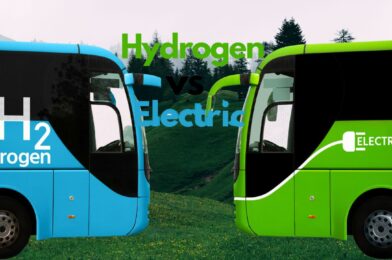
Electric buses and hydrogen buses are both zero-emission vehicles that are becoming increasingly popular as cities and countries around the world look to reduce their carbon footprint. But which type of bus is better?

Electric buses

Electric buses are powered by batteries, which are charged using electricity from the grid. Electric buses are relatively simple to maintain and operate, and they produce no tailpipe emissions.

Some of the advantages of electric buses include:

Lower operating costs: Electric buses are cheaper to operate than diesel buses because they do not require fuel or oil changes.

Reduced emissions: Electric buses produce zero tailpipe emissions, which helps to improve air quality and reduce greenhouse gas emissions.

Quieter operation: Electric buses are much quieter than diesel buses, which makes them more pleasant to ride on and operate.

However, there are also some disadvantages to electric buses:

Limited range: Electric buses have a limited range, which means that they need to be recharged more frequently than diesel buses.

Long charging times: It can take several hours to fully charge an electric bus.

High upfront cost: Electric buses are more expensive to purchase than diesel buses.

Hydrogen buses

Hydrogen buses are powered by hydrogen fuel cells, which generate electricity by combining hydrogen with oxygen. Hydrogen buses produce zero tailpipe emissions and have a longer range than electric buses.

Some of the advantages of hydrogen buses include:

Longer range: Hydrogen buses have a longer range than electric buses, which means that they can travel longer distances without needing to refuel.

Faster refueling times: Hydrogen buses can be refueled in as little as 10 minutes, which is comparable to the refueling time for diesel buses.

Zero tailpipe emissions: Hydrogen buses produce zero tailpipe emissions, which helps to improve air quality and reduce greenhouse gas emissions.

However, there are also some disadvantages to hydrogen buses:

High upfront cost: Hydrogen buses are more expensive to purchase than diesel buses and electric buses.

Limited refueling infrastructure: There is a limited network of hydrogen refueling stations, which can make it difficult to refuel hydrogen buses in some areas.

Safety concerns: Hydrogen is a flammable gas, so there are some safety concerns associated with hydrogen buses.
Which type of bus is better?

So, which type of bus is better? Electric buses and hydrogen buses both have their own advantages and disadvantages. The best type of bus for a particular city or country will depend on a number of factors, including the budget, the availability of refueling infrastructure, and the desired range.

Overall, electric buses are a good choice for cities that have short commuting distances and a good network of charging stations. Hydrogen buses are a good choice for cities that have long commuting distances or limited charging infrastructure.

Tagged : / / /

Psyche Mission : NASA To Launch Mission To An Asteroid Worth All The Gold On The Earth!

Psyche Mission : NASA To Launch Mission To An Asteroid Worth All The Gold On The Earth!
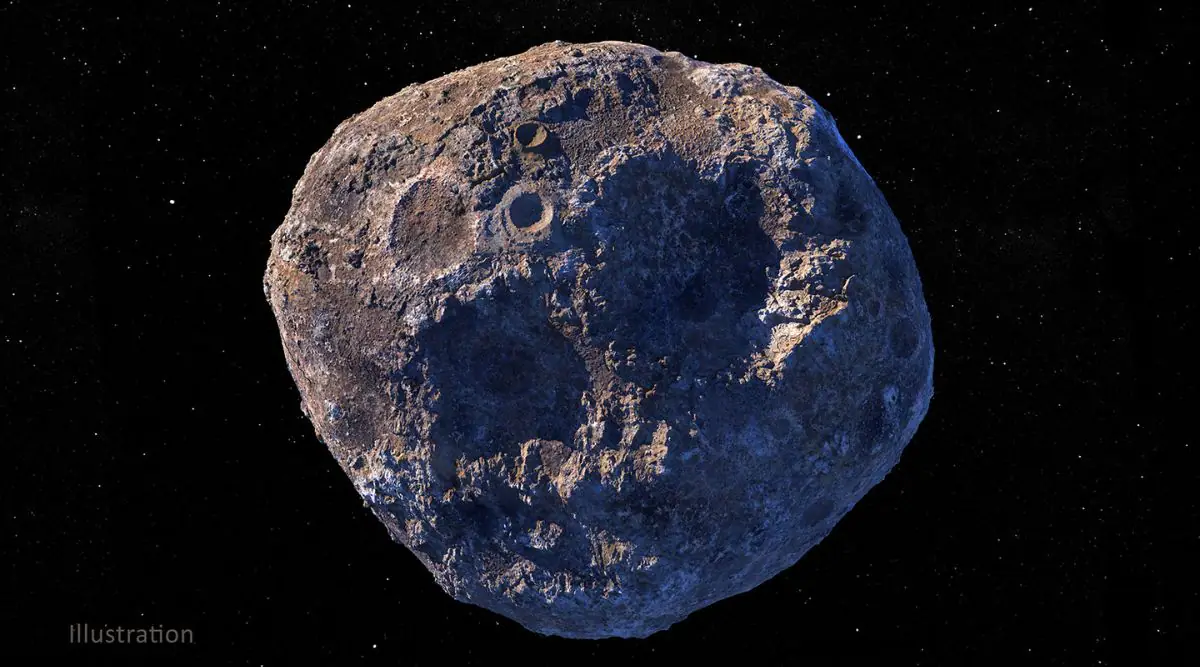
NASA is preparing to launch a mission to an asteroid worth more than all the gold on Earth. The asteroid, called Psyche, is located in the asteroid belt between Mars and Jupiter. It is thought to be made up of mostly iron and nickel, with a smaller amount of gold and other precious metals.

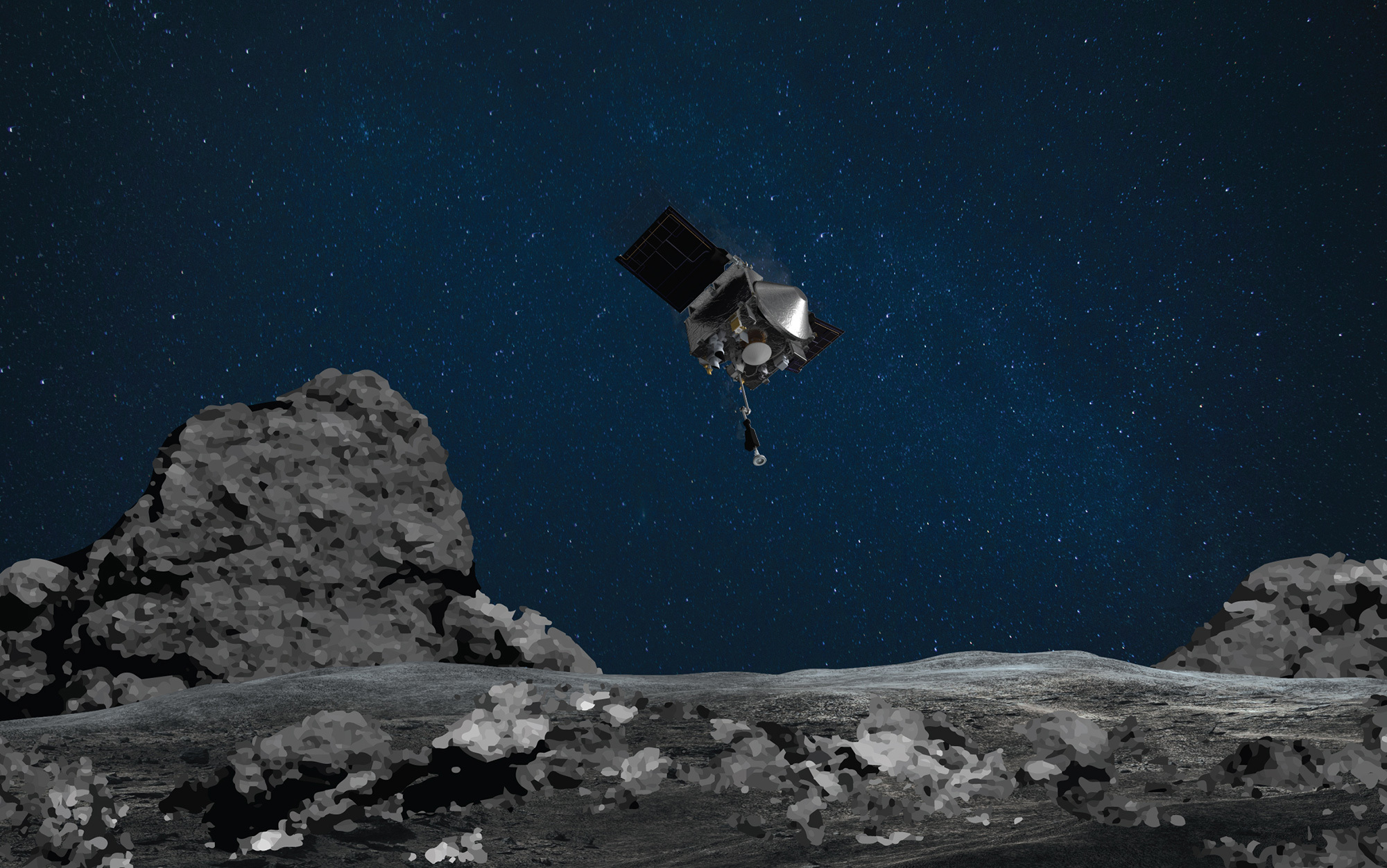
The Psyche mission is scheduled to launch on October 12, 2023. The spacecraft will travel to the asteroid and orbit it for two years. During that time, it will use a variety of instruments to study the asteroid’s composition, shape, and magnetic field.

Scientists are excited to study Psyche because it is thought to be the exposed core of a protoplanet, or a planet that never fully formed. By studying Psyche, scientists hope to learn more about how planets form and evolve.

The Psyche mission is also of interest to the mining industry. The asteroid is estimated to be worth $10 quintillion, which is more than the total value of all the gold that has ever been mined on Earth. However, it is still unclear whether it will be possible to mine Psyche in a cost-effective way.

The Psyche mission is a complex and ambitious undertaking. However, it has the potential to revolutionize our understanding of the solar system and to open up new possibilities for space mining.

What will the Psyche mission do?

The Psyche mission will use a variety of instruments to study the asteroid, including:

  • A magnetometer to measure the asteroid’s magnetic field
  • A gamma ray and neutron spectrometer to measure the asteroid’s composition
  • An infrared imaging spectrometer to map the asteroid’s surface temperature and mineralogy
  • A multispectral imager to take high-resolution images of the asteroid’s surface
  • The Psyche mission will also use solar electric propulsion, a type of propulsion that uses solar energy to power the spacecraft. This type of propulsion is very efficient, but it is also very slow. As a result, the Psyche mission will take four years to reach the asteroid.

What do scientists hope to learn from the Psyche mission?

Scientists are hoping to learn a lot about Psyche and about the formation of planets from the Psyche mission. Some of the questions that scientists hope to answer include:

What is Psyche’s composition?
How did Psyche form?
Does Psyche have a magnetic field?
Is Psyche the exposed core of a protoplanet?
What can Psyche teach us about the formation and evolution of planets?
The Psyche mission is a very exciting mission with the potential to revolutionize our understanding of the solar system.

What are the implications of the Psyche mission for space mining?

The Psyche mission is also of interest to the mining industry. The asteroid is estimated to be worth $10 quintillion, which is more than the total value of all the gold that has ever been mined on Earth. However, it is still unclear whether it will be possible to mine Psyche in a cost-effective way.

There are a number of challenges that would need to be overcome in order to mine Psyche. One challenge is the distance to the asteroid. Psyche is located in the asteroid belt, which is between Mars and Jupiter. This means that it is very far from Earth, which would make mining it very expensive.

Another challenge is the asteroid’s composition. Psyche is thought to be made up of mostly iron and nickel, with a smaller amount of gold and other precious metals. This means that the asteroid would need to be processed in order to extract the valuable metals. This processing would also be very expensive.

Despite the challenges, the Psyche mission is a sign that space mining is becoming a reality. As technology continues to improve, it is possible that we will be able to mine Psyche and other asteroids in the future.

Tagged : / / / / / /
Verified by ExactMetrics