Unlocking Metabolic Health: Break This One Habit For Better Metabolism

Unlocking Metabolic Health: Break This One Habit For Better Metabolism
In the pursuit of health and wellness, we often focus on what we should add to our routines, but sometimes, the key lies in what we should stop doing. In the realm of metabolic health, the habit of undereating emerges as a crucial factor to break for a healthier and more energized life.

The Pitfalls of Undereating

Contrary to popular belief, consuming too few calories can have detrimental effects on our metabolism. When the body receives insufficient energy, it goes into “starvation mode,” slowing down its metabolic processes to conserve energy. This metabolic adaptation can lead to a myriad of health issues, including:

1. Weight regain: Despite restricting calories, undereating can lead to weight regain in the long run due to the slowed metabolism.

2. Reduced energy levels: Adequate calorie intake is essential for maintaining energy levels throughout the day. Undereating can cause fatigue, lethargy, and difficulty concentrating.

3. Nutrient deficiencies: Not consuming enough calories can lead to deficiencies in essential vitamins, minerals, and macronutrients, hindering overall health.

4. Hormonal imbalances: Undereating can disrupt hormone production, affecting functions like appetite control, metabolism, and reproductive health.

Rebuilding a Healthy Metabolism

To break the habit of undereating and restore metabolic health, dietitians recommend a few key strategies:

1. Prioritize nutrient-dense foods: Instead of focusing on calorie restriction, prioritize nutrient-dense foods like whole grains, fruits, vegetables, and lean proteins. These foods provide essential nutrients while keeping you satiated.

2. Listen to your body: Pay attention to your hunger cues and eat when you’re truly hungry. Don’t skip meals, as this can lead to overeating later in the day.

3. Gradually increase calorie intake: If you’ve been undereating for a while, gradually increase your calorie intake over time to allow your body to adjust.

4. Seek professional guidance: Consult a registered dietitian to develop a personalized plan that meets your individual needs and goals.

Embark on a Journey of Metabolic Wellness

By breaking the habit of undereating and adopting healthy eating habits, you can embark on a journey towards metabolic wellness. Remember, your body is an intricate system that thrives on nourishment. Give it the fuel it needs to function optimally, and you’ll reap the rewards of enhanced energy, improved health, and a vibrant spirit.


Tagged : / / / / / /

You Are Genuinely Intelligent If You Have These 10 Attributes, Says Psychology

You Are Genuinely Intelligent If You Have These 10 Attributes, Says Psychology
Intelligence is often seen as a fixed trait, something you’re either born with or not. But this isn’t the case. Intelligence is actually a complex and multifaceted concept that can be developed and nurtured over time.

In fact, there are a number of attributes that are common among genuinely intelligent people. Here are 10 of them:

1. You’re constantly curious
Intelligent people are always asking questions and seeking out new information. They’re not afraid to admit what they don’t know, and they’re always looking for new ways to learn and grow.

2. You are open-minded
Intelligent people are willing to consider different viewpoints and perspectives. They’re not afraid to challenge their own beliefs, and they’re always open to new ideas.

3. You are adaptable
Intelligent people are able to adjust to change and new situations. They’re not afraid of the unknown, and they’re always up for a challenge.

4. You enjoy your own company
Intelligent people are comfortable spending time alone. They enjoy their own thoughts and company, and they’re not afraid to be independent.

5. You have a good sense of humour
Studies have shown a strong correlation between humor and intelligence. It takes a sharp mind to understand and create humor that hits the mark. Intelligent people are able to see the humor in life. They’re not afraid to laugh at themselves, and they enjoy making others laugh.

6. You are a good listener
Intelligent people are good listeners. They’re able to pay attention to what others are saying, and they’re able to understand and respond to their points of view.

7. You are a good problem solver
Intelligent people are good problem solvers. They’re able to think critically and come up with creative solutions to problems.

8. You don’t shy away from saying you don’t know things
Intelligent people never shy away from telling people that they do not know a certain thing. Since they lack the false inflated ego of most people, they never hesitate to tell things they might not know or might not have any knowledge about. This way they pave the way for their learning.

9. You are constant learners
Intelligent people know that there are billions of things to learn in this universe that help a person grow. This is why they love learning anything new, anything that they think they might not know, actually challenges their mind and they start working towards acquiring that new knowledge.

10. You have empathy and hence high emotional intelligence
Intelligent people not just know ‘things’, they also know ’emotions’ well too! Psychological investigations have revealed that emotional intelligence requires empathy. This part of intelligence involves recognizing and managing one’s own emotions as well as others’. Emotional intelligence shows when you share others’ joy and sorrow. Deep empathy shows great awareness of human emotions and relationships. This skill improves all communication and relationships, demonstrating intellect.

Tagged : / / / /

8 Common Fears Of Men That Make Them Afraid Of Commitment

8 Common Fears Of Men That Make Them Afraid Of Commitment
Commitment is a scary thing for many people, and men are no exception. There are many reasons why men might be afraid of commitment, but some of the most common include:

1. Fear of loss of independence
Many men value their independence and freedom, and they worry that committing to a relationship will mean giving up these things. They may be afraid of losing their sense of self, their hobbies, or their friends.

2. Fear of vulnerability
Men are often socialized to be strong and stoic, and they may be afraid of being vulnerable with someone else. They may worry about being hurt or rejected, or they may simply not feel comfortable sharing their deepest thoughts and feelings.

3. Fear of change
Commitment often means making changes in your life, and some men are resistant to change. They may be afraid of the unknown, or they may simply be comfortable with the way things are.

4. Fear of failure
Men often put a lot of pressure on themselves to be successful in all aspects of their lives, including their relationships. They may be afraid of failing at a relationship, which could damage their self-esteem.


5. Fear of making the wrong choice
Men can be perfectionists, and they may worry about making the wrong choice when it comes to a partner. They may be afraid of settling down with the wrong person or of missing out on something better.

6. Fear of being controlled
Some men have had negative experiences in past relationships where they felt controlled by their partner. This can make them wary of committing to a new relationship for fear of being controlled again.

7. Fear of being emotionally hurt
Men can be just as emotionally vulnerable as women, but they may not always feel comfortable expressing their emotions. This can make it difficult for them to open up to a partner and let themselves be truly vulnerable.

8. Fear of being trapped
Some men have a fear of being trapped in a relationship that they can’t get out of. This can be especially true if they have seen friends or family members go through difficult divorces or other relationship problems.

If you’re a man who struggles with commitment, it’s important to understand why you have these fears. Once you understand the root of your fears, you can start to address them and work towards building healthy, committed relationships.


Here are a few tips for overcoming your fear of commitment:

Talk to someone you trust about your fears: This could be a friend, family member, therapist, or anyone else who you feel comfortable talking to.

Challenge your negative thoughts: When you start to think negatively about commitment, try to challenge those thoughts and replace them with more positive ones.

Focus on the present moment: Don’t worry about the future or the past. Just focus on enjoying the present moment with your partner.

Be honest with your partner about your fears: This will help them to understand you better and make sure that your expectations are aligned.

Don’t rush into things: Take your time getting to know your partner and make sure that you’re both on the same page before taking the next step.

Seek professional help if needed: If you’re struggling to overcome your fears on your own, a therapist can help you to identify the root of your fears and develop coping mechanisms.

Remember, commitment is not about losing your independence or giving up on your dreams. It’s about finding someone who loves and supports you, and who you can build a life with. If you’re willing to put in the work, you can overcome your fears and build a healthy, committed relationship.

Tagged : / / / /

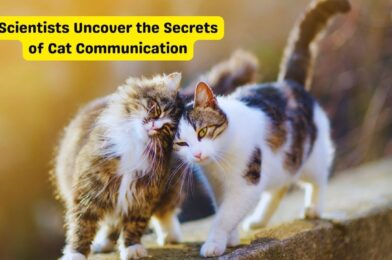
Scientists Uncover the Secrets of Cat Communication

Scientists Uncover the Secrets of Cat Communication
For centuries, cats have been known for their enigmatic nature and seemingly aloof demeanor. But beneath their mysterious exterior lies a complex world of communication, one that scientists are now beginning to decipher.

Recent research has revealed that cats have a sophisticated system of communication that goes far beyond meows and purrs. In fact, cats use a variety of sensory modalities, including scent, body language, and vocalizations, to convey a wide range of emotions and messages.

Scent: The Language of Pheromones

Cats have a highly developed sense of smell, which they use to leave behind scent marks that convey information about their identity, territory, and reproductive status. These scent marks are made up of pheromones, which are chemical signals that can trigger specific behaviors in other cats.

For example, a female cat in heat may release pheromones that attract males, while a male cat may leave scent marks to warn other males from approaching his territory.

Body Language: The Art of Nonverbal Communication

Cats also communicate through their body language. A relaxed cat will have a loose, drooping body and a tail held high in the air. A cat that is feeling threatened or defensive may arch its back, flatten its ears, and swish its tail back and forth.

By observing a cat’s body language, we can get a good sense of how it is feeling and what it is trying to communicate.

Vocalizations: The Power of the Meow

While meows are often thought to be a way for cats to get our attention, they can also be used to communicate a variety of other things, such as happiness, contentment, or hunger.

The pitch, duration, and context of a meow can all convey different meanings. For example, a high-pitched meow may be a plea for attention, while a low-pitched meow may be a warning.

A Complex and Rewarding Language

The study of cat communication is still in its early stages, but scientists are constantly learning more about how these fascinating creatures interact with each other and with the world around them.

By understanding the nuances of cat communication, we can better understand our feline companions and build stronger bonds with them.

Tagged : / / / /
Verified by ExactMetrics