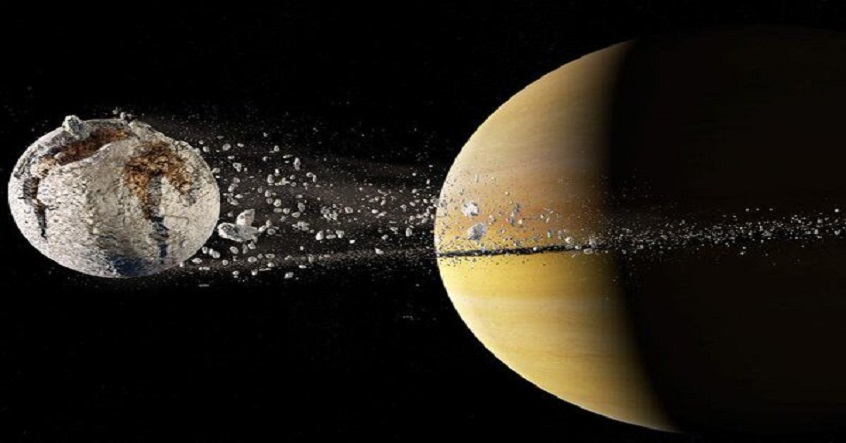
Why Saturn has rings and our Earth doesn’t!

The giant planets in our solar system have very diverse rings. Observations show that Saturn’s rings are made of more than 95 per cent icy particles, while the rings of Uranus and Neptune are darker and may have higher rock content.

This study by researchers at Kobe University and Tokyo Institute of Technology in Japan focused on the period called the Late Heavy Bombardment that is believed to have occurred 4 billion years ago in our solar system, when the giant planets underwent orbital migration. Planetary rings that surround Saturn, Neptune and Uranus were formed four billion years ago when large objects passed very close to planets and got destroyed, scientists have found, solving the mystery behind the origin and diversity of these rings.

This model can also explain the compositional difference between the rings of Saturn and Uranus.

It is thought that thousands of Pluto-sized objects from the Kuiper belt existed beyond Neptune. Researchers calculated the probability that these large objects passed close to the giant planets and were destroyed by their tidal force during the Late Heavy Bombardment. Results showed that Saturn, Uranus and Neptune experienced close encounters with these large objects multiple times.

The team used computer simulations to study disruption of these Kuiper belt objects by tidal force when they passed the vicinity of the giant planets. They discovered that in many cases fragments comprising 0.1-10 per cent of the initial mass of the passing objects were captured into orbits around the planet. The combined mass of these captured fragments was found to be sufficient to explain the mass of the current rings around Saturn and Uranus.

Compared to Saturn, Uranus and Neptune have higher density. This means that objects can pass within close vicinity of the planet, where they experience extremely strong tidal forces. As a result, if Kuiper belt objects have layered structures such as a rocky core with an icy mantle and pass within close vicinity of Uranus or Neptune, in addition to the icy mantle, even the rocky core will be destroyed and captured, forming rings that include rocky composition.

However, if they pass by Saturn, only the icy mantle will be destroyed, forming icy rings. This explains the different ring compositions.

The researchers also simulated the long-term evolution of the captured fragments using supercomputers at the National Astronomical Observatory of Japan. From these simulations they found that captured fragments with an initial size of several kilometers are expected to undergo high-speed collisions repeatedly and are gradually shattered into small pieces. Such collisions between fragments are also expected to circularize their orbits and lead to the formation of the rings observed today.

As a technology lover you may like our daily important technology news series. It’s a playlist and you can retrieve the total day-wise videos. Please consider subscribing our YouTube channel:

Author: Technology and Beyond

Tagged : /

Beware! Hacker’s next target is your light bulb and this can destroy a society!

We’re all fascinated by the Internet of Things and the positive changes and conveniences it would offer. Its proponents claim it offers many benefits: energy efficiency, technology so convenient it can anticipate what you want, even reduced congestion on the roads. But then, what’s the catch?

Researchers report in a paper to be made public on Thursday that they have uncovered a flaw in a wireless technology that is often included in smart home devices like lights, switches, locks, thermostats and many of the components of the much-ballyhooed “smart home” of the future.

Putting a bunch of wirelessly connected devices in one area could prove irresistible to hackers. And it could allow them to spread malicious code through the air, like a flu virus on an airplane. And they wouldn’t have to have direct access to the devices to infect them: The researchers were able to spread infection in a network inside a building by driving a car 229 feet away.

The researchers focused on the Philips Hue smart light bulb and found that the wireless flaw could allow hackers to take control of the light bulbs, according to researchers at the Weizmann Institute of Science near Tel Aviv and Dalhousie University in Halifax, Canada.

That may not sound like a big deal. But imagine thousands or even hundreds of thousands of internet-connected devices in close proximity. Malware created by hackers could be spread like a pathogen among the devices by compromising just one of them.

“Even the best internet defense technologies would not stop such an attack,” said Adi Shamir, a widely respected cryptographer who helped pioneer modern encryption methods and is one of the authors of the report.

Just two weeks ago, hackers briefly denied access to whole chunks of the internet by creating a flood of traffic that overwhelmed the servers of a New Hampshire company called Dyn, which helps manage key components of the internet.

Security experts say they believe the hackers found the horsepower necessary for their attack by taking control of a range of internet-connected devices, but the hackers did not use the method detailed in the report being made public Thursday. One Chinese wireless camera manufacturer said weak passwords on some of its products were partly to blame for the attack.

The new risk comes from a little-known radio protocol called ZigBee. Created in the 1990s, ZigBee is a wireless standard widely used in home consumer devices. The researchers found that the ZigBee standard can be used to create a so-called computer worm to spread malicious software among internet-connected devices.

Next Page For More

Tagged : /

These Six Amazing Uses of Graphene Will Show You How Cool it is!

A quick introduction to Graphene. It is a super-strong, ultra-lightweight material that consists of bonded carbon atoms formed into sheets that measure just one atom thick. It has led to scores of technological innovations in recent years as its strength to weight ratio makes it ideal for all sorts of applications ranging from desalination filters that produce clean drinking water to batteries that charge up in seconds, and even next-gen LED bulbs.

Graphene has lead to the inception of various amazing products- even solar cells that produce electricity in the rain! Here are a few others…

Rechargeable batteries become less efficient over time and we know about the health hazards of Lithium batteries. Researcher Han Lin at Australia’s Swinburne University created a battery with a graphene supercapacitor that can be used time and time again without any loss in performance — and it charges up in mere seconds.

What’s more, it Graphene gives this new battery a major edge, beating out traditional batteries in charging time, lifespan and also environmental impact.

Lin used a 3D printer to build sheets of graphene for his energy storage device, which could one day replace the lithium-based batteries in smartphones, tablets and even electric cars.

Scientists from Yunnan Normal University and the Ocean University of China used graphene to develop a novel solar panel that is able to generate electricity in the rain. Now that’s something worth discussing!

A layer of graphene over the top of the solar cells generates energy as it reacts with naturally occurring salts in rainwater. The solar cells have an efficiency rate of around 6.5 percent, which isn’t much, but with improved efficiency, rain power could become a real thing in places where the weather isn’t exactly ripe for traditional solar cells.

Our resources of clean drinking water are largely scarce and the unusable water left in the oceans seems a major waste. So, there’s a major push for developing more efficient ways to turn saltwater into clean drinking water.

Lockheed Martin found that this atom-thick graphene filter could reduce the amount of energy needed for the desalination process. Because the filter is only one atom thick, saltwater flows through it without excess pressure — and since the holes in the filter are just 100 nanometers in diameter, they’re just large enough for water molecules to squeeze through, but too small to allow salt particles to pass.

The filtering material, dubbed Perforene, was originally patented for cleaning up oil spills. This desalination filter that cuts energy usage by 20 percent, making it more environmentally friendly and better suited for use in regions where electricity is as scarce as clean water.

Next Page For More

Tagged : /

These scanners could really show how your brain works

The newly refurbished Wolfson Brain Imaging Centre in the University of Cambridge has been equipped with some of the world’s most powerful magnetic resonance imaging (MRI) and positron emission tomography (PET) scanners and will give its researchers unprecedented power to make images of cancers, study the precise makeup of the cortex and analyse how chemicals in the brain – known as neurotransmitters – underpin the development of schizophrenia and depression.

At the heart of the refurbished centre – funded by the Medical Research Council, Wellcome Trust and Cancer Research UK – are three groundbreaking devices. Only a handful of these exist at institutions outside Cambridge and no institution – other than Cambridge – has all three.

One of them is a Siemens 7T Terra MRI scanner that will allow researchers to see details in the brain as tiny as a grain of sand. “The devices we have assembled are primarily for studying humans and will have a strong research focus,” Bullmore says. 

A key example is provided by the 7T MRI scanner. Current devices have magnetic fields that have strengths of around 3T (tesla) and can see structures 2-3 mm in size. By contrast, the new Cambridge scanner with its 7T field will have a resolution of around 0.5mm.

“That is a very important difference,” adds Bullmore. “The outer layer of the brain, the cortex, is about 3-4mm thick. That is the grey matter that provides us with our thoughts. Current scanners show it as a single strip.

Next Page For More 

Tagged : / /

This is how NASA will save our lives by detecting incoming Asteroid through its ultrafast detector

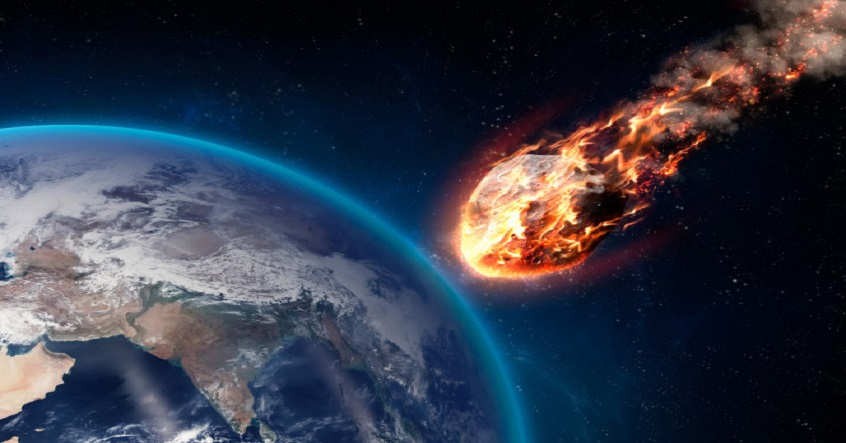
NASA’s new asteroid detector, a computer program aptly named Scout, is the celestial equivalent of the person who yells “heads up” as a baseball comes barreling toward the stands. Scout is a computer program designed to detect Near Earth Objects that could be on track for impact with Earth in a matter of days or weeks.

Scout also has a big brother, Sentry, which is designed to keep track of objects over the course of the century. Kelly Fast, program manager for Near Earth Objects Observations at NASA, told NBC News that tools like Sentry and Scout are part of the first line of defense, allowing the space agency and its partners to “find them and keep track of them.”

Anything larger than 30 to 50 meters could survive entering Earth’s atmosphere and have the potential to inflict damage around its impact site, according to NASA. Scout works by scanning data from NASA’s network of telescopes and assessing the likelihood of a Near Earth Objects slamming into Earth. It’s then able to have other telescopes around the world confirm its findings.

“We can get a heads-up immediately, within an hour of the data being reported,” Paul Chodas, manager of NASA’s Center for Near-Earth Object (NEO) Studies at the Jet Propulsion Laboratory in Pasadena, California, told NBC News. Cholas has been part of the team working on refining Scout over the past year.

A Near Earth Object is a comet or asteroid with an orbit that brings it within 30 million miles of Earth’s orbit. NASA and its partners have a catalogue of around 15,000 Near Earth Objects that don’t appear to pose threats to Earth any time soon. Rob Landis, program executive for the Planetary Defense Coordination Office, told NBC News there’s a mantra that sums up the work they do detecting Near Earth Objects: “Find them early.”

“There is probably no greater gift that the space agencies of the world can provide humanity than to know the time and place of an impact event and to plan a response to it,” he said.

NASA has never needed to mitigate a threat from a Near Earth Object. However, the agency has a number of concepts in the works so it’s ready if the need ever arises. One of those is set to be demonstrated as part of the Asteroid Redirect Mission, which is slated for 2021. While the scope of the project is intended to test tech to be used on a future Mars mission, it will also demonstrate a key planetary defense method call the “gravity tractor.” After capturing a boulder from the surface of an asteroid, NASA hopes to use the spacecraft’s gravitational force to slowly alter the rock’s trajectory.

Another possibility is the kinetic impactor method, which would work by sending one or more large, high-speed spacecraft into the path of a Near Earth Object, with the goal of changing its path. Still, NASA says decades or more may be needed to successfully deflect a potential threat from a large asteroid using the kinetic impactor method.

“The goal would be to have decades of lead time if there is something that could be a problem in the future,” Kelly Fast said.

As a technology lover you may like our daily important technology news series. It’s a playlist and you can retrieve the total day-wise videos. Please consider subscribing our YouTube channel:

Author: Technology and Beyond

Tagged : /

How much time will it take for us to finish our wildlife? A horrific account of our irresponsible behavior!

“For the first time since the demise of the dinosaurs 65 million years ago, we face a global mass extinction of wildlife. We ignore the decline of other species at our peril – for they are the barometer that reveals our impact on the world that sustains us. Humanity’s misuse of natural resources is threatening habitats, pushing irreplaceable species to the brink and threatening the stability of our climate,” added Mike Barrett, Director of Science and Policy at WWF-UK.

This is the anthropocene, the era where human activity has overwhelmingly and irreversibly altered the geology and ecosystems of our planet. And along with changing the atmosphere, earth, seas, and forests, this brave new world has a lot less wild animals.

The new “Living Planet Report” by the World Wildlife Fund (WWF) and Zoological Society of London (ZSL) is the world’s most comprehensive survey of the health of our planet ever compiled and it reveals that global populations of fish, birds, mammals, amphibians, and reptiles are on course to decline by 67 percent by 2020, compared to 1970 levels. Wildlife populations have already declined by 58 percent between 1970 and 2012. The figures and projections were based on the data trends of about 14,200 populations of 3,700 different vertebrate species across the globe.

“These are declines – they are not yet extinctions – and this should be a wake-up call to marshal efforts to promote the recovery of these populations,” Professor Ken Norris, Director of Science at ZSL, said in a statement.

The most prevalent threat to wildlife is loss of habitat. Specifically, the WWF say much of the destruction and degradation of habitats is caused by unsustainable agriculture, industrial infrastructure, logging, mining, energy production, and commercial development. Other key factors include overexploitation, poaching, pollution, invasive species, and climate change.

In case you’re thinking we might as well give up before we start, bear in mind that the past few months has seen the Paris Climate Agreement, where 195 countries agreed together to limit global carbon emissions, and the CITES Wildlife Summit, which successfully increased levels of protection of sharks, rays, pangolins, African grey parrots, psychedelic rock geckos, and many other endangered species. If governments, industry, and citizens act now and continue these efforts, the planet’s fate could be a lot less bleak.

As a technology lover you may like our daily important technology news series. It’s a playlist and you can retrieve the total day-wise videos. Please consider subscribing our YouTube channel:

Author: Technology and Beyond

Tagged : /

Ever wondered what a parallel universe would look like? An attempt to decode parallel universe!

It’s estimated that there are 100 to 200 billion galaxies in the Universe. We’re just occupying a miniscule- almost insignificant- space of the Milky Way. If you consider that the Milky Way galaxy has a radius of 100,000 light-years (1 light-year is 9.5 trillion km), you can begin to understand how vast the entirety is.

When we have so many galaxies out there and yet we have touched just one, isn’t there a real possibility of many universes existing too? What if our Universe is just one of many, and they’re all bouncing off of each other like mind-numbingly gargantuan marbles, each with their own weird laws of physics? The theory of the multiverse supports this claim and was formed in the aftermath of the Big Bang.

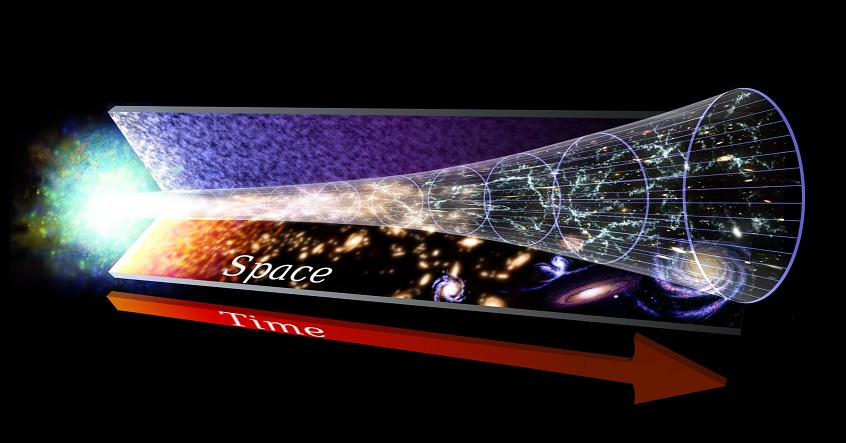
As the latest episode of Life Noggin explains, it’s widely believed that a mere fraction a second after the Big Bang, our Universe expanded incredibly quickly – a period known as inflation – and then stopped. It’s been expanding ever since, but nowhere near as fast.

But, there could be pockets of space out there that never stopped inflating after the Big Bang, and some others that have, but at different stages in their lifetime. This is known as the eternal inflation hypothesis in which each of these bubbles of space represent entirely different universes, entirely separated from our own.

What makes it even more interesting is the fact that these universes could follow a whole new kind of “Physics”. That being said, the gravitational pull could be repulsive and unicorns could be kings!

As Fraser Cain from Universe Today explains, “For each one of these basic constants, it’s as if the laws of physics randomly rolled the dice, and came up with our Universe. Maybe in another universe, the force of gravity is repulsive, or green, or spawns unicorns.”

And that’s if you’re lucky. What if the forces between particles were too weak, and the atoms that make up all matter in our Universe never got the chance to form in another one?

This might all sound frustratingly abstract, but here’s the thing: it might actually be possible to detect parallel universes, if they’ve bumped into our own Universe and left ‘bruises’ behind in the cosmic microwave background – the faint afterglow of the Big Bang.

And if you can’t get enough of the multiverse, here’s Fraser Cain on the brain-bending question: If the Universe is expanding, what’s it expanding into?

With the possibility of all the infinite parallel universes out there, maybe we have a monkey-typewriter situation on our hands, which means, statistically speaking, there could be a universe where time flows backwards, or a universe that contains another you, but ever-so-slightly skewed.

width="560" height="314" allowfullscreen="allowfullscreen">

As a technology lover you may like our daily important technology news series. It’s a playlist and you can retrieve the total day-wise videos. Please consider subscribing our YouTube channel:

Author: Technology and Beyond
Tagged : /

Is universe is expanding at accelerated rate? this is what physicists say!

Challenging a standard cosmological concept, a team of researchers led by an Indian-origin scientist has found that the universe may not actually be expanding at an accelerating pace as was previously believed.

Back in 2011, the Nobel Prize in Physics was awarded to three astronomers for their discovery, in the late 1990s, that the universe is expanding at an accelerating pace.

Their conclusions were based on analysis of Type Ia supernovae – the spectacular thermonuclear explosion of dying stars – picked up by the Hubble space telescope and large ground-based telescopes.

It led to the widespread acceptance of the idea that the universe is dominated by a mysterious substance named ‘dark energy’ that drives this accelerating expansion.

In a paper published in the Nature journal Scientific Reports, the team of scientists led by Professor Subir Sarkar of Oxford University’s Department of Physics has cast doubt on this standard cosmological concept.

“Naturally, a lot of work will be necessary to convince the physics community of this, but our work serves to demonstrate that a key pillar of the standard cosmological model is rather shaky,” Sarkar said.

Making use of a vastly increased data set – a catalogue of 740 Type Ia supernovae, more than ten times the original sample size – the researchers have found that the evidence for acceleration may be flimsier than previously thought, with the data being consistent with a constant rate of expansion.

“The discovery of the accelerating expansion of the universe won the Nobel Prize, the Gruber Cosmology Prize, and the Breakthrough Prize in Fundamental Physics. It led to the widespread acceptance of the idea that the universe is dominated by “dark energy” that behaves like a cosmological constant – this is now the “standard model” of cosmology,” Sarkar noted.

“However, there now exists a much bigger database of supernovae on which to perform rigorous and detailed statistical analyses,” he added.

gWe analysed the latest catalogue of 740 Type Ia supernovae – over ten times bigger than the original samples on which the discovery claim was based – and found that the evidence for accelerated expansion is, at most, what physicists call “3 sigma”. This is far short of the “5 sigma” standard required to claim a discovery of fundamental significance,” Sarkar explained.

The researchers hope that their study will motivate better analyses of cosmological data, as well as inspire theorists to investigate more nuanced cosmological models.

“Significant progress will be made when the European Extremely Large Telescope makes observations with an ultrasensitive ‘laser comb’ to directly measure over a ten to 15-year period whether the expansion rate is indeed accelerating,” Sarkar said.

As a technology lover you may like our daily important technology news series. It’s a playlist and you can retrieve the total day-wise videos. Please consider subscribing our YouTube channel:

Author: Technology and Beyond
Tagged : / /

Scientists Suspect Aliens Are Trying to Reach Out

Scientists have heard unusual noises from space for quite some time now and suspect extraterrestrial beings are trying to make contact with earth. They have analysed strange modulations in a tiny set of stars that appear to be coming from aliens who might possibly want to alert Earthlings of their existence.

Two scientists, working on the research from Quebec’s Laval University, EF Borra and E Trottier, wrote in their research paper, “We find that the detected signals have exactly the shape of an [extraterrestrial intelligence] signal predicted in the previous publication and are therefore in agreement with this hypothesis.  The fact that they are only found in a very small fraction of stars within a narrow spectral range centered near the spectral type of the sun is also in agreement with the ETI hypothesis.”

The database is very low – this new study has analyzed modulation in only 234 of 2.5 million stars and a small slice of them seemed to be behaving strangely. However, they clarify that more research is required to affirm or deny the hypothesis. Currently there is not enough explanation to explain these strange modulations which has led the scientists to conclude that the messages are coming from aliens.

Their research will be published in the journal Publications of the Astronomical Society of the Pacific, titled Signals probably from Extraterrestrial Intelligence.

As a technology lover you may like our daily important technology news series. It’s a playlist and you can retrieve the total day-wise videos. Please consider subscribing our YouTube channel:

Author: Technology and Beyond

Tagged : / /

Beware, there are two types of iPhone 7. One is slower than the other. Yours the Faster One? Check It Out!

First of all, it’s worth mentioning that both versions of the iPhone 7 Plus were soundly beaten by the Galaxy S7 Edge in the tests, so even the best iPhone isn’t comparable to Samsung’s flagship on a good day. But, even the the two iPhones have a difference in the quality of their performance.

Both will work just fine when there’s a good LTE signal, it seems that if you’ve got an Intel modem, your data speed in areas with less-than-ideal coverage may be much slower than the iPhones with the Qualcomm modems. 

The testing was conducted by Cellular Insights, using a test rig that allowed them to vary the cell signal at will. As such, it might not be a perfect representation of real-world conditions, but it does have the benefit of being more scientific and controllable.

For the first time this year, Apple went with two different providers of cellular modems in the iPhone 7 and 7 Plus. Some phones have Qualcomm modems, the company Apple has worked with for years. The others had Intel modems, marking a real breakthrough for Intel, which has been trying to get its chips into flagship smartphones for years.

The results show that the iPhone 7 Plus with the Intel modem performs much worse in areas with poor cell signal. At worst, the Intel-powered phone was 40Mbps slower than the Qualcomm device, although when the cell signal gets really bad, they’re only a couple megabits apart.

This also isn’t the first time that we’ve found major performance differences between different versions of iPhones. Other tests have shown that the storage used in this year’s 32GB iPhones is much worse than in the 128GB or 256GB models, and previous years have seen different processors in different models with vastly different processing speeds.

Qualcomm modems can be found in Verizon, Sprint, and SIM-unlocked iPhones. Devices on other networks are using the Intel modems. To work out which device you have, you can check the model number on the back of your phone. The A1778 and A1784 versions are powered by Intel modems, while the A1660 and A1661 models are Qualcomm-powered.

As a technology lover you may like our daily important technology news series. It’s a playlist and you can retrieve the total day-wise videos. Please consider subscribing our YouTube channel:

Author: Technology and Beyond
This is what will happen if asteroids hit our planet

In the 2011 movie Melancholia, there is a very scary situation in which a rogue planet is on its way to collide with Earth and it captures the last few days of the lives of the people on Earth, waiting for the predictable to happen.

The most usual answer to earth’s destruction after pollution is its collision with a huge asteroid. This scary scenario was replicated by lovely folks at the Discovery Channel and they have made a video that is a must watch.

Last time when the Earth was hit by an asteroid

Practically most scientific community accepts that dinosaurs were wiped off the face of Earth, when big time climate change took place credits to an asteroid impacting on the Earth’s surface.

The Chicxulub crater impact is found in the Yucatan Peninsula in Mexico. The crater hit Earth some 66 million years ago and its impact caused a massive climate change that wiped off the dinosaurs and other animal and plant that lived on Earth.

The crater was noticed in 1970s and experts came up with theories of the effect of the impact. They say that its impact had resulted in mega tsunamis and a cloud of superheated dust, ash and steam would have enclosed the Earth’s entire surface for more than a decade and made life impossible for dinosaurs and several other living organisms.

The Discovery channel just made a video that shows an asteroid almost the size of Earth and the impact alone generates massive waves in the Pacific Ocean, resulting in mega tsunamis.

The impact removes the 10 km crust off the Earth’s surface. The resulting shock waves travel at hypersonic speeds, destroying everything in their path. Some of the fragments will leave the Earth’s atmosphere and go into orbit. They will then come back to Earth at high speeds and devastate wherever they land.

The Earth’s crust, which is full of magma, will start a blaze that will slowly engulf the whole Earth, leaving nothing behind, but fire and fragments all over. All living beings like humans and animals will die almost within seconds of the impact, because of the superheated air and Earthquakes caused by the impact. It is a distressing scenario and the most feasible reason for how Earth will be destroyed billions of years in the future.

Author: Technology and Beyond

Disclaimer: All information, data and material contained, presented, or provided on neopress.in is for educational purposes only. It is not to be construed or intended as providing medical or legal advice. Decisions you make about your family’s healthcare are important and should be made in consultation with a competent medical professional. We are not physicians and do not claim to be. Any views expressed here-in are not necessarily those held by neopress.in.
Attributions: Some of the images are derived from http://www.wikihow.com under Creative Commons License: https://creativecommons.org/compatiblelicenses
Tagged : /

Water geysers on Jupiter’s moon Europa may indicate alien presence. NASA plans new mission in 2020

With the use of the Hubble Space Telescope in the last five years, NASA astronomers have observed water vapor plumes that erupted from the surface Europa which is of Jupiter’s moon. Out of 10 observation sessions, they spotted these water vapor emissions 3 times. The information was publicly released last September 26th 2016.

Scientists estimated the volume of these plumes to be 5,000 to 7,000 kg of water mass per second. That’s almost like spouting out an Olympic-sized swimming pool every minute!

William Sparks, the leading astronomer for this research endeavor with the Space Telescope Science Institute in Baltimore, says that “The chances of this occurring due to randomness is very low. The problem is that there may be something we don’t understand about the instrument or what Europa looks like in ultraviolet light. These are difficult wavelengths for Hubble. I’m not aware of any natural explanation for this besides water plumes.”

The scientists expect to collect better data about these plumes using James Webb Space Telescope, that will launch in 2018.

This matters because, it would enable scientists to study the oceans beneath the moon’s surface. In addition, this news comes in tandem with NASA taking steps to launch a pair of missions to Europa in the 2020s.

The same engineers who spearheaded Curiosity’s landing on Mars will start working on a plan to land a probe on Europa’s icy surface. Naturally, it is no easy feat as Jupiter’s gravity pushes and pulls the icy surface of Europa by several meters every few days. Gathering information on these underground oceans would be like drilling through kilometers of rock hard ice. On top of that, the radiation from nearby Jupiter could kill a human in a matter of hours.

width="560" height="314" allowfullscreen="allowfullscreen">

Author: Technology and Beyond

Tagged : /

Want night vision? This technology by IBM will add night vision to your glasses!

It takes us some time to adjust our eyesight on entering a dark room. This is because our eye consists of two kinds of photoreceptors namely, the rods and the cones. The rod cells are responsible for our ability to see in the dark. However, for the rods to completely adjust to darkness it takes nearly 30 minutes.

Although the idea of night vision involves a lot of biological processes, there are studies that say an effort can really help tweak and enhance the entire process. And this can be done without any kind of genetic manipulation. All we may need is glasses, for that matter.

The rod cells send higher vibes and contrasting images on seeing the red light, hence making it easy to make out the object. This is the reason behind keeping the red lights in places that are required to be kept dark (eg. Photography Labs) so as to make the objects visible to humans.

Lately, a technology that relies on this principle is patented by IBM. This will now be used in the Google Glass.

A projector that beams with red light is incorporated in the eyeglass lens. So that when the wearer of Google Glass enters into a dark environment, the projectors by itself projects red light into each eye so as to make the objects visible. This process guiles the rods to send higher contrast images to the brain, giving the glasses night-vision characteristics.

If you want to dig in deeper into this discovery you may also get more information on night vision and the chemicals behind it here.

As a technology lover you may like our daily important technology news series. It’s a playlist and you can retrieve the total day-wise videos. Please consider subscribing our YouTube channel:

Author: Technology and Beyond

Tagged : /

This Russian Scientist injected himself with Prehistoric Bacteria to gain eternal life. The result is shocking!

If there is anything that scientists are unable to do is discover a potion to become immortal. If there has ever been a Madagascar in test ride out of Marvel comic book then it is him – Anatoli Broushkov. The Russian scientist who is controversial experiments are going wild on the Internet. His experiments for so bizarre that the world is now astonished looking at him conduct all of these experiments on himself. Of late the scientist injected himself with Prehistoric bacteria that was more than 3.5 million years old which was derived from the Siberian permafrost. His reasons will shock you beyond order because according to him it is an elixir to immortality.

Prehistoric bacteria influenced immunity and vitality

After the experiment he says that the bacteria cell found in the permafrost have actually have him develop a heightened state of immunity two diseases and other negative factors of environment and bad health. He also claims that it has revitalized him to a really great extent.
The scientist earlier conducted a similar experiment on animals and observed almost the same result that is an increasing immunity and in the sense of power physically.

3.5 million year old Jurassic bacteria discovered in Siberian permafrost

It is talking to long path he is actually the head of Geo cryology department at State University Moscow. Since this time he has started to conduct the experiment of injecting prehistoric bacteria into the system, 2 years ago, he has never fallen ill.
The bacteria in focus is described as bacillus F dating back to almost 3.5 million years discovered in Siberian permafrost and it is also regarded as a vital ingredient that promotes longevity in humans. Russian scientist sequenced is DNA for further experiments on animal studies but Broushkov played a guinea pig where he injector himself with this bacteria. He claims to feel Stronger and more healthy than ever.

Next Page For More

Tagged : /

This Fabric Can Charge Your Smartphone using solar and wind power!!!

Have you ever imagined that your handkerchief can be used to charge you’re mobile as well?  Or just think that you will never have to stop at any motel during your journey just to charge your laptop or tab. How great that would be!!! Thanks to the scientist who have developed a new fabric that can harvest energy from sun and wind.

It is basically combination of two types of electricity generation modes knitted into a textile for developing garments that can provide their own source of energy to charge electronic devices like Smartphone.

As per professor  Zhong Lin Wang of Georgia Tech school of material science and engineering “This hybrid power textile presents a novel solution to charging devices in the field from something as simple as the wind blowing on a sunny day”.

For making this fabric, commercial textile machine was used to weave together solar cells which were constructed from light weight polymer fibers with triboelectric nanogenerators, which were also fiber based.

How these triboelectric  nanogenerators work? These use a combination of the triboelectric effect and electrostatic induction to produce small amount of electric power from mechanical motion like sliding, rotation or vibration.

As per professor wang the fabric is very flexible, breathable, light weight and can be adapted for various uses. It is 320micrometer thick, woven together with the strands of wool, and, it can be used and made into curtains, tents or wearable garments.

The manner in which these fibers based triboelectric nanogenerators work is that, they capture any energy produced when certain materials become electrically charged once they come into moving contact with different material. And for the sunlight harvesting photo anodes made in a wire shaped fashion was used that could be woven together with other fibers. The backbone of the fiber was made with inexpensive, environment friendly commonly used polymer fiber. The electrodes used in the fiber were also made through a low cost process aiming the possibility of large scale manufacturing.

Wang’s team did a primary experiment. In this they used the fabric in the size of the office sheet. It was then attached to a rod. It looked like a small flag. In a fast moving car they let it blow in the wind through windows. The fiber was able to generate significant power from a moving car and that too on a cloudy day. The output measured on a 4 by 5 centimeter piece -it could charge 2mF commercial capacitor to 2 volts in one minute.

Early test on this fabric indicated that it has a capability of working even in harsh environment and it can withstand repeated and rigorous use. And next they are focusing on its industrial use.

As a technology lover you may like our daily important technology news series. It’s a playlist and you can retrieve the total day-wise videos. Please consider subscribing our YouTube channel:

Author: Technology and Beyond

Tagged : /
Verified by ExactMetrics