Water geysers on Jupiter’s moon Europa may indicate alien presence. NASA plans new mission in 2020

With the use of the Hubble Space Telescope in the last five years, NASA astronomers have observed water vapor plumes that erupted from the surface Europa which is of Jupiter’s moon. Out of 10 observation sessions, they spotted these water vapor emissions 3 times. The information was publicly released last September 26th 2016.

Scientists estimated the volume of these plumes to be 5,000 to 7,000 kg of water mass per second. That’s almost like spouting out an Olympic-sized swimming pool every minute!

William Sparks, the leading astronomer for this research endeavor with the Space Telescope Science Institute in Baltimore, says that “The chances of this occurring due to randomness is very low. The problem is that there may be something we don’t understand about the instrument or what Europa looks like in ultraviolet light. These are difficult wavelengths for Hubble. I’m not aware of any natural explanation for this besides water plumes.”

The scientists expect to collect better data about these plumes using James Webb Space Telescope, that will launch in 2018.

This matters because, it would enable scientists to study the oceans beneath the moon’s surface. In addition, this news comes in tandem with NASA taking steps to launch a pair of missions to Europa in the 2020s.

The same engineers who spearheaded Curiosity’s landing on Mars will start working on a plan to land a probe on Europa’s icy surface. Naturally, it is no easy feat as Jupiter’s gravity pushes and pulls the icy surface of Europa by several meters every few days. Gathering information on these underground oceans would be like drilling through kilometers of rock hard ice. On top of that, the radiation from nearby Jupiter could kill a human in a matter of hours.

width="560" height="314" allowfullscreen="allowfullscreen">

Author: Technology and Beyond

Tagged : /

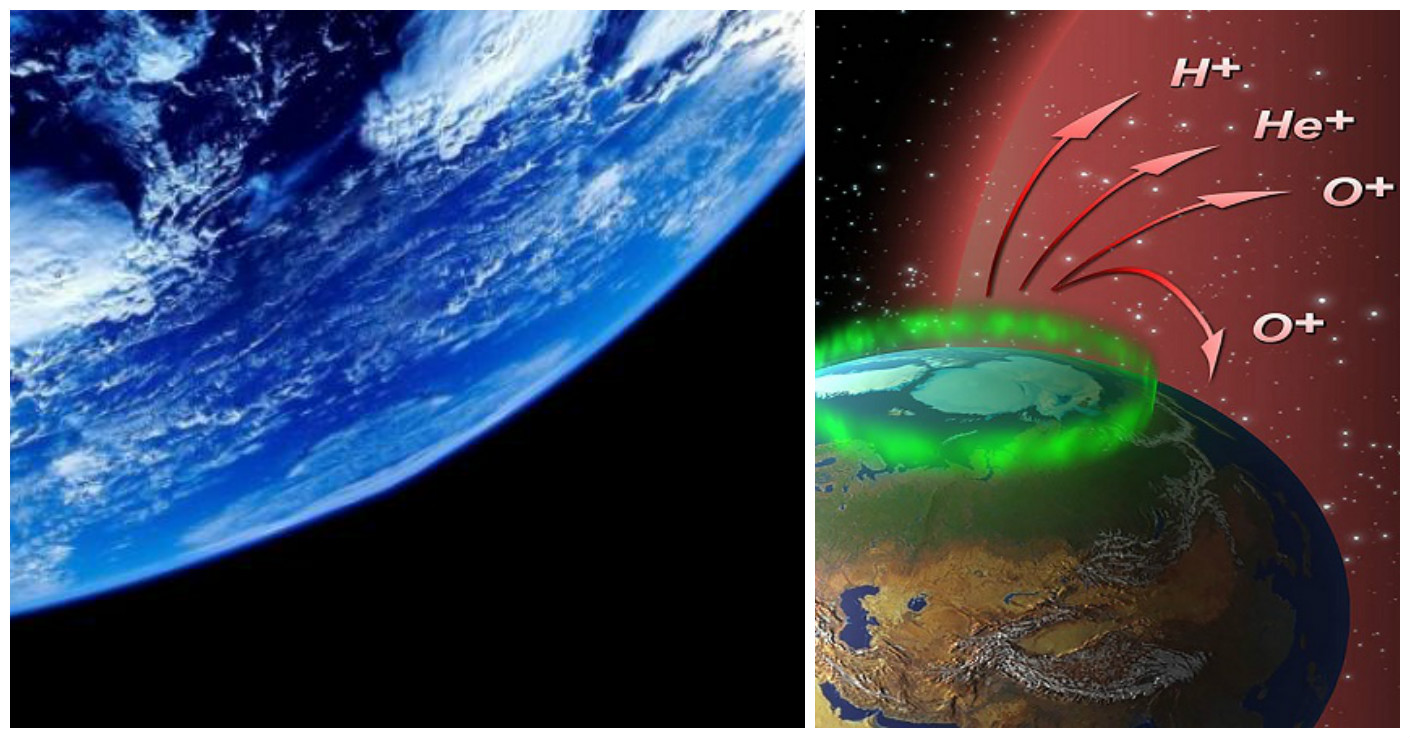
Worrying Scenario? Scientists don’t know why Earth’s atmosphere is leaking oxygen out!

Researchers discovered that for some reason, oxygen has started to slowly leak out of Earth’s atmosphere, but they don’t seem to get to the bottom of it so quickly.

A team Princeton University found that oxygen levels have shockingly dropped by 0.7 percent in the last 800,000 year. They analysed air bubbles trapped inside ice cores from Greenland and Antarctica.

For now, they have failed to the point out the reason of leakage. To get to the answer is difficult as oxygen is constantly being recycled and reused by humans, animals, plants, and even silicate rocks. So using ice cores for oxygen level determination is the only way at the moment.

Researcher Daniel Stolper told in an interview,

“We did this analysis more out of interest than any expectation. We didn’t know whether oxygen would be going up, down, or flat. It turns out there is a very clear trend.”

The fall is very nominal and is not even dangerous for the living beings, but getting to the bottom of it can actually reveal many secrets of our wondrous planet.

The researchers believe that one reason can be an increased erosion rates, exposing and oxidising more fresh sediment while reducing atmospheric oxygen levels.

Other possible cause can be pinned on to long-term climate change. Over the last few million years, the global temperature have been slightly dropping, but post the industrial revolution, Earth has started to rapidly heat in the past fifty years. This could have set off an ecological chain reaction, which probably caused sucking up of more oxygen out of the atmosphere.

All these are just speculations and till now have no data that can be used to back it up.

While the declination is not as detrimental as carbon dioxide’s rising, it may hinder the amount of sunlight that reaching the ground. And there also has been evidence of changing oxygen levels adversely affecting Earth’s climate in the past.

Stolper added,

“We are consuming O2 at a rate a factor of a thousand times faster than before. Humankind has completely short-circuited the cycle by burning tonnes of carbon… it’s yet another indication of our collective ability to do what happens [naturally] on the Earth, yet so much faster.”

As a technology lover you may like our daily important technology news series. It’s a playlist and you can retrieve the total day-wise videos. Please consider subscribing our YouTube channel:

Author: Technology and Beyond

Tagged : /
Verified by ExactMetrics