
Get ready! You can soon watch 3D videos on your smartphone without special eyewear!

Amazingly, this is soon to become a reality. You could soon watch 3D videos on your smartphone without any special eyewear, thanks to scientists who have developed a way to make displays for small screen devices that offer both 2D and 3D imaging- that too on eyewear-free displays.

The only action is behind the screen where the image’s pixels and optics are layered together to produce the stereoscopic effect. The simplest example of this effect is found on a movie poster whose image appears to change as you walk by. Two or more images are interlaced and printed behind a plastic layer with grooves matching the interlaced pattern. In the case of 2D/3D convertible screens, these layers are active, meaning they can be switched on or off.

The two primary ways of producing these optically illusive effects are by using either an array of micro-lenses, called lenticular lenses, or an array of micro-filters, called parallax barriers, in front of the image to make its appearance depend on the angle at which it is being seen.

The gap distance between the image layer and the barrier layer is a key determinant of the viewing distance. Closer stacking of these layers together allows for a closer viewing distance. In the above example, the grooves act as distinct, interlaced arrays of lenses or filters, unveiling one image as you approach the poster and another as you depart.

Sin-Doo Lee, professor at Seoul National University in South Korea, and colleagues developed a monolithic structure that effectively combines the active parallax barrier, a polarising sheet and an image layer into a single panel. Instead of two separate image and barrier panels, they use a polarising interlayer with the image layer in direct contact with one side of the interlayer, while the active parallax barrier of a liquid crystal layer is formed on the other side as an array of periodically patterned indium-tin-oxide (ITO) electrodes.

The use of this interlayer allows the minimum separation of the image and barrier layers, thus providing the short viewing distance required for the smaller screens of mobile devices. This concept not only applies to LC-based 2D/3D displays, but also to OLED-based 2D/3D displays, offering application to a broad range of present and future device designs.

“The polarising interlayer approach here will allow high resolution together with design flexibility of the displays, and will be applicable for fabricating other types of displays such as viewing-angle switchable devices,” Lee said.

“Our technology will definitely benefit display companies in manufacturing low cost and lightweight 2D/3D convertible displays for mobile applications. Under mobile environments, the weight is one of the important factors,” Lee added.

As a technology lover you may like our daily important technology news series. It’s a playlist and you can retrieve the total day-wise videos. Please consider subscribing our YouTube channel:

Author: Technology and Beyond

This is how NASA will save our lives by detecting incoming Asteroid through its ultrafast detector

NASA’s new asteroid detector, a computer program aptly named Scout, is the celestial equivalent of the person who yells “heads up” as a baseball comes barreling toward the stands. Scout is a computer program designed to detect Near Earth Objects that could be on track for impact with Earth in a matter of days or weeks.

Scout also has a big brother, Sentry, which is designed to keep track of objects over the course of the century. Kelly Fast, program manager for Near Earth Objects Observations at NASA, told NBC News that tools like Sentry and Scout are part of the first line of defense, allowing the space agency and its partners to “find them and keep track of them.”

Anything larger than 30 to 50 meters could survive entering Earth’s atmosphere and have the potential to inflict damage around its impact site, according to NASA. Scout works by scanning data from NASA’s network of telescopes and assessing the likelihood of a Near Earth Objects slamming into Earth. It’s then able to have other telescopes around the world confirm its findings.

“We can get a heads-up immediately, within an hour of the data being reported,” Paul Chodas, manager of NASA’s Center for Near-Earth Object (NEO) Studies at the Jet Propulsion Laboratory in Pasadena, California, told NBC News. Cholas has been part of the team working on refining Scout over the past year.

A Near Earth Object is a comet or asteroid with an orbit that brings it within 30 million miles of Earth’s orbit. NASA and its partners have a catalogue of around 15,000 Near Earth Objects that don’t appear to pose threats to Earth any time soon. Rob Landis, program executive for the Planetary Defense Coordination Office, told NBC News there’s a mantra that sums up the work they do detecting Near Earth Objects: “Find them early.”

“There is probably no greater gift that the space agencies of the world can provide humanity than to know the time and place of an impact event and to plan a response to it,” he said.

NASA has never needed to mitigate a threat from a Near Earth Object. However, the agency has a number of concepts in the works so it’s ready if the need ever arises. One of those is set to be demonstrated as part of the Asteroid Redirect Mission, which is slated for 2021. While the scope of the project is intended to test tech to be used on a future Mars mission, it will also demonstrate a key planetary defense method call the “gravity tractor.” After capturing a boulder from the surface of an asteroid, NASA hopes to use the spacecraft’s gravitational force to slowly alter the rock’s trajectory.

Another possibility is the kinetic impactor method, which would work by sending one or more large, high-speed spacecraft into the path of a Near Earth Object, with the goal of changing its path. Still, NASA says decades or more may be needed to successfully deflect a potential threat from a large asteroid using the kinetic impactor method.

“The goal would be to have decades of lead time if there is something that could be a problem in the future,” Kelly Fast said.

As a technology lover you may like our daily important technology news series. It’s a playlist and you can retrieve the total day-wise videos. Please consider subscribing our YouTube channel:

Author: Technology and Beyond
Tagged : /

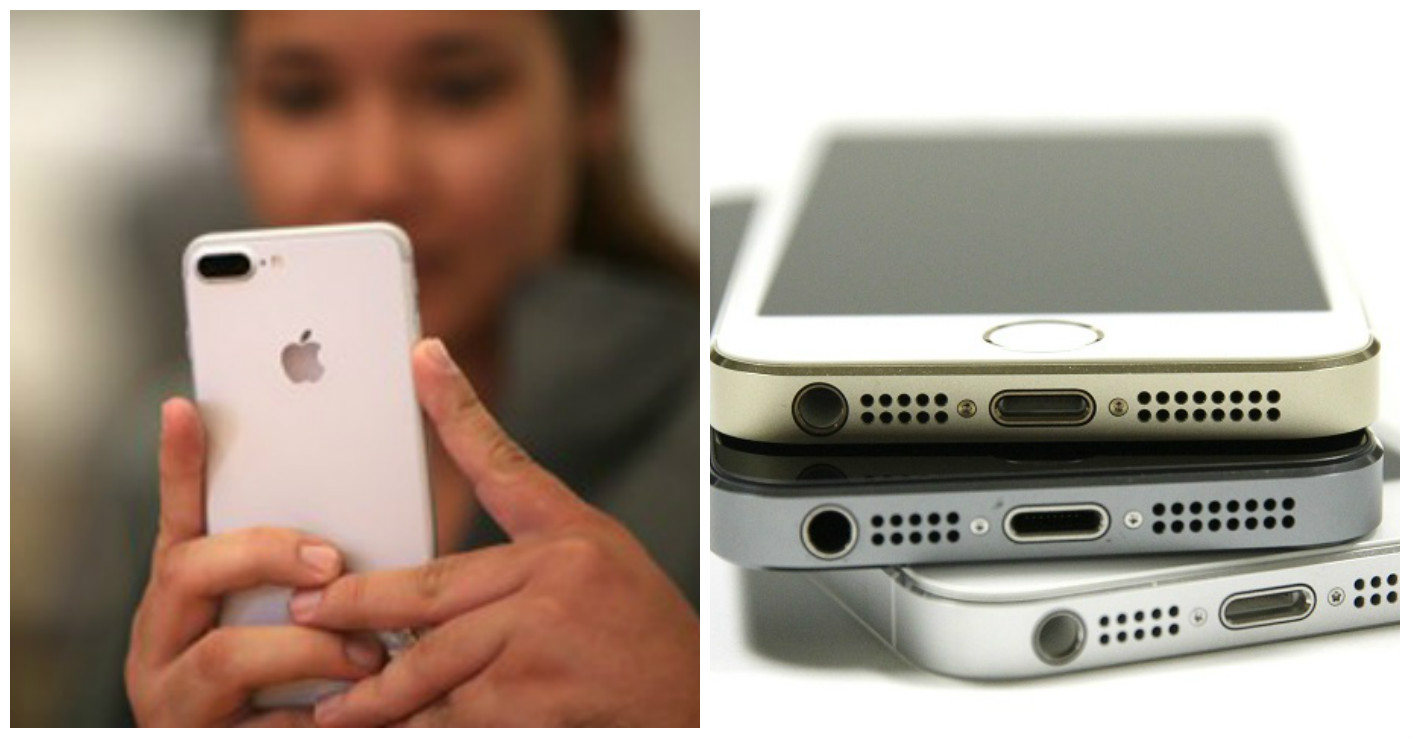
Women has her 20 boyfriends buy her iPhones. She then did this unimaginable thing with all those iPhones!

Using the pseudonym Proud Qiaoba, a blogger gave a detailed description on how a colleague of hers, dubbed Xiaoli, convinced her 20 boyfriends to buy her 20 new iPhone 7s, which she then sold for enough money to put a down payment on a house.

Proud Qiaoba said she was utterly surprised when Xiaoli revealed she sold 20 iPhones to a mobile phone recycling plant for $A23,200 and then used that money for her house deposit.

“Everyone in the office is talking about this now,” Proud Qiaoba wrote in her blog, reports the BBC. “Who knows what her boyfriends think now this news has become public.”

While the legitimacy of the story might sound dubious at first, the BBC reported it has been able authenticate the claims. Making the feat even more impressive is the fact the iPhone 7 was only launched on September 17 this year, which means Xiaoli hustled quickly.

Proud Qiaoba said Xiaoli did not come from a wealthy family, so she had to think outside the box to raise the funds for a home. “Her parents are getting old and she might be under a lot pressure hoping to buy them a house,” she wrote.

Following the story, users on China’s microblogging site Sina Weibo have been expressing admiration for the smart cookie.

“I can’t even find one boyfriend. She can actually find 20 boyfriends at the same time and even get them to buy her an iPhone 7. Just want to ask her to teach me such skills,” wrote one user.

However, not all agree with other users labelling her as “shameless”.

Xiaoli, we’re guessing, doesn’t care about any of this. She must be busy moving into her new home and dealing with her many, many boyfriends.

As a technology lover you may like our daily important technology news series. It’s a playlist and you can retrieve the total day-wise videos. Please consider subscribing our YouTube channel:

Author: Technology and Beyond

Tagged : /
Verified by ExactMetrics