This skydiver creates world record by jumping 25,000 feet without any parachute!

This 42 years old daredevil skydiver, Luke Aikins, set a world record as he jumped 25,000 ft (7,600 m) from a plane that too without wearing a parachute.

He recently completed the dangerous stunt called “Heaven Sent” and the Guinness Book of World Records documented it as “officially the highest skydive without a parachute ever.”

The Guinness website went on to report that during the freefall, Aikins only had “his body and a GPS unit to direct his movements towards the 10,000-square-foot net he needed to land on, in order to survive the freefall.”

More than thousands of people held their breaths as they witnessed the death-defying 2-minute jump aired on FOX TV’s live broadcast. The jump ended with Luke landing safely on a net in Simi Valley, Southern California.

When asked about his experience, Aikins described:

“I’m almost floating, it’s incredible. The thing is that it just happened. The words I want to say I can’t even get out of my mouth.”

As you can see in the video below, Aikins jumped with three other skydivers who assisted in collecting the discarded oxygen tank. All the skydivers released their parachutes at about 5,000 ft – except for Aikins, of course.

Michael Turoff, co-writer of the book “Parachuting: The Skydiver’s Handbook”, also a skydiver  called the dive “a ridiculously dangerous stunt that could have easily resulted in a fatality.”

Aikins spent 18 months preparing for the unbelievable leap. He presently runs a skydiving school and has also performed stunts for movies like Iron Man 3.

width="560" height="314" allowfullscreen="allowfullscreen">

As a technology lover you may like our daily important technology news series. It’s a playlist and you can retrieve the total day-wise videos. Please consider subscribing our YouTube channel:

Author: Technology and Beyond

Tagged : /

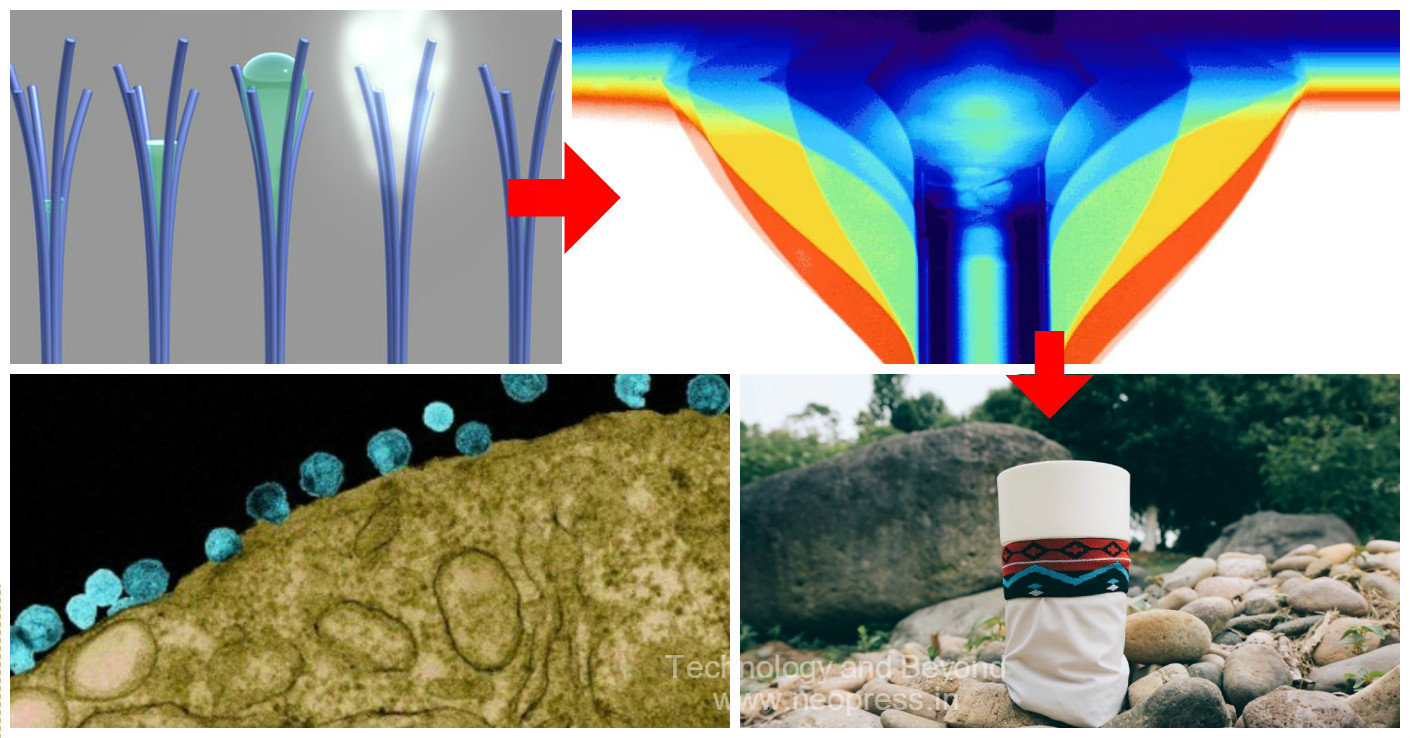
Scientists made accidental discovery of nanorods that harvest water from the air

Unbelievable scientific discoveries never fail to enthrall us. With each passing day we find ourselves standing with our jaws dropped looking at how many researchers stumble onto things that haven’t even been looking for while experimenting to find newer inventions. One such discovery is the new nanorods that have the potential to harvest water from air.

These carbon-rich microscopic, inadvertently produced rods absorb and release water in a different way to all kinds of material that we are aware about. They can absorb water at low humidity levels and later on oust it as the level increases to 50-80 percent while other resources just continue to take in the excessive liquid from the air.

Gizmag’s Michael Irving emphasizes that these nanorods can ultimately be used in array of applications, starting from low-energy water-harvesting structures to possible even in the fabrics that can absorb sweat from the body.

“Our unusual material possesses qualities a bit like sponge; it squeezes itself almost halfway before it’ completely saturates itself with water,” explained David Lao from the Pacific Northwest National Laboratory (PNNL), one of the material’s Inventors.

Here’s how this happy accident took place, the team was intending to produce magnetic nanowires, but instead ended up creating these carbon nanorods in the lab. A closer inspection detailed how these nanorods apparently lost weight as the humidity in the surrounding environment rose.

Initially, the Researchers doubted their instrument to be malfunctioning but to their surprise, they realized that it was the recap of a very similar phenomenon that was considered in 1990s.

The team then started going through papers from year 2012 and 2013 that referred to the theories of how water can automatically vaporize if it’s surrounded by hydrophobic components/ materials or kept in an area not more than 1.5 nanometres wide.

The team reports that water apparently condenses and forms a bridge between the nanorods, this process is called capillary condensation. This water between the rods causes tension on the surface and pulls adjacent rods, placing them very near to each other. When this gap gets as close as 1.5 nanometres, the water starts to evaporate.

The PNNL team calls it an impending paradigm shift in the process of purification of water and also talks about their futuristic thought of how someday the sheets of these nanorods may harvest water from even the desert air. Presently a mere 10-20 percent of the material is seen to spill out water and scientists are working to increase this number considerably high.

“We’ve started to imagine the many ways it could be harnessed so as to better the quality of life that we live, now that we’ve moved on the preliminary blow of this unexpected behavior of the material”, said David Heldebrant, team engineer. “But before we can put these nanorods to use, we need to figure out a way to control them and perfect their shape and size.”

As a technology lover you may like our daily important technology news series. It’s a playlist and you can retrieve the total day-wise videos. Please consider subscribing our YouTube channel:

Author: Technology and Beyond

Tagged : /

The amazing world of food scanners. We now know what’s in our plate for sure!

A question by a concerned mother whose kid was suffering from a nutrition deficiency led me to wonder if there could be any gadget in this high-tech world that could scan our plates and tell us what all nutrients we were hogging on. We also wonder what we’d do if we knew the food much closely that’s on our plate. During a research study, one of these respondents being an emotional mother of an eight year old girl left a question asking how technology will advance when it comes to food scanning.

She explained how difficult it was to find the right food for her daughter who was suffering from various food allergies at such a tender age. She had to ensure that it didn’t contain anything her daughter was allergic to by diligently checking the labels on food product and had to cook very deliberately. She was pregnant when she wrote the comment, and was extremely worried. She asked if there were any labeling advances or technological devices that could make her life a bit easier and she also asked if it was possible to scan food to determine the ingredients.

The Problem with our Food

Concluding from the statistics of Europe, around 220 to 250 million people suffer from various food allergies across the globe. In the US one out of three people possesses one kind of food allergy or modifies the family meals in fear of a susceptible food allergy in the family. 5% of children and 4% of teens and adults have clinically proven food allergy.

About 35 % of adults are overweight, with about half a billion being obese possessing a body mass index of more than 30, globally. The International Diabetes Federation report that half a billion people may suffer from diabetes by 2035; and half of them may remain undiagnosed. Obesity, diabetes and food allergies are just a few of the most prominent examples where awareness of the calorie intake and ingredients are crucial in managing medical issues day after day.

According to the European Commission launched  €1 million prize challenge to develop a mobile, affordable, non–invasive solution that will enable users to measure, calculate and analyze their food intake. This contest shall run until the end on 2016. Many other such initiatives are required to be brought up to help people get over the problems of diabetes or obesity.

We really have no Idea what we eat

We can only presume. Almost all the ingredients are come enlisted on the product’s label, but at the end every plate and every meal is different. One way to solve this would be to have a list of exact and correct ingredients and the number of calories a meal contains, also a list of all the toxins and allergens it contains. Not just the kind of food we eat but the actual meal that is on our plates with specific amount. Many companies have come up with ways to address this problem.

In 2013, Canadian TellSpec carried out a successful crowd funding campaign that managed to raise more than $380,000. It aimed to develop a mobile food scanner that informs the users just the specific ingredients and macronutrients on their plates. Spectroscopy is a technique that enables us analyze as to how a matter interacts with wavelengths of light that differ from each other, it can also very quickly determine the chemical compounds contained in a given food. Isabel Hoffmann, Founder of the company, had a similar story with that of the mother who commented on my blog. Hoffman’s daughter got sick after they moved to a new flat in Toronto. A few months later she was diagnosed to have developed various food allergies.

This drove Hoffman to recruit a team of designers to develop device that enabled the user to know what was in a definite food. They sent the primary versions of the device to beta testers in mid 2015 and now after gaining much popularity, they have promised to launch the device in 2016. Many critics have asked for the availability of the device and questioned its capabilities.

width="560" height="314" allowfullscreen="allowfullscreen">

The Promise and problems of Food Scanners

People with optical engineering backgrounds in Israel found SCiO and raised ove $2.7million in 2014 on Kickstarter. It used technology similar to that of TellSPec’s but was designed not only the molecular contents of medicines and food but also of plants. An optical sensor to detect the reflected light was illuminated by it on an object and it further analyzed the cloud based data using an algorithm. The user’s smartphone would display the molecular make up and contents of the food within seconds, as promised by the Company. The launch was scheduled to be in 2015 but it came as a major disappointment to backers a it hasn’t been shipped yet. Let alone the delay, critics also criticized the makers of both SCiO and Tell Space for overstating their inventions.

There were two major problems that was faced, one being the size as the device should not be bigger than a hand-held for the buyers which implied that engineers were asked to bargain the accuracy and sensitivity just to ensure that the size was not bigger than a mobile phone. The second issue was of the algorithm as SCiO used to operate with a cloud-based data by sending the specifics of the food – whether it is solid or in liquid form, or if it is a vegetable- to the cloud and then displaying the calculation on the device.

There aren’t many promising devices that are hand–held food scanners other than these on the horizon. It is a greater challenge to figure out what we would do with the large amount of information that any of these devices generate if and whenever they come into existence.

Next Page For More

Tagged : /

Low cost bio-foam purifies dirty water into drinkable water. A perfect solution for rural areas!

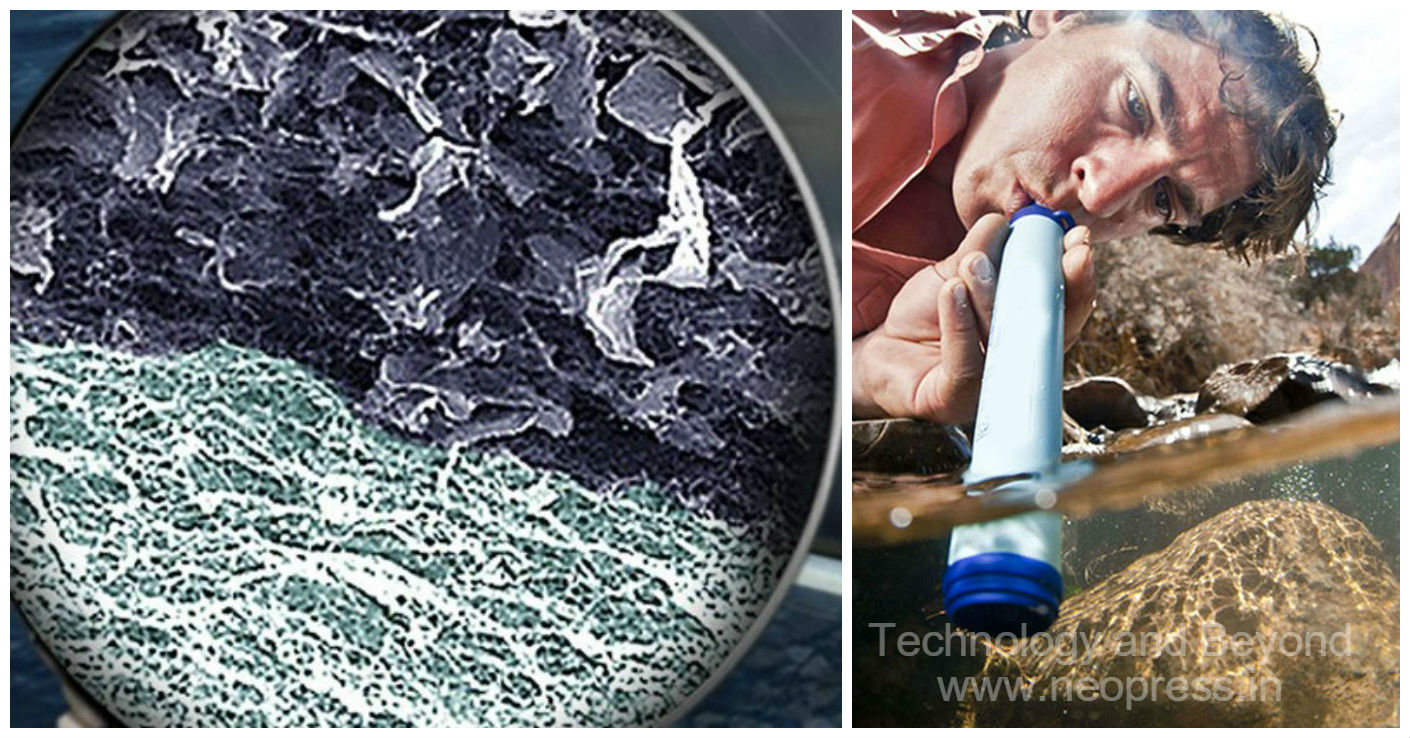
Engineers at Washington University have figured out a way to turn dirty water into drinkable water by using graphene oxide sheets.

This new approach chains graphene oxide and bacteria-produced cellulose to form one bi-layered biofoam, as detailed in their paper published in Advanced Materials.

“The process is extremely simple,” said Srikanth Singamaneni, an Associate Professor of Mechanical Engineering and material science.

 “The beauty of this is that the entire network of nanoscale cellulose fiber produced by bacteria has outstanding ability to move the water to the evaporative surface from bulk along with minimizing the heat, and the whole thing is produced in one go.”

The cellulose at the bottom of the biofoam acts like a sponge and soak water up to the graphene oxide. On rapid evaporation, the clean water is collected from the top of the sheet.

Fascinatingly, the process in which the biofoam is formed, functions in the same way as when an oyster makes a pearl. The bacteria develops layers of nanocellulose fibers, ehich is then embedded by the graphene oxide flakes.

The major benefit of this biofoam is that it’s extremely light and inexpensive to produce.

“Cellulose can be produced on a huge scale,” Singamaneni reports, “and graphene oxide is tremendously low-priced—people can produce loads, truly loads, of it. Both materials going into this are highly accessible. So one can easily produce huge sheets of the biofoam.”

Researchers have found, the properties of this synthesized foam material to have features that enhance solar energy harvesting, making it more effective at putting an end to the bacteria and contaminants in the water.

“We hope that for countries where there is abundant sunlight, such as India, you’ll be able to take some dirty water, evaporate it, and collect some fresh water, using our material,” Singamaneni states.

As a technology lover you may like our daily important technology news series. It’s a playlist and you can retrieve the total day-wise videos. Please consider subscribing our YouTube channel:

Author: Technology and Beyond

Tagged : /

Cloaking Technology: How it works and Why it is a promising technology!

atravesar las paredes 11

During April 2151, humanity encountered the first cloaking incident when Suliban used their cloaking device to approach Startship Enterprise and managed to inflict a close fight. Yes, you heard it right, we are talking about Star Trek stories. Suliban’s cloaking device was a particle generator which absorbs all the light making it invisible. In the scenario of dark space it may be possible but when it comes to its application on earth there is a major practical difficulty. The cloaking material may absorb the light but in turn, it will create a black patch and will obstruct  the background. That serves no purpose because the object can be identified by its dark patch.

Invisibility_Cloak_610

The major idea of invisibility came into forth when the idea of light bending the across the object came into picture. The whole idea was to pass the light across the periphery of the object and then clubbing the light together. This helps in seeing the background behind the object thus making the object completely invisible.

chamikawpblogspotcom2-141

Scientists has successfully tried this with a diamond-shaped cloak allowing the edges to match up. By this process, they were successful in bending light around their 1 centimeter high, 7.5 centimeter wide cylinder without reflections. When it comes to replicating such things with bigger objects it becomes almost achievable, let alone making a complete starship invisible.

flatinvisotiles2 cloak

invisble1

In the picture above, the object wearing the cloak appears invisible because the background visual is being displayed onto the retro-reflective material. At the same time, all other light rays are allowed to reach the user’s eye, making the person in the front completely invisible. [image : Howstuffworks]

Bending of light across the periphery of the object sounds simple but difficult to achieve. Scientists have come out with various meta-material structure with intricate slits and cuts across the periphery of the object to channelize the light streams in proper direction and then clubbing the same behind the object. Manufacturing such accurate and intricate meta-material structure is always costly and challenging and sometimes almost impossible. On top of that, It is easier to hide objects from other waves like heat, magnetic fields or acoustics. Scientists are not that successful replicating these incidents with Light waves having longer wavelengths

Wasser-Tarnkappe / Sonar

Invisibility-cloak-tsunami-stopper

Advent of 3D printer solves this problem and you can print such intricate structure accurately.  You will not be surprised if you hear scientists are cloaking bigger materials with the 3D printed meta-materials.

3d printed invisibility cloak

Recently Scientists are successful in creating a cloak in entirely different way. This is done by creating a time hole/ time gap in the light stream. It is more like fast forwarding the front of the wavelength and pulling back the trail of the wavelength. This is even effective in cloaking a total incident. it can be explained like this:

The rays emanating from the slits combine on the other side to create an intricate interference pattern of peaks and troughs. Talbot discovered that this pattern repeats at regular intervals, creating what is now known as a Talbot carpet. There is also a temporal version of this effect in which you manipulate light over time to generate regular periods with zero light intensity, says Lukens. Data can be then be hidden in these holes in time. [Nature]

Invisible Time

In simplistic term if you imagine the bus-scene in the movie Speed in which the good guys use a short loop of camera footage of all the passengers sitting still to fool the bad guy into thinking that everything is going his way. During that time, the hero was helping everyone to escape. The invisibility cloak with time gap will be able to do that when it will be available in scaled up version.

s3

  • Coming to the usage of cloaking technology, it will have various utilities in the form of:
  • Cloaking various vehicles during  war or to hide the supply chain in hostile location
  • Commando team can observe the hostage and the extremists beyond the wall in front and drive the operation accordingly
  • In medical field, it will be extremely useful for surgeons to see the actual part of the body/ tissue beyond the tools and/or equipment that comes in front
  • The time gap cloak will be extremely useful to hide events in future. In near future, we will see its practical application in secure data transmission by hiding the data partially or completely in time gap.

Possibilities are endless and endless are the practical challenges. But in all probability we have to wait a while before we see a flawless and practical demonstration of invisibility cloak.

As a technology lover you may like our daily important technology news series. It’s a playlist and you can retrieve the total day-wise videos. Please consider subscribing our YouTube channel:

Author: Technology and Beyond

Tagged : /
Verified by ExactMetrics