Guess which countries are the top three Smartphone Hubs? The ranking will surprise you!

In terms of smartphone connections, India has globally overtaken US and has claimed the second place, right after China. According to figures provided by global telecom body GSMA, smartphone connections in India at the end of the first half of this year (ending June 2016) stood at 275 million, higher than 259 million connections in the US.

More and more Indians are logging on the internet using their mobiles, aided by availability of low-priced smartphones — a significant number of them assembled locally and sold for as low as Rs 3,000 — and rapid expansion of 3G and 4G networks. China, however, leads by a huge margin with overall smartphone connections at 910 million.

GSMA said mobile operators are investing heavily to improve network coverage, and this should see 3G being available to 90% of the population by 2020, while 4G to 70%, the latter registering a 14-fold increase from now.

Total mobile users in India (some may carry multiple SIM cards) stood at 616 million at the end of June, GSMA said. “Almost half of the country’s population now subscribes to a mobile service, indicating the significant growth potential in the coming years, particularly from the rural and under-penetrated segments.”

In its ‘India Mobile Economy’ report, GSMA estimates that 330 million new mobile users will be added by 2020. This would push up the mobile phone penetration base across the population to 68% against 47% at the end of 2015.

Alasdair Grant, the head of Asia for GSMA, told TOI that the growth in smartphone connections will continue to remain strong in coming years as 3G and 4G networks spread rapidly across the country. The growth will be fuelled further with the entry of new operators such as Reliance Jio. He also added that the 4G connection base is forecast to grow from 3 million at the end of 2015 to 280 million by 2020. “Mobile broadband (3G and 4G) will account for nearly 50% of total connections in India by then.”

The report said that data traffic will register a CAGR of 63% between 2015 and 2020, registering a 12-fold increase over the present usage. This will be fuelled by social networking and online communication. Mobile phones will also become a platform to offer a variety of government schemes and other services such as financial access, information dissemination, and productivity enhancement.

Most of the mobile manufacturers have also read the trend as the majority of new device launches by them are only 3G and 4G compatible as 2G devices — which are mainly feature phones — are being discontinued.

As a technology lover you may like our daily important technology news series. It’s a playlist and you can retrieve the total day-wise videos. Please consider subscribing our YouTube channel:

Author: Technology and Beyond
Tagged : /

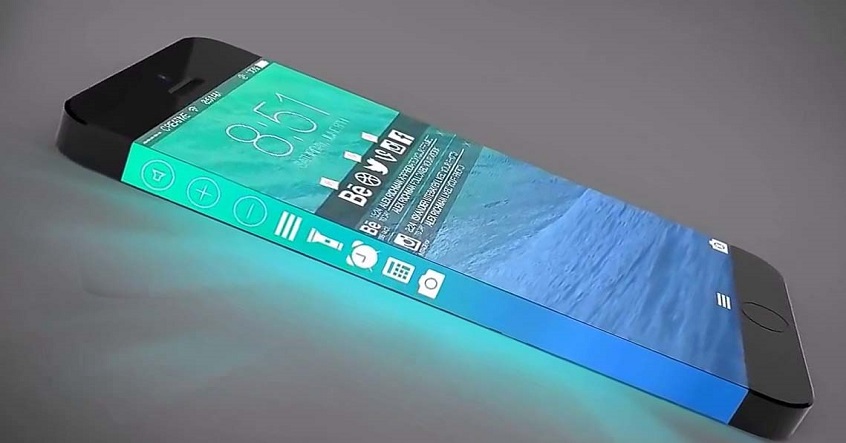
Summing Up Everything We Know So Far About iPhone 8

The apple lineup will be celebrating ten years this 2017 (the first iPhone was launched in 2007) and Apple is expected to bring a radical new design for it.

Apple iPhone 7 is out, and its larger sibling the iPhone 7 Plus remains out of stock with Apple failing to keep up with its high demand. Even while the iPhone 7 and iPhone 7 were modest upgrades to the iPhone 6S, the 2017 iPhone 8 is expected to be a significant upgrade to the (then 10 years old) Apple lineup.

According to Ming-Chi Kuo of KGI securities, the 2017 iPhone will not be featuring an aluminium back – instead the phone will come with a glass back (reportedly developed by Biel and Lens). Apple has used the glass back design in the past, with the iPhone 4S being the last phone to feature it before the company moved on to aluminium designs.

Popularity of the Jet Black variant of the iPhone 7 is being seen as the reason for the shift.

The new features seen in the iPhone 7, will probably be incorporated. But, it had very few redeeming features to the company’s old design (first seen on the iPhone 6 in 2014), which includes a ‘haptic’ home button (replacing the physical button) and a change in the antenna band location on the back. The iPhone 7 Plus received the biggest upgrade, with the addition of a dual-rear camera array (wide angle lens + telephoto lens).

A new report from Nikkei has shared a statement from a Sharp executive (Sharp is an Apple supplier) who said that the 2017 iPhone will be adopting an OLED display. Another Nekkei report has said that there will be an additional screen size for the iPhone 8 – a 5-inch version, and might also feature a 2.5D glass.

As a technology lover you may like our daily important technology news series. It’s a playlist and you can retrieve the total day-wise videos. Please consider subscribing our YouTube channel:

Author: Technology Vista

Tagged : /

How much time will it take for us to finish our wildlife? A horrific account of our irresponsible behavior!

“For the first time since the demise of the dinosaurs 65 million years ago, we face a global mass extinction of wildlife. We ignore the decline of other species at our peril – for they are the barometer that reveals our impact on the world that sustains us. Humanity’s misuse of natural resources is threatening habitats, pushing irreplaceable species to the brink and threatening the stability of our climate,” added Mike Barrett, Director of Science and Policy at WWF-UK.

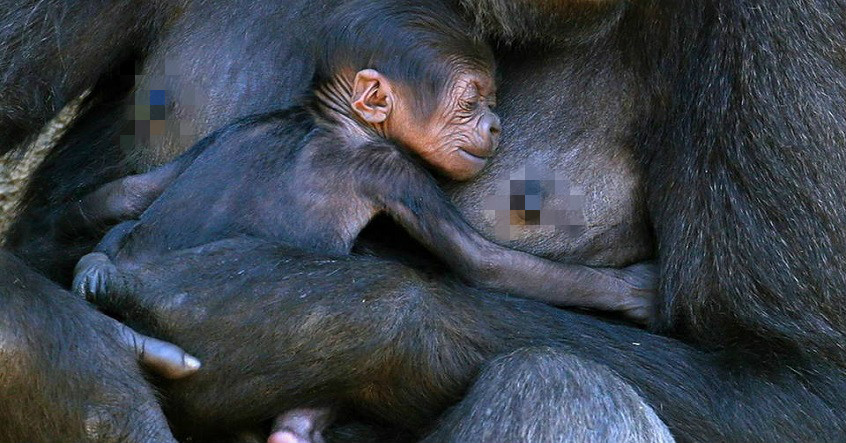
This is the anthropocene, the era where human activity has overwhelmingly and irreversibly altered the geology and ecosystems of our planet. And along with changing the atmosphere, earth, seas, and forests, this brave new world has a lot less wild animals.

The new “Living Planet Report” by the World Wildlife Fund (WWF) and Zoological Society of London (ZSL) is the world’s most comprehensive survey of the health of our planet ever compiled and it reveals that global populations of fish, birds, mammals, amphibians, and reptiles are on course to decline by 67 percent by 2020, compared to 1970 levels. Wildlife populations have already declined by 58 percent between 1970 and 2012. The figures and projections were based on the data trends of about 14,200 populations of 3,700 different vertebrate species across the globe.

“These are declines – they are not yet extinctions – and this should be a wake-up call to marshal efforts to promote the recovery of these populations,” Professor Ken Norris, Director of Science at ZSL, said in a statement.

The most prevalent threat to wildlife is loss of habitat. Specifically, the WWF say much of the destruction and degradation of habitats is caused by unsustainable agriculture, industrial infrastructure, logging, mining, energy production, and commercial development. Other key factors include overexploitation, poaching, pollution, invasive species, and climate change.

In case you’re thinking we might as well give up before we start, bear in mind that the past few months has seen the Paris Climate Agreement, where 195 countries agreed together to limit global carbon emissions, and the CITES Wildlife Summit, which successfully increased levels of protection of sharks, rays, pangolins, African grey parrots, psychedelic rock geckos, and many other endangered species. If governments, industry, and citizens act now and continue these efforts, the planet’s fate could be a lot less bleak.

As a technology lover you may like our daily important technology news series. It’s a playlist and you can retrieve the total day-wise videos. Please consider subscribing our YouTube channel:

Author: Technology and Beyond
Tagged : /
Verified by ExactMetrics