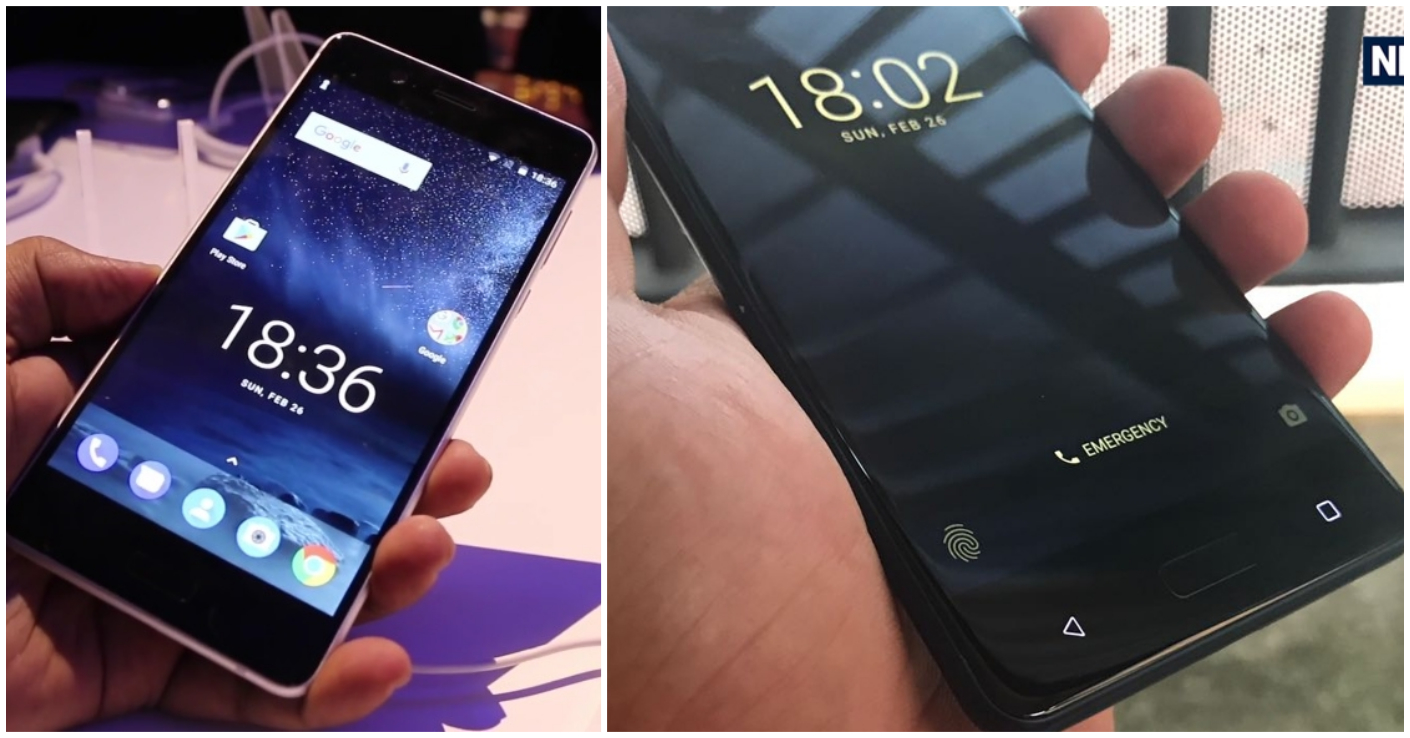
The new Nokia Android smartphone phones are manufactured by Foxconn and while Nokia 3 started selling in India a few weeks back, the Finnish startup has announced when the mid-range phone is expected.
It seems that given the overwhelming demand for Nokia 3 across all markets, HMD Global had focussed its manufacturing resources on this phone initially.
“We are humbled by the response to Nokia 3. Currently, we are ramping up our production for Nokia 3 on priority to meet the existing consumer demand. In the coming weeks, we will start production of Nokia 6 and Nokia 5 to get them ready for sales start by mid-August,” an HMD spokesperson said.
While the Nokia 6 pre-bookings will be on Amazon India, the Nokia 5 pre-bookings were announced for “select mobile retail outlets” across Delhi NCR, Mumbai, Bengaluru, Chennai, Chandigarh, Jaipur, Kolkata, Lucknow, Indore, Hyderabad, Pune, Ahmedabad and Kozhikode.
HMD Global has announced a network of over 400 distributors to support its new range of Nokia Android smartphones and feature phones. This network, HMD hopes, will help the new Nokia devices to be made available at more than 80,000 retail outlets across the country.
The Nokia 3, priced at Rs 9,499 has been a huge hit in India. The Nokia 5 and Nokia 6 are priced at Rs 14,999 and 12,899, respectively.
HMD Global announced the availability of Nokia 3, Nokia 5 and the Nokia 6 smartphones in India this June. While Nokia 3 went on sale June 16, the company had just announced pre-bookings for the Nokia 5 starting July 7 and Nokia 6 from July 14.
As a technology lover you may like our daily important technology news series. It’s a playlist and you can retrieve the total day-wise videos. Please consider subscribing our YouTube channel:
A handful of people advising Musk urged him to make small, cheap rockets that would bring the cost of getting something into orbit down to $5 million from the going rate of about $100 million. This was before SpaceX, and in the years that followed, Space Exploration Technologies Corp. did manage to lower launch prices drastically, but it stuck to making bigger spaceships instead of pursuing the radical approach that some of Musk’s advisers desired.
Two people who were formerly on Musk’s team have now emerged with their own rocket startup called Vector Space Systems. They have radical plans and then some. Vector’s goal is to make a $1.5 million rocket that can carry small satellites into orbit. It expects to conduct 100 launches per year—a figure that would match the annual capacity of the entire aerospace industry. To help meet this goal, Vector told Bloomberg that it raised $21 million from some of Silicon Valley’s largest venture capital firms, including Sequoia Capital, Shasta Ventures and Lightspeed Venture Partners.
“While Elon made space safe for investors, he did not fix the launch problem,” said Jim Cantrell, co-founder and chief executive officer of Vector. “We are making the rockets as simple as they can be made, building them like sausages and launching by the hundreds.”
One of the rocket builders Musk visited in Los Angeles during the early years of SpaceX was John Garvey, a former engineer at manufacturer McDonnell Douglas. Garvey had long fantasized about making very small, very cheap rockets and maintained a workshop to pursue his designs. He’s now chief technology officer at Vector, and Cantrell has helped find the money to turn his prototypes into a commercial business.
Cantrell is something of a connector in the aerospace world. He’s spent decades helping companies arrange deals for launches and assessing the business plans of startups. Most famously, Cantrell accompanied Musk on a handful of trips to Russia in a bid to negotiate the purchase of intercontinental ballistic missiles that Musk hoped to use as rockets. When those negotiations fell apart, Musk set off to start SpaceX in 2002 and build his own rockets.
While SpaceX’s workhorse is the Falcon 9 rocket, which stands 230 feet tall and can take 50,000 pounds of gear to low-Earth orbit. Typically, the Falcon 9 will carry a bus-sized satellite or ferry supplies to the International Space Station for about $60 million a pop—about a fifth of what its rival United Launch Alliance LLC charges, Vector, though, is betting on the coming wave of smaller, cheaper satellites known as CubeSats to be the core of its business.
These devices are about the size of a shoebox and have just started becoming popular in recent years as improvements in electronics and software have made it possible to shrink satellites drastically. Planet Labs Inc., a startup in San Francisco, is the best-known CubeSat maker. It has a constellation of 160 satellites circling the Earth, taking daily pictures of the planet’s landmass. Other small satellite makers are rushing to market with machines that take pictures, perform communications and conduct experiments in zero gravity.
The top performers in the launch business, like SpaceX and Europe’s Arianespace SA, conduct about one liftoff per month. Both Rocket Lab and Vector want to ratchet up this cadence. “We think the market will be on the order of 400 to 500 launches a year,” said Cantrell. “There is room for four or five launch providers.”
Several rocket-launch companies have appeared in the U.S. and overseas to serve as ferries for small satellites. The most successful to date is Rocket Lab, which just completed its first test launch from New Zealand. Its rockets can carry more weight than Vector’s and cost $5 million per flight.
Vector, which started operations 18 months ago, has been testing early versions of its rockets in the Mojave Desert, although it has not yet tried to reach orbit. While Rocket Lab has a private spaceport, Vector will be looking to fly from government-run launch pads in Alaska, Florida and Georgia. “We will be able to launch in three to four hours from standing the rocket up, to fueling it, to gone,” said Cantrell.
About eight small satellites could fit inside of a Vector-R rocket and close to 30 could fit in the larger Vector-H rocket that is due to be built over the next 18 months, according to Cantrell. The company will have its next test flight in late July or early August and aims to be flying commercially by mid-2018.
The price per pound on the large rockets from SpaceX and others is still more economical. But it’s the flexibility of requesting a launch, almost like you’d order something on Amazon.com, that could end up being more attractive than pure cost.
As a technology lover you may like our daily important technology news series. It’s a playlist and you can retrieve the total day-wise videos. Please consider subscribing our YouTube channel:
Nokia 3, Nokia 5 and Nokia 6 release plans are out of the way and all we can think of is Nokia 8. Press renders of the smartphone have been outed, giving away the Nokia 8 design details with Carl Zeiss optics and dual camera setup. This leak comes a day after a report pegged July 31 as the launch date for the smartphone.
Considered the true Nokia flagship after the mid-range budget handsets unveiled so far, the Nokia 8 flagship’s blue colour variant is seen sporting a metal body and a vertical dual camera setup at the back. The lenses are Zeiss branded, making this the first smartphone to be leaked with this after the announcement of HMD Global and Zeiss partnership earlier this month. This press render has been posted by tipster extraordinaire Evan Blass (aka @evleaks).
Also leaked was the dual camera module separately showing two camera lenses, a flash at the bottom, and an extra hole presumed to be for laser autofocus. The Nokia 8 is tipped to run on Android 7.1 Nougat and sport a 5.3-inch QHD display. It is expected to be powered by the Snapdragon 835 processor.
There’s a Home Button in the front with hardware capacitive keys on either side for navigation. The volume and power keys both are seen situated on the right edge of the device, while the 3.5mm audio jack is seen sitting on the top edge. It is largely expected to be priced at EUR 589 (roughly Rs. 43,400) and at launch, will be available in four colour options – Blue, Steel, Gold/Blue, and Gold/Copper.
Nokia 8 may launch with 4GB RAM and 64GB storage initially, though the rumoured 6GB RAM and 8GB RAM variant may see the light of the day a little bit later. Two 13-megapixel rear lenses from Carl Zeiss are a possibility, and a 13-megapixel front camera is expected as well. The dimensions are tipped to be at 151.55×73.7mm.
As a technology lover you may like our daily important technology news series. It’s a playlist and you can retrieve the total day-wise videos. Please consider subscribing our YouTube channel:
For years Apple has released a redesigned iPhone one year before upgrading its components the year after, giving that model an “S” designation, just deviating from its proud tradition a bit last year with iPhone 7 which didn’t have a radically new design. But for the next two years, according to a new report from Nikkei, Apple may be planning to release three new iPhones in 2018.
All three of these new phones will have a kind of screen called OLED, which is a newer, superior technology with darker blacks and better power consumption.
Apple is expected to launch a premium handset later this year that’s being called the iPhone 8, for lack of a better term. This model is expected to get a full redesign without a home button, an OLED screen, and a price tag that may top $1000.
In 2018, the plan is that Apple will bring OLED screens to all three of its models. Apple has started to design those iPhones, according to Nikkei.
Apple will require tens of millions of OLED screens, which could cause other companies to miss out on the key component. Currently, Samsung Display is the only company making OLED screens for smartphones at scale, but other companies, including Foxconn’s Sharp, are ramping up production. There is a shortage of OLED screens.
What’s clear is that Apple is completely shifting its iPhone product lineup, focusing around the next generation screen, and by 2019, Apple’s iPhone lineup will have mostly OLED screens. Foxconn will assemble all of the redesigned iPhones this year, according to Nikkei.
As a technology lover you may like our daily important technology news series. It’s a playlist and you can retrieve the total day-wise videos. Please consider subscribing our YouTube channel:
Some experts believing the Red Planet could be in the midst of a colonisation process by 2030. Now, one of the necessities for life to be built and sustained on Mars will be power, which is why Nasa is working on nuclear fission reactors that could work on Earth’s next door neighbour.
Under this £11million project , NASA has already built the small 6’5” reactors which they will soon test on Earth. If all goes to plan, could be shipped off to Mars in the future.
Nasa has attempted to make nuclear reactors for space before. In the 1960s it was working on the Systems for Nuclear Auxiliary Power (SNAP) programme which developed the radioisotope thermoelectric generator (RTG) and is now used by the Curiosity Rover on Mars.
Lee Mason, a Nasa employee who works on power and energy storage technology development at Nasa’s Glenn Research Center, told Space.com: “It’ll be the first time that we operate a fission reactor that could be used in space since [the] 1960s SNAP programme.”
The reactors work by splitting uranium atoms in half which generate huge amounts of power – which will be needed to generate oxygen, light, heat, electricity and even water.
As a technology lover you may like our daily important technology news series. It’s a playlist and you can retrieve the total day-wise videos. Please consider subscribing our YouTube channel:
The Pixel and Pixel XL- the first handsets designed inside and out by Google and manufactured by HTC, were definitely not perfect. But they were both great high-end smartphones featuring terrific cameras, great build quality, and stock Android software that’s extremely popular among a lot of users.
Although, we hope Google will improve the issues of their generic design, high price tag, and lack of proper water resistance in its new release.
To begin with, So far, we haven’t heard any rumors regarding the release date of the Pixel 2 series, however, Google normally unveils its new devices in the fall.
How many products are they launching? It was initially rumored that Google would, just like last year, take the wraps off two Pixel devices. The smaller of the two is codenamed Walleye, while the XL variant goes under the Muskie moniker. We then heard reports that the company is also working on a third device, dubbed Taimen, which is expected to be even larger than the Pixel XL.
However, it looks like Google has changed its mind and will in fact only release two smartphones this year. According to a report by Android Police, the tech giant has decided to cancel the Muskie device. This means that only Walleye and Taimen will be announced, with the former being the successor to the Pixel, while the latter will be a larger version of the Pixel XL.
New rumors have now popped up online suggesting that the online search giant will actually be joining forces with LG, at least for the larger of the two devices.
Just like their predecessors, Walleye (Pixel 2) and Taimen (Pixel XL 2) will offer high-end specs. According to the latest rumors, the smaller of the two devices is expected to sport a 4.97-inch display with Full HD resolution. It will be powered by the latest Snapdragon 835 chipset and have 4GB of RAM. When it comes to storage, a 64GB version is mentioned, but we’ll likely see a larger option as well.
Pixel 2 is said to feature two front-facing stereo speakers, which is more than a welcome addition. Unfortunately, it will come at the expense of the 3.5 mm headphone jack. This means you’ll have to plug in your headphones with the help of an adapter that will likely come included in the box. Rumors also suggest that Google will not be following in the footsteps of LG, Huawei, OnePlus, and others in the camera department. This means that the Pixel 2 won’t have a dual-camera setup on the back.
The larger of the two devices, the Pixel XL 2, will be similar to its smaller brother in a lot of ways. It will be powered by the Snapdragon 835 chipset, have 4GB of RAM, and sport the same camera. It will also be waterproof, but it won’t have two speakers on the front due of a different design — more on that later. Rumors claim that it will have 128GB of storage, but just like with the Pixel 2, we’ll probably see at least one more additional storage option.
The Pixel XL 2 is also rumored to be water and dust resistant. It is expected to be either IP67 or IP68 rated, meaning it will survive being submerged in 1 to 1.5 meters of water for a period of 30 minutes. As a refresher, the current Pixel generation is only IP53 rated, which basically means it won’t die on you if it’s sprayed with water here and there, but definitely isn’t suitable for anything more than that.
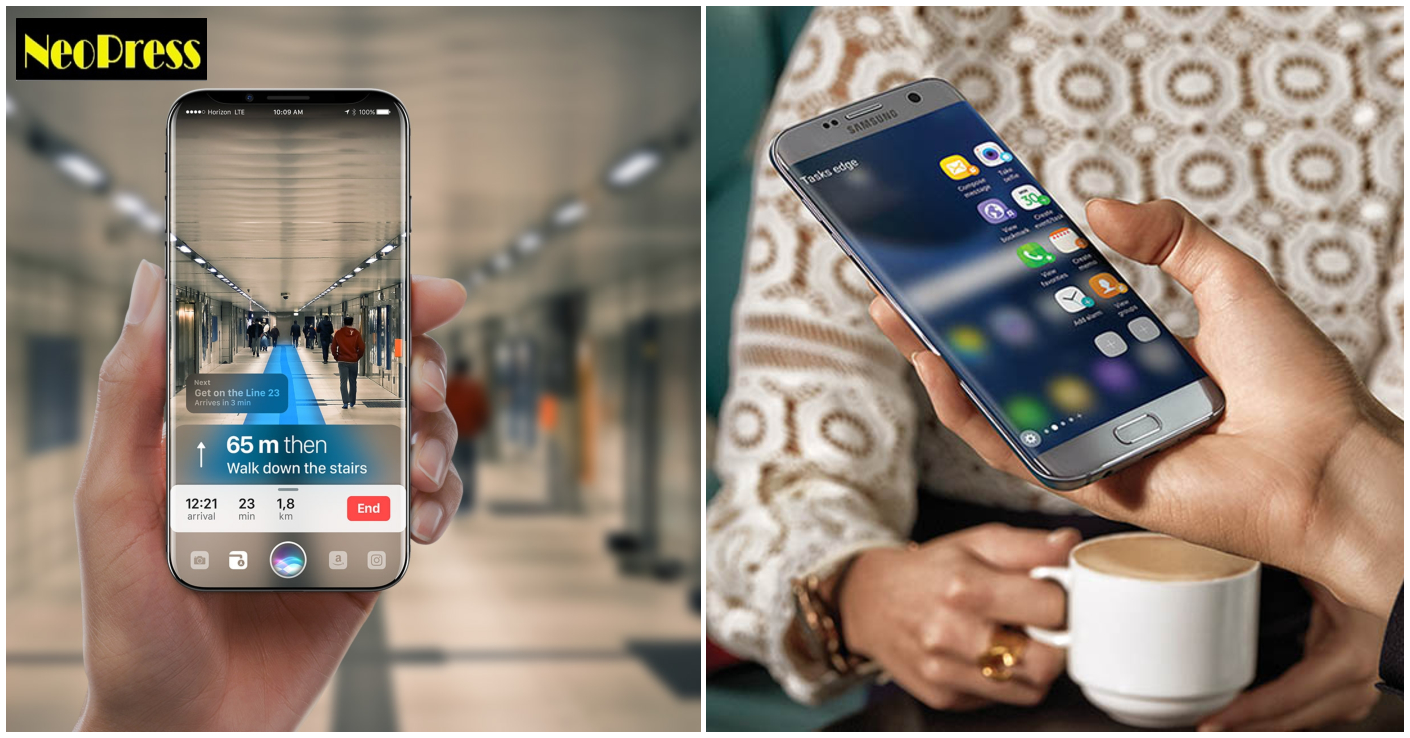
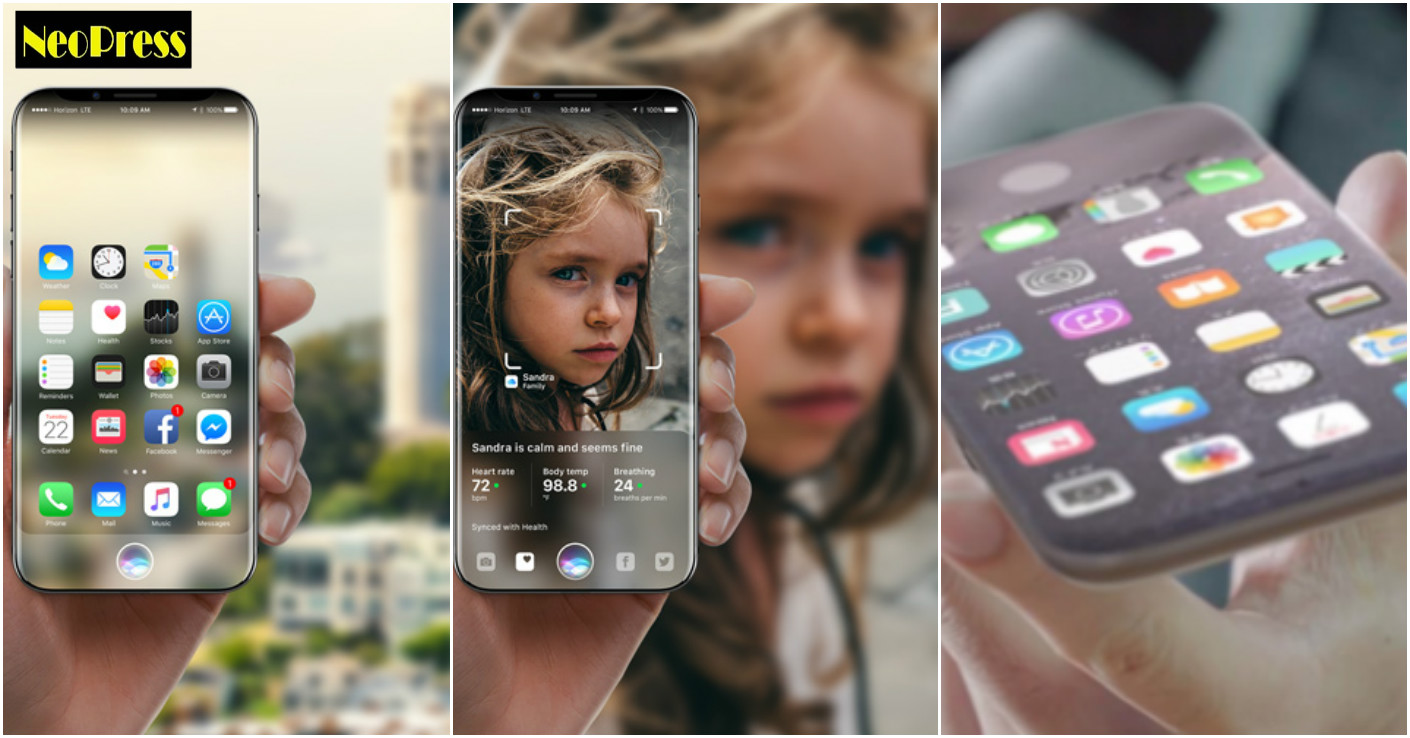
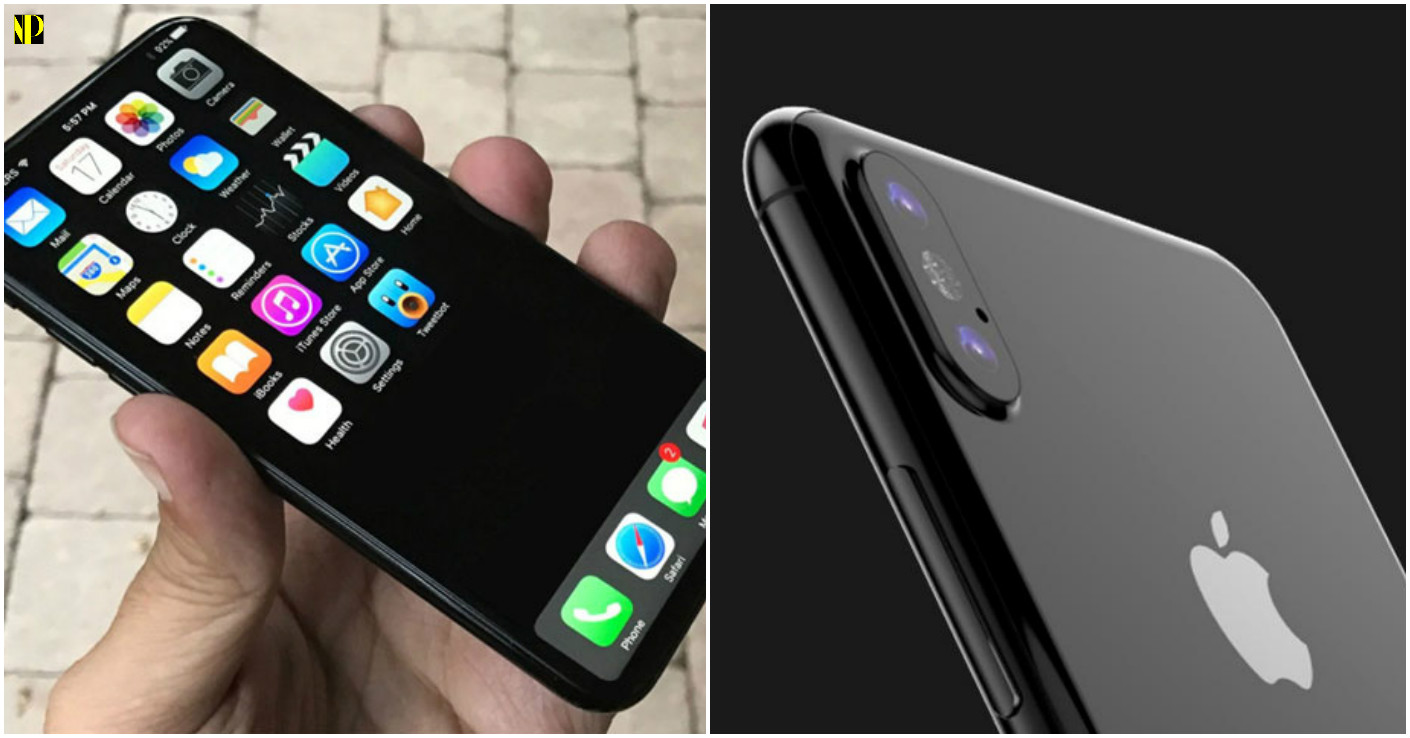
Having spent years iterating the original iPhone design, Apple has decided to shake things up on the 10th anniversary ‘iPhone 8’- two new (and highly credible) leaks have now confirmed. We have long time leak superstar Steve Hemmerstoffer (aka @OnLeaks) delivers the first. Having obtained detailed schematics “sourced directly from the factory in charge of building the new iPhone”, he worked with TigerMobiles to manufacturer the device using CNC manufacturing.
The highlight of the major redesign has to be its massive (high resolution) 5.8-inch display, with its potentially awkward top cutout for the front camera and sensors, and space for the secret iOS 11 Function Area.
The iPhone 8’s precise dimensions reveal it to be 43.5 x 71 x 7.5 mm (5.65 x 2.79 x 0.29 in). iPhone 7 was measured as 138.3 x 67.1 x 7.1 mm (5.44 x 2.64 x 0.28 in) and the iPhone 7 Plus as 158.2 x 77.9 x 7.3 mm (6.23 x 3.07 x 0.29 in). This is incredibly compact for a 5.8-inch device making it notably shorter, if slightly wider, than the 5.8-inch Galaxy S8 (148.9 x 68.1 x 8.0 mm). The only thing blotting the iPhone 8’s copybook is the large, protruding dual camera which increases the depth at this point to 9.1mm and will make the phone hard to use on a flat surface.
These changes are huge, to say the least. We see there is no rear fingerprint scanner (or physical home button) showing this crucial upgrade will indeed be integrated into the display. The additional space to keep that extra battery is gone too.
We also have the reassurances of prolific case maker and accurate smartphone leaker Olixar about the leaks. Having already correctly leaked the iPhone 7, Galaxy Note 7, Galaxy S8 and iPhone 8, its retail partner Mobile Fun goes public this time with a hands on video showing off the company’s official iPhone 8 case and screen protectors and comparing them to an iPhone 7.
Mobile Fun measures the Olixar cases and – you guessed it – at approximately 145 x 73 x 9mm they would perfectly fit around the iPhone 8 chassis Hemmerstoffer measured leaving roughly 1mm thick of protection on all sides. For years iPhones have been criticised for their large and top bottom bezels, but this will change dramatically with the iPhone 8. iPhone 7 almost fills Olixar’s iPhone 8 case, despite the latter’s 1.1-inch larger display.
The reality is Apple needs to manufacturer millions of units in the run up its release and this typically starts three months out so we can’t predict a U-turn happening this late in the game. Thus, no changes should be anticipated before Apple’s official iPhone 8 reveal (which historically has been seen) in September.
As a technology lover you may like our daily important technology news series. It’s a playlist and you can retrieve the total day-wise videos. Please consider subscribing our YouTube channel:
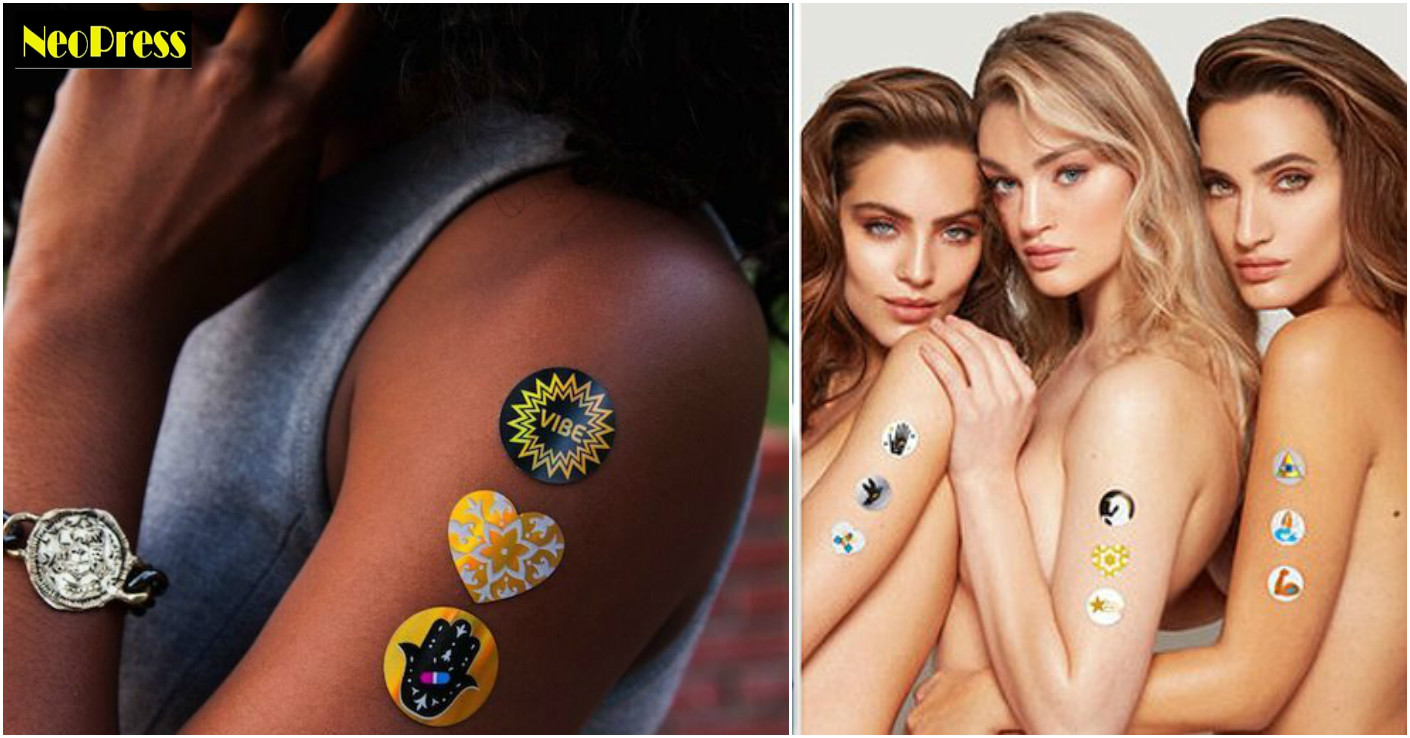
Now, Gwyneth Paltrow’s Goop has been praising these self healing stickers and Cameron Diaz’s lifestyle website has advertised these. But NASA’s former scientist publicly announces smart stickers embedded with a specific combination of bio-frequencies’ meant to treat imbalances and ‘re-balance the energy frequency’ of the body by Body Vibes to be a complete scam.
Goop explains on it’s site that ‘human bodies operate at an ideal energetic frequency, but everyday stresses and anxiety can throw off our internal balance, depleting our energy reserves and weakening our immune systems’.
The lifestyle website’s explanation continues: ‘Body Vibes stickers (made with the same conductive carbon material NASA uses to line space suits so they can monitor an astronaut’s vitals during wear) come pre-programmed to an ideal frequency, allowing them to target imbalances.’
According to Body Vibes’ site, the company uses ‘an exclusive material originally developed for NASA’, noting ‘this waterproof, carbon fiber compound can hold specific frequency charges that naturally stimulate the human body’s receptors’.
However, when Gizmodo contacted Mark Shelhamer, former chief scientist at NASA’s human research division, to ask about the claim, he said that NASA space suits are not lined with carbon material, and even if they were, it wouldn’t be for the purpose monitoring vital signs.
Goop is known for touting everything from placing jade eggs in the vagina to the ‘sex dust’ Gwyneth scoops in her morning smoothie. Unicorn Skin’, ‘Anti-Anxiety’, and ‘Self Love’ are just a few of individual therapies being offered by the brand. The latest pricey stickers cost $120 for a 24-pack.
Although the product was tested by a few Goop employees, it is never clearly stated whether or not the staffers felt that the brand had lived up to its claims. Instead, the article just warns that a some staffers ended up with marks on their skin after wearing the stickers for the prescribed three-day period.
Goop later pulled the NASA claim in its piece, explaining to Daily Mail Online in a statement that they’ve gone back to the company to inquire about the claim.
‘As we have always explained, advice and recommendations included on goop are not formal endorsements and the opinions expressed by the experts and companies we profile do not necessarily represent the views of goop.
‘Our content is meant to highlight unique products and offerings, find open-minded alternatives, and encourage conversation. We constantly strive to improve our site for our readers, and are continuing to improve our processes for evaluating the products and companies featured.
‘Based on the statement from NASA, we’ve gone back to the company to inquire about the claim and removed the claim from our site until we get additional verification.’
‘We apologize to NASA, Goop, our customers and our fans for this communication error. We never intended to mislead anyone,’ the company told Daily Mail Online in an email.
‘We have learned that our engineer was misinformed by a distributor about the material in question, which was purchased for its unique specifications. We regret not doing our due diligence before including the distributor’s information in the story of our product. However, the origins of the material do not anyway impact the efficacy of our product. Body Vibes remains committed to offering a holistic lifestyle tool and we stand by the quality and effectiveness of our product.’
Body Vibes co-founders Leslie Kritzer explained on the company’s site that she was first introduced to bio-frequency technology when her husband was given a ‘non-chemical frequency patch’ to manage the pain of his Rheumatoid Arthritis.
As a technology lover you may like our daily important technology news series. It’s a playlist and you can retrieve the total day-wise videos. Please consider subscribing our YouTube channel:
The iPhone 8 video leak was uploaded by tipster Benjamin Geskin who is also responsible for several render and live image leaks in the past. Two other leaks have hit the Internet at the same time, and one contradicts the video leak.
The video shows the iPhone 8 being held in a hand rotated front and back. The smartphone is seen sporting a glass back, a vertical dual camera setup, and a metal frame. The power button is a bit longer than before, and the frame also seems a bit wider and thicker than the current generation iPhone models. At the front, there is no Home Button seen, and the entire real estate appears to be occupied by the display.
More clarity would have been gained if the display was turned on, but sadly that was not the case.
As Apple has reportedly run into various hiccups regarding yield of various components, and the complete lack of iPhone or Apple logo, there is no certainty that this unit in the video would make the final cut.
Since no fingerprint sensor was visible, it can be presumed that if this leak is correct, Apple has indeed used the much rumoured display embedded Touch ID sensor. More renders have also appeared on Weibo showing the iPhone 8 in a different design format than Geskin’s. While the vertical dual camera setup remains, the display is not edge-to-edge, and the fingerprint scanner is seen at the back, refuting rumours of an embedded Touch ID. The leak shows the iPhone 8 in Pink, Rose Gold, and Black colour variants. Notably, Geskin tweeted saying that this leak is false, and the iPhone 8 won’t look like that. We hope he is right!
Now, another image shared by MobileExpose also shows the iPhone 8 in four colours – Silver, White, Black, and Gold. Only the back of the device is exposed here, and there’s no fingerprint sensor seen at the back, reducing the credibility of the Weibo image leak.
Interestingly, a report by The Bell, shared by The Investor, also indicates that there will be two new size variants introduced for the iPhone 9 – 5.28-inches and 6.46-inches. Geskin also reiterates in a tweet that the iPhone 8 will sport 3D face scanning, be powered by the 10nm process A11 Chip, run on iOS 11, and sport AR features.
Samsung will reportedly ship 180 million units of OLED panels next year. As for 2017, Apple is expected to introduce 4.7-inch iPhone 7s, 5.5-inch iPhone 7s Plus, and 5.8-inch iPhone 8. All the three devices are tipped to sport wireless charging, but OLED panels will only be used on the anniversary edition iPhone 8.
As a technology lover you may like our daily important technology news series. It’s a playlist and you can retrieve the total day-wise videos. Please consider subscribing our YouTube channel:
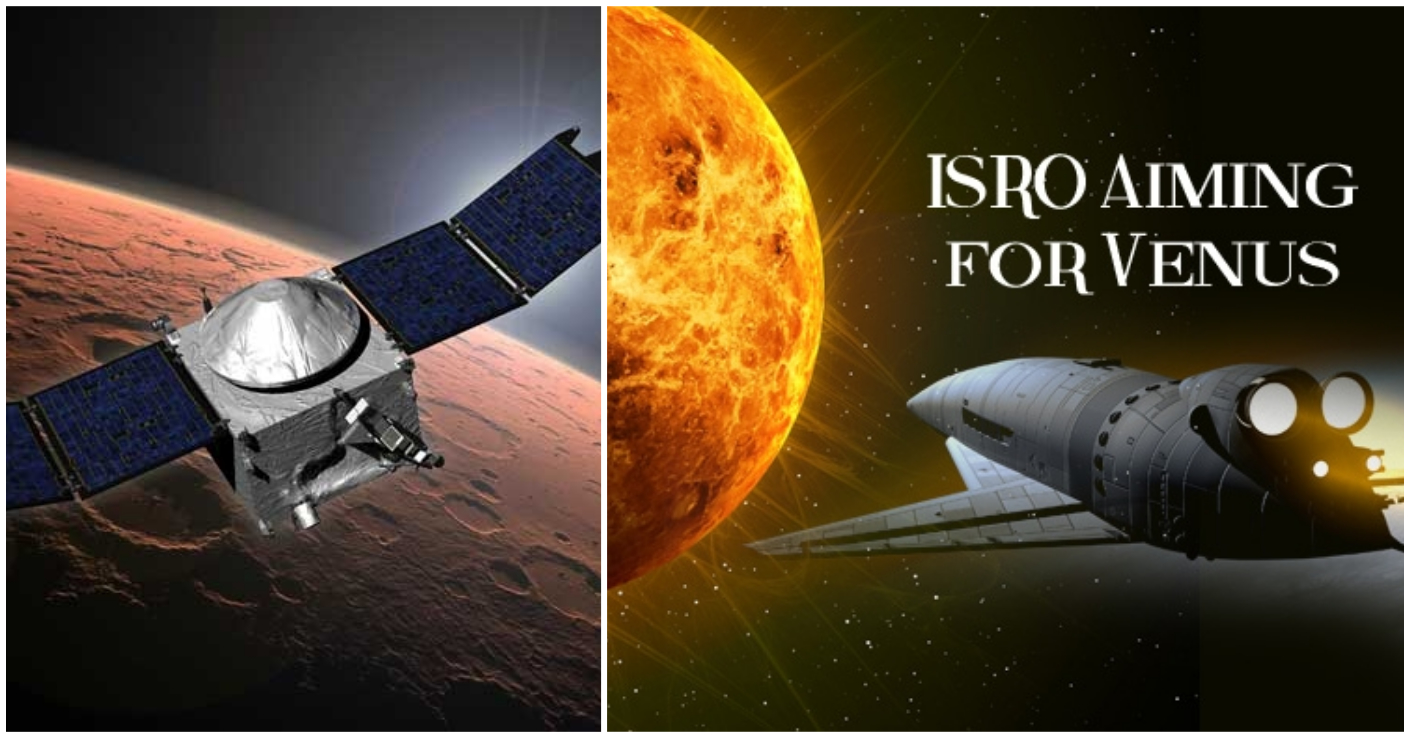
Indian Space Research Organisation (Isro) has created an electric propulsion system that increases the efficiency of satellites greatly. Known as electric propulsion (EP) system, this technology converts solar energy into electrical energy which, in turn, is used to change the velocity of a satellite in space. It reduces the use of chemical propellant in a launch vehicle.
Currently, a 2,000-kg Insat/Gsat-class communication satellite carries 800-1,000kg of chemical propellant. However, the new electric propulsion system reduces the usage of chemical propellant to just 100-200kg as the former serves as the back-up power for correcting the orbit of the spacecraft.
EP system was first used as a technology demonstrator in Gsat-9 or the South Asia Satellite launched on May 5, which was PM Narendra Modi’s brainchild. “The EP system basically converts solar energy into electrical energy and then kinetic energy by generating thrust that propels a satellite. The system just needs a solar panel and components for charging ions.” said a top source in Isro.
“With the new system, we can reduce the quantity of chemical propellant carried on a satellite and thus carry a heavier payload to space,” said Dr K Sivan, director of Thiruvananthapuram-based Vikram Sarabhai Space Centre.
This chemical fuel is required for transferring the communication satellite from the geosynchronous transfer orbit (where it is placed by a rocket) to the geostationary orbit (36,000km away from the earth). It also helps in orbit correction and maintaining a satellite on its path for its life duration of 10-12 years.
“The EP system basically converts solar energy into electrical energy and then kinetic energy by generating thrust that propels a satellite. The system just needs a solar panel and components for charging ions,” he said.
After the June 5 launch of its ‘Baahubali’ GSLV Mk III rocket, Isro has acquired the capability to launch a satellite of up to 4 tonnes into the geo orbit.
As a technology lover you may like our daily important technology news series. It’s a playlist and you can retrieve the total day-wise videos. Please consider subscribing our YouTube channel:
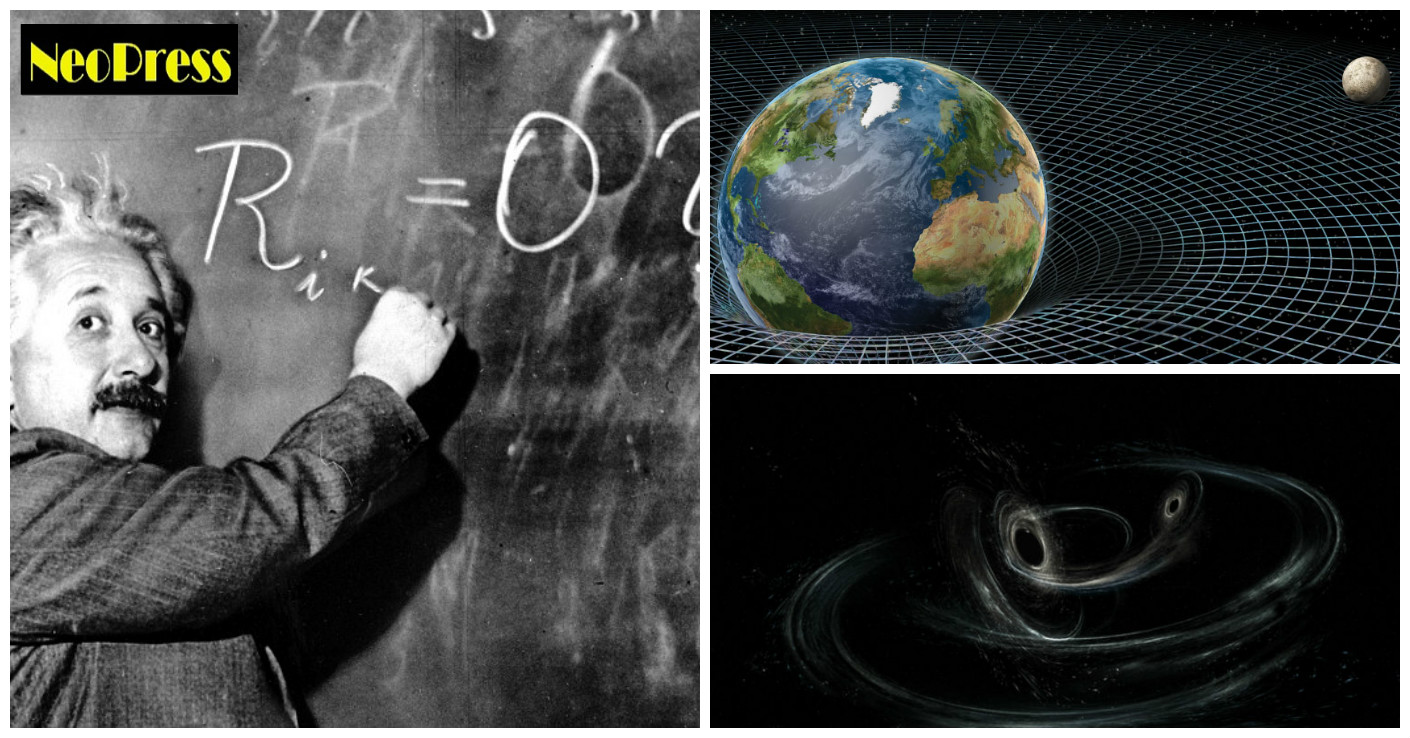
Einstein’s theory of general relativity relies on the four fundamental forces found in the universe. Or so we thought.
Gravity, electromagnetic and strong and weak nuclear forces— is what our understanding of the universe revolves around. Einstein reportedly suggested that these forces stop planets, molecules and atoms from tearing apart while also serving as building blocks for the physical rules of cosmos. Researchers, however have discovered a fifth force of nature that may pretty much overthrow everything we know about how the universe works, reported Daily Mail.
“Einstein’s theory describes (gravity) beautifully well, but there’s a lot of evidence showing the theory has holes,” said team member Professor Andrea Ghez, director of the University of California, Los Angeles, Galactic Centre Group. “The mere existence of supermassive black holes tells us that our current theories of how the universe works are inadequate to explain what a black hole is,” she added.
The team made use of detailed images of the centre of the Milky Way captured by the Keck Observatory in Hawaii.
“By watching the stars move over 20 years using very precise measurements taken from Keck Observatory data, you can see and put constraints on how gravity works.”
Her research goes on to suggest that the gravity existing right in the middle of the supermassive black hole is so strong, that it indicates the presence of a fifth force.
“If gravitation is driven by something other than Einstein’s theory of General Relativity, you’ll see small variations in the orbital paths of the stars.”
As a technology lover you may like our daily important technology news series. It’s a playlist and you can retrieve the total day-wise videos. Please consider subscribing our YouTube channel:
Even the smallest amount of antigen in donated blood can set off a dangerous immune response in the recipient. And that is why the right blood type is very important (and can be difficult) to find for transfusion. Now scientists have discovered that a particular type of enzyme can cut away antigens in blood types A and B, to make them more like Type O – considered the ‘universal’ blood type, because it’s the only type that can be donated to anyone without the risk of provoking a life-threatening immune response.
The team, from the University of British Columbia of Canada, worked with a family of enzymes called 98 glycoside hydrolase, extracted from a strain of Streptococcus pneumoniae. “A major limitation has always been the efficiency of the enzymes,” one of the team, Stephen Withers, said in a press release. “Impractically large amounts of enzyme were needed.”
Over many generations, they were able to engineer a super high-powered enzyme strain that can very effectively snip away blood antigens where previous generations of the enzyme struggled. Now we have an enzyme that’s 170 times more effective than its parent strain.
Getting the right type of blood when you need it is crucial, and it has to do with the different types of residue that can accumulate the surface of red blood cells. Both blood types A and B have this residue – A has an N-acetylgalactosamine residue, and B has a galactose residue – and Type AB has a mixture of both. Only Blood Type O is free from this residue, which means it can be received by any patient, no matter what type they’re carrying.
Withers and his team managed to create their ‘mutant’ enzyme strain using a technology called directed evolution, which allows them to insert many different types of mutations into the gene that codes for it. They progressively selected strains that are the best at snipping away the blood antigens.
While the current enzyme strain is not yet capable of removing 100 percent of the antigens from Blood Types A and B, which is where it needs to get if the researchers want to make any real use of it, the team is confident that they’ll get it there so they can try it out in clinical trials.
“The concept is not new, but until now we needed so much of the enzyme to make it work that it was impractical,” said Withers. “Now I’m confident that we can take this a whole lot further.”
As a technology lover you may like our daily important technology news series. It’s a playlist and you can retrieve the total day-wise videos. Please consider subscribing our YouTube channel:
Although, it’s been years that Apple is speculated to be working towards building autonomous cars, it has never really been confirmed by the company. Until now, that is.
“We’re focusing on autonomous systems,” said Apple Inc. Chief Executive Officer Tim Cook in a June 5 interview on Bloomberg Television that amounted to his most detailed comments yet on Apple’s automotive plans. “It’s a core technology that we view as very important.” He likened the effort to “the mother of all AI projects,” saying it’s “probably one of the most difficult AI projects to work on.”
Apple had initially been seeking to build its own car, before recalibrating those ambitions last year to prioritize the underlying technology for autonomous driving, Bloomberg News reported. The iPhone maker had hired more than 1,000 engineers to work on Project Titan, as the car team is known internally, after it started in 2014.
The iPhone maker secured a permit from the California Department of Motor Vehicles in April to test three self-driving sports-utility vehicles, photos of which emerged several weeks later. A half-dozen vehicles had been surreptitiously testing the autonomous technology on public roads in and around the San Francisco Bay area for at least a year, according to someone familiar with Project Titan. Apple spokesman Tom Neumayr declined to comment on how long the company has been conducting road tests.
Cook was bullish about the prospects for electric vehicles, a market which last week helped Tesla Inc. become the world’s fourth-biggest carmaker by market capitalization, even as it ranks well outside the top 10 by unit sales.
Apple invested $1 billion last year in Didi Chuxing, the biggest Chinese ride-hailing service. The announcement came soon after Mansfield took over Project Titan and set about cutting hundreds of engineers. Whereas Apple had initially been building its own car, Mansfield scrapped those plans in favor of building an autonomous driving system. The company will make a decision on whether to proceed with the push later this year.
As a technology lover you may like our daily important technology news series. It’s a playlist and you can retrieve the total day-wise videos. Please consider subscribing our YouTube channel:
An investigation by Greenpeace finding that the number of deaths caused by air pollution is only a fraction less than the number of smoking-related deaths. In 2014, the World Health Organization determined that out of the 20 global cities with the most air pollution, 13 are in India.
We need change, and it is hoped that by ridding India’s roads of petrol and diesel cars in the years ahead, the country will be able to reduce the harmful levels of air pollution that contribute to a staggering 1.2 million deaths per year. Every car sold in India from 2030 will be electric.
Efforts have been made by the country’s leaders to to improve air quality, with one example coming in January 2016 when New Delhi’s government mandated that men could only drive their cars on alternate days depending on whether their registration plate ended with an odd or even number (single women were permitted to drive every day).
While such interventions have enjoyed modest success, switching to a fleet of purely electric cars would have a much greater environmental impact. It’s been calculated that the gradual switch to electric vehicles across India would decrease carbon emissions by 37% by 2030.
India’s Energy Minister Piyush Goyal says the government will financially support the initiative for the first two or three years, but the production of electric vehicles will be “driven by demand and not subsidy” after that.
Asia has long been the main driver of future oil demand. China is also gearing up for a move away from gas-guzzling cars. Oil bosses claim it’s too early to tell what the implications of a move away from petrol and diesel cars will be.
As a technology lover you may like our daily important technology news series. It’s a playlist and you can retrieve the total day-wise videos. Please consider subscribing our YouTube channel:
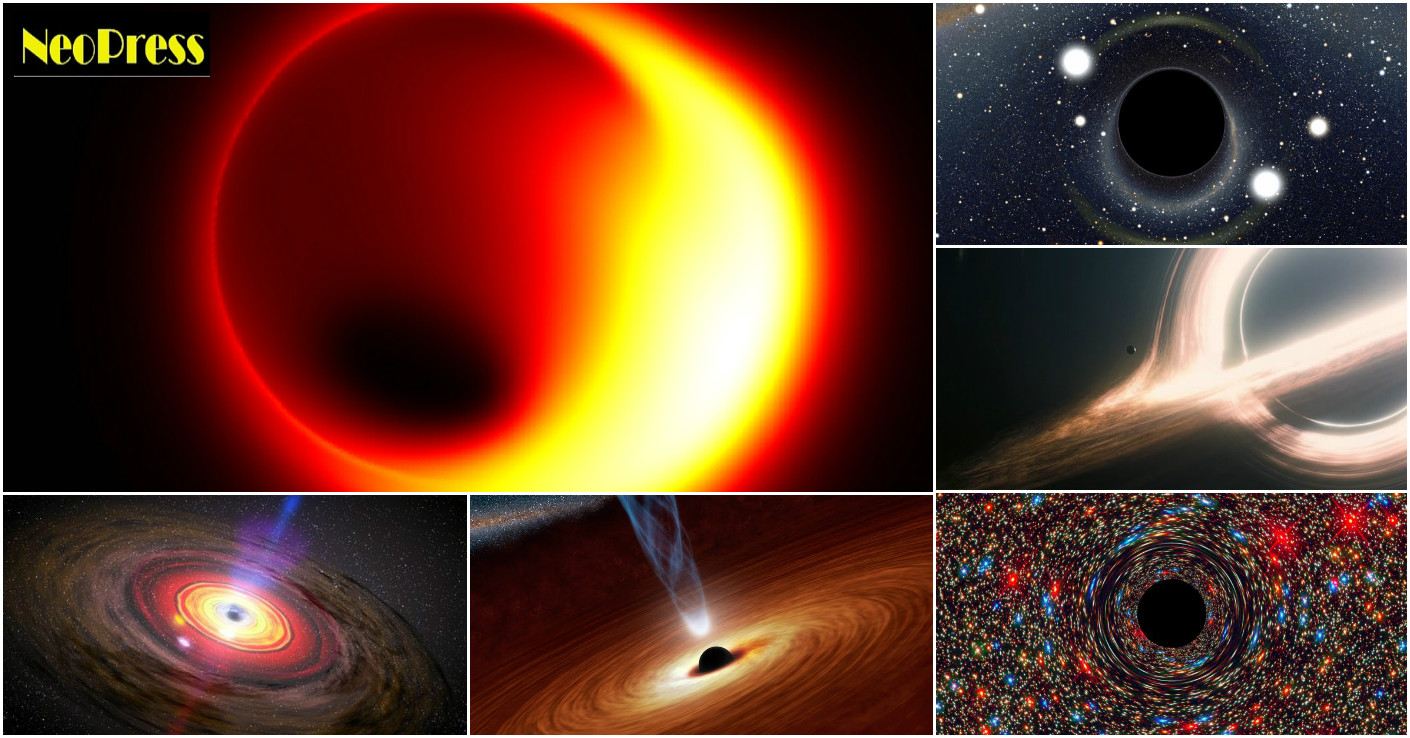
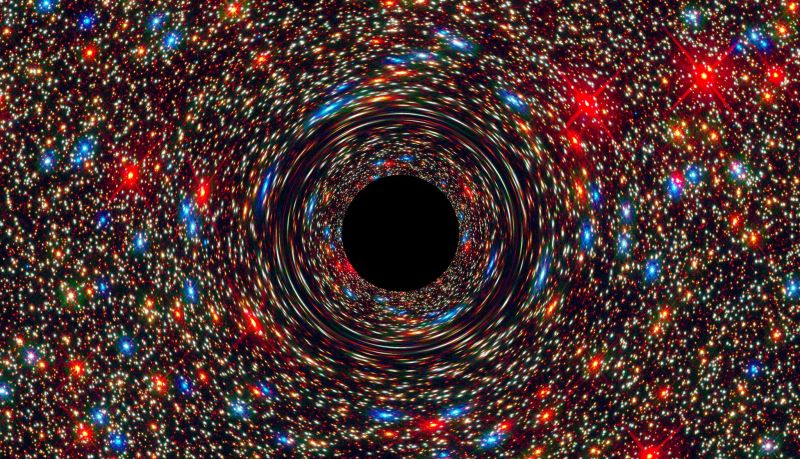
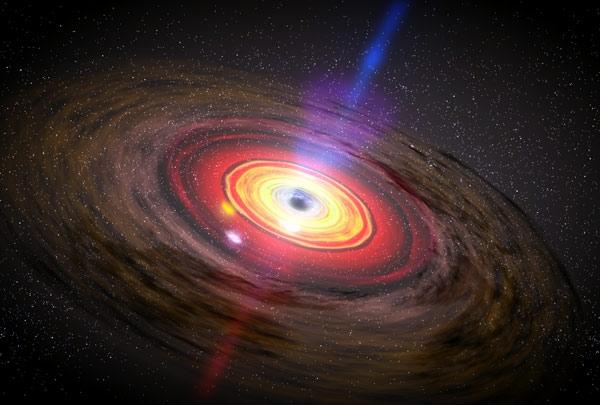
While a network of telescopes across the world- the Event Horizon Telescope, has successfully completed its highly-anticipated ten-day-long observation period, only people really keen to spot the difference and science geeks will recognize that the pictures taken are not really the black hole.
In other words, we will maybe soon see a real image of a black hole but, not for at least a few months. The pictures we are currently seeing are just beautiful artist renderings and simulations.
Yes, the Event Horizon Telescope successfully collected data for the past week and a half. All of the scopes in the network recorded the radio waves emanating from the center of the galaxy, where the super-massive black hole Sagittarius A* is believed to reside. Things went well, with the exception of some bad weather here and there.
But now, the scientists must take their data back to supercomputers, line up those light sources, and run special algorithms to get the final picture. As we previously reported, this will happen later this year at the earliest, but we may need another cycle of observation before we get our first true image of a black hole.
Meanwhile, we need not worry. Whatever the telescope has seen will be truly amazing!
We have photos like a computer-generated image of what a black hole might look like, and how its gravity might distort the light around it and an artist’s depiction of how matter might be ripped and radiate energy as it orbits the black hole’s high-gravity center.
As a technology lover you may like our daily important technology news series. It’s a playlist and you can retrieve the total day-wise videos. Please consider subscribing our YouTube channel: