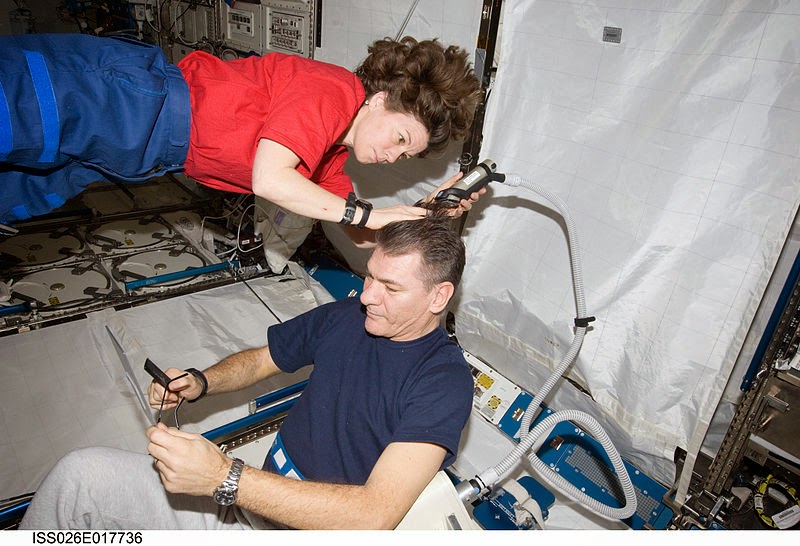
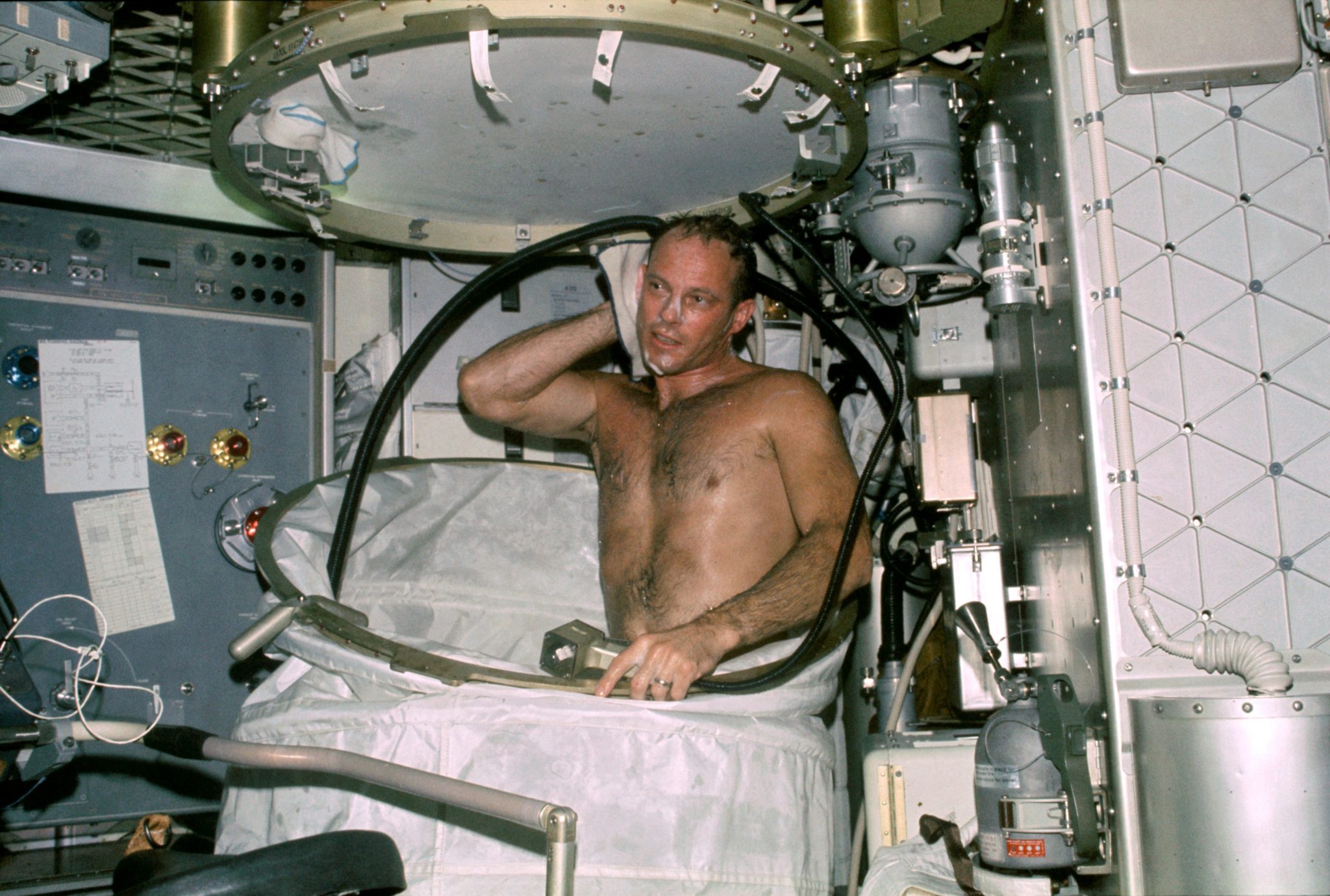
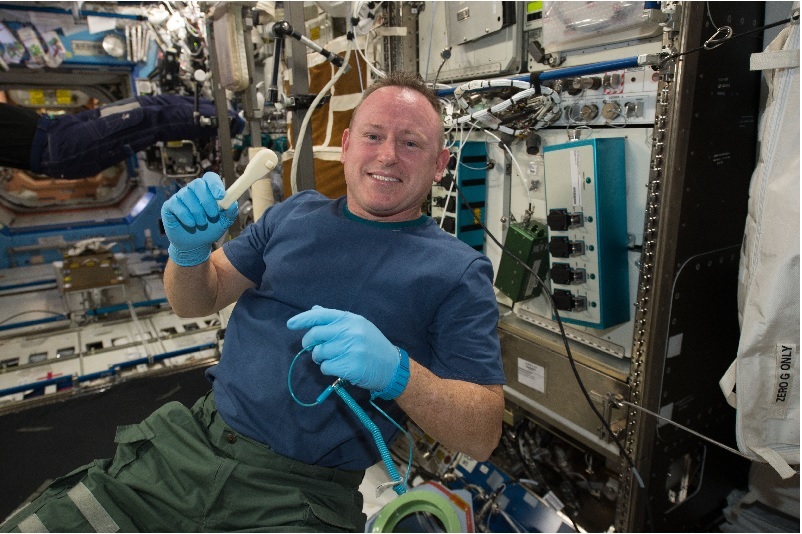
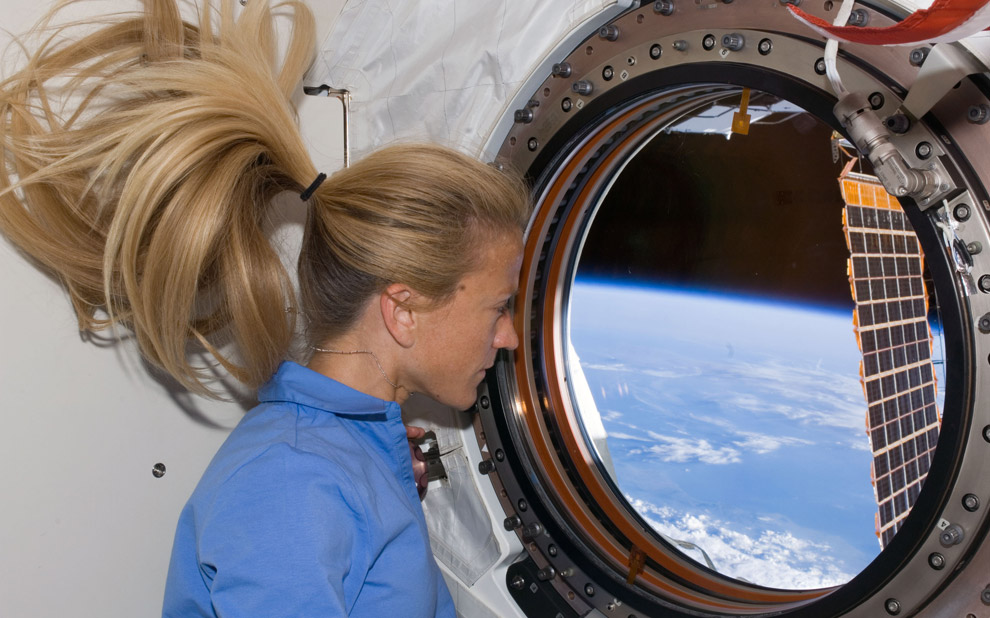
Have you ever wondered what if somebody has to start living in space where there is no gravity? Many of the mundane tools and tackles and also the process of accomplishing the common day to day tasks don’t work there because of lack of gravity. Here are a series of photos as they explain the daily routines of the astronauts.
Bedroom/ Sleeping space:
Sipping a cup of coffee in the morning with zero gravity cup:
As a technology lover you may like our daily important technology news series. It’s a playlist and you can retrieve the total day-wise videos. Please consider subscribing our YouTube channel:
Even if you are not computer savvy, you must have all used computers at least once in our life time or have seen people using laptops at office or coffee shops. The tiny parts that are assembled in that small case, that makes a truly portable computer, may fascinate you. However, you need to charge the laptop using the charging cable that came with it, to keep in alive.
In 1971, personal computers came into existence that people could afford to buy. Once PCs became popular, the thought of building portable computers struck people. The first well-known and most usually used modern laptop was IBM N40 laptop in 1994. With the arrival of Microsoft’s Windows operating system, laptops became a craze and since then, people have used laptop.
You must have seen small cylinder at the end of the charging cable, and yet, you would have not thought of it as something serious. However, it plays a major role in keeping your laptop working.
Your laptop is made up of several moving parts like hard disk drive and CD drive that generates vibrations as they move and complete their work. The laptop comes with a battery that needs to be charged so that you can use it during power failure or when there is no power supply. The charging cable has a cylinder called ferrite bead near the end of it and it is one of the most fascinating part of the computer.
The moving part of the laptop vibrates and produces radio frequencies. These radio frequencies can obstruct with things like Wi-Fi router of your home, the dish connection and other things. Though the laptop case reduces those vibrations and prevent them from causing any interference, but the charging cord, being unprotected, may help in spreading those vibrations.
The charging cable acts as antennae and airs the vibration as radio frequencies picks up other frequencies and cause interference both in nearby equipment and in laptop.
Your Wi-Fi acts violently if these signals compete at the same frequency at which your Wi-Fi works. This is where, the cylinder plays a role on the charging cable. The cylinder has Ferrite, which is an alloy of Iron oxide or rust.
This ferrite bead kills signals that the charging cable airs or catches. It is a simple and cheap way of keeping your laptop from interfering with other electronic devices in your home.
As a technology lover you may like our daily important technology news series. It’s a playlist and you can retrieve the total day-wise videos. Please consider subscribing our YouTube channel:
Indian Space Research Organisation (Isro) has created an electric propulsion system that increases the efficiency of satellites greatly. Known as electric propulsion (EP) system, this technology converts solar energy into electrical energy which, in turn, is used to change the velocity of a satellite in space. It reduces the use of chemical propellant in a launch vehicle.
Currently, a 2,000-kg Insat/Gsat-class communication satellite carries 800-1,000kg of chemical propellant. However, the new electric propulsion system reduces the usage of chemical propellant to just 100-200kg as the former serves as the back-up power for correcting the orbit of the spacecraft.
EP system was first used as a technology demonstrator in Gsat-9 or the South Asia Satellite launched on May 5, which was PM Narendra Modi’s brainchild. “The EP system basically converts solar energy into electrical energy and then kinetic energy by generating thrust that propels a satellite. The system just needs a solar panel and components for charging ions.” said a top source in Isro.
“With the new system, we can reduce the quantity of chemical propellant carried on a satellite and thus carry a heavier payload to space,” said Dr K Sivan, director of Thiruvananthapuram-based Vikram Sarabhai Space Centre.
This chemical fuel is required for transferring the communication satellite from the geosynchronous transfer orbit (where it is placed by a rocket) to the geostationary orbit (36,000km away from the earth). It also helps in orbit correction and maintaining a satellite on its path for its life duration of 10-12 years.
“The EP system basically converts solar energy into electrical energy and then kinetic energy by generating thrust that propels a satellite. The system just needs a solar panel and components for charging ions,” he said.
After the June 5 launch of its ‘Baahubali’ GSLV Mk III rocket, Isro has acquired the capability to launch a satellite of up to 4 tonnes into the geo orbit.
As a technology lover you may like our daily important technology news series. It’s a playlist and you can retrieve the total day-wise videos. Please consider subscribing our YouTube channel:
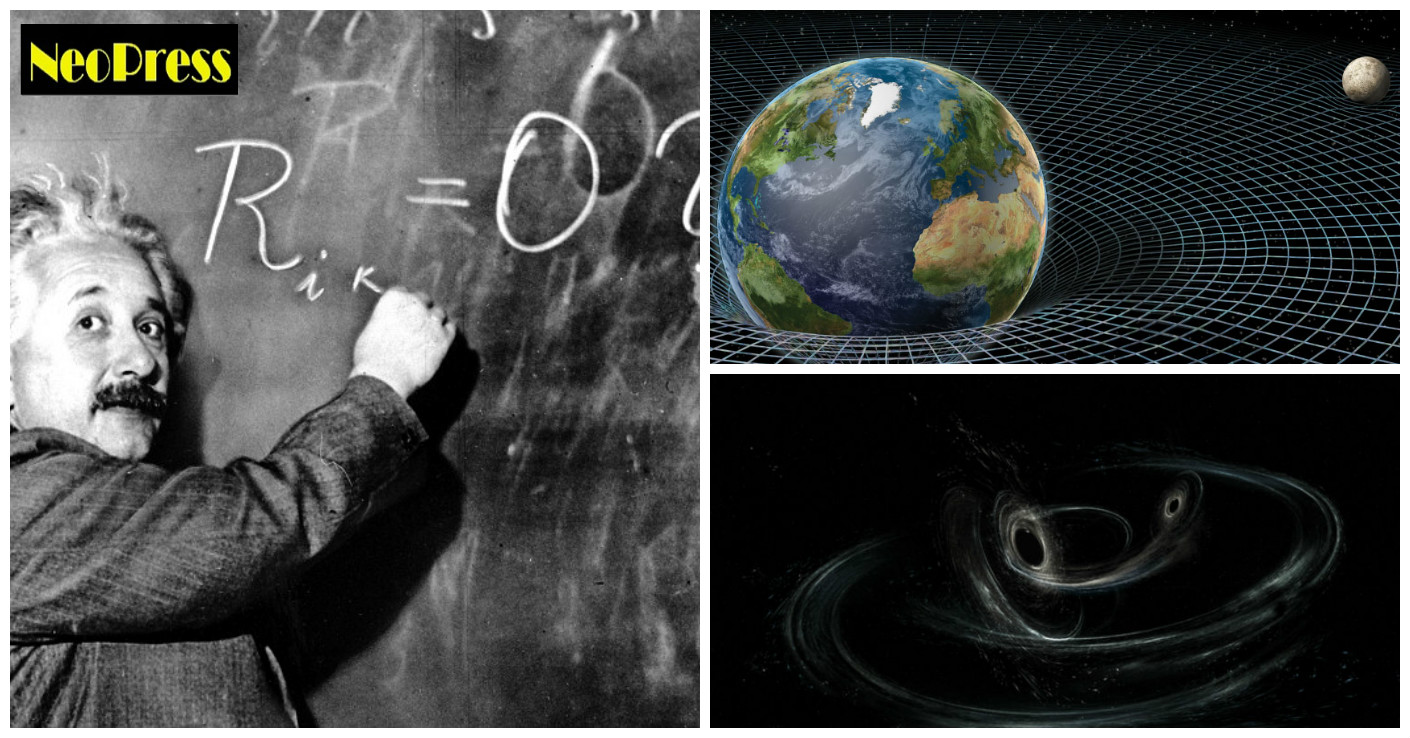
Einstein’s theory of general relativity relies on the four fundamental forces found in the universe. Or so we thought.
Gravity, electromagnetic and strong and weak nuclear forces— is what our understanding of the universe revolves around. Einstein reportedly suggested that these forces stop planets, molecules and atoms from tearing apart while also serving as building blocks for the physical rules of cosmos. Researchers, however have discovered a fifth force of nature that may pretty much overthrow everything we know about how the universe works, reported Daily Mail.
“Einstein’s theory describes (gravity) beautifully well, but there’s a lot of evidence showing the theory has holes,” said team member Professor Andrea Ghez, director of the University of California, Los Angeles, Galactic Centre Group. “The mere existence of supermassive black holes tells us that our current theories of how the universe works are inadequate to explain what a black hole is,” she added.
The team made use of detailed images of the centre of the Milky Way captured by the Keck Observatory in Hawaii.
“By watching the stars move over 20 years using very precise measurements taken from Keck Observatory data, you can see and put constraints on how gravity works.”
Her research goes on to suggest that the gravity existing right in the middle of the supermassive black hole is so strong, that it indicates the presence of a fifth force.
“If gravitation is driven by something other than Einstein’s theory of General Relativity, you’ll see small variations in the orbital paths of the stars.”
As a technology lover you may like our daily important technology news series. It’s a playlist and you can retrieve the total day-wise videos. Please consider subscribing our YouTube channel:
Even the smallest amount of antigen in donated blood can set off a dangerous immune response in the recipient. And that is why the right blood type is very important (and can be difficult) to find for transfusion. Now scientists have discovered that a particular type of enzyme can cut away antigens in blood types A and B, to make them more like Type O – considered the ‘universal’ blood type, because it’s the only type that can be donated to anyone without the risk of provoking a life-threatening immune response.
The team, from the University of British Columbia of Canada, worked with a family of enzymes called 98 glycoside hydrolase, extracted from a strain of Streptococcus pneumoniae. “A major limitation has always been the efficiency of the enzymes,” one of the team, Stephen Withers, said in a press release. “Impractically large amounts of enzyme were needed.”
Over many generations, they were able to engineer a super high-powered enzyme strain that can very effectively snip away blood antigens where previous generations of the enzyme struggled. Now we have an enzyme that’s 170 times more effective than its parent strain.
Getting the right type of blood when you need it is crucial, and it has to do with the different types of residue that can accumulate the surface of red blood cells. Both blood types A and B have this residue – A has an N-acetylgalactosamine residue, and B has a galactose residue – and Type AB has a mixture of both. Only Blood Type O is free from this residue, which means it can be received by any patient, no matter what type they’re carrying.
Withers and his team managed to create their ‘mutant’ enzyme strain using a technology called directed evolution, which allows them to insert many different types of mutations into the gene that codes for it. They progressively selected strains that are the best at snipping away the blood antigens.
While the current enzyme strain is not yet capable of removing 100 percent of the antigens from Blood Types A and B, which is where it needs to get if the researchers want to make any real use of it, the team is confident that they’ll get it there so they can try it out in clinical trials.
“The concept is not new, but until now we needed so much of the enzyme to make it work that it was impractical,” said Withers. “Now I’m confident that we can take this a whole lot further.”
As a technology lover you may like our daily important technology news series. It’s a playlist and you can retrieve the total day-wise videos. Please consider subscribing our YouTube channel: