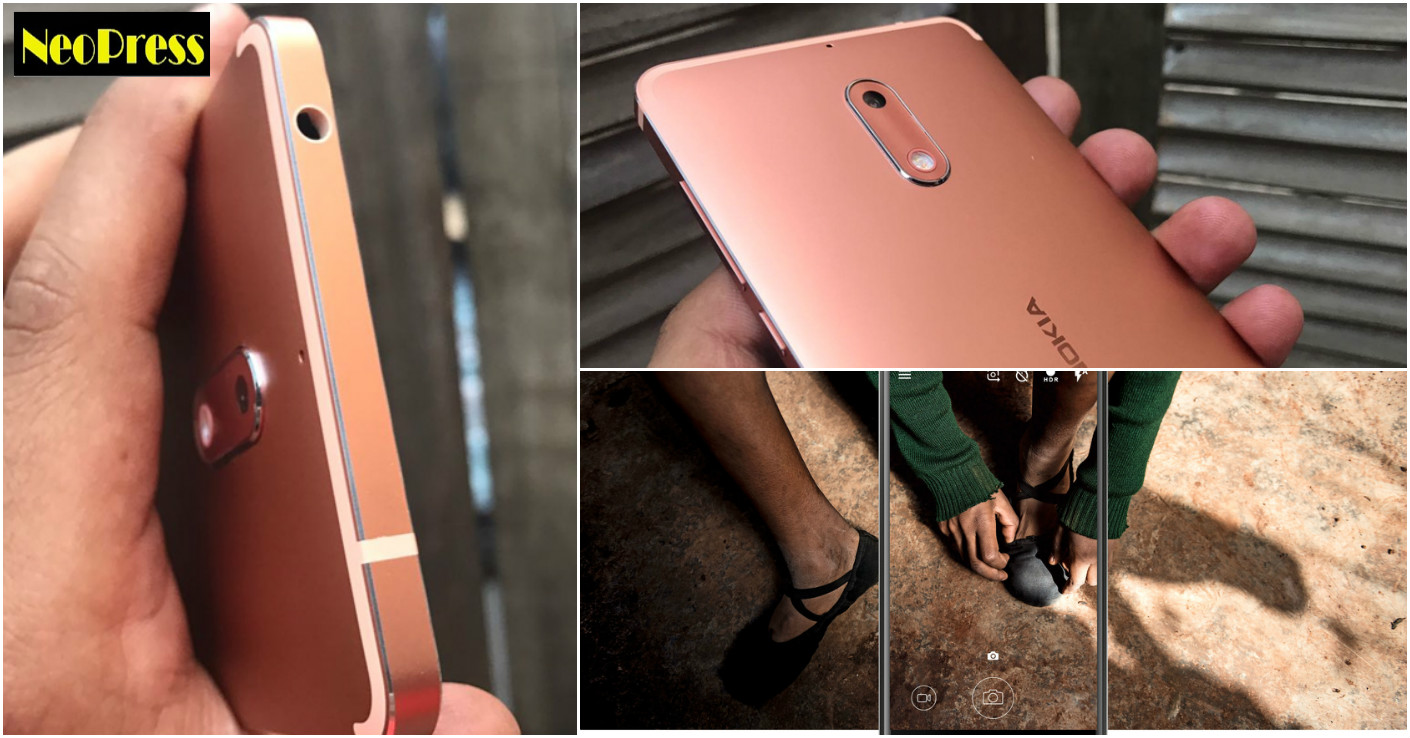
Nokia 6, Nokia 5 and Nokia 3 Are Here, But Are They Too Late?

Nokia re-entered the Indian market on Tuesday. While the actual company is just HMD Global, a Finland-based firm, the Nokia brand exists just as strong as ever. But, it will be a while before consumers, and tech media in India, get a better look at the Nokia 6, Nokia 5 and Nokia 3.

HMD Global is taking a very clean and very simple approach with its first Android phones. There are three basic features Nokia-turned-HMD plans to offer:

First is, of course, Nokia’s brand appeal. Indian consumers just have that connect with the brand, it’s familiar, it’s personal. There is something unique about Nokia phones, which give them an edge.

Secondly, all three phones are powered by the latest Android Nougat aka Android 7.1 software. And unlike what other companies do with this Android by modifying it, Nokia is using the Android with its pure aka stock UI. in other words, the Android in the Nokia 6, Nokia 3 and the Nokia 5 is the same one that you get in Google Pixel. This one factor alone makes the new Nokia phones better than the most in the market.

The Nokia 3 will cost Rs 9,499 while the Nokia 5 will sell for Rs 12,899. The Nokia 6, meanwhile, has a price of Rs 14,999. These are very competitive prices. these are the kind of prices that should make Xiaomi and the Motorola sit up and take notice. These are the prices that are going to hit Samsung real bad in the offline market.

And lastly, a clean and distinctive design that also has premium finish. There is no doubt that the Nokia 6 is the best-looking and best built phone under Rs 15,000 mark. In terms of design the only phone I will compare with it in this price bracket is now (possibly) discontinued Lenovo Vibe S1. The Nokia 6 is a premium phone irrespective of the angle you look at it. Then there is the Nokia 5, which is more or less similar to the Nokia 6 in design and build quality. And finally there is the Nokia 3, which may have a plastic body but its finishing and build quality make it look quite dashing. Overall, on the design part Nokia gets it right.

The company has created a lot of buzz around the Nokia 6, Nokia 3 and the Nokia 5. In China, Nokia 6 has seen its stock selling out fast fast fast. The Nokia 3310, a feature phone re-imagined for 2017, has wowed fans and has seen people swooning in love with it.

Looks like they have a lot going for them, so why might they be too late?

Of the three phones announced today, only Nokia 3 is going to be on sale in the coming days. It will go on sale from June 16. The sale of Nokia 6, which is the most anticipated phone of the lot, will be only in July. And the same is the case with the Nokia 5. Also, it is certain that the stock of the Nokia 6 and Nokia 5 is going to be low, similar to the stock of Nokia 3310 that is rarely available in shops.

That’s the problem: the delay.

The delay and the non-availability of the phones not only frustrate fans but may even allow the competitors to catch up with all the good ideas that Nokia is bringing with the Nokia 6, Nokia 5 and the Nokia 3 to the market. It also puts more pressure on Nokia. In the month or two from now, Android Nougat will not be the latest Android. Android O will be and that will blunt Nokia’s message that its phones run the latest Android. In a month from now, companies like Lenovo and Xiaomi will have other phones, possibly more powerful phones, out in the market.

June is going to be over in a few weeks from now and yet Nokia 6 will not be reaching the hands of Indian consumers. The brand is strong, but it is also clear that HMD’s launch Nokia campaign has gone on far too long without seeing the actual launch.

As a technology lover you may like our daily important technology news series. It’s a playlist and you can retrieve the total day-wise videos. Please consider subscribing our YouTube channel:

Author: Technology Vista
Tagged : /

NASA and ISRO Come Together to Build Earth Monitoring Satellite NISAR

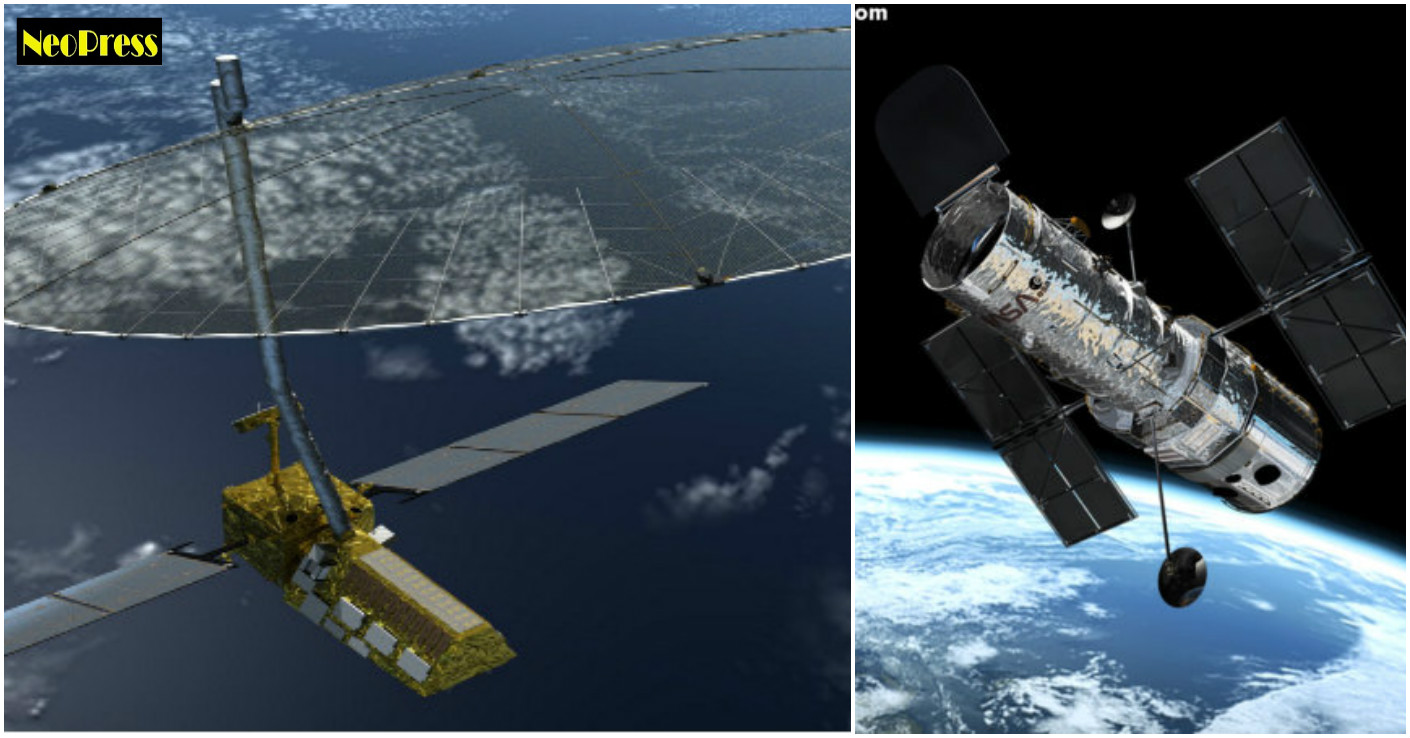
The two of the world’s top space agencies finally come together to make a first-of-its-kind Earth monitoring satellite NISAR– the NASA-ISRO Synthetic Aperture Radar satellite. It is estimated to cost the two countries over 1.5 billion dollars and could possibly be the world’s most expensive Earth imaging satellite.

“NISAR is the first big collaboration between NASA and ISRO, certainly on RADAR but just in general as well. This is two frequency RADAR, it is an L-band 24 centimetre RADAR and S-band 13 centimetre. S-band is being built by ISRO and L-band by NASA. It is a major collaboration both in terms of the technical building of the satellite as well as working together across the Pacific between India and US,” said Paul A Rosen, a scientist working on the NISAR satellite project, NDTV reported.

Rosen also said, “We are going to be making snapshots of the Earth every week using these two radars that gives us a time lapse image of the motion of the tectonic plates, of the ice sheets, of the changes in vegetation over land in agriculture and forests. So what we are doing is looking at time variability of the Earth over the life of the mission to understand how disasters evolve, how earthquakes occur, how volcanoes occur, how the ice sheets are changing and affecting sea level rise, and how forest fires and changes in the forest cover affect the atmosphere. It is very relevant to what society cares about which is changes in our climate, changes in our environment and how it affects society,” NDTV further reported.

The NISAR satellite is scheduled for a 2021 launch from India using the Geo-synchronous Satellite Launch Vehicle (GSLV) and will definitely open a new vista in Indo-US friendship.

As a technology lover you may like our daily important technology news series. It’s a playlist and you can retrieve the total day-wise videos. Please consider subscribing our YouTube channel:

Author: Technology Vista

Tagged : /

This gadget turns your iPhones into photo printers!

In an attempt to bridge the physical and the digital gap, Prynt, a startup founded in 2014, is trying to revamp the way digital content is shared — with photo-printing, augmented-reality-powered devices for smartphones.

The Prynt Pocket, which lets you print photos directly from your iPhone, is about half the size of the original and can now be used without having to take off an existing phone case. The first photo-printing phone case was launched in 2015 on Kickstarter and now is unveiling a second-generation version. CNNTech got an early look at the new “Prynt Pocket,” which is available for $150 starting Tuesday.

Here’s how it works: Download the Prynt app, slide the gadget onto your phone and snap a photo (or choose an existing picture from social media or your camera roll). You can add special effects like filters, stickers, text and frames, and the image prints in about 30 seconds. Users can capture the moment automatically with both a physical photo and a social-media-friendly video.

The device also has augmented reality video features, similar to Apple’s (AAPL, Tech30) moving image format called Live Photos or Instagram’s Boomerang app, which makes short videos that loop back and forth.

“It’s the best of both worlds: You get something that is tangible, unique…but you also have a sense of the context of what happened at that time,” Prynt cofounder and CEO Clément Perrot told CNNTech.

When you take a photo, the Prynt app records a video and stores it in the cloud. After the picture has been printed, use the app to see the moving photo or share it on social media. Perrot says people are “living memories as a group” — everyone takes videos at events like weddings.

“Here’s a way to capture all of that and put it into something that people would look back at. If it stays on their phone, you don’t necessarily look at it again,” he said.

“People are going back to instant photographing [because] digital photography is missing some of the nostalgia that physical photos have — the fact that you can touch something and go back to it.”

The Prynt Pocket works only on iPhone currently but an Android version will be available later this year. Both versions of the product use Zink’s inkless paper, so no ink cartridge or toner is needed (the ink is activated with heat).

The Prynt Pocket holds 10 sheets of paper at a time (a pack of 40 costs $20). Other companies have developed portable printers designed for smartphones, like HP’s Sprocket photo printer and Polaroid’s instant mobile photo printer (both sell for $130 at Staples). Instant-film cameras, like those from Fujifilm and Polaroid, have also made a comeback in recent years.

As a technology lover you may like our daily important technology news series. It’s a playlist and you can retrieve the total day-wise videos. Please consider subscribing our YouTube channel:

Author: Technology Vista
Tagged : /

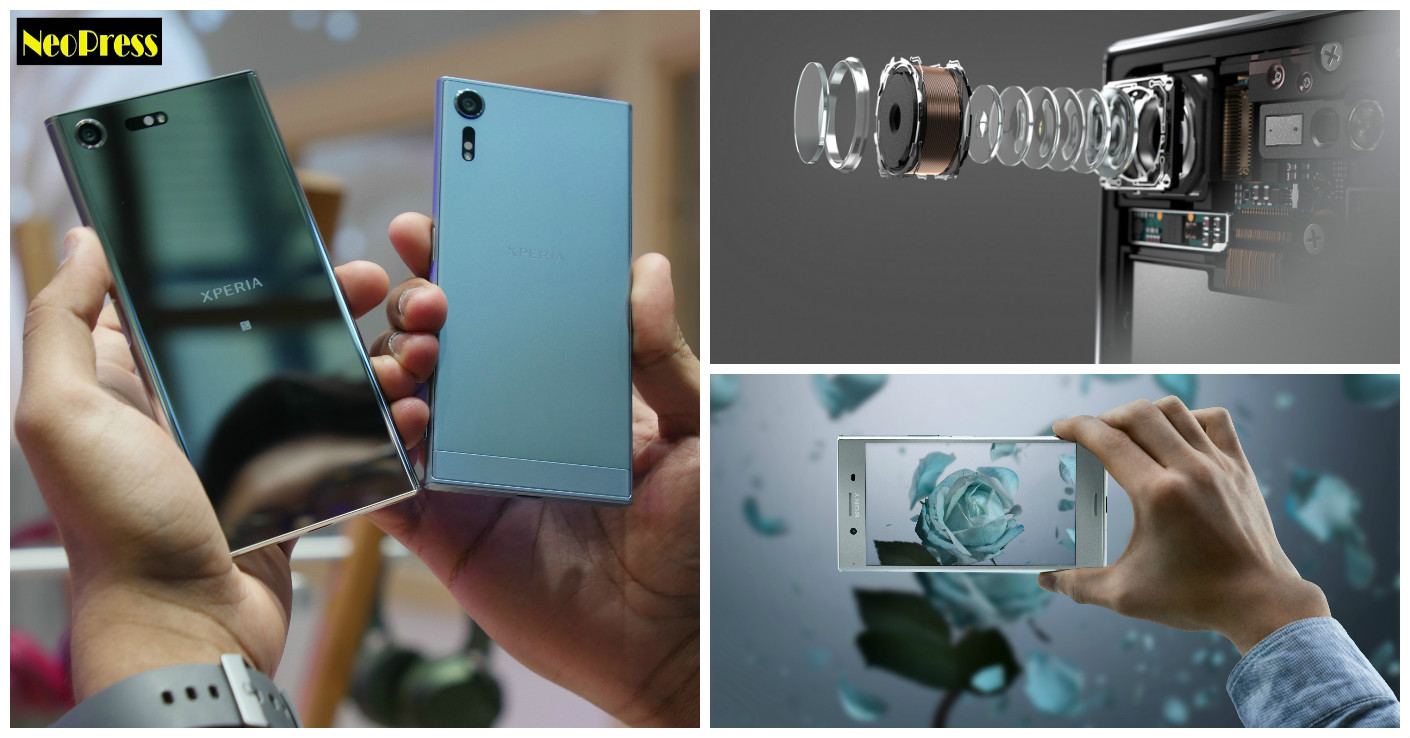
Sony Xperia XZ Premium with snapdragon 835- What Makes It Awesome?

The company’s new flagship has officially gone on sale and is Amazon exclusive in the online space. Priced at 59,990 rupees, it was so far up for pre-booking on the Amazon India website. Now it has finally been released to offline retail stores in India. Let’s see what it promises to offer.

The second smartphone from the company to feature a 4K display, it also comes with a 5.5-inch 4K HDR display. The resolution is 2160 x 3840 pixels, and Sony has added Corning Gorilla Glass 5 on top for extra protection. Sony’s new phone comes with the “glass loop” surface design, with reflective surface on the back. However, this means the smartphone is prone to picking up fingerprint smudges quite easily.

Sony Xperia XZ Premium has a 19MP Motion Eye rear camera on board. This one comes with a 1/2.3-inch Exmor RS sensor, and a pixel size of 1.22μm, along with Sony’s triple image sensing technology, and predictive hybrid autofocus. Additionally the XZ Premium supports the Super Slow motion videos at 960 frames per second (FPS). Sony has gone for 5-axis stabilization with the rear camera, which also has support for 4K video recording.

It is the first smartphone in India to officially launch with the new Qualcomm Snapdragon 835 processor, which comes with 10nm FinFET design, and promises faster performance along with improved battery life. The phone also comes with 4GB RAM and 64GB internal storage (expandable up to 256GB via a microSD card). Sony Xperia XZ Premium supports high resolution audio playback. The new Snapdragon 835 SoC is an octa-core one, and is also capable of supporting Gigabit Class LTE (up to 1Gbps speeds) in theory thanks to the new X16 LTE modem.

Sony Xperia XZ Premium’s front camera is 13MP with 22mm wide-angle lens, f/2.0 aperture, and 5-axis stabilization. Sony has also included some special effects in the camera like an Augmented Reality mode to let you superimpose some creatures like a dinosaur, etc onto your surroundings while you take a photo.

This flagship continues with the IP65/68 rating for water and dust resistance. This is a dual-SIM smartphone with two Nano SIM cards supported. Other features include 4G VoLTE, WiFi Miracast, and Bluetooth 5.0, along with NFC.

It sports a 3,230mAh battery with modes like Smart Stamina, Battery Care, STAMINA Mode. It comes with support for Qualcomm Quick Charge 3.0 technology as well. The phone relies on Type-C USB port for charging. On the software front, Sony Xperia XZ Premium runs Android Nougat 7.1.1 with the Xperia UI on top.

As a technology lover you may like our daily important technology news series. It’s a playlist and you can retrieve the total day-wise videos. Please consider subscribing our YouTube channel:

Author: Technology Vista
Tagged : /

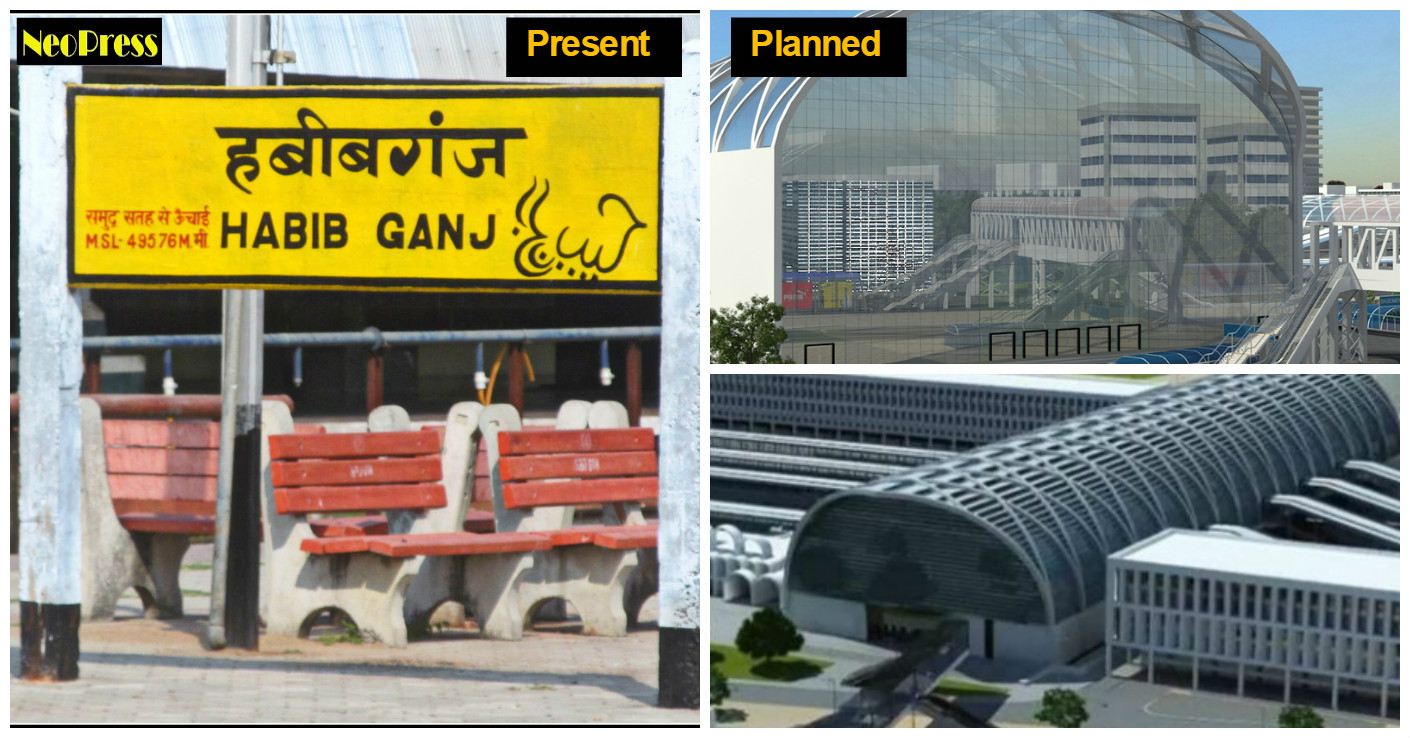
Habibganj Railway Station to Be Made Into World Class Terminal Similar To Airports

“Till now, railways was depending on passenger and freight earnings. But time has come now to look beyond fare revenue. Station redevelopment is one such revenue stream,” Railway Minister Suresh Prabhu said at an event to mark the signing agreement with the developer for the project involving the development of Habibganj railway station.

On Thursday, railways launched an ambitious Rs 450-crore redevelopment project at Habibganj station near Bhopal through PPP route with a dual aim of providing world-class amenities for passengers and generating revenue for the public transporter.

As per the agreement signed between the Indian Railway Station Development Corporation (IRSDC) and the developer, the latter will provide modern amenities like escalators, lifts, parking lot, landscaping, concourse, walkway, travelators, parcel corridor, subways as part of the redevelopment of the station.

Mr. Prabhu said 400 stations will be redeveloped as per the plan and there is a purpose behind it, and that, besides being another revenue stream for railways, station development will also provide better facilities to passengers. He said there are various ways including taking help of the World Bank, foreign countries, State governments and PSUs for modernisation of stations.

“We are negotiating with World Bank for getting USD 500 million for station development project. We can also join hands with countries like Germany, the UK and France which have expertise in redevelopment to modernise a few stations here. I am also writing to all chief ministers to be part of the redevelopment project in their respective States.”

A consortium of Bansal Construction Works and Prakash Asphalting and Toll Highways has formed a special purpose company- Bansal Pathways Habibganj Private Ltd to implement the project. part from Habibganj, IRSDC will also develop Chandigarh, Surat, Shivaji Nagar, Bijwasan, Anand Vihar, Mohali and Gandhinagar stations.

The estimated completion date is three years, but Mr Prabhu asked the developer to “take up the project as a challenge and complete it within two years”. The station will also have food plaza, medical clinics, office complex, salon and other facilities to use the area to generate revenue for railways.

“Gujarat government has come forward for redevelopment of Surat and Gandhinagar stations. We are also exploring to involve PSU like NBCC to develop a few stations,” Mr Prabhu added.

width="560" height="314" allowfullscreen="allowfullscreen">

As a technology lover you may like our daily important technology news series. It’s a playlist and you can retrieve the total day-wise videos. Please consider subscribing our YouTube channel:

Author: Technology Vista

Tagged : /

Communication via thought and touch is the future: Facebook’s secret unit revealed

Innovation is what’s keeping the giants of IT afloat and thriving. And when it comes to innovation the wheels never seem to stop. Every other day, something or the other comes up which creates waves by the new thoughts it brings forth. Facebook is one such company which has always backed and encouraged innovation and the company which thrives on communication would be the best to innovate in its field.

So, taking the baton forward, the company has really moved ahead in the field of innovation in communication and how! Facebook Inc recently revealed one of its secretive units which is working in the direction of finding ways for people to communicate by thought and touch. The secret unit is headed by Regina Dugan who was previously Director of the US Defence Department’s Defence Advanced Research Projects Agency (DARPA).

Facebook launched the research shop last year and christened it ‘Building 8’. The shop will conduct long-term work in the direction of communication via thought and touch to come up with feasible hardware products. At Facebook’s annual F8 conference, the unit’s head Regina Dugan told software developers that the company was modelling Building 8 after DARPA.

Dugan revealed that any hardware roll-outs are years away. She disclosed that one example of Building 8’s work so far was an attempt to improve technology that allows people to type words using their minds. And if you are wondering that it isn’t quite possible, then Dugan herself dispelled the doubts by telling that using brain implants, people can already type eight words per minute.

Dugan informed that it was Facebook’s main aim to work on this system and make it non-invasive. To achieve this, work with researchers at several US universities is ongoing. Facebook wants to make this system fast to such an extent that people can type 100 words per minute just by thinking.  This will turn out to be a blessing for disabled people and will help people in texting without taking their phone out.

Another Building 8 project which is quite ambitious derives inspiration from Braille (the writing system for blinds and visually impaired). This project is trying to advance the ability to communicate through touch only. Facebook has already signed a deal with 17 universities (including Harvard and Princeton) last December to work collaboratively on these projects with Dugan. Sooner or later, whenever these projects will turn into reality, will change the game of communication – that’s for sure.

As a technology lover you may like our daily important technology news series. It’s a playlist and you can retrieve the total day-wise videos. Please consider subscribing our YouTube channel:

Author: Technology Vista

Tagged : /

You will be shocked to know the actual cost price of your favourite Samsung Galaxy S8

Yes, this is how businesses work! They manufacture something at a cost, add their profits to it and sell it to the customer at a higher price. But how much higher? Well, it depends on the brand you are buying.

In this so-called well-connected world, where mobile phones have become synonymous with one’s social status, do you ever stop and realise how much profit these high-end flagship companies are making? We will give you an idea about the world’s favourite Samsung Galaxy S8 phone recently launched in India. The phone has been priced at Rs 57,900. But if you delve deeper then you will find that the actual price of the phone is far less than this.

This is well-known that smartphone manufacturers, in order to generate maximum profits, sell their products at higher than actual prices. So, when we started with Samsung, the facts that came out in the open regarding the pricing were quite interesting. The total bill of materials for the 64 GB storage variant is approximately Rs 19,500. Add to this the manufacturing cost of Rs 381.

The amount sums up to Rs 19,900. Just imagine, how much profit the company is making on a single piece of Samsung Galaxy S8!! Add to this the fact that as per reports, all the 1,50,000 Samsung Galaxy S8+128 GB models have been sold out and there is none available for pre-order now. Imagine the sale of profits the company would be making on these phones.

Though the Note 7 was a big let-down, people have chosen to ignore that and embrace the new flagship with full enthusiasm. As per reports, Samsung has already sold 620,000 units of the S8 and S 8+ in South Korea so far. Someone is making humongous amounts of money out of our pockets!

As a technology lover you may like our daily important technology news series. It’s a playlist and you can retrieve the total day-wise videos. Please consider subscribing our YouTube channel:

Author: Technology Vista

Tagged : /

Aliens Allergic to Heat? Might be Waiting for the Universe to Cool Before Contacting Us

A new study claims that alien lifeforms are most likely to have shifted to a digital-based existence. And while, living life as a machine would have many advantages, including being able to process information faster and being less vulnerable to disease and death, supercomputers capable of processing vast amounts of information are known to be more efficient at lower temperatures. Because of this, intelligent machine-based lifeforms might have chosen to go into hibernation until the climatic of the universe starts to cool down, according to the researchers.

Supercomputers need lower temperatures for optimal function as they need a large amount of energy is to cool down the processing activity.

‘If a civilization wants to maximize computation it appears rational to aestivate until the far future in order to exploit the low temperature environment,’ the scientists, led by Dr Anders Sandberg, said in the Journal of British Interplanetary Society.

‘We hence suggest the “aestivation hypothesis”: the reason we are not observing manifestations of alien civilizations is that they are currently (mostly) inactive, patiently waiting for future cosmic eras.’

Scientists from the University of Oxford call this theory the ‘aestivation hypothesis.’

As the universe expands and stars die out over the course of millions of years, it’s likely that the temperature will drop back to absolute zero. As of now, the level of background radiation of the universe is currently three degrees Kelvin above zero, which could be intolerably hot for machine-based life, the scientists said.

As a technology lover you may like our daily important technology news series. It’s a playlist and you can retrieve the total day-wise videos. Please consider subscribing our YouTube channel:

Author: Technology Vista
Tagged : /

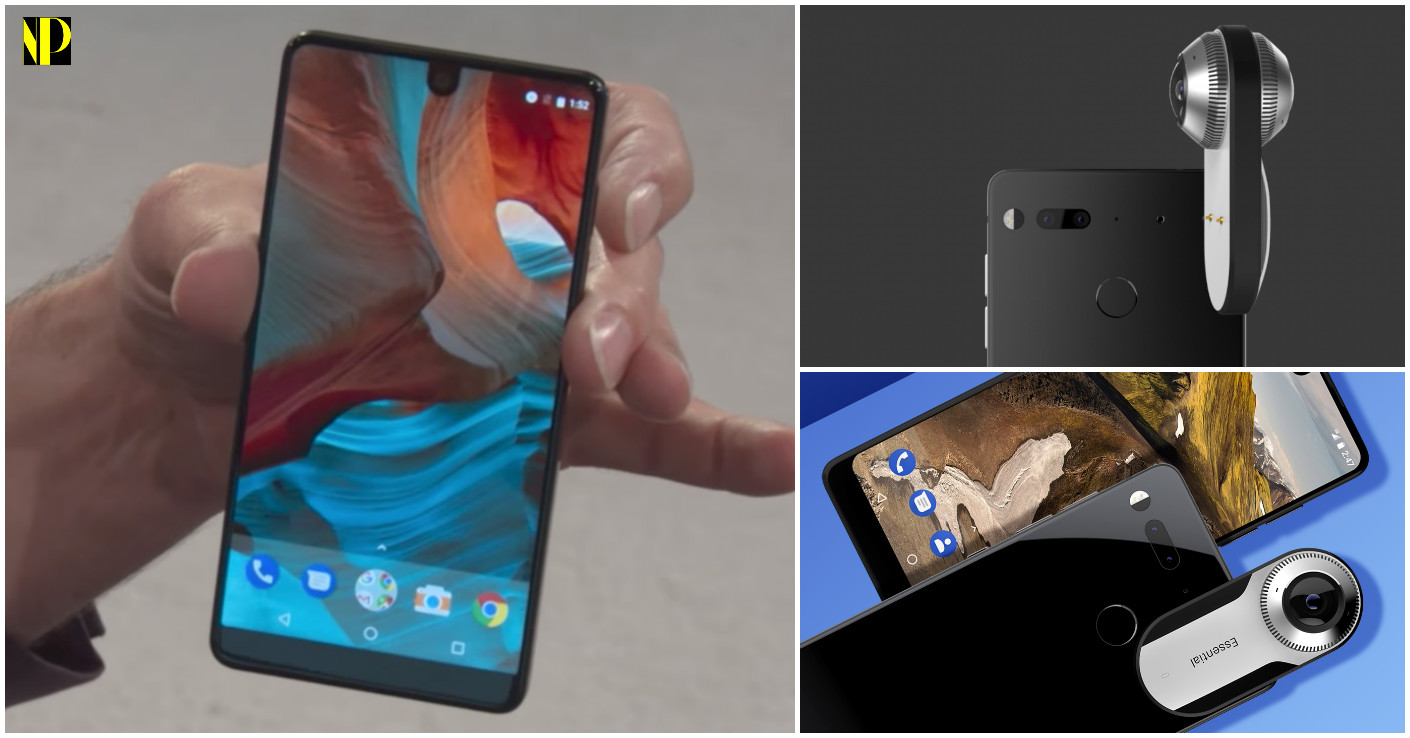
‘Father of Android’ Andy Rubin Launches Essential Phone with Modular Accessories

Andy Rubin’s company, Essential Products, has launched a new phone, an intelligent home smart speaker, and a 360-degree camera.

The Essential Phone offers top of the line specifications- a 5.7-inch edge-to-edge QHD (1312×2560 pixels) display with 19:10 aspect ratio and Corning Gorilla Glass 5 protection. It is powered by the 64-bit Snapdragon 835 octa-core (2.45GHz Quad + 1.9GHz Quad) processor with Adreno 540 GPU and 4GB RAM. Internal storage option is at 128GB.

There’s a 13-megapixel dual camera setup at the back with RGB and monochrome capabilities in each lens, with hybrid autofocus, phase detect, IR Laser Assist Focus, and 4K video support. At the front there is an 8-megapixel selfie sensor with f/2.2 aperture, 16:9 aspect ratio, and 4K video support here as well. The battery is at 3040mAh with fast charging support. Connectivity options include 4G LTE, Bluetooth v5.0, Wi-Fi 802.11a/b/g/n/ac, NFC, GPS, USB Type-C port, Nano-SIM support, and GLONASS. The dimensions of the Essential Phone are at 141.5×72.2×7.8mm, and the smartphone weighs less than 185 grams.

It looks beautiful with respect to design- a futuristic aesthetic with an almost edge to edge display, a dual camera setup, and a fingerprint scanner situated at the back, and no signs of a visible logo. The display is worth noting as it is edge-to-edge, with only a thin bottom bezel. The flushed camera design keeps the phone free of any unsightly bumps, and there are two magnetic pins at the back for modular attachments as well. The metal edges house the volume keys and power button on the right side of the smartphone. The Essential Phone is made of titanium and ceramic which the company claims gives it the highest durability score compared to any other smartphone out there.

The Essential Phone is made available in Black Moon, Stellar Grey, Pure White, and Ocean Depths colour options. The price of the smartphone starts at $699 (roughly Rs. 45,200), but you can buy it with a 360-degree camera for $749 (roughly Rs. 48,400).

The miniature 360-degree camera comes alongside. It sticks to the Essential Phone with the help of the magnetic pins at the back, and lets you record 360-degree content from your smartphone. The tiny accessory can be bundled with the smartphone purchase for $749 (roughly Rs. 48,400). Alongside, Rubin has also launched the Essential Home – a smart speaker with a big round display that runs on the brand new Ambient OS.

As mentioned, there’s also a pair of magnetic back pins for a modular accessory system that will “keep your phone cord-free, future-proof, and always up-to-date.” The pins will act as a click cordless connector that will hook up to Essential’s two modular accessories launched alongside – the 360-degree camera and its Essential Phone Dock. This modular system reminds us of Moto Mods – Lenovo’s efforts at creating modular accessory category in the market. There’s no 3.5mm audio jack on the Essential Phone (though it ships with a USB Type-C adapter), so we can expect Rubin and company to launch more such modular accessories to specifically amp up the audio game.

As a technology lover you may like our daily important technology news series. It’s a playlist and you can retrieve the total day-wise videos. Please consider subscribing our YouTube channel:

Author: Technology Vista

Tagged : /

Elon Musk Supports India’s Switch to Electric Fleet by 2030. Sharp Contrast To Trump’s Move

While, the Trump administration is set to withdraw from the Paris Climate Agreement, Elon Musk hails India’s aim to move to an all-electric fleet by 2030.

“Climate change is real. Leaving Paris is not good for America or the world,” Musk tweeted, not hiding his dismay at the move. While he was upset with the US President, Musk was more than pleased with the Indian government’s plans on electric vehicles and China’s efforts to enhance production of clean energy.

Musk welcoming India’s move comes close on the heels of the Canadian-American businessman announcing his resignation from all three positions on the Presidential Councils, over Trump’s decision to exit the Paris Climate Agreement.

“India commits to sell only electric cars by 2030. It is already the largest market for solar power,” he tweeted. Power minister Piyush Goyal had said in April that India was looking at having an all-electric car fleet by 2030 with an objective to reduce fuel imports and running cost of vehicles.

But oil minister Dharmendra Pradhan told ET last month that the government had not taken a final decision on this. Minister for road transport and highways Nitin Gadkari has offered Tesla land near ports so it can set up a manufacturing unit and make India an export base. Tesla has yet to commit. Prime Minister Narendra Modi has also shown keen interest in some of Tesla’s inventions, particularly in renewable energy sector.

Musk had indicated his firm may have to put on hold launch plans in the Indian market due to the absence of an ecosystem for supply of components. In an answer to a query about Tesla’s India plans, he had said: “Maybe I’m misinformed, but I was told that 30% of parts must be locally sourced and the supply does not yet exist in India to support that.”

Musk had earlier indicated Tesla was likely to launch in India in the summer of 2017. The government statement (on May 23) came as a response to Musk expressing concern. The 30% sourcing condition is only applicable if a foreign company opens a wholly owned single-brand retail store in India. A foreign investor, on the other hand, is permitted to sell wholesale, retail or ecommerce after manufacturing in India. The foreign investment policy also permits wholesale of imported goods without sourcing conditions, according to the commerce ministry statement. Thus, Tesla need not source locally to set up base here.

As a technology lover you may like our daily important technology news series. It’s a playlist and you can retrieve the total day-wise videos. Please consider subscribing our YouTube channel:

Author: Technology Vista

Tagged : /

Scientists Finally Developed a Model for Time Travel- But Will It Ever Be a Reality?

Countless fiction like H.G Wells’, The Time Machine and the iconic Hollywood movie ‘Back to the Future’ have done nothing but aggravate the hype surrounding time travel. Now, bringing the fictional concept closer to reality, a US scientist has developed a mathematical model for a viable time machine.

“People think of time travel as something as fiction. And we tend to think it’s not possible because we don’t actually do it. But, mathematically, it is possible,” said Ben Tippett, from University of British Columbia in Canada, who used Math and Physics to create the brilliant formula.

In 1915, German scientist Albert Einstein announced his theory of general relativity, stating that gravitational fields are caused by distortions in the fabric of space and time. And more than 100 years later, the LIGO Scientific Collaboration – an international team of physics institutes and research groups – announced the detection of gravitational waves generated by colliding black holes billions of lightyears away, confirming Einstein’s theory.

“The division of space into three dimensions, with time in a separate dimension by itself, is incorrect,” said Tippett.

Using Einstein’s theory, Tippett said that the curvature of spacetime accounts for the curved orbits of the planets. The four dimensions should be imagined simultaneously, where different directions are connected, as a space-time continuum.

In “flat” spacetime, planets and stars would move in straight lines. In the vicinity of a massive star, space-time geometry becomes curved and the straight trajectories of nearby planets will follow the curvature and bend around star.

“The time direction of the space-time surface also shows curvature. There is evidence showing the closer to a black hole we get, time moves slower,” said Tippett. “My model of a time machine uses the curved space-time to bend time into a circle for the passengers, not in a straight line. That circle takes us back in time.”

Now, for the question of actually making this model a reality- “HG Wells popularised the term ‘time machine’ and he left people with the thought that an explorer would need a ‘machine or special box’ to actually accomplish time travel,” Tippett said.

“While is it mathematically feasible, it is not yet possible to build a space-time machine because we need materials – which we call exotic matter – to bend space-time in these impossible ways, but they have yet to be discovered.”

As a technology lover you may like our daily important technology news series. It’s a playlist and you can retrieve the total day-wise videos. Please consider subscribing our YouTube channel:

Author: Technology Vista

Tagged : /

Surprise Your Friends! You Can Schedule Whatsapp Messages by Following This!

Scheduling a text/email/reminder/notification is always convenient. It could help you remember and greet people on birthdays, without having to stay up till midnight and could prevent you from forgetting to pick up groceries. Did you know you could schedule your WhatsApp texts?

There are a handful of apps available on the Google Play Store that let you schedule not just WhatsApp messages, but also images and videos. The best part is that the basic functionality works on both rooted and unrooted Android smartphones. Of course, there might be limitations with the basic version, and you may have to upgrade to premium for all the functions to work. But, let’s look at some of the WhatsApp scheduler apps available in Store.

‘Scheduler for WhatsApp’ and ‘Scheduler NO ROOT’ are among the ones that are easy to use, and worked well for me. And for those who have a rooted Android device, the ‘Seebye Scheduler ROOT’ would do the trick.

After installing any of the mentioned apps, simply open it and give the required permissions. Next, you’ll also have to head over to Settings -> Accessibility -> Services and enable the service. Once this is done, you’re all set to go.

Do note, for the message to be sent, the device’s screen should be unlocked, and there should not be any screen lock – such as PIN, Pattern or Fingerprint lock. This may sound odd, but due to security concerns, these apps cannot bypass security screen. So, if you have set a schedule to send a WhatsApp message at 12:00PM, and you unlock the screen at 1:00PM, it only will be sent then. However, if you have a rooted Android device, the app can bypass the security screen and send the message right away.

Now, to schedule WhatsApp messages, open ‘Scheduler for WhatsApp’ and tap on the ‘+’ icon on the bottom left. Here, you’ll have to select choose between WhatsApp group or individual contact, followed by selecting the recipient. Next, you’ll have to select the date and time when you want to send the message, followed by frequency and message. The frequency of the scheduled messages can be once, daily, weekly, monthly or yearly.

Have fun!

As a technology lover you may like our daily important technology news series. It’s a playlist and you can retrieve the total day-wise videos. Please consider subscribing our YouTube channel:

Author: Technology Vista

Tagged : /

GSLV Mk III Launch Success Means India Can Realise Manned Space Mission Dream

After more than 33 years of Rakesh Sharma being the only Indian citizen to travel to space, the Indian Space Research Organisation (ISRO) is ready with a plan to put a two-three member human crew into space soon.

The Indian Space Research Organisation (ISRO) today successfully launched a 3,136-kg GSAT-19 communication satellite into space through a monster launch vehicle, GSLV Mk-III. Now, besides reducing India’s dependence on foreign launch vehicles to place its satellites in space, the GSLV Mk-III can help India realise its dreams of launching its own manned space mission.

“In principle, it will be the GSLV Mk-III or its variant that will be human rated in future,” ISRO chairman A S Kiran Kumar was quoted by PTI. The GSLV Mk-III, or the Geosynchronous Satellite Launch Vehicle-Mark III, can place up to eight tonnes in a low Earth orbit–this is enough to carry India’s crew module into space.

In October 2016, China sent two astronauts on longest-ever manned mission to space. It is also working towards establishing its permanent space station by 2022. According to some reports, the estimated cost of India’s manned space mission is pegged at Rs 12,400 crore. The project is already running late, and the ISRO is now looking at 2024 deadline to put Indians on space.

Currently, India uses the French Ariane-5 rocket launched from Kourou in South America to place its heavy four-tonne class of communication satellites. If the manned space mission takes off, India would join the United States, Russia and China to have a human spaceflight programme.

The GSLV Mk-III will help India save millions of dollars that it spends to use launch vehicles of other countries to put its heavier satellites into space. With the GSAT-19 launch, the ISRO has almost doubled its capacity to launch satellites from 2.3 tonnes to almost four tonnes.

“After a couple of developmental flights to establish, I am sure there will be opportunities for launching even foreign communication satellites,” former ISRO Chairman K Radhakrishnan was quoted by PTI.

ISRO’s success with GSLV Mk-III will also open up new markets where other countries can use it as a launch vehicle to put their satellites in space.

width="560" height="314" allowfullscreen="allowfullscreen">

As a technology lover you may like our daily important technology news series. It’s a playlist and you can retrieve the total day-wise videos. Please consider subscribing our YouTube channel:

Author: Technology Vista
Tagged : /

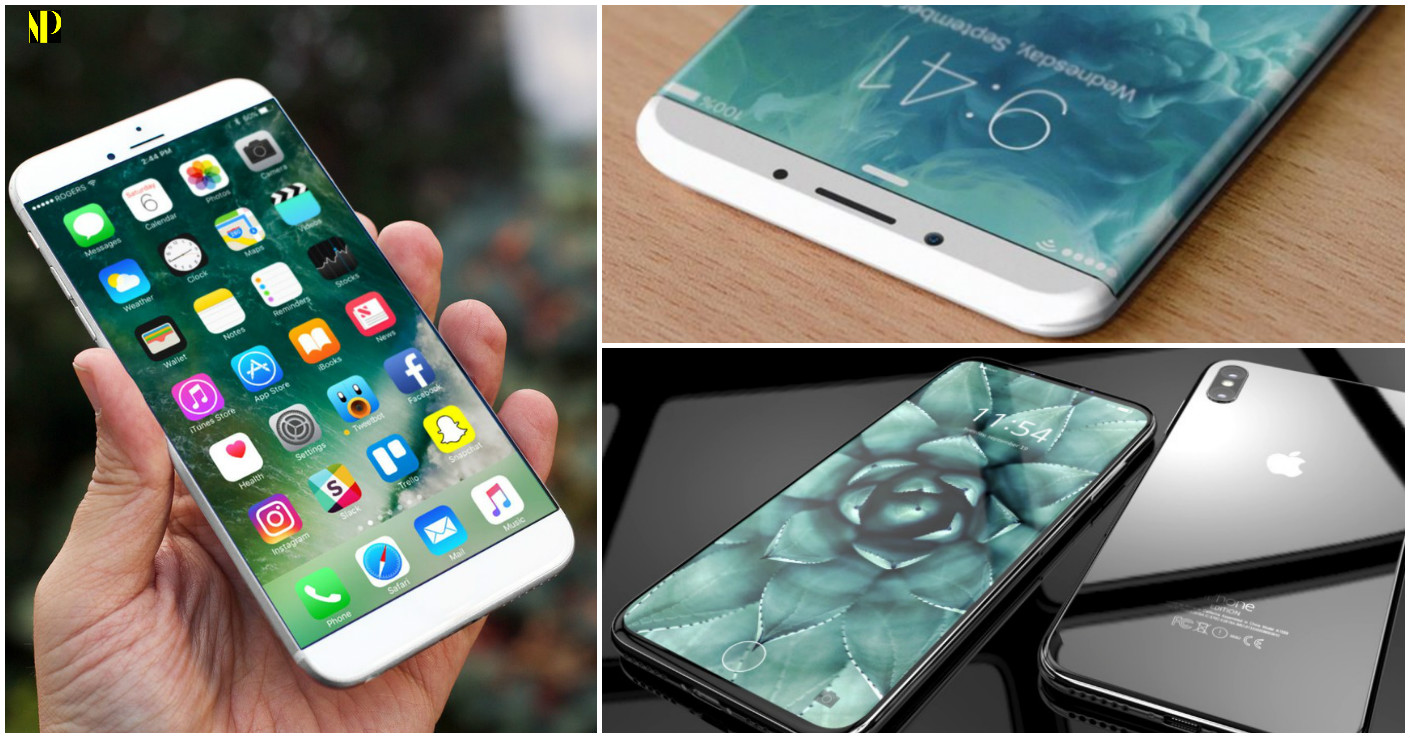
Three Stunning Changes iPhone 8 Is Rumoured to Bring

Since September last year we have been speculating about how the next iPhone would turn out to be. As per latest details coming in from some confirmed sources, there would be three major changes in the iPhone 8 design that will renew our entire notion of iPhones.

As per Forbes, which has received some insider details about the new design, Apple will introduce an aspect ratio of 18:5:9, which is more or less like that of Samsung Galaxy S8 and LG G6. With this aspect ratio, the new iPhone 8 will have an elongated look, which is a massive alteration in their design module. This new design of the screen will help Apple to increase the display size, while at the same time keeping it narrow enough to help the user to hold it comfortably.

This has been revealed by chipset maker TSMC.

But, the problem with this design is that the back button becomes somewhat harder to reach. We suppose Apple is working on this. Or maybe they’re going to get rid of the back button altogether!

The new elongated size of the display area means that the overall design of the handset needs to be altered and drastically changed. And, the report from Forbes suggests that the home button may be scrapped for good, and Touch ID mechanism shall be integrated into the display.

Such massive design changes also mean that the new iPhone 8 shall have a nearly bezel-less design, and the front camera will not be under the display. The key function area, which is below the screen, would be modelled on MacBook Pro style touch bar, which can replace the Home Button with contextual controls.

Lastly, the biggest, most exciting change is the Augmented Reality ready camera. The new camera would be equipped with invisible infrared image sensors, which will not only enhance the quality of the camera but will also enable AR applications.

The new iPhone 8 would be launched in the month of October 2017, according to reports.

width="560" height="314" allowfullscreen="allowfullscreen">

As a technology lover you may like our daily important technology news series. It’s a playlist and you can retrieve the total day-wise videos. Please consider subscribing our YouTube channel:

Author: Technology Vista
Tagged : /

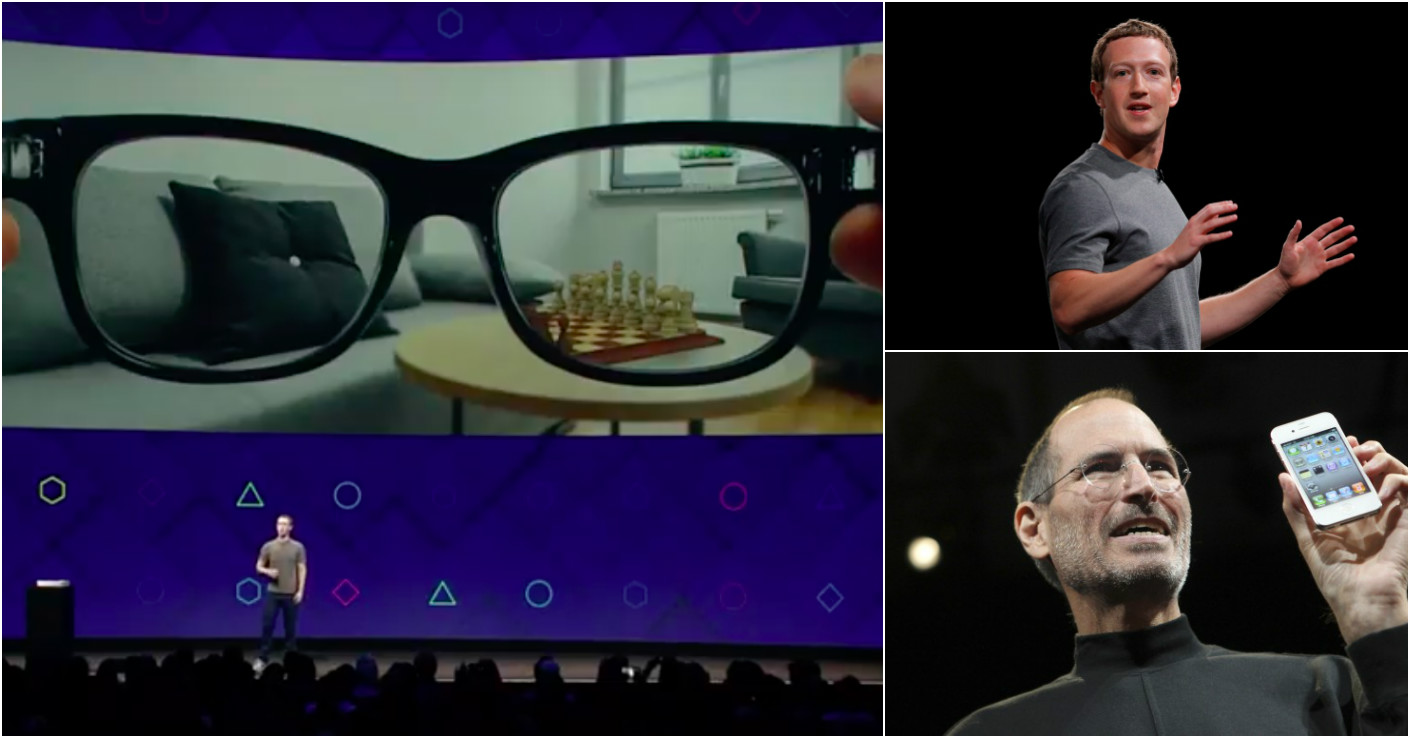
The smartphone’s death is imminent, says Mark Zuckerberg

Think about “out-of-the-box” and Mark Zuckerberg pops into your mind. Not only his ideas took the world by storm and made him a billionaire, they are also taking mankind towards a future which is absolutely beyond our thoughts. Nobody could have imagined that something like Facebook could become so huge, but it happened. So, when Zuckerberg speaks, it holds some weightage and the world takes a note of it, however absurd the idea looks at the beginning.

At this week’s Facebook F8 conference in San Jose shared his crazy ten-year plan.IN 2026, Zuckerberg envisages internet access to everyone in the world. Its smart glasses are no secret now and Zuckerberg is vehemently planning for a world of artificial intelligence where humans could talk to computers like any other human being.

In the Facebook world ten years hence, there won’t be any screens. So, there aren’t going to be any smartphones, computers, tabs or laptops because everything will be projected into our eyes as we will master the art of typing with our brains. In fact, Michael Abrash, the chief scientist of Facebook-owned Oculus Research, said this week, that the possibility of augmented reality glasses becoming good enough to go mainstream is very high and it may happen in just next five years. This week, Oculus also unveiled “Facebook Spaces”- a social VR app that lets people hang out with each other in a way that some of them may be in the real world while the others in virtual one with their headsets.

With artificial intelligence gaining momentum, you wouldn’t be surprised to find a virtual person taking your Macdonald’s order or a virtual cashier helping you. Add to this the crazy plan of Facebook to let you ‘hear’ with your skin, and you are left wide eyed to know that you will be able to reply with just a thought. As fancy and hi-tech as this may sound, the very genuine concern regarding plans such as this remains still very dominant.

If all of this were to happen wouldn’t companies like Facebook, Google, etc, have unprecedented and many a times unwanted control over our lives? Wouldn’t they automatically become the key to every interaction? Wouldn’t the concept of ‘privacy’ be lost after all this happens? Technology is a blessing, but there is a fine line when it starts to become a curse, a demon and we never see to know when that line starts. So, each of us will have to draw our very own.

As a technology lover you may like our daily important technology news series. It’s a playlist and you can retrieve the total day-wise videos. Please consider subscribing our YouTube channel:

Author: Technology Vista

Tagged : /
Verified by ExactMetrics