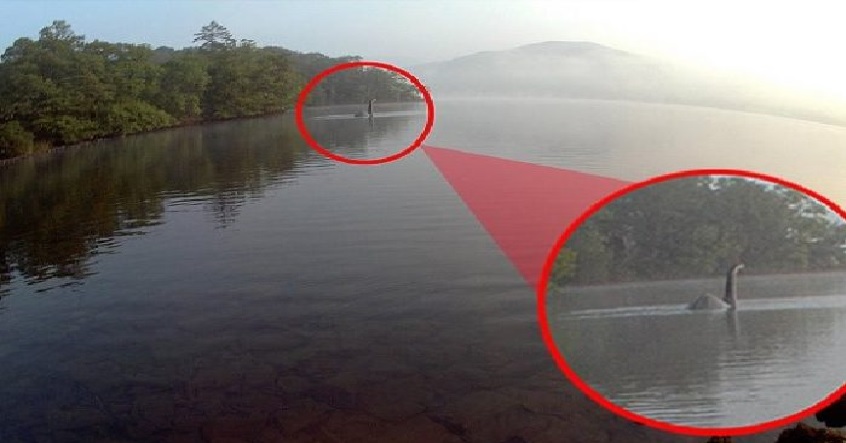
The mystery surrounding Tully monster has been finally resolved

Paleontologists discovered a fossilized creature with a pincer-tipped nose, sharp needle-like teeth and eyes placed on a slim stalk. This ancient animal was given the name of Tully monster.

For last six decades, paleontologists were intrigued by the bizarre Tullimonstrum gregarium fossils. This is because the creature did not fit into any known major group in animal kingdom, until now. According to a new report, scientists were finally able to solve the mystery.

160317152847-tully-monster-mystery-irpt-exlarge-169

Initially, the fossils were found inside a 300-million-year-old rock and the largest fossil was approximately one-foot long. Reassessment of those fossils helped scientists to conclude that the Tully monster was vertebrate with a very rudimentary spinal cord.

They used the clues like how the creature’s muscles decayed etc. and concluded that the animal was probably having an eel-like structure. The Tully monster was very similar to the modern-day bloodsucking lamprey which is a jawless fish with a funnel-like sucking mouth, full of sharp teeth.

Though it was very similar to lamprey but the ancient creature was still unique its anatomy. It was having tiny beady eyes which were attached to the stalk that runs across its head.

Earlier, scientists theorized a wormlike body which was largely conceptualized like a segmented worm or a swimming slug.

According to associated folklore the Loch Ness monster was actually a giant Tully monster. This myth was propagated by self-proclaimed monster hunter F. W. Holiday. Later, the same theory was retold by writer Richard Ellis in his book “Monsters of the Sea.”

Hopefully, the clarification will end a decades-long debate over details of the Tully monster.

As a technology lover you may like our daily important technology news series. It’s a playlist and you can retrieve the total day-wise videos. Please consider subscribing our YouTube channel:

Author: Technology and Beyond
Tagged : /

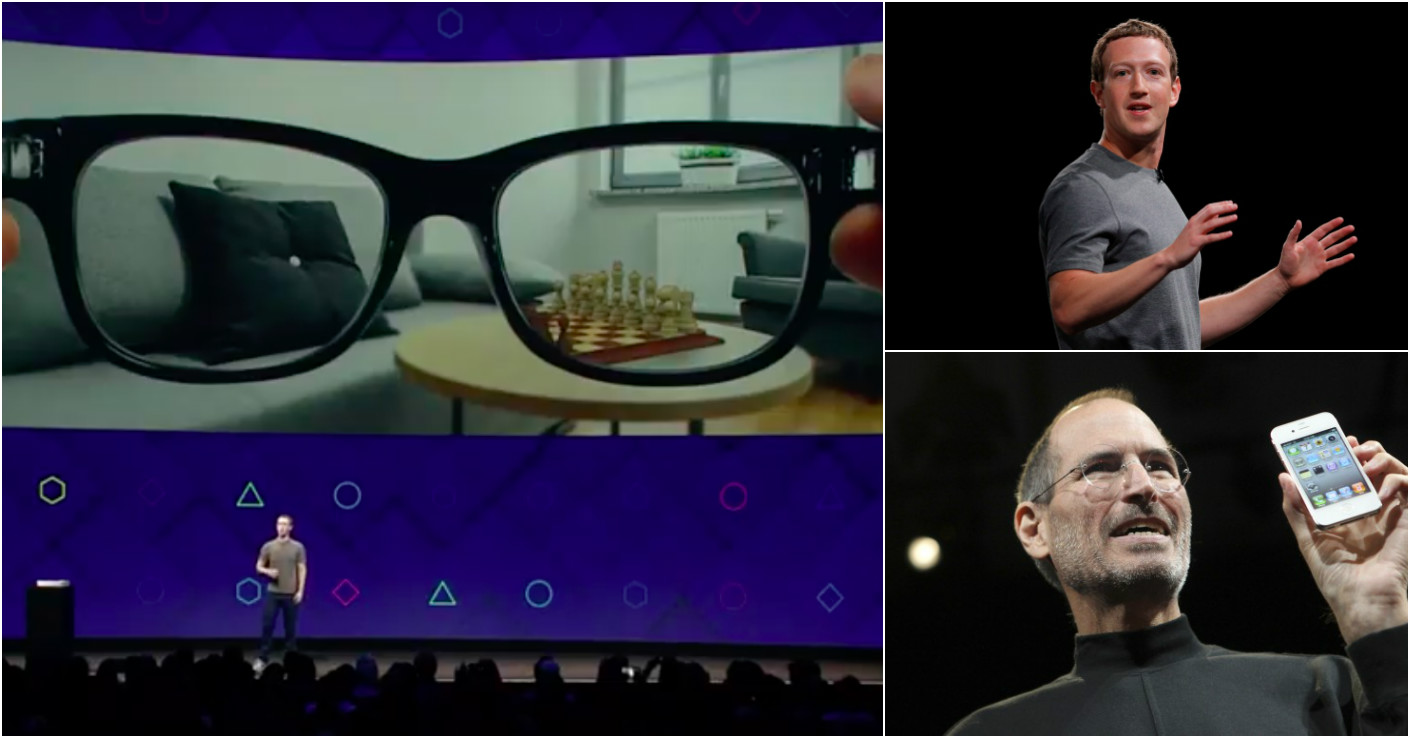
The smartphone’s death is imminent, says Mark Zuckerberg

Think about “out-of-the-box” and Mark Zuckerberg pops into your mind. Not only his ideas took the world by storm and made him a billionaire, they are also taking mankind towards a future which is absolutely beyond our thoughts. Nobody could have imagined that something like Facebook could become so huge, but it happened. So, when Zuckerberg speaks, it holds some weightage and the world takes a note of it, however absurd the idea looks at the beginning.

At this week’s Facebook F8 conference in San Jose shared his crazy ten-year plan.IN 2026, Zuckerberg envisages internet access to everyone in the world. Its smart glasses are no secret now and Zuckerberg is vehemently planning for a world of artificial intelligence where humans could talk to computers like any other human being.

In the Facebook world ten years hence, there won’t be any screens. So, there aren’t going to be any smartphones, computers, tabs or laptops because everything will be projected into our eyes as we will master the art of typing with our brains. In fact, Michael Abrash, the chief scientist of Facebook-owned Oculus Research, said this week, that the possibility of augmented reality glasses becoming good enough to go mainstream is very high and it may happen in just next five years. This week, Oculus also unveiled “Facebook Spaces”- a social VR app that lets people hang out with each other in a way that some of them may be in the real world while the others in virtual one with their headsets.

With artificial intelligence gaining momentum, you wouldn’t be surprised to find a virtual person taking your Macdonald’s order or a virtual cashier helping you. Add to this the crazy plan of Facebook to let you ‘hear’ with your skin, and you are left wide eyed to know that you will be able to reply with just a thought. As fancy and hi-tech as this may sound, the very genuine concern regarding plans such as this remains still very dominant.

If all of this were to happen wouldn’t companies like Facebook, Google, etc, have unprecedented and many a times unwanted control over our lives? Wouldn’t they automatically become the key to every interaction? Wouldn’t the concept of ‘privacy’ be lost after all this happens? Technology is a blessing, but there is a fine line when it starts to become a curse, a demon and we never see to know when that line starts. So, each of us will have to draw our very own.

As a technology lover you may like our daily important technology news series. It’s a playlist and you can retrieve the total day-wise videos. Please consider subscribing our YouTube channel:

Author: Technology Vista

Tagged : /

SpaceX Targets Universal High Speed Internet by Launching 1000s of Satellites

Adding this to the already overly ambitious list to-do list by Elon Musk (building a fleet of reusable rockets, an Interplanetary Transport System, colonizing Mars, and revolutionizing transportation), SpaceX hopes to provide worldwide broadband access by deploying a “constellation” of internet-providing satellites.

In November of 2016, SpaceX filed an application with the Federal Communications Commission (FCC) for a license to operate this constellation of non-geostationary satellites (NGS). In the hearing that followed earlier this week convened by the US Senate Committee on Commerce. Science, and Transportation, titled- Investing in America’s Broadband Infrastructure: Exploring Ways to Reduce Barriers to Deployment- the committee heard from representatives of government and industry who spoke about the best ways to offer streamlined broadband access (especially in rural areas), the necessary infrastructure, and how to encourage private investment.

Ms. Patricia Cooper – VP of Satellite Government Affairs for SpaceX- cited recent FCC findings, which indicated that millions of Americans lag behind other developed nations in terms of broadband speed, access, and price competitiveness. Basically, thirty-four million American citizens do not have access to 25 megabits per second (“Mbps”) broadband service while 47% of students in the US lack the connectivity to meet the FCC’s short-term goal of 100 Mbps per 1,000 students and staff.

The company’s vision is: “SpaceX sees substantial demand for high-speed broad band in the United States and worldwide. As the Committee is aware, millions of Americans outside of limited urban areas lack basic, reliable access. Furthermore, even in urban areas, a majority of Americans lacks more than a single fixed broadband provider from which to choose and may seek additional competitive options for high-speed service.”

SpaceX plans to launch 4,425 broadband satellites and will begin in 2019 aboard the company’s fleet of Falcon 9 rockets. The launches will continue until they have reached full capacity, which is expected to be by 2024. As Cooper outlined it:

“Later this year, SpaceX will begin the process of testing the satellites themselves, launching one prototype before the end of the year and another during the early months of 2018. Following successful demonstration of the technology, SpaceX intends to begin the operational satellite launch campaign in 2019. The remaining satellites in the constellation will be launched in phases through 2024, when the system will reach full capacity with the Ka- and Ku-Band satellites. SpaceX intends to launch the system onboard our Falcon 9 rocket, leveraging significant launch cost savings afforded by the first stage reusability now demonstrated with the vehicle.”

Next Page For More

Tagged : /
Verified by ExactMetrics