Seven deep dark secrets of the oceans, you knew nothing about!

“My love for you is as deep as the ocean itself” this cliché has been uttered and heard so many times that it has really lost its meaning. But one thing is for sure, ocean’s depth has always intrigued one and all. Did you know that the deepest point in an ocean is the ‘Challenger Deep’ in the Mariana Trench, in the western Pacific and it is ‘eleven’ kilometres down!! That means Mount Everest would fit into the Mariana Trench with a mile or so to spare.
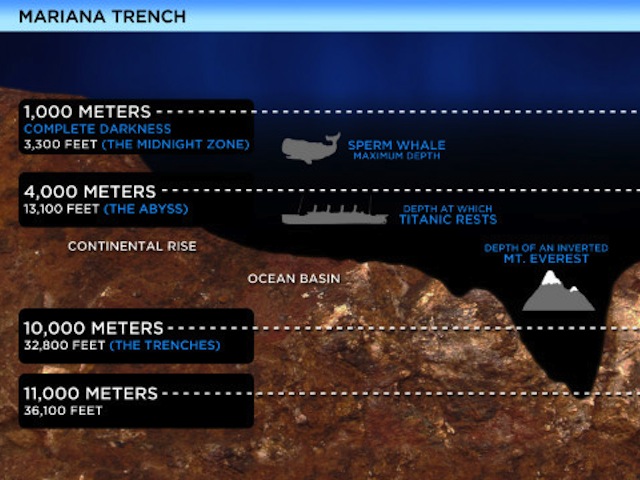
mariana-trench

The depth of the ocean has actually been categorized:

  • Littoral zone: Depth from the surface to 0.2 km
  • Bathyal xone: Depth from 0.2 km to 3 km
  • Abyssal zone: 3 km to 6 km
  • Hadal zone: 6 km to beyond

The Hadal Zone

Have you heard of the word ‘Hades’? This is actually a Greek god of the underworld. Hadal has been derived from Hades. The term also means ‘home of the dead’. In mythology, Hades has been portrayed as unreasonably ‘stringent’. He strictly prohibited the inhabitants of his dominion to leave which fits exactly with the hadal fauna which are confined to these hadal trenches and seldom go elsewhere. The hadal zone is largely comprised of deep trenches caused by tectonic plate subduction that drive the vast abyssal plains steeply down to depths of 11,000 metres in places.

What is the extreme depth of Hadal Zone?

‘Bomb sounding’ was the technique used to find the depth of hadal zone. In this method, half-pound block of TNT is thrown off a ship and its echo was recorded. Though the exact depth of the deepest point hasn’t yet been calculated, the general consensus is that it exceeds 10 km in Marian Trench.  Four other trenches, all in the Western Pacific, also exceed 10km: the Tonga, Kuril-Kamchatka, Philippine, and Kermadec trenches.

Has it really been explored?

The hadal depths have been a matter of intrigue for many since ages. Time and again, expeditions gathered data for this zone. For example, the HMS Challenger Expedition (1873 to 1876) was the very first trial in this direction which collected sediments from about 8 km of depth. Then there was the 1901 Princess Alive Expedition exploring in over 6 km depth. The Swedish Expedition in 1948 was the one which successfully trawled the variety of species from 7km to 8km in the Puerto Rico Trench, which finally proved that life existed at depths greater than 6km.

[adinserter block=”7″]
Next page For More

Tagged :

Stunning! This is how iPhone was conceptualized!

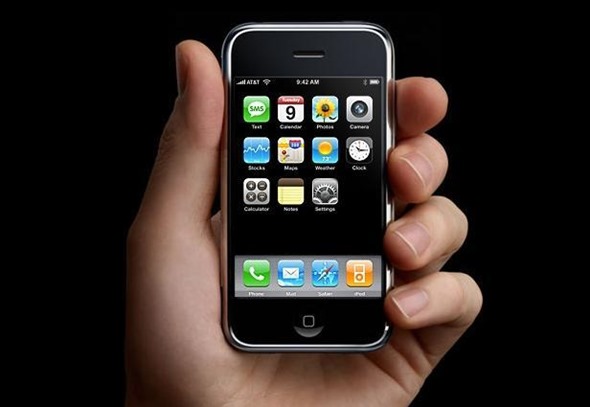
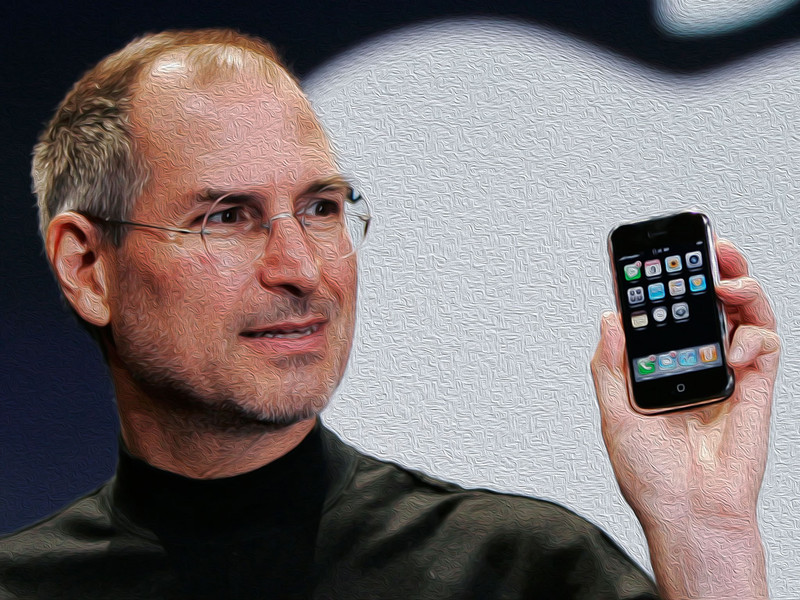
Do you know Tony Fadell? Well, he is the person who had a crucial role in designing both the iPod and iPhone. Presently, he is the CEO of Nest. So if you wish to know anything interesting or not so interesting about the iPhones and iPods, he is the person to talk to.

iphone two

In a recent interview, he lifted off covers from many interesting facts related to the launch and development of the two. According to Fadell, the birth of the iPhone was the result of two and half years of laborious efforts, research, design and development.

Fadell also stressed that if it wasn’t for the persistence, faith and tenacity of Steve Jobs, iPhone would never have been born. He goes on to tell that they had started by making an iPod phone- an iPod with a phone module inside it. Though it looked like an iPod, it had a phone and if you wanted to dial a number, it was exactly like using the rotary dial. Fadell said, they had completely lost faith in the project and had thought that it was a complete failure.

But it was Steve Jobs who kept motivating them by urging them to keep trying. He informed that it took many more iteration to actually get to the production version of iPhone, and it included a lot of rethinking, dropping everything and starting over. 

Fadell revealed that “Apple first created a touch screen company to build the multi-touch display. Then we needed a better operating system, so we brought a bunch of pieces of the Mac, a bunch of pieces of the iPod, and bolted them together. That was the first version. Then we threw that away and made the second version of the iPhone. That was the one that shipped.”

[adinserter block=”7″]

Author: Technology and Beyond

Tagged :

Keyboard was not Working ! This Guy Typed Out and Edited this Document Without Lifting a Finger!

After Google’s introduction of voice typing for Docs, now it has come out with some new tweaks that allow the user to edit and perform several other functions without having to touch the keyboard.

voice-1

These functions include commands like “Select all” and “insert period”. It adheres to a list of commands such as Align center, align left, Unselect, Select done, Applying heading and so on. You can check the complete list here.

“For business users, there are quite a few use cases for these new features. Jotting down ideas in a meeting or brainstorming sessions is the most obvious, but it could also be used to capture your thoughts as you read through research from an outside source, or as you verbally process ideas while putting together a proposal,” points out TheRepublic.

So get started and test out this new feature by selecting “Voice typing” in the “Tools” menu while using Docs in Chrome.

Check this video:

width="505" height="505" allowfullscreen="allowfullscreen">

[adinserter block=”7″]

Author: Technology and Beyond

The magic of potato chips: An inside out story of an intriguing battle!

Science is taking a leap in attempts at trying to get tastier foods healthier, starting with potato chips. Scientists at the University of Illinois have used a technique called X-ray micro-computed tomography to look at what happens inside a 1.65 millimeter potato disk as it is deep fried for different lengths of time. They described their results in a recent paper in the Journal of Food Science.

frying-potato-chips-inside-nanabreads-head

X-ray tomography uses X-rays to get two-dimensional images of the inside of an object. A computer then cobbles together many two-dimensional images to create a three-dimensional image of that object at a certain point in time.

In the X-rays produced by the team, we find that the internal water and the external oil are constantly in battle with the increasing heat. As the water escapes, it opens up pores in the food, allowing the oil to penetrate inwards. This makes for a greasy and unhealthy food quality.

But, a piece of really thick food can create an impasse, as outward-pushing water prevents inward-pushing oil from penetrating all the way into the food. This is why deep-frying a turkey on Thanksgiving has become more and more popular. The oil keeps the water in, and the water keeps the oil out.

Potato chips are unfortunately not that simple as the water escapes, initially via winding, complicated paths through the chip and keeps the oil out initially. But after a while, pores open up, and the walls between them are breached, making for straight routes and easier oil penetration. This also makes the chips crispy, and we wouldn’t want to give that up!

The team envisions that understanding the technique would lead to other ways we might be able to get the same structure, that don’t involve as much oil.

[adinserter block=”7″]

Author: Technology and Beyond

This looks like a cataract lens but it provides super human vision through painless surgery!

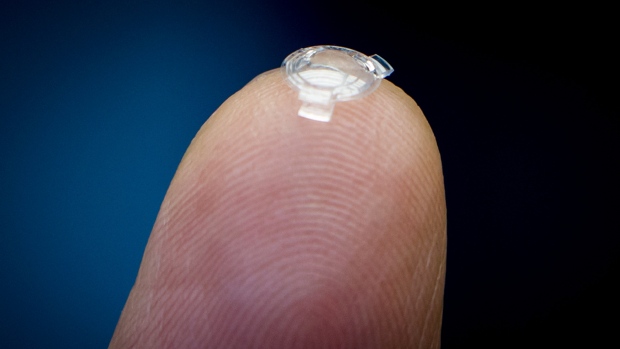
Created by the Ocumetics Technology Corp., the Ocumetics Bionic Lens looks like a little button that replaces your first lens. It’s added via an eight-minute eye surgery, quite like a cataract operation. The physicians promises the operation to be completely painless. The patient’s vision will be corrected promptly with no need of any additional interventions.

bionic-lens-20150518-dr-garth-webb-may-2015

This man-made lens replaces the natural lens of the eye. So, this operation would also additionally stop the individual from developing cataracts. The single but natural drawback is that only individuals over 25 could do the operation. This is because because the eye is still under growth phase before that age.

In accordance with the CBC News, three million dollars and eight years of research were invested to create these brand new lenses. Dr. Garth Webb was in lead while creating this Ocumetics Bionic Lens which enables you to see three times better than 20/20 vision. This means, the lens not only corrects sight problems like nearsightedness and farsightedness but also provides “bionic” vision to the humans.

“This is vision enhancement that the world has never seen before,” Webb told CBC. “If you can just barely see the clock at 10 feet, when you get the Bionic Lens you can see the clock at 30 feet away.” Webb presented the innovation during a yearly convention of the American Society of Cataract and Refractive Surgery to other 14 ophthalmologists and they were certainly impressed.

As stated by the physician, the lens is going to be first examined in animals and then in human eyes that are blind. Subsequently Canadian approval will be sought by the organization for advertising the product that could be available in 2017.

[adinserter block=”7″]
Author: Technology and Beyond

Tagged :

How Virtual Reality Could Cure Depression

A new study published in the British Journal of Psychiatry Open, showed that virtual reality therapy could help people with depression reduce the symptoms by being less critical and more compassionate towards themselves.

VR-2

The tests which were conducted used a total of 15 subjects aged 23-61, nine of whom reported reduced depressive symptoms a month after the therapy, and four experienced a clinically significant drop in depression severity, researchers said.

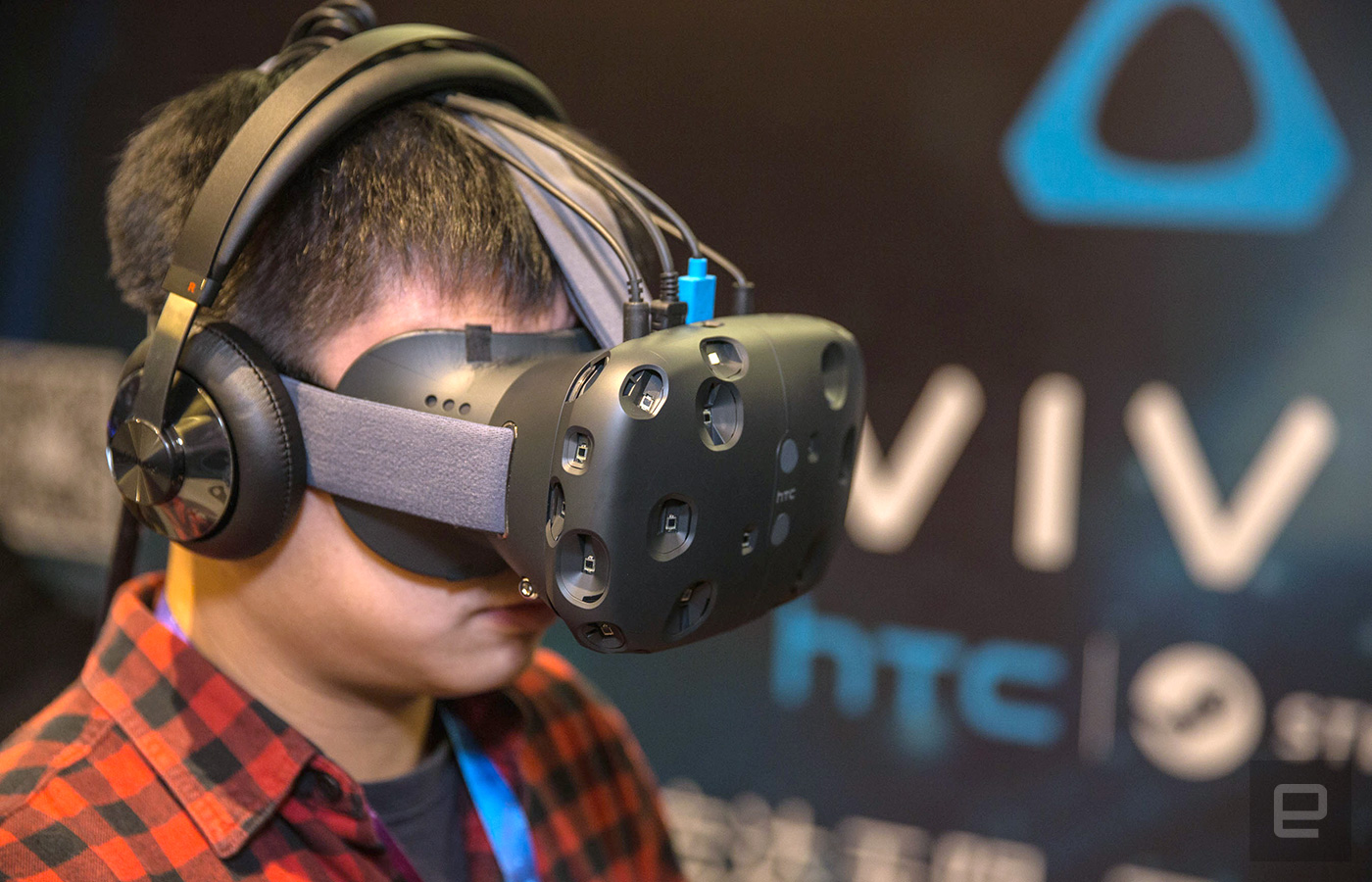
“People who struggle with anxiety and depression can be excessively self-critical when things go wrong in their lives,” said study lead Chris Brewin from UCL. The patients were made to wear a virtual reality headset to see from the perspective of a life-size ‘avatar’ or virtual body. This study was conducted by the University College London and ICREA-University of Barcelona.

The subjects were made to experience the feeling of embodiment by viewing a virtual body in a mirror moving in the same way as their own body. While embodied in an adult avatar, participants were trained to express compassion towards a distressed virtual child. As they talked to the child it appeared to gradually stop crying and respond positively to the compassion. After a few minutes the patients were embodied in the virtual child and saw the adult avatar deliver their own compassionate words and gestures to them. This was approximately an eight-minute procedure and was repeated three times a week for each subject for a month.

“In this study, by comforting the child and then hearing their own words back, patients are indirectly giving themselves compassion, the aim was to teach patients to be more compassionate towards themselves and less self-critical, and we saw promising results. A month after the study, several patients described how their experience had changed their response to real-life situations in which they would previously have been self-critical” said Brewin.

“We now hope to develop the technique further to conduct a larger controlled trial, so that we can confidently determine any clinical benefit. If a substantial benefit is seen, then this therapy could have huge potential as the recent marketing of low-cost home virtual reality systems means that methods such as this could potentially be part of every home and be used on a widespread basis,” said Mel Slater, professor at the ICREA-University of Barcelona.

[adinserter block=”7″]

Author: Technology and Beyond

Why Apple’s fight against the Department of Justice important for all?

iPhones are the best for no simple feat. When you have an iPhone, you know that you are in possession of the most secure smartphone one could ever have. But what if these security barriers were to come off? Apple…. the super secretive Apple was yesterday ordered by a US federal court judge to assist the Department of Justice in unlocking an iPhone used by one of the shooters in the San Bernadino attack.

Vara-Apple-E-book-pricing-1200

In order to unlock the device, Apple will have to build a malware which will disable a built-in security feature that causes the device to wipe its memory after 10 unsuccessful login attempts.  Now, the DOJ claims that since this is a matter of National security, the needful has to be done by the company. The government says that this is just one malware intended for one case. But is it?

Apple’s Tim Cook has expressed his views on this matter clarifying the company’s stance on this order, privacy and its continued efforts to fight the government for this type of access. The government though claims that it will be a one-off event. But what is the guarantee that there would never be another such matter concerning ‘national security’? And suppose if it is for one event then who ensures that the malware developed will never fall into the wrong hands.

The government’s cluelessness about cyber security and encryption is a well known fact. Apple will not create a malware for an event. It will essentially be creating a way to gain easy access to any other iPhone. How safe do you thing that is? What if this software falls into some wrong hands? Or suppose the malware is destroyed after being used, the knowledge of how it was created can’t be destroyed anyhow.

The developers who will be doing it will have the knowledge etched into their minds. Ok they may be great human beings, but what if they are coerced into revealing that malware it would be a public catastrophe if private data of the people becomes accessible. This is something once ‘done’ can’t be ‘undone’.

Tim Cook has summed it up nicely: “The government suggests this tool could only be used once, on one phone. But that’s simply not true. Once created, the technique could be used over and over again, on any number of devices. In the physical world, it would be the equivalent of a master key, capable of opening hundreds of millions of locks — from restaurants and banks to stores and homes. No reasonable person would find that acceptable.”

For data security, encryption is the heart and soul. If the soul is killed by Apple, the idea of privacy and security will just be a joke then with government agencies or even antisocial elements having an easy access to all your data through your smartphone (which are steadily becoming an extension of the person him/her self). This is the reason why Apple is fighting and we need to fight with it too.

[adinserter block=”7″]

Author: Technology and Beyond

Where would Gravitational Waves lead us?

Something, the existence of which was discussed a century ago by none other than Albert Einstein, has finally made an appearance in front of the world. Gravitational waves- said to be the ripples in the fabric of spacetime-have finally been discovered. The historical announcement was done by David Reitez, executive director of the LIGO (Laser Interferometer Gravitational Wave Observatory) at the National Press Building in Washington DC. This moment was an outcome of a hundred years worth of research one may say.

Gravitational-wave-Observatory

Einstein had first predicted the existence of gravitational waves in 1915 and physicists uncovered indirect evidence in the 1970s and 1980s. But direct detection was something that eluded the scientists up until September 2015. Yes! On September 14, 2015, at 5:51 AM EST, the LIGO detectors at Livingston and Hanford both picked up signals within milliseconds of each other. Surprisingly, the waveforms of those signals closely matched predictions of the simulations. The signals are similar to the decay signatures that physicists use to identify subatomic particles produced in collisions at the Large Hadron Collider. The signals were so clear and well-defined that at first that Reitez that it was just another false signal inserted by one of the LIGO team members (they used to insert false signals into the data to test the rigour of the analysis). Similar was the thinking of Alan Weinstein, Head, LIGO Caltech. But luckily and surprisingly it wasn’t so. These were ‘real’ signals.

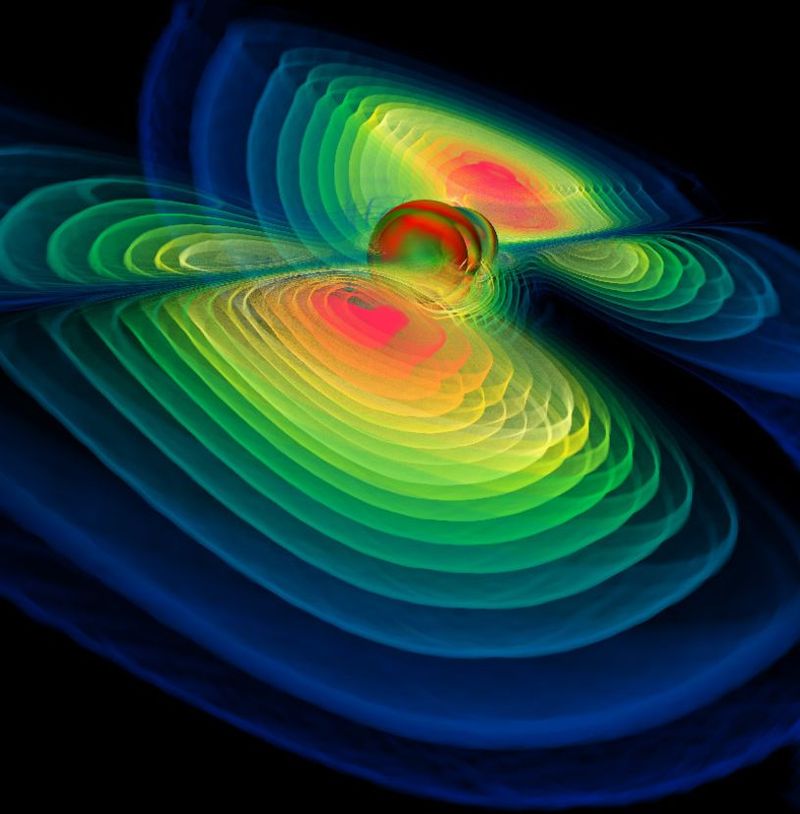
The signals that was picked was enough to predict the calculations which showed that two black holes, one- 29 solar masses heavy and the other- 36 solar masses, had merged and formed a new black hole; short of three solar masses in the combined mass. These three solar masses were emitted in a powerful burst of gravitational waves. The amplitude of the signal showed that the collision had happened nearly 1.3 billion light years away in the southern hemisphere.

The detection not only proved the existence of gravitational waves but also binary black hole systems. The positive part is that, this information came from data during an engineering run right after the upgraded Advanced LIGO came online. So imagine, what more can it cath when it starts running at full sensitivity?

Avery Broderick, a physicist at the Perimeter Institute and the University of Waterloo in Canada, expressed while discussing the importance of first such detection: “First detection is very important in terms of fundamental physics because of what it says about gravity, but it also opens a window onto what has previously been the dark universe. For centuries, astronomers have been looking up at the night sky and thinking about the light side of the universe. Now we’re going to get our first look at the dark side. There’s every expectation that it will be just as rich and exciting.”

Up until now, astronomers have looked at the Universe with x-rays, infra red, gamma rays or radio waves and they have come out with so many new things, which we never knew existed. So is the case with the Gravitational waves, a basic difference being that these are more similar to sound waves. Still there is a key difference between sound waves and Gravitational waves and that is, while sound requires a medium through which to travel, gravitational waves move the medium that is the spacetime itself. There is a possibility that there is an entire spectrum of gravitational waves just like light. So there need to be other set-ups and collaborations that catch frequencies beyond what LIGO can catch (the kilohertz portion of the spectrum). For example, Mingarelli works with the NanoGRAV (North American Nanohertz Observatory for Gravitational Waves) collaboration, part of a larger international consortium that also includes the European Pulsar Timing Array and the Parkes Pulsar Timing Array in Australia. As the name implies, NanoGRAV scientists are hunting very low frequency gravitational waves in the 1 to 10 nanohertz regime. There is also the space-based mission known as LISA (Laser Interferometer Space Antenna). While LIGO is earth-bound, LISA will take care of the gravitational waves of lower frequencies detected in space.

These equipments will surely contribute in understanding Gravitational waves in a better way which in turn will help in understanding the universe. So, the waves have finally reached us, a lot of work needs to be done now!

[adinserter block=”7″]

Author: Technology and Beyond

Why do readers always fall in the ‘Clickbait’ trap?

“You would never believe what this gel can do”…. “You would be a fool to ignore this post”…. “Nobody will miss this amazing trick to lose weight”…. These are a very few examples of the headlines you come across while reading content on various websites. These headlines have become extremely common. The very nature of these headlines makes them “Clickbait” because that is what they are: They trigger some or the other emotional feeling in you… strong enough to make you click on it.

click-bait

Did you know that everyday two million blog posts, 294 billion emails and over 800 thousand hours of videos are created? Considering this huge amount of content doing the rounds on the internet, it is natural that the creators would want to ensure that their content reaches as many people as possible. That is why they use Clickbait which is based on the age-old philosophy of ‘Direct response’ which is basically a type of marketing designed to generate an immediate response from consumers.

People uploading content would ask ‘what is wrong with it?’ Technically there isn’t anything wrong in it. But if you delve deeper, you will know that every other headline that claims to surprise you or blow your mind, it is actually the content that starts losing the credibility. It isn’t required if you have a great content and it is even pathetic to see some good quality content trapping people using claickbait, though it isn’t actually required.

Overdoing clickbait has its repercussions. Most of the sites now are concerned only about one thing: increasing the traffic volume hence the advertisement impressions. Content has been kept at the backburner. And people now understand this. There is a reason why people fall prey to clickbait and that is sensationalism, shock, envy, insecurity and fear are all those intense negative emotions that elicit a response. Similarly there is a reason why people start ignoring even the good content with a clickbait headline. Responses based on negative emotions don’t last long. When the content is poor (which most of the times is!), the user or reader gets disappointed after clicking the headline and going through the content. As humans, the more we are exposed to disappointing — and in some cases, frustrating or infuriating clickbait, the more skeptical we are of it, and the more we tune it out at the most basic biological level.

Clickbait initially may cause an increase in the traffic but if it is being continuously used as just a marketing strategy, the readers will feel cheated, frustrated and disappointed and consequently will stop falling prey to it. The easiest way to do things would be following ‘quality’. Nothing can replace or beat quality! It is the good quality of any content which will ensure that the users find it engaging, relevant and in sync with their expectations. This is the only way brand loyalty can be achieved.

Instead of using clickbait blindly, the approach should be to understand what the expectations of the readers or users are. Your website is successful only if you have repeat users. You can attract users initially with a cliackbait but they won’t visit next time knowing well that you don’t deliver according to their expectations. So the goal instead be to engage the user in such a way that the reader or viewer will stay and want to watch the next item on the playlist. So go ahead and drop that clickbait gimmick and concentrate on quality! This is what is going to pay you in the long run.

[adinserter block=”7″]

Author: Technology and Beyond

The preparation that NASA took for capturing Neil Armstrong’s first step on Moon will amaze you!

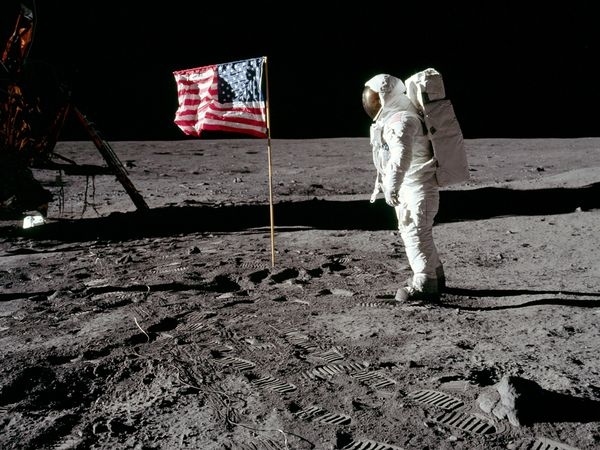
Neil Armstrong’s first step on the moon was undoubtedly one of the biggest things in the 20th Century. NASA knew that it was one such event that was going to linger in the minds of people for years to come so they planned for a live broadcast and as expected it came out to be the biggest television event of the 20th century. In July 1969, the space technology wasn’t as refined as today’s. So broadcasting the historic event of landing of Apollo 11 on the Moon had required a lot of hard work, innovation and amazing engineering.

45th-anniversary-of-apollo-11-moon-landing-42-638

Hello… Hello… Deep Space!

In any space mission, exchange of information or communication is the key. It is imperative that a communication system exists where there is an easy and continuous exchange of information between a spacecraft and supporting ground crews. For the Apollo mission it was even more necessary as Apollo, unlike the Mercury and Gemini programmes (where included flying missions in earth’s orbit) was to go beyond the Earth’s orbit.

The Mercury and Gemini programmes had used separate radio systems. Using Ultra High Frequency (UHF) and Very High Frequency (VHF); two-way voice communication, uplinked data and down-linked telemetry were done while tracking was achieved with a C-band beacon on the spacecraft interrogated by ground-based radar. Since this was a system for simpler missions, it wouldn’t have worked for Apollo which was going to the Moon with three men working in two spacecraft that would be operating simultaneously and sending down live television images, NASA needed a new way to uplink and downlink more data.

The NASA team came out with a solution for this and this was called Unified S-Band or USB. It was different as it combined tracking, ranging, command, and voice and television data into a single antenna. Voice and biomedical data were transmitted on a 1.25 MHz FM subcarrier, telemetry was done on a 1.024 MHz bi-phase modulated subcarrier, and the two spacecraft — the command and lunar modules — would use a pseudo-random ranging code using a common phase-modulated S-band downlink frequency of 2287.5 MHz for the CSM and 2282.5 MHz for the LM. All this meant that every base was covered as far as the information exchange between the ground and Moon-bound spacecraft was concerned.

The only thing that was still occupying the team’s mind was the television broadcast. So, in order to free up space for a television downlink from the lunar module, NASA removed the ranging code and changed the modulation from phase to frequency. This freed up 700 kHz of bandwidth for a television downlink on the USB signal. But this too posed a problem as 700 kHz was not enough bandwidth for the standard video camera of the day that transmitted 525 scan lines of data at 30 frames per second at 5 MHz.

Considering all this, what NASA needed was a slow-scan camera needed optimized for a smaller format, 320 scan lines of data at 10 frames per second and all this could be transmitted at 500 kHz. Once the specifications and guidelines of the camera were decided upon, NASA awarded a contract to RCA for the command module camera and another to Westinghouse Electric’s Aerospace Division for the lunar module camera.

[adinserter block=”7″]

Next page For More

Are you a ‘leader’ or a ‘follower’? This study will disclose that

Monash Institute of Cognitive and Clinical Neurosciences conducted a study using functional magnetic resonance imaging to investigate what parts of the brains become active when people disagree with others. There is a general tendency in our society to nod your head in agreement even if you do not actually agree and this habit of agreeing is generally used to avoid confrontational or unpleasant situations in one’s life.

great-leader

But, did you know this very habit of yours about agreeing or not agreeing can indicate what kind of a person you are? Brain scans found that those who rarely disagree have a different brain structure than those who do. According to the researchers, these areas of the brain are also linked to other life implications such as poor decision making, anxiety or interpersonal relationship problems, researchers say.

Dr Pascal Molenberghs, senior author of the study said: “People like to agree with others, a social default known as the truth bias, which is helpful in forming and maintaining social relationships. The study involved 39 right-handed participants who were given 192 true or false statements about four topics, viz. Biology, history, medical and physics. Each topic had 24 true and 24 false statements that were attributed to an individual with high or low expertise in the area – a professor or a student. The participants were then asked to decide which statements were true and which were false. They were also told that each answer was checked for accuracy and that most were incorrect, which was done to make sure they would make an attempt to disagree.

When the results were checked, only half of the participants agreed more often with the statements. The results of the imaging scan showed that those who rarely disagree with others display activity in the medial prefrontal cortex and anterior insula when they actually do disagree. These areas of the brain are responsible for cognitive dissonance or heightened state of mental stress. The study explained: ‘Having a lot of trouble disagreeing due to a heightened cognitive dissonance response may be indicative of an array of emotional, attitudinal or social issues compromising an individual’s capacity to make autonomous choices.’

So now you know, leaders never feel scared to disagree with others. They believe in putting their point across, whereas followers tend to be a ‘yes-man’ to avoid any kind of conflict and this can further lead to sadness and depression and mental stress. Now that you know, the ball is in your court. Take your life where you want to take it!

[adinserter block=”7″]

Author: Technology and Beyond

Immortality? This Experiment Might Provide a Breakthrough!

Senescence is the condition of cells of the body starting to age. A senescent cells doesn’t only die, but also starts to pump out a brew of compounds that can cause damage to surrounding tissue. The process, called senescence, is thought to protect us against cancer and help wounds heal.

BG7P49 Scientist watching mice in laboratory. Image shot 2009. Exact date unknown.

But as we get older, senescent cells start to accumulate across the body, and may be partly responsible for the general wear and tear of all our organs as we age. Elevated numbers of these cells have already been linked to heart failure, arthritis, Alzheimer’s – and cancer.

Darren Baker, Jan van Deursen and their colleagues at the Mayo Clinic in Rochester, Minnesota, conducted various studies on mice, and have been successful in wiping out senescent cells. They did so by tagging the senescent cells with a “suicide gene”, which on activation triggers the death of 70 percent of the tagged cells.

Baker is working with Unity Biotechnology, which launched last week, and bills itself as the first company to develop medicines that specifically target senescence. One of its founders is Judith Campisi of the Buck Institute for Research on Aging in Novato, California, who pioneered work on senescence.

The team used this method to wipe out senescent cells from mice that were 12 months old – about 40 in human years – twice a week, for the rest of their lives. It is around this age that the accumulation of senescent cells is thought to start causing problems. “This can be thought of as a prevention strategy, because we never let the cells accumulate,” says Baker.

The treated mice lived, on average, around 25 per cent longer than their untreated counterparts. “That’s the equivalent of extending human life from 80 to 100 years,” says Baker. Not only that, improvement was seen in their heart conditions and their ability to handle stress after 6 months of treatment. What’s more, the treated mice were able to stave off age-related disease. Their kidneys showed less of the scarring usually seen with ageing. They didn’t develop cataracts or cancer until much later in life, compared with untreated mice. They even looked younger, because they didn’t show the same fat loss as untreated mice.

A similar study by Baker and his colleagues in 2011, showed when they used the same technique to slow the ageing of mice with a disorder that makes them age more quickly.

“If you had asked me about this in 2011, I would have said we were a long way off,” says Baker. “But we’ve been working with a company to find drugs that kill senescent cells, and it’s easier than we thought.”

Campisi hopes to treat age-related conditions as preventable and curable, rather than treating symptoms of diseases where the end is inevitable and debilitating. “It is extraordinarily rewarding to see our discoveries move toward clinical trials.”

The ultimate aim is to develop a drug that could hit all age-related diseases in one go.

[adinserter block=”7″]

Author: Technology and Beyond

10 addictive mobile games over the last 20 years

The mobile gaming industry has enjoyed remarkable growth during the past few years, and the easy access it offers has made it at least as popular as console gaming. 2016 is set to be another exciting year, with new games as good as those listed below set to be released.

Playing-together-low-res

 1. Sky Chasers

This free iOS game has become enormously popular with Apple gamers thanks to the smart animations and a great adventure plot where you have take your character on quests, while avoiding enemies and running out of power in your spaceship.

2. World Chef

This is another great free game for the iOS platform and involves having to construct your dream restaurant and manage it well enough to stay ahead of your rivals. Again the graphics are nifty and the game is very involving.

3. Blown Away

This Android game offers a free 30-stage trial and subsequently costs £2.14 to download. The protagonist is Hendrik, who has lost his house, belongings and hair in a wind storm – and now needs to use his teleporter shoes to locate them.

4. The Executive

This £2.41 Android game lets those stuck in boring office jobs live out their fantasies of fighting off werewolves – after all of the employees turn into them. You play as the surviving CEO, who has to defeat them.

5. Ridiculous Fishing

This is a free Dutch game available for both iOS and Android platforms and lets you play a fisherman catching the fish he wants by somewhat explosive means!

 6. New Star Soccer

This highly addictive free Android or IOS game sees you play a young football hotshot trying to hit the big time, complete with distractions from girlfriends and sponsors. Scoring goals earns financial bonuses to fund the big-time lifestyle.

7. Soccer Safari

If you fancy a football game that is funny rather than realistic, this slots game – available for both Android and iOS mobiles as well as via Casinoonline.co.nz where slots are known as pokies – centres on an all-animal World Cup tournament, with hilarious graphics and great chances of scooping a payout.

8. Playnets

Another of the many great free games for iOS devices; this is a space-based game where you have to ensure the survival of your planet by tapping out invaders. It is a simple set-up but requires seriously nimble fingers.

9. Alto’s Adventure

Yet another nifty free iOS game, this is an oddly soothing experience as you make the protagonist glide across the skilfully drawn snowy mountains on a snowboard, in search of his lost llamas.

10.Minecraft Pocket

Minecraft is one of the great gaming success stories and the Android and iOS mobile version works the same way – allowing you to construct anything from the Enterprise to the Millennium Falcon, while fighting off Creepers.

We can look forward to more equally addictive mobile games this year.

[adinserter block=”7″]

Author: Technology Blog

Plastic convenience: What it means for our mother earth?

The rise of plastics since the mid-20th century, both as a material element of modern life and as a growing environmental pollutant, has been widely described. Their distribution in both the terrestrial and marine realms suggests that they are a key geological indicator of the Anthropocene- an epoch where humans dominate the Earth’s surface geology- as a distinctive stratal component.

earth-in-plastic-bag

A new study, which has been published in the journal Anthropocene, suggests that the surface of the planet is being noticeably altered by the production of long-lasting man-made materials, resulting in us entering an ‘Age of Plastic’.

Jan Zalasiewicz, Professor of Palaeobiology from the University of Leicester’s Department of Geology explained: “Plastics were more or less unknown to our grandparents, when they were children. But now, they are indispensable to our lives. They’re everywhere – wrapping our food, being containers for our water and milk, providing cartons for eggs and yoghurt and chocolate, keeping our medicines sterile. They now make up most of the clothes that we wear, too.

“Plastics are also pretty well everywhere on Earth, from mountain tops to the deep ocean floor – and can be fossilized into the far future. We now make almost a billion tons of the stuff every three years. If all the plastic made in the last few decades was clingfilm, there would be enough to put a layer around the whole Earth. With current trends of production, there will be the equivalent of several more such layers by mid-century.” The study was carried out by an international team of scientists including the University of Leicester’s Professors Jan Zalasiewicz and Mark Williams and PhD student Yasmin Yonan from the Department of Geology and field archaeologist Dr Matt Edgeworth who is an Honorary Visiting Research Fellow from the School of Archaeology and Ancient History.

The study suggests that plastics have such a long-lasting impact on the planet’s geology because they are inert and hard to degrade. As a result, when plastics litter the landscape they become a part of the soil, often ending up in the sea and being consumed by and killing plankton, fish and seabirds.

Professor Zalasiewicz added: “Plastics will continue to be input into the sedimentary cycle overcoming millennia as temporary stores – landfill sites – are eroded. Plastics already enable fine time resolution within Anthropocene deposits via the development of their different types and via the artefacts, known as ‘technofossils’, they are moulded into, and many of these may have long-term preservation potential when buried in strata.

“Once buried, being so hard-wearing, plastics have a good chance to be fossilized – and leave a signal of the ultimate convenience material for many million years into the future. The age of plastic may really last for ages.” Dr Edgeworth said: “It may seem odd to think of plastics as archaeological and geological materials because they are so new, but we increasingly find them as inclusions in recent strata. Plastics make excellent stratigraphic markers.”

Colin Waters from the British Geological Survey, a co-author in the study, added: “We have become accustomed to living amongst plastic refuse, but it is the ‘unseen’ contribution of plastic microbeads from cosmetics and toothpaste or the artificial fibres washed from our clothes that are increasingly accumulating on sea and lake beds and perhaps have the greatest potential for leaving a lasting legacy in the geological record.”

In 2016 the Anthropocene Working Group led by Professor Jan Zalasiewicz will gather more evidence on the Anthropocene, which will help inform recommendations on whether this new time unit should be formalized and, if so, how it might be defined and characterized.

[adinserter block=”7″]

Author: Technology Blog

You would never want to miss this list of 100 most popular things on Facebook!

“A list of top ten actors” or a “list of top ten football players” or a list of “hottest teen pop sensations”… what its the most common thing in all these? A List. But today what we are presenting here is not some short, peppy, trendy list but a long, exhaustive and interesting one.

facebook

This is the list of those things that lure people the most on Facebook or those that rank high on people’s interests. And this list doesn’t typically counts the top ten or top fifty or top hundred…. it includes the top 2001 popular things on Facebook. While Facebook, Technology, Entertainment, Consumer Electronics and Shopping and Fashion were the top five in the list, Call of Duty, Ska, Wrinkle, Whiskey and Tequila constituted the bottom five. Take out some time and read on to find… what rank does your favourites managed to grab!

1.Facebook – 1,466,365,990
2.Technology – 1,318,222,270
3.Entertainment – 1,312,985,610
4.Consumer electronics – 1,214,006,340
5.Shopping and fashion – 1,193,713,720
6.Sports – 1,139,145,910
7.Social network – 1,121,276,200
8.Mobile phones – 1,087,369,660
9.Music – 1,060,002,530
10.Computers – 1,056,166,060
11.Shopping – 990,441,390
12.Food – 989,889,920
13.Games – 983,470,150
14.Films – 971,781,740
15.Travel – 900,896,720
16.Instant messaging – 897,632,660
17.Facebook for Android – 896,071,070
18.Reading – 864,833,410
19.Arts and music – 862,449,880
20.Clothing – 840,041,970
21.Love – 838,535,070
22.Televisions – 829,642,700
23.Video games – 815,693,470
24.Family – 814,696,580
25.Facebook Messenger – 804,449,790
26.Design – 785,249,430
27.Education – 780,857,920
28.Football – 769,984,930
29.Online shopping – 767,873,570
30.Beauty – 753,230,080
31.Television programme – 752,308,070
32.Life – 736,591,580
33.Friendship – 724,202,450
34.Photography – 693,437,920
35.Time – 693,278,170
36.World – 688,763,350
37.Fitness and wellness – 686,835,160
38.Car – 682,922,740
39.Pop music – 654,290,380
40.Beverages – 649,673,920
41.Rock music – 648,965,080
42.Finance – 642,934,260
43.Business – 638,130,940
44.Books – 607,374,150
45.Human – 590,738,510
46.Child – 582,476,090
47.Fashion accessories – 577,243,110
48.Happiness – 570,671,330
49.SWFL Mobile Fusion – 564,004,460
50.Online – 562,631,700
51.Sales – 554,681,240
52.Nature – 548,853,590
53.Current events – 542,360,510
54.Android (operating system) – 538,875,740
55.Photograph – 533,051,570
56.Vehicles – 530,156,110
57.Music videos – 524,824,790
58.Year – 522,709,940
59.Website – 506,401,250
60.Woman – 502,159,980
61.Price – 500,351,920
62.Image – 492,761,390
63.Free software – 492,469,570
64.Dance – 489,967,640
65.Marketing – 488,935,380
66.Brand – 486,587,110
67.Video – 485,880,130
68.Pets – 485,270,540
69.Victory – 484,713,760
70.Twitter – 477,187,170
71.Newspapers – 474,822,640
72.Telecommunication – 471,924,740
73.Cosmetics – 468,836,960
74.Day – 465,184,270
75.Higher education – 460,739,210
76.Shoes – 458,806,450
77.Instagram – 458,725,000
78.COM file – 454,814,140
79.People – 453,878,550
80.Satellite television – 452,427,070
81.Telephone – 451,706,590
82.Mobile app – 446,118,890
83.Country – 445,513,270
84.Electronic music – 444,201,290
85.Smartphones – 441,232,960
86.Open-source software – 440,880,810
87.Medicine – 438,581,390
88.Jewellery – 435,847,840
89.Biology – 432,185,650
90.United States – 430,747,920
91.First-person shooter games – 430,266,270
92.Google Play – 428,875,010
93.iPhone – 428,558,240
94.University – 426,740,250
95.Information – 425,968,660
96.Digital distribution – 425,945,280
97.Application software – 423,675,190
98.Rhythm and blues music – 423,585,180
99.Company – 415,202,240
100.Restaurants – 408,863,460

[adinserter block=”7″]

Author: Technology Blog

Verified by ExactMetrics