
10 addictive mobile games over the last 20 years

The mobile gaming industry has enjoyed remarkable growth during the past few years, and the easy access it offers has made it at least as popular as console gaming. 2016 is set to be another exciting year, with new games as good as those listed below set to be released.

Playing-together-low-res

 1. Sky Chasers

This free iOS game has become enormously popular with Apple gamers thanks to the smart animations and a great adventure plot where you have take your character on quests, while avoiding enemies and running out of power in your spaceship.

2. World Chef

This is another great free game for the iOS platform and involves having to construct your dream restaurant and manage it well enough to stay ahead of your rivals. Again the graphics are nifty and the game is very involving.

3. Blown Away

This Android game offers a free 30-stage trial and subsequently costs £2.14 to download. The protagonist is Hendrik, who has lost his house, belongings and hair in a wind storm – and now needs to use his teleporter shoes to locate them.

4. The Executive

This £2.41 Android game lets those stuck in boring office jobs live out their fantasies of fighting off werewolves – after all of the employees turn into them. You play as the surviving CEO, who has to defeat them.

5. Ridiculous Fishing

This is a free Dutch game available for both iOS and Android platforms and lets you play a fisherman catching the fish he wants by somewhat explosive means!

 6. New Star Soccer

This highly addictive free Android or IOS game sees you play a young football hotshot trying to hit the big time, complete with distractions from girlfriends and sponsors. Scoring goals earns financial bonuses to fund the big-time lifestyle.

7. Soccer Safari

If you fancy a football game that is funny rather than realistic, this slots game – available for both Android and iOS mobiles as well as via Casinoonline.co.nz where slots are known as pokies – centres on an all-animal World Cup tournament, with hilarious graphics and great chances of scooping a payout.

8. Playnets

Another of the many great free games for iOS devices; this is a space-based game where you have to ensure the survival of your planet by tapping out invaders. It is a simple set-up but requires seriously nimble fingers.

9. Alto’s Adventure

Yet another nifty free iOS game, this is an oddly soothing experience as you make the protagonist glide across the skilfully drawn snowy mountains on a snowboard, in search of his lost llamas.

10.Minecraft Pocket

Minecraft is one of the great gaming success stories and the Android and iOS mobile version works the same way – allowing you to construct anything from the Enterprise to the Millennium Falcon, while fighting off Creepers.

We can look forward to more equally addictive mobile games this year.

[adinserter block=”7″]

Author: Technology Blog
Plastic convenience: What it means for our mother earth?

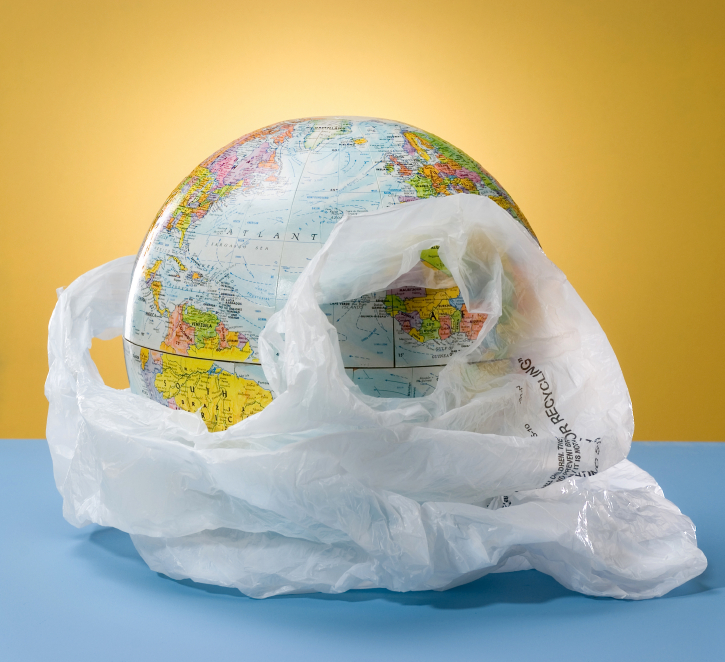
The rise of plastics since the mid-20th century, both as a material element of modern life and as a growing environmental pollutant, has been widely described. Their distribution in both the terrestrial and marine realms suggests that they are a key geological indicator of the Anthropocene- an epoch where humans dominate the Earth’s surface geology- as a distinctive stratal component.

earth-in-plastic-bag

A new study, which has been published in the journal Anthropocene, suggests that the surface of the planet is being noticeably altered by the production of long-lasting man-made materials, resulting in us entering an ‘Age of Plastic’.

Jan Zalasiewicz, Professor of Palaeobiology from the University of Leicester’s Department of Geology explained: “Plastics were more or less unknown to our grandparents, when they were children. But now, they are indispensable to our lives. They’re everywhere – wrapping our food, being containers for our water and milk, providing cartons for eggs and yoghurt and chocolate, keeping our medicines sterile. They now make up most of the clothes that we wear, too.

“Plastics are also pretty well everywhere on Earth, from mountain tops to the deep ocean floor – and can be fossilized into the far future. We now make almost a billion tons of the stuff every three years. If all the plastic made in the last few decades was clingfilm, there would be enough to put a layer around the whole Earth. With current trends of production, there will be the equivalent of several more such layers by mid-century.” The study was carried out by an international team of scientists including the University of Leicester’s Professors Jan Zalasiewicz and Mark Williams and PhD student Yasmin Yonan from the Department of Geology and field archaeologist Dr Matt Edgeworth who is an Honorary Visiting Research Fellow from the School of Archaeology and Ancient History.

The study suggests that plastics have such a long-lasting impact on the planet’s geology because they are inert and hard to degrade. As a result, when plastics litter the landscape they become a part of the soil, often ending up in the sea and being consumed by and killing plankton, fish and seabirds.

Professor Zalasiewicz added: “Plastics will continue to be input into the sedimentary cycle overcoming millennia as temporary stores – landfill sites – are eroded. Plastics already enable fine time resolution within Anthropocene deposits via the development of their different types and via the artefacts, known as ‘technofossils’, they are moulded into, and many of these may have long-term preservation potential when buried in strata.

“Once buried, being so hard-wearing, plastics have a good chance to be fossilized – and leave a signal of the ultimate convenience material for many million years into the future. The age of plastic may really last for ages.” Dr Edgeworth said: “It may seem odd to think of plastics as archaeological and geological materials because they are so new, but we increasingly find them as inclusions in recent strata. Plastics make excellent stratigraphic markers.”

Colin Waters from the British Geological Survey, a co-author in the study, added: “We have become accustomed to living amongst plastic refuse, but it is the ‘unseen’ contribution of plastic microbeads from cosmetics and toothpaste or the artificial fibres washed from our clothes that are increasingly accumulating on sea and lake beds and perhaps have the greatest potential for leaving a lasting legacy in the geological record.”

In 2016 the Anthropocene Working Group led by Professor Jan Zalasiewicz will gather more evidence on the Anthropocene, which will help inform recommendations on whether this new time unit should be formalized and, if so, how it might be defined and characterized.

[adinserter block=”7″]

Author: Technology Blog
Verified by ExactMetrics