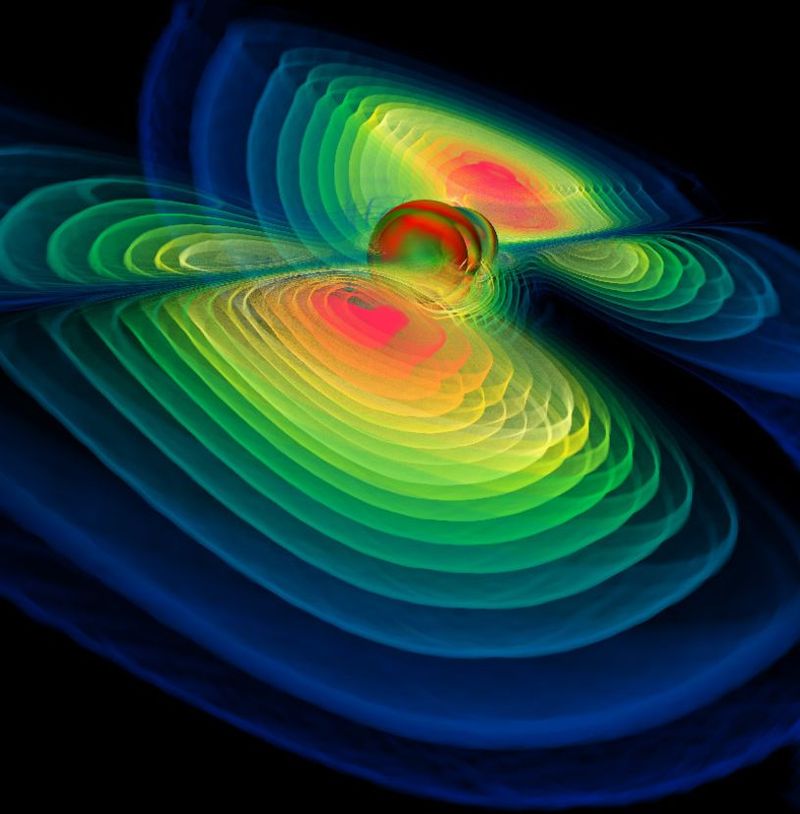
Something, the existence of which was discussed a century ago by none other than Albert Einstein, has finally made an appearance in front of the world. Gravitational waves- said to be the ripples in the fabric of spacetime-have finally been discovered. The historical announcement was done by David Reitez, executive director of the LIGO (Laser Interferometer Gravitational Wave Observatory) at the National Press Building in Washington DC. This moment was an outcome of a hundred years worth of research one may say.
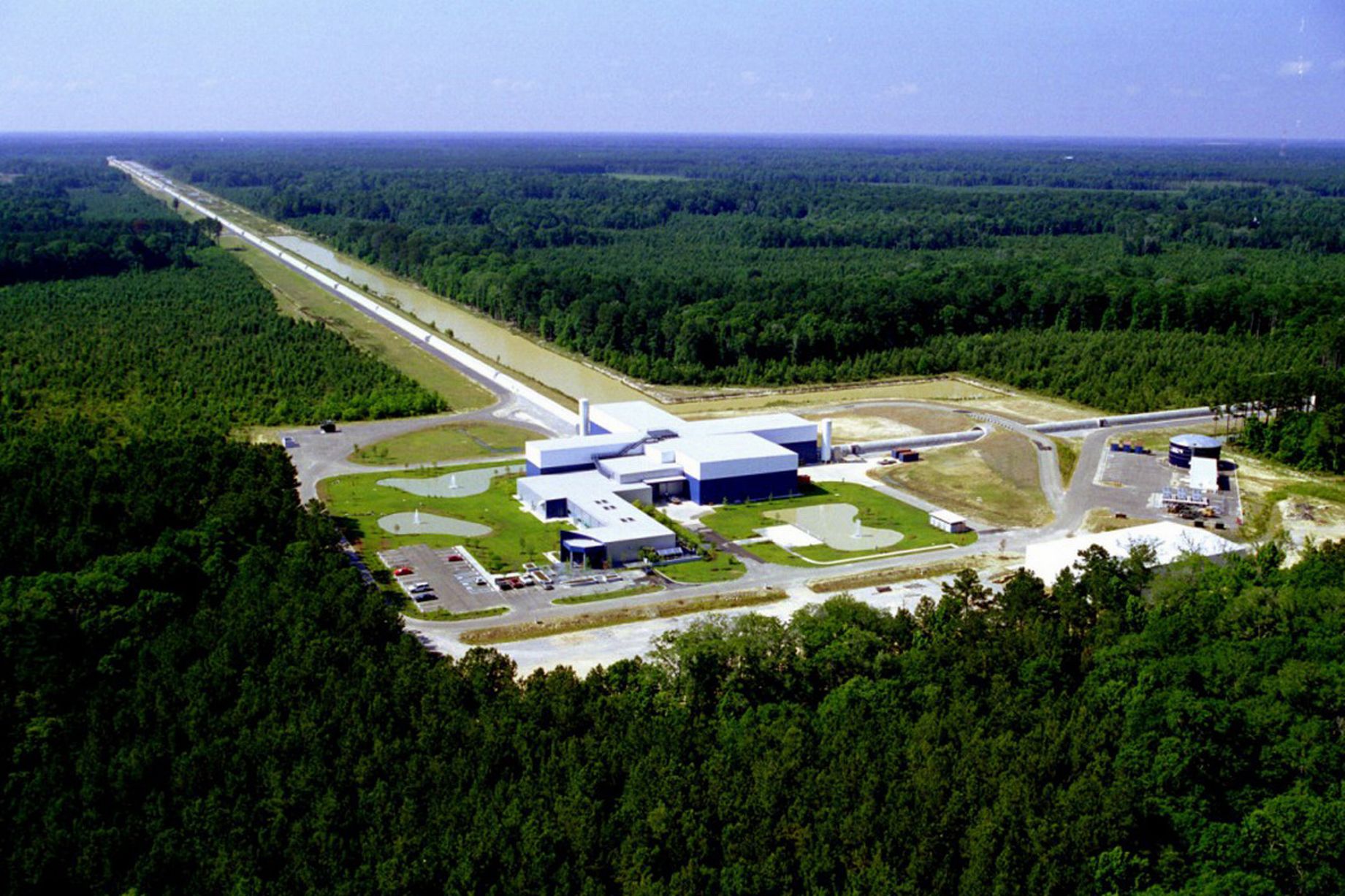
Einstein had first predicted the existence of gravitational waves in 1915 and physicists uncovered indirect evidence in the 1970s and 1980s. But direct detection was something that eluded the scientists up until September 2015. Yes! On September 14, 2015, at 5:51 AM EST, the LIGO detectors at Livingston and Hanford both picked up signals within milliseconds of each other. Surprisingly, the waveforms of those signals closely matched predictions of the simulations. The signals are similar to the decay signatures that physicists use to identify subatomic particles produced in collisions at the Large Hadron Collider. The signals were so clear and well-defined that at first that Reitez that it was just another false signal inserted by one of the LIGO team members (they used to insert false signals into the data to test the rigour of the analysis). Similar was the thinking of Alan Weinstein, Head, LIGO Caltech. But luckily and surprisingly it wasn’t so. These were ‘real’ signals.
The signals that was picked was enough to predict the calculations which showed that two black holes, one- 29 solar masses heavy and the other- 36 solar masses, had merged and formed a new black hole; short of three solar masses in the combined mass. These three solar masses were emitted in a powerful burst of gravitational waves. The amplitude of the signal showed that the collision had happened nearly 1.3 billion light years away in the southern hemisphere.
The detection not only proved the existence of gravitational waves but also binary black hole systems. The positive part is that, this information came from data during an engineering run right after the upgraded Advanced LIGO came online. So imagine, what more can it cath when it starts running at full sensitivity?
Avery Broderick, a physicist at the Perimeter Institute and the University of Waterloo in Canada, expressed while discussing the importance of first such detection: “First detection is very important in terms of fundamental physics because of what it says about gravity, but it also opens a window onto what has previously been the dark universe. For centuries, astronomers have been looking up at the night sky and thinking about the light side of the universe. Now we’re going to get our first look at the dark side. There’s every expectation that it will be just as rich and exciting.”
Up until now, astronomers have looked at the Universe with x-rays, infra red, gamma rays or radio waves and they have come out with so many new things, which we never knew existed. So is the case with the Gravitational waves, a basic difference being that these are more similar to sound waves. Still there is a key difference between sound waves and Gravitational waves and that is, while sound requires a medium through which to travel, gravitational waves move the medium that is the spacetime itself. There is a possibility that there is an entire spectrum of gravitational waves just like light. So there need to be other set-ups and collaborations that catch frequencies beyond what LIGO can catch (the kilohertz portion of the spectrum). For example, Mingarelli works with the NanoGRAV (North American Nanohertz Observatory for Gravitational Waves) collaboration, part of a larger international consortium that also includes the European Pulsar Timing Array and the Parkes Pulsar Timing Array in Australia. As the name implies, NanoGRAV scientists are hunting very low frequency gravitational waves in the 1 to 10 nanohertz regime. There is also the space-based mission known as LISA (Laser Interferometer Space Antenna). While LIGO is earth-bound, LISA will take care of the gravitational waves of lower frequencies detected in space.
These equipments will surely contribute in understanding Gravitational waves in a better way which in turn will help in understanding the universe. So, the waves have finally reached us, a lot of work needs to be done now!
[adinserter block=”7″]
Author: Technology and Beyond