Samsung Galaxy S7: The rumours doing the rounds!

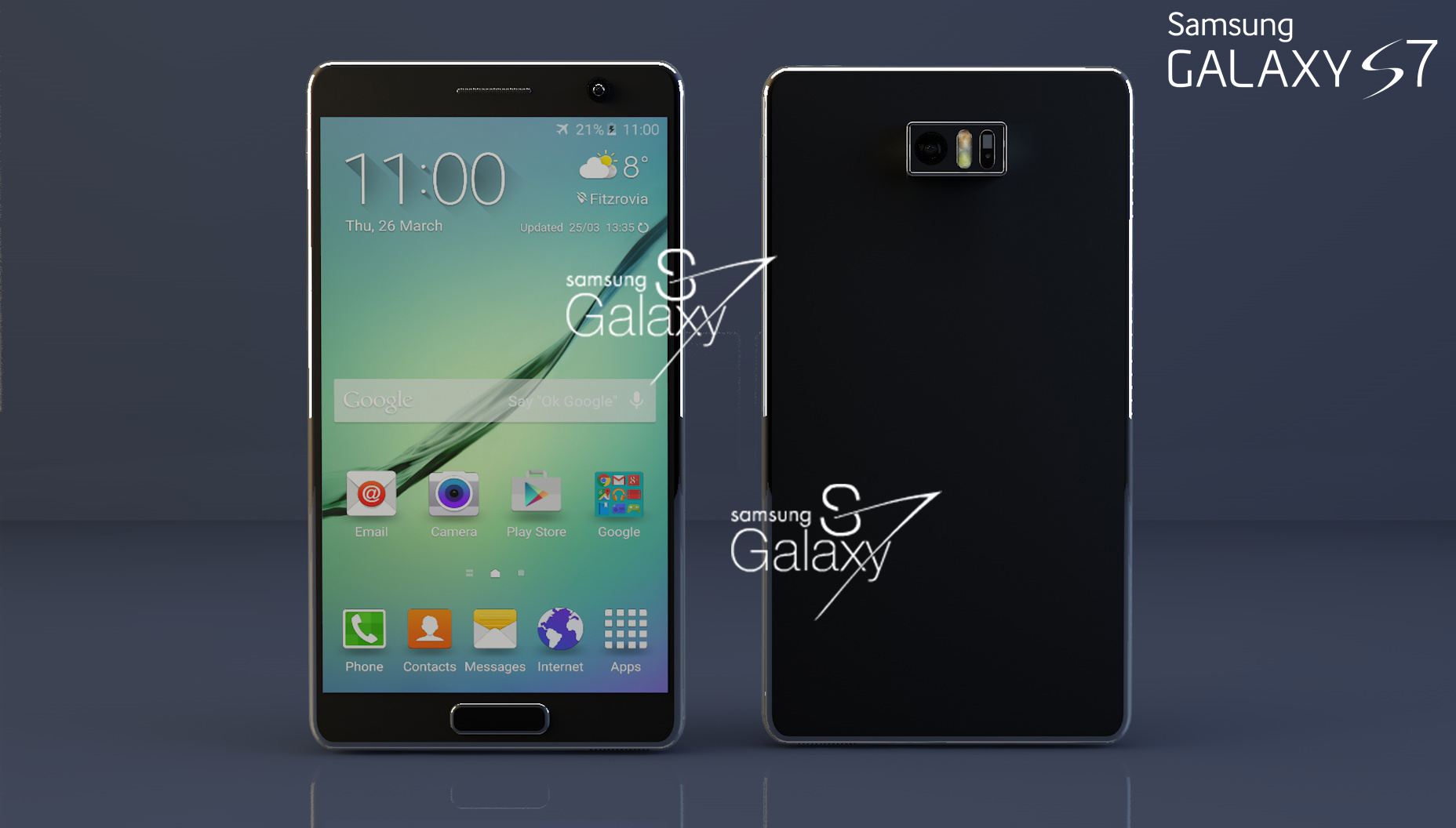
Samsung Galaxy S smartphones have a faithful fan following owing to their Super AMOLED display, a good camera and the ease with which you can use them. The launch of Samsung Galaxy S7 is just around the corner, most likely on 21st of February. And as the launch is drawing near, the rumour mills are running at full throttle. We have compiled all these rumour-cum-unofficial hints about the S7. Read on and discover on 21st how near we were to the reality.
galaxy-s7-edge-concept-3

What’s in a name?
Well, if you are launching a smartphone that is in direct competition with the iPhone 7, then the name does matter. Samsung’s new offering would be called the Galaxy S7 and S7 edge. The iPhone 7 is making its grand entry this year so it is a good strategy to use the same numeral for launching the new smartphone.

Probable Design
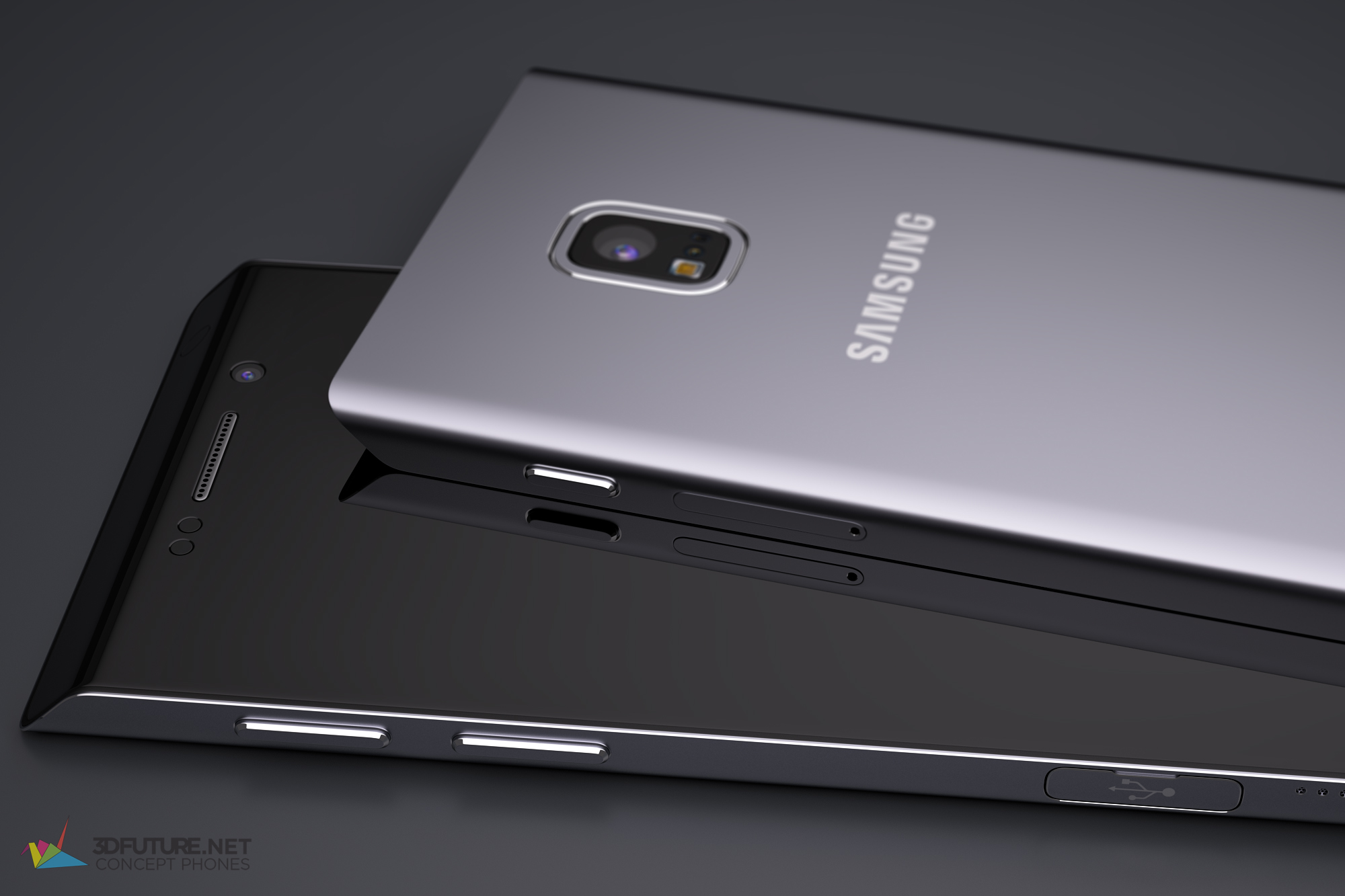
Based on all the rumours and peek-ins we have, it is most likely that Galaxy S7 Edge will have a slight curve on both the sides. According to the reports, the Edge will be a perfect compromise between the 5.1-inch Galaxy S6 and the 5.7-inch Galaxy S6 Edge+ that were revealed last year. So the resultant phone will be larger than the previous generations but not a big one like the Samsung Galaxy Note 5. There is also a rumour that the Samsung Galaxy S7 will come with USB Type-C. Gold and silver will surely be the colour options available.

Hardware
In all probability, Galaxy S7 will have a hybrid SIM tray providing space for expandable memory. It will also bring back the feature of water resistance that was ditched in the case of Galaxy S6. The company will keep using the non-removable battery in the new smartphones too. While the Galaxy S7 will come with an upgraded 3,000 mAh battery, the S7 Edge will have a jumbo 3,600 mAh battery. The Galaxy S7 is supposed to have super fast USB Type-C charging as well as as both types of wireless charging standards The Galaxy S7 will supposedly come with Qualcomm’s newest and most powerful Snapdragon 820 processor in North America despite the news of the break up between Samsung and Qualcomm. This will be the first smartphone to launch with new processor.
The screen in all probability will have quad HD resolution with a Super AMOLED display. The phone may have 32GB or 64GB of storage, and come with 4GB of RAM. The camera, interestingly, may actually “devolve” from 16 megapixels to 12 megapixels but with an f/1.7 lens aperture, which could make the S7 a delight to capture with in low lights.

Software
Though this head hasn’t had much of rumours but it can be said safely that features like Samsung Pay and YouTube live broadcasting will be baked in right from the get go, whereas last year they were retroactively added with software updates. If Samsung does add a 3D Touch-like feature to the S7, TouchWiz will surely be loaded up with pressure-sensitive shortcuts. One feature that’s probably going to make an appearance is a copy of Apple’s Live Photos feature called Vivid Photo. There is a big rumour doing the rounds according to which in order to improve the fluency of TouchWiz, Samsung is reaching out to Google for help. If this is true then TouchWiz may run faster on Samsung’s new smartphones.

Cost and availability
It is most likely that the Galaxy S7 will remain below the four digit price. Since S6 was launched at $700, S7 may hover around the same price. The Galaxy S7 edge will most likely be around a $100-150 mark-up compared to the regular S7. If everything goes as per plan… the new smartphone of Samsung will make its foray into the market in the month of March. Till then we will just have to satiate our thirst with these rumours.

[adinserter block=”7″]

Author: Technology Blog

A sneak peek into MacBook 2016!

The ‘oh so famous’ Apple secrecy is again at its best! With all the apprehensions surrounding the updated MacBook to make an entry in 2016, some rumours seem more concrete than the others. So let’s take a look at what Apple has in store for us when it comes to MacBook 2016.

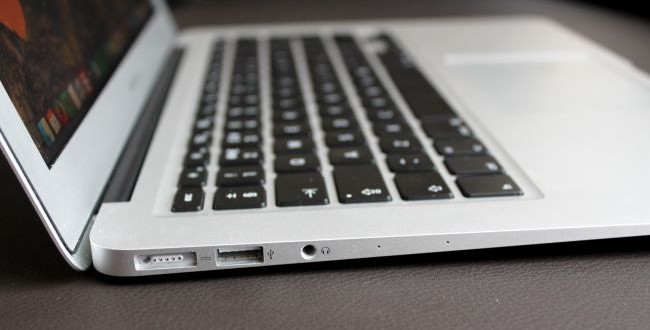
MacBook-Air-2016

Knock! Knock! Skylake is here!

This is almost a certainty that Skylake is gaining entry into Apple and this appears to be the right move considering the MacBooks chips which are no less than ancient. The MacBook Pro 13 is powered by a quad-core Broadwell chip that’s nearing a year old at this point, and that alas! is the newest of the bunch. The reintroduced 2015 MacBook is powered by choice of two Core M chips, both of which come from the end of 2014. The 15-inch MacBook Pro is, ironically, the oldest of all, with a Haswell chip that released in the third quarter of 2014. Skylake will bring along not only performance improvements but also smarter power usage that will help extend the MacBook’s battery life (which is already quite impressive). This can also lead to more powerful integrated graphics.

New designs are needed

MacBook Air and Macbook Pro have been quite popular so far and are loved but the time has come for a redesign. What with all others taking designs to a different level, it is high time that Apple too starts considering a revamp of the MacBook. So if changes are incorporated, it is most likely that we’ll see the introduction of the USB Type–C port across every laptop in the MacBook line though the option of ‘only’ including that port seems less likely (not to forget the MacBook Pro’s popularity for media creation and editing). The traditional USB ports are a bit more of a sticking point, and until Type-C rolls out to a lot of accessories, or adapters are more easily accessible, it’s not likely that we’ll see Type-C stand on any MacBook Pro.

Air takes the back seat

MacBook Air and MacBook are almost similar in most aspects and there seems to be a probability that the redesigned MacBook may replace MacBook Air which hasn’t seen a design update in a long time. If Apple does drop the Air, it will mean new offerings in the sub-$1,000 laptop point for Apple to replace it with. Some of that cost-cutting from the current $1,300 base model would come simply from the fact that it’s now second-generation hardware. In true Apple form, the brand could also continue selling the older models at a cheaper price than newer versions.

Go retina…. go away!

The trademark Retina display of Apple needs a change now and seems like this year is the time. Laptops are shedding that 1080p display to step into the high-resolution territory. So the redesigned MacBook 2016 may have it and expand its panel size. But improving displays doesn’t only mean resolution only. There is a huge possibility that Apple’s MacBook lines would begin including OLED displays.

Money matters

The price will play an important role in the launch of MacBook 2016 because The big question is what Apple plans to do about its entry level product. The Air’s days seem numbered, but it’s also the company’s best selling laptop. Apple would have to lower the price of the MacBook if the Air is cut. The MacBook Pro line though will not have many differences to spot. While they may receive a design update, the hardware inside the Pros isn’t going to change substantially, over than the update to Skylake. 

The guessing game will go on till we actually see those Apple products with our own eyes. But till the time the company officially unveils its new and updated line of macBook, we will just have to wait and watch and hope that whatever positive changes we have heard so fat are incorporated in the new MacBook.

[adinserter block=”7″]

Author: Technology Blog
This amazing technique makes your mind an open book !

Mind reading is an exciting thing. All of us once or more in our lifetime have had a strong desire to read the mind of persons around us. How would it feel? Will it hurt us or will it make us happy? Can’t say; because none of us can actually read someone else’s mind. But researchers at the University of Washington are doing an experiment that can pave the way for mind reading. Using brain implants and sophisticated software, researchers can now predict what their subjects are seeing with high speed and accuracy.

i4gcjsx6xgt8iwyljg5c

A neurological process is involved in viewing a two-dimensional image on a paper and transforming that image into something easily recognized by our minds. To understand this very neurological process, a research team led by University of Washington neuroscientist Rajesh Rao and neurosurgeon Jeff Ojermann demonstrated that it’s possible to decode human brain signals at nearly the speed of perception.

To achieve this, an experiment was conducted with the help of seven patients who were undergoing treatment for epilepsy. It was found that medicines had proved futile in controlling the seizures because of which these patients were given temporary brain implants and electrodes were used to pinpoint the focal points of their seizures. Since Rao and his team also need electrodes for their experiment, this group proved to be a good one considering electrodes were already fitted on their minds so it was just a question of giving them an additional task.

The patients were shown a random sequence of pictures—images of human faces, houses, and blank gray screens—on computer monitors in brief 400 millisecond intervals. Their specific task was to watch for an image of an upside-down house. At the same time, the electrodes in their brain were connected to software that extracted two distinct brain signal properties, namely “event related potentials” (when massive batches of neurons simultaneously light up in response to an image) and “broadband spectral” changes (signals that linger after viewing an image).

A computer was used to sample and digitize the incoming brain signal at a rate of 1000 times per second, as the images flickered one after the other on the screen. This resolution allowed the software to determine which combination of electrode locations and signals correlated best to what the patients were seeing. The team observed that the responses differed, some were sensitive to faces and some were sensitive to houses.

Based on these responses, the software was trained and then the patients were shown an entirely new set of pictures by the researchers. Without previous exposure to these new images, the computer was able to predict with 96 percent accuracy when a test subject was seeing a house, a face, or a grey screen. And it did so at nearly the speed of perception. But it is to be noted that this accuracy was achieved only when the computer considered both event-related potentials and broadband changes because in order to understand how a person perceives a complex visual object; a holistic picture of the neural networks needs to be considered.

No huge claims can be made as of now because the sample size of the study was too small. But it can be hoped that if success is achieved moving on this path, this kind of brain decoding could be used in brain mapping to identify locations in the brain responsible for certain types of information in real time. It can also be used to build communication mechanisms for “locked-in” patients who are paralyzed or have suffered a stroke.

[adinserter block=”7″]

Author: Technology Blog

The world is not enough: Facebook’s grand plan to dominate all!

Facebook is reaching new summits of growth, revenue, success, reach and popularity. With each quarter, the company is weaving a new tale of financial gain and success. The best part is: Facebook is discovering itself on a continuous basis: a super impressive mobile profile and lots of hidden and to-be-launched features.

The more we see Facebook climbing high up those stairs of success the more it makes you realise the similarity between it and Google. And no we are not talking about the domain in which they work. One is a search engine and other is a social network.

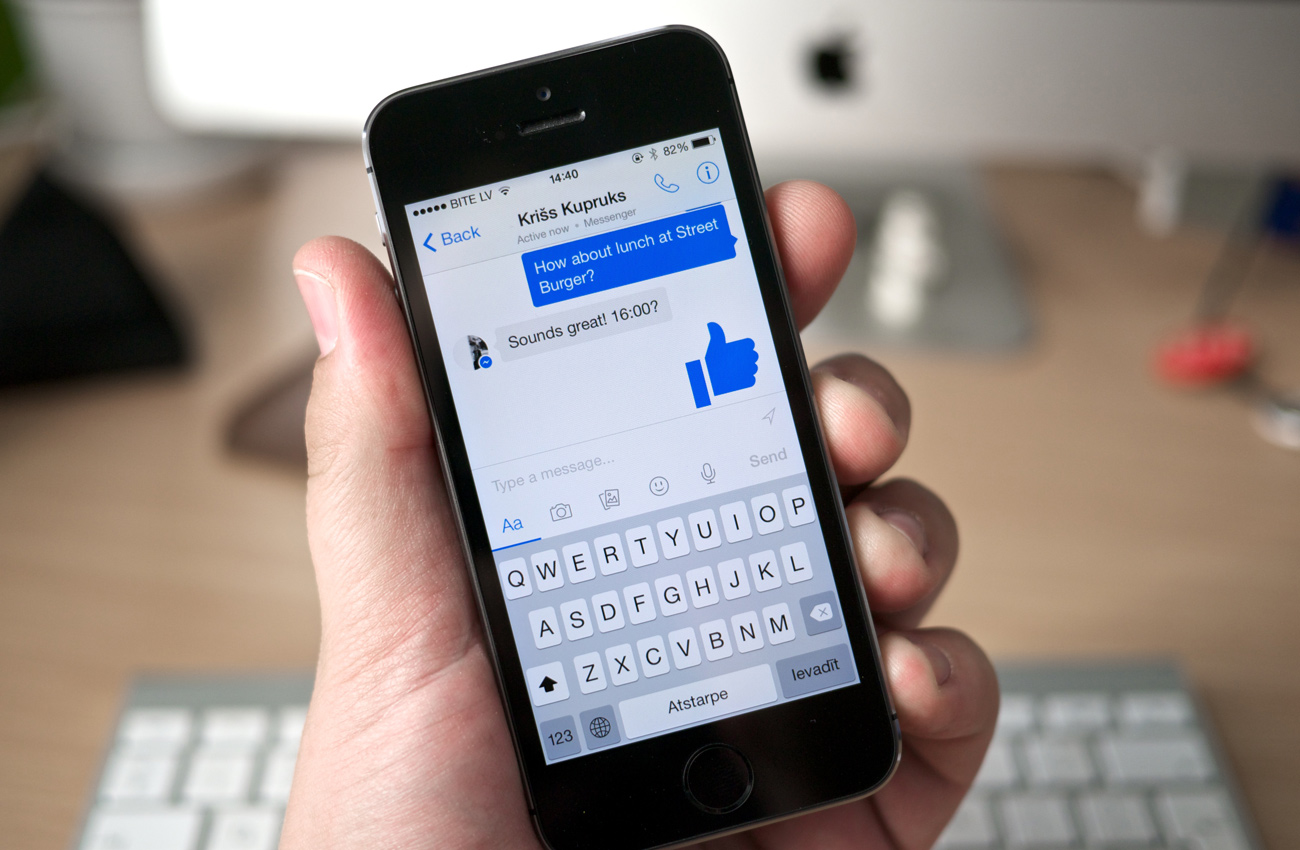
facebook-messenger

They seem similar because of the way they have grown by gifting new and innovative things to its users and maintaining and enhancing the connection with them. Though operating in the ‘Social Network’ domain, Facebook has also evolved as a medium. It’s a content platform and, to a certain extent, a shaper of thoughts and ideas through the content it presents.

The company is growing in an unbelievable manner and at a break-neck speed. 1 billion people check in Facebook everyday and Facebook is converting them making heaps of money. The company’s last year advertising revenue grew by 57%. If you consider all this, there is no doubt that Facebook can easily take on a giant like Google and if it truly finds these ways then the world is not enough for it.

Facebook Search: People love Facebook and there is no two ways about it. But they visit Facebook as a leisure activity. For Facebook to take on giants like Google, it will really have to delve into ‘search’. And by this search we do not mean the current one which looks at posts inside  the network and does a decent job of revealing associated users and content, but there is, obviously, a vast world of information outside of Facebook that, for the most part, is Google’s purview.

Facebook should add a global search as part of its search bar. This click on search could then start by presenting the option of searching within or outside the Facebook. For this, Facebook could license Bing search results owing to its longstanding friendship with Microsoft.

And if not this, then Facebook can start thinking about developing its own search engine. Considering they are investing big time in AI, the search engine can really turn into a reality by building a search engine that does not try to organize the world’s information, but instead triangulates with existing interests on Facebook.

[adinserter block=”7″]

Next page For More

India: Apple’s Final Frontier!

When you run a company as huge as Apple you require income as huge as the world itself! Apple is a giant in its field and its iPhones aren’t just technology marvels but status symbols. Since long China has been a big, big market for Apple but everything has to reach a saturation point. This is what’s happening with Apple in China.

3-iphone-apple-event-re-G6-e1441790066752

Sales of iPhone though show growth but are surely cooling down with the passage of time. And when you are in business, you mean business. Apple is doing just that. Seeing the Chinese market slowing down in terms of its sales in the country, the smartphone giant is diverting its attention towards India slowly emerging as a great prospective market.

According to the reports from the company, when it comes to revenue, Indian markets shine the brightest. Sales of the company’s flagship smartphone climbed 76 percent in India from the year-ago quarter, Apple Chief Financial Officer Luca Maestri said. Apple sold an estimated 800,000 iPhones in India in the fourth-quarter, its highest ever amount but one that is a fraction of the 28 million smartphones sold during that period. But the company is very optimistic about its future in India citing that the rising wages of the ever expanding middle class and greater disposable income of the younger generation will ensure a bright future for the company in the country.

But an important thing to be considered is that, if you consider India, the cost of iPhones is on the higher side. While 70 percent of smartphones sell for less than $150 in India, Apple’s basic iPhone 6S comes at a staggering price of around $700. According to technology research analysts India still has way to go to match up to the spending capacity of the Chinese middle class because Indian middle class is still expanding and is quite small as compared to China. So for Apple to repeat a success story like that of China, a couple of more years are required.

But Apple is very much keen and optimistic about its prospects in India. Apple CEO Tim Cook said the company was increasingly putting more energy into India. With faster 4G coverage expanding, Apple has already asked Indian government for a license to set up its own retail stores. And last but not the least, Indian’s love for the iPhone in order to flash their status symbol will come in handy for Apple to boost its revenue.

[adinserter block=”7″]

Author: Technology Blog

You will be amazed when you look at Facebook’s success story in figures!

When it started as a means to keep in touch with your friends and make some new ones… it was just a fetish. Nobody could have guessed that it would become so huge one day. But here it is – Facebook – the unbelievable success story! The unparalleled giant! The company of Mark Zuckerberg is scaling new heights of success every day, every month and every year. We don’t speak, it’s the data and the figures that sketch the outline of the vast reach of this company. If you want to know what money and success really look like in mathematical numbers then follow Facebook and read on this article.

Facebook continued its rise towards new summits last year too. The company reported that itearned a revenue of $5.84 billion and had about 1.59 billion monthly active users in last quarter alone. It had 1.55 billion users last quarter, and an impressive 14 percent increase over this time last year. And that $5.84 billion? It’s a whopping 52 percent increase year-over-year. Taken as a whole, that means Facebook had a revenue of $17.93 billion in 2015, which is a 44 percent increase from 2014.

A large chunk of Facebook’s revenue (about 80 percent) comes from mobiles. Facebook also enjoyed 1.44 billion mobile monthly users last quarter. What’s even more impressive is that Facebook kept the trend for daily active users — as of last quarter, an average of 1.04 billion people used Facebook every day, and 934 million of those people were on mobile.

Facebook-stats

Zuckerberg gave a detailed summary of his earnings by revealing that more than one billion people used Facebook’s Groups last year. More than 950 million people used a ‘Safety Check’ feature to let folks know they were safe during the refugee crisis and the Paris attacks. He also informed that 500 million people use the site for Events every month and a whopping 123 million events were created in 2015. The developing world also had a share to contribute to Zuckerberg’s earnings. Around 80 million people use ‘Facebook Lite’: the lightweight version of the site for less sophisticated mobiles. A contributing factor in the earnings was also the recent efforts made to increase video advertising for lower bandwidth mobile devices which are more prevalent in developing countries.

Zuckerberg also reiterated the importance of videos and he revealed that they intend to invest more in this area. Presenting figures, he informed that people have watched over a 100 million hours of video on Facebook and the company is working on ways for users to discover even more. There could even be a dedicated section for people who just want to watch videos, he said.

And if you thought it is just that social network and videos doling out money in Zuckerberg’s account, then you are probably forgetting Whatsapp, Instagram and their Messenger. The last quarter figures reveal that Whatsapp now has 900 million users, Instagram has 400 million users and Messenger has 800 million users. The Messenger platform has specially caught the fancy of Zuckerberg. Facebook is now testing it so you could use it with the M digital assistant and you can even order transportation through it thanks to a partnership with Uber. Zuckerberg said that the company is even working with airlines so you could potentially check-in with a flight reservation just by using Messenger.

And to wind up, who can forget Facebook’s interest in VR? Just to remind you, Facebook owns Oculus! This is another thing bringing a smile on Zuckerberg’s face as he accepts: “VR is going to be a big area of investment for us. It’s going to change how we’re going to communicate, work and play games. We’re off to a good start.”

Wow!! Here we are struggling with our electricity and mobile bills and Zuckerberg sitting over there doesn’t probably know if there exists anything below millions!

[adinserter block=”7″]

Author: Technology Blog

Anti-Glare, Self-Cleaning Smart Windows Are Here

This is the first time that anyone has combined both a bio-inspired nanostructure with a thermochromic coating to create a self-cleaning, highly-performing smart window that could reduce heating bills by up to 40 percent, while also reducing maintenance costs and improving worker comfort and productivity.

PleoTint-57

In 2009, researchers at Tel Aviv University looking into a cure for Alzheimers discovered a new nanomaterial that can repel dust and water and could provide a self-cleaning coating for windows or solar panels. Then in 2012, researchers at MIT found a new way to create arrays of nanotextures to produce glass that is self-cleaning, non-glare, and non-fogging. all these other projects have led to this big discovery by the University College London (UCL) and the Engineering and Physical Sciences Research Council (EPSRC).

Partially inspired by the reflective properties of moth eyes, when rain hits the outside of the smart window it forms spherical droplets that roll over the surface and pick up dirt, dust and other contaminants, then carries them away. A very thin (5-10nm) thermochromic coating of vanadium dioxide prevents heat loss during cold weather, plus it keeps heat-causing infrared radiation from entering during hot weather.

While, thermochromic refers to the ability of a material to change color with changes to temperature, vanadium dioxide is a cheap and abundant material, and offers a less expensive and more sustainable alternative to silver and gold-based and other coatings used by current energy-saving windows.

For the anti-glare part, they are the result of a nanostructure that mimics those found in the eyes of moths and other creatures that hide from predators. Previously, a group of researchers in Japan created an antireflective film coating for use on solar cells using the same concept.

[adinserter block=”7″]

Author: Technology Blog
Unheard Sounds Could Slowly Kill Your Hearing

Following your phone’s safety hearing limit while using microphones, might not be enough to stop the slow damage on your ears. It seems, train stations, shopping centres, museums and libraries could be making people ill by exposing the public — without their knowledge — to airborne ultrasound and very high frequency noise (VHF), a new study has revealed.

The study, published this week in the Proceedings of the Royal Society, suggests that mass public exposure to ultrasound and VHF could be causing “ultrasonic sickness.” The symptoms of which include, nausea, dizziness, stomach pain, tiredness and headaches. The problem with ultrasound is that it is in the frequency of 20 kilohertz, mostly out of people’s hearing range. Researchers recorded frequencies at locations where members of the public have complained of headaches, migraines, nausea, fatigue, dizziness and an uncomfortable feeling of pressure in the ears.

article-2653249-05F9716C00000514-34_636x382

Peculiarly these sounds were picked up at a public library with an annual footfall in excess of 1.6 million people, and in a museum with over 3 million visitors per year.

Professor Tim Leighton of Southampton University’s Institute of Sound and Vibration Research, who authored the report, warned of the “massive increase” in deployment devices or loudspeakers in residential, recreational and occupational places, which expose members of the public to ultrasonic sound without their knowledge and without official regulation.

“The current lack of evidence makes it unlikely that clinicians will consider VHF and ultrasound exposure to be a possible cause when confronted with patients experiencing these symptoms,” wrote Leighton in the report.

“The current guidelines in place are based on an inadequate research base, and occupational guidelines are being applied to public exposure,” Leighton continued.

Leighton stresses the urgent need to impose more stringent and to ensure that the new guidelines provide ample protections, stating that the research behind the existing set is “not sufficiently substantial”.

While, concern and research regarding airborne ultrasound harm began in the 1940s, however this research was focused largely on the effects of ultrasound from jet engines, dental drills and cleaning baths.

Professor Bruce Drinkwater of Bristol University’s Department of Mechanical Engineering however disagrees. “Whilst I agree with Prof Leighton that the the evidence base surrounding ultrasonic sickness is poor, I’m not convinced there is much of a problem,” Drinkwater told Mashable.

“A few anecdotal cases do not prove anything as we are exposed to many potentially harmful things each day, including traffic fumes, flashing lights, and vibrations,” he continued.

[adinserter block=”7″]

Author: Technology Blog

Does Social Media Increases the Number of Friends? Find the fact here !

Social media networking for friendship has increased over last few years. We have many friends on social media and many people boost on the number of friends they have on Facebook. Does it really matter to have 1000, 700 or 500 friends? Are your online buddies, your real friends? A research carried out by University of Oxford, says that, the number of real on-line buddies you’ve, is substantially different from your offline buddies. Their findings indicate that face to face interactions are necessary to acquire camaraderie. Study is published in Royal Society open science journal.

Research indicates that there’s a limitation to exactly how many buddies a person can have. It is because the capability to process multiple relationships of our brain creates an all-natural group size of 100-200 individuals. That is known as the Social Brain Hypothesis. This group size can also be constrained by the time needed to keep relationships – we just have so much time to commit to meeting or speaking to folks. This study was based on offline world where face to face communication was the only way to remain in touch.

social_media_freak1

But, what about on-line friendships? It’s been implied that the constraints might beat by social media because tweets, posts and images enable us to speak to many more individuals at once, even though the interaction isn’t direct. Psychology professor Robin Dunbar, carried out survey twice on more than 3300 individuals to check out, how internet influenced number of their friends.

What he found out was amazing. The typical amount of friend’s people had on Facebook was 155 in the initial survey whereas in next survey it was 183. Girls had more friends than guys (In the initial sample, girls averaged 166 and guys only 145 buddies; in the next, it was 196 vs 157), while – perhaps unsurprisingly – old generations had fewer friends than younger ones. The initial survey group, made up of frequent social media users, considered just 28% of their Facebook friends to be ‘real’ (i.e. close) buddies. When, asked about the number of friends that would help in need, then the number turned out was 4 and 14 friends in respective surveys. These figures are not very different when compared to offline findings of the Social Brain Hypothesis.

Social media doesn’t create difference between close and more distant relationships. Due to which the list of number of friends list increases. Whereas in real world, our mind distinguishes between the two. Although online media assists to keep us hanged on any relationship but Professor Robin Dunbar described: that to have real relationships, you need to maintain face to face communication.

[adinserter block=”7″]

Author: Technology Blog
You just need one trial to love these ODG smartglasses!

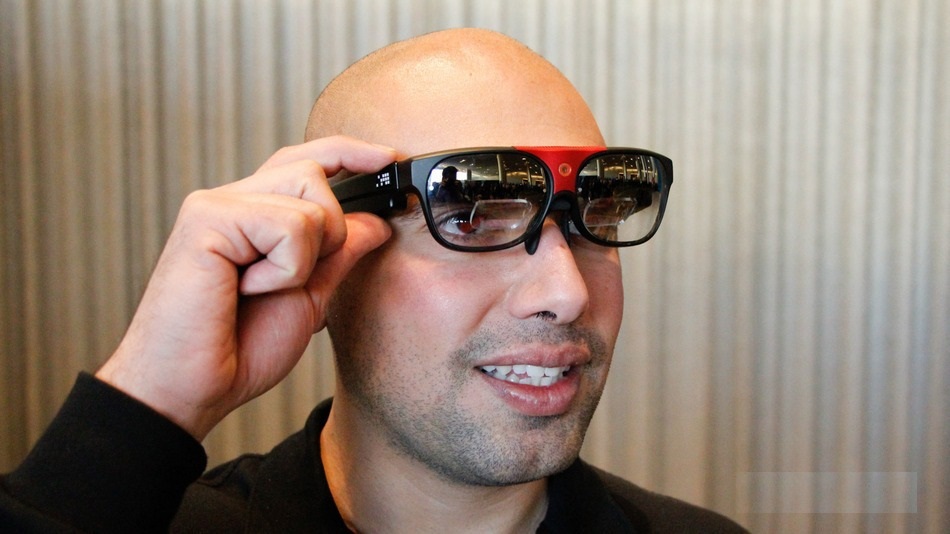
Osterhout Design Group is known for the super cool smart glasses it makes. Though these glasses are something which appeal to enterprise customers and developers technically (and financially too!), normal people like you and me would also love to have a pair. At this year’s CES, ODG showcased two of its new models- the new R-7 model, which has a 30-degree field of view and is available to order now for an enterprise-priced US$2,750, along with an unreleased prototype that’s very similar to the R-7 but has a 1080p display with a 50-degree field of view.

The glasses are amazing as these include 64 GB storage, 3 GB RAM and a Snapdragon 805 processor in the R-7. Though these are still bulky if you wear them, they don’t make you look odd like the Google Glass. They just look like a pair of bulky sports glasses. Let’s hope ODG works towards getting these lighter and subtler.

odg_r7_1

So what do you see when you wear these? These glasses let you see an amazing high-resolution display centred in the lower half of your field of view. Capable of supporting 3D content with stereoscopic imagery, the glasses hit a nice balance of transparency and immersion. You can easily see through (and around) the display to catch what’s going on around you, but it’s still opaque enough to fully absorb the displayed 720p content. The glasses boast of a custom version of Android KitKat, so sideloading Android apps and movie files alone could give you plenty of options for traditional content. In addition to this, it is also easy to control. You can use either a trackpad on the glasses or a paired handheld controller.

Apart from all these perks, the one thing that truly bowls you over while using these glasses is when you try to exploit the full AR capabilities of the glasses. One thing is for sure, that if right software support is provided, the ODG glasses can place any AR content on any physical surface. The R-7 is great for stationary content, and it could work for AR experiences too, but wider FOVs will always create a more effective illusion when placing AR content in the real world. 

As of now, ODG’s current focus is on encouraging developers to build the apps that will bring the glasses to life. Hope the developers refine it soon to be used by people like us, and whenever that happens, one thing is for sure, these glasses will make an interesting wearable.

[adinserter block=”7″]

Author: Technology Blog
Super interesting facts about Amazon’s drone delivery program for Technology Fans

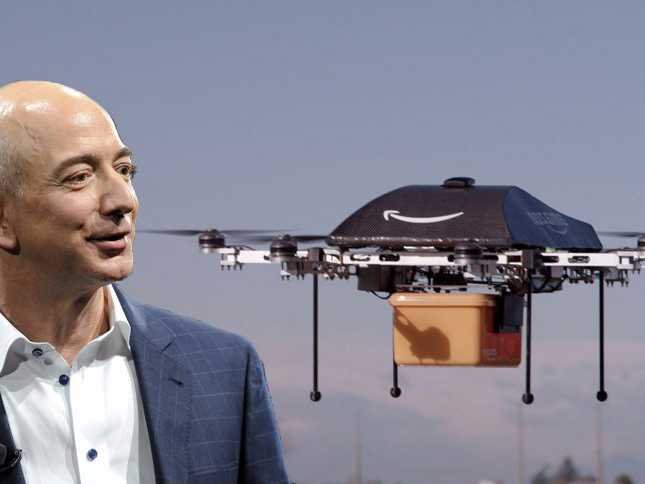
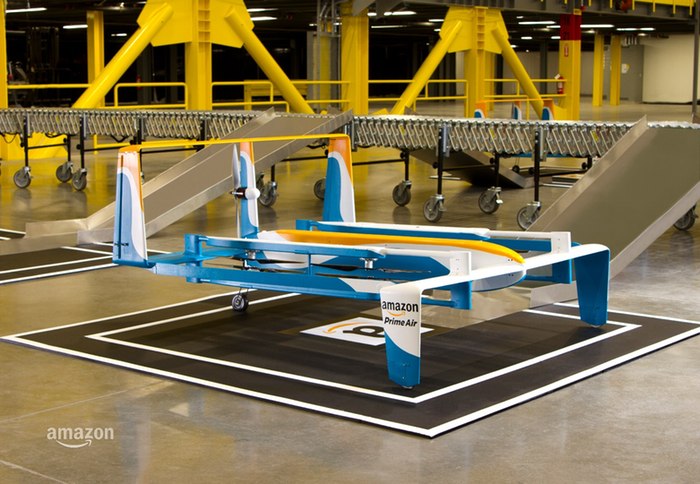
You are sprawled on the green grass of your lawns at home… soaking in the sun and the light. Suddenly a drone appears from nowhere and drops a package in your lawn and disappears. When you open it, you find, it is your favourite colour T-shirt that you had ordered an hour ago on Amazon….. Imaginary scenario? How does it feel? Great… Isn’t it? But it won’t be an imaginary scenario for long as Amazon’s drone delivery service ‘Amazon Prime Air’ is very much real. Well here we are presenting some interesting facts about this new development based on what Amazon’s vice president for global policy, Paul Misener informed.

amazon-prime-drone-3

Airspace designation

When it is something you are supposed to fly in the sky and that something is supposed to carry packages for people, safety becomes a primary concern. Misener clarifies that Amazon’s proposal is for its delivery drones to fly between altitudes between 200 and 400 feet. A 100-foot buffer would exist between 400 feet and 500 feet, where manned aircraft would fly above 500 feet. Amateur drones would only be able to fly up to 200 feet in the air. At present, this is just a proposal suggested to regulators such as the Federal Aviation Administration. But this kind of airspace designation will surely be good for proper and safe operation of these drones.

‘Small’ and ‘quick’ are the keywords

So if you needed a new couch and booked it on Amazon, don’t expect the drone to deliver it to your terrace. Misener informs that Prime Air drones will weigh about 55 pounds and hence will deliver packages that weigh up to five pounds. The delivery will take place in 30 minutes.

Customisation is the key

According to Misener, Amazon wants to reach out to everyone using a drone irrespective of the climate or place they live in. But in order to cater to such variety of customers, the company will have to come up with different types of drones to cater to different climates like hot, cold or wet or different types of residential areas like high-rise apartments or suburban houses. So customisation of drones is high on Amazon Prime Air’s agenda.

Cut that noise

Everybody who knows about a drone knows the noise it creates because of the spinning rotors. This is one other aspect that Amazon wants to focus on. Misener says it wants to design their drones in such a way that they are not noisy and don’t prove to be a nuisance in the neighbourhood. Work is underway to find ways to dampen that unpleasant noise.

Sense–and–avoid technology

Misener explains that in order to make Prime Air a success it is imperative that the drones used by the company are high-tech and highly automated with a ‘sense–and–avoid technology’ in order to enable them to see objects and avoid crashing. Only then the purpose of using drones in home delivery is served otherwise it will be just another service wreaking havoc.

[adinserter block=”7″]

Author: Technology Blog

Did you know we are on the verge of extinction?

Stephen Hawking doesn’t need an introduction. His name speaks volumes. The brilliant astrophysicist has enlightened one and all with his various theories about the earth and the universe around.  At a recent press conference Hawking expressed that despite knowing that we-humans are destroying quite many things that maintain the balance between man and nature, despite knowing that the damage has far exceeded the hope to make it right and despite making a mess of everything natural around us, we aren’t yet ready to mend our ways. Hawking proposes that we are about to be wiped out off the face of the earth in 1000 years or so.

alg-hawking-jpg

Hawking says: “Although the chance of a disaster to planet Earth in a given year may be quite low, it adds up over time, and becomes a near certainty in the next 1,000 or 10,000 years.” And if you consider about the age of the universe, 1000 years isn’t that far practically. But does that mean total annihilation is imminent and unavoidable? If you believe Hawking, he has an optimistic approach to offer.

He says that forget 1000 years, we should be worried only about the next 100 because he believes that in a 1000 years’ time “we should have spread out into space, and to other stars, so a disaster on Earth would not mean the end of the human race.” But he also adds that, “We will not establish self-sustaining colonies in space for at least the next hundred years, so we have to be very careful in this period.”

According to Hawking, nuclear war, genetically engineered viruses and global warming are the greatest threats to the mankind and these can loom large over humanity in form of some disaster any given day. Hawking stresses on the fact that the next 100 years are extremely important for us because these will be the Hundred Years of Caution for us.

In order to save the humanity, we will even have to be very responsible in choosing who our leaders should be. He also stressed that a little scientific knowledge should be necessary for all. He said that in a democratic society “everyone needs to have a basic understanding of science to make informed decisions about the future. Communicate plainly what you are trying to do in science, and who knows, you might even end up understanding it yourself.”

Though this is something that will happen in the far-far future, we will have to take charge of things because you never know when that future transforms into the present.

[adinserter block=”7″]

Author: Technology Blog

Are these self-driving cars actually safe?

2020 has been earmarked as the year when autonomous cars may finally make it to the roads. But just four years to go, are we really sure that these cars are safe enough to be allowed to run on our roads along with other vehicles?

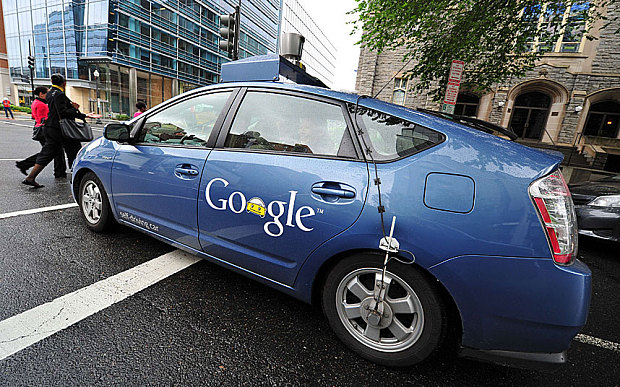
Based on data received from Google’s Self Driving Car Centre in Atwater, California, one can have some idea as to how things would look once these self-driving cars make an entry on to real roads. If one delves deep into these test drives then one comes to know that Google now has a fleet of 53 cars operating day and night, and they have logged 1.3 million miles of autonomous driving. Google is required by California state law to report “disengagements”—that is, times when either the computer has handed control of the car back to the driver, or the driver has taken over on his own.

google_3300415b

Though the cars have clocked appreciable number of miles the reporting process of the so called ‘disengagements’ isn’t entirely clear. This data is dicey because disengagements can happen anytime a car encounters something as simple as a piece of wood in the road and has to be steered around it.

It suggests they happen several times per trip. What amazes all is the fact that from the end of 2014 through the entire 2015, Google has reported just 341 disengagements. Probably Google felt that it didn’t have to report incidents that the car could have handled on its own.

Some of the data obtained also shows that the cars are getting better at driving on their own as the average distance between computer-initiated disengagements has gone down over time. In addition to this, the data reveals that the trained drivers stepped in on average within 0.84 seconds of the computer signalling it was turning control over to a human.

Though all these seem very encouraging as far as the progress of autonomous cars is concerned, the problem lies in the handoff between human and computer control because trained drivers like the ones Google employs may react quickly when the system needs help, but the research suggests that regular drivers are likely to zone out. That is they may not react exactly as one is expected to react in situations of changing controls. All in all, there is still a lot to be done to make these autonomous cars safe for the person travelling in it and travelling along with it on the roads.

[adinserter block=”7″]

Author: Technology Blog

Is 2016 going to be a year of Virtual Reality? Let’s track the giants of the field!

Right from the day Virtual Reality: the word came into existence, it has been a point and subject of curiosity among the tech-savvy population. Last year was the year of discussing and presenting prototypes of VR whereas this year may prove to be the actualisation of those prototypes. Many companies have planned to bring their prototypes on sale this year. Let’s have a look at some of the front runners.

Facebook

With its Oculus Rift now available for purchase, Facebook is surely leading the race. It was in 2014, when Facebook had acquired Oculus VR unit and had built an upgraded prototype of the virtual reality headset. The headset has finally reached the consumers. During CES, Oculus Rift VR was put up for pre-order for a whopping $600. A path has already been created by Facebook where users can enjoy and experience their fantasy settings while using Oculus Rift and playing the accompanying games ‘Lucky’s Tale’ and a multiplayer space combat game ‘EVE: Valkyrie”.

2015-02-18-image-2

Google

Google has always been one of those companies who have vehemently supported the virtual reality concept. Their Google Cardboard and the GoPro partnerships don’t require any introduction. And who can forget its Camera app that lets you create VR 3D images?  Though there is no product as yet which is on sale right now from the company but the announcement of a separate division solely dedicated to Virtual Reality speaks volumes about the seriousness of the company in moving ahead in the field of VR. The separate division will be led by Clay Bavor (known to be overseeing the Google Cardboard project), who is the VP, Product Management for Google’s apps including Gmail, Drive and Docs.

Apple

Known for its secrecy, Apple hasn’t let out that much about its VR projects but it won’t lag behind its rivals in the field of VR too, this is for sure. According to some reports, it patented a ‘head-mounted display apparatus for Retaining a Portable Electronic Device with Display’ which essentially means a virtual reality headset powered by an iPhone or iPod. So whether it reveals or not, Apple is progressing slowly and stealthily in this field.

Microsoft

If you are a VR freak you will surely know about Windows HoloLens and HoloLens headset. The Windows HoloLens in case you don’t know, is similar to an augmented reality except that this is much more advanced, because users can wear a headset, like Virtual Reality goggles,  to experience holograms in real life. HoloLens brings high-definition holograms in your world, where they integrate with your physical places, spaces, and things. Microsoft’s Hololens is expected to start shipping within the first half of 2016.

Sony

Sony: the TV and camera giant isn’t lagging behind when it comes to exploiting the user’s inclination towards VR. It has its own set of products to give you that VR experience. Sony’s ‘Playstation VR’ popularly known as ‘Project Morpheus’ so far is expected to hit stores at a price of £350 (approximately Rs 35,000). It sports a 5.7-inch OLED display with a 1920 x 1080 resolution and includes an approximate 100-degree field of view, an accelerometer and gyroscope along with nine LEDs for head tracking. The device also comes with a 3D audio with microphone and stereo input jacks along with HDMI and USB ports.

Next Page For More

A ‘spermsuit’? It is not a joke! Read on to find

A lot of couples around the globe struggle with the problem of infertility. Their hopes get shattered every month and it stretches to the years that follow. Among various reasons of infertility, low sperm motility appears high on the causes of infertility in men.

Motility is the ability of the sperm to swim fast and reach the egg before other sperms succeed in doing so. So low motility means they are not fast enough to reach the egg and fertilize it, hence the infertility.

dn24721-1_800

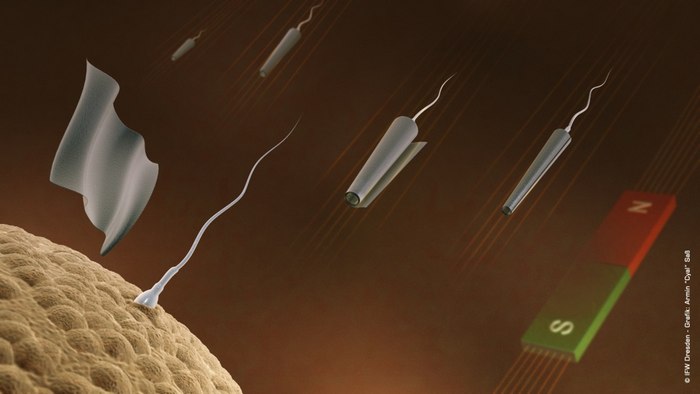
But scientists are one great restless race. They accept every problem as a challenge and strive to find a solution to combat this. So this is what researchers in Germany are trying to do. They have found a way to use tiny robots to help sperms swim more quickly and efficiently.

These ‘spermbots’ or ‘spermsuits’ are miniscule metal helixes that are just large enough to completely encircle the tail of a single sperm. These helix suits then propel it towards the egg.

Though the team informed that they controlled these bionic swimmers in a petri dish with the help of a magnetic field and it doesn’t mean the experiment will be as successful in the human body, but it does mean we have another alternative to boost fertility and conception chances of couples eagerly trying for the same.

There is still a lot of work to do even to reach the stage when bionic sperms would be tested in human body, but they are sure that something good may come off it.

width="560" height="314" allowfullscreen="allowfullscreen">

As a technology lover you may like our daily important technology news series. It’s a playlist and you can retrieve the total day-wise videos. Please consider subscribing our YouTube channel:

Author: Technology and Beyond

Verified by ExactMetrics