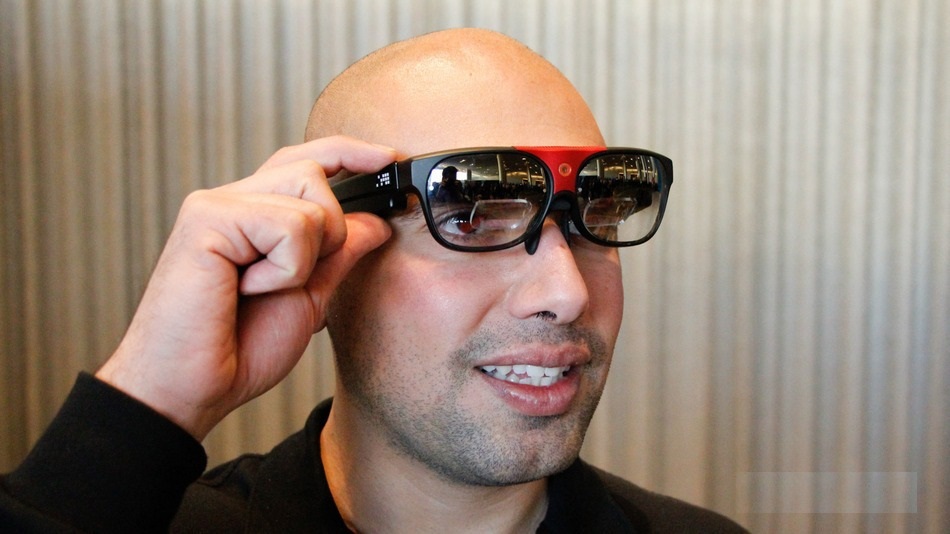
You just need one trial to love these ODG smartglasses!

Osterhout Design Group is known for the super cool smart glasses it makes. Though these glasses are something which appeal to enterprise customers and developers technically (and financially too!), normal people like you and me would also love to have a pair. At this year’s CES, ODG showcased two of its new models- the new R-7 model, which has a 30-degree field of view and is available to order now for an enterprise-priced US$2,750, along with an unreleased prototype that’s very similar to the R-7 but has a 1080p display with a 50-degree field of view.

The glasses are amazing as these include 64 GB storage, 3 GB RAM and a Snapdragon 805 processor in the R-7. Though these are still bulky if you wear them, they don’t make you look odd like the Google Glass. They just look like a pair of bulky sports glasses. Let’s hope ODG works towards getting these lighter and subtler.

odg_r7_1

So what do you see when you wear these? These glasses let you see an amazing high-resolution display centred in the lower half of your field of view. Capable of supporting 3D content with stereoscopic imagery, the glasses hit a nice balance of transparency and immersion. You can easily see through (and around) the display to catch what’s going on around you, but it’s still opaque enough to fully absorb the displayed 720p content. The glasses boast of a custom version of Android KitKat, so sideloading Android apps and movie files alone could give you plenty of options for traditional content. In addition to this, it is also easy to control. You can use either a trackpad on the glasses or a paired handheld controller.

Apart from all these perks, the one thing that truly bowls you over while using these glasses is when you try to exploit the full AR capabilities of the glasses. One thing is for sure, that if right software support is provided, the ODG glasses can place any AR content on any physical surface. The R-7 is great for stationary content, and it could work for AR experiences too, but wider FOVs will always create a more effective illusion when placing AR content in the real world. 

As of now, ODG’s current focus is on encouraging developers to build the apps that will bring the glasses to life. Hope the developers refine it soon to be used by people like us, and whenever that happens, one thing is for sure, these glasses will make an interesting wearable.

[adinserter block=”7″]

Author: Technology Blog
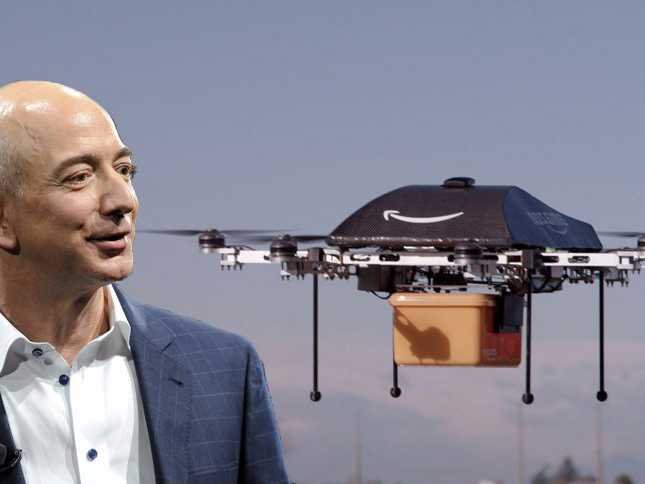
Super interesting facts about Amazon’s drone delivery program for Technology Fans

You are sprawled on the green grass of your lawns at home… soaking in the sun and the light. Suddenly a drone appears from nowhere and drops a package in your lawn and disappears. When you open it, you find, it is your favourite colour T-shirt that you had ordered an hour ago on Amazon….. Imaginary scenario? How does it feel? Great… Isn’t it? But it won’t be an imaginary scenario for long as Amazon’s drone delivery service ‘Amazon Prime Air’ is very much real. Well here we are presenting some interesting facts about this new development based on what Amazon’s vice president for global policy, Paul Misener informed.

amazon-prime-drone-3

Airspace designation

When it is something you are supposed to fly in the sky and that something is supposed to carry packages for people, safety becomes a primary concern. Misener clarifies that Amazon’s proposal is for its delivery drones to fly between altitudes between 200 and 400 feet. A 100-foot buffer would exist between 400 feet and 500 feet, where manned aircraft would fly above 500 feet. Amateur drones would only be able to fly up to 200 feet in the air. At present, this is just a proposal suggested to regulators such as the Federal Aviation Administration. But this kind of airspace designation will surely be good for proper and safe operation of these drones.

‘Small’ and ‘quick’ are the keywords

So if you needed a new couch and booked it on Amazon, don’t expect the drone to deliver it to your terrace. Misener informs that Prime Air drones will weigh about 55 pounds and hence will deliver packages that weigh up to five pounds. The delivery will take place in 30 minutes.

Customisation is the key

According to Misener, Amazon wants to reach out to everyone using a drone irrespective of the climate or place they live in. But in order to cater to such variety of customers, the company will have to come up with different types of drones to cater to different climates like hot, cold or wet or different types of residential areas like high-rise apartments or suburban houses. So customisation of drones is high on Amazon Prime Air’s agenda.

Cut that noise

Everybody who knows about a drone knows the noise it creates because of the spinning rotors. This is one other aspect that Amazon wants to focus on. Misener says it wants to design their drones in such a way that they are not noisy and don’t prove to be a nuisance in the neighbourhood. Work is underway to find ways to dampen that unpleasant noise.

Sense–and–avoid technology

Misener explains that in order to make Prime Air a success it is imperative that the drones used by the company are high-tech and highly automated with a ‘sense–and–avoid technology’ in order to enable them to see objects and avoid crashing. Only then the purpose of using drones in home delivery is served otherwise it will be just another service wreaking havoc.

[adinserter block=”7″]

Author: Technology Blog
Verified by ExactMetrics