A sneak peek into MacBook 2016!

The ‘oh so famous’ Apple secrecy is again at its best! With all the apprehensions surrounding the updated MacBook to make an entry in 2016, some rumours seem more concrete than the others. So let’s take a look at what Apple has in store for us when it comes to MacBook 2016.
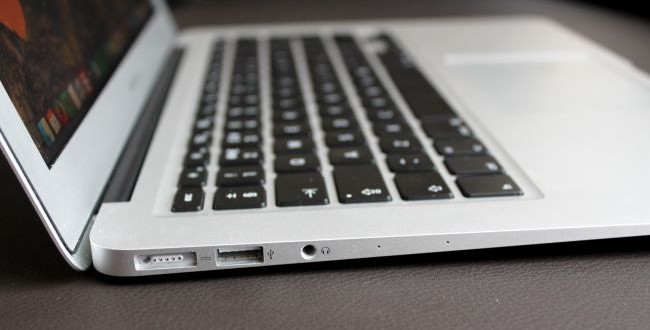
MacBook-Air-2016

Knock! Knock! Skylake is here!

This is almost a certainty that Skylake is gaining entry into Apple and this appears to be the right move considering the MacBooks chips which are no less than ancient. The MacBook Pro 13 is powered by a quad-core Broadwell chip that’s nearing a year old at this point, and that alas! is the newest of the bunch. The reintroduced 2015 MacBook is powered by choice of two Core M chips, both of which come from the end of 2014. The 15-inch MacBook Pro is, ironically, the oldest of all, with a Haswell chip that released in the third quarter of 2014. Skylake will bring along not only performance improvements but also smarter power usage that will help extend the MacBook’s battery life (which is already quite impressive). This can also lead to more powerful integrated graphics.

New designs are needed

MacBook Air and Macbook Pro have been quite popular so far and are loved but the time has come for a redesign. What with all others taking designs to a different level, it is high time that Apple too starts considering a revamp of the MacBook. So if changes are incorporated, it is most likely that we’ll see the introduction of the USB Type–C port across every laptop in the MacBook line though the option of ‘only’ including that port seems less likely (not to forget the MacBook Pro’s popularity for media creation and editing). The traditional USB ports are a bit more of a sticking point, and until Type-C rolls out to a lot of accessories, or adapters are more easily accessible, it’s not likely that we’ll see Type-C stand on any MacBook Pro.

Air takes the back seat

MacBook Air and MacBook are almost similar in most aspects and there seems to be a probability that the redesigned MacBook may replace MacBook Air which hasn’t seen a design update in a long time. If Apple does drop the Air, it will mean new offerings in the sub-$1,000 laptop point for Apple to replace it with. Some of that cost-cutting from the current $1,300 base model would come simply from the fact that it’s now second-generation hardware. In true Apple form, the brand could also continue selling the older models at a cheaper price than newer versions.

Go retina…. go away!

The trademark Retina display of Apple needs a change now and seems like this year is the time. Laptops are shedding that 1080p display to step into the high-resolution territory. So the redesigned MacBook 2016 may have it and expand its panel size. But improving displays doesn’t only mean resolution only. There is a huge possibility that Apple’s MacBook lines would begin including OLED displays.

Money matters

The price will play an important role in the launch of MacBook 2016 because The big question is what Apple plans to do about its entry level product. The Air’s days seem numbered, but it’s also the company’s best selling laptop. Apple would have to lower the price of the MacBook if the Air is cut. The MacBook Pro line though will not have many differences to spot. While they may receive a design update, the hardware inside the Pros isn’t going to change substantially, over than the update to Skylake. 

The guessing game will go on till we actually see those Apple products with our own eyes. But till the time the company officially unveils its new and updated line of macBook, we will just have to wait and watch and hope that whatever positive changes we have heard so fat are incorporated in the new MacBook.

[adinserter block=”7″]

Author: Technology Blog

This amazing technique makes your mind an open book !

Mind reading is an exciting thing. All of us once or more in our lifetime have had a strong desire to read the mind of persons around us. How would it feel? Will it hurt us or will it make us happy? Can’t say; because none of us can actually read someone else’s mind. But researchers at the University of Washington are doing an experiment that can pave the way for mind reading. Using brain implants and sophisticated software, researchers can now predict what their subjects are seeing with high speed and accuracy.

i4gcjsx6xgt8iwyljg5c

A neurological process is involved in viewing a two-dimensional image on a paper and transforming that image into something easily recognized by our minds. To understand this very neurological process, a research team led by University of Washington neuroscientist Rajesh Rao and neurosurgeon Jeff Ojermann demonstrated that it’s possible to decode human brain signals at nearly the speed of perception.

To achieve this, an experiment was conducted with the help of seven patients who were undergoing treatment for epilepsy. It was found that medicines had proved futile in controlling the seizures because of which these patients were given temporary brain implants and electrodes were used to pinpoint the focal points of their seizures. Since Rao and his team also need electrodes for their experiment, this group proved to be a good one considering electrodes were already fitted on their minds so it was just a question of giving them an additional task.

The patients were shown a random sequence of pictures—images of human faces, houses, and blank gray screens—on computer monitors in brief 400 millisecond intervals. Their specific task was to watch for an image of an upside-down house. At the same time, the electrodes in their brain were connected to software that extracted two distinct brain signal properties, namely “event related potentials” (when massive batches of neurons simultaneously light up in response to an image) and “broadband spectral” changes (signals that linger after viewing an image).

A computer was used to sample and digitize the incoming brain signal at a rate of 1000 times per second, as the images flickered one after the other on the screen. This resolution allowed the software to determine which combination of electrode locations and signals correlated best to what the patients were seeing. The team observed that the responses differed, some were sensitive to faces and some were sensitive to houses.

Based on these responses, the software was trained and then the patients were shown an entirely new set of pictures by the researchers. Without previous exposure to these new images, the computer was able to predict with 96 percent accuracy when a test subject was seeing a house, a face, or a grey screen. And it did so at nearly the speed of perception. But it is to be noted that this accuracy was achieved only when the computer considered both event-related potentials and broadband changes because in order to understand how a person perceives a complex visual object; a holistic picture of the neural networks needs to be considered.

No huge claims can be made as of now because the sample size of the study was too small. But it can be hoped that if success is achieved moving on this path, this kind of brain decoding could be used in brain mapping to identify locations in the brain responsible for certain types of information in real time. It can also be used to build communication mechanisms for “locked-in” patients who are paralyzed or have suffered a stroke.

[adinserter block=”7″]

Author: Technology Blog

Verified by ExactMetrics