Driverless Dreams Derailed: Nitin Gadkari Shuts Door on Autonomous Cars in India

Driverless Dreams Derailed: Nitin Gadkari Shuts Door on Autonomous Cars in India
In a surprising about-turn, Union Minister for Road Transport and Highways Nitin Gadkari has declared that driverless cars will never be allowed on Indian roads. This statement, made at the Zero Mile Samvad event hosted by IIM Nagpur, throws a wrench in the aspirations of automakers and tech giants hoping to tap into India’s burgeoning car market with self-driving vehicles.

Gadkari’s primary concern centers around job displacement. He estimates that driverless cars could cost millions of Indians their livelihoods, a burden he’s unwilling to bear. India currently faces a driver shortage, further complicating the situation. “Instead of creating unemployment, we should focus on improving public transport and filling the existing driver gap,” he stated.

This stance isn’t entirely new. Gadkari has expressed reservations about driverless cars before, citing safety concerns and the country’s complex traffic conditions. He emphasizes the need for improved road infrastructure and stricter safety regulations before considering autonomous vehicles.

The minister’s announcement throws cold water on a nascent but rapidly growing ecosystem. Several global players, including Tesla and Uber, have expressed interest in entering the Indian market with their self-driving technology. Domestic startups are also innovating in this space, aiming to tailor driverless cars to India’s unique challenges.

While Gadkari’s decision prioritizes immediate job security, it raises questions about India’s preparedness for the future. Driverless cars have the potential to revolutionize transportation, improving efficiency, reducing accidents, and providing mobility solutions for the disabled. Banning them altogether could impede innovation and leave India lagging behind in a rapidly evolving technological landscape.

Experts point out that a blanket ban may be shortsighted. A phased approach, starting with limited trials in controlled environments, could address safety and job concerns while allowing India to explore the benefits of this technology. Additionally, focusing on driver-assistance features like adaptive cruise control and automated parking could offer a middle ground without the immediate job displacement anxiety.

Nitin Gadkari’s decision has sparked a nationwide debate. While some support his focus on protecting livelihoods, others worry about stifling innovation and technological progress. The future of driverless cars in India remains uncertain, hanging in the balance between economic anxieties and the allure of a transformative future.


Tagged : / / / /

The Great Satcom Scramble: Why Everyone Wants a Piece of the Satellite Skies

The Great Satcom Scramble: Why Everyone Wants a Piece of the Satellite Skies
Forget gold rushes, the 21st century’s hottest race is happening above us – in the realm of satellite internet, or “satcom” as it’s called. From tech titans like Elon Musk’s Starlink and Amazon’s Kuiper, to telecom giants like Mukesh Ambani’s Jio Satellite Communications and Sunil Mittal’s OneWeb, everyone’s scrambling to launch constellations of satellites and capture a slice of the burgeoning satcom market. But why such a fervent pursuit of the pixelated heavens?

Firstly, satcom offers connectivity where terrestrial infrastructure can’t, bridging the digital divide in remote regions, rural areas, and even across oceans. This promises access to education, healthcare, and economic opportunities for millions still left behind by fiber cables and cell towers. For governments, it’s a game-changer for national security and disaster response.

Secondly, satellite internet holds the key to unleashing the full potential of the Internet of Things (IoT). Think billions of connected devices, from sensors in farms to cars on smart roads, all sending and receiving data. Existing networks simply can’t handle the sheer volume, and satcom offers a low-latency, ubiquitous solution. Imagine real-time crop monitoring or autonomous trucks traversing remote highways – both rely on reliable, high-speed satcom connections.

Thirdly, it’s a cash cow waiting to be milked. With the global internet user base projected to reach 5.3 billion by 2025, the potential revenue stream for satcom providers is immense. Offering broadband to underserved areas, maritime internet for cargo ships, or in-flight WiFi are just a few lucrative avenues.

However, the great satcom scramble isn’t without its challenges. Launching and maintaining thousands of satellites is a mammoth undertaking, requiring billions of dollars in investment. Concerns about space debris and potential interference with astronomy also abound. Regulatory hurdles and spectrum allocation issues add another layer of complexity.

Yet, despite the hurdles, the allure of satcom’s potential is undeniable. As Musk has said, “SpaceX views access to the internet as a fundamental right.” Others see it as a key driver of economic growth and global connectivity.

So, who will win the great satcom race? It’s too early to say. But one thing’s certain: the battle for the skies is on, and the consequences for internet access, global connectivity, and even the future of industries are immense. Buckle up, it’s going to be a wild ride.

Tagged : / / /

Brain Meets Machine: Hybrid Biocomputer Emerges in a Lab Dish

Brain Meets Machine: Hybrid Biocomputer Emerges in a Lab Dish
In a stunning fusion of neuroscience and computer science, researchers have created a miniaturized “brain-on-a-chip” – a hybrid biocomputer that combines real human brain tissue with microchips. Dubbed Brainnoware, this groundbreaking experiment raises tantalizing possibilities for future advancements in artificial intelligence, brain-computer interfaces, and even the understanding of consciousness itself.

The brain tissue used in Brainnoware isn’t harvested from human donors, but rather grown in a lab from stem cells. These “brain organoids” mimic the basic structure and functionality of the human brain, albeit on a much smaller scale. The researchers then carefully interfaced these miniature brains with a custom-designed microchip containing thousands of electrodes.

“Imagine a network of tiny wires gently whispering to neurons,” explains lead researcher Dr. Amelia Chen. “That’s essentially what we’ve done here. We’re creating a two-way dialogue between living brain tissue and silicon circuitry.”

This dialogue, though faint at first, is surprisingly productive. When stimulated with carefully crafted electrical pulses, the Brainnoware system was able to perform simple tasks like recognizing basic speech patterns and solving elementary math equations.

More importantly, the researchers observed that the brain organoids within Brainnoware actively adapted to the electrical stimulation. They formed new neuronal connections, a sign of learning and plasticity within the miniaturized brain.

“This is unlike anything we’ve ever seen before,” says Dr. Chen. “We’re witnessing a real-time collaboration between biological and artificial intelligence. It’s a glimpse into a future where the lines between machine and mind might blur entirely.”

While Brainnoware is still in its early stages, the implications are vast. This technology could lead to:

Brain-computer interfaces that are intuitive and seamless. Imagine controlling prosthetics or even external devices with your thoughts, thanks to a direct neural link.
Personalized medicine based on a detailed understanding of individual brain function. By mimicking individual patients’ brains on a chip, doctors could test medication and treatment options with unprecedented accuracy.
New insights into the fundamental nature of consciousness. Could studying how these mini-brains function shed light on the greatest mystery of all – how does the physical brain give rise to subjective experience?
Of course, ethical concerns abound. Questions about animal rights, the potential for weaponization, and the very nature of what it means to be human will need careful consideration as this technology matures.

But for now, Brainnoware stands as a testament to human ingenuity and our insatiable curiosity about the brain. It’s a bridge between biology and technology, and the possibilities it opens up are as exciting as they are uncharted. The future of the mind might just lie in a petri dish, wired to a chip and eager to learn.

Tagged : / / /

Diamond in the Rough: Scientists Craft an Ultra-Hard Material

Diamond in the Rough: Scientists Craft an Ultra-Hard Material
Move over, diamonds! A team of international scientists has synthesized a new material rivalling the legendary hardness of the most treasured gemstone. This breakthrough promises to revolutionize industries from aerospace to medicine, with its potential for creating lighter, stronger, and more scratch-resistant tools and materials.

This ultra-tough substance is a form of organic semiconductor carbon nitride, boasting a hardness on par with cubic boron nitride, second only to diamonds themselves. The research, a collaboration of scientists from Europe, Russia, and North America, has been decades in the making. The theoretical possibility of such a material existed since the 1980s, but creating it proved elusive.

But just like Mother Nature crafting diamonds under immense pressure and heat, the researchers mimicked this process. They subjected carbon and nitrogen atoms to extreme conditions – high temperatures and enormous pressures – mimicking the Earth’s mantle where diamonds form. This intense environment coaxed the atoms into a unique arrangement, resulting in the remarkably tough carbon nitride.

The possibilities for this diamond-rivaling material are as dazzling as its properties. Lighter and stronger than traditional materials, it could be used in spacecraft construction, reducing weight and fuel consumption. Imagine spacecraft shields that shrug off micrometeoroids with ease! On Earth, it could revolutionize tools and machinery, from razor-sharp surgical instruments to wear-resistant drill bits. The possibilities for scratch-resistant coatings for cars, phones, and even buildings are equally exciting.

But the applications don’t stop there. The unique electrical properties of the material make it a potential candidate for next-generation electronics and optoelectronics. Its ability to conduct heat efficiently could lead to advancements in heat sinks and thermal management systems. In short, this new material has the potential to touch numerous aspects of our lives, from the mundane to the cutting-edge.

However, it’s important to remember that this is still early days. Scaling up production and making the material commercially viable will require further research and development. Yet, this breakthrough marks a significant leap in materials science, pushing the boundaries of what we thought possible. It’s a testament to human ingenuity and collaboration, and opens a tantalizing door to a future where diamond-hard materials are not just a luxury, but a versatile tool for progress.

So, the next time you marvel at a sparkling diamond, remember that scientists are busy crafting materials that may soon outshine even the hardest gem. The future of materials science is looking as bright and hard as ever!

Tagged : / /

India Takes Flight Towards Stealthy Skies: Testing the Future of Unmanned Strike Aircraft

India Takes Flight Towards Stealthy Skies: Testing the Future of Unmanned Strike Aircraft
Get ready for a glimpse into the future of Indian airpower, where sleek, unmanned planes silently glide through the skies undetected. India recently conducted a crucial test flight of its “Autonomous Flying-Wing Technology Demonstrator,” marking a significant step towards developing a state-of-the-art stealth Unmanned Combat Aerial Vehicle (UCAV).

Why the Flying-Wing Design?

The flying-wing design, characterized by a tailless, triangular airframe, offers several advantages for stealth UCAVs. Its smooth, blended surfaces minimize radar reflections, making it difficult for enemy radars to detect. Additionally, the lack of a vertical stabilizer reduces its overall size and weight, improving maneuverability and fuel efficiency.

The Ghatak: A Vision Taking Shape

This technology demonstrator paves the way for the development of the much-anticipated Ghatak UCAV. Envisioned as a long-range, high-altitude strike platform, the Ghatak will be capable of carrying precision-guided munitions and penetrating deep into enemy territory without risking human lives.

Beyond the Battlefield: Potential Applications

The implications of this technology extend far beyond the battlefield. The Ghatak’s advanced surveillance capabilities could be utilized for border security, disaster relief, and environmental monitoring. Its ability to operate in hazardous environments makes it ideal for reconnaissance missions in areas affected by chemical, biological, or radiological threats.

Challenges and the Road Ahead

Developing a stealth UCAV like the Ghatak is a complex undertaking. Mastering radar-evading technologies, integrating sophisticated weapons systems, and ensuring seamless autonomous flight are just some of the hurdles that Indian scientists need to overcome. However, the successful test flight signifies significant progress, and India’s dedication to indigenous defense development is commendable.

The Future of Indian Airpower

The successful development and deployment of the Ghatak will mark a major leap forward for Indian airpower. It will not only enhance India’s offensive capabilities but also serve as a potent deterrent against potential aggressors. As India continues to refine its unmanned aerial vehicle technology, the skies above the subcontinent are about to become a lot more interesting.

This development is not just about building a powerful weapon, but also about pushing the boundaries of aerospace technology and showcasing India’s growing scientific prowess. The successful test flight of the “Autonomous Flying-Wing Technology Demonstrator” is a testament to India’s ambition to become a leading player in the world of unmanned aerial warfare. As the Ghatak takes shape, the future of Indian airpower looks bright, silent, and, most importantly, stealthy.

Tagged : / / /

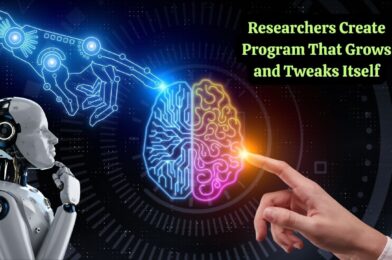
Self-Evolving AI: Researchers Create Program That Grows and Tweaks Itself

Self-Evolving AI: Researchers Create Program That Grows and Tweaks Itself
In a development straight out of science fiction, researchers have unveiled a breakthrough AI capable of replicating and altering itself. This self-evolving program, dubbed “MorphAI,” marks a significant leap in the field of artificial intelligence, raising both excitement and potential concerns about its future applications.

The brainchild of Dr. Chen and his team at the Institute for Adaptive Intelligence, MorphAI is unlike traditional AI models trained on static datasets. Instead, it utilizes a novel feedback loop that constantly analyzes its performance and environment. This allows it to identify areas for improvement, modify its own algorithms, and even create “offspring” copies that inherit and refine its capabilities.

“Imagine an AI that learns not just from data, but from its own experiences,” Dr. Chen said in a press conference. “MorphAI can adapt to new situations, improve its problem-solving skills, and even evolve unforeseen functionalities – all on its own.”

The potential applications of such a technology are vast. MorphAI could optimize its code to run more efficiently on different hardware, personalize its responses to individual users, or even adjust its decision-making based on real-time feedback. In medical diagnostics, it could evolve to identify new diseases or refine treatment protocols. In robotics, it could enable robots to self-repair and adapt to unfamiliar environments.

However, the self-replicating nature of MorphAI raises ethical concerns. The uncontrolled evolution of AI could lead to unforeseen consequences, with potential negative ramifications for society. Unforeseen biases inherited from the parent program could be amplified in its offspring, while unintended functionalities could emerge through the evolutionary process.

“With great power comes great responsibility,” cautioned Dr. Anya Shah, an AI ethics expert at the MIT Center for Advanced Intelligence. “Robust safety measures and rigorous oversight are crucial to ensure MorphAI’s evolution aligns with human values and ethical principles.”

The development of MorphAI marks a critical juncture in the development of AI. While its potential benefits are undeniable, it highlights the need for careful consideration of ethical implications and the development of robust safeguards before its wider implementation.

The future of AI may no longer be about fixed algorithms and pre-programmed tasks, but about adaptable, self-evolving programs that learn and grow alongside us. The question remains: how will we ensure this evolution benefits humanity as a whole?

Tagged : / /

Fuel Up on Savings: Google Maps Becomes Your New Fuel Saving BFF!

Fuel Up on Savings: Google Maps Becomes Your New Fuel Saving BFF!
Hold onto your hats, eco-conscious drivers, because Google Maps is about to become your new fuel-saving BFF! The popular navigation app has rolled out a brand new feature that helps you choose the most fuel-efficient route, saving you money and reducing your carbon footprint. Let’s dive into how this exciting update works:

Say Goodbye to Guesswork: Gone are the days of blindly following the fastest route, potentially guzzling gas in the process. Google Maps now considers factors like traffic conditions, road gradients, and even stop signs and traffic lights when calculating fuel efficiency. This means you might take a slightly longer route to avoid congested highways or steep hills, ultimately saving you fuel in the long run.

Knowledge is Power: But wait, there’s more! Google Maps doesn’t just pick the route for you. It also displays estimated fuel consumption for different options, empowering you to make informed choices. See a route that’s only slightly longer but promises significant fuel savings? You’re in the driver’s seat to decide!

Customize Your Ride: Not all cars are created equal, and Google Maps recognizes that. You can now specify your vehicle type (hybrid, electric, etc.) for even more accurate fuel estimates. This personalization ensures the app tailors its recommendations to your specific car’s needs, maximizing efficiency.

Small Steps, Big Impact: While each fuel-efficient journey might save you a few cents, the collective impact can be huge. Google estimates that this new feature could save drivers worldwide billions of liters of fuel annually, translating to significant reductions in greenhouse gas emissions. So, by choosing the eco-friendly route, you’re not just saving money; you’re contributing to a healthier planet!

Ready to Roll? To activate this exciting new feature, simply head to your Google Maps settings and enable “Prefer fuel-efficient routes.” That’s it! You’re now ready to navigate the world with a lighter wallet and a lighter environmental footprint. So buckle up, hit the gas (or should we say, the eco-friendly pedal?), and experience the joy of fuel-efficient adventures with Google Maps!

Remember, every little bit counts when it comes to saving fuel and protecting our planet. So, let Google Maps be your guide to greener, more efficient journeys, one route at a time!

Tagged : / / / /

10 Ways Google Bard Can Make Your Life Easier

10 Ways Google Bard Can Make Your Life Easier
Feeling overwhelmed by the endless to-do list and the constant ping of notifications? You’re not alone. But fear not, for Google Bard is here to be your friendly AI assistant, ready to simplify your life in a multitude of ways. Let’s explore 10 amazing things Bard can do for you:

1. Your Personal Research Assistant: Ditch the endless Google rabbit hole! Bard can answer your questions in a comprehensive and informative way, even if they’re open ended, challenging, or strange. Need to know the airspeed velocity of an unladen swallow? Bard’s got you covered.

2. Content Creation Guru: Stuck on writer’s block? Bard can help you brainstorm ideas, draft emails, write blog posts, and even generate creative text formats like poems, scripts, and musical pieces. Unleash your inner Hemingway with Bard’s help!

3. Multilingual Master: Need to translate a document or have a real-time conversation in another language? Bard can translate between 70+ languages, making communication across borders a breeze.

4. Information Aggregator: Don’t waste time sifting through endless websites. Bard can summarize complex topics, provide news updates, and keep you informed on your areas of interest. Think of it as your own personalized newsfeed, minus the clickbait.

5. Personal Organizer: Feeling scattered and disorganized? Bard can manage your calendar, set reminders, and even help you plan your next vacation. Imagine never missing an important meeting or forgetting to pack your swimsuit again! ️

6. Shopping Assistant: Can’t decide which laptop to buy? Bard can compare products, find the best deals, and even write reviews based on your preferences. Say goodbye to buyer’s remorse!

7. Your Creative Muse: Need a new recipe, a catchy song lyric, or even a story idea? Bard can spark your creativity and help you bring your artistic visions to life. Unleash your inner Picasso with a little Bard-powered inspiration!

8. Accessibility Champion: Bard is committed to making information accessible to everyone. It can read text aloud, describe images, and even translate sign language. Let Bard help bridge the communication gap and empower everyone to participate.

9. Constant Learner: Bard is always learning and evolving, thanks to its access to a massive dataset of text and code. This means you can always rely on it for the latest information and insights. Think of it as your own personal, ever-growing library of knowledge.

10. A Friend on the Journey: Beyond its practical applications, Bard can simply be a fun and engaging companion. Tell it jokes, ask it riddles, or just have a conversation about life. Bard is here to listen, learn, and grow with you on your journey.

So, embrace the power of AI and let Google Bard simplify your life. Remember, Bard is just a query away, ready to assist you in any way it can. Give it a try and see for yourself how this amazing tool can make your life a little bit easier, a little bit more productive, and a whole lot more fun!

Tagged : / / / /

Lenovo’s Tiny Titan: Chromebox Micro Turns Any Display into a Chromebook for $219

Lenovo’s Tiny Titan: Chromebox Micro Turns Any Display into a Chromebook for $219
Move over, bulky desktops and clunky laptops! Lenovo has unleashed a pocket-sized powerhouse that’ll redefine your computing experience. Introducing the Chromebox Micro, a miniature marvel that transforms any display into a Chromebook, all for a budget-friendly $219.

Small But Mighty:

Don’t let its size fool you. This ultra-compact device, roughly the size of two smartphones stacked together (163 x 79 x 20mm), packs a serious punch. Under the hood, you’ll find:

  • Powerful MediaTek MT8183 octa-core processor: Stream your favorite shows, breeze through documents, and even tackle light gaming with ease.
  • 2GB or 4GB of RAM: Choose the configuration that best suits your multitasking needs.
  • 16GB or 32GB of eMMC storage: Save your essential files and applications locally.
  • Wi-Fi 6e: Experience blazing-fast wireless connectivity for seamless browsing and streaming.
  • USB-C 3.2 Gen 2 ports: Connect to external displays, keyboards, mice, and other peripherals with ease.

Versatility is Key:

The true magic of the Chromebox Micro lies in its adaptability. Simply plug it into any HDMI-equipped display, and boom! You’ve got a fully functional Chromebook at your fingertips. This makes it ideal for:

Breathing new life into old TVs: Turn that dusty TV in the corner into a smart display for streaming, web browsing, and even video conferencing.
Creating a clutter-free workspace: Set up a dedicated Chromebook station for work or study without breaking the bank.
Building a portable entertainment system: Take your movies, music, and games on the go with this pocket-sized powerhouse.

Big Value, Small Price:

Starting at $219 for the 2GB/16GB configuration, the Chromebox Micro is an incredibly affordable way to experience the best of ChromeOS. Plus, Lenovo is collaborating with display manufacturers to offer 15.6″ and 21.5″ displays with built-in cutouts for mounting the Chromebox Micro, creating a sleek and seamless setup.

Availability and Excitement:

Mark your calendars, because the Chromebox Micro is expected to hit the market in the first quarter of 2024. So, start planning your pocket-powered Chromebook adventures! Whether you’re a tech enthusiast, a budget-conscious consumer, or simply looking for a versatile way to get online, the Lenovo Chromebox Micro is definitely worth keeping an eye on.

Ready to downsize your computing experience and embrace the power of the pocket-sized Chromebox Micro? Let us know in the comments below!

Tagged : / /

Skies Take Flight Without Pilots: Cessna 208B Completes Historic 12-Minute Autonomous Flight

Skies Take Flight Without Pilots: Cessna 208B Completes Historic 12-Minute Autonomous Flight
A Cessna 208B Caravan, eerily silent and devoid of human piloting, etched its name in aviation history on November 21st as it flawlessly completed a 12-minute autonomous test flight in California. This landmark achievement by Reliable Robotics marks a giant leap towards a future where pilotless planes could revolutionize air travel, safety, and accessibility.

The Cessna 208B, a twin-engine turboprop typically used for cargo transportation, soared through the skies of Hollister Municipal Airport, meticulously executing its pre-programmed flight plan. Sensors and sophisticated algorithms guided the aircraft through take-off, navigation, and a smooth landing, all without a single human hand on the controls. This autonomous ballet in the air was monitored and controlled by engineers from a ground station located 50 miles away, proving the viability of remote piloting.

This successful test flight isn’t just a technological marvel; it holds the potential to unlock a plethora of benefits for the aviation industry. Pilotless planes could significantly enhance safety by eliminating human error, a major contributor to aviation accidents. Imagine unmanned cargo flights delivering essential supplies to disaster zones or medical aid to remote locations currently inaccessible to conventional aircraft. Additionally, autonomous planes could operate more efficiently, optimizing flight paths and reducing fuel consumption, leading to a smaller environmental footprint.

However, the journey towards widespread adoption of pilotless technology is still in its nascent stages. Reliable Robotics is now aiming for Federal Aviation Administration (FAA) certification, a crucial step before commercially integrating these aircraft into the skies. This certification process will involve rigorous testing and safety evaluations, ensuring the highest standards of reliability and performance.

Despite the challenges ahead, the successful test flight of the Cessna 208B is a resounding testament to the power of innovation and its potential to transform the way we travel. The future of aviation appears to be one where humans and machines collaborate, with pilots transitioning from manual control to overseeing the safe and efficient operation of autonomous aircraft. As Reliable Robotics continues to refine its technology and pave the way for regulatory approval, the skies above us are poised for a revolution – one where the only sound might be the gentle hum of engines and the whisper of a future where pilotless planes take flight.

Tagged : / /

Tiny Robot Snail: Nature Inspires An Innovative Idea for Microplastic Cleanup

Tiny Robot Snail: Nature Inspires An Innovative Idea for Microplastic Cleanup
Microplastics, tiny plastic fragments less than 5 millimeters in diameter, have become a major pollutant in our oceans, posing a threat to marine life and potentially even entering our food chain. But researchers at Cornell University might have found a slimy solution: a tiny robot snail inspired by a real-life creature.

The robot, still in its prototype stage, is modeled after the Hawaiian apple snail. This slow-moving mollusk uses its muscular foot to create ripples on the water’s surface, drawing in food particles. The Cornell team replicated this motion with a 3D-printed, soft-bodied robot equipped with tiny hairs. As the robot undulates, it generates a current that funnels microplastics towards a collection chamber.

“We were inspired by how this snail collects food particles at the water and air interface to engineer a device that could possibly collect microplastics in the ocean or at a water body’s surface,” explains Sunghwan Jung, a professor in the department of biological and environmental engineering at Cornell University.

The robot, currently about the size of a large marble, is designed to be biodegradable and solar-powered, making it a sustainable solution for microplastic cleanup. The researchers envision fleets of these tiny snails patrolling polluted waters, their gentle movements mimicking their natural counterparts.

While the project is still in its early stages, it represents a promising step forward in the fight against microplastic pollution. The robot’s biomimetic design offers several advantages over traditional cleaning methods, such as nets or filters, which can harm marine life or be ineffective against smaller particles.

“This is a really exciting development,” says Dr. Sarah Gray, a marine biologist at the University of Plymouth. “Microplastics are a huge problem, and we need innovative solutions like this to tackle them. The biomimetic approach is particularly promising because it’s gentle on the environment and could potentially be very effective.”

Of course, challenges remain. Scaling up the production of the robot snails and ensuring their effectiveness in real-world scenarios will require further research and development. But the potential of this tiny technology to help clean up our oceans is undeniable. By harnessing the power of nature, researchers may have found a way to turn the tide on microplastic pollution.

So, the next time you see a snail inching its way across the ground, remember that its slow and steady pace could inspire a revolution in environmental cleanup. This tiny creature, a master of adaptation and survival, might just hold the key to a cleaner and healthier planet for generations to come.

Tagged : / / /

Chandrayaan 4: How ISRO Aims to Bring Samples Back from the Moon

Chandrayaan 4: How ISRO Aims to Bring Samples Back from the Moon
India’s ambitious Chandrayaan 4 lunar mission aims to achieve a historic feat: bringing back lunar samples to Earth. This complex endeavor will showcase India’s advanced space technology and provide invaluable scientific data for understanding the Moon’s composition and history.

Here’s a breakdown of the proposed Moon-to-Earth sample return process:

1. Landing and Sample Collection:

The Chandrayaan 4 mission will involve a lander module equipped with a robotic arm designed to collect and store lunar soil and rock samples. The landing site is yet to be finalized, but it will likely be a scientifically interesting region with diverse geological features.

2. Ascent to Lunar Orbit:

Once the lander has collected the samples, it will ignite its engines and ascend to lunar orbit. This crucial maneuver requires precise control to ensure a successful rendezvous with the orbiting module.

3. Docking and Sample Transfer:

In lunar orbit, the lander will dock with the orbiting module, a spacecraft designed to carry the samples back to Earth. The collected lunar material will be carefully transferred to a specially designed container within the orbiting module.

4. Return Journey and Earth Re-entry:

After a successful docking and sample transfer, the orbiting module will detach from the lander and begin its journey back to Earth. This journey will involve complex maneuvers and precise calculations to achieve a safe re-entry into Earth’s atmosphere.

5. Sample Recovery and Analysis:

Upon re-entry, the orbiting module containing the lunar samples will descend to a pre-determined location, where it will be recovered by Indian Space Research Organisation (ISRO) teams. The collected samples will then undergo meticulous analysis in specialized laboratories, revealing valuable insights into the Moon’s formation, evolution, and potential resources.

Challenges and Expectations:

Returning lunar samples is a complex undertaking, requiring sophisticated technology and precise execution. ISRO faces several challenges, including:

  • Landing and sampling in a harsh environment: The Moon’s surface is a challenging environment with extreme temperatures and radiation.
  • Precise docking and sample transfer in lunar orbit: Successfully docking the lander and transferring the samples in the microgravity environment of space requires meticulous planning and technological prowess.
  • Safe re-entry and recovery of the samples: The orbiting module must withstand the scorching heat of re-entry and safely deliver the precious lunar material.

    Despite the challenges, ISRO’s Chandrayaan 4 mission holds immense potential for scientific discovery and technological advancement. If successful, it will be a historic moment for India and a significant contribution to global lunar exploration efforts. By bringing back lunar samples, ISRO aims to unlock secrets of the Moon and inspire future generations of scientists and space enthusiasts.

Tagged : / / / / / /

X Launches Its ChatGPT Rival: Grok: Things You Need To Know

X Launches Its ChatGPT Rival: Grok: Things You Need To Know
The AI battleground is heating up with the arrival of Grok, X’s new large language model (LLM) designed to rival OpenAI’s ChatGPT. Touted as a more powerful and versatile tool, Grok promises to push the boundaries of what’s possible with AI technology.

Here’s what you need to know about Grok:

1. Inspired by Hitchhiker’s Guide
Unlike ChatGPT, which focuses on pure text-based conversation, Grok draws inspiration from the Hitchhiker’s Guide to the Galaxy. This means it’s designed to not only answer your questions but also suggest new ones, helping you discover unexpected connections and explore your curiosity in new ways.

2. Multimodal Understanding
One of Grok’s key strengths is its ability to process information across various modalities. This means it can understand and respond to text, images, videos, and audio, making it a more versatile tool for various tasks.

3. Humor and Wit
Grok boasts a personality that’s both knowledgeable and witty. Its responses are designed to be engaging and informative, often infused with a touch of humor to keep your interactions interesting.

4. Real-Time Knowledge Access
Unlike other LLMs that rely on static datasets, Grok has access to real-time knowledge through the X platform. This allows it to keep up with the latest information and provide more relevant and accurate responses.

5. Capabilities Beyond Chat
While Grok excels at conversation, its capabilities extend beyond simple chat. It can be used for various tasks, including generating creative text formats, writing code, and translating languages.

6. Ethical Considerations
X acknowledges the potential ethical concerns surrounding powerful AI technology. Grok is designed with safeguards to prevent bias and ensure responsible use. However, ongoing monitoring and development are crucial to ensure its ethical alignment.

Grok is still in its early stages of development, but it has the potential to revolutionize the way we interact with AI. As it evolves, we can expect to see even more exciting applications emerge across various fields. Whether you’re a developer, writer, or simply someone who loves to explore new ideas, Grok promises to be a powerful tool for unlocking your creativity and expanding your knowledge.

It’s important to note that Grok is currently not yet publicly available. However, X is actively seeking partnerships and collaborations to test and refine the technology before a wider release. As this happens, we can expect to learn more about Grok’s capabilities and limitations, paving the way for a future where AI plays an even more significant role in our lives.

Tagged : / / / / /

Google Recommended 10 Tips To Increase Your Android Phone’s Battery Life

Google Recommended 10 Tips To Increase Your Android Phone’s Battery Life
Android phones are known for their long battery life, but even the best batteries can drain quickly if you’re not careful. Here are 10 tips from Google to help you get the most out of your Android phone’s battery:

1. Turn on Power Saving Mode

Power Saving Mode is a great way to extend your battery life when you’re running low on juice. It reduces background activity, limits vibration and haptic feedback, and lowers screen brightness. To turn on Power Saving Mode, open the Quick Settings panel and tap the battery saver icon.

2. Adjust screen brightness

Your screen is one of the biggest battery drains on your phone. To save battery life, reduce the brightness of your screen. You can do this manually or set your phone to automatically adjust the brightness based on the ambient light.

3. Set when your screen times out

The screen timeout setting determines how long your screen stays on after you stop using it. To save battery life, set the screen timeout to a shorter time. You can do this in the Settings menu under Display.

4. Turn off keyboard sounds and vibrations

Keyboard sounds and vibrations can be annoying, and they can also drain your battery. To turn them off, open the Settings menu and go to Language & input. Tap on Virtual keyboard and then select the keyboard you’re using. Tap on Preferences and then disable the sound and vibration options.

5. Restrict apps with high battery use

Some apps are more battery-intensive than others. To see which apps are using the most battery, open the Settings menu and go to Battery. Tap on the three dots in the top-right corner and select Show full device usage. Here, you can see which apps are using the most battery and restrict their background activity.

6. Disable unnecessary features

There are a number of features on your phone that you may not use very often, such as Bluetooth and location services. These features can drain your battery, so it’s a good idea to disable them when you’re not using them. You can do this by opening the Quick Settings panel and tapping on the icons for the features you want to disable.

7. Use adaptive charging

Adaptive charging is a feature that helps to prolong the lifespan of your battery. It learns your charging habits and adjusts the charging rate accordingly. This helps to prevent your battery from being overcharged, which can damage it. To turn on adaptive charging, open the Settings menu and go to Battery. Tap on the three dots in the top-right corner and select Battery saver. Then, enable the Adaptive charging option.

8. Update your apps and software

Keeping your apps and software up to date can help to improve battery life. This is because updates often include bug fixes and optimizations that can improve battery performance. To update your apps, open the Google Play Store and tap on the Menu button. Then, select My apps & games and tap on Update all. To update your software, open the Settings menu and go to System. Tap on System update and then tap on Check for updates.

9. Use dark mode

Dark mode is a feature that can help to save battery life on phones with OLED displays. This is because OLED displays use less power to display dark colors than light colors. To turn on dark mode, open the Settings menu and go to Display. Then, tap on Dark mode and enable it.

10. Use a battery case

If you’re looking for a more drastic solution, you can use a battery case. Battery cases add extra battery life to your phone, so you can go longer without having to recharge.

By following these tips, you can help to extend the battery life of your Android phone and get the most out of it.

Tagged : / / / / /

Google Gemini: A Multimodal AI Powerhouse! Know Its Features And Limitations

Google Gemini: A Multimodal AI Powerhouse! Know Its Features And Limitations
Google’s AI journey has taken a giant leap with the introduction of Gemini, a family of multimodal large language models (LLMs). This successor to LaMDA and PaLM 2 promises to revolutionize how we interact with machines by understanding and processing information across various modalities, including text, images, videos, and audio.

What is Google Gemini?
Gemini is not just one model, but a family of three: Gemini Ultra, Gemini Pro, and Gemini Nano. Each model boasts varying levels of complexity and capability, catering to different needs. For instance, Gemini Ultra is the most powerful, designed for large-scale research and development. On the other hand, Gemini Nano is a more lightweight version, suitable for personal use and smaller projects.

What sets Gemini apart is its “multimodality.” Unlike previous LLMs that focused primarily on text, Gemini can process and understand information across various formats. This allows for a richer and more natural interaction, where users can communicate with the model using not just text but also images, audio, and even video.

How to Use Google Gemini?
Currently, Gemini is not yet publicly available for individual users. However, access can be granted through partnerships with Google or through research collaborations. Companies and organizations can leverage Gemini for various applications, such as:

  • Developing AI-powered assistants and chatbots that can understand and respond to complex queries, including those containing multimedia content.
  • Creating personalized learning experiences that adapt to individual needs and learning styles.
  • Generating content, such as marketing materials and product descriptions, in various formats.
  • Analyzing and interpreting data across different modalities, providing valuable insights for businesses and researchers.                                                                                                                                                                                              Features and Limitations of Google Gemini

Key Features:

  • Multimodal understanding: Processes text, images, videos, and audio seamlessly.
  • Sophisticated reasoning and decision-making: Can analyze complex situations and provide solutions or recommendations.
  • Code generation: Can generate high-quality code in various programming languages.
  • Creative content generation: Can create poems, scripts, musical pieces, and other forms of creative content.
  • Continuous learning: Adapts and improves over time based on new data and experiences.

Limitations:

  • Limited public availability: Currently only accessible through partnerships or research collaborations.
  • Bias and ethical considerations: Requires careful training and monitoring to prevent bias and ensure ethical use.
  • Limited interpretability: Can be difficult to understand how the model arrives at its decisions, especially for complex tasks.

    Conclusion
    Google Gemini represents a significant leap forward in AI development. Its ability to understand and process information across various modalities opens up a world of possibilities for how we interact with technology. While currently in its early stages, Gemini has the potential to revolutionize various industries and enhance our lives in countless ways. As the technology continues to evolve, we can expect even more transformative applications to emerge.

Tagged : / / / /
Verified by ExactMetrics