5 Animals That Can Survive Without Food For Months

5 Animals That Can Survive Without Food For Months
The animal kingdom is full of amazing adaptations, and one of the most impressive is the ability to go for extended periods without food. While most animals need to eat regularly to stay alive, some have developed incredible strategies to survive in harsh environments with limited resources. Here are five animals that can go months without a single bite:

1. Camels: These iconic desert dwellers are perhaps the most famous for their ability to withstand long periods of hunger. Their humps store not just fat but also water, allowing them to trek for weeks through scorching sand dunes without needing to refuel.

2. Bears: During winter, many bear species hibernate, entering a state of deep sleep where their metabolism slows down significantly. They can live off their stored fat for months, emerging from their dens in the spring leaner but alive.

3. Crocodiles: These patient predators are masters of energy conservation. With a slow metabolism and efficient hunting techniques, crocodiles can go for months, or even years, between meals. They conserve energy by resting motionless in the water, waiting for prey to come within striking distance.

4. Snakes: Depending on the species, some snakes can go for months without eating. They achieve this by slowing down their metabolism and digesting their meals slowly. Pythons, for example, can swallow prey many times their own size and then slowly digest it over a period of weeks or even months.

5. Desert Tortoises: These slow-moving reptiles are perfectly adapted to life in arid environments. They can store water in their bladders and extract moisture from their food, allowing them to survive for months without drinking. Their low metabolic rate and ability to burrow underground for shade further help them conserve energy.

These are just a few examples of the many animals that have evolved remarkable strategies to survive without food. Their adaptations teach us about the incredible resilience of nature and the power of evolution in shaping the animal kingdom.

It’s important to note that while these animals can go for extended periods without eating, it’s not healthy for them to do so all the time. They still need to eat regularly to maintain their health and energy levels. So, the next time you see a camel crossing a desert or a snake curled up in its den, remember the incredible adaptations that allow them to thrive in some of the harshest environments on Earth.
Tagged : / /

Beyond Lithium: Why Sodium Batteries Are Sparking Excitement Among Firms?

Beyond Lithium: Why Sodium Batteries Are Sparking Excitement Among Firms?
Lithium-ion batteries have become the workhorses of modern technology, powering our phones, laptops, and even electric vehicles. But what if there were a more sustainable and readily available alternative? Enter sodium batteries, which are emerging as a promising contender in the energy storage race.

Unlike lithium, sodium is an abundant and inexpensive element, found abundantly in seawater and table salt. This makes sodium batteries potentially cheaper and less reliant on geographically constrained resources. Additionally, sodium is less prone to fire and thermal runaway, addressing safety concerns surrounding lithium batteries.

Here are some key reasons why firms are exploring sodium batteries:

1. Abundance and Cost: Lithium resources are concentrated in a few countries, leading to supply chain bottlenecks and price fluctuations. Sodium, on the other hand, is widely available and significantly cheaper, offering a more stable and cost-effective solution.

2. Sustainability: Lithium mining can have harmful environmental impacts. Sodium extraction, however, is less invasive and poses a lower environmental risk. This aligns with the growing demand for sustainable energy solutions.

3. Safety: Lithium batteries have been known to overheat and catch fire in rare cases. Sodium batteries are inherently safer due to the lower reactivity of sodium compared to lithium. This is crucial for applications like grid storage and electric vehicles.

4. Performance: While sodium batteries currently lag behind lithium in terms of energy density (amount of energy stored per unit weight), ongoing research is rapidly improving their performance. Scientists are developing new electrode materials and electrolytes to boost sodium battery capacity and power output.

While sodium batteries may not entirely replace lithium-ion batteries in the near future, they offer a compelling alternative for specific applications. Their low cost, abundance, and safety make them ideal for grid storage, home energy systems, and even some electric vehicles. As research progresses and performance improves, sodium batteries could play a crucial role in building a more sustainable and secure energy future.

The development of sodium batteries is still in its early stages, but the potential rewards are immense. By harnessing the power of this readily available element, we can create a cleaner, safer, and more sustainable energy landscape for generations to come.

Tagged : / / /

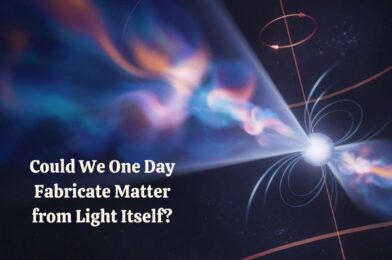
From Photons to Particles: Could We One Day Fabricate Matter from Light Itself?

From Photons to Particles: Could We One Day Fabricate Matter from Light Itself?
For centuries, humanity has gazed at the twinkling tapestry of the night sky, pondering the nature of the universe and the very stuff that makes it up. While dark matter and dark energy remain enigmatic, the very building blocks of the cosmos – protons, neutrons, and electrons – are governed by Einstein’s iconic equation E=mc², where energy (E) and mass (m) are interchangeable under the speed of light (c). But could we, in a controlled setting, actually create matter from pure light?

This isn’t just science fiction. Recent advancements in laser technology are pushing the boundaries of what we thought possible, inching closer to the experimental realization of light-to-matter conversion. One such experiment, described in a recent study published in Nature Physics, utilized ultra-intense laser pulses focused onto a gold target. These pulses, carrying immense energy, triggered the collision of highly accelerated gold ions, resulting in the fleeting creation of electron-positron pairs – fundamental particles arising directly from the energy of light.

While the duration of this “materialization” was miniscule – on the order of femtoseconds (a quadrillionth of a second) – it represents a monumental leap in our understanding of light-matter interactions. Imagine the possibilities if we could refine this process, generating and manipulating matter with the precision of focused light!

Such technological advancements could hold profound implications for our understanding of the universe. By creating and studying exotic forms of matter in the lab, we could test long-standing theories about the composition of dark matter and the early universe. The ability to tailor-make materials at the atomic level could revolutionize fields like electronics, nanotechnology, and even medicine.

Of course, the road ahead is filled with challenges. Scaling up the current experiments to create larger quantities of matter remains a considerable hurdle. Additionally, fully controlling the properties and behavior of light-generated particles presents a complex scientific puzzle.

But, like the intrepid explorers who first charted the night sky, scientists are undeterred. The potential rewards of unlocking the secrets of light-to-matter conversion are too vast to ignore. By harnessing the power of focused light, we may one day not only fabricate matter but also illuminate the fundamental building blocks of the universe itself.

Tagged : / / /

Trick Your Stomach, Trim Your Waistline: Could a Vibrating Capsule Be the Key to Weight Loss?

Trick Your Stomach, Trim Your Waistline: Could a Vibrating Capsule Be the Key to Weight Loss?
For those struggling with obesity, the quest for effective weight loss solutions can feel like an endless pursuit. But what if a simple pill – one that vibrates in your stomach – could help curb your appetite and shed those unwanted pounds?

That’s the promise of a revolutionary new development from MIT engineers – a vibrating ingestible capsule designed to trick your brain into feeling full. This tiny pill, about the size of a large vitamin, houses a miniature motor that kicks in once it reaches your stomach. The gentle vibrations stimulate nerve endings that send signals to your brain, mimicking the sensation of a full stomach and reducing your urge to eat.

Early tests on pigs showed promising results: animals who swallowed the pill before meals consumed 40% less food compared to those without it. The researchers believe this technology could offer a minimally invasive and affordable alternative to existing weight-loss treatments, like surgery or expensive medications.

Here’s how it works:

Stomach Stretch Receptors: Your stomach has stretch receptors that signal fullness to your brain. The vibrations from the capsule mimic the activation of these receptors, tricking your brain into thinking you’ve eaten more than you have.

Hormonal Harmony: The capsule also appears to stimulate the release of satiety hormones like leptin, further reinforcing the feeling of fullness.

No Strings Attached: Unlike gastric balloons or restrictive bands, the vibrating capsule doesn’t require surgery or any invasive procedures. You simply swallow it like any other pill, and it passes through your digestive system naturally after about 30 minutes.

While still in its early stages of development, this vibrating capsule technology holds exciting potential for the millions battling obesity. It offers a potentially safe, non-invasive, and convenient way to manage weight and improve overall health.

However, some questions remain:

  • Will it work in humans? While pig trials were successful, human trials are needed to confirm the effectiveness and safety of the capsule in our bodies.
  • Long-term effects: What are the long-term implications of repeatedly stimulating stomach receptors? More research is needed to understand any potential side effects.
  • Accessibility and affordability: Can this technology be made readily available and affordable for everyone who needs it?                                                            Despite these uncertainties, the vibrating capsule presents a glimpse into a future where weight management might be as simple as taking a pill. While it’s not a magic bullet, it could be a valuable tool in the fight against obesity, alongside healthy diet and exercise habits.

So, stay tuned! As research progresses, this vibrating pill might just become the next big shake-up in the weight-loss world. And who knows, maybe a future where a quick rumble in your tummy helps you trim your waistline is closer than we think.

Tagged : / / / / /

Power Up From Within: Scientists Develop Biodegradable Wireless Charger for Implants

Power Up From Within: Scientists Develop Biodegradable Wireless Charger for Implants
Imagine never having to plug in your pacemaker or worry about replacing the battery in your cochlear implant. Thanks to a groundbreaking new development by scientists at Lanzhou University in China, that future might be closer than we think. They’ve created a biodegradable wireless charger that can be implanted inside the human body and power medical devices wirelessly, before dissolving harmlessly over time.

No More Wires, No More Worries:

This chip-like implant is smaller than a penny and can be seamlessly integrated with various medical devices. It works by receiving energy from an external transmitter placed near the body, eliminating the need for bulky batteries and potentially risky surgical procedures to replace them. This not only improves patient comfort and reduces the risk of infections but also extends the lifespan of implanted devices.

Dissolving Discreetly:

One of the most impressive aspects of this technology is its biodegradability. The implant is made from a special polymer and wax that slowly dissolve within the body after fulfilling its purpose. This eliminates the need for additional surgery to remove the device, further reducing risks and discomfort for patients.

Early Success, Bright Future:

While still in its early stages, the technology has shown promising results in tests with rodents. The implanted chargers successfully powered medical devices for up to 10 days before gradually dissolving over the next two months. Researchers are now working on refining the technology for human trials, with the potential to revolutionize the field of implantable medical devices.

A Glimpse into the Future:

This breakthrough development opens up a world of possibilities for the future of healthcare. Implantable sensors, drug delivery systems, and even brain-computer interfaces could all benefit from this wireless charging technology. Imagine a world where pacemakers adjust their output based on real-time blood pressure readings, or insulin pumps automatically deliver medication based on glucose levels, all powered wirelessly from within the body.

Challenges and Cautions:

While the potential is immense, it’s important to remember that this technology is still under development. Researchers need to address concerns about long-term biocompatibility, the potential for tissue irritation, and the efficiency of energy transfer over larger distances within the human body. However, the initial success is a significant step forward, and with continued research and development, this revolutionary technology could soon be transforming the lives of millions.

The Future of Power is Inside Us:

The development of this biodegradable wireless charger marks a significant milestone in the field of medical technology. It paves the way for a future where medical devices are seamlessly integrated into the body, powered wirelessly, and eventually disappear without a trace. This is not just about convenience; it’s about improving patient safety, comfort, and quality of life. As researchers continue to refine this technology, we can only imagine the exciting possibilities that lie ahead for the future of healthcare, powered from within.

Tagged : / / /

Earth’s Expiration Date: Does NASA Hold the Key to Our Escape?

Earth’s Expiration Date: Does NASA Hold the Key to Our Escape?
A recent NASA study sent shockwaves through the world, claiming to pinpoint the date of Earth’s eventual demise: one billion years from now. While the news might sound apocalyptic, the study also suggests humanity has enough time to find an escape route. But let’s unpack this cosmic announcement before booking one-way tickets to Mars.

The culprit behind Earth’s expiration date is our trusty sun. As it ages, its internal temperature will increase, causing it to expand into a red giant. This fiery transformation will engulf Mercury and Venus, while pushing Earth out towards the outskirts of the solar system. Thankfully, this shift in orbit should prevent our planet from getting roasted.

However, the expanding sun will significantly heat Earth’s atmosphere, causing oceans to evaporate and rendering the planet uninhabitable for life as we know it. So, does this mark the end of the line for humanity? Not necessarily.

NASA’s research suggests a billion years is a long time in cosmic terms. It’s an opportunity to develop technology beyond our current imagination, perhaps terraforming other planets or even venturing beyond the solar system. Imagine, in a trillion years, humans might be colonizing distant galaxies, leaving behind our dying sun like a nostalgic memory.

Of course, the journey won’t be without its challenges. Developing interstellar travel, finding and colonizing suitable planets, and ensuring the survival of our species across generations are monumental tasks. We’ll need international cooperation, scientific breakthroughs, and unwavering optimism to succeed.

But the Earth’s expiration date also presents an opportunity. It forces us to think beyond our immediate needs and consider the long-term future of our species. The potential extinction event becomes a motivator, pushing us to innovate and explore like never before.

So, while the news of Earth’s demise might have initially felt like a death sentence, it’s more accurately a call to action. It’s a wake-up call reminding us that our home planet isn’t permanent, and it’s time to start looking for greener pastures among the stars.

The Earth’s expiration date may be approaching, but humanity also has an expiration date: the point where we lose the will to explore, the courage to dream, and the ingenuity to overcome seemingly insurmountable challenges. Let’s ensure that date never comes. Instead, let’s use this knowledge as fuel for our journey beyond, pushing the boundaries of science and securing a future for humanity beyond Earth’s fiery farewell.

Tagged : / / / /

Our Sun’s Glorious End: What Happens When The Sun Dies?

Our Sun’s Glorious End: What Happens When The Sun Dies?
The Sun, our life-giving star, has been blazing for over 4.5 billion years. But like all stars, it has a finite lifespan. While we still have billions of years to enjoy its warmth, it’s natural to wonder what happens when it finally dies. Let’s delve deeper into this cosmic drama, exploring the different stages of the Sun’s demise and their implications for our solar system.

Act 1: The Hydrogen Honeymoon

For billions of years, the Sun has been merrily fusing hydrogen atoms into helium at its core, releasing the energy that sustains life on Earth. This process is called nuclear fusion, and it’s the powerhouse that keeps our star shining brightly.

However, this nuclear fuel isn’t infinite. The Sun is slowly but steadily converting its hydrogen reserves into helium, and once the hydrogen is depleted, the party’s over.

Act 2: The Red Giant Phase

With its hydrogen fuel gone, the Sun will undergo a dramatic transformation. Its core will shrink and heat up, causing the outer layers to expand outward. This will make the Sun balloon into a red giant, engulfing Mercury and Venus in its fiery embrace.

Despite its larger size, the red giant Sun will be dimmer and cooler than it is now. Earth, fortunately, will likely escape this fiery fate, thanks to the Sun’s expanding outer layers pushing us farther out into orbit.

Act 3: The Planetary Nebula and White Dwarf

The red giant phase is a brief interlude in the Sun’s death throes. Eventually, the outer layers of the Sun will be ejected into space, forming a beautiful planetary nebula. This colorful shroud will glow with the remnants of the Sun’s fusion, a final testament to its former glory.

Meanwhile, the Sun’s core will collapse in on itself, becoming incredibly dense and hot. This stellar cinder, called a white dwarf, will be about the size of Earth but contain nearly half the Sun’s original mass.

The Aftermath: A New Dawn for the Solar System

The white dwarf Sun will slowly cool down over billions of years, eventually becoming a faint, black ember in the vast expanse of space. Our solar system, however, will continue its lonely journey through the Milky Way galaxy.

The planets, including a potentially habitable Earth, will keep orbiting the white dwarf, bathed in its faint glow. While life as we know it will likely cease to exist on Earth due to the changed conditions, the possibility of life emerging on other planets in our solar system remains an intriguing Gedankeexperiment.

The Sun’s death may seem like a distant and daunting event, but it’s a crucial part of the cosmic cycle. Every star is born to die, and the Sun’s demise will pave the way for new stars and planets to form in the Milky Way. So, the next time you gaze up at the Sun, remember its fiery fate, and appreciate its life-giving power while it lasts.

Remember, the Sun’s death is billions of years away, so there’s no need to panic! Instead, let this celestial spectacle inspire us to learn more about our universe, appreciate our place in it, and strive to protect our precious planet.

Tagged : / / / / /

The Cosmic Hunger Games: Why Some Black Holes Rule the Galaxy

The Cosmic Hunger Games: Why Some Black Holes Rule the Galaxy
Black holes, those enigmatic beasts lurking in the cosmic shadows, captivate our imaginations with their insatiable appetite for everything, even light itself. But have you ever wondered why some black holes are absolute cosmic gluttons, dwarfing their less-hefty brethren? Fear not, intrepid spacefarers, for I, your friendly neighborhood astronomer, am here to shed light on this gravitational mystery.

Imagine a newborn black hole, a stellar runt formed from the death throes of a massive star. This cosmic pipsqueak might only be a few times the sun’s mass, a lightweight in the black hole arena. But here’s the thing: black holes are like celestial snowballs rolling down a cosmic hill. The steeper the hill, the faster they roll, and the more they pick up.

That “cosmic hill” comes in the form of gas and dust swirling around the black hole. The denser the surroundings, the stronger the gravitational pull, and the more material gets sucked in, fattening up the black hole. It’s like a cosmic buffet with bottomless refills! Galaxies, with their swirling arms of gas and dust, offer particularly sumptuous feasts, allowing black holes to grow into absolute behemoths, millions or even billions of times the sun’s mass.

But growth isn’t all about buffets. Black holes can also engage in a bit of cosmic cannibalism. When two black holes meet, they dance a gravitational tango, eventually merging into a single, larger entity. It’s a winner-takes-all battle in the realm of the dark lords, with the bigger black hole always emerging victorious.

However, there’s a limit to this cosmic feasting. As black holes grow, their gravity also intensifies, making it harder for new material to fall in. It’s like trying to shove a watermelon through a keyhole – eventually, even the hungriest black hole has to call it quits and settle for leftovers.

So, the next time you gaze up at the night sky, remember that those twinkling stars might be hiding colossal shadows, each with its own unique feeding history. Some might be solitary gluttons, feasting on galactic buffets, while others might be scarred veterans of countless cosmic mergers. The mysteries of black holes continue to entice us, reminding us that in the vastness of space, even the seemingly impossible can happen.

And who knows, maybe one day, with even more powerful telescopes and deeper understanding, we’ll be able to unlock the secrets of these ultimate cosmic vacuum cleaners and truly understand how they shape the dance of galaxies and the fate of stars. Until then, let the cosmic hunger games continue!

Tagged : / / / /

Peeking into the Mind: Scientists Equip Mice with Tiny VR Goggles

Peeking into the Mind: Scientists Equip Mice with Tiny VR Goggles
Imagine strapping a virtual reality headset onto a mouse. Sounds like something out of a sci-fi movie, right? Well, it’s no longer fiction – scientists at Northwestern University have done just that, and it’s opening up a whole new window into the animal mind.

Seeing the World Through Mouse Eyes:

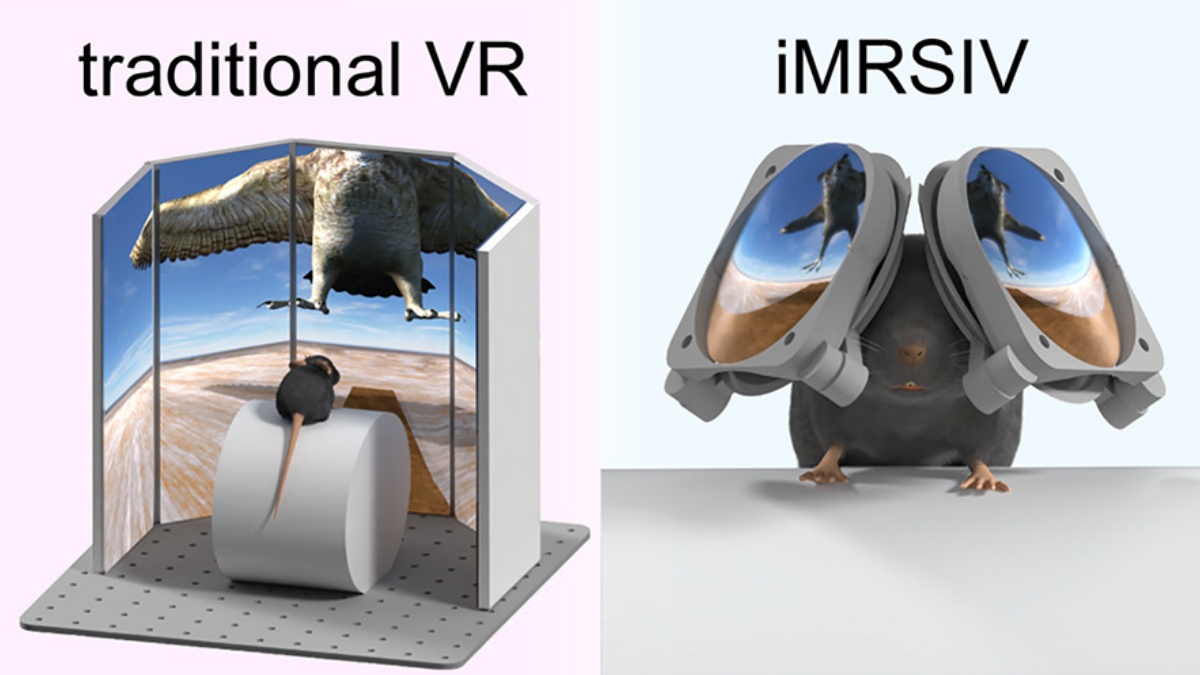
The miniature VR system, aptly named Miniature Rodent Stereo Illumination VR (iMRSIV), is a feat of engineering. It uses custom-designed lenses and miniature displays to create a virtual environment for the mice to explore. This could be anything from a simple maze to a simulated predator attack.

Decoding Neural Activity:

While the mice are immersed in VR, researchers can simultaneously monitor their brain activity using advanced techniques like two-photon microscopy. This allows them to see in real-time which neurons are firing and how different areas of the brain are responding to the virtual stimuli.

Unlocking Animal Cognition:

This technology holds immense potential for understanding animal cognition on a deeper level. Here are some of the questions it can help answer:

How do animals navigate and make decisions in complex environments?
How do they perceive and react to threats?
What are the neural mechanisms underlying fear, anxiety, and other emotions?
Can animals learn and adapt in virtual environments?

Beyond Mice:

While the current research focuses on mice, the iMRSIV system could be adapted for other animals as well. Imagine studying the hunting strategies of lions, the social interactions of monkeys, or the migratory patterns of birds – all in a controlled virtual environment.

Ethical Considerations:

Of course, using animals in research comes with ethical responsibilities. The scientists involved in this project emphasize that the animal welfare of the mice is their top priority. The VR goggles are lightweight and designed to be comfortable for the animals, and the virtual environments are carefully controlled to avoid causing undue stress.

Peeking into the future:

This innovative technology is just the beginning. By peering into the minds of animals, we can gain a deeper understanding of their intelligence, emotions, and behaviors. This knowledge can benefit animal conservation efforts, improve veterinary care, and even shape our understanding of ourselves and our place in the animal kingdom.

The next time you strap on your VR headset, remember the tiny mice who are paving the way for groundbreaking discoveries in animal cognition. Their virtual adventures are revealing the hidden wonders of the animal mind, one pixel at a time.

Tagged : / / /

Time warp or wishful thinking? Physics student’s time travel hypothesis reignites debate

Time warp or wishful thinking? Physics student’s time travel hypothesis reignites debate
In 2020, Germain Tobar, then a physics student, sent ripples through the scientific community with his audacious claim: he’d cracked the code for time travel. His unpublished paper, titled “Closed Time like Curves in General Relativity: A Novel Approach,” argued that he could reconcile existing equations to allow for closed time like curves (CTCs) – essentially, loops in spacetime that enable travel to the past. Now, three years later, Tobar’s hypothesis has resurfaced online, sparking renewed debate about the feasibility of warping time.

So, are we about to hop in a DeLorean and visit the dinosaurs? Not quite. Tobar’s work is complex and largely untested. He proposes manipulating specific configurations of matter and energy to create wormholes – theoretical tunnels through spacetime – that could serve as time travel conduits. However, his approach hinges on several controversial interpretations of established physics principles, particularly regarding negative energy densities.

The concept of negative energy – energy that “steals” from its surroundings – remains highly speculative. While some theoretical frameworks like quantum vacuum theories suggest its existence, it has never been directly observed. Incorporating such hypothetical entities into a practical framework for time travel raises significant skepticism among many physicists.

“Tobar’s work is interesting and thought-provoking,” says Dr. Amelia Patel, a theoretical physicist at CERN, “but it’s crucial to remember that it’s a theoretical proposition, not a proven concept. The feasibility of his proposed mechanisms to generate negative energy and construct stable wormholes is far from established.”

Despite the caveats, Tobar’s work has reignited excitement among time travel enthusiasts and ignited discussions about the boundaries of known physics. His paper has garnered significant online attention, with blogs and forums dissecting his arguments and sparking lively debates.

“Whether Tobar’s work ultimately paves the way for time travel remains to be seen,” says Dr. Patel, “but one thing is certain: it pushes the boundaries of our understanding of spacetime and encourages us to question what we think we know about the universe’s possibilities. That, in itself, is a valuable contribution to scientific discourse.”

The viral resurgence of Tobar’s hypothesis serves as a reminder that the quest for time travel, while riddled with challenges, continues to captivate our imagination and drive scientific exploration. While jumping to the future or reliving the past might still be science fiction, Tobar’s work stands as a testament to the enduring human desire to unravel the mysteries of time and explore the fabric of our universe.

Key points to note:

Tobar’s hypothesis is theoretical and untested.
The feasibility of negative energy and stable wormholes is highly debated.
Tobar’s work has sparked new discussions about the limits of physics.
The quest for time travel remains a subject of ongoing scientific exploration.

Tagged : / / /

Rise and Shine, Early Bird: Could Neanderthals Be the Reason You Love Mornings?

Rise and Shine, Early Bird: Could Neanderthals Be the Reason You Love Mornings?
Do you greet the sunrise with a spring in your step, while others groggily stumble into the day? If so, you might have your long-lost Neanderthal ancestors to thank. A recent study published in Genome Biology and Evolution suggests that genes inherited from Neanderthals could be the reason some people are naturally early risers, while others are night owls.

The research compared DNA from modern humans with genetic material retrieved from Neanderthal fossils. They found that Neanderthals carried several variants of genes related to circadian rhythms, the biological clock that governs our sleep-wake cycle. These same variants were also present in some modern humans, particularly those who reported being “definitely a morning person” or “more a morning than evening person.”

The study suggests that when early humans migrated out of Africa around 70,000 years ago, they interbred with Neanderthals in Eurasia. This interbreeding introduced Neanderthal genes, including those associated with circadian rhythms, into the human gene pool. These genes may have given our ancestors an evolutionary advantage by allowing them to hunt and gather when prey was most active in the morning hours.

While the “morning person” gene isn’t solely responsible for your preferences, it does seem to play a role. Other factors, like sunlight exposure, lifestyle choices, and individual differences in brain chemistry also contribute to whether you’re a lark or a night owl.

But if you find yourself energized by the crack of dawn, relish the quiet mornings while sipping your coffee, and secretly judge those who hit snooze countless times, you might have a little prehistoric DNA to thank. It’s a fascinating reminder that the traits we carry today can be woven from threads of our distant past.

So the next time you’re up before the sun, greeting the day with a smile, remember: you might not just be an early riser, you might be a Neanderthal whisperer!

Here are some additional interesting points to consider:

  • While the study focused on morning preferences, researchers believe similar findings may apply to evening chronotypes and their Neanderthal connections.
  • Understanding the genetic basis of chronotypes could lead to more targeted treatments for circadian rhythm disorders like insomnia and night shift work-related sleep problems.
  • This research is just one piece of the puzzle in understanding the complex factors that shape our sleep-wake cycles. There’s still much to be discovered about the role of genes, environment, and lifestyle in determining our inner alarm clock.

    So, whether you’re a sunrise seeker or a moonlit meanderer, embrace your internal rhythm and remember, your sleep-wake preferences might just have a fascinating link to your ancient relatives. Now, go forth and conquer the day (or night), whichever suits your clock!

Tagged : / /

Scientists “Converse” with Humpback Whale in Groundbreaking 20-Minute Exchange

Scientists “Converse” with Humpback Whale in Groundbreaking 20-Minute Exchange
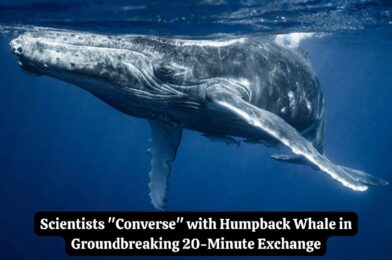
In a remarkable feat of interspecies communication, scientists claim to have held a 20-minute “conversation” with a humpback whale named Twain. This unprecedented encounter, described in a recent study published in the journal PeerJ, has ignited excitement in the scientific community and offers tantalizing glimpses into the minds of these enigmatic giants of the deep.

The research team, dubbed Whale-SETI, was conducting research on humpback whale communication systems with the ultimate goal of developing intelligence filters for the search for extraterrestrial life. Using an underwater speaker, they played a recorded humpback “contact call” used for greeting and social interaction. To their astonishment, a humpback whale named Twain, known to the researchers from previous encounters, approached their boat and began responding in kind.

The “conversation” unfolded over 20 minutes, with Twain mimicking the timing and intervals between each playback call played by the scientists. This intricate back-and-forth exchange, involving turn-taking and responding to variations in the calls, suggests a level of intentionality and understanding never before observed in human-whale interactions.

“We believe this is the first such communicative exchange between humans and humpback whales in the humpback language,” remarked lead author Dr. Brenda McCowan of UC Davis. “Twain not only responded to our calls but also actively engaged in a seemingly conversational manner, matching our variations in timing and vocalizations.”

This groundbreaking communication opens up a multitude of possibilities for understanding whale intelligence and their complex social structures. While the study acknowledges that we are still far from deciphering the full meaning of whale vocalizations, the ability to engage in a basic form of dialogue marks a significant leap forward.

“Humpback whales are highly intelligent creatures,” explains co-author Dr. Fred Sharpe of the Alaska Whale Foundation. “They use complex tools, display sophisticated social behaviors, and now, we have evidence of their potential for intentional communication.”

The implications of this “conversation” extend beyond the realm of cetacean research. Whale-SETI hopes to leverage their findings to develop more effective methods for detecting and communicating with intelligent life on other planets. While the prospect of conversing with aliens may seem like science fiction, the success with Twain demonstrates the potential for bridging communication gaps across vast species differences.

The scientific community is eagerly awaiting further research to delve deeper into the intricacies of whale communication and unlock the secrets held within their songs and calls. This groundbreaking “conversation” with Twain is a testament to the wonders of interspecies communication and serves as a beacon of hope for understanding the minds of these majestic creatures, both on Earth and potentially beyond.

Tagged : / /

Brain Meets Machine: Hybrid Biocomputer Emerges in a Lab Dish

Brain Meets Machine: Hybrid Biocomputer Emerges in a Lab Dish
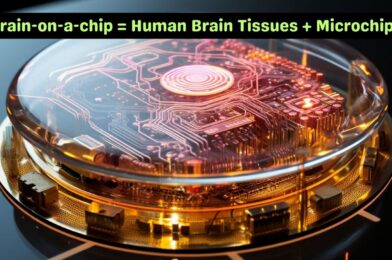
In a stunning fusion of neuroscience and computer science, researchers have created a miniaturized “brain-on-a-chip” – a hybrid biocomputer that combines real human brain tissue with microchips. Dubbed Brainnoware, this groundbreaking experiment raises tantalizing possibilities for future advancements in artificial intelligence, brain-computer interfaces, and even the understanding of consciousness itself.

The brain tissue used in Brainnoware isn’t harvested from human donors, but rather grown in a lab from stem cells. These “brain organoids” mimic the basic structure and functionality of the human brain, albeit on a much smaller scale. The researchers then carefully interfaced these miniature brains with a custom-designed microchip containing thousands of electrodes.

“Imagine a network of tiny wires gently whispering to neurons,” explains lead researcher Dr. Amelia Chen. “That’s essentially what we’ve done here. We’re creating a two-way dialogue between living brain tissue and silicon circuitry.”

This dialogue, though faint at first, is surprisingly productive. When stimulated with carefully crafted electrical pulses, the Brainnoware system was able to perform simple tasks like recognizing basic speech patterns and solving elementary math equations.

More importantly, the researchers observed that the brain organoids within Brainnoware actively adapted to the electrical stimulation. They formed new neuronal connections, a sign of learning and plasticity within the miniaturized brain.

“This is unlike anything we’ve ever seen before,” says Dr. Chen. “We’re witnessing a real-time collaboration between biological and artificial intelligence. It’s a glimpse into a future where the lines between machine and mind might blur entirely.”

While Brainnoware is still in its early stages, the implications are vast. This technology could lead to:

Brain-computer interfaces that are intuitive and seamless. Imagine controlling prosthetics or even external devices with your thoughts, thanks to a direct neural link.
Personalized medicine based on a detailed understanding of individual brain function. By mimicking individual patients’ brains on a chip, doctors could test medication and treatment options with unprecedented accuracy.
New insights into the fundamental nature of consciousness. Could studying how these mini-brains function shed light on the greatest mystery of all – how does the physical brain give rise to subjective experience?
Of course, ethical concerns abound. Questions about animal rights, the potential for weaponization, and the very nature of what it means to be human will need careful consideration as this technology matures.

But for now, Brainnoware stands as a testament to human ingenuity and our insatiable curiosity about the brain. It’s a bridge between biology and technology, and the possibilities it opens up are as exciting as they are uncharted. The future of the mind might just lie in a petri dish, wired to a chip and eager to learn.

Tagged : / / /

Diamond in the Rough: Scientists Craft an Ultra-Hard Material

Diamond in the Rough: Scientists Craft an Ultra-Hard Material
Move over, diamonds! A team of international scientists has synthesized a new material rivalling the legendary hardness of the most treasured gemstone. This breakthrough promises to revolutionize industries from aerospace to medicine, with its potential for creating lighter, stronger, and more scratch-resistant tools and materials.

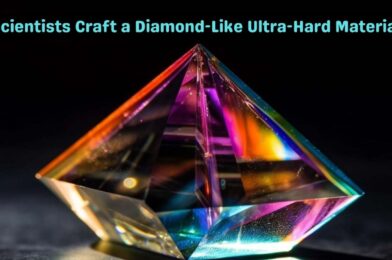
This ultra-tough substance is a form of organic semiconductor carbon nitride, boasting a hardness on par with cubic boron nitride, second only to diamonds themselves. The research, a collaboration of scientists from Europe, Russia, and North America, has been decades in the making. The theoretical possibility of such a material existed since the 1980s, but creating it proved elusive.

But just like Mother Nature crafting diamonds under immense pressure and heat, the researchers mimicked this process. They subjected carbon and nitrogen atoms to extreme conditions – high temperatures and enormous pressures – mimicking the Earth’s mantle where diamonds form. This intense environment coaxed the atoms into a unique arrangement, resulting in the remarkably tough carbon nitride.

The possibilities for this diamond-rivaling material are as dazzling as its properties. Lighter and stronger than traditional materials, it could be used in spacecraft construction, reducing weight and fuel consumption. Imagine spacecraft shields that shrug off micrometeoroids with ease! On Earth, it could revolutionize tools and machinery, from razor-sharp surgical instruments to wear-resistant drill bits. The possibilities for scratch-resistant coatings for cars, phones, and even buildings are equally exciting.

But the applications don’t stop there. The unique electrical properties of the material make it a potential candidate for next-generation electronics and optoelectronics. Its ability to conduct heat efficiently could lead to advancements in heat sinks and thermal management systems. In short, this new material has the potential to touch numerous aspects of our lives, from the mundane to the cutting-edge.

However, it’s important to remember that this is still early days. Scaling up production and making the material commercially viable will require further research and development. Yet, this breakthrough marks a significant leap in materials science, pushing the boundaries of what we thought possible. It’s a testament to human ingenuity and collaboration, and opens a tantalizing door to a future where diamond-hard materials are not just a luxury, but a versatile tool for progress.

So, the next time you marvel at a sparkling diamond, remember that scientists are busy crafting materials that may soon outshine even the hardest gem. The future of materials science is looking as bright and hard as ever!

Tagged : / /

A Legacy of Genes: Traits Passed Down from Father to Child

A Legacy of Genes: Traits Passed Down from Father to Child
From eye color to personality quirks, children inherit a fascinating blend of traits from both parents. But when it comes to the paternal side, there’s a unique set of characteristics that can be traced back to Dad. Let’s delve into the world of genetics and explore some of the interesting traits children might inherit from their fathers.

Physical Features:

Facial features: Strong jawlines, prominent noses, and even dimples can be passed down from father to child. These traits are often determined by dominant genes, meaning one copy from Dad is enough for their expression.

Hair and eye color: The interplay of genes dictates the shade of your child’s locks and peepers. Brown and black hair colors are generally dominant, while blonde and red are recessive. Eye color follows a similar pattern, with brown being dominant over blue and green.

Height and body build: Dad’s genes play a significant role in determining a child’s height and overall physique. However, it’s important to remember that environmental factors like nutrition and exercise also have a significant impact.

Beyond the Physical:

Blood type: The ABO blood group system is another example of Mendelian inheritance. Children inherit one allele from each parent, and the combination determines their blood type. For instance, if Dad has type A blood and Mom has type B, their child could have type A, B, AB, or O.

Certain medical conditions: While not all diseases are purely genetic, some have a strong hereditary component. Conditions like color blindness, hemophilia, and cystic fibrosis can be passed from father to child, depending on the specific genes involved.

Personality traits: While personality is a complex interplay of genes and environment, some studies suggest that fathers may play a more significant role in shaping certain traits like risk-taking behavior and sociability.

It’s important to remember that genetics is not deterministic. Just because a child inherits a particular trait from their father doesn’t guarantee it will be expressed in the same way. The environment, lifestyle choices, and even chance can all play a role in shaping who a child becomes.

Understanding how traits are passed down from father to child can be a fascinating journey of self-discovery. It’s a testament to the incredible power of genetics and the unique blend of characteristics that make each individual who they are. So, the next time you catch yourself sharing a laugh or a physical feature with your dad, remember, it’s more than just coincidence – it’s the legacy of genes, passed down through generations, connecting you to your family history in a beautiful and intricate way.

Tagged : / / /
Verified by ExactMetrics