There are people out there who are afraid of travelling by air. And if you think about it, it is scary indeed, considering the height at which the plane flies. In case of some tragedy, there is nothing exactly in your hands because a fall from the sky is just something out of your hands until unless you don’t have a parachute and know how to use it but that’s hardly possible in most of the cases.
A plane though seems really huge and tough but do you know that even a small bird can do a lot of damage to it? Pilots and crew people know how serious the problem of birds is. Something like this happened with an Egptair plane.
The Egyptair 737-866 airplane approaching London’s Heathrow Airport on Friday faced a major problem as a bird smacked right into its nose. The impact with even this bird created a large gaping hole in the nose of the plane. But by the grace of God none of the 70 passengers on board were hurt.
They probably didn’t even know if something had happened to the plane. The hole was repaired on the same day and the plane took off the very next day. The incident just reiterates that even a small bird can cause huge damage to a gigantic plane running or flying at full throttle.
Almost all of us have been cautioned against charging our smartphones overnight. It is said that overnight charging is bad for the battery. As per Battery University, a website run by the company Cadex, if you are charging your phone when it is already fully charged, you are pushing the phone in a high-stress, high-tension state. This high-tension state affects the chemistry within and does lasting damage to the phone’s battery. Well, it turns out; this is not exactly the case!
According to tech author Jesse Hollington, charging your iPhone or any other modern smartphone doesn’t cause any damage your battery. He says: “You simply can’t overcharge an iPhone, or any other modern electronic device, for that matter.
Any device that uses a Lithium Ion or Lithium Polymer battery must incorporate a charging circuit that cuts off charging power when the battery reaches 100%.”Apple, Samsung and all the top tech companies – almost of whose products use lithium-based batteries – use this best practice.
He also informed about another very interesting and useful fact. According to Hollington, “Lithium Ion batteries are rated for a limited number of “charge cycles’ (about 500 in the case of the iPhone), the term “charge cycle” refers to complete recharges, and partial recharges simply use up partial charge cycles. In other words, every time you charge your iPhone up from 90%, you’re using 1/10th, or 10%, of a complete charge cycle.
However, if you deliberately drain your battery to zero and then recharge it, instead of simply plugging it in when it needs to be charged, you’re needlessly using up a complete charge cycle.” So, this is all clear now and simple, overnight charging does not harm your smartphone but yes avoid draining it to zero levels so that you don’t use up those ‘charge cycles’ unnecessarily.
Since time immemorial, breast milk has been advertised as the best thing that a mother can give to her child. Doctors, parents, midwives, scientific journals all seem to echo this same fact time and again. Breast milk: the all purpose solution to your baby’s problems. It doesn’t just stop here.
Breast milk actually customizes itself to the baby’s needs over the months of its growth. Katie Hinde, an evolutionary biologist shed light on the amazing exchange between a mother’s nipple and her baby that in turn makes it understand exactly what the child needs. According to Hinde, when a baby suckles at its mother’s breast, a vacuum is created. Within that vacuum, the infant’s saliva is sucked back into the mother’s nipple. She calls it “baby spit backwash”.
Receptors in the mammary gland of the mother read the saliva as signals. The spit backwash contains the information about the baby’s immunity status. So if the mammary gland receptors detect the presence of pathogens, they compel the mother’s body to produce antibodies to fight it.
The antibodies thus produced, travel through breast milk back into the baby’s body, where they target the infection. This thing keeps working in a loop and based on the need of the baby, breast milk keeps making changes accordingly. This theory throws light on how the magic of breast milk works and how important it is for the baby.
As a technology lover you may like our daily important technology news series. It’s a playlist and you can retrieve the total day-wise videos. Please consider subscribing our YouTube channel:
The hypothalamus located above the pituitary gland and below the thalamus might just be one of the most essential part of the brain. It is what concerns itself with our hunger, thirst, sexual drive and body’s homeostasis.
The hypothalamus is only able to do so because of the many, many hormones floating inside our skulls. Simply put, some hormones work to suppress hunger and some work to produce it. The hormones that work to inhibit are: Cholecystokinin (CCK), Peptide YY, glucagon-like peptide 1 (GLP-1), oxyntomodulin and uroguanylin, Amylin, insulin and pancreatic polypeptide and the most powerful to all, Leptin. Leptin quantities in your body vary proportionally with the amount of fat cells in a body.
The stimulators of hunger on the other hand are: Ghrelin, Insulin-like peptide 5 (ILP-5) etc. These hormones are only good to control the neurons in our brain.
Pleasure pathways also have a say in our appetite by receiving signals using dopamine, endocannabinoids and serotonin as messengers.
These all factors and hormones vary appropriately in sync to make us hungry or not. All the hormones take a break to up their fasting levels three to four hours after a meal.
As more and more nations are adopting renewable energy solutions in different spheres, the need to enhance its efficiency is increasing. Though solar energy is a clean and renewable source of energy, the problem with it is that its supply becomes erratic in unfavourable weather conditions. Adding to that, the efficiency of solar panels isn’t that high even when the days are sunny. It hovers somewhere around 20-23%.
To find a solution of these genuine bottlenecks, a team of scientists from Purdue University and Switzerland’s Federal Polytechnic School of Lausanne, have developed a new energy system called ‘hydricity’. Hydricity is named so as it derives energy from sunlight as well as hydrogen fuel. As Rakesh Agrawal from Purdue puts it “Traditionally, electricity production and hydrogen production have been studied in isolation, and what we have done is synergistically integrate these processes while also improving them.”
The most prevalent two types of harnessing solar energy are photovoltaic cells and solar thermal power plants. While photovoltaic way uses solar panels to produce energy, solar thermal power plants concentrate the Sun’s rays, thereby using the generated heat to warm up water and drive turbines using the steam produced. The advantage of the solar thermal power plants is that they capture more of the sun’s spectrum but the limitation is that these are less efficient than solar panels and are good when the sunlight is direct.
These reasons prompted the scientist community working in the field of renewable energy to come up with the idea of hydricity. The idea behind hydricity is improving the efficiency of both solar thermal power plants and hydrogen fuel production plants. The system that the scientists have envisaged will be an integrated one that would produce both steam for generating electricity for immediate use and hydrogen for storing it for later utilization.
The team of scientists claims that the system can produce hydrogen at an efficiency of 50 percent and electricity 46 percent (something unheard of) obtainable owing to the way the high pressure turbines can be used to run in succession of the lower-pressure ones. They claim that in a 24 hour cycle a Sun-to-electricity efficiency of 35 percent can be obtained which is a commendable number. In this process of producing electricity, the hydrogen fuel produced along with the electricity is an important factor to be considered and that is because this same fuel could be used in transportation, chemical production and other industries.
The biggest advantage is that it doesn’t degrade with repeated use and doesn’t get discharged when stored. So when the sunlight is not available, the hydrogen power can take its turn and turbines can be kept running.
Though the process is still at its simulated model stage, real-world experiments are quite near in the future. And the future does seem bright with ‘hydricity’!
Type I Diabetes patients have a hard time monitoring their blood sugar levels and injecting the right amount of insulin at regular intervals several times a day manually. This algorithm will hopefully here to solve the problem.
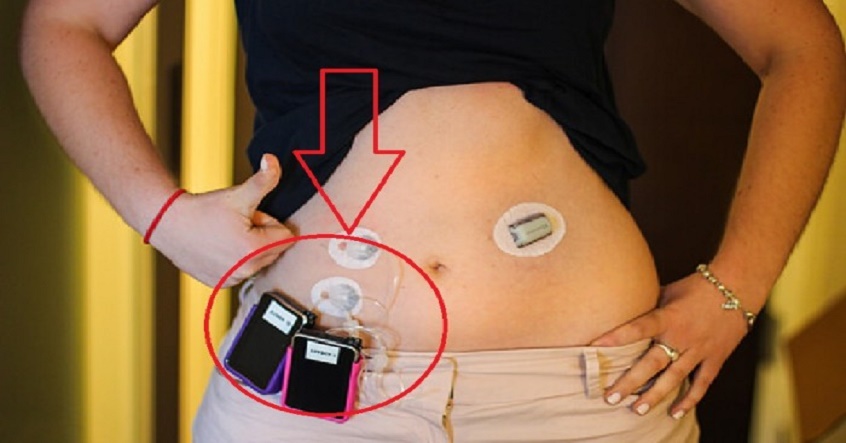
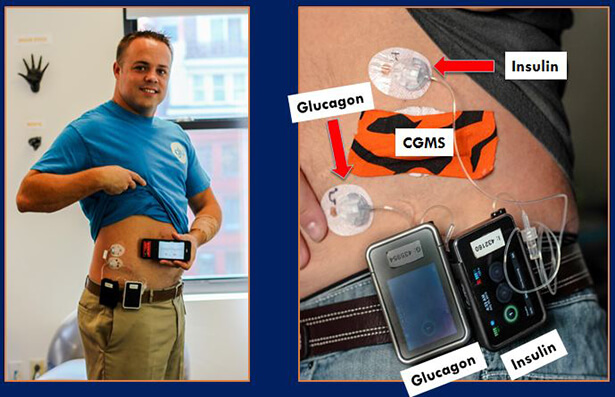
All we need is a pump, a monitor and the algorithm and the patients never have to worry about self-administering insulin into their bloodstream again. The algorithm is installed in a tablet computer or an android phone and can check a person’s blood glucose levels automatically and wirelessly, with the help of a sensor implanted into the layer of fat above their abdomen.
Type I diabetes is an unfortunate condition where the destruction of cells involved in processing of insulin to control glucose levels are destroyed, and the patient is left with the lifelong task of maintaining their own blood-sugar levels. This algorithm runs checks every 12 minutes and maintains optimal glucose levels in the blood. “It tells the pump how much insulin to deliver and it does it day and night,” says Roman Hovorka of the University of Cambridge.
Hovorka’s team tested out this new system with perfect result. The tests involved three-month trial of the device with 33 adults and 25 children. Each diabetic person tried both systems- the one with the algorithm, and the one without. As far as stats go, children using the bionic device spent 25 per cent more of their time in the “ultrasafe” blood sugar target zone, up from 34 to 60 per cent. The time they spent with abnormally low sugar levels per night was halved, to just 5 minutes.
The system worked well for the adults too, pushing them into the target zone 68 per cent of the time, up from 57 per cent with the simpler system
As a technology lover you may like our daily important technology news series. It’s a playlist and you can retrieve the total day-wise videos. Please consider subscribing our YouTube channel:
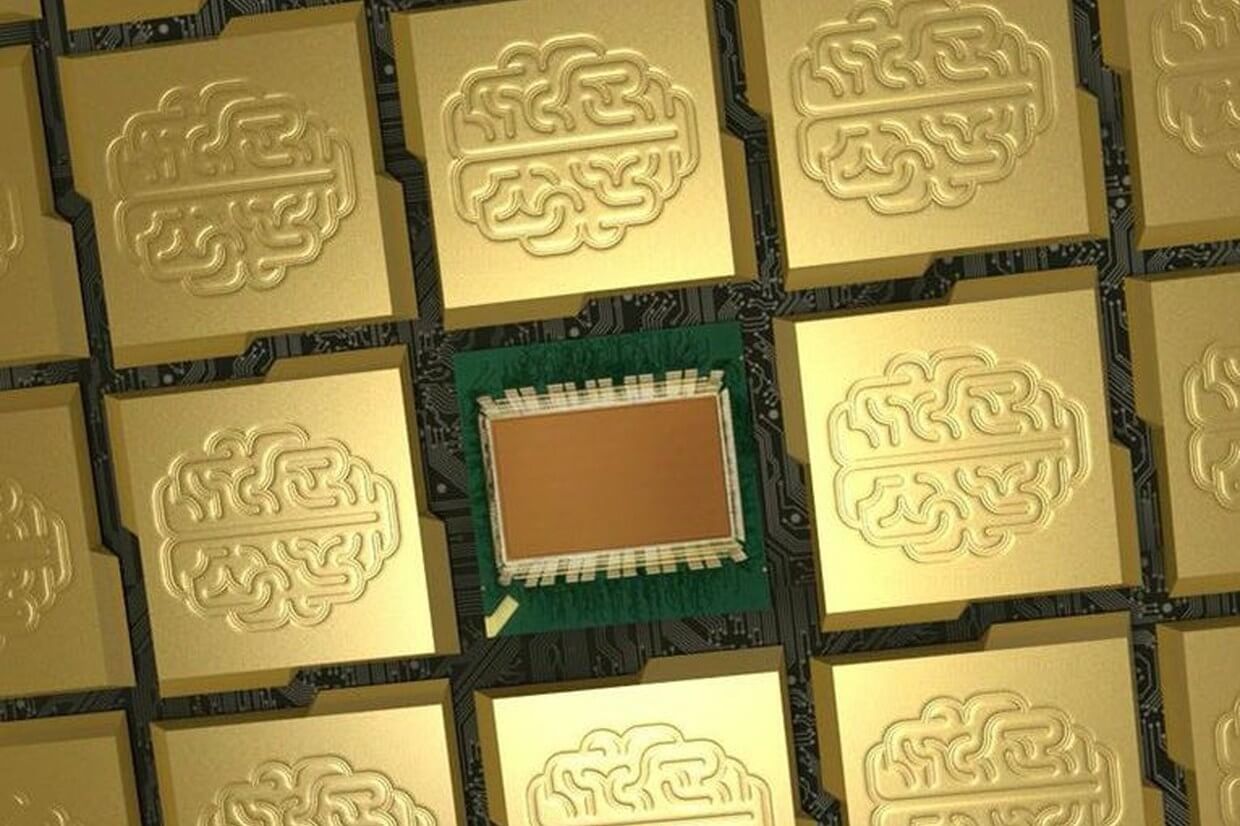
The current chips used in computers drain power to perform the simplest operations, like adding or subtracting as they require the use of many transistors. They also can’t process information in parallel. This is where they differ from human brains, not to mention, they can’t recognize a visual pattern or understand human language.
Alternative chip use design that deviate from the traditional norms tackle all the above problems by using neuron-like structures or resorting to massive parallelism, but they still need human minds for shaping their software.
A research team led by professors Wilfried van der Wiel and Hajo Broersma from the University of Twente in the Netherlands have devised a new type of electronic chip that is massively parallel, and can manipulate data in arbitrary ways – even though it doesn’t need to be explicitly designed to perform any task, it takes after the human brain.
The chip itself decides the best path to follow and judges the outcome. This proof-of-principle device consists of a network of up to 100 densely interconnected gold nanoparticles, 20 nanometers in size, each acting as a tiny transistor. This product of artificial evolution is dubbed as the natural computer as the particles and transistors that make it up are are connected in a specific pattern, the shared network is exactly like our brain’s’ neuron connections.
The nanoparticle cluster contains two input signals, one output signal, and six control voltages that are connected to the end and determine the output of the network. The entire circuit is not handmade, but instead the researchers function by knowing the exact combination of control voltages that process all the inputs into the correct outputs.
“Although we understand the generic physics principles underlying the cluster’s behavior, we do not know the actual current paths in the network on a nanoscale level,” Van der Weil said.
This method will prove cheaper and more sustainable in the long run as if the chip were to suffer damage, then it could be recovered by adjusting the voltage values for the signals that control how the nanoparticle cluster manipulates the data. A genetic algorithm (GA) in computer science, is a clever way to optimize a set of parameters for an arbitrary condition. Selection of the optimal values for the six control voltages is done by this method which takes less than an hour.
The researchers were able to indirectly “program” the chip to act as any one of the Boolean logic gates by optimizing the voltages for different functionalities.
“Natural computers have, in general, the promise to be more energy efficient,” says Van der Weil. “The promise for lower energy consumption is based on the fact that natural computers take more advantage of the computational power of matter than conventional computers, and that many computational processes occur in parallel as opposed to sequentially as in conventional computers.”
The current drawback is that this system can only operate at temperatures close to absolute zero. This is nothing that can be improved soon enough. The next steps for the team’s research will be to “create larger networks with more complex functionality, preferably at room temperature.”
As a technology lover you may like our daily important technology news series. It’s a playlist and you can retrieve the total day-wise videos. Please consider subscribing our YouTube channel:
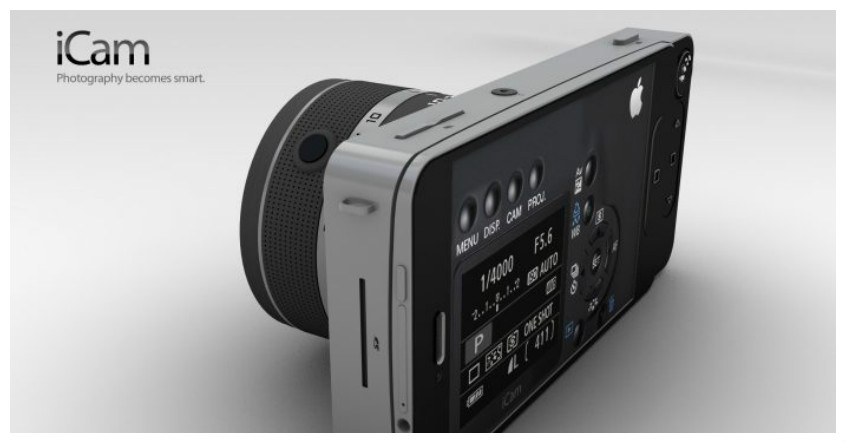
Talk about revolutionizing high-tech markets with innovation, quality and style, Apple wins the race hands down. Be it smartphones, smartwatches, tablets or MP3 players, Apple has always managed to surprise and elate one and all. But sometimes what we miss is an Apple camera. Don’t you? Let’s see why Apple should start thinking and working on an Apple camera.
Apple is photographers’ delight: Flickr informs that a quick survey of photo-sharing site’s camera –finder shows the iPhone 6, iPhone 5s, and iPhone 5 and iPhone 6 Plus were four of the five most popular cameras in the last one year. Apple still leads the group of brands followed by Samsung, Canon and Nikon.
It has excellent image processing: We tend to buy cameras based on terminologies like megapixel, sensor size, shutter speed, aperture, etc. but the image processing also plays an important role when the final outcome of the image is discussed. And Apple always hovers around or on the top whenever it does anything. So when we talk about image processing it is amazing and has smooth software. Apple’s cameras succeeding iPhone4 have consistently had some of the best colour reproduction in the industry, and the company has pioneered easy to use features like auto-HDR, which help negate some of its sensor’s technical deficiency and a user’s lack of expertise.
If a car then why not a camera? : The news has been doing the rounds from quite some time that Apple is hell bent on manufacturing its own self-driven car. What we think is…. if it can produce something as technologically advanced and big as a car, then coming out with a camera isn’t such a big deal for the tech-giant.
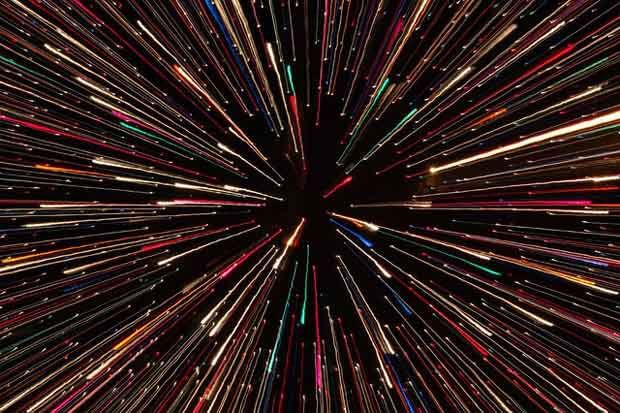
Whenever there is discussion about speed, everybody knows that the speed of light is the ultimate limit, nothing can move faster than that. Then how come according to a report, galaxies are moving away from us at a speed greater than the speed of light? It is simple, if you are standing and something is moving away from you then it is moving at its own speed…. but when you are moving and the thing is moving in a direction opposite to you then the thing moves with a speed which is a sum of yours and its own. The same applies to galaxies. But can two space bodies move away from each other at such speeds that their relative speed becomes even greater than speed of light?
Here comes the concept of ‘Hubble Constant’. According to this, for every megaparsec of distance between us and a distant galaxy, the speed separating them increases by about 71 kilometres per second. Galaxies separated by 2 parsecs will increase their speed by 142 kilometres every second.
If you run the marathon, once you get out to 4,200 megaparsecs away, two galaxies will see each other travelling away faster than the speed of light. But do we have that much space in the universe? Sure we do dear readers! The first light ever, the cosmic microwave background radiation, is 46 billion light-years away from us in all directions and if calculated, 4,200 megaparsecs is a little over 13.7 billion light-years. So to say, there’s humongous room for objects to be more than 4,200 megaparsecs away from each other.
Now the next question that arises because of this finding is that if most of the universe is already moving away at a speed greater than the speed of light. Then how can we see the lights from galaxies moving faster than the light itself? Actually, the galaxies may be moving away from us but the light emitted by the galaxies is moving towards us. That is the reason why photons emitted by all the stars in these galaxies can still reach us.
These wavelengths of light get stretched out, and shift further into the red end of the spectrum, off to infrared, microwave, and even radio waves. So with the passage of time there will come a time when the photons will be stretched so far that all galaxies and radiations that we see today will become totally undetectable. The universe never ceases to surprise and confuse us at the same time.
As a technology lover you may like our daily important technology news series. It’s a playlist and you can retrieve the total day-wise videos. Please consider subscribing our YouTube channel:
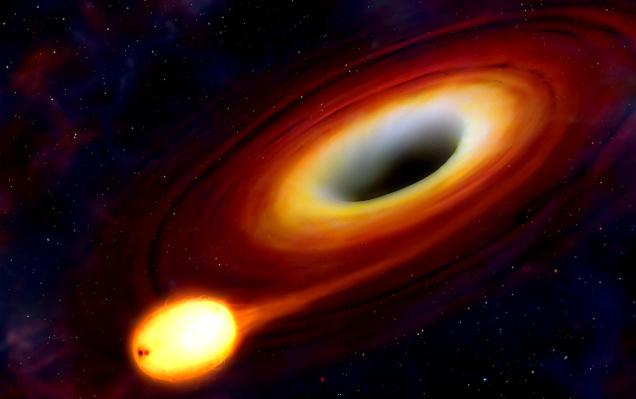
Black holes are called black holes for a reason. These celestial members are those dense areas of space that have gravitational pulls to such extreme degrees that neither light nor any matter can pass through them. This is the reason why it is always difficult to study these. They just keep hiding there in the vastness as huge voids.
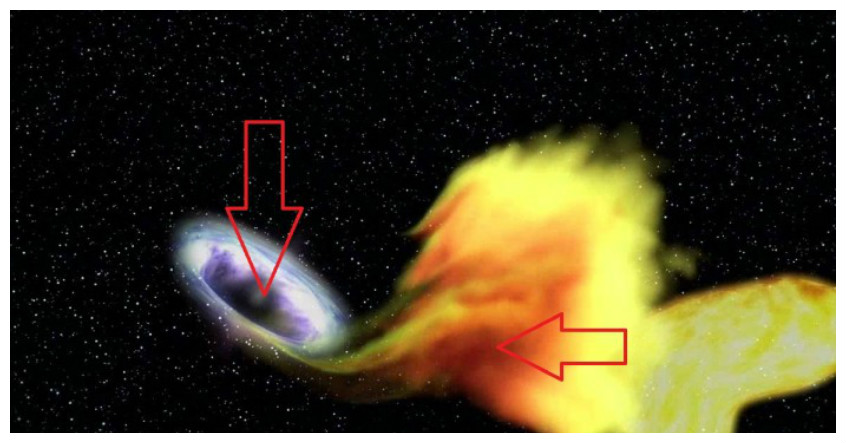
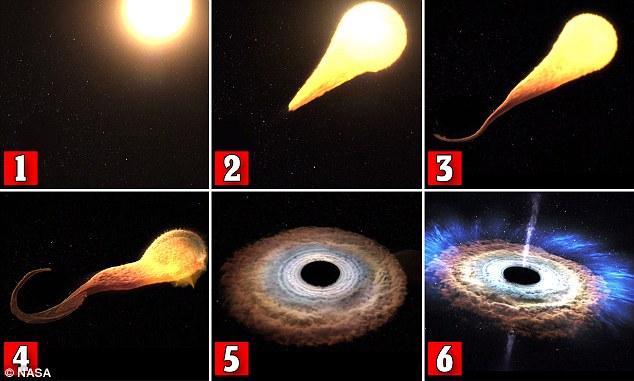
Recently an international team of researchers has observed one such black hole swallowing up a star and this has been observed for the very first time. This event took place over several months; hence over a period of 12 months the research team got a chance to study this amazing event in order to test the theory that when a large volume of gas is pulled in by such an object, a fast moving jet of plasma travelling at close to the speed of light escapes from near the black hole rim.
The black hole that the team studied was a massive one with a mass one million times that of our sun and located at a distance of 300 million light years. It was in December 2014 that the event was first spotted at the Ohio State University by astronomers who were using an optical telescope in Hawaii. After this, a team from UK’s University of Oxford turned their telescopes in the direction of the object and caught the event in the nick of time.
Due to this combined effort, it became possible to gather radio, optical and X-ray data which in turn contributed to provide a supreme quality, detailed and valuable record of the event. Based on all the data received, the researchers were able to prove with the multi-wavelength portrait that the increased light emission was the result of a newly trapped star. This in turn proved the existing theories regarding such events.
John Hopkins University’s Sjoert van Velzen said: “The destruction of a star by a black hole is beautifully complicated, and far from understood. From our observations, we learn the streams of stellar debris can organize and make a jet rather quickly, which is valuable input for constructing a complete theory of these events.”
As a technology lover you may like our daily important technology news series. It’s a playlist and you can retrieve the total day-wise videos. Please consider subscribing our YouTube channel:
Hurrah! The android N preview is here and you are surely dying to know what’s new. The developer preview has some good features. We are enumerating here those five we are almost sure about.
Better battery life
A good battery life is very important for a phone nowadays as most of our tasks are completed using these phones and if the battery keeps draining every now and then it becomes a nuisance. Google had introduced a new battery-saving feature called ‘Doze’ with Android Marshmallow and it’s been improved in Android N. So the feature ‘Doze’ now works whenever the screen is off, not just when the device is stationary. As a result the phone’s battery lasts even longer when it is in standby mode.
Improvements in notifications
Life has become all about notifications what with Facebook, Whatsap, Twitter etc. so the deluge of notifications that the phone receives on a daily basis has to be in a proper and easy manner. Android N helps you do that. It has brought about improvements that enable users to see the notifications as bundle and then expand them individually when necessary. Another improvement: now the notifications support a new ‘direct reply’ feature which enables the user to respond to a text, Whatsap or tweet straight from the notification pane without having to launch the app in question.
Multi window apps
With this new feature built into Android N, the users will be able to open multiple windows side by side. For example, typing out a message while checking the weather will be one of the many things the users could do. The users will be able to split the screen horizontally or vertically based on their personal preference.
Christopher Wrede, assistant professor of Physics at the Michigan State University (MSU) opines about the universe: “There is a recycling process going on here. When stars die, they spew out material in the form of dust and gas, which then gets recycled into future generations of stars and planets.”
Based on this concept, a team of researchers have come to a conclusion that the microscopic dust particles found in meteoritic material on the Earth may be particles that were formed in stellar explosions that probably occurred long before the creation of sun.
The team researching on these meteoritic dust particles believes that the explosion probably occurred around five billion years ago which caused ejection of stellar material as gas and dust into the space between stars. There is a fat chance that some of that material was used in the creation of our very own solar system.
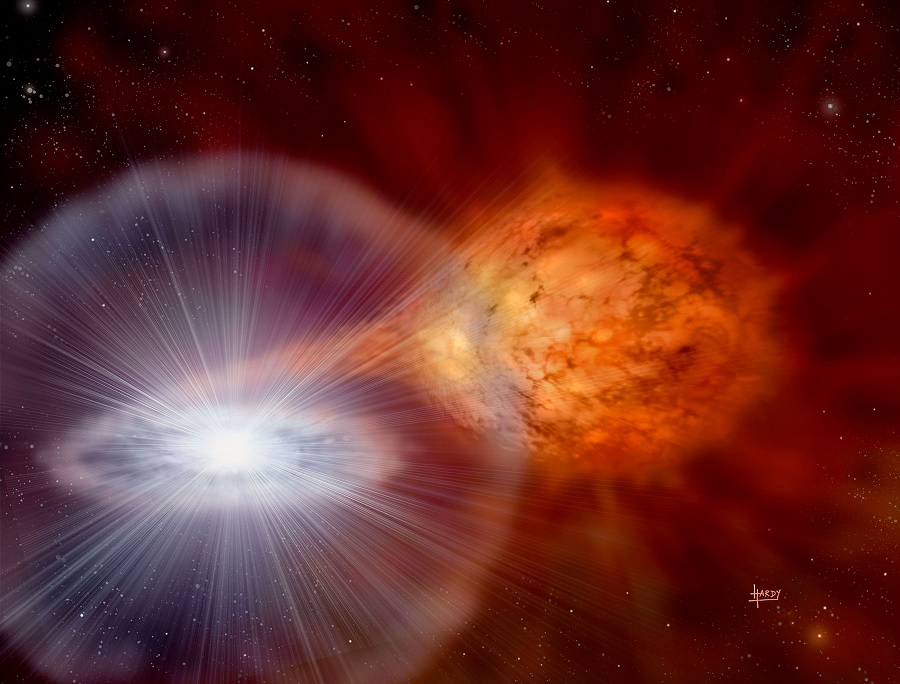
The team is carrying out its further investigation whether the particles may have formed in a classical nova (a thermonuclear explosion on the surface of a small star which is part of a binary star system).
Last year, Elon Musk’s SpaceX sent a Falcon rocket toward orbit along with 11 small satellites and then successfully retrieved the 15-story leftover booster back in their custody.
It is expected that reusable rockets will bring down the cost of the space missions dramatically. However, Elon Musk things that there is a lot of improvement possible in the usable launcher technology.
“If one can figure out how to effectively reuse rockets just like airplanes, the cost of access to space will be reduced by as much as a factor of a hundred. A fully reusable vehicle has never been done before. That really is the fundamental breakthrough needed to revolutionize access to space,” Musk had said earlier this year.
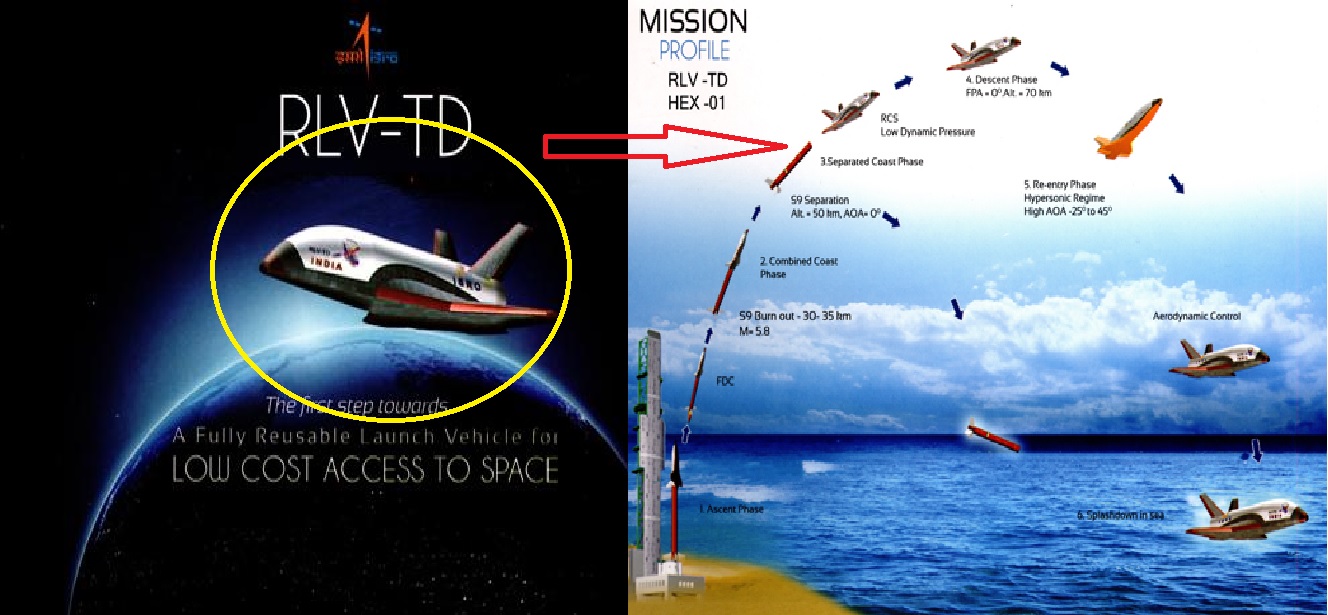
Indian space agency ISRO is exact trying to do the same away from media glare. During last year, the reputed space agency specialized in low cost launching completed several studies by carrying out various simulations in this regard. It was successful in validating the onboard software and conducted a highly successful test of the solid booster motor (HS9) together with Secondary Injection Thrust Vector Control (SITVC) system.
“A reusable vehicle is very important. There are two ways to look at it, one is the time factor and one is the cost factor. With a reusable vehicle, if two launches can be carried out in quick succession. This would save huge costs and will reduce the time to prepare the launch site,” informed Ajey Lele, who is working as fellow at New Delhi-based Institute for Defence Studies and Analyses.
India will soon test a small aeroplane-shaped launching vehicle as part of its pursuit to develop a reusable vehicle, informed a senior official of Indian Space Research Organisation (ISRO). “We will test a small aeroplane-shaped vehicle — reusable launch vehicle technology demonstrator — weighing around 1.7 tonnes soon. The vehicle will travel up to 70 km and will return,” said Mr. K. Sivan, Director, Vikram Sarabhai Space Centre, part of ISRO.
The current cost of putting 1kg of object in space is about USD 5000 and Indian scientists are hoping to bring it down to USD 500. That’s will be real substantial cost reduction! He also informed that ISRO will be using its heaviest rocket Geosynchronous Satellite Launch Vehicle-Mark III (GSLV-Mk III) which is powered by a cryogenic engine.
“The rocket’s carrying-capacity will be between 3.2-3.4 tonnes. It will carry the GSAT 19 communication satellite,” Sivan informed.
We may be the one who created the robots and put artificial intelligence in but, that doesn’t necessarily mean that we have the upper hand in everything. In today’s context, the things are changing rapidly. This is because, everyday, newer tools and algorithms are being introduced to empower the robots to carry out many of the things autonomously.
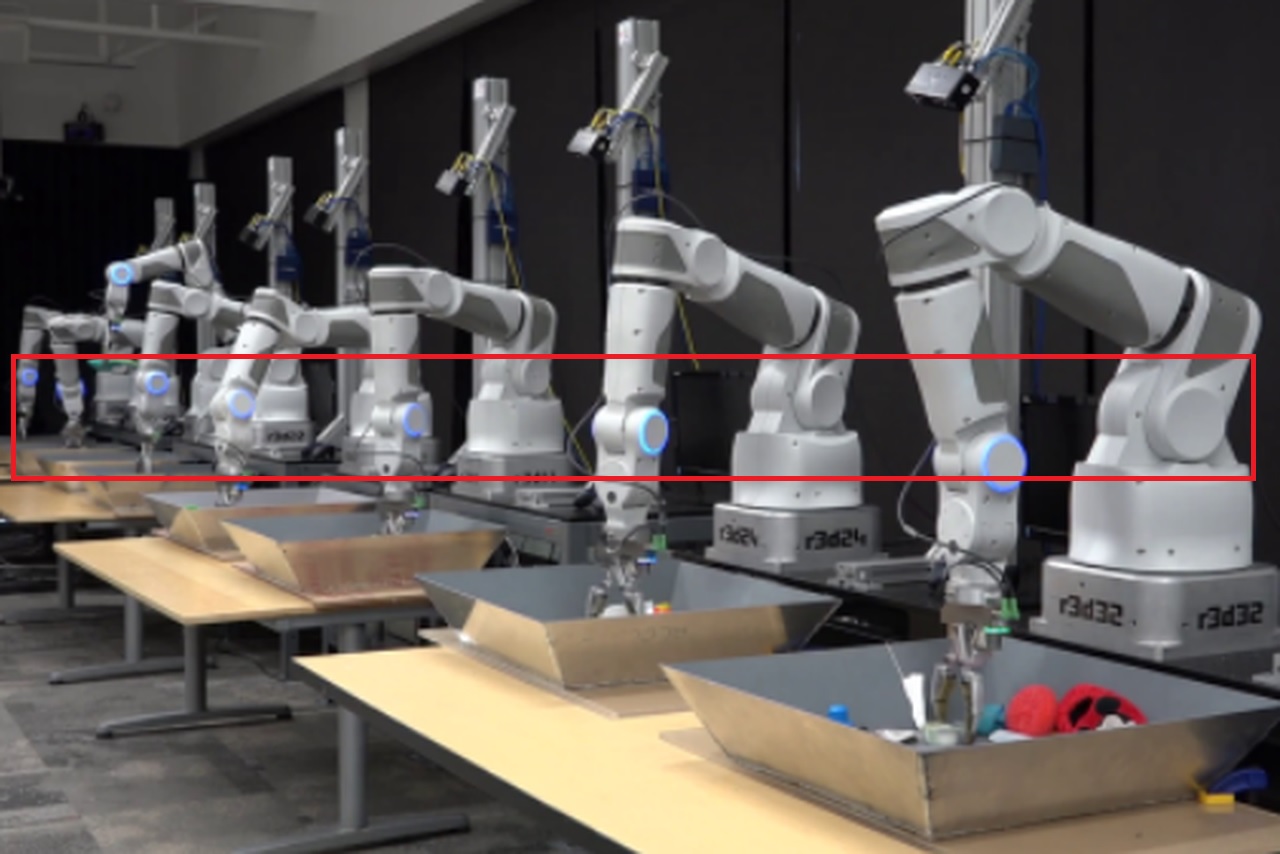
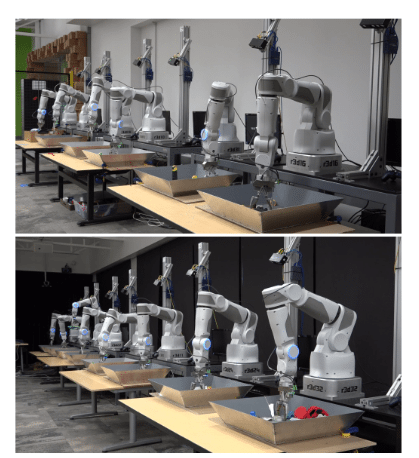
Google, who has a massive stake in robotics, is taking a radical approach to train its robots. Google is allowing the robots to learn the things from each other. As per the latest report released by Google, they connected 14 robot arms together and deployed convolutional neural networks so that they consult one another and learn how to pick things up on their own..
The approach is very much similar to how little children upto four years, explore and learn the things.This exposure is providing them the opportunity to learn effective hand-eye coordination.
Typically, a robot is programmed to perform some specific tasks, but in this method, robots are prompted to learn through endless trial-and-error with the help of a neural network – This is very similar to how a child learns simply by watching other people.
The crux of the matter is to make robots prepared to roam around autonomously and for that, they need to interact and go along with the objects they haven’t encountered so far. No pre-programing need should bridge the gap between the sensorimotor skills of robots and humans.
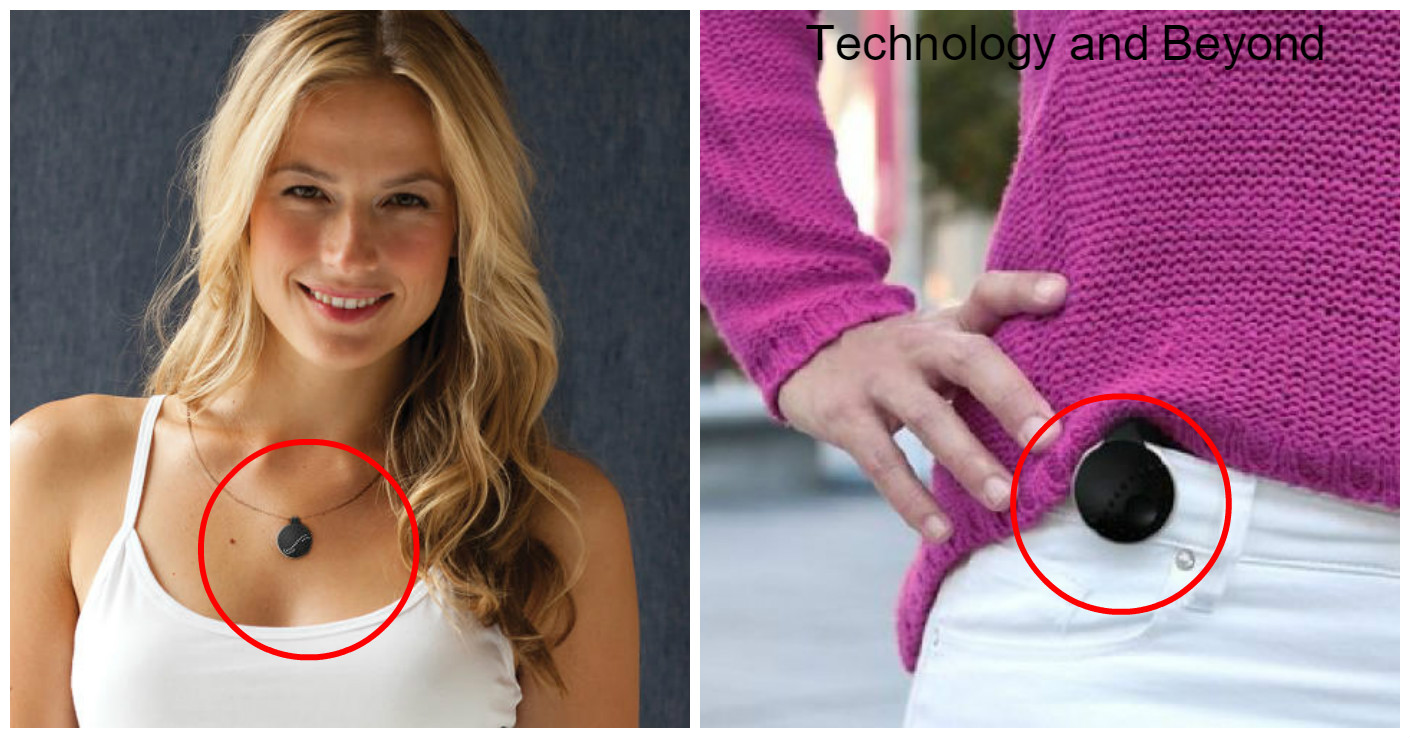
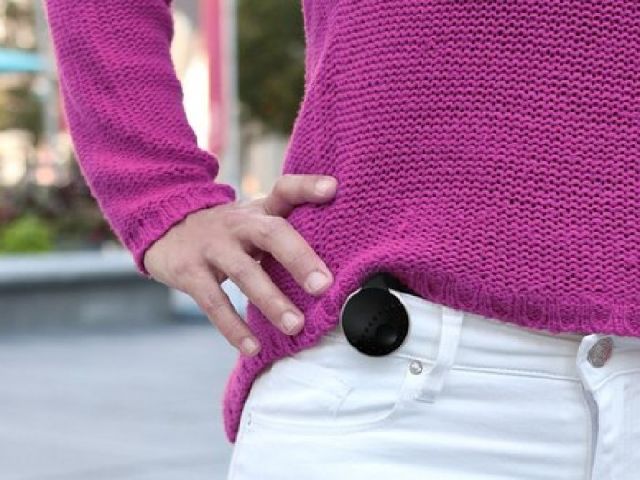
Roar for Good is dedicated to preventing physical assaults and have come to with their first product which a tiny security device that is special in its own little way. It can be worn anywhere- on a belt, lapel, chain, key chain or bracelet.
Athena, as the device is called, is a petite and compact safety measure that on pressing lets out a loud alarm and texts the wearer’s location to her emergency contacts. This works as Athena contains a low-energy Bluetooth chip that pairs with a smartphone and cell service in order for the text messaging system. While pepper spray and tasers are not readily available to consumers and are often confiscated at airports, Athena was designed to be easily accessible to anyone. Also, if overpowered, the Athena cannot be used as a tool against the victim, like the aforementioned safety devices might.
The idea to create a device that could be worn on other places than on the wrist struck Athena cofounder Yasmine Mustafaduring “We took a self-defense class and we found out that the worst place to wear a safety device is on your wrist, because you only have one hand to activate it,” Mustafa explained. “That’s why we designed ours so it’s not a bracelet. You can wear it in a couple different ways.” This is what distinguishes Athena from others like Safelet. The original idea to build a safety device came during a solo backpacking trip across South America. “As amazing as [the trip] was…literally everywhere I went I would hear of a time where a woman had been attacked,” Mustafa told Mashable. When she came back, a nearby neighbor had gone outside to read her meter when she was attacked, brutally beaten and sexually assaulted. “When I read the news story the next day, that’s when the idea for ROAR was born.”
[adinserter block=”7″]
SilentROAR is another feature available in this device. This this feature activated, the alarm disables, but the text system continues to work. The idea behind this is to help the victims in an abusive domestic relationship to alert others without alerting the abuser.
While Athena is being marketed for women, Mustafa said the unisex product can be used by males, children and even the elderly. The battery-powered device is currently only available in three colors — Rose Gold, Antique Silver and Timeless Black — but the company plans to release more products down the line geared toward specific groups.
The product is currently crowdfunding on Indiegogo, has made and long crossed its goal of $40,000 within 48 hours of its launch. Roar For Good, a registered B-corp, hopes to fight sexual attacks and rage in its totality by planning to donate 10% of its Indiegogo proceeds to the One Love Foundation, which aims to educate high school and college students about relationship violence.
“Building these self-defense tools or safety tools to us is kind a short term strategy,” Mustafa said. “The whole idea is educating young children on what constitutes a healthy relationship with the goal of not needing these devices one day.”
Athena is expected to be available internationally in early May 2016 and will retail for $99.