Say Hello to Advanced Li-Fi

Li-Fi

Li-Fi

Ways to transmit information via LED fittings have already been developed, but the engineers at the University of Virginia (U.Va) have taken Li-Fi to the whole new level. An algorithm has supposedly been formulated which can establish communication between any two devices fitted with the same type of LEDs. Exercise your imagination to the fullest in wake of the endless possibilities.

Prof. Maite Brandt-Pearce and Mohammad Noshad, the latter a postdoctoral fellow at Harvard University, were the brains behind this technique that would enable light from LED to transmit signals to wirelessly, streaming data at approximately 300 Mbps per source. The best part is that, the usual limitations of RF Wi-Fi would be eliminated and there will be no restriction on access points. This form of Li-Fi communication could also be freely exercised in areas where RF waves are prohibited, both for health and safety concerns such as near medical equipment and EM sensitive environment.
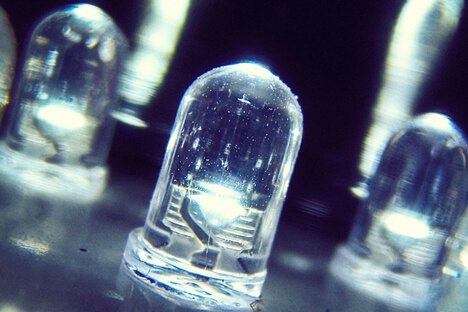
LiFiLEDs

“We developed a modulation algorithm that increases the throughput of data in [visible light communications],” says Brandt-Pearce. “We can transmit more data without using any additional energy. As more light fixtures get replaced with LED lights, you can have different access points to the same network.”

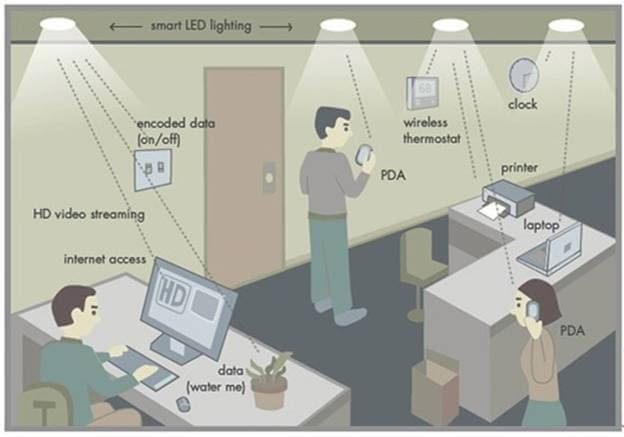
“The idea in this technology is to transmit the data using the lighting systems that are already used for the illumination of indoor environments. [Visible light communications] offer a compact, dual-use, energy-saving solution and can provide a high-speed secure network connection for a large number of users,” says Noshad.

“You can use it any place that has lighting,” adds Professor Brandt-Pearce. “In a stadium, in a parking lot, or from vehicle to vehicle if using LED headlights and taillights.” This is the point of difference of the U.Va system.
clip_image0023

Even though this form of communication transmission is not the fastest out there. SiSoft Li-Fi is undeniably much quicker. But the benefits and advantages associated with such portability and cheapness weighs out this drawback.

“[Visible light communications] has the potential to significantly increase the speed of internet connection in multiuser indoor environments due to the broad bandwidth of the visible light,” says Noshad. “It will offer a huge energy saving for the nation since energy is already used for lighting, and thus does not need to be expended for communications.”

Several patents have already been granted and researchers are working on a Li-Fi fitted lamp to demonstrate, while exploring ways to expand the current user base.

[adinserter block=”7″]

Author: Technology Blog
Tagged : /

Chip based Human organs simulator: Will it be the end of animal testing?

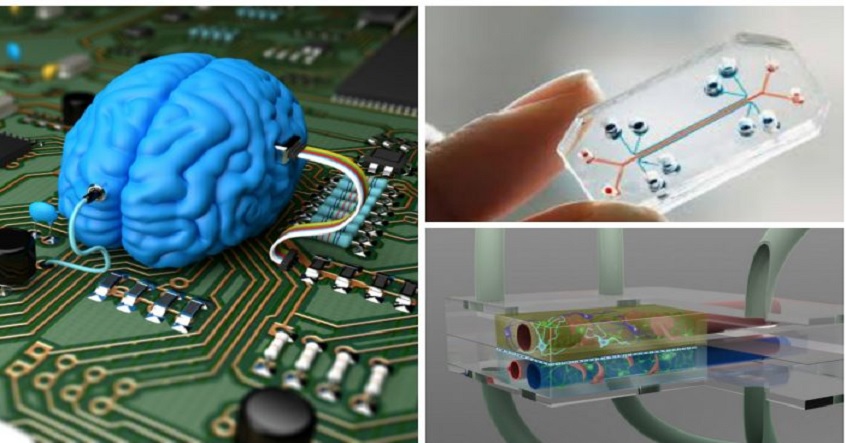
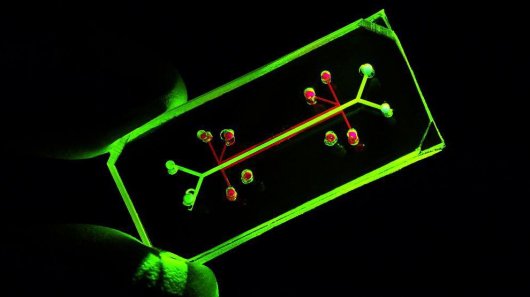
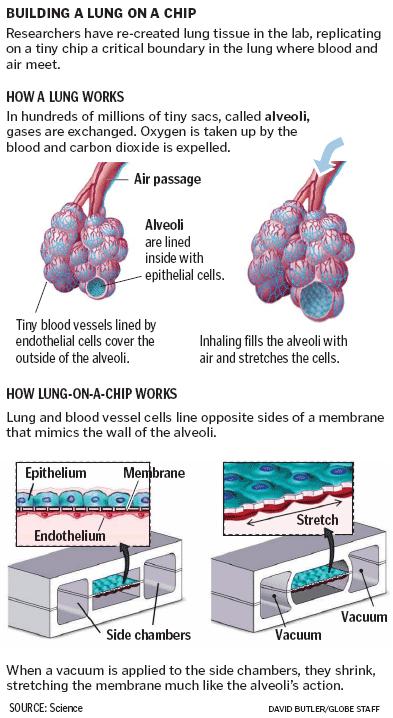
‘Lung-on-a-chip’ crowned as this year’s ‘Design of the Year’ by London’s Design Museum is on the verge of creating a revolutionary change in the pharmaceutical industry. The design, developed by the Wyass Institute for Biologically Inspired Engineering at Harvard University, is a simulation of the biological processes going inside the human lung.

lung-on-a-chip-5

This model organ is a small chunk of see-through silicone that is lined with living human cells and mimics the mechanical motions and tissue structures of human organs which in turn could help in accelerating drug discovery, reducing the need for animal testing and decrease development costs. This all can lead consequently to a future of personalised medicines.

globegiftastic__1277459402_9855

Don Ingber, founding director of the Wyass Institute opines: “The organs-on-chips allow us to see biological mechanisms and behaviours that no one knew existed before. We now have a window on the molecular-scale activities going on in human organs, including things that happen in human cells that don’t occur in animals. Most drug companies get completely different results in dogs, cats, mice and humans, but now they will be able to test the specific effects of drugs with greater accuracy and speed.”

F1.large

Ingber along with his team has developed a number of organs-on-chips like kidney, liver and peristaltic-gut-on-chip, till date. Skin-on-a-chip is currently in its developmental phase for the cosmetics industry. And according to him, the different organs can also be joined in a network to study the journey of a blood in a simulated human body, for example, the effect of an aerosol drug dispensed through an asthma inhaler on lungs, heart, liver and kidneys and its side effects.
This is the first time that a design from the field of medicine has bagged this award. Paola Antonelli, design curator at New York’s Museum of Modern Art, who nominated the project for the award said: “This is the epitome of design innovation.”

As a technology lover you may like our daily important technology news series. It’s a playlist and you can retrieve the total day-wise videos. Please consider subscribing our YouTube channel:

Author: Technology and Beyond

Tagged : /

Imagine! there is no charging…..THIS phone charges itself when you talk!

From charging your phone through radio waves used in communication, to electromagnetic waves produced while walking, there is just one thing on your mind; where is the plug point?

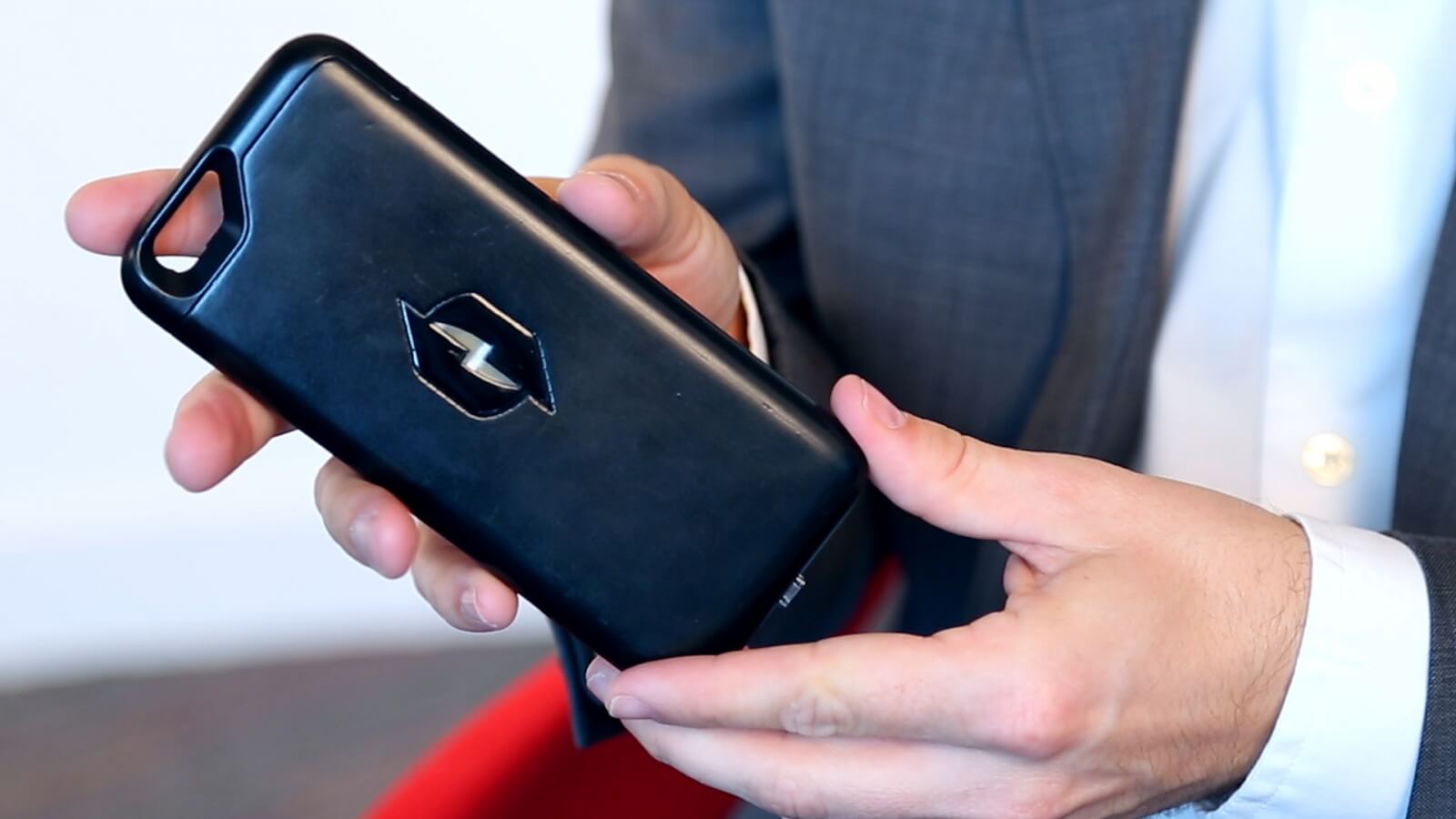
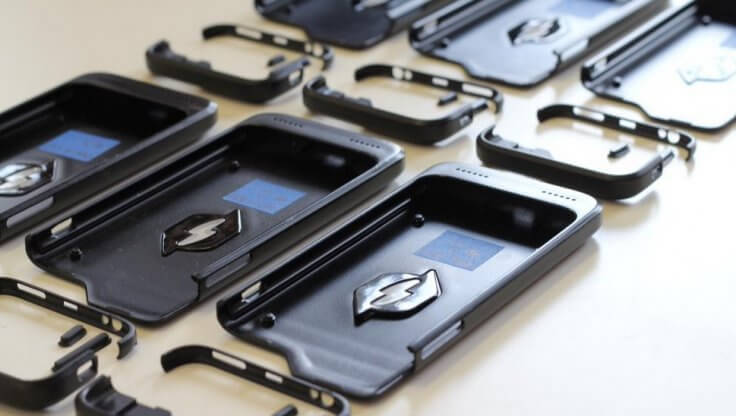
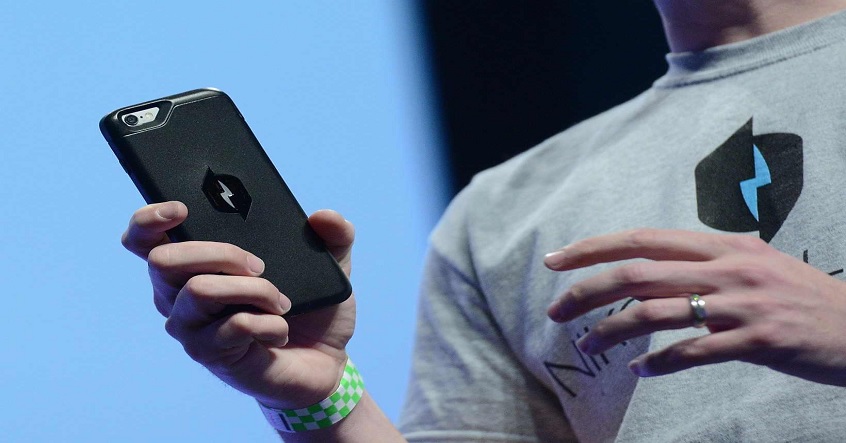
Well, we might soon be free of this dilemma of choosing between texting and streaming videos. Nikola Labs is coming up with a solution- the radio waves sent out from our mobile for communicating, will be used the power and charge up an iPhone by about 30%.

nikola

This doesn’t mean that we would never have to plug in, or power down. Radio waves just help to extend battery life. Radio wave technique can be compared to the wearable charger from Ampy, a startup based in Evanston, Illinois. The device contains a battery you fill up by moving around. Our motion from walking/cycling/jogging would send energy to the phone. An hour of exercise would produce the energy needed by an iPhone to function for an hour usage normal usage.

nikola-case-iphone-galaxy-s6

But Nikola Labs’ Zell, at least, is optimistic that this could eventually change. “Ultimately what I’d love to create is where thinking about battery life is no longer something that’s in everyone’s minds,” he says. “What if you just didn’t have to consider it?”

[adinserter block=”7″]

Author: Technology Blog
Tagged :

It’s the Sun,It’s not…China creates artificial sun in quest for limitless energy!

In a ‘never-before’ scenario, a man-made sun experiment in China has successfully produced long pulse plasma discharge at a staggeringly high temperature of more than 50 million degrees. At such high temperatures, this is the longest ever discharge produced.

The Experimental Advanced Superconducting Tokamak, an artificial sun experiment developed by Hefei Institute of Physical Science of the Chinese Academy of Science, realized an ultra-high temperature (UHT) long pulse plasma discharge for 102 seconds as of January.

It is to be noted that the light and heat of the sun come from two of the radioactive isotopes of hydrogen which are deuterium and tritium. These two isotopes while fusing into a helium atom release a huge amount of energy.

The artificial sun basically tries to imitate this same process of fusion. Xu Jiannan, from the China Academy of Engineering Physics, expresses: “An artificial sun can provide limitless clean energy through controlled thermonuclear fusion.”

Watch the video below for more information:

width="566" height="566" allowfullscreen="allowfullscreen">

Author: Technology and Beyond

Tagged :

What’s going on at Area 51? Is it hiding UFO resembling Millennium Falcon?

Famous UFO hunter Scott Waring has made a new claim related to US Air Force base popularly known as Area 51 in Nevada desert. He claims that the base itself is all about aliens. He also said that US government is hiding a UFO over there which looks very similar to the Millennium Falcon from Star Wars.

picture-4

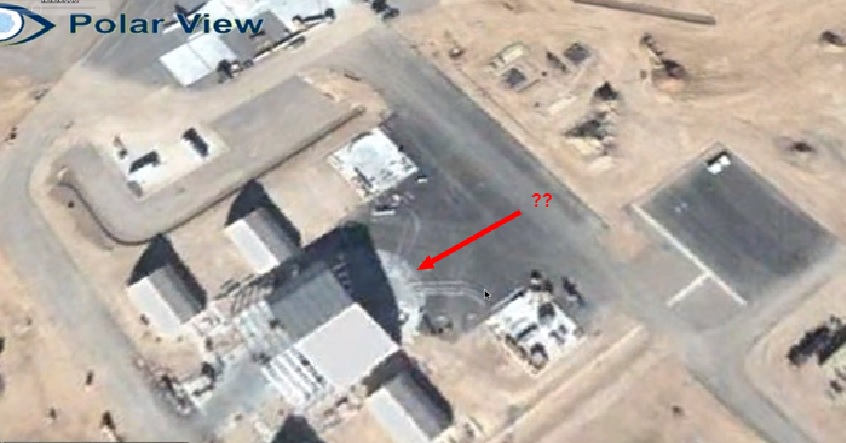
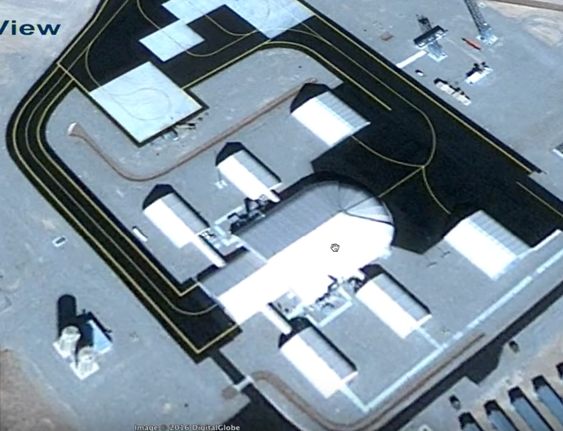
Scott Waring of UFOSightingsDily.com, in his 9-minute-long video, explains how over the years, structures have been built to maintain and hide the UFO inside. With the help of Google Maps’ time travel, he video showed the initial images of the area and the s images of a finished hanger which has been specially built around a UFO. Waring first noted the under-construction structure during 2010.

By using Google Maps’ time travelling feature, Waring points out the changes that have been taken place over the span of six years, in this secret base which he termed as Area S4. According to him, there are several such sites, being built right now, in order to maintain 8 such alien aircraft.

Waring explained that the four connected buildings around the hanger are ‘air conditioning units’ which are needed to maintain the UFO at a certain temperature.

It is to be noted that US Military, so far, denied the existence of aliens and UFOs but they did admit the existence of Area 51.

Watch the video below for more information:

width="481" height="481" allowfullscreen="allowfullscreen">

As a technology lover you may like our daily important technology news series. It’s a playlist and you can retrieve the total day-wise videos. Please consider subscribing our YouTube channel:

Author: Technology and Beyond

Tagged : /

THIS medicine erases memories to cure you from addictions!

Drug addiction is a nasty thing and getting rid of this addiction is a herculean task for those who are neck deep in this addiction and in this line Methamphetamine is the nastiest one to overcome the reason being the powerful nature of memories created during a Methamphetamine high. Wouldn’t it be bliss if those memories could be erased? Then the drug developed at the University of Florida can be named bliss as it does just that…… erases the memories! To develop this drug called Blebbistatin, or Blebb, the researchers had to understand the difference between how are brain creates memories under normal conditions and under the effect of a drug.

v3v2-brain_alamyv1Memories that are normally created in our mind or “normal memories” like the first day of your school or your favourite vacation, reside in our brains as a connection of neurons supported by a protein named as ‘actin’. The actin stabilizes and the memory is stored or saved in your brain. But in the case of memories created by the drug amphetamine, the actin never stabilizes itself. The researchers wanted to take advantage of this instability and so they did by creating drug that could disrupt the actin as well as the memory. However when they considered that disrupting actin (which also makes the muscles work and heart contract) can prove to be dangerous too, they utilized another molecule called nonmuscle myocin IIB that helps actin work but doesn’t interfere with the ususal muscle and heart related functions. So what Blebb actually does is, it disrupts non muscle myocin IIB interrupting the unstable actin and erases the memory associated with the psychoactive drug. According to the researchers, with a single dose the memory associated with the drug can be disrupted for 30 days.

dreamstime_s_4188302

Right now it does seem to be a risky and dangerous concept and since it has just been tried on mice, it may not sound convincing if used in the cases of human. Years of research would be needed in this direction. But if it conquers all the negatives and comes out victorious, drug addicts struggling to go back to their normal life may finally have a great solution.

[adinserter block=”7″]

Author: Technology Blog
Tagged : /

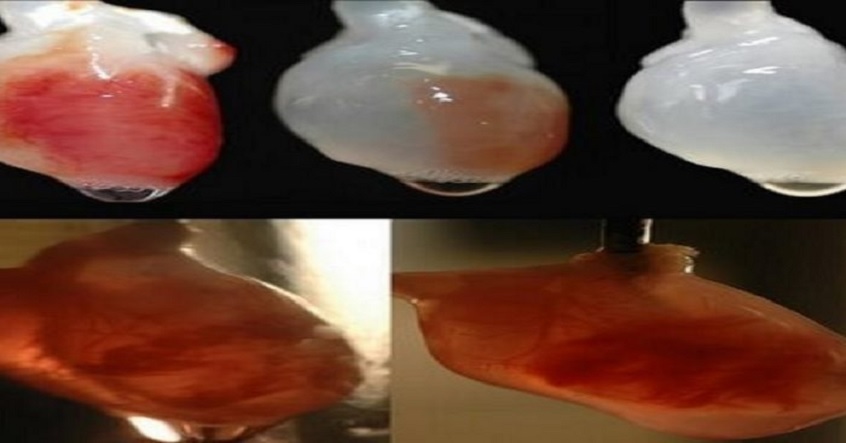
You will be amazed to know the purposes of these tiny lab grown hearts!

article-2669350-1F1F6F5400000578-803_634x522

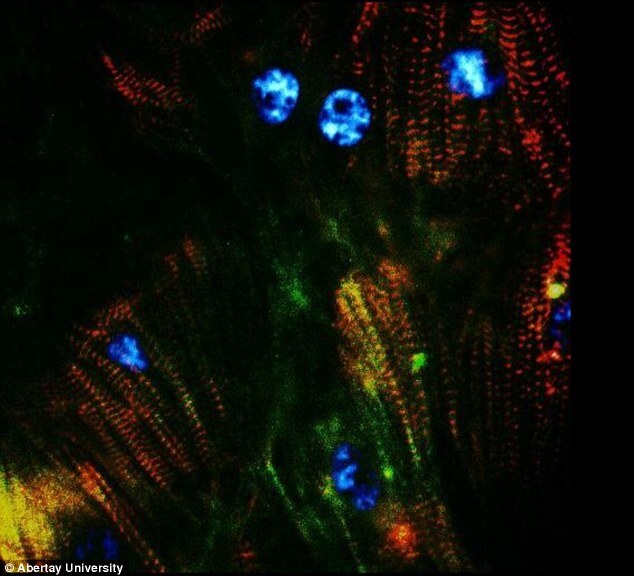
Stem cells have been used to form cardiac tissues, thanks to their versatility, on account of being totipotent (inherent tendency to form unlimited specialized cell types). Even though, the current research is using mouse heart cells, the scientists involved, hope to use human cardiac cells to study the formation of cardiac tissue, and the growth of heart in fetuses. Enhanced knowledge about fetus heart development would help to create safer drugs for pregnant women.

article-2669350-1F1F6F5000000578-155_634x576

In a growing fetus, stem cells change into heart tissue through a chain of chemical reactions, albeit some Physics also being involved.  DNA structure can be influenced by stretching and pulling the cells of the body in a certain way.

In the study, published in Nature Communications, the stem cells were in a growth medium which induced their differentiation. A special chemical layer, having areas of impression of oxygen plasma was added. This caused areas of irregularity in chemical and physical properties in the medium, which transformed the stem cells into different cardiac tissue cells. This process showed results similar to that in the making of a human heart.

video-undefined-1F1F4AC400000578-3_636x358

A drug, thalidomide, has already been tested on some of the artificially created tissue cells, which hindered the proper growth of the cells, as presumed.

As a technology lover you may like our daily important technology news series. It’s a playlist and you can retrieve the total day-wise videos. Please consider subscribing our YouTube channel:

Author: Technology Blog

Tagged : /

THIS miracle house produces more energy than it uses and it’s completely green!

Following the “Buildings as Power Stations” concept developed by the SPECIFIC Innovation and Knowledge Centre and as part of the Wales Low Carbon Research Institute’s SOLCER Project, a Welsh University has built the UK’s first smart low-carbon energy-positive house. This house was designed as a prototype to show how low-carbon targets could be achieved using some off-the shelf technologies. Energy positive status of the house means some ways were devised so that there was reduced energy demand, supply of renewable energy and storage of surplus energy for later use. In this house, electricity is also imported from the grid depending on the need and exported back in case of a surplus.

solarnewnew

Various techniques were used to make the house energy positive, like use of low carbon cement for the construction, employment of Transpired Solar Collectors (TSC) (to draw air into a cavity through perforated exterior skin of the house and warming it using sun’s rays). To reduce its demand for energy structural insulated panels (SIPS), thermal insulations and low-emissivity double-glazed aluminium-clad timber-frame windows and doors were installed.

maxresdefault

The Solcer House, built in 16 weeks generates electricity using a 4.3 kWp glazed photovoltaic panel array integrated into the south-west facing panel of the house and this electricity is then used to power the household appliances, hot water system, ventilation and heating.

As a technology lover you may like our daily important technology news series. It’s a playlist and you can retrieve the total day-wise videos. Please consider subscribing our YouTube channel:

Author: Technology Blog

Tagged : /

From plastic to pavement. This will definitely make you say “wow”

A Dutch firm VolkerWessels has put forth a concept of roads crafted from recycled plastic, PlasticRoad, and is looking for partners to help develop a prototype to test it under various conditions. Though it is just a concept as yet VolkerWessels cites various advantages of this concept if it is to turn into practical implementation. According to them PlasticRoad can withstand extreme temperatures from -40° C (-40° F) to 80° C (176° F).

3048671-poster-p-1-these-lego-like-roads-are-made-from-plastic-trash

It would be more resistant to corrosion, will have thrice the lifespan of an asphalt road and that too with minimum maintenance. The construction time of road will also reduce from months to weeks, as it would be possible to prefabricate and install sections of road on sand in single piece.

article-2627189-1DCDFF9D00000578-860_634x421

Adding to the above advantages, the biggest advantage lies in utilising used plastic trash in building roads hence lessening the reliance on carbon-intensive asphalt production. This material will also be lighter and would allow better control over factors like water drainage and road stiffness. It has been reported that the Dutch city of Rotterdam is already considering trying out a trial.

width="560" height="314" allowfullscreen="allowfullscreen">

As a technology lover you may like our daily important technology news series. It’s a playlist and you can retrieve the total day-wise videos. Please consider subscribing our YouTube channel:

Author: Technology Blog

Tagged : /

On second glance I understood what it MEANS !!

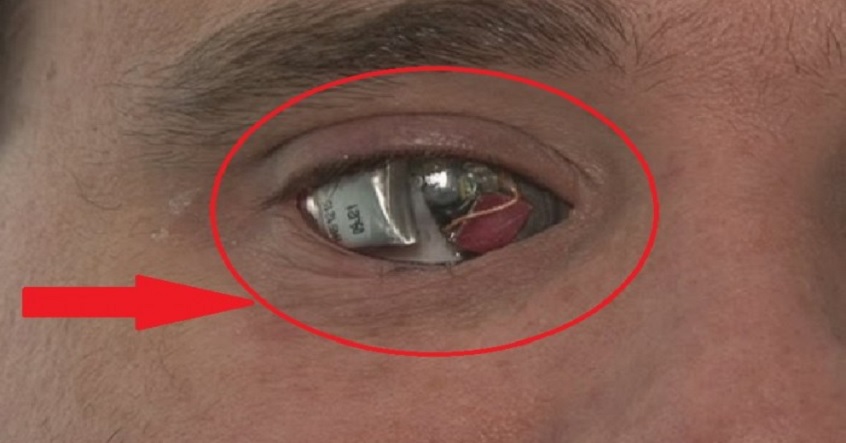
80-year old Raymond Flynn became the first person to receive the implant for AMD (age-related macular degeneration) treatment and the early results of this implant have been encouraging. The Argus II implant had received market approval from the Food and Drug Administration (FDA) in the US in 2013, for the treatment of Retinitis Pigmentosa (RP) – a degenerative disease affecting peripheral vision of patients. Continuing the journey, two years hence, the Argus II Retinal Prosthesis System is now in its testing phase, exploring its utility for patients suffering from dry AMD (which affects the central vision and not the peripheral one).

article-2138775-12E77132000005DC-935_634x284

Built by Second Sight, the Argus II Retinal Prosthesis System is designed in such a way that it stimulates a patient’s remaining retinal cells and allows them to obtain useful visual information. This visual information or images are then captured by a small, glass-mounted camera which are then converted into electrical pulses which in turn are finally transmitted too electrodes implanted onto the surface of the retina. If the implant works as per the plan, it will enable the patient to perceive patterns of light, which they can learn to interpret thus regaining some degree of sight.

article-2281661-182660E5000005DC-34_634x386

This whole procedure was carried out by Dr. Paulo Strange MD at the Manchester Royal Eye Hospital, UK. Two weeks after the implant, the device was activated and the tests indicated that Mr. Raymond Flynn was already receiving useful vision from the system. Commenting on this success, Second Sight’s Executive Officer, Dr. Robert Greenberg said: “We are very excited to begin such an important study for this patient population and to have the opportunity to help a great deal more people living with blindness. Though it is obviously still early in this clinical trial, we are very encouraged by these initial results.”

As a technology lover you may like our daily important technology news series. It’s a playlist and you can retrieve the total day-wise videos. Please consider subscribing our YouTube channel:

Author: Technology Blog

Tagged : /

If you see this creature in days to come, it means THIS…

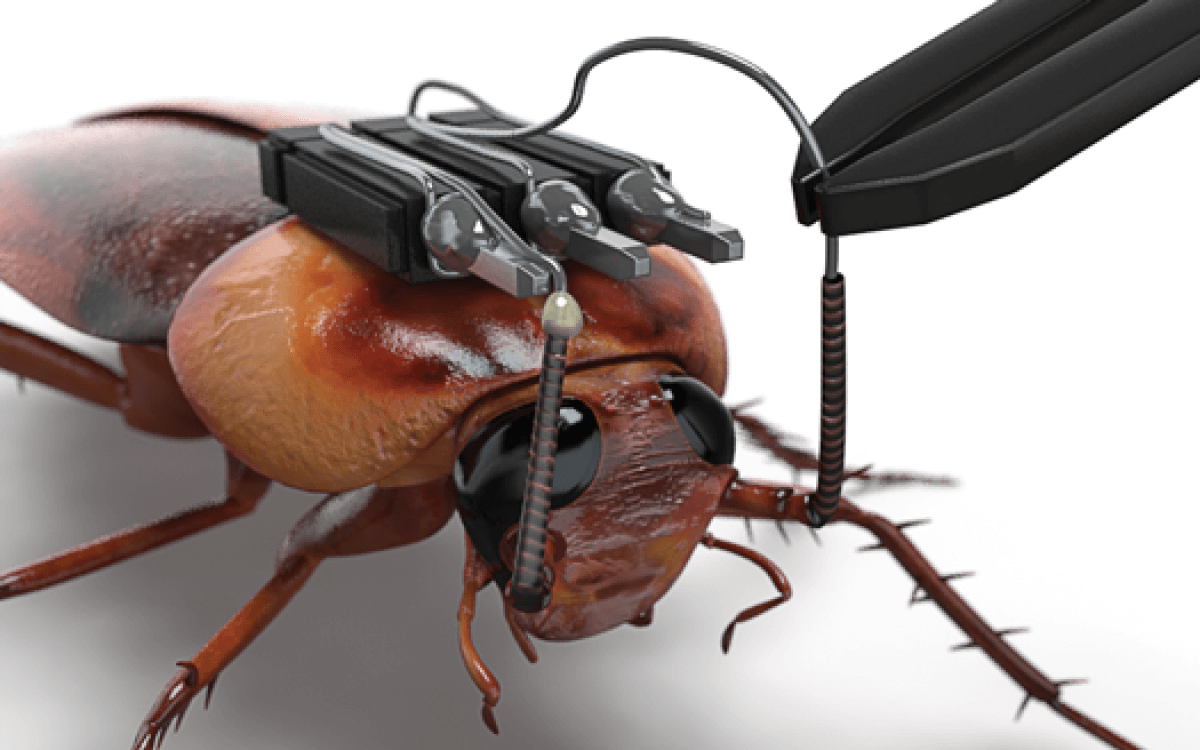
Yes… you heard it right! Who could have thought that the most irritating, yuck …response- inducing creatures called cockroaches can do a hero’s job!! Alper Bozkurt and his brainy team at North Carolina State University have put forth a revolutionary idea: to use cockroaches in finding out survivors trapped under rubble caused by a disaster and they plan to run the real-world tests pretty soon. They have christened these critters as ‘Cyborg Cockroaches’…. impressive… isn’t it?

Robo_Roach

These special cockroaches will carry a sensor backpack. In addition to this, they will be fitted with electronic bridles with a capability of picking up sounds. Each electrode will give each cockroach the directions on how to navigate a particular area (disaster struck area). The sensor backpack will help the researchers to control the critters in two ways. First, a drone will beam an invisible series of parameters called radio fences. These radio fences help in confining the cockroaches in a limited area and prevent them from venturing out. The second function of the sensor backpack is to create a tethering network that binds all the roaches together, so when one of the cockroaches catches or picks up any valuable information; it sends this information to the cockroach which is closest to the drone which in turn transmits it to the whole team.

wiring-cropped

The backpack also monitors the signal strength of each critter and ensures that none of the roaches lose contact with the team. The backpack has a low resolution microphone attached to it to detect sounds of probable survivors under the rubble. If a critter picks up such sound, the signal reaches to the other members of the critter group; particularly to those fitted with high resolution microphones. The cockroach gang then moves towards the location to pin point it. After the exact location has been found and the sound has been honed, the sensor transmits the data to the drone and the team gets an alert.

If real-world tests show positive and encouraging results then one thing is for sure… we will soon have a superhero Cockroachman… standing along with spiderman and batman!!

As a technology lover you may like our daily important technology news series. It’s a playlist and you can retrieve the total day-wise videos. Please consider subscribing our YouTube channel:

Author: Technology and Beyond

Tagged : /

Now, Gun down the cancer cells with pinpointed proton-beam ! This Particle Accelerator is for cancer treatment!

Researchers at Cern, Switzerland are building another particle accelerator. It is only two metres long and can the used in hospitals with cancer patients for imaging and treatment of cancer. The mini-Linac will consist of four modules, each just 50 cm long.

mini-lhc-treat-cancer

“With this first module, we have validated all the stages of construction and concept in general.” said Serge Mathot of the Cern engineering department.
This miniature accelerator, has a radiofrequency quadrupole. RFQ component is present on the end of every proton chains. and protects from high intensity beams. The real challenge for the mini accelerator is to double the RFQ, so the wavelength of RFQ is shortened.

img_cpt05

“Thanks to new beam dynamics and innovative idea from the for the RFQ, and mechanical aspects, we came up with accelerator design that was much better adapted to the practical uses on medical applications.” says Alessandra Lombardi, in charge of design of the RFQ.

[adinserter block=”7″]

Author: Technology Blog

Tagged :

Folks, Apple is building something secretly! And, it is THIS…

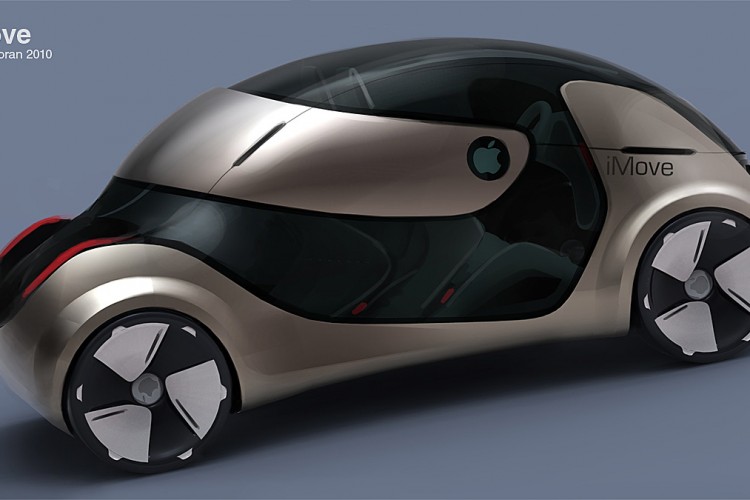
According to secret sources, the notoriously secretive Apple is secretly building a self-driving car. Lots of secrets… aren’t they? A rumour has been doing the rounds from quite a while that Apple is working on a self-driving electric car, codenamed Project Titan with hundreds of engineers secretly working on automotive technologies in an anonymous office building in Sunnyvale, four miles from its main campus in Cupertino. Last May, when engineers from Apple’s secretive Special Project group met with officials from GoMentum Station, it came to the fore that the hush-hush project is surely a car in the making.

39e0383811b851b4401e8ae28e4d6f69

It is to be noted that GoMentum Station is actually a disused second world-war era facility that boasts of 20 miles of paved highways and city streets. Its empty roads feature everything from highway overpasses and railway crossings to tunnels and cattle grids. This base is closed to the general public and is guarded by the military. So in a nutshell, it is the largest secure test facility in the world for the testing, validation and commercialization of connected vehicle (CV) applications and autonomous vehicles (AV) technologies. The place has been used in the past by Mercedez-Benz and Honda. So when Apple officials met GoMentum officials the rumour started taking a more solid shape.

In May this year, Apple Senior Vice President Jeff Williams had hinted by calling the car “the ultimate mobile device” and that they were “exploring a lot of different markets”. Presently Google, Uber and other tech companies are doling out huge chunks of money into robot cars.

So this move doesn’t come as a surprise. Other developments like Apple CEO Tim Cook attending a series of meetings with car executives in recent months; Cook meeting Fiat-Chrysler boss Sergio Marchionne; the company recruiting automotive experts from Silicon Valley and beyond; hiring engineers from Tesla Motors and Mercedes-Benz; as well as power experts from electric car battery maker A123 Systems; all confirm that the rumour is no longer a rumour but a solid fact. Another important thing is that Google, Volkswagen, Tesla, Mercedez-Benz and several other carmakers have been issued permits by the California department of motor vehicles to test self-driving cars on the state’s public roads. But that process requires disclosing technical and commercial details, something that the notoriously secretive Apple might not want. So the talks of Apple using the GoMentum facility started doing the rounds.

Apple-Green-Car-iMove-Concept_4-750x500

Randy Iwasaki, executive director of the Contra Costa Transportation Authority, owner of GoMentum Station doesn’t divulge much but says: “We had to sign a non-disclosure agreement with Apple. We can’t tell you anything other than they’ve come in and they’re interested.”
After this news, we will just have to wait and watch… as to when the Titan arrives!!

[adinserter block=”7″]

Author: Technology Blog
Tagged : /

Where there is a will there is a way! This is how they produce water from fog in the driest desert on earth!

Whenever you brush your teeth and turn the tap on, or whenever you take a shower and the water comes gushing out from that shower head do you take a second and think of the people for whom water is as precious as gold? Most of us don’t realise the importance of water because it is available to us as soon as we touch a tap. But the story is entirely different for the people in Peña Blanca, Chile. This remote, drought-stricken community lies on the fringes of an expanding Atacama Desert, the driest (non-polar) desert on Earth. And there are some parts in this area that have never seen even a single drop of rain. Boasting of a population of more than a million, many of which reside in fishing villages, towns and coastal cities throughout, when it comes to water, they have had a really thirsty history. But the people of this area have really proved that “Necessity is the mother of invention”.

fogpup

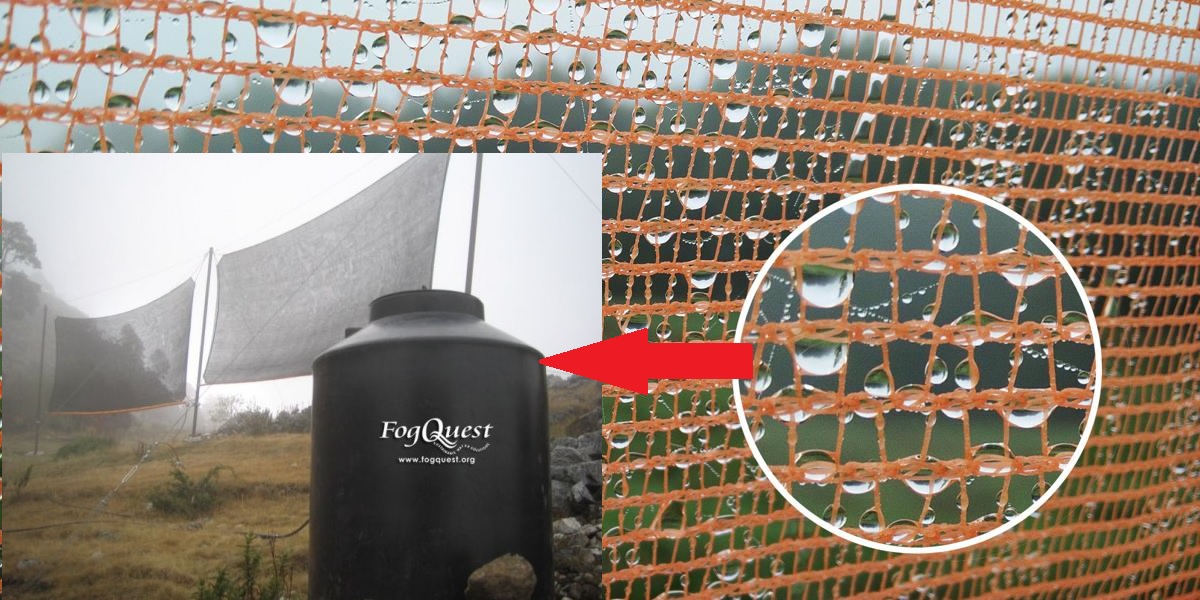
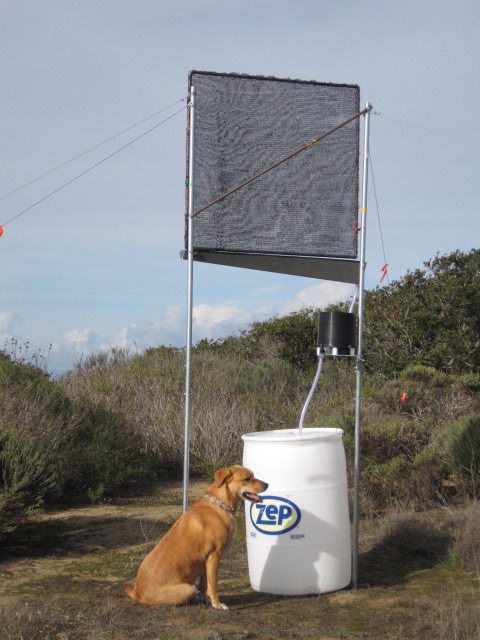
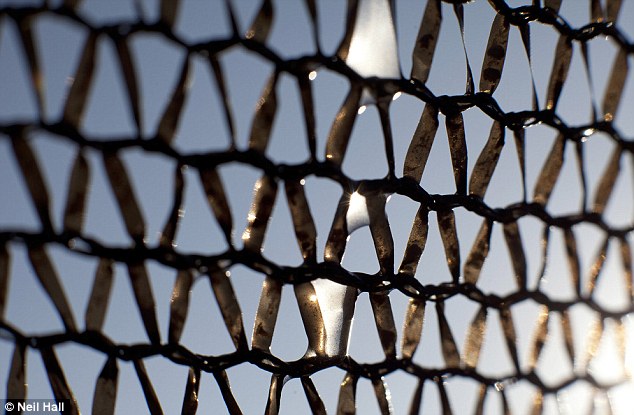
Rain is an extremely rare sight in the north of Chile. But they have a saviour known as “Camanchacha”. It is a storied mist or fog you may say, that rolls in from the Pacific. The fog advances as a dense sheet sweeping across the desert hills, but it contains droplets of such miniscule size that they can’t fall as droplets of rain. Here comes a very creative and cheap method of collecting water, into picture. Strategically placed nets across the desert hills catch the super tiny droplets of the fog and then collect these millions and billions of droplets as ‘water’ in tanks for farming, preserving native vegetation and even producing beer. The shortage of rainfall in this area has entered its eighth year which has prompted fear among the geographers that the desert could actually expand down south to the capital of Santiago. Because of this, the copper mining industry of this area has taken a huge blow. The 200,000 people that populate the mining city of Antofagasta rely on desalinated water from the ocean, while more modest townships count on water from underwater basins or have it shipped in on trucks. And the smaller these communities get, the more problematic and less financially viable sourcing water becomes. For example the fishing community that is scattered along the coastline of Chile survive on only eight litres of water per day because building a pipeline to give fishermen access to tap water is financially not feasible at all. Due to all these factors, Chile’s academics, engineers and geographers have diverted all their attention to the famous Camanchaca for cheaper and more sustainable answers.

article-0-18FE07D4000005DC-683_634x415

[adinserter block=”7″]

Next Page For More

Tagged : /

Scientists came out with the most realistic explanation of Bermuda Triangle mystery!

The Bermuda triangle also known as the ‘Devil’s Triangle’ spread over an area of five hundred thousand miles has been a matter of mystery since long. Sailors as well as aircraft pilots fear this place because never a month goes by when a plane or boat doesn’t get vanished in this area and that too without any trace.

437308-bermuda-triange

In the last 100 years, this place has become a cemetery for thousands of people. And the real problem is that no one knows why it happens in this particular area.

But now it seems the scientists have come to a probable reason behind all these disappearances. They have discovered giant underwater craters at the bottom of the Barrents Sea. These craters are upto half a mile wide and 150 ft deep. These are believed to have been caused by build-up of methane off the coast of natural gas-rich Norway. Scientists assume that the methane would have leaked from deposits of natural gas further below the surface and created cavities which finally burst.

The crater area is likely to represent one of the largest hotspots for shallow marine methane release in the Arctic. The explosions causing the craters to open up could potentially pose risks to vessels travelling on Barents Sea, scientists say. Experts also believe that this same phenomenon could explain the loss of ships and aircrafts in the Bermuda Triangle. Russian scientist Igor Yeltsov, the deputy head of the Trofimuk Institute, said last year: “There is a version that the Bermuda Triangle is a consequence of gas hydrates reactions.

They start to actively decompose with methane ice turning into gas. It happens in an avalanche-like way, like a nuclear reaction, producing huge amounts of gas. That makes the ocean heat up and ships sink in its waters mixed with a huge proportion of gas.

Author: Technology Vista

Tagged : /
Verified by ExactMetrics