Folks, Apple is building something secretly! And, it is THIS…

According to secret sources, the notoriously secretive Apple is secretly building a self-driving car. Lots of secrets… aren’t they? A rumour has been doing the rounds from quite a while that Apple is working on a self-driving electric car, codenamed Project Titan with hundreds of engineers secretly working on automotive technologies in an anonymous office building in Sunnyvale, four miles from its main campus in Cupertino. Last May, when engineers from Apple’s secretive Special Project group met with officials from GoMentum Station, it came to the fore that the hush-hush project is surely a car in the making.

39e0383811b851b4401e8ae28e4d6f69

It is to be noted that GoMentum Station is actually a disused second world-war era facility that boasts of 20 miles of paved highways and city streets. Its empty roads feature everything from highway overpasses and railway crossings to tunnels and cattle grids. This base is closed to the general public and is guarded by the military. So in a nutshell, it is the largest secure test facility in the world for the testing, validation and commercialization of connected vehicle (CV) applications and autonomous vehicles (AV) technologies. The place has been used in the past by Mercedez-Benz and Honda. So when Apple officials met GoMentum officials the rumour started taking a more solid shape.

In May this year, Apple Senior Vice President Jeff Williams had hinted by calling the car “the ultimate mobile device” and that they were “exploring a lot of different markets”. Presently Google, Uber and other tech companies are doling out huge chunks of money into robot cars.

So this move doesn’t come as a surprise. Other developments like Apple CEO Tim Cook attending a series of meetings with car executives in recent months; Cook meeting Fiat-Chrysler boss Sergio Marchionne; the company recruiting automotive experts from Silicon Valley and beyond; hiring engineers from Tesla Motors and Mercedes-Benz; as well as power experts from electric car battery maker A123 Systems; all confirm that the rumour is no longer a rumour but a solid fact. Another important thing is that Google, Volkswagen, Tesla, Mercedez-Benz and several other carmakers have been issued permits by the California department of motor vehicles to test self-driving cars on the state’s public roads. But that process requires disclosing technical and commercial details, something that the notoriously secretive Apple might not want. So the talks of Apple using the GoMentum facility started doing the rounds.

Apple-Green-Car-iMove-Concept_4-750x500

Randy Iwasaki, executive director of the Contra Costa Transportation Authority, owner of GoMentum Station doesn’t divulge much but says: “We had to sign a non-disclosure agreement with Apple. We can’t tell you anything other than they’ve come in and they’re interested.”
After this news, we will just have to wait and watch… as to when the Titan arrives!!

[adinserter block=”7″]

Author: Technology Blog

Tagged : /

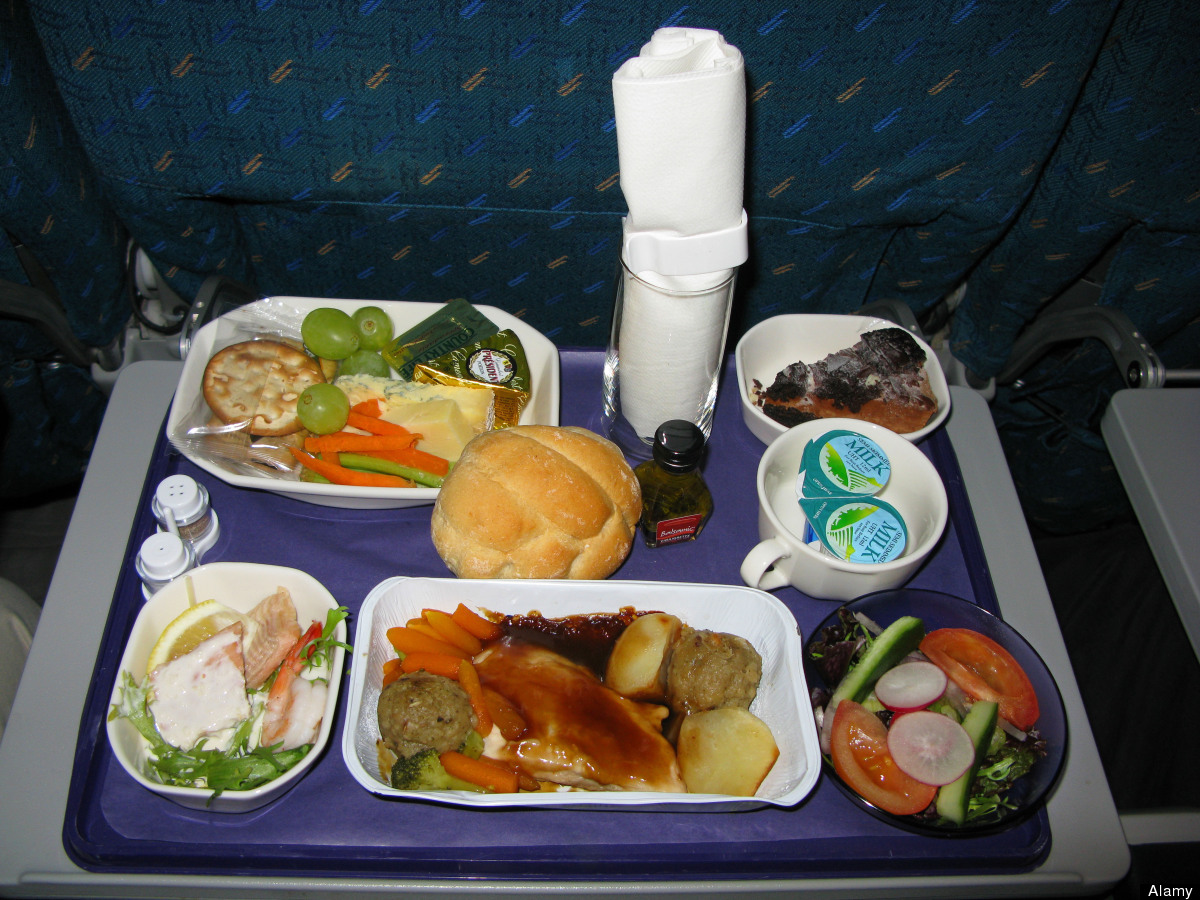
You always wondered about this ! HERE are the reasons why airplane food tastes ‘Yuck!’

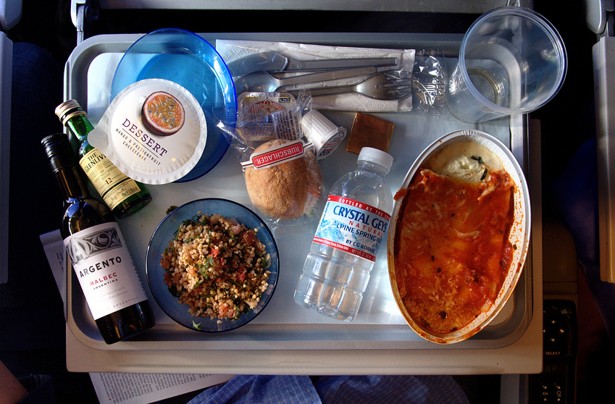
From the very first time when the Wright brothers made an airplane fly aeroplanes have been a thing of constant development and air travel has evolved into a luxurious time-saving experience. But the one thing that sticks out like a sore thumb amidst all this, is airline food. It seems to have stuck to the same bland taste since decades. But read this article before you start mouthing some bad words for the airline company you generally fly with.

lead_large

Janice Lawandi, a PhD chemist turned baker explains that the humidity levels at great heights while flying takes a toll on your taste buds. Depending on the altitude of the flight, the humidity levels can drop down to 15 percent which is less humid than even a desert. Because of these dropped levels of moisture available and cabin pressure, our taste buds become less sensitive to sweet and salty flavours. Also at this height, humidity and pressure; odour receptors can’t work properly. So the whole experience turns out like eating food when you are suffering from cold and stuffy nose.

Another study published this past June in the Journal of Experimental Psychology explains that the noise of the aircraft also affects the taste buds of the person eating something during a flight. In this study, the researchers subjected some individuals to the simulated noise of an aircraft cabin while some others were made to eat in normal conditions. The ones sitting in a noisy environment had a tougher time recognizing sweet flavours compared to the group eating in normal conditions.

Apart from these scientific explanations, there are some other logistical and logical factors too. When there are hundreds of passengers on a transoceanic flight, the food needs to be pre-cooked and re-heated, both of which affect the taste. Also, since the main task of an airplane is to transport you from one point to the other and not providing good food unlike a restaurant, air planes lack the best cookware.

slide_242224_1316041_free

If this wasn’t enough, there is a variety of dietary restrictions that airplanes have to cater to: vegetarians, vegans, pescatarians, allergies of all different varieties, spice-haters, lactose intolerance, pregnant women, people with suppressed immune systems, etc and in order to meet all these restrictions they have to settle with the lowest common denominator and this is one big reason why you may find your food bland. But still a lot of research at this particular moment is in full swings to make the airline food a bit tastier at least. Keep your fingers crossed, you may have delicious food on your platter in an airplane someday!

[adinserter block=”7″]

Author: Technology Blog
Where there is a will there is a way! This is how they produce water from fog in the driest desert on earth!

Whenever you brush your teeth and turn the tap on, or whenever you take a shower and the water comes gushing out from that shower head do you take a second and think of the people for whom water is as precious as gold? Most of us don’t realise the importance of water because it is available to us as soon as we touch a tap. But the story is entirely different for the people in Peña Blanca, Chile. This remote, drought-stricken community lies on the fringes of an expanding Atacama Desert, the driest (non-polar) desert on Earth. And there are some parts in this area that have never seen even a single drop of rain. Boasting of a population of more than a million, many of which reside in fishing villages, towns and coastal cities throughout, when it comes to water, they have had a really thirsty history. But the people of this area have really proved that “Necessity is the mother of invention”.

fogpup

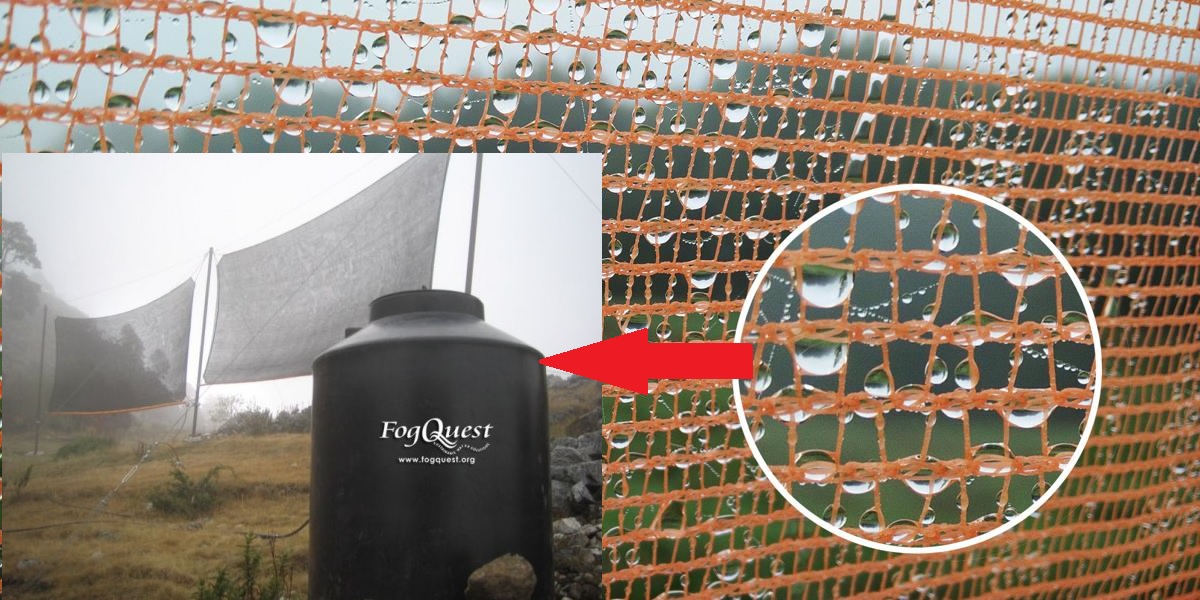
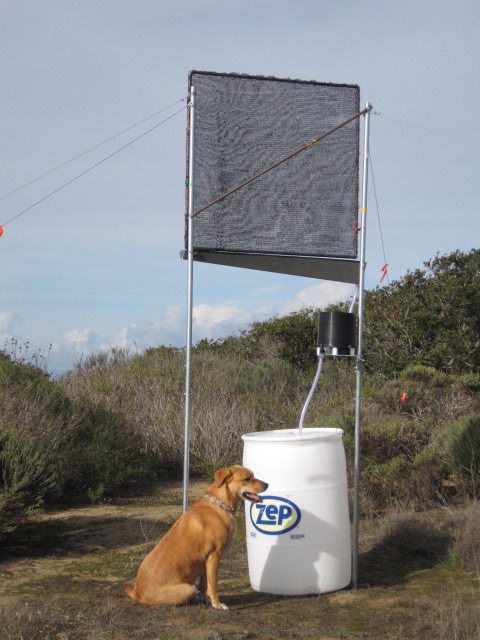
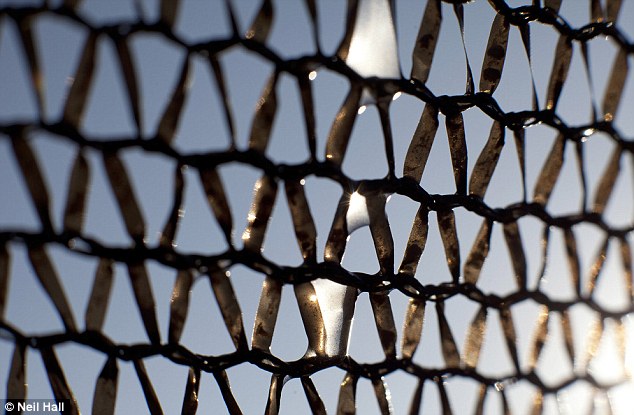
Rain is an extremely rare sight in the north of Chile. But they have a saviour known as “Camanchacha”. It is a storied mist or fog you may say, that rolls in from the Pacific. The fog advances as a dense sheet sweeping across the desert hills, but it contains droplets of such miniscule size that they can’t fall as droplets of rain. Here comes a very creative and cheap method of collecting water, into picture. Strategically placed nets across the desert hills catch the super tiny droplets of the fog and then collect these millions and billions of droplets as ‘water’ in tanks for farming, preserving native vegetation and even producing beer. The shortage of rainfall in this area has entered its eighth year which has prompted fear among the geographers that the desert could actually expand down south to the capital of Santiago. Because of this, the copper mining industry of this area has taken a huge blow. The 200,000 people that populate the mining city of Antofagasta rely on desalinated water from the ocean, while more modest townships count on water from underwater basins or have it shipped in on trucks. And the smaller these communities get, the more problematic and less financially viable sourcing water becomes. For example the fishing community that is scattered along the coastline of Chile survive on only eight litres of water per day because building a pipeline to give fishermen access to tap water is financially not feasible at all. Due to all these factors, Chile’s academics, engineers and geographers have diverted all their attention to the famous Camanchaca for cheaper and more sustainable answers.

article-0-18FE07D4000005DC-683_634x415

[adinserter block=”7″]

Next Page For More

Tagged : /

Scientists came out with the most realistic explanation of Bermuda Triangle mystery!

The Bermuda triangle also known as the ‘Devil’s Triangle’ spread over an area of five hundred thousand miles has been a matter of mystery since long. Sailors as well as aircraft pilots fear this place because never a month goes by when a plane or boat doesn’t get vanished in this area and that too without any trace.

437308-bermuda-triange

In the last 100 years, this place has become a cemetery for thousands of people. And the real problem is that no one knows why it happens in this particular area.

But now it seems the scientists have come to a probable reason behind all these disappearances. They have discovered giant underwater craters at the bottom of the Barrents Sea. These craters are upto half a mile wide and 150 ft deep. These are believed to have been caused by build-up of methane off the coast of natural gas-rich Norway. Scientists assume that the methane would have leaked from deposits of natural gas further below the surface and created cavities which finally burst.

The crater area is likely to represent one of the largest hotspots for shallow marine methane release in the Arctic. The explosions causing the craters to open up could potentially pose risks to vessels travelling on Barents Sea, scientists say. Experts also believe that this same phenomenon could explain the loss of ships and aircrafts in the Bermuda Triangle. Russian scientist Igor Yeltsov, the deputy head of the Trofimuk Institute, said last year: “There is a version that the Bermuda Triangle is a consequence of gas hydrates reactions.

They start to actively decompose with methane ice turning into gas. It happens in an avalanche-like way, like a nuclear reaction, producing huge amounts of gas. That makes the ocean heat up and ships sink in its waters mixed with a huge proportion of gas.

Author: Technology Vista

Tagged : /

What happens when a bird hits an airplane?

There are people out there who are afraid of travelling by air. And if you think about it, it is scary indeed, considering the height at which the plane flies. In case of some tragedy, there is nothing exactly in your hands because a fall from the sky is just something out of your hands until unless you don’t have a parachute and know how to use it but that’s hardly possible in most of the cases.

A plane though seems really huge and tough but do you know that even a small bird can do a lot of damage to it? Pilots and crew people know how serious the problem of birds is. Something like this happened with an Egptair plane.

The Egyptair 737-866 airplane approaching London’s Heathrow Airport on Friday faced a major problem as a bird smacked right into its nose. The impact with even this bird created a large gaping hole in the nose of the plane. But by the grace of God none of the 70 passengers on board were hurt.

They probably didn’t even know if something had happened to the plane. The hole was repaired on the same day and the plane took off the very next day. The incident just reiterates that even a small bird can cause huge damage to a gigantic plane running or flying at full throttle.

[adinserter block=”7″]

Author: Technology and Beyond

Tagged : /

The magic of shampoo and hair spray. Knowing how they work will help you to use them efficiently!

Hair-care is a thing of routine for all of us and we seldom pay any attention at the science behind it while shampooing our hair or using a hairspray. Today we will try to understand the hidden science behind these. All hair products are an amalgamation of various chemicals and compounds responsible to do various tasks.

hair-2

So how do shampoos work?

India was the country that created shampoo during the 1500s using pulp of a fruit called soapberries mixed with other herbs and hibiscus flowers. But that was a long time ago. Nowadays, two types of shampoos are available in markets- regular and moisturizing. Keep in mind one thing- other than anti-dandruff shampoo most shampoos are basically made with the same components. While regular shampoos contain higher levels of cleaning detergents, moisture shampoos are made with ingredients like dimethicone and polyquaterinum that make your hair less dry.

When we don’t wash our hair, the natural oils in our hair are secreted and start depositing on the hair strands and scalp, attracting more dust and dirt. All shampoos have cleaning detergent just like dish soap and laundry detergent. The chemicals in these shampoos have a hydrophobic and hydrophilic ends. Hydrophobic end latches on to the oils in the scalp and hydrophilic end attaches to the water thus washing the dirt off the scalp. The main ingredient in shampoos is sodium lauryl sulphate which is very hazardous if you do not wash it off instantly and completely.

And how exactly does a hairspray work?

Hairsprays are nothing but an invisible hairnet made of polymers. These polymers coat hair with a light weight film. It was introduced 1940s but it was by 1964 that it became famous. And not simply famous, it was so famous with women that even lipstick came second to it. Women found it was a quick and easy way to ‘glue’ their beehives in place, which is because the polymers in hairspray are also ingredients in certain types of glue.

Polyvinlyprolidone is a water-soluble polymer that has been used as a binder for pharmaceutical tablets, as it can be taken orally and passes through the body without any issues. The other polymer in the spray is polyvinyl acetate, which is found in wood glue and is used in bookbinding. So when you spray it on your hair, the liquid hairspray connects individual hair fibres wherever they happen to touch. The hairspray dries out the intersections and the polymers bond with themselves, holding hair in the right place.
So the next time you use that shampoo and hairspray, you will know what’s happening chemically inside those products.

[adinserter block=”7″]

Author: Technology and Beyond

Tagged :

Do you charge your iPhone overnight? Well, you must know THIS

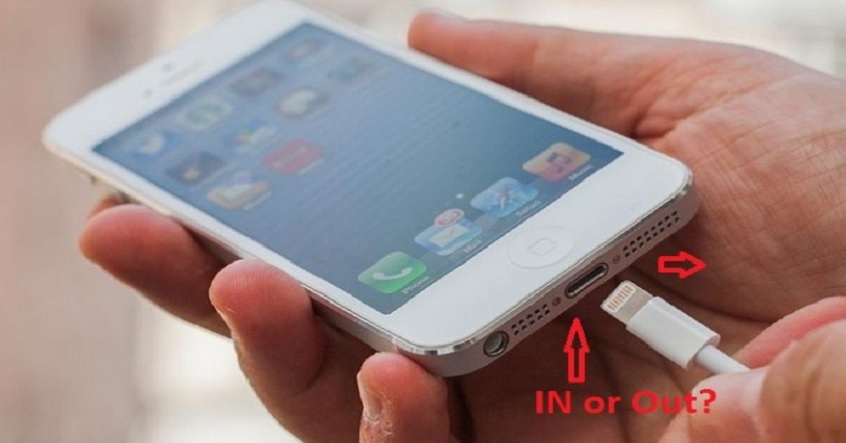
Almost all of us have been cautioned against charging our smartphones overnight. It is said that overnight charging is bad for the battery. As per Battery University, a website run by the company Cadex, if you are charging your phone when it is already fully charged, you are pushing the phone in a high-stress, high-tension state. This high-tension state affects the chemistry within and does lasting damage to the phone’s battery. Well, it turns out; this is not exactly the case!

iPhone charge-970-80

According to tech author Jesse Hollington, charging your iPhone or any other modern smartphone doesn’t cause any damage your battery. He says: “You simply can’t overcharge an iPhone, or any other modern electronic device, for that matter.

Any device that uses a Lithium Ion or Lithium Polymer battery must incorporate a charging circuit that cuts off charging power when the battery reaches 100%.”Apple, Samsung and all the top tech companies – almost of whose products use lithium-based batteries – use this best practice.

He also informed about another very interesting and useful fact. According to Hollington, “Lithium Ion batteries are rated for a limited number of “charge cycles’ (about 500 in the case of the iPhone), the term “charge cycle” refers to complete recharges, and partial recharges simply use up partial charge cycles. In other words, every time you charge your iPhone up from 90%, you’re using 1/10th, or 10%, of a complete charge cycle.

However, if you deliberately drain your battery to zero and then recharge it, instead of simply plugging it in when it needs to be charged, you’re needlessly using up a complete charge cycle.” So, this is all clear now and simple, overnight charging does not harm your smartphone but yes avoid draining it to zero levels so that you don’t use up those ‘charge cycles’ unnecessarily.

[adinserter block=”7″]

Author: Technology and Beyond

Tagged : /
Verified by ExactMetrics