
THIS medicine erases memories to cure you from addictions!

Drug addiction is a nasty thing and getting rid of this addiction is a herculean task for those who are neck deep in this addiction and in this line Methamphetamine is the nastiest one to overcome the reason being the powerful nature of memories created during a Methamphetamine high. Wouldn’t it be bliss if those memories could be erased? Then the drug developed at the University of Florida can be named bliss as it does just that…… erases the memories! To develop this drug called Blebbistatin, or Blebb, the researchers had to understand the difference between how are brain creates memories under normal conditions and under the effect of a drug.
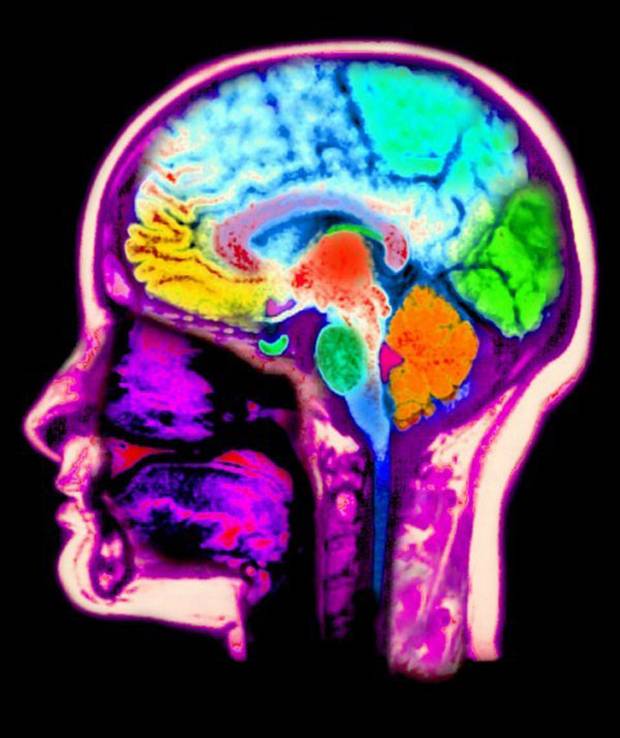
v3v2-brain_alamyv1Memories that are normally created in our mind or “normal memories” like the first day of your school or your favourite vacation, reside in our brains as a connection of neurons supported by a protein named as ‘actin’. The actin stabilizes and the memory is stored or saved in your brain. But in the case of memories created by the drug amphetamine, the actin never stabilizes itself. The researchers wanted to take advantage of this instability and so they did by creating drug that could disrupt the actin as well as the memory. However when they considered that disrupting actin (which also makes the muscles work and heart contract) can prove to be dangerous too, they utilized another molecule called nonmuscle myocin IIB that helps actin work but doesn’t interfere with the ususal muscle and heart related functions. So what Blebb actually does is, it disrupts non muscle myocin IIB interrupting the unstable actin and erases the memory associated with the psychoactive drug. According to the researchers, with a single dose the memory associated with the drug can be disrupted for 30 days.

dreamstime_s_4188302

Right now it does seem to be a risky and dangerous concept and since it has just been tried on mice, it may not sound convincing if used in the cases of human. Years of research would be needed in this direction. But if it conquers all the negatives and comes out victorious, drug addicts struggling to go back to their normal life may finally have a great solution.

[adinserter block=”7″]

Author: Technology Blog

Tagged : /

Your new “Touch skin” phone instead of boring old ‘touch screen’ one!

What if you could play your favourite song just by touching a point on your palm or write that email using a keypad on your forearm? Absurd? Or a dream? No, to both!

150304075218_1_900x600

Scientists from the Max Planck Institute of Germany have come up with a revolutionary concept called iSkin that will enable you to control your phone by touching areas on your body. In this innovation, the pressure-sensitive sensors are hidden beneath a thin silicone rubber layer which can be placed over the top of your skin. These pressure sensitive sensors are made from a special silicone layer that has carbon particles running through it. This can be incorporated even as tattoo designs. According to Martin Weigl, a co-developer of the project this new technology has many advantages such as flexibility and stretch ability which will help and enable manufacturers to explore the possibility of new designs.

The sensor would find use in controlling music player and keyboards. The prototype at its nascent stage is connected to a computer using wires but it is hoped that with advancement in this technology it could start using its own integrated control system. There are also plans to let a kinetic energy system power the iSkin, paving a way to avoid battery complications.

It is a possibility that it would never have to be removed or charged up. Though the institute doesn’t plan to take this concept beyond the stage of prototype, it surely will act as a catalyst in the implementation of this concept for real.

[adinserter block=”7″]

Author: Technology Blog

How the miracle of sight is restored! Gene Therapy Cures Blindness

In case of colour blindness or total blindness, the cones and/or rods (cells responsible for catching light rays present on the surface of the retina) are damaged. This gene therapy targets the cells in the deeper parts of the retina to capture the light instead of depending on the dysfunctional cones and rods. Leber congenital amaurosis, which is a rare form of inherited blindness, has been specifically targeted by this approach.

Blindness

In this treatment, the human gene for rhodopsin (pigment used by rod cells to detect brightness) was injected into the cells of the blind mice in the study. The idea was to give the cells present on the deeper layers the ability to produce their own light detecting pigments so that they could compensate for the loss of the natural light receptor cells of the eyes. This injection was performed using vector DNA technique, where the DNA of virus was carrying the human gene coding for rhodopsin.

“The treated mice could discriminate black and white bars, but only ones that were 10 times thicker than what sighted mice could see,” says Lucas, of the University of Manchester, UK, co-leader of the team that developed and tested the treatment.

In earlier trials, the mice could only make out object shapes in very intense light. “Our mice could respond in ordinary light, the equivalent of looking at a computer monitor under ordinary office lighting,” says Lucas, presently.

The virus used as vector to inject the pigment into the mice’s cell is approved for human use too. So the possibilities of the human trial experiment is highly anticipated in the coming 3-5 years.

“This is the most effective example yet of the use of genetic therapy to treat advanced retinal degeneration,” says Robin Ali, whose team at University College London focuses on people with Leber congenital amaurosis.

article-2540276-1AB207DF00000578-470_634x449

But other scientists and Robert Ali are skeptical about the lasting effects of this treatment. There have been some speculation and observations about how the effects of gene therapy on people suffering from Leber congenital amaurosis might wane over time in the last one to three years.

[adinserter block=”7″]

Author: Technology Blog

Verified by ExactMetrics