You will be amazed to know the purposes of these tiny lab grown hearts!

article-2669350-1F1F6F5400000578-803_634x522

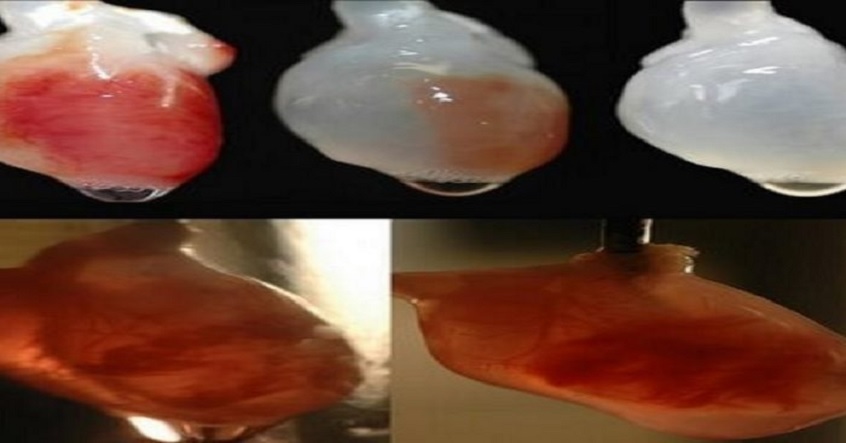
Stem cells have been used to form cardiac tissues, thanks to their versatility, on account of being totipotent (inherent tendency to form unlimited specialized cell types). Even though, the current research is using mouse heart cells, the scientists involved, hope to use human cardiac cells to study the formation of cardiac tissue, and the growth of heart in fetuses. Enhanced knowledge about fetus heart development would help to create safer drugs for pregnant women.

article-2669350-1F1F6F5000000578-155_634x576

In a growing fetus, stem cells change into heart tissue through a chain of chemical reactions, albeit some Physics also being involved.  DNA structure can be influenced by stretching and pulling the cells of the body in a certain way.

In the study, published in Nature Communications, the stem cells were in a growth medium which induced their differentiation. A special chemical layer, having areas of impression of oxygen plasma was added. This caused areas of irregularity in chemical and physical properties in the medium, which transformed the stem cells into different cardiac tissue cells. This process showed results similar to that in the making of a human heart.

video-undefined-1F1F4AC400000578-3_636x358

A drug, thalidomide, has already been tested on some of the artificially created tissue cells, which hindered the proper growth of the cells, as presumed.

As a technology lover you may like our daily important technology news series. It’s a playlist and you can retrieve the total day-wise videos. Please consider subscribing our YouTube channel:

Author: Technology Blog

Tagged : /

THIS miracle house produces more energy than it uses and it’s completely green!

Following the “Buildings as Power Stations” concept developed by the SPECIFIC Innovation and Knowledge Centre and as part of the Wales Low Carbon Research Institute’s SOLCER Project, a Welsh University has built the UK’s first smart low-carbon energy-positive house. This house was designed as a prototype to show how low-carbon targets could be achieved using some off-the shelf technologies. Energy positive status of the house means some ways were devised so that there was reduced energy demand, supply of renewable energy and storage of surplus energy for later use. In this house, electricity is also imported from the grid depending on the need and exported back in case of a surplus.

solarnewnew

Various techniques were used to make the house energy positive, like use of low carbon cement for the construction, employment of Transpired Solar Collectors (TSC) (to draw air into a cavity through perforated exterior skin of the house and warming it using sun’s rays). To reduce its demand for energy structural insulated panels (SIPS), thermal insulations and low-emissivity double-glazed aluminium-clad timber-frame windows and doors were installed.

maxresdefault

The Solcer House, built in 16 weeks generates electricity using a 4.3 kWp glazed photovoltaic panel array integrated into the south-west facing panel of the house and this electricity is then used to power the household appliances, hot water system, ventilation and heating.

As a technology lover you may like our daily important technology news series. It’s a playlist and you can retrieve the total day-wise videos. Please consider subscribing our YouTube channel:

Author: Technology Blog

Tagged : /

From plastic to pavement. This will definitely make you say “wow”

A Dutch firm VolkerWessels has put forth a concept of roads crafted from recycled plastic, PlasticRoad, and is looking for partners to help develop a prototype to test it under various conditions. Though it is just a concept as yet VolkerWessels cites various advantages of this concept if it is to turn into practical implementation. According to them PlasticRoad can withstand extreme temperatures from -40° C (-40° F) to 80° C (176° F).

3048671-poster-p-1-these-lego-like-roads-are-made-from-plastic-trash

It would be more resistant to corrosion, will have thrice the lifespan of an asphalt road and that too with minimum maintenance. The construction time of road will also reduce from months to weeks, as it would be possible to prefabricate and install sections of road on sand in single piece.

article-2627189-1DCDFF9D00000578-860_634x421

Adding to the above advantages, the biggest advantage lies in utilising used plastic trash in building roads hence lessening the reliance on carbon-intensive asphalt production. This material will also be lighter and would allow better control over factors like water drainage and road stiffness. It has been reported that the Dutch city of Rotterdam is already considering trying out a trial.

width="560" height="314" allowfullscreen="allowfullscreen">

As a technology lover you may like our daily important technology news series. It’s a playlist and you can retrieve the total day-wise videos. Please consider subscribing our YouTube channel:

Author: Technology Blog

Tagged : /

On second glance I understood what it MEANS !!

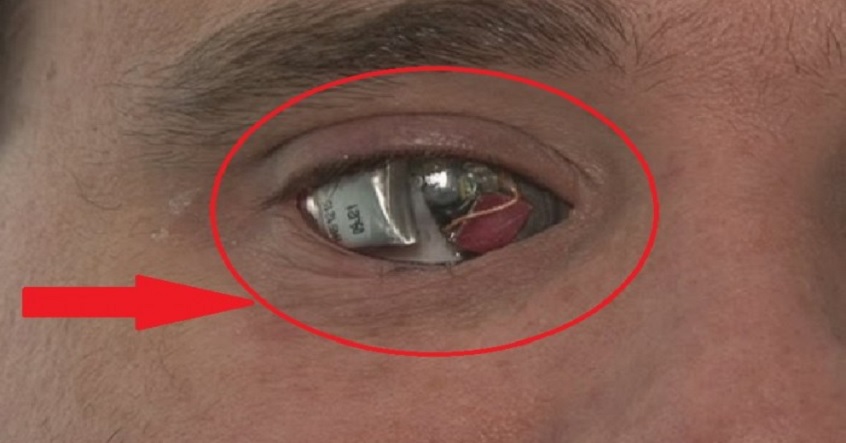
80-year old Raymond Flynn became the first person to receive the implant for AMD (age-related macular degeneration) treatment and the early results of this implant have been encouraging. The Argus II implant had received market approval from the Food and Drug Administration (FDA) in the US in 2013, for the treatment of Retinitis Pigmentosa (RP) – a degenerative disease affecting peripheral vision of patients. Continuing the journey, two years hence, the Argus II Retinal Prosthesis System is now in its testing phase, exploring its utility for patients suffering from dry AMD (which affects the central vision and not the peripheral one).

article-2138775-12E77132000005DC-935_634x284

Built by Second Sight, the Argus II Retinal Prosthesis System is designed in such a way that it stimulates a patient’s remaining retinal cells and allows them to obtain useful visual information. This visual information or images are then captured by a small, glass-mounted camera which are then converted into electrical pulses which in turn are finally transmitted too electrodes implanted onto the surface of the retina. If the implant works as per the plan, it will enable the patient to perceive patterns of light, which they can learn to interpret thus regaining some degree of sight.

article-2281661-182660E5000005DC-34_634x386

This whole procedure was carried out by Dr. Paulo Strange MD at the Manchester Royal Eye Hospital, UK. Two weeks after the implant, the device was activated and the tests indicated that Mr. Raymond Flynn was already receiving useful vision from the system. Commenting on this success, Second Sight’s Executive Officer, Dr. Robert Greenberg said: “We are very excited to begin such an important study for this patient population and to have the opportunity to help a great deal more people living with blindness. Though it is obviously still early in this clinical trial, we are very encouraged by these initial results.”

As a technology lover you may like our daily important technology news series. It’s a playlist and you can retrieve the total day-wise videos. Please consider subscribing our YouTube channel:

Author: Technology Blog

Tagged : /

If you see this creature in days to come, it means THIS…

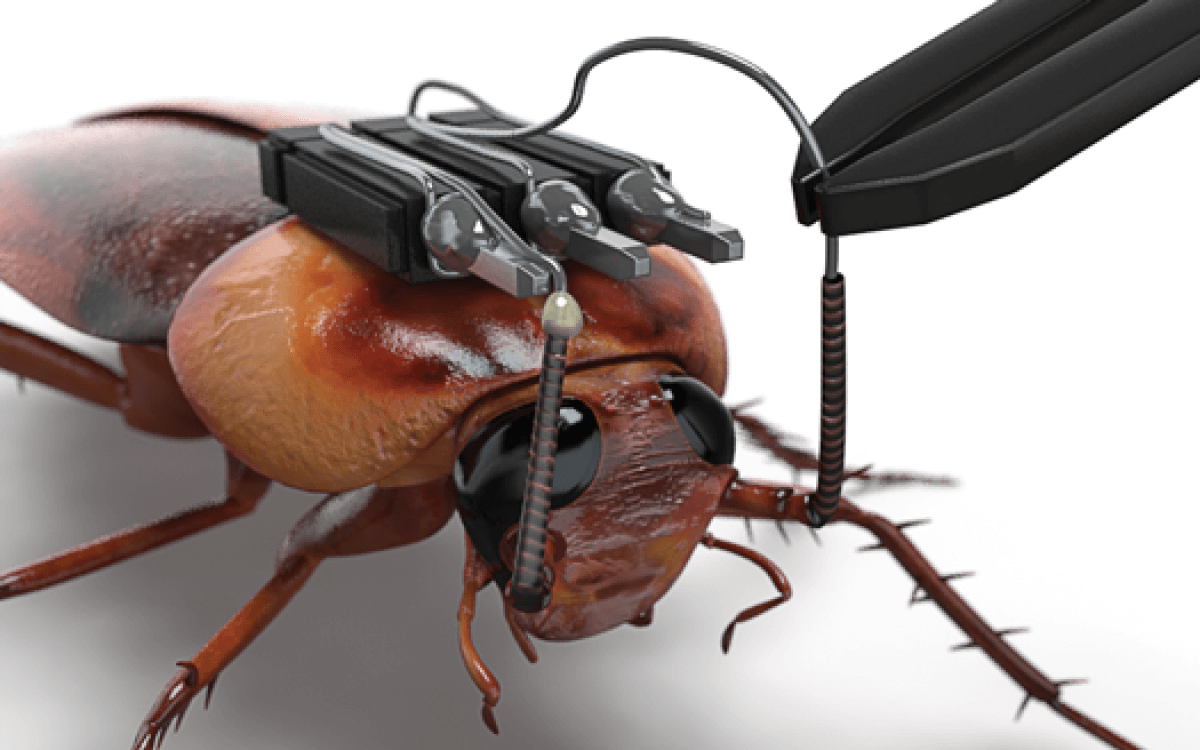
Yes… you heard it right! Who could have thought that the most irritating, yuck …response- inducing creatures called cockroaches can do a hero’s job!! Alper Bozkurt and his brainy team at North Carolina State University have put forth a revolutionary idea: to use cockroaches in finding out survivors trapped under rubble caused by a disaster and they plan to run the real-world tests pretty soon. They have christened these critters as ‘Cyborg Cockroaches’…. impressive… isn’t it?

Robo_Roach

These special cockroaches will carry a sensor backpack. In addition to this, they will be fitted with electronic bridles with a capability of picking up sounds. Each electrode will give each cockroach the directions on how to navigate a particular area (disaster struck area). The sensor backpack will help the researchers to control the critters in two ways. First, a drone will beam an invisible series of parameters called radio fences. These radio fences help in confining the cockroaches in a limited area and prevent them from venturing out. The second function of the sensor backpack is to create a tethering network that binds all the roaches together, so when one of the cockroaches catches or picks up any valuable information; it sends this information to the cockroach which is closest to the drone which in turn transmits it to the whole team.

wiring-cropped

The backpack also monitors the signal strength of each critter and ensures that none of the roaches lose contact with the team. The backpack has a low resolution microphone attached to it to detect sounds of probable survivors under the rubble. If a critter picks up such sound, the signal reaches to the other members of the critter group; particularly to those fitted with high resolution microphones. The cockroach gang then moves towards the location to pin point it. After the exact location has been found and the sound has been honed, the sensor transmits the data to the drone and the team gets an alert.

If real-world tests show positive and encouraging results then one thing is for sure… we will soon have a superhero Cockroachman… standing along with spiderman and batman!!

As a technology lover you may like our daily important technology news series. It’s a playlist and you can retrieve the total day-wise videos. Please consider subscribing our YouTube channel:

Author: Technology and Beyond

Tagged : /

No more railway crossing deaths. THIS train will generate power to close the unmanned crossings!

According to a paper published in the Journal of Rail and Rapid Transit a research was carried out by students Abolfazl (Sina) Pourghodrat , Sean Hansen and Vedvyas Kamarajugadda, along with faculty members Carl Nelson and Stephen Platt that included a series of experiments to find ways of providing electricity to railway signals in rural areas where there is always scarcity of electric power. Though photovoltaics provide a part solution the need of the hour is to search for an alternative option for consistent supply.

railroad-crossing-sign

Keeping this in mind they devised various systems that could harness power from the rails itself. In one of the systems, an inductive coil was attached to the rail, located above a permanent magnet with a radial magnetic field that’s mounted on the ground. As the rail flexed vertically under the weight of a passing train, the coil repeatedly moved up and down through the magnetic field, generating an electrical current.

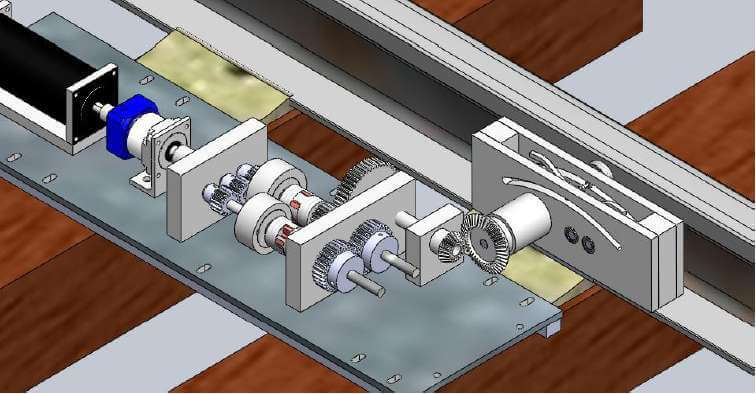
In second system, a strip of piezoelectric material was mounted on the underside of the rail. As that rail flexed under use, the material was subjected to mechanical strain, producing an electrical charge. Both these systems were good but no good enough to provide enough power to illuminate warning lights. This prompted them to move on to the third design where the vertical flexion of moved an attached ratcheting mechanism that turned a planetary gearbox which subsequently drove a generator mounted on the ties. The scientists also created a hydraulic system, in which the vertical deflection of the rail drives a hydraulic cylinder that’s wired to a motor.

railway-crossing-power-2@2x

Though all these systems generated power, the problem is that they relied on the considerable flexion of the rails which is variable particularly when cold weather makes the rails quite stiff. Keeping all these factors in mind another system was created where a spring-loaded cam mechanism that’s mounted on the rail is pushed forward by each train wheel, and then springs back to its starting position once that wheel has passed. That oscillating motion drives a generator, in turn producing enough electricity to power warning lights.

[adinserter block=”7″]

Author: Technology Blog

Tagged :

Now, Gun down the cancer cells with pinpointed proton-beam ! This Particle Accelerator is for cancer treatment!

Researchers at Cern, Switzerland are building another particle accelerator. It is only two metres long and can the used in hospitals with cancer patients for imaging and treatment of cancer. The mini-Linac will consist of four modules, each just 50 cm long.

mini-lhc-treat-cancer

“With this first module, we have validated all the stages of construction and concept in general.” said Serge Mathot of the Cern engineering department.
This miniature accelerator, has a radiofrequency quadrupole. RFQ component is present on the end of every proton chains. and protects from high intensity beams. The real challenge for the mini accelerator is to double the RFQ, so the wavelength of RFQ is shortened.

img_cpt05

“Thanks to new beam dynamics and innovative idea from the for the RFQ, and mechanical aspects, we came up with accelerator design that was much better adapted to the practical uses on medical applications.” says Alessandra Lombardi, in charge of design of the RFQ.

[adinserter block=”7″]

Author: Technology Blog

Tagged :
Verified by ExactMetrics