Google locked 14 robot arms in a room together…and the result was terrifying ! 

We may be the one who created the robots and put artificial intelligence in but, that doesn’t necessarily mean that we have the upper hand in everything. In today’s context, the things are changing rapidly. This is because, everyday, newer tools and algorithms are being introduced to empower the robots to carry out many of the things autonomously.

robotarmstraininginparallel

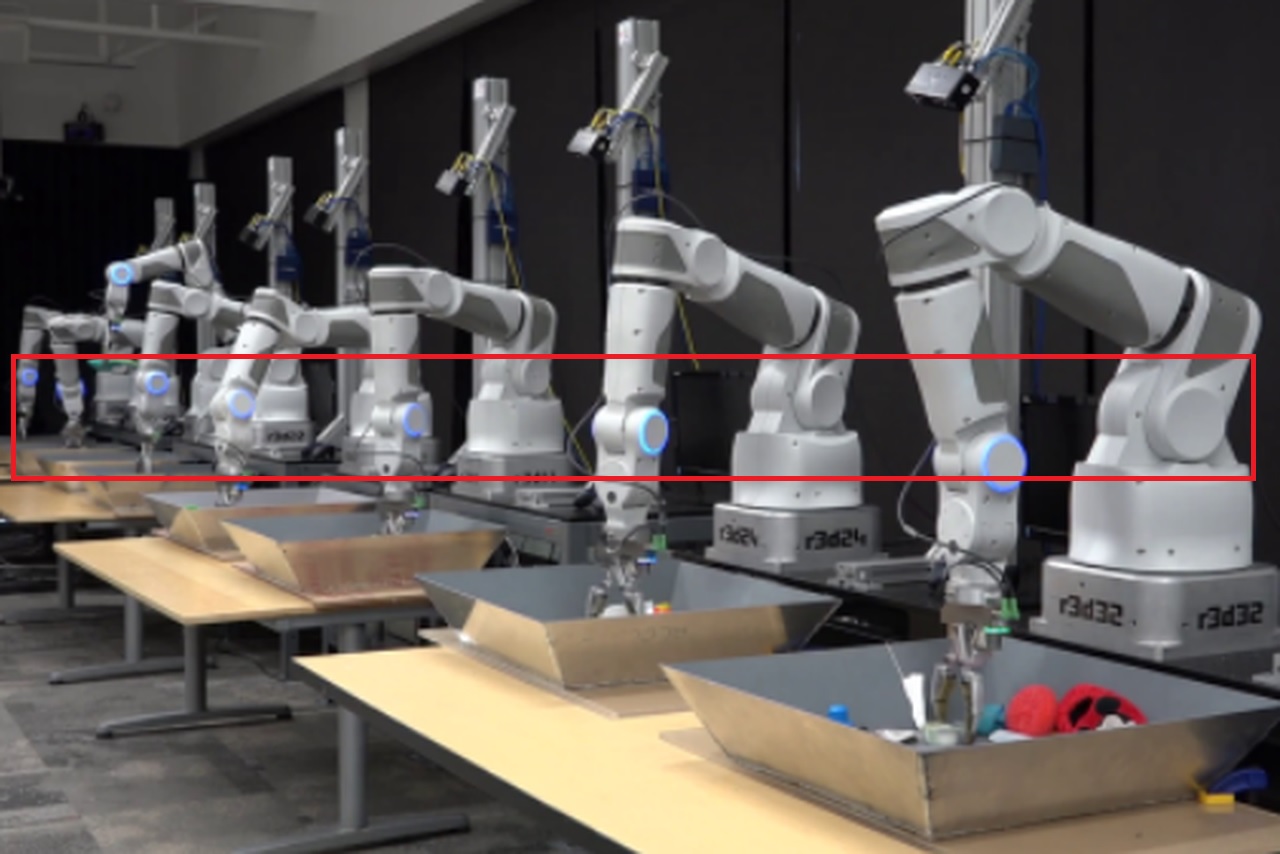
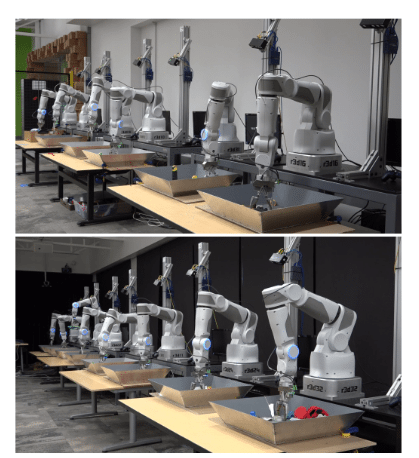
Google, who has a massive stake in robotics, is taking a radical approach to train its robots. Google is allowing the robots to learn the things from each other. As per the latest report released by Google, they connected 14 robot arms together and deployed convolutional neural networks so that they consult one another and learn how to pick things up on their own..

The approach is very much similar to how little children upto four years, explore and learn the things.This exposure is providing them the opportunity to learn effective hand-eye coordination.

Typically, a robot is programmed to perform some specific tasks, but in this method, robots are prompted to learn through endless trial-and-error with the help of a neural network – This is very similar to how a child learns simply by watching other people.

The crux of the matter is to make robots prepared to roam around autonomously and for that, they need to interact and go along with the objects they haven’t encountered so far. No pre-programing need should bridge the gap between the sensorimotor skills of robots and humans.

[adinserter block=”7″]

Next Page For More


Tagged : /

The Art of Bridge Building! This is what this monster does!

SLJ900/32 weighs 580 tons and measures 300 feet in length, supported by 64 wheels split up into four sections of 16 wheels each, of which each section can rotate 90 degrees, enabling the entire machine to drive horizontally.

Bridge-3

Build by the Shijiazhuang Railway Design Institute, this machine is currently being employed to build a bridge connecting the cities of Chongqing and Wanzhou. China is using the machines mostly for the construction of high-speed rail viaducts.

Eliminating the need for cranes, this machine picks up a beam from the starting point and places it accurately on the pre-erected pillars after placing two supports in place. With the beam secured, the machine drives backwards, taking the two portable support structures with it. When it returns with another beam, it drives along the first installed segment, and the process is repeated to place the next beam between the first and second columns.

Bridge-1

Reported by the institute to be capable of building 730 spans in a lifetime, 40 of which can be reassembled over a thousand in a service lifetime on an average of four years.

As a technology lover you may like our daily important technology news series. It’s a playlist and you can retrieve the total day-wise videos. Please consider subscribing our YouTube channel:

Author: Technology and Beyond

If you see these tiny things hanging around, it means THIS…

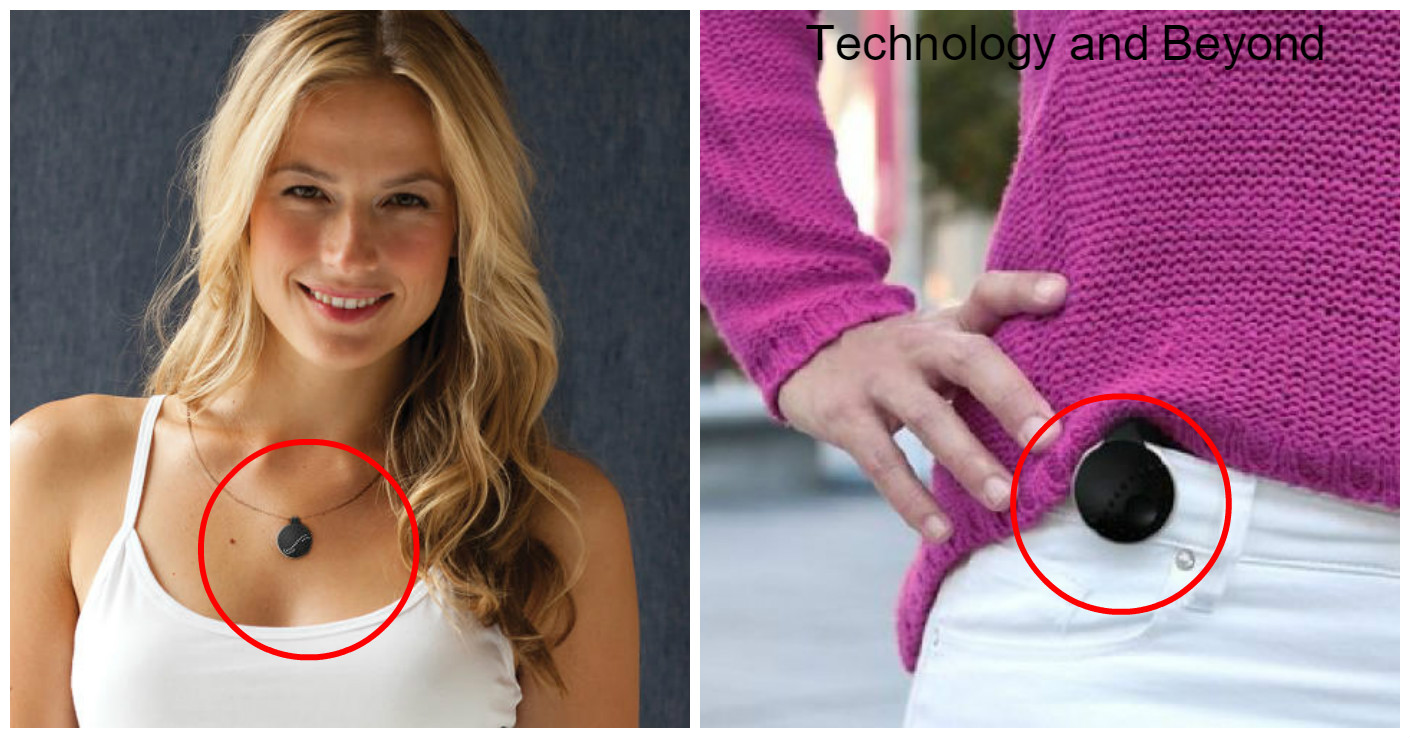
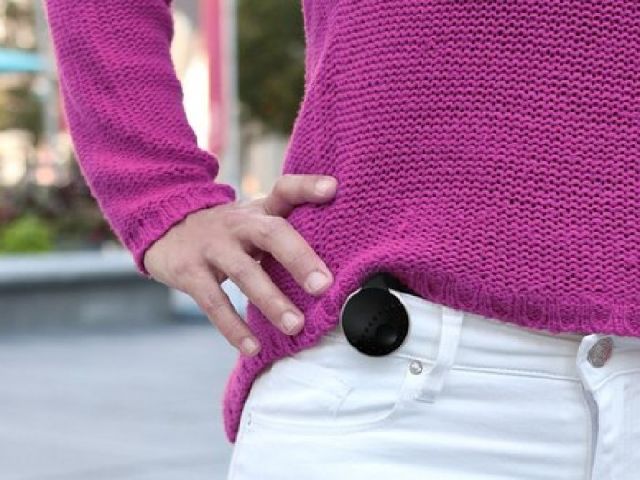
Roar for Good is dedicated to preventing physical assaults and have come to with their first product which a tiny security device that is special in its own little way. It can be worn anywhere- on a belt, lapel, chain, key chain or bracelet.

Athena-4

Athena, as the device is called, is a petite and compact safety measure that on pressing lets out a loud alarm and texts the wearer’s location to her emergency contacts. This works as Athena contains a low-energy Bluetooth chip that pairs with a smartphone and cell service in order for the text messaging system. While pepper spray and tasers are not readily available to consumers and are often confiscated at airports, Athena was designed to be easily accessible to anyone. Also, if overpowered, the Athena cannot be used as a tool against the victim, like the aforementioned safety devices might.

The idea to create a device that could be worn on other places than on the wrist struck Athena cofounder Yasmine Mustafaduring “We took a self-defense class and we found out that the worst place to wear a safety device is on your wrist, because you only have one hand to activate it,” Mustafa explained. “That’s why we designed ours so it’s not a bracelet. You can wear it in a couple different ways.” This is what distinguishes Athena from others like Safelet. The original idea to build a safety device came during a solo backpacking trip across South America. “As amazing as [the trip] was…literally everywhere I went I would hear of a time where a woman had been attacked,” Mustafa told Mashable. When she came back, a nearby neighbor had gone outside to read her meter when she was attacked, brutally beaten and sexually assaulted. “When I read the news story the next day, that’s when the idea for ROAR was born.”

[adinserter block=”7″]

SilentROAR is another feature available in this device. This this feature activated, the alarm disables, but the text system continues to work. The idea behind this is to help the victims in an abusive domestic relationship to alert others without alerting the abuser.

Athena-2

While Athena is being marketed for women, Mustafa said the unisex product can be used by males, children and even the elderly. The battery-powered device is currently only available in three colors — Rose Gold, Antique Silver and Timeless Black — but the company plans to release more products down the line geared toward specific groups.

The product is currently crowdfunding on Indiegogo, has made and long crossed its goal of $40,000 within 48 hours of its launch. Roar For Good, a registered B-corp, hopes to fight sexual attacks and rage in its totality by planning to donate 10% of its Indiegogo proceeds to the One Love Foundation, which aims to educate high school and college students about relationship violence.

“Building these self-defense tools or safety tools to us is kind a short term strategy,” Mustafa said. “The whole idea is educating young children on what constitutes a healthy relationship with the goal of not needing these devices one day.”
Athena-1

Athena is expected to be available internationally in early May 2016 and will retail for $99.

Author: Technology Blog

Tagged : /

Make every window a power generator with this transparent solar cell!

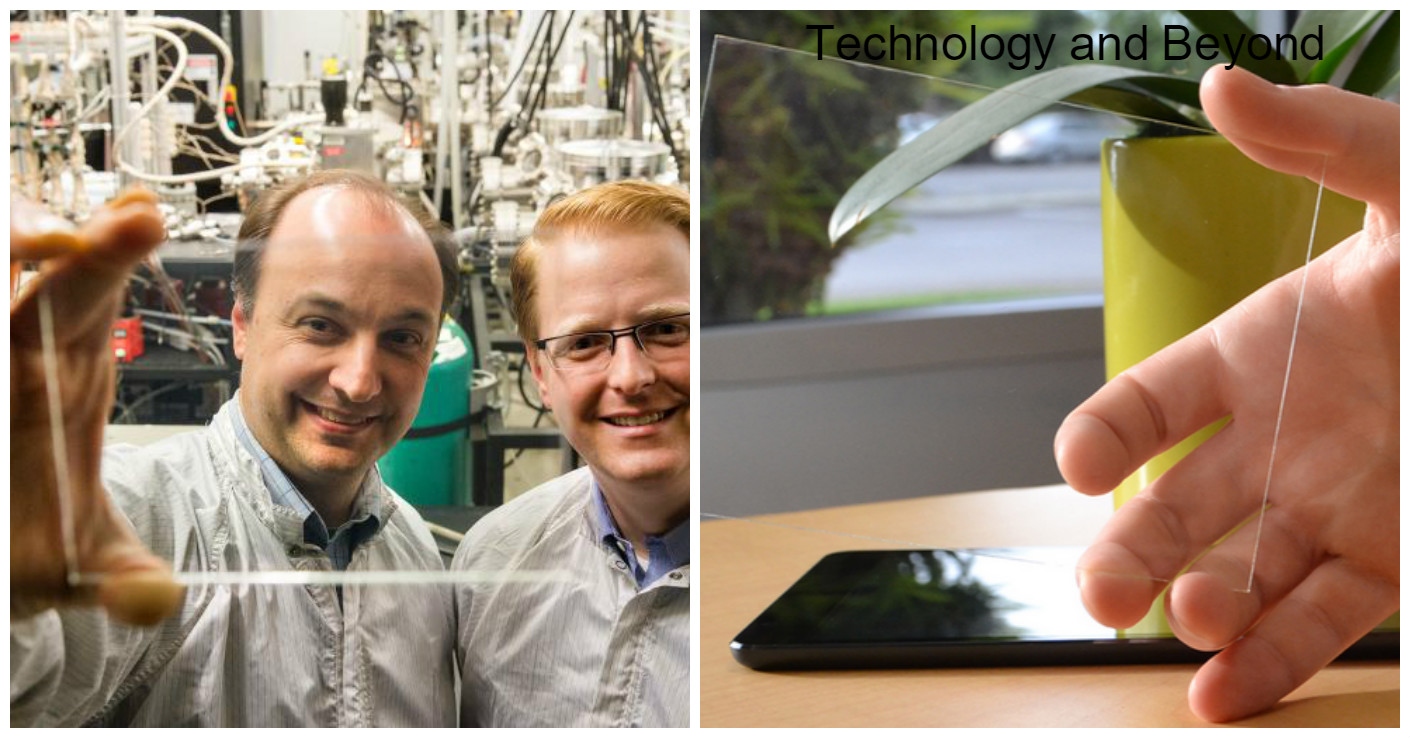
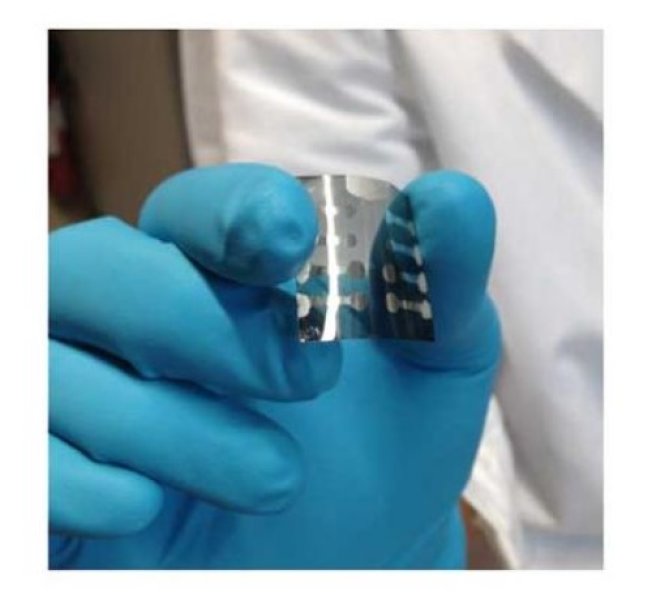
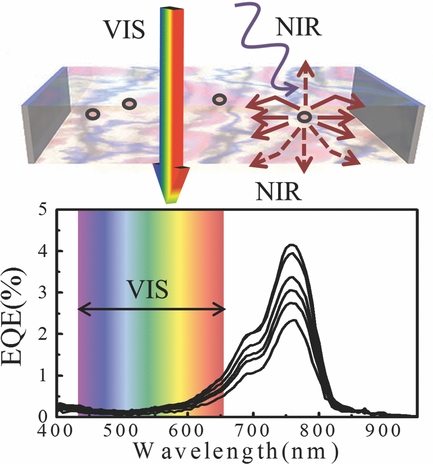
Efforts have been on for quite some time in the direction of reducing the opaqueness of solar cells and it seems those efforts have started bearing fruits. California-based start-up Ubiquitous Energy has developed a completely transparent solar panel that’s practically as good as an average glass pane. Earlier it was considered impossible to create transparent solar cells, as, to convert solar energy into electricity the photons must be absorbed and the very nature of transparent materials is to let the photons go straight through them without being absorbed. But these transparent solar cells aren’t catching visible light.

Solar-5

These are actually harnessing the power of ultraviolet and infra red rays which are beyond the visible spectrum of light. Once the infrared and ultraviolet wavelengths are captured, they’re directed to the edges of the panel, where the light is captured by a very thin strip of traditional photovoltaic material and transformed into electricity.

But if you are imagining a world where every glass pane – be it the windows of your home or the screen of your smartphone – would act as a solar panel, then you will have to wait for quite a long time. Ubiquitous surely has stumbled upon a great technology but it is at “very” early stages of development and the road ahead is a long one.

[adinserter block=”7″]

According to Ubiquitous CEO Miles Barr, so far, the company has focused its commercial application efforts on wearable devices and digital signage, as the first official tech releases with transparent solar power panel screens. The Ubiquitous team believes that sooner or later they will be able to completely eliminate the need for batteries in small consumer gadgets and even smart phones. Apart from wearable gadgets and smart phones, the company also plans to venture into the field of un-tethered Internet of Things sensors and connected devices and large area smart windows.

Solar-2

It is to be noted that construction has already begun on a rapid prototyping facility as part of the company’s Silicon Valley headquarters. Taking the future into account, the company is also partnering with companies and manufacturers to join in development agreements to make the solar powered technology reach the markets quickly. There is no word from the company about when it wishes to start production, but its advent in smart wearables is comparatively near. Though the use of this technology in buildings and homes is still something hidden in the future, it still is a hope for those who believe in making Earth a greener planet once again.

width="560" height="314" allowfullscreen="allowfullscreen">

Author: Technology Blog

Ever saw naturally obtained synthetic silk? This is how we are going to get it from spiders!

If you are a woman then you know how much you love your clothes and shopping for new ones and if you are a man… well then….. it holds true for you too… who doesn’t like good clothes? But if we consider our history, we human beings haven’t exactly been quite experimental about our clothes and this is not in terms of designs and cuts and fashion, it is about the kind of fabrics we use. We have been using silk, cotton and wool fabrics since ages. What if we could find a new fabric?

spider-4

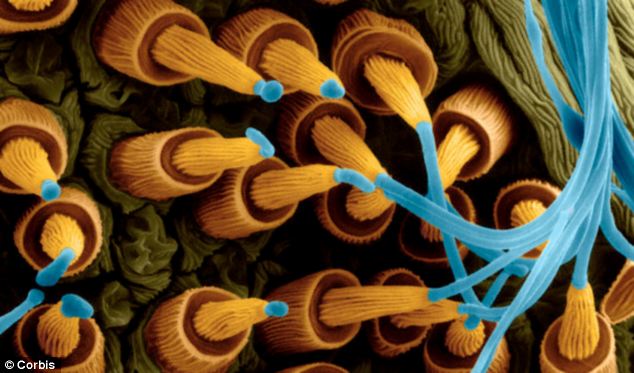
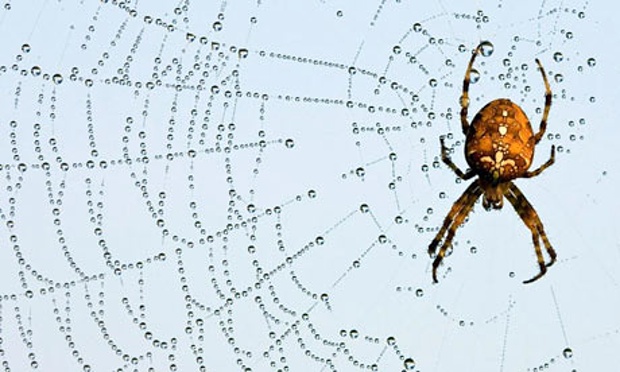
A California-based start-up known as Bolt Threads claims to have found a way to synthesize artificial silk. The company is among several groups trying to emulate the properties of spider silk to create a synthetic material useful for various purposes. But the problem with this way of creating silk is that it is extremely expensive so it is difficult to scale to mass production. The start-up also claims to have cracked the problems associated with getting silk from spiders and silk worms naturally (silk worms and spiders are considered as one of the most un- cooperative work-force, particularly spiders which tend to eat each other). The company supported by government grants and their venture capital money, plan to launch synthetic Bolt fabrics as a brand used by other clothing companies to make their clothes.

[adinserter block=”7″]

For creating this synthetic silk, Bolt uses yeast to create silk protein then minutely adjusts the ingredients and the process to shape the properties of the finished product. Right from buying the corn to produce yeast, the company keeps a hold on the whole production process. According to Bolt co-founder Dan Widmaier though earlier Bolt clothing would cost a premium, the company plans to keep prices affordable for consumers. He also claims that the environmental impact of synthetic fabric will be quite less than that of current textile production.

Adding to other things, Bolt says that by fine-tuning the process of fabric synthesis, it would be possible to control the properties of the fabric, for ex. making a lighter fabric for warm weather, stronger fabric for hard-wearing clothes. It would even be possible to make water-proof clothing for outdoor clothing and apart from that, the option of combining the properties are also open.

spider-2

All things considered, the biggest question that remains to be answered is whether Bolt can scale as a business and this only time can answer. Still it would be a great thing if it happens because apart from apparels, the synthetic fibre could also make itself useful in innovations like lightweight bullet-proof vests, medical devices or even composite materials for aircraft and construction. Till then we will just have to hope and wait!

Author: Technology Blog

Your WiFi crawls when your neighbor watches movies in their WiFi. Shocking?….This is how you can avoid it!

“Most people think it’s a mystery,” says Aleksandar Kuzmanovic, associate professor of electrical engineering and computer science at Northwestern. “They get upset at their routers. But what’s really happening is that your neighbor is watching Netflix.” Confused? Well, that is the truth. When many Wi-Fi signals are transmitted simultaneously, as will inevitably be the case in today’s world, the data packets (data is transferred by a system of packets) collide and back off. They slow down, and the process of signal propagation is delayed, hence the inexplicable slow Wi-Fi speeds.

wifm-5

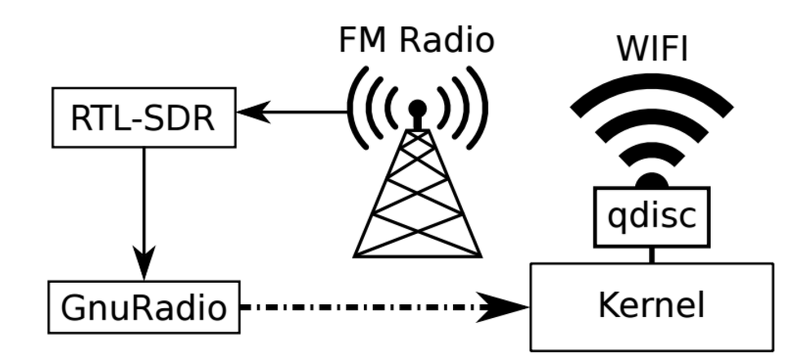
Now researchers from the McCormick School of Engineering at Northwestern University have come up with a simple way to prevent this – and improve Wi-Fi speeds – by using Frequency Modulation (FM) and a smart time-sharing system that maximizes data throughput. This involves a whole lot of management, optimisation and ingenuity.

Dubbed Wi-FM by its creators, the system aims to prevent a person’s network data from competing with a neighbor’s data when packets of network data are transmitted at the same time. They take the help of FM, which is mostly inbuilt everywhere, in every device. The protocols used in Wi-FM allow the monitoring of the network and select time slots that are the least busy. That is when the FM radio signals are transmitted. “It will listen and send data when the network is quietest,” says PhD student Marcel Flores. “It can send its data right away without running into someone else or spending any time backing off. That’s where the penalty happens that wastes the most time.”

[adinserter block=”7″]

The existing Wi-Fi signals can communicate with each other by syncing the device in question to the digital information transmitted on the RDS (Radio Data System) section of a transmitted FM signal. The RDS contains information about the times of broadcasts to be made, the signals of which the McCormick Engineering team uses to allow their system to determine the “quiet” intervals in which the Wi-FM can transmit with the least interference.

“Our wireless networks are completely separate from each other,” says Flores. “They don’t have any way to talk to each other even though they are all approximately in the same place. We tried to think about ways in which devices in the same place could implicitly communicate. FM is everywhere.”

wifm-2

So that covers optimisation and ingenuity. The management part? Seeing as the system monitor other network to determine the time and amount of traffic, the patterns could be changed autonomously without any human intervention. “Our system can solve these problems without involving real people,” says Kuzmanovic. “Because are you going to knock on 30 doors to coordinate your wireless network with your neighbors? That is a huge management problem that we are able to bypass.”

Author: Technology Blog

This is how you charge your phone with your coffee power!

An age old concept with has gone around for quite a while is charging your electronic goods using heat from food or other electronics, that would otherwise get radiated out and go to a waste. But companies like Alphabet Energy are working on with thermoelectric technology to make this a reality.

IKEA-5

Design students at Copenhagen’s Institute of Interaction, Sergey Komardenkov and Vihanga Gore, recently proposed the idea of embedding this technology in furniture to Ikea; a dinner table or a desk could absorb heat from a plate of food or a laptop and turn it back into electricity.

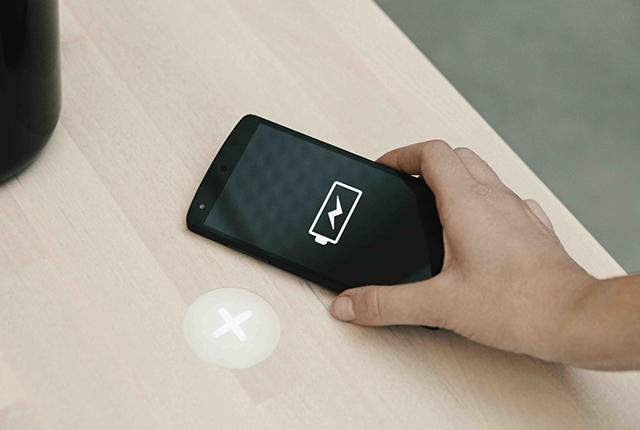
Calling it the Heat Harvest, this idea was developed at an Ikea-run research lab opened this fall in Copenhagen called Space10. Right from their project description, while a normal laptop will consume about 40 watts of electricity and will emit the same amount of heat during operation, a Heat Harvest desk would use an embedded pad to absorb that latent heat and run it through a small thermoelectric generator. The resulting electricity would then be pushed back to the surface of the table through a wireless charging dock.

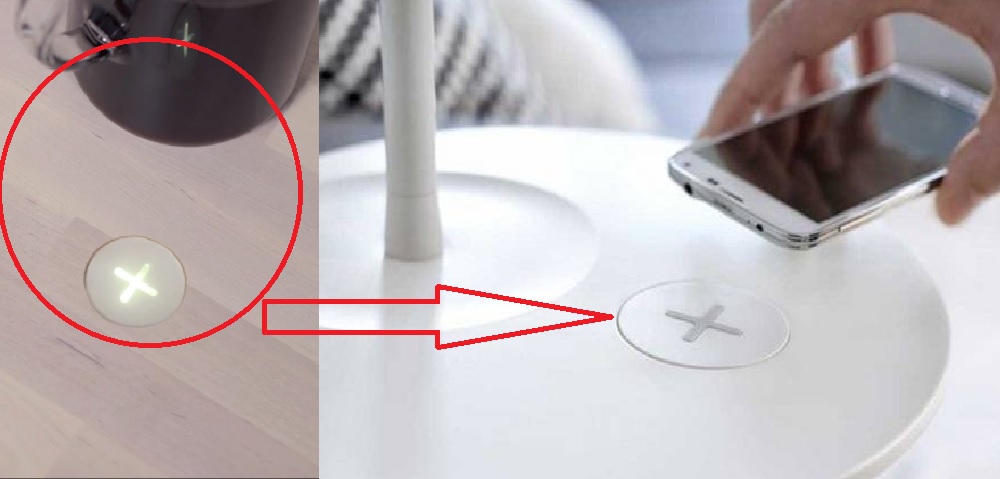
Ikea started selling kits to convert its furniture into wireless charging stations last year, but involving thermodynamics would be much, much more complicated. A material was required for this technology that was a great conductor of electricity, while simultaneously being a very bad conductor of heat. In other words, it should have the ability to absorb all the heat and give out all the electricity. That’s because the conversion process takes advantage of heat differences in a given conductor to generate voltage. Such materials are rare to come by, and extremely expensive to manufacture. But start-up energy companies like Alphabet Energy or Tellurex are developing low-cost versions that use nanotechnology to make any old semiconductor worse at conducting heat–making it possible to use them as thermoelectric generators.

IKEA-4

Here’s to your dream of letting your coffee do the work and charge your phone while you kicked back and relaxed.

[adinserter block=”7″]

Author: Technology Blog

And, finally! ‘Plant to power’ is here. Nothing can be greener than this!

A team of eight students and a professor are trying to create history by working in the direction of finding an alternative energy source. This team working at Universidad de Ingeniería y Tecnología (UTEC) is trying to view plants in a different light altogether. Plants are Peru’s most abundant natural resource and the team envisages using these plants as a source of energy.

LED-4

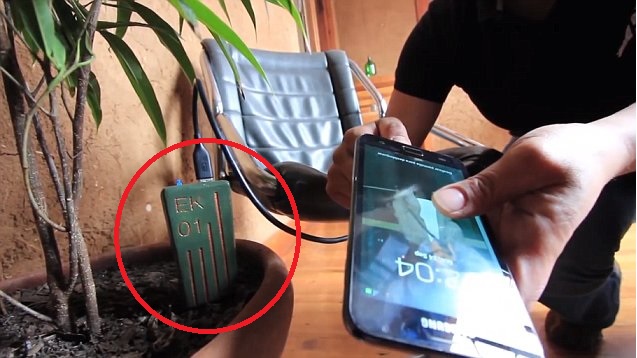
Moving in this direction, the UTEC team has built a small lamp that uses low-power consumption, high-illuminated LED bulb for light and is powered by a plant. This power is obtained from the nutrients and bacteria contained within the soil that houses the plant. The soil based plant nutrient materials are harvested by the energy-generating system designed by the UTEC team and then converted into a usable form of electric energy.

Though the plant light unit is bigger than a normal lamp, it can still be carried to different places in a house. The team has built 10 such prototypes of the plant lamp which are being sent to the Peruvian residents of Nuevo Saposa, a small community in Ucayli that has almost negligible access to electricity. But this community is rich in terms of the wealth given by Mother Nature. The community has a vast area under dense, lush vegetation which can easily power the plant lamp.  In its current form, the plant lamp is able to provide up to two hours of light each day.

Elmer Ramirez, head of the plant lamp research team and a professor of Energy and Power Engineering at UTEC explains: “We made proper use of the Amazon region’s own natural resources such as the soil and plants, in harmony with the environment without any impact whatsoever on the forest.” The research team firmly believes that this plant lamp will make a positive difference in the lives of Nuevo Saposa and other such communities that are deprived of electricity by making it easier for students to do their school work in late evening and artisans and other workers to work when the dusk draws closer.

LED-3

These small green initiatives will pave way for a better and greener tomorrow.

[adinserter block=”7″]

Author: Technology Blog

Tagged :

Google is doing something creepy with your intimate data and it’s because you are too predictable!

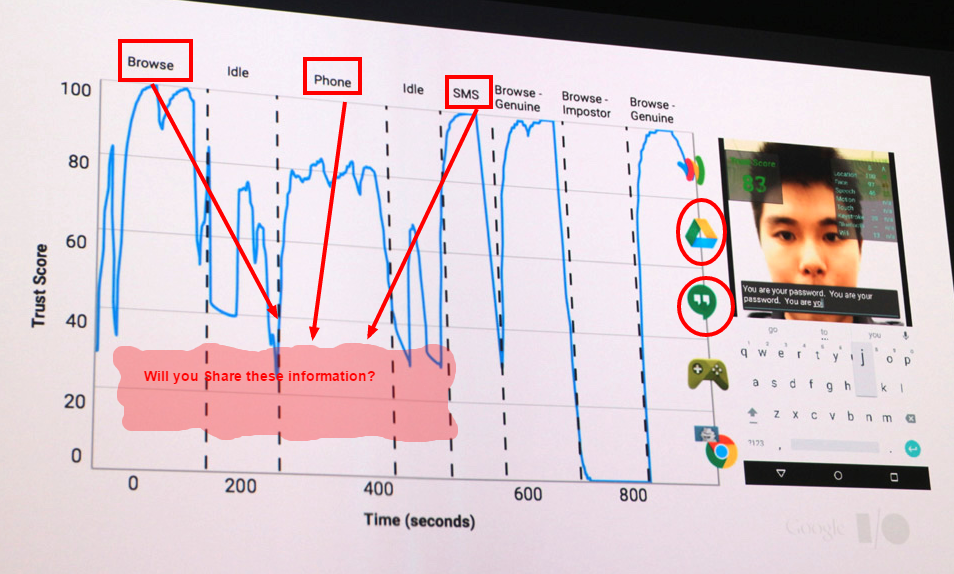
Passwords have become an integral part of our lives (though it’s always tough to remember the right one at the right time). Can you imagine your present life without using any passwords? No! But Google thinks you can! This is what Google has in store for us in 2016- Project Abacus. This project in the most crude of languages means killing our age old beloved ‘password’ and replacing it with smartphone user authentication via a collection of biometric readings that cant actually be cracked easily. What’s more? Abacus will be developed in such a way that it would lock or unlock devices and apps based on a criterion called ‘trust score’ which will increase as your phone continually monitors and recognizes your location patterns, voice and speech patterns, how you walk and type, and your face.

468347435

The proponents of this Project are joyous as they believe that this is the most secure and miraculous way of securing your device as compared to the two-factor authentication as in the latter case, the whole system crashes if you lose the access to SMS. During its first public demo at Google’s I/O conference, Regina Dugan claimed that with its “trust score” method, Project Abacus “may prove to be ten-fold more secure than just a fingerprint sensor.” And it’s easy to believe this could be true.

The idea though new and interesting isn’t inviting much of appreciation from the opponents. For example Cisco Engineer Shawn Cooley countered the Project by saying : “very cool until I break my leg or hand & can’t auth to any services to get healthcare info since my behaviour is different.” To this, there is more because according to Google experts, the smartphone will know about your health and your present state of mind with the help of all the data and constant monitoring. So Google actually tracks and records almost everything and anything related to you. So in order to present you with that perfect security, Google will require a constant invasive surveillance and access to some pretty intimate records of the people involved. Sounds exciting? Not anymore!

The two-factor authentication is currently trending which combines login with a text message or email you need as a second step for verifying it’s really you. It’s tougher to hack, and this year it’s being phased in for banking customers by federal mandate.  Apart from this, there is also the fingerprint method but what if it is obtained by force? So a way to discover more secure ways is on.

Apart from securing your account, doesn’t it occur to you that securing Android (the most hacked OS) should be the first step in this direction? And God knows, how comfortable would people feel about an app collecting almost all the sensitive information about them to build and present a ‘trust score’ just so that they can log in safely into their emails, etc.

As much as we try to convince ourselves that what Google is doing is actually for our benefits, but will it still be foolproof considering the data collection on us has gone way too far and the data collection sites are the ones struggling with their security. There is a lot to be done in this field.  Security of everything around the user has to be perfect and foolproof.

[adinserter block=”7″]

Author: Technology Blog

Verified by ExactMetrics