Space research is a fascinating field. Searching new planets and stars and galaxies, studying the existing ones, comparing two different celestial bodies etc. are some of the interesting aspects of it. One of the fixation of space scientists is searching planets similar to Mother Earth. Finding a planet and life (or even probability of life) on it has been a fetish since long for these scientists. The habitability of these planets is calculated on the basis of Earth Similarity Index (ESI).

This number is calculated from the exoplanet’s radius, density, surface temperature and escape velocity, which is the minimum speed needed to break free from the planet’s surface. The ESI varies from 0 to 1 and anything with an ESI above 0.8 may be considered ‘earth-like’. Based on these ESI values we present you a list of five exoplanets that are quite like our beloved planet.
Kepler 438b
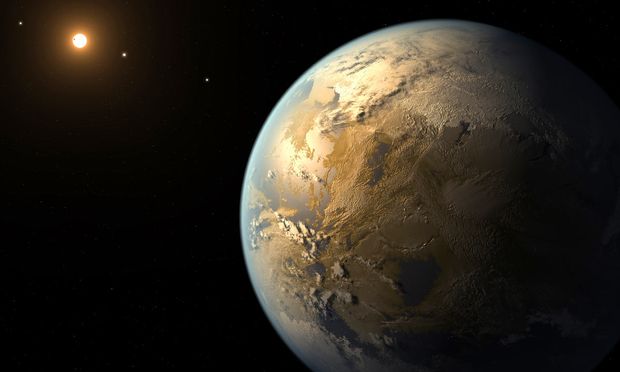
Of all the exoplnets known this has the highest ESI of 0.88. It was discovered in 2015 around a red dwarf star that was way smaller and cooler than our very own sun. The star is nearly 470 light years from earth. It has a radius only 12% larger than Earth’s and orbits its star every 35 days. The mass of the planet hasn’t been measured yet but if it has a rocky composition it may be 1.4 times that of the Earth’s with a surface temperature between 0°C and 60°C. But according to a recent finding, the host star of this exoplanet sends out powerful flares of radiation, which may render the planet uninhabitable after all.
Gliese 667Cc
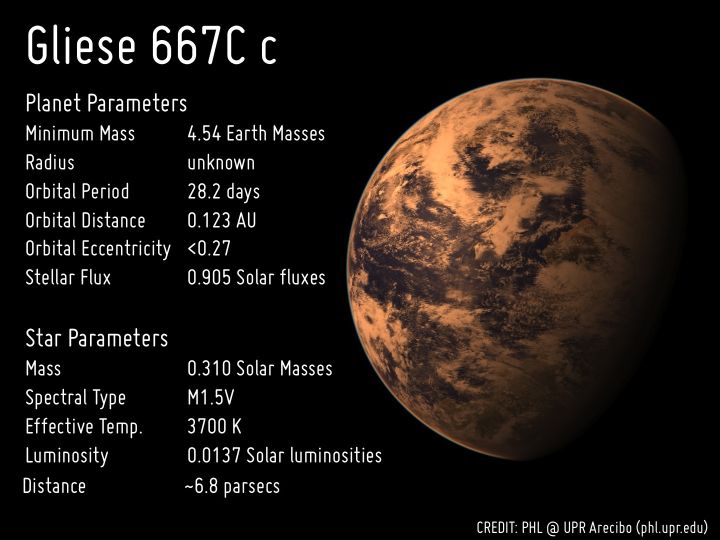
Discovered in 2011, orbiting a red dwarf in the Gliese 667 triple star system, just 24 light years away, the exoplanet has an ESI of 0.85. The planet’s mass has been estimated at 3.8 times the Earth’s, and its size is unknown as yet. This is because the planet does not pass in front of the star, which helps us to measure the planet’s radius. It has an orbital period of 28 days and lies in the habitable zone of the cool star with a possible surface temperature of around 5°C.
Kepler 442b
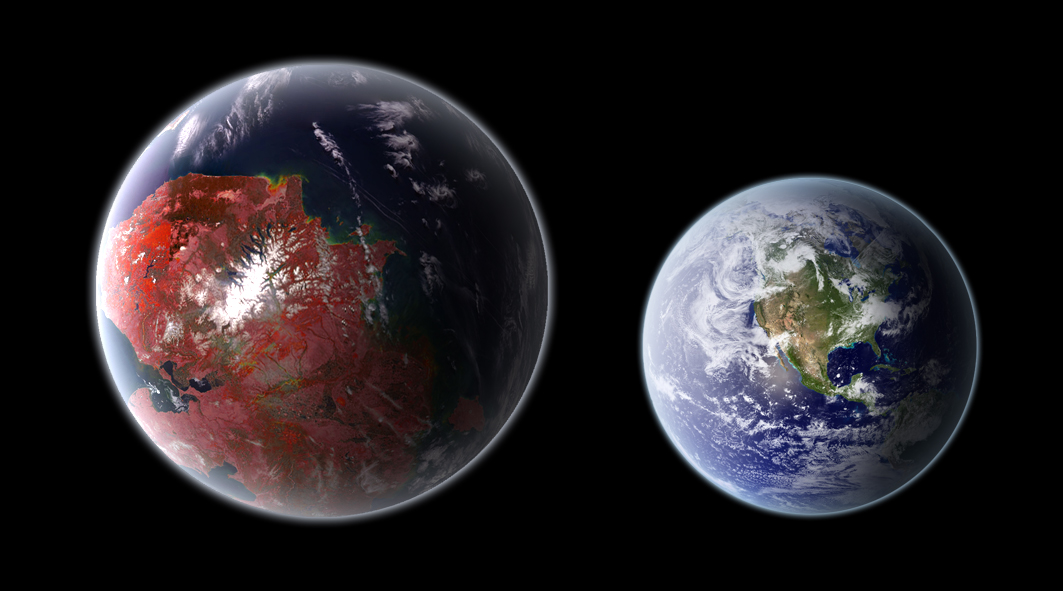
It was discovered in 2015. It has an ESI of 0.84 and a size 1.3 times the size of the earth. With an orbital period of 112 days, it is orbiting a star cooler than the sun about 1100 light years away. It may be hospitable but with a surface temperature as low as -40°C. Once again, the exoplanet’s mass is not known, but if it has a rocky composition, it may be only 2.3 times the mass of the Earth.
Kepler 62e and 62f
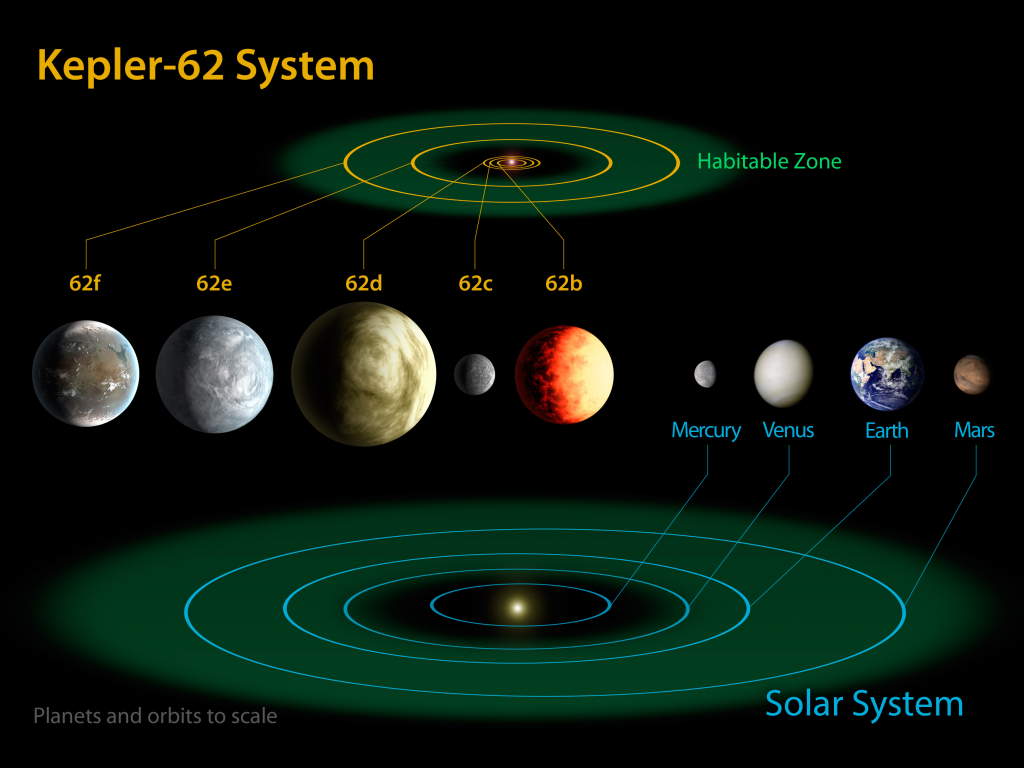 Both these exoplanets were discovered in 2013 and have an ESI of 0.83 and 0.67 respectively. These were discovered in with the help of Kepler telescope which spotted their transit in front of their host star. This star is located at a distance of 1200 light years from us and is a bit cooler than the sun. They both have planetary radii of 1.6 and 1.4 times that of the earth and their orbital periods of 122 and 267 days mean that they both fall within the star’s habitable zone. As with many other planets discovered by Kepler, their masses have not been measured, but are estimated at over 30 times the mass of the Earth in each case. The temperatures of each could permit liquid water to exist on their surfaces, depending on their atmospheric composition.
Kepler 452b

Discovered in 2015 and an ESI value of 0.83 it was the first potentially Earth-like planet orbiting in the habitable zone of a star similar to our Sun. The radius of the planet is 1.4 times that of the earth and it takes 385 days to orbit its star. This star is 1400 light years away from our planet. Because the star is too faint to measure its movement due to the gravitational tug by Kepler 452b, the planet’s mass is unknown. However it has been predicted to be at least five times that of the Earth and the planet’s surface temperature is estimated between -20°C and +10°C.
Considering all the facts, one may notice that despite many similarities even all these planets are not much habitable if you consider the atmosphere of earth. But nothing can beat hope. Let’s hope we find one that is actually like our Mother Earth and habitable.
[adinserter block=”7″]
Author: Technology Blog























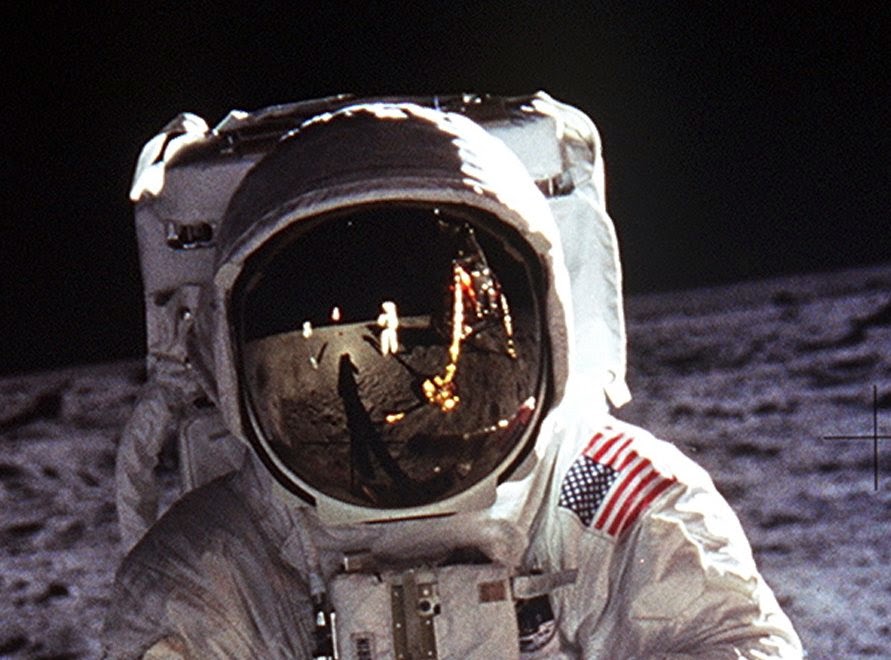
 Many casts doubt about the Moon landing. The first book about the subject,