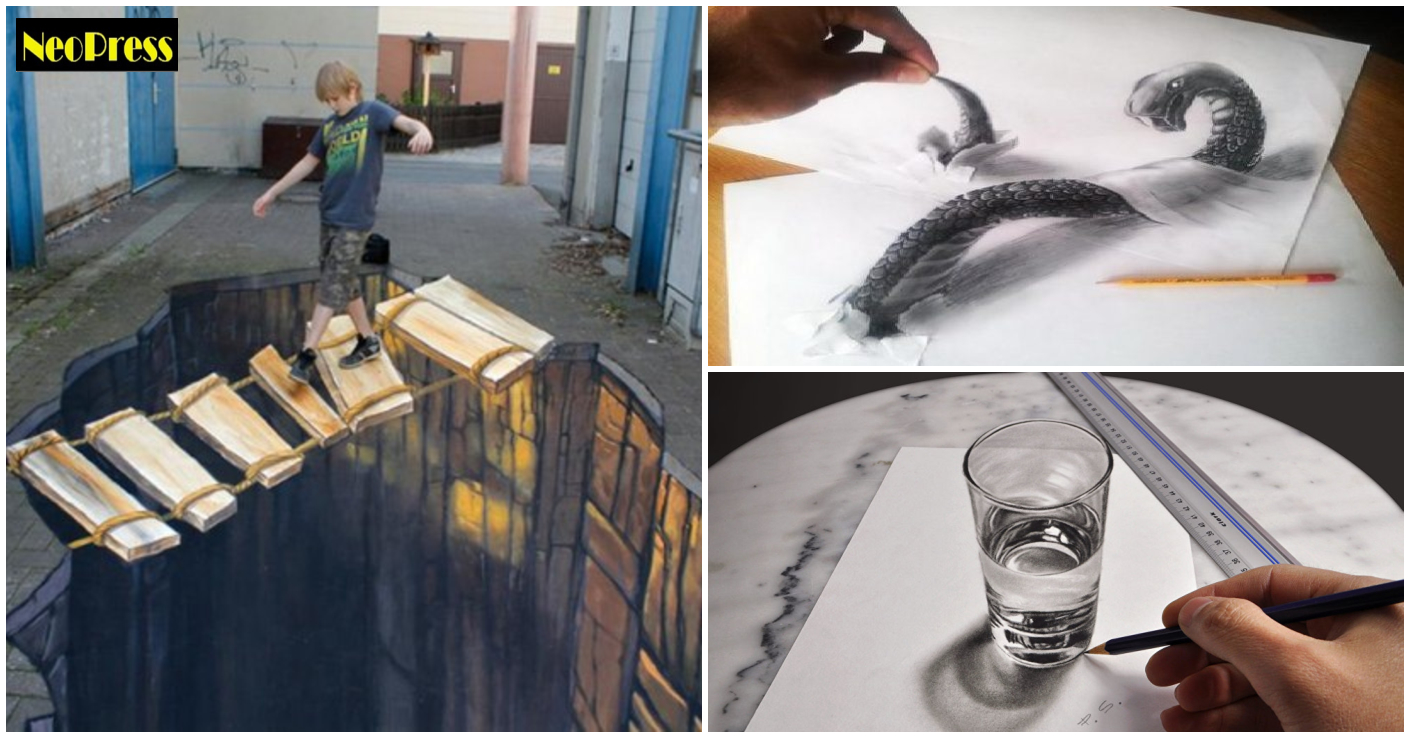
If we consider a practical example, it makes our concept clear about the shading and perspective effect:
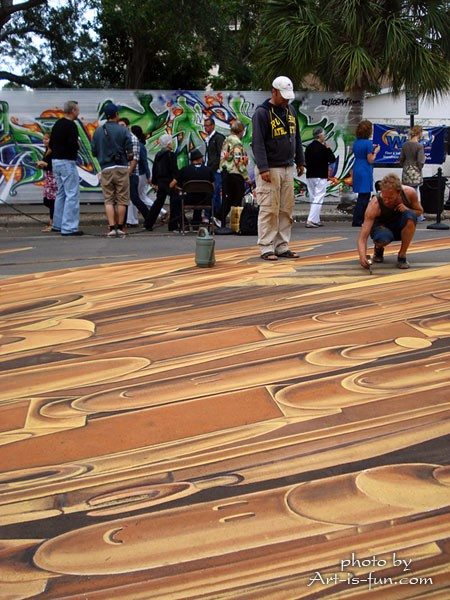
The above drawing looks strangely distorted from the current angle and it is impossible to make out what it is supposed to look like. The same picture is presented below from another angle which is not supposed to be the proper viewing angle.
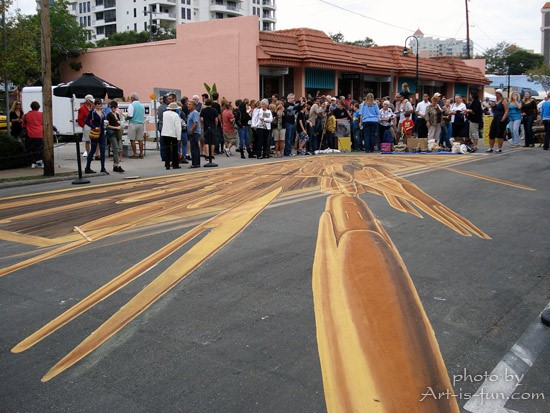
This photo above is taken from the opposite angle from where it should actually be viewed. The drawing still looks meaningless from this angle. But, below is the view from the correct designated angle:
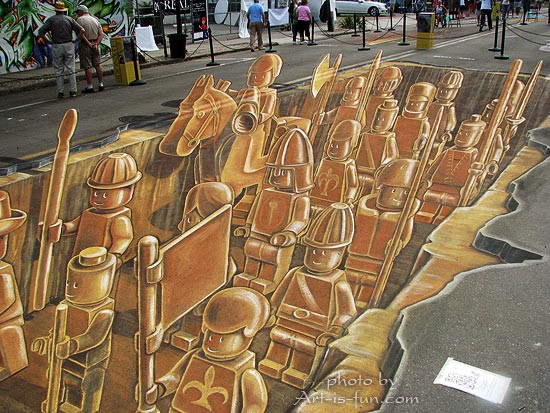
The correct view point has got a technical name called “perspectival anamorphosis”. This means that the artwork looks three dimensional when viewed from a specific angle. All other angles will present a totally skewed look. That is why, this technique of drawing is also called “Anamorphic drawing”.
Amorphosis was a technique used during the early Renaissance, when artists used to paint the flat ceilings of buildings/ room to create the virtual look of a dome above with sculptures all around it.
The Jesuit Church in Vienna, which was painted by Andrea Pozzo during 1703 is a good example of this type of painting.
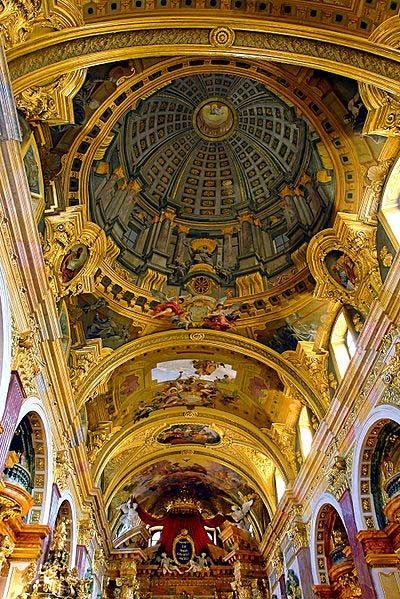
When one looks at the photo above, it looks like there is a dome in the ceiling of this church. But, this church does not have a dome. This is a painting on the flat ceiling.
Modern day 3D Street Art are far more exciting. Some exciting examples can be seen here.
Sources:
- http://www.art-is-fun.com/sidewalk-chalk-drawings.html
- http://en.wikipedia.org/wiki/Street_painting
- http://www.instructables.com/id/How-to-do-3D-Anamorphic-Artwork-and-Sidewalk-Stre/
- http://howtodraw.pencilportraitsbyloupemberton.co.uk/step-by-step-drawing-tutorial/pencil-drawing-techniques/creating-depth-with-3d-drawing/
Author: Technology Vista


What the latest phone by nokia.
4693640349
God bless you