The first prototype of NASA’s deep space habitat will be made up of a recycled aluminum cargo container and will help the space agency to develop life-support systems that can protect astronauts when they travel beyond low-Earth orbits, the media reported.
The cargo space container, named Donatello built 15 years ago, will be refurbished into a habitat prototype by Lockheed Martin — a global security and aerospace company — at the Kennedy Space Centre in Florida, The Washington Post reported on Wednesday.
From the outside, Donatello looks like just a massive cylindrical metal container, about 21 feet long and 15 feet in diameter.
However, the interior will be turned into a living quarter, with robotics work stations for astronauts, a place to exercise and storage spaces for food, water, toiletries – “all the tings you need to live and be happy in space”, said Bill Pratt, programme manager for the habitat contract, at Lockheed Martin.
“While building this habitat, we have to operate in a different mindset that’s more akin to long trips to Mars to ensure we keep them safe, healthy and productive,” Pratt added.
Donatello, was one of three built by the Italian Space Agency in the 1990s to serve as “moving vans carrying equipment, experiments and supplies to and from the International Space Station” and was delivered to NASA’s Kennedy Space Centre from Italy in 2001.
The project, which would take about 18 months to be ready for roll out, is a step toward NASA’s next big human spaceflight project called the Deep Space Gateway — a “spaceport” in the moon’s orbit where astronauts would live for up to an year.
The Deep Space Gateway habitat will be docked to a spacecraft called Orion, the “exploration vehicle” that will carry astronauts to space.
As a technology lover you may like our daily important technology news series. It’s a playlist and you can retrieve the total day-wise videos. Please consider subscribing our YouTube channel:
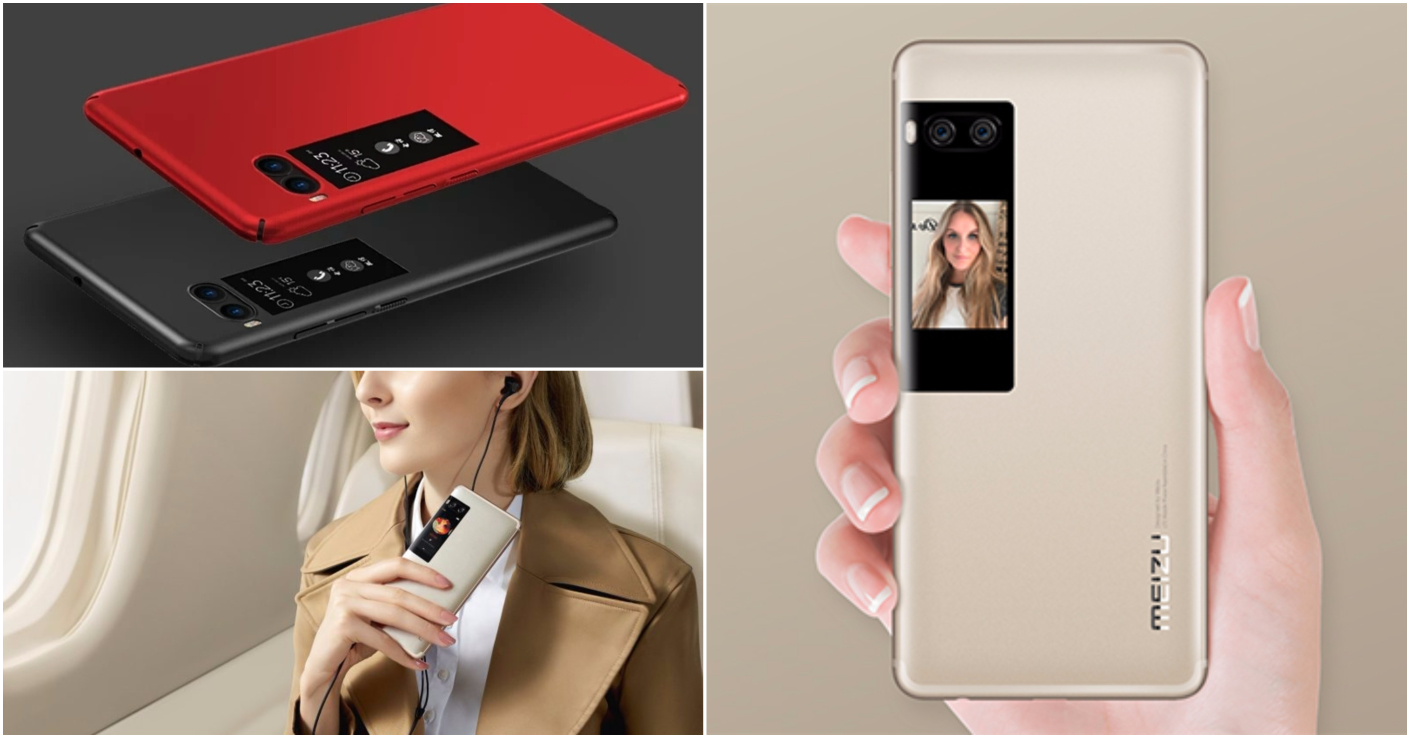
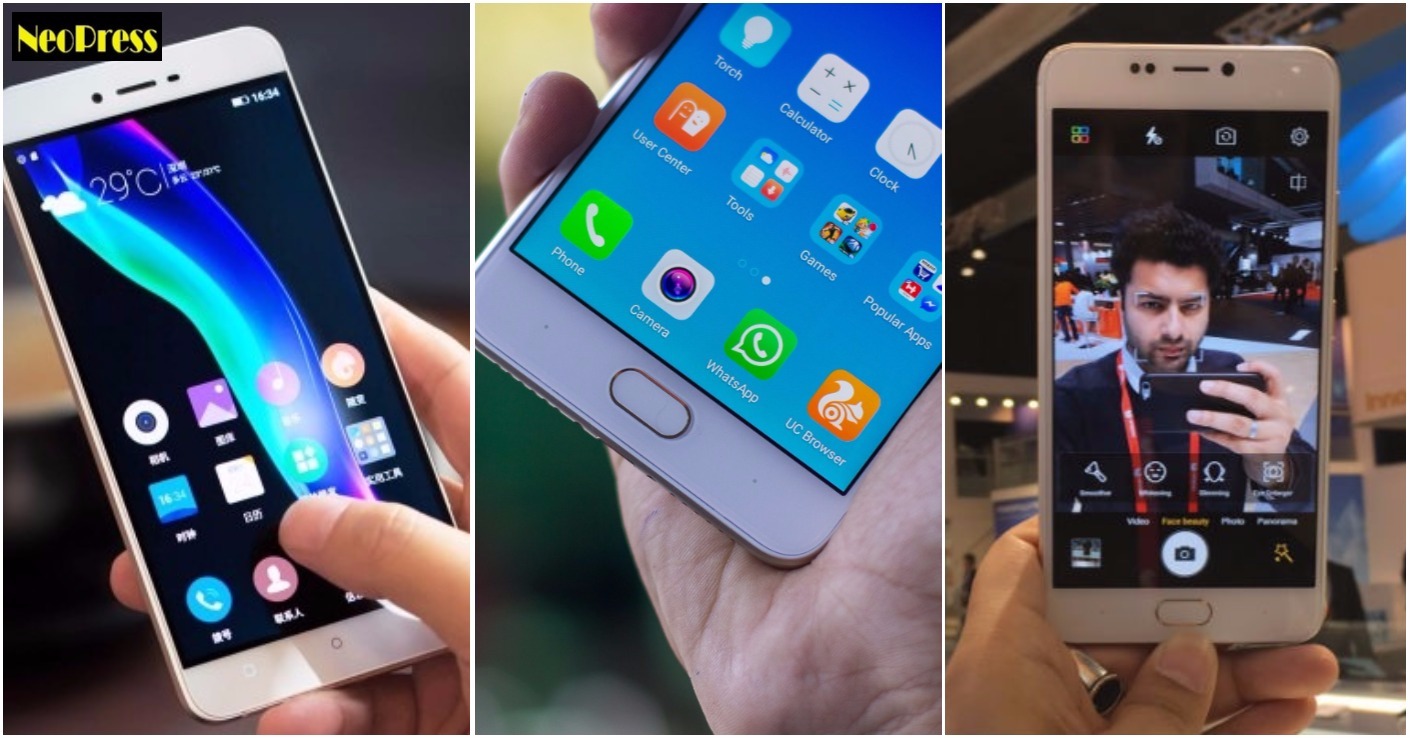
Chinese smartphone manufacturer Meizu on Thursday unveiled its latest flagship devices — ‘PRO 7’ and ‘PRO 7 Plus’ — which feature dual screens (one at the rear) and dual cameras.
The ‘PRO 7’ and ‘PRO 7 Plus’ feature an AMOLED rear display which allows users to manage notifications and take ‘selfies’ with rear cameras. In the front, ‘Pro 7’ carries 5.2-inch super-AMOLED full-HD display while ‘PRO 7 Plus’ has 5.7-inch Quad-HD display.
The devices pack 12MP dual cameras on the rear and 16MP ‘selfie’ cameras. “The ‘Meizu PRO 7’ and ‘PRO 7 Plus’ convey the very essence of Meizu — our passion to innovate and our commitment to creating premium devices,” said Ard Boudeling, Head of Global Marketing, Meizu, in a statement.
“We have been trying out different implementations of rear displays for the past years and are confident we have now created an implementation that truly offers a great user experience,” he added.
‘PRO 7’ is equipped with Helio P25 processor and has 4GB RAM and 64GB of internal storage. ‘PRO 7 Plus’ comes with 6GB RAM and offers two storage options of 64GB and 128GB. ‘Meizu PRO 7’ and ‘PRO 7 Plus’ are powered by 3,000mAh and 3,500mAh batteries, respectively, which are capable of quick-charging.
The prices of both the devices are yet to be announced.
As a technology lover you may like our daily important technology news series. It’s a playlist and you can retrieve the total day-wise videos. Please consider subscribing our YouTube channel:
Nokia-built phones used Carl Zeiss optics for years, heralding it as a selling point for the popular N95 smartphone a decade ago. HMD is now bringing back the Zeiss branding on Nokia-branded phones in a move designed to position its devices with yet another logo and push the idea of a superior camera on consumers.
HMD Global, the Finnish company that licensed the rights to produce Nokia phones, has already unveiled a trio of Nokia-branded Android smartphones, but none of them feature Zeiss optics. It is clear that HMD isn’t committing to a timeframe for new phones with Zeiss lenses.
Any future premium handset will include Zeiss optics, but that doesn’t necessarily mean it will be a superior camera from what’s already on the market. While Zeiss has featured on many Nokia devices, including its famous 808 and PureView handsets, it’s Nokia’s own image sampling technologies that gave it an advantage over the competition rather than the lenses alone.
HMD will have to prove that its premium handset with Zeiss optics isn’t just an average Android phone with a couple of respected stickers on it. HMD’s existing devices are all unremarkable mid-range Android phones, but the company has promised a premium handset for the future. Any new Nokia-branded premium phones won’t be made by the same engineers that pioneered PureView.
As a technology lover you may like our daily important technology news series. It’s a playlist and you can retrieve the total day-wise videos. Please consider subscribing our YouTube channel:
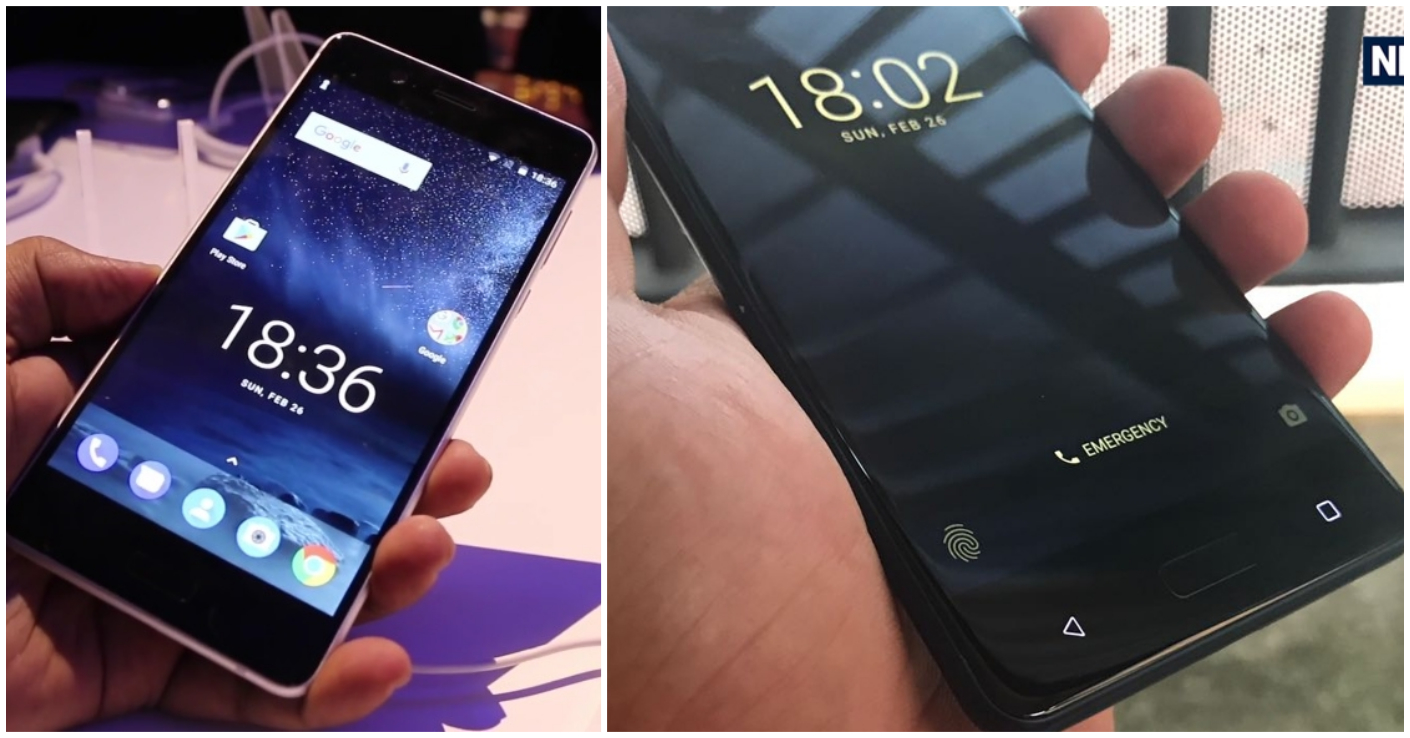
As HMD Global- the Finnish company currently owning rights to manufacture Nokia-branded smartphones- is set to launch its most expensive device till date, we can’t help speculating if it’s the Nokia 8 or the Nokia 9. However, according to German website WinFuture, HMD Global’s next-generation phone is the Nokia 8 with the model number TA-1004.
The report claims the Nokia 8 will be a premium phone that’s going to sport a Snapdragon 835 processor – the latest chipset from Qualcomm. Further, the device will come with 4GB RAM and 64GB of internal storage. WinFuture also reports the Nokia 8 will come with dual-SIM cards in Europe, but the company is likely to offer the single SIM variant of the device as well.
Earlier rumors had suggested that the phone with the model number TA-1004 will launch as the Nokia 9. Now it appears the Finnish company has finally decided otherwise.
WinFuture remains unsure about the previously speculated specifications of the Nokia 8 as they do not match up with the information they have received lately. Earlier information indicated that the Nokia 8 might ship with a 5.7-inch Quad HD ( 2560 x 1440) display, and dual 13-megapixel cameras.
Four colour schemes are currently planned for the Nokia 8 – Blue, Steel, Gold/Blue and Gold/Copper. A Scandinavian retailer has allegedly claimed the phone will go on sale on July 31, and with a price tag of €589 ( or approx Rs 43,415). In other countries, however, the price will be slightly lower. For comparison, the iPhone 7 costs Rs 47,699, and the Galaxy S8 sells for Rs 57,900.
Understandably, it is hard to see the Nokia 8 go on sale on July 31, when the company’s mid-range offerings like Nokia 5, Nokia 6 are yet to hit the markets officially. In the UK, sales will now start in August, and it is the same for India, so yes it would be surprising if the company launches Nokia 8 so soon.
HMD Global has recently announced an “exclusive” partnership with German optics company Zeiss. The first three Nokia phones – Nokia 6, Nokia 5 and Nokia 3 don’t have a Zeiss lenses, which leads us to believe that the company’s next smartphone, rumoured to be the Nokia 8, might feature a Zeiss lens.
As a technology lover you may like our daily important technology news series. It’s a playlist and you can retrieve the total day-wise videos. Please consider subscribing our YouTube channel:
Clothes that double up as cell-phone charger could be a reality soon as researchers have found a way to generate electricity from human motion.
Researchers from Nanomaterials and Energy Devices Laboratory of US-based Vanderbilt University have developed an ultra-thin energy harvesting system that can generate small amounts of electricity when the system is bent or pressed even at extremely low frequencies like that of human motion.
“In the future, I expect that we will all become charging depots for our personal devices by pulling energy directly from our motions and the environment,” said Cary Pint, Assistant Professor of Mechanical Engineering, Vanderbilt University, who directed the research.
Based on ‘battery technology’, the device is made from layers of black phosphorus that are only a few atoms thick.
The energy harvesting system was described in a paper titled ‘Ultralow Frequency Electrochemical Mechanical Strain Energy Harvester using 2D Black Phosphorus Nanosheets’, published June 21 by the journal ACS Energy Letters.
One of the futuristic applications of this technology might be electrified clothing. It could power clothes impregnated with liquid crystal displays that will allow wearers to change colours and patterns with a swipe on their smartphone.
“The materials are atomically thin and small enough to be impregnated into textiles without affecting the fabric’s look or feel and it can extract energy from extremely low-frequency movements,” added Pint.
Since the basic building blocks of the harvester are about 1/5,000th the thickness of a human hair, the technology could be incorporated in devices as thin as needed for specific applications.
As a technology lover you may like our daily important technology news series. It’s a playlist and you can retrieve the total day-wise videos. Please consider subscribing our YouTube channel:
Researchers have found that an investigational HIV vaccine regimen was well-tolerated and generated immune responses against the deadly virus in healthy adults.
The findings by APPROACH — an early-stage clinical trial — are based on “mosaic” technology that combines immune-stimulating proteins from four different HIV strains, representing different types of virus from around the globe.
The new vaccine regimen — called as “Ad26 mosaic” — were well-tolerated and capable of generating anti-HIV immune responses in healthy HIV-negative adults.
Importantly, Ad26 mosaic was found as most protective in pre-clinical studies in animals elicited among the greatest immune responses in the study participants.
“A safe and effective HIV vaccine would be a powerful tool to reduce new HIV infections worldwide and help bring about a durable end to the HIV/AIDS pandemic,” said Anthony S. Fauci, Director at the National Institute of Allergy and Infectious Diseases (NIAID) in Maryland.
“By exploring multiple promising avenues of vaccine development research, we expand our opportunities to achieve these goals,” Fauci added.
The results were presented at the ninth International AIDS Society Conference on HIV Science in Paris.
For the study, APPROACH involved nearly 400 volunteers in the US, Rwanda, Uganda, South Africa and Thailand who were randomly assigned to receive one of seven experimental vaccine regimens or a placebo.
The Ad26 mosaic vaccine delivers its four immunogens to human cells through an adenovirus (common cold virus) that is genetically engineered to cause infection but not illness.
The results showed that Ad26 is safe and triggered a strong immune response to the different HIV strains in the volunteers.
The promising, early-stage results from the APPROACH study support further evaluation of these candidate vaccines to assess their ability to protect those at risk of acquiring HIV, the researchers said.
The APPROACH findings, as well as results expected in late 2017 from another early-stage clinical trial called TRAVERSE, will form the basis of the decision whether to move forward with a larger trial in southern Africa to evaluate vaccine safety and efficacy among women at risk of acquiring HIV.
As a technology lover you may like our daily important technology news series. It’s a playlist and you can retrieve the total day-wise videos. Please consider subscribing our YouTube channel:
There may be substantial amounts of trapped water in the interior of the moon, researchers have said.
By analysing satellite data, researchers at Brown University in the US discovered rich amounts of indigenous water within the volcanic deposits or within layers of rocks spread across the lunar surface after ancient volcanoes erupted on the moon, Xinhua news agency reported.
This suggests that water may be rich in the moon’s mantle, the layer between the crust and the core, according to the study published in the journal Nature Geoscience.
The study’s lead author, Ralph Milliken, said past findings of water on the moon did not appear to come from indigenous sources.
The moon is believed to have been formed from debris of an object that hit the Earth early in the solar system’s history, but the essential hydrogen to form water could hardly survive the heat in the formation of the moon.
Li Shuai, who co-authored the story, said: “Water did somehow survive or that it was brought in shortly after the impact by asteroids or comets before the moon had completely solidified.
The exact origin of water in the lunar interior is still a big question.”
The finding also sheds light on future lunar exploration as water could potentially be extracted from the volcanic deposits.
As a technology lover you may like our daily important technology news series. It’s a playlist and you can retrieve the total day-wise videos. Please consider subscribing our YouTube channel:
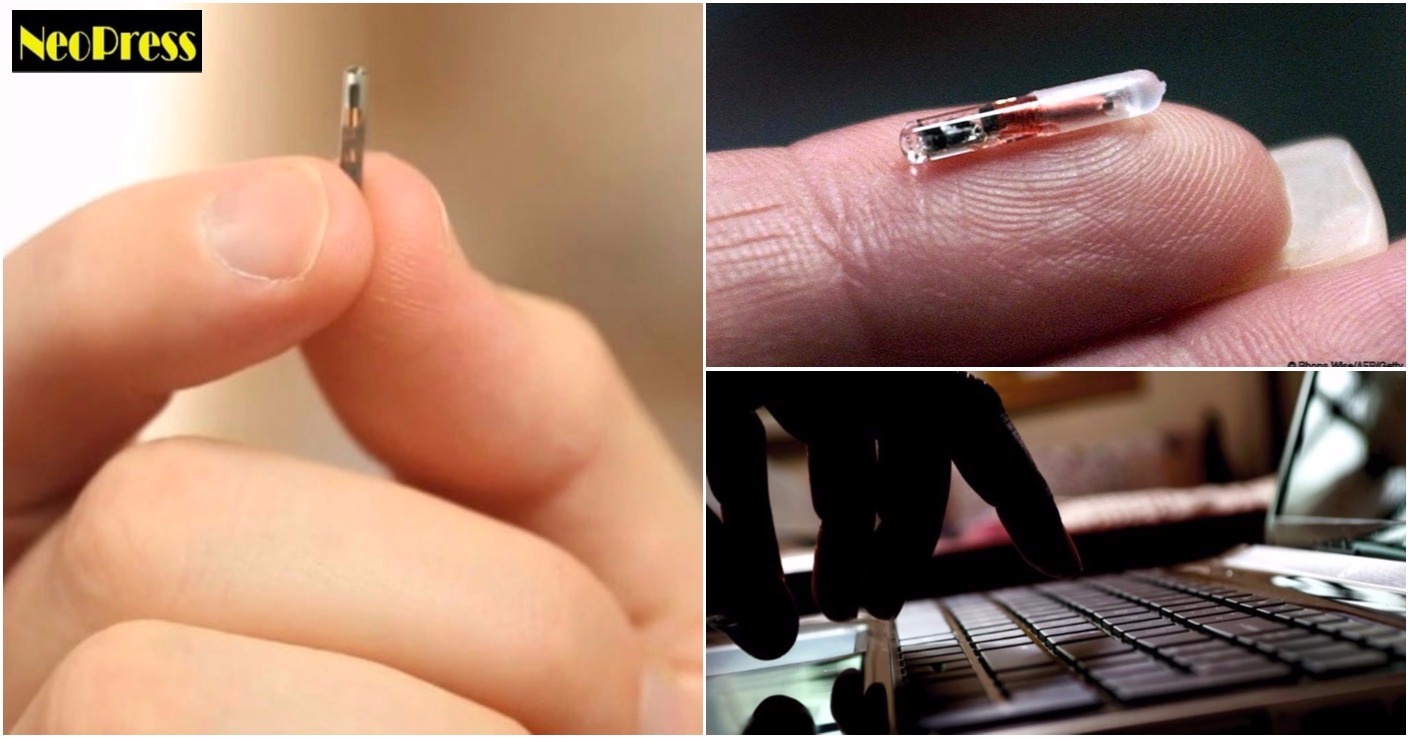
US-based tech company Three Square Market (32M) is offering its employees the option of implanting an RFID chip in their body which would serve multiple purposes.
The chip, which is the size of a rice grain, will be implanted between the thumb and forefinger underneath the skin within seconds, allowing the employees to open doors, login to computers, use the copy machine and more.
The chip implant uses “Near-Field Communication” (NFC) — the technology which is used in contact-less credit cards and mobile payments.
“We foresee the use of RFID technology to drive everything from making purchases in our office-breakroom market, opening doors, use of copy machines, logging into our office computers, unlocking phones, sharing business cards, storing medical/health information, and used to make payments at other RFID terminals,” said Todd Westby, CEO, 32M, in a blog post.
“Eventually, this technology will become standardised allowing you to use this as your passport, public transit, all purchasing opportunities etc,” he added.
32M is partnering with Sweden-based company BioHax International for the programme.
The employees will be chipped at the 32M inaugural “chip party” hosted at the company’s headquarters on August 1 and the company is expecting over 50 staff members to be voluntarily chipped.
The employees who are interested in the technology but not the implant have the option to place the micro-chip in an RFID wrist-band or a “smart ring”.
As a technology lover you may like our daily important technology news series. It’s a playlist and you can retrieve the total day-wise videos. Please consider subscribing our YouTube channel:
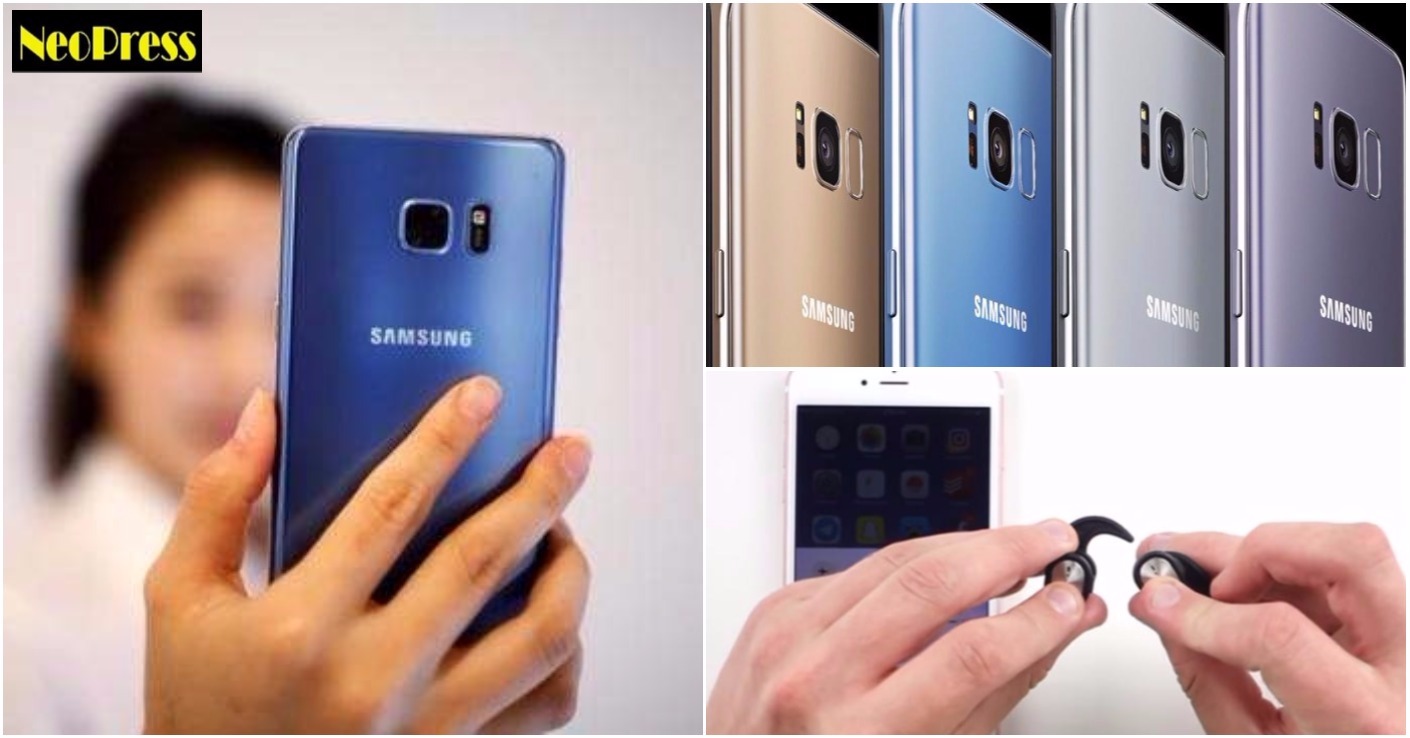
South Korean giant Samsung might launch with the upcoming Galaxy Note 8 device a pair of wireless earplugs — similar to Apple’s wireless AirPods — that will be powered by its artificial intelligence assistant ‘Bixby’.
According to a report in Korean outlet ETNews, the earphones will feature noise cancelling technology and it’s expected that they will also work alongside the Galaxy S8 and Galaxy S8+. Samsung was also rumoured to have been working on a Bixby speaker, though it has now been claimed that those plans have been scrapped.
A software update released earlier this month has already brought an English-speaking version of the Bixby voice assistant to the US. It was rumoured that Samsung will launch its next flagship Galaxy Note 8 device in September to counter its biggest rival Apple. Last week, the South Korean giant “accidentally” revealed the device on Twitter.
In a tweet, Samsung promoted its new processor Exynos 8895 (commonly known as Exynos 9) that is used in the Galaxy S8 and Galaxy S8 Plus. The smartphone used in the photo has an Infinity Display which has even smaller bezels than the Galaxy S8 and Galaxy S8 Plus. This matches almost exactly with the images that were leaked in June when it was reported that Galaxy Note 8 will have a 6.2-inch display, dual cameras, 3,300 mAh battery, the Exynos 8895 or Qualcomm Snapdragon 835 chipset and 6GB RAM.
It is also rumoured that this upcoming flagship will be the priciest one till now with a price tag of $900. Interestingly, the next iPhone is also rumoured to be the costliest Apple device till date with a cost price of $1,000 and will be launched in September.
As a technology lover you may like our daily important technology news series. It’s a playlist and you can retrieve the total day-wise videos. Please consider subscribing our YouTube channel:
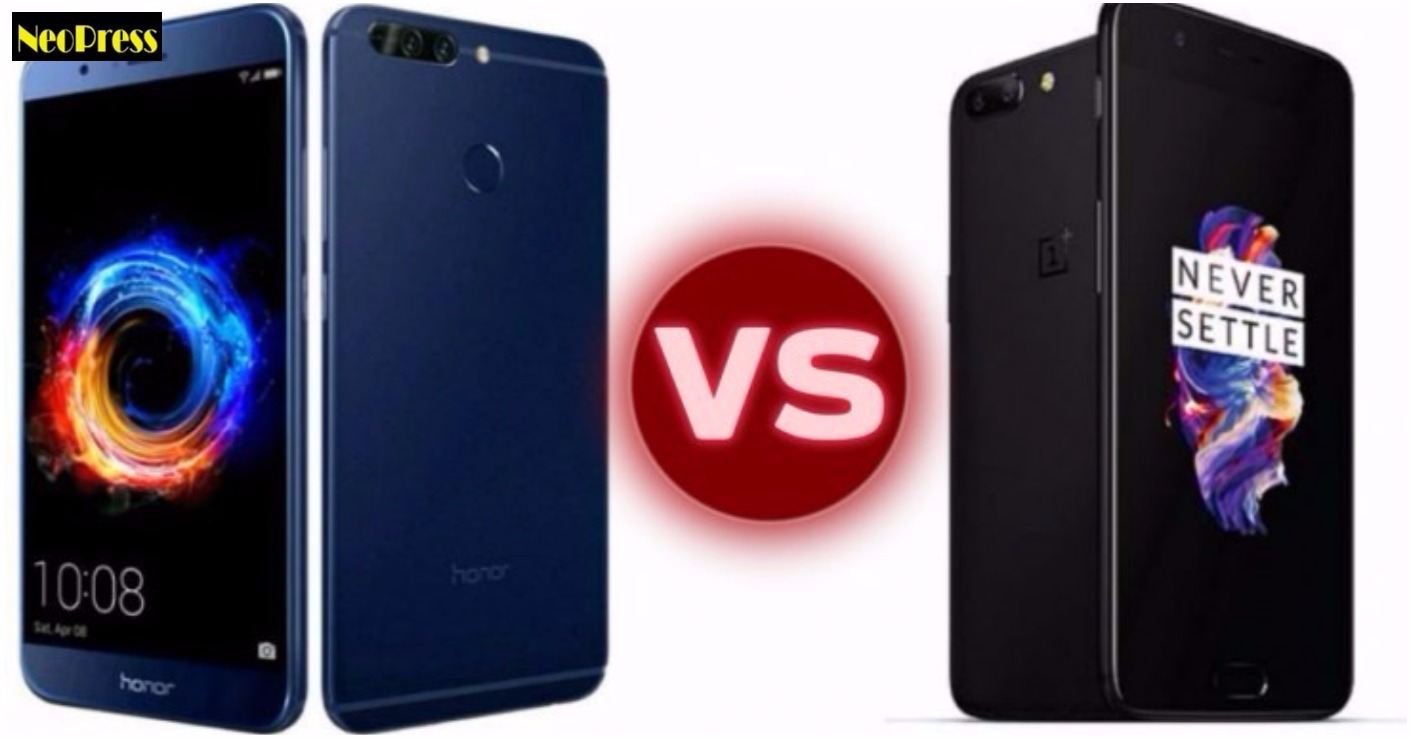
Two flagship duel-camera smartphones from two Chinese players — one from Huawei under its sub-brand Honor and another from OnePlus — have arrived in India.
Claiming to rip apart the premium mid-segment market — after a successful Honor 8 run — Huawei has brought the Honor 8 Pro with fourth generation 12MP dual-lens camera system at Rs 29,999 (6GB/128GB variant), Let’s see what makes it different from OnePlus 5, which is available for Rs 32,999 (6GB/64GB variant) and Rs 37,999 (8GB/128GB variant).
Designwise, both the devices flaunt unibody chassis with metal finish. But Honor 8 Pro comes with 6.97mm thin body while OnePlus 5 sports 7.25mm thinness. With 5.7-inch IPS 2K display, Honor 8 Pro features a high resolution of 515ppi and 79 per cent screen-to-body ratio.
On the other hand, OnePlus 5 has 5.5-inch, Full-HD display that, according to some users, shows a weird jelly-like effect while scrolling through an app. In a statement regarding the issue, OnePlus said, “We’ve received feedback from a small number of users saying that at times they notice a subtle visual effect when scrolling. This is natural and there’s no variance in screens between devices.”
While Honor 8 Pro has followed the trend of placing Fingertouch ID on the back (Samsung S8, Google Pixel devices has it there and upcoming iPhone 8 is also reported to have that at the rear), OnePlus 5 has it below the display. The duel-SIM Honor 8 Pro houses 12MP duel-lens camera system with a neat flat back and no protrusion.
One other reason why Honor 8 Pro outclasses OnePlus 5 is that it can shoot videos in 4K quality. The phone also has several shooting modes, including 3D creator and a dedicated feature “Night Shot” for low-light photography.
To shutterbugs’ delight, in its dual-camera system (“Pro Camera” mode), you can adjust the aperture from f0.95 to f16 (OnePlus 5 has a f/1.7 aperture) to give an artistic touch to images. We also found a built-in 3D creator (nubia phones have this feature) that lets you create 3D images with animated effects. The 8MP selfie camera returned quality images in both day and low-light conditions.
When it comes to the processor’s performance, OnePlus 5 outshines Honor 8 Pro. In terms of being the latest, the Kirin 950 processor in Honor 8 Pro cannot beat Qualcomm’s Snapdragon 835 in OnePlus 5. But that does not mean Honor 8 Pro is slow. There was nothing to complain as the device handled multi-tasking like surfing and gaming easily.
Paired up with a 6GB RAM and 128GB onboard memory (can be expanded up to 256GB), the new EMUI 5.1, on top of Android 7.0 Nougat, is very smooth. When it comes to battery, Honor 8 Pro tops with a 4,000mAh pack (3,300mAh for OnePlus 5).
Apart from offering a large battery, the Honor device has “Smart Power 5.0” technology that helped us maximise battery life by minimising power consumed by background apps — a respite for those who do not want to carry power banks.
On a single charge, the battery lasted for more than a day on heavy usage like social media, gaming and both online and offline content consumption. Huawei has also partnered with Gameloft and GoPro for in-built apps. On top of it, the smartphone comes bundled in a box that can also be used as a virtual reality (VR) headset. The camera’s wide aperture range delivers DSLR-like depth of field effects for both photo and video shooting.
What does not work? Try to spot one when you go for this device.
Conclusion: Honor 8 Pro has the best camera in sub-Rs 30,000 category and outsmarts OnePlus 5 in every department. Period.
As a technology lover you may like our daily important technology news series. It’s a playlist and you can retrieve the total day-wise videos. Please consider subscribing our YouTube channel:
Chinese smartphone maker Gionee on Tuesday launched the ‘A1 Plus’ smartphone at Rs 26,999 in India. The device has dual (13MP+5MP) camera system at the rear with LED flash and 20MP front camera.
Powered by 4,550mAh battery, Gionee ‘A1 Plus’ features a Helio P25 Octa-core processor coupled with 4GB RAM and 64GB internal storage. The memory can be further expanded up to 256GB. The smartphone will be available in retail stores, starting July 26.
“The ‘A’ series is rooted to the growing demand of high-quality smartphone photography experience. We are confident that our attention to detail with impressive specs, powerful battery and advanced features will deliver the best user experience possible,” said Alok Shrivastava, Director-Business Intelligence and Planning, Gionee India, in a statement.
The 20MP front camera on the smartphone comes with a customised ‘selfie’ flash. The device offers a massive battery that features ultrafast charging. It can give users two-hour talk time in a 300-second charge.
Other specifications of the smartphone include a fingerprint sensor. The ‘A1 Plus’ has a 6-inch full-HD display along with features such as Split Screen, 2.5D + Gorilla Glass 3 and Maxx Audio VOLTE. The phone comes with a panic button that is activated by pressing the home button thrice. Swiping down on the screen opens the notification bar while the toggle apps are accessed by swiping up from the bottom of the display.
As a technology lover you may like our daily important technology news series. It’s a playlist and you can retrieve the total day-wise videos. Please consider subscribing our YouTube channel:
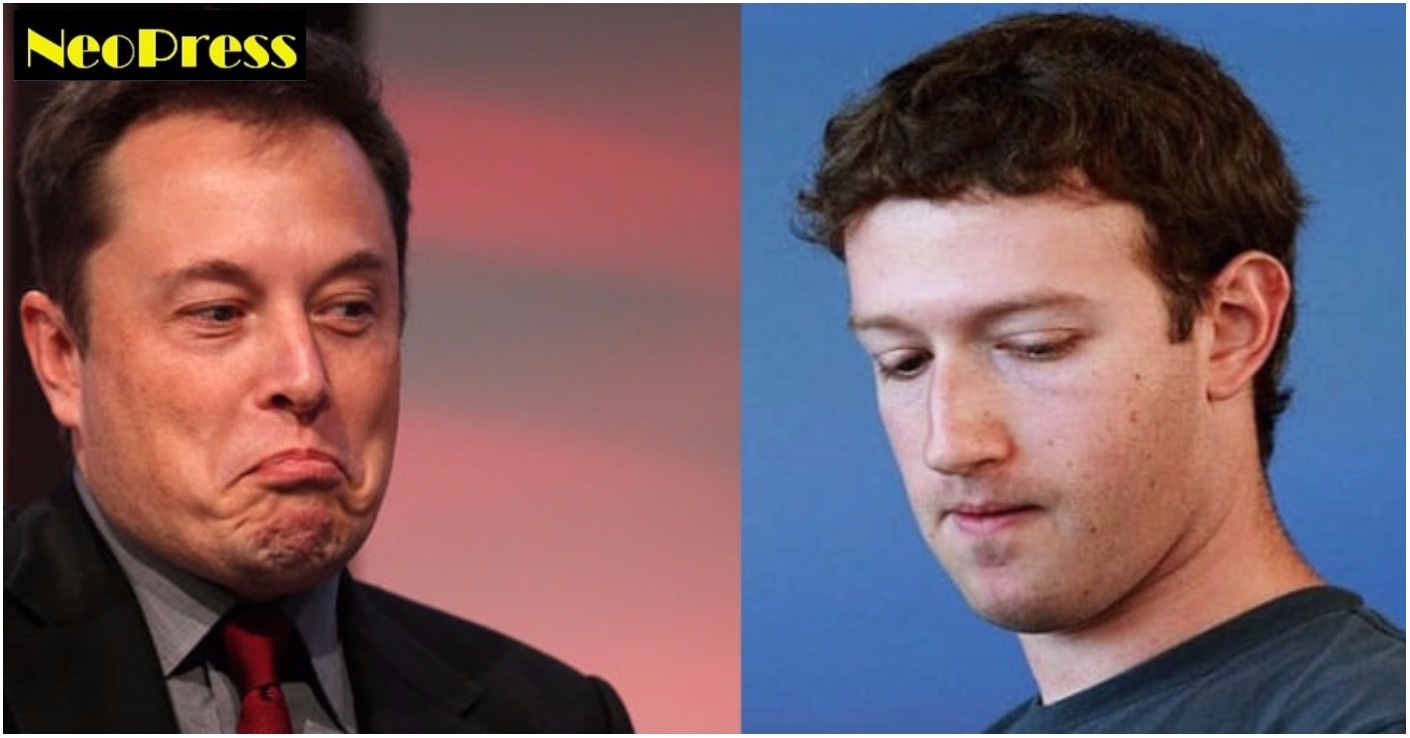
In the ongoing spat between two tech honchos, Founder and CEO of SpaceX Elon Musk has hit back at Facebook CEO Mark Zuckerberg, saying the Internet entrepreneur’s understanding of artificial intelligence (AI) is ‘limited’.
“I’ve talked to Mark about this (AI). His understanding of the subject is limited,” Musk tweeted on Monday.
The tweet came after Zuckerberg, during a Facebook livestream last week, castigated Tesla founder Musk for arguing that care and regulation was needed to safeguard the future if AI becomes mainstream.
“I have exposure to the very cutting-edge AI and I think people should be really concerned about it,” Silicon Valley Business Journal quoted Musk as saying.
Responding to this, Zuckerberg said during livestream: “I think people who are naysayers and try to drum up these doomsday scenarios — I just, I don’t understand it. It’s really negative and in some ways I actually think it is pretty irresponsible.”
Musk has been speaking frequently on AI and has called its progress the “biggest risk we face as a civilisation”.
“AI is a rare case where we need to be proactive in regulation instead of reactive because if we’re reactive in AI regulation it’s too late,” a report in TechCrunch quoted him as saying.
Zuckerberg calls himself an optimist when it comes to AI.
Inspired by Iron Man’s artificial assistant (AI) “Jarvis” and his capabilities, he has coded and developed his own “Jarvis” to run his home.
Zuckerberg has built a simple AI that he can talk to on his phone and computer, and that can control his home, including lights, temperature, appliances, music and security, that learned his tastes and can even entertain his daughter Max.
The system he developed uses several AI techniques, including natural language processing, speech recognition, face recognition and reinforcement learning.
During the recent livestream session with his fans, he observed that AI would be “responsible for such lifesaving services as diagnosing diseases and driving cars”.
“One of the top causes of death for people is car accidents still and if you can eliminate that with AI, that is going to be just a dramatic improvement,” Zuckerberg said.
The war of words between the two top CEOs is not new.
Last year, when a SpaceX rocket carrying a Facebook satellite broke up into fragments during its launch in Florida, the incident stirred a controversy between Musk and Zuckerberg.
As a technology lover you may like our daily important technology news series. It’s a playlist and you can retrieve the total day-wise videos. Please consider subscribing our YouTube channel:
The new Nokia Android smartphone phones are manufactured by Foxconn and while Nokia 3 started selling in India a few weeks back, the Finnish startup has announced when the mid-range phone is expected.
It seems that given the overwhelming demand for Nokia 3 across all markets, HMD Global had focussed its manufacturing resources on this phone initially.
“We are humbled by the response to Nokia 3. Currently, we are ramping up our production for Nokia 3 on priority to meet the existing consumer demand. In the coming weeks, we will start production of Nokia 6 and Nokia 5 to get them ready for sales start by mid-August,” an HMD spokesperson said.
While the Nokia 6 pre-bookings will be on Amazon India, the Nokia 5 pre-bookings were announced for “select mobile retail outlets” across Delhi NCR, Mumbai, Bengaluru, Chennai, Chandigarh, Jaipur, Kolkata, Lucknow, Indore, Hyderabad, Pune, Ahmedabad and Kozhikode.
HMD Global has announced a network of over 400 distributors to support its new range of Nokia Android smartphones and feature phones. This network, HMD hopes, will help the new Nokia devices to be made available at more than 80,000 retail outlets across the country.
The Nokia 3, priced at Rs 9,499 has been a huge hit in India. The Nokia 5 and Nokia 6 are priced at Rs 14,999 and 12,899, respectively.
HMD Global announced the availability of Nokia 3, Nokia 5 and the Nokia 6 smartphones in India this June. While Nokia 3 went on sale June 16, the company had just announced pre-bookings for the Nokia 5 starting July 7 and Nokia 6 from July 14.
As a technology lover you may like our daily important technology news series. It’s a playlist and you can retrieve the total day-wise videos. Please consider subscribing our YouTube channel:
A handful of people advising Musk urged him to make small, cheap rockets that would bring the cost of getting something into orbit down to $5 million from the going rate of about $100 million. This was before SpaceX, and in the years that followed, Space Exploration Technologies Corp. did manage to lower launch prices drastically, but it stuck to making bigger spaceships instead of pursuing the radical approach that some of Musk’s advisers desired.
Two people who were formerly on Musk’s team have now emerged with their own rocket startup called Vector Space Systems. They have radical plans and then some. Vector’s goal is to make a $1.5 million rocket that can carry small satellites into orbit. It expects to conduct 100 launches per year—a figure that would match the annual capacity of the entire aerospace industry. To help meet this goal, Vector told Bloomberg that it raised $21 million from some of Silicon Valley’s largest venture capital firms, including Sequoia Capital, Shasta Ventures and Lightspeed Venture Partners.
“While Elon made space safe for investors, he did not fix the launch problem,” said Jim Cantrell, co-founder and chief executive officer of Vector. “We are making the rockets as simple as they can be made, building them like sausages and launching by the hundreds.”
One of the rocket builders Musk visited in Los Angeles during the early years of SpaceX was John Garvey, a former engineer at manufacturer McDonnell Douglas. Garvey had long fantasized about making very small, very cheap rockets and maintained a workshop to pursue his designs. He’s now chief technology officer at Vector, and Cantrell has helped find the money to turn his prototypes into a commercial business.
Cantrell is something of a connector in the aerospace world. He’s spent decades helping companies arrange deals for launches and assessing the business plans of startups. Most famously, Cantrell accompanied Musk on a handful of trips to Russia in a bid to negotiate the purchase of intercontinental ballistic missiles that Musk hoped to use as rockets. When those negotiations fell apart, Musk set off to start SpaceX in 2002 and build his own rockets.
While SpaceX’s workhorse is the Falcon 9 rocket, which stands 230 feet tall and can take 50,000 pounds of gear to low-Earth orbit. Typically, the Falcon 9 will carry a bus-sized satellite or ferry supplies to the International Space Station for about $60 million a pop—about a fifth of what its rival United Launch Alliance LLC charges, Vector, though, is betting on the coming wave of smaller, cheaper satellites known as CubeSats to be the core of its business.
These devices are about the size of a shoebox and have just started becoming popular in recent years as improvements in electronics and software have made it possible to shrink satellites drastically. Planet Labs Inc., a startup in San Francisco, is the best-known CubeSat maker. It has a constellation of 160 satellites circling the Earth, taking daily pictures of the planet’s landmass. Other small satellite makers are rushing to market with machines that take pictures, perform communications and conduct experiments in zero gravity.
The top performers in the launch business, like SpaceX and Europe’s Arianespace SA, conduct about one liftoff per month. Both Rocket Lab and Vector want to ratchet up this cadence. “We think the market will be on the order of 400 to 500 launches a year,” said Cantrell. “There is room for four or five launch providers.”
Several rocket-launch companies have appeared in the U.S. and overseas to serve as ferries for small satellites. The most successful to date is Rocket Lab, which just completed its first test launch from New Zealand. Its rockets can carry more weight than Vector’s and cost $5 million per flight.
Vector, which started operations 18 months ago, has been testing early versions of its rockets in the Mojave Desert, although it has not yet tried to reach orbit. While Rocket Lab has a private spaceport, Vector will be looking to fly from government-run launch pads in Alaska, Florida and Georgia. “We will be able to launch in three to four hours from standing the rocket up, to fueling it, to gone,” said Cantrell.
About eight small satellites could fit inside of a Vector-R rocket and close to 30 could fit in the larger Vector-H rocket that is due to be built over the next 18 months, according to Cantrell. The company will have its next test flight in late July or early August and aims to be flying commercially by mid-2018.
The price per pound on the large rockets from SpaceX and others is still more economical. But it’s the flexibility of requesting a launch, almost like you’d order something on Amazon.com, that could end up being more attractive than pure cost.
As a technology lover you may like our daily important technology news series. It’s a playlist and you can retrieve the total day-wise videos. Please consider subscribing our YouTube channel:
We, the humans, often talk about aliens or some kind of smart artificial intelligence existing at some corner of the universe. But despite all noise, we, so far, failed to collect any evidence of existence of any aliens let alone contacting them. The central dilemma here is the Fermi paradox. The Fermi paradox mentions that the universe is very large with trillions of galaxies and billions of stars and planets. Out of these insanely large numbers, there exists only tiny fraction which contains habitable planets capable of hosting any kind of life form.
But even a tiny fraction will translate itself into a large number which indicates that there might be billions of species of aliens exist out there. Here, the Fermi paradox questions us: With so many alien species out there, why we failed to find them? Or, for that matter, why they also failed to find us?
The Wikipedia page of Fermi Paradox is flooded with answers related to this. Some says “it is too expensive to spread physically throughout the galaxy”, some says “intelligent civilizations are too far apart in space or time” and some even talks philosophically like “it is the nature of intelligent life to destroy itself.”
Our planet is only 4.5 billion years old whereas our universe is about 14 billion years old. It’s safe to assume that most of the aliens will be way smarter than us. Experts argue that their level and quality of intelligence will be much adhead compared to human intelligence. Most of the advanced intelligence probably have reached the point of singularity.
The singularity, according to David Kelley, co-founder of Wired Magazine, is the point at which “all the change in the last million years will be superseded by the change in the next five minutes.”. That’s unimaginable because that simply denotes that those aliens are probably trillions of times more intelligent than us.
Another interesting dimension of this logic is that such intelligent aliens will not bother to notice us like we don’t notice the 100 trillion microbes present in our body. We don’t notice them upto the point they don’t cause us any health problem. Probably, we have not reached the stage to bother them even!
If we follow the progression of human civilization, we will assume that in next 250 years we will not be confined to our static physical state, at least not in the molecular sense. We will not be artificial intelligences living within the machines either. Becoming machine intelligence is just another dynamic phase of evolution—which will probably last for only few decades.
Ultimate form of advanced intelligence is likely to exists in atomic scale or even something smaller than that. It may be something like willful conscious energy or something even beyond that. Either the biology or the ones and zeros of the machines are too rudimentary to hold intelligent life forms. A functional advanced intelligence will be more spirit-like—more like our ideas of ghosts. Such advanced life forms might have the capability to cover millions of lights years almost in real time all around the universe, changing itself into whatever form it wants.
The bottom line is, we are unable to hear from the aliens. This is probably because we don’t have ways and means to understand their language which is far superior than our mundane physical abilities. Probably, there are millions of singularities those have already happened, but, we are very similar to blind bacteria present in our bodies running around cluelessly.
The good news is that, we are progressing rapidly and one day we will be intelligent enough to draw their attention. At that point of time, like an agitated landlord at the door, aliens will make contact with us to let us know the norms followed by the advanced intelligence all around the universe.