Device that can harvest electricity from human motion

Clothes that double up as cell-phone charger could be a reality soon as researchers have found a way to generate electricity from human motion.

Researchers from Nanomaterials and Energy Devices Laboratory of US-based Vanderbilt University have developed an ultra-thin energy harvesting system that can generate small amounts of electricity when the system is bent or pressed even at extremely low frequencies like that of human motion.

“In the future, I expect that we will all become charging depots for our personal devices by pulling energy directly from our motions and the environment,” said Cary Pint, Assistant Professor of Mechanical Engineering, Vanderbilt University, who directed the research.

Based on ‘battery technology’, the device is made from layers of black phosphorus that are only a few atoms thick.

The energy harvesting system was described in a paper titled ‘Ultralow Frequency Electrochemical Mechanical Strain Energy Harvester using 2D Black Phosphorus Nanosheets’, published June 21 by the journal ACS Energy Letters.

One of the futuristic applications of this technology might be electrified clothing. It could power clothes impregnated with liquid crystal displays that will allow wearers to change colours and patterns with a swipe on their smartphone.

width="560" height="314" allowfullscreen="allowfullscreen">

“The materials are atomically thin and small enough to be impregnated into textiles without affecting the fabric’s look or feel and it can extract energy from extremely low-frequency movements,” added Pint.

Since the basic building blocks of the harvester are about 1/5,000th the thickness of a human hair, the technology could be incorporated in devices as thin as needed for specific applications.

As a technology lover you may like our daily important technology news series. It’s a playlist and you can retrieve the total day-wise videos. Please consider subscribing our YouTube channel:

Author: Technology Vista
Tagged : /

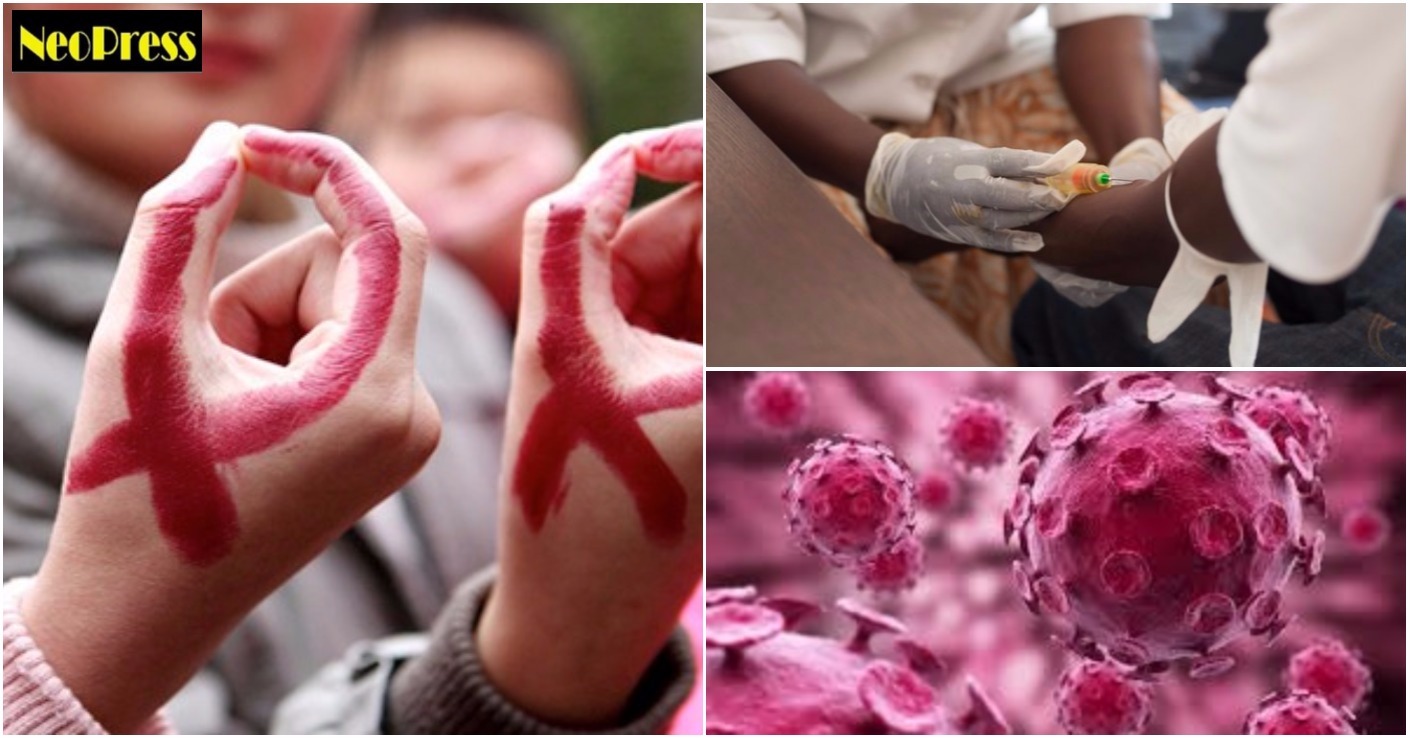
Good News For Mankind. Experimental HIV vaccine is well-tolerated in adults: Study

Researchers have found that an investigational HIV vaccine regimen was well-tolerated and generated immune responses against the deadly virus in healthy adults.

The findings by APPROACH — an early-stage clinical trial — are based on “mosaic” technology that combines immune-stimulating proteins from four different HIV strains, representing different types of virus from around the globe.

The new vaccine regimen — called as “Ad26 mosaic” — were well-tolerated and capable of generating anti-HIV immune responses in healthy HIV-negative adults.

Importantly, Ad26 mosaic was found as most protective in pre-clinical studies in animals elicited among the greatest immune responses in the study participants.

“A safe and effective HIV vaccine would be a powerful tool to reduce new HIV infections worldwide and help bring about a durable end to the HIV/AIDS pandemic,” said Anthony S. Fauci, Director at the National Institute of Allergy and Infectious Diseases (NIAID) in Maryland.

“By exploring multiple promising avenues of vaccine development research, we expand our opportunities to achieve these goals,” Fauci added.

The results were presented at the ninth International AIDS Society Conference on HIV Science in Paris.

For the study, APPROACH involved nearly 400 volunteers in the US, Rwanda, Uganda, South Africa and Thailand who were randomly assigned to receive one of seven experimental vaccine regimens or a placebo.

The Ad26 mosaic vaccine delivers its four immunogens to human cells through an adenovirus (common cold virus) that is genetically engineered to cause infection but not illness.

The results showed that Ad26 is safe and triggered a strong immune response to the different HIV strains in the volunteers.

The promising, early-stage results from the APPROACH study support further evaluation of these candidate vaccines to assess their ability to protect those at risk of acquiring HIV, the researchers said.

The APPROACH findings, as well as results expected in late 2017 from another early-stage clinical trial called TRAVERSE, will form the basis of the decision whether to move forward with a larger trial in southern Africa to evaluate vaccine safety and efficacy among women at risk of acquiring HIV.

As a technology lover you may like our daily important technology news series. It’s a playlist and you can retrieve the total day-wise videos. Please consider subscribing our YouTube channel:

Author: Technology Vista

Tagged : /

There may be a lot of water hiding under the moon’s dusty surface, researchers say

There may be substantial amounts of trapped water in the interior of the moon, researchers have said.

By analysing satellite data, researchers at Brown University in the US discovered rich amounts of indigenous water within the volcanic deposits or within layers of rocks spread across the lunar surface after ancient volcanoes erupted on the moon, Xinhua news agency reported.

This suggests that water may be rich in the moon’s mantle, the layer between the crust and the core, according to the study published in the journal Nature Geoscience.

The study’s lead author, Ralph Milliken, said past findings of water on the moon did not appear to come from indigenous sources.

The moon is believed to have been formed from debris of an object that hit the Earth early in the solar system’s history, but the essential hydrogen to form water could hardly survive the heat in the formation of the moon.

Li Shuai, who co-authored the story, said: “Water did somehow survive or that it was brought in shortly after the impact by asteroids or comets before the moon had completely solidified.

The exact origin of water in the lunar interior is still a big question.”

The finding also sheds light on future lunar exploration as water could potentially be extracted from the volcanic deposits.

As a technology lover you may like our daily important technology news series. It’s a playlist and you can retrieve the total day-wise videos. Please consider subscribing our YouTube channel:

Author: Technology Vista

Tagged : /

It’s finally there! US-based company to implant chip in employees’ bodies

US-based tech company Three Square Market (32M) is offering its employees the option of implanting an RFID chip in their body which would serve multiple purposes.

The chip, which is the size of a rice grain, will be implanted between the thumb and forefinger underneath the skin within seconds, allowing the employees to open doors, login to computers, use the copy machine and more.

The chip implant uses “Near-Field Communication” (NFC) — the technology which is used in contact-less credit cards and mobile payments.

“We foresee the use of RFID technology to drive everything from making purchases in our office-breakroom market, opening doors, use of copy machines, logging into our office computers, unlocking phones, sharing business cards, storing medical/health information, and used to make payments at other RFID terminals,” said Todd Westby, CEO, 32M, in a blog post.

“Eventually, this technology will become standardised allowing you to use this as your passport, public transit, all purchasing opportunities etc,” he added.

32M is partnering with Sweden-based company BioHax International for the programme.

The employees will be chipped at the 32M inaugural “chip party” hosted at the company’s headquarters on August 1 and the company is expecting over 50 staff members to be voluntarily chipped.

The employees who are interested in the technology but not the implant have the option to place the micro-chip in an RFID wrist-band or a “smart ring”.

As a technology lover you may like our daily important technology news series. It’s a playlist and you can retrieve the total day-wise videos. Please consider subscribing our YouTube channel:

Author: Technology Vista

Tagged : /

Verified by ExactMetrics