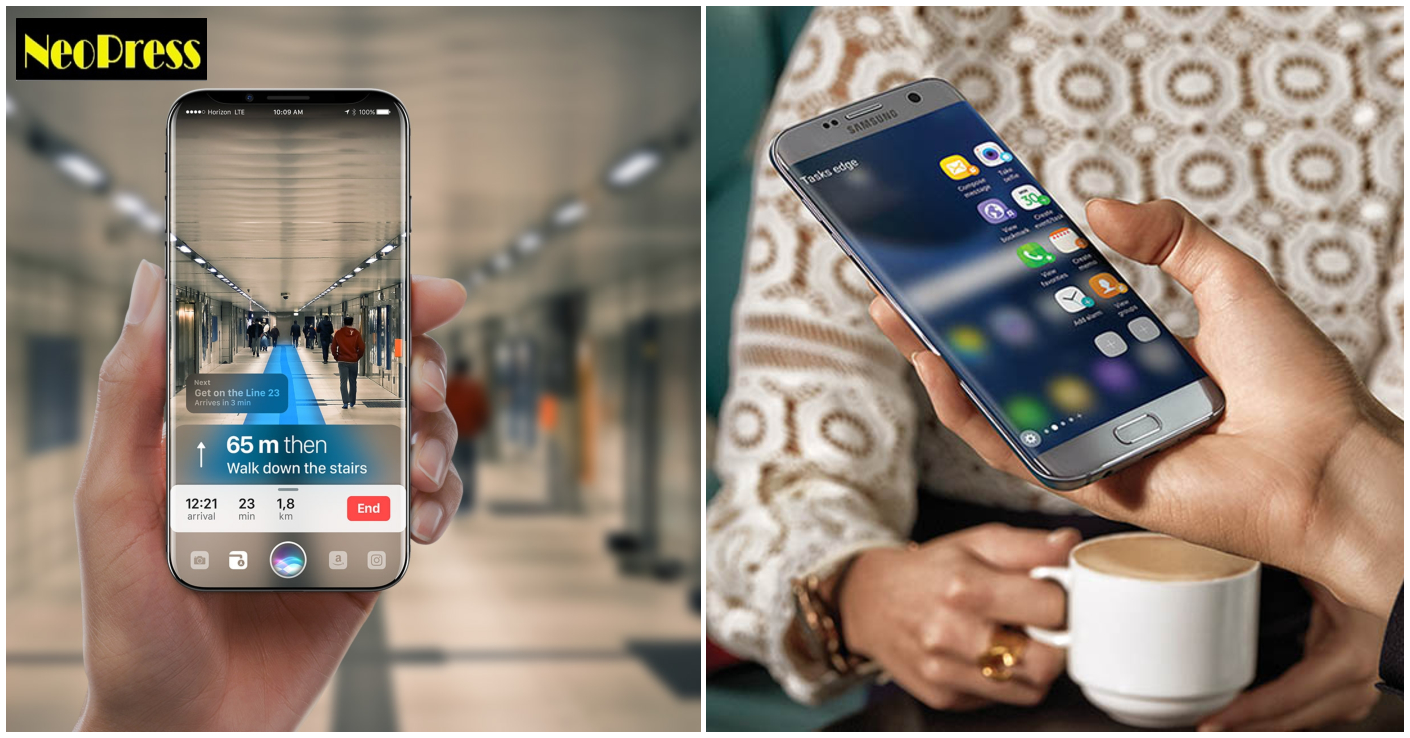
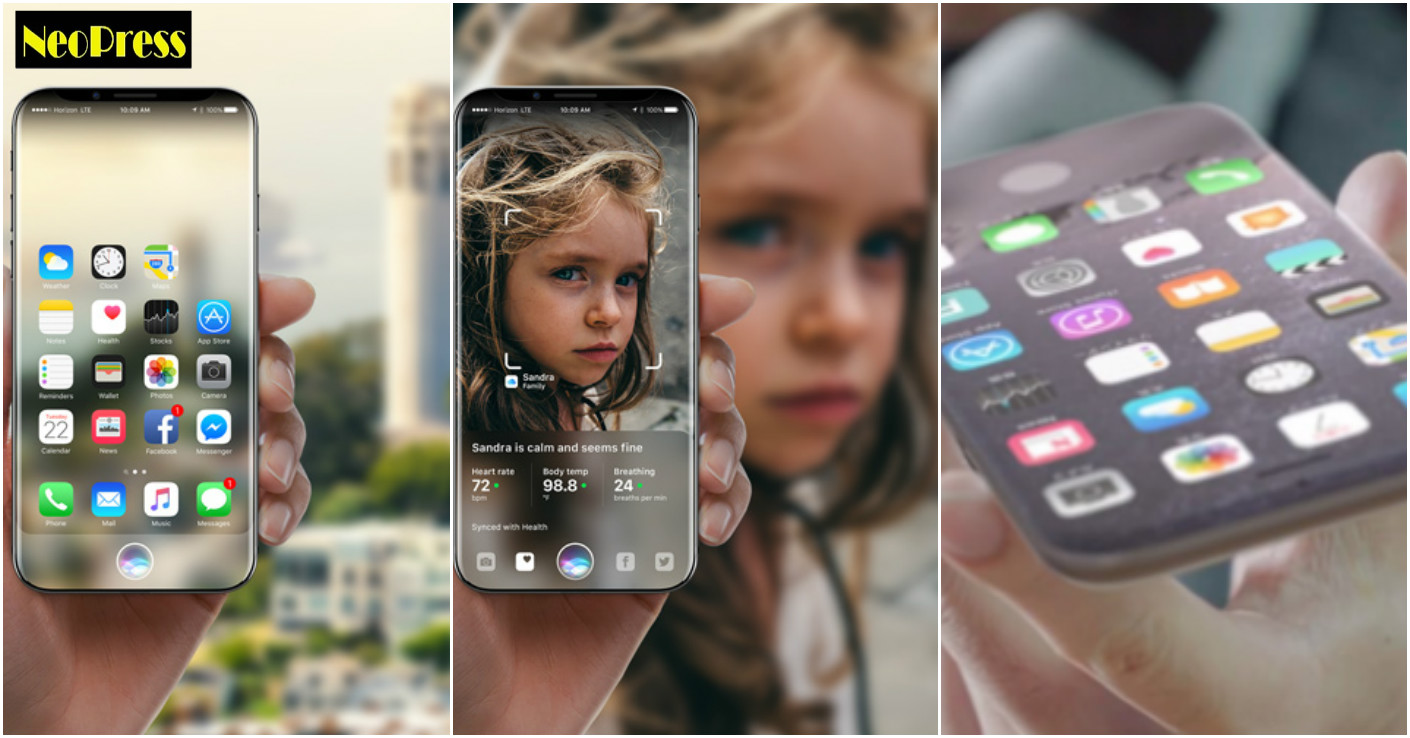
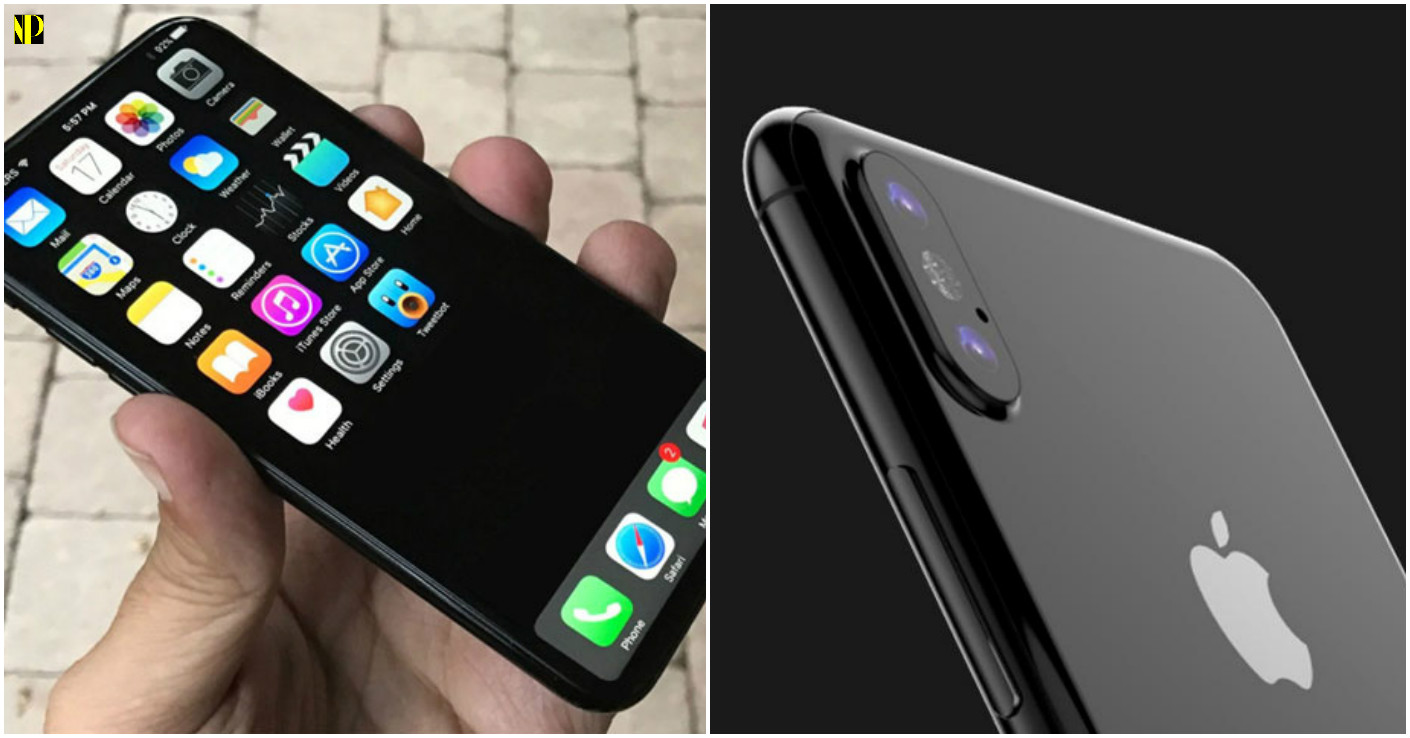
For years Apple has released a redesigned iPhone one year before upgrading its components the year after, giving that model an “S” designation, just deviating from its proud tradition a bit last year with iPhone 7 which didn’t have a radically new design. But for the next two years, according to a new report from Nikkei, Apple may be planning to release three new iPhones in 2018.
All three of these new phones will have a kind of screen called OLED, which is a newer, superior technology with darker blacks and better power consumption.
Apple is expected to launch a premium handset later this year that’s being called the iPhone 8, for lack of a better term. This model is expected to get a full redesign without a home button, an OLED screen, and a price tag that may top $1000.
In 2018, the plan is that Apple will bring OLED screens to all three of its models. Apple has started to design those iPhones, according to Nikkei.
Apple will require tens of millions of OLED screens, which could cause other companies to miss out on the key component. Currently, Samsung Display is the only company making OLED screens for smartphones at scale, but other companies, including Foxconn’s Sharp, are ramping up production. There is a shortage of OLED screens.
What’s clear is that Apple is completely shifting its iPhone product lineup, focusing around the next generation screen, and by 2019, Apple’s iPhone lineup will have mostly OLED screens. Foxconn will assemble all of the redesigned iPhones this year, according to Nikkei.
As a technology lover you may like our daily important technology news series. It’s a playlist and you can retrieve the total day-wise videos. Please consider subscribing our YouTube channel:
Have you ever noticed that geckos are actually the last animals up the size scale, who can successfully scale a wall? Latest research reveals why.
A new study, published today in PNAS, shows that in climbing animals from mites and spiders up to tree frogs and geckos, the percentage of body surface covered by adhesive footpads increases as body size increases, setting a limit to the size of animal that can use this strategy because larger animals would require impossibly big feet. Scientists estimate that a human would need adhesive pads covering 40% of their body surface in order to walk up a wall like Spiderman, and believe their insights have implications for the feasibility of large-scale, gecko-like adhesives.
Dr David Labonte and his colleagues in the University of Cambridge’s Department of Zoology discovered that tiny mites use approximately 200 times less of their total body area for adhesive pads than geckos. We humans would require roughly 80% of our front, to be covered in sticky footpads if we wanted to achieve the same.
“As animals increase in size, the amount of body surface area per volume decreases – an ant has a lot of surface area and very little volume, and a blue whale is mostly volume with not much surface area” explains Labonte.
“This poses a problem for larger climbing species because, when they are bigger and heavier, they need more sticking power to be able to adhere to vertical or inverted surfaces, but they have comparatively less body surface available to cover with sticky footpads. This implies that there is a size limit to sticky footpads as an evolutionary solution to climbing – and that turns out to be about the size of a gecko.”
These investigations also gave the researchers greater insights into how the size of adhesive footpads is influenced and constrained by the animals’ evolutionary history.
“We were looking at vastly different animals – a spider and a gecko are about as different as a human is to an ant- but if you look at their feet, they have remarkably similar footpads,” says Labonte.
“Adhesive pads of climbing animals are a prime example of convergent evolution – where multiple species have independently, through very different evolutionary histories, arrived at the same solution to a problem. When this happens, it’s a clear sign that it must be a very good solution.”
“Our study emphasises the importance of scaling for animal adhesion, and scaling is also essential for improving the performance of adhesives over much larger areas. There is a lot of interesting work still to do looking into the strategies that animals have developed in order to maintain the ability to scale smooth walls, which would likely also have very useful applications in the development of large-scale, powerful yet controllable adhesives.”
Thus, we can see two different evolutionary solutions to the problem of scaling walls. One is to get the adhesive pads bigger, and second is to get them stickier. “Across all species the problem is solved by evolving relatively bigger pads, but this does not seem possible within closely related species, probably since there is not enough morphological diversity to allow it. Instead, within these closely related groups, pads get stickier. This is a great example of evolutionary constraint and innovation.”
Some experts believing the Red Planet could be in the midst of a colonisation process by 2030. Now, one of the necessities for life to be built and sustained on Mars will be power, which is why Nasa is working on nuclear fission reactors that could work on Earth’s next door neighbour.
Under this £11million project , NASA has already built the small 6’5” reactors which they will soon test on Earth. If all goes to plan, could be shipped off to Mars in the future.
Nasa has attempted to make nuclear reactors for space before. In the 1960s it was working on the Systems for Nuclear Auxiliary Power (SNAP) programme which developed the radioisotope thermoelectric generator (RTG) and is now used by the Curiosity Rover on Mars.
Lee Mason, a Nasa employee who works on power and energy storage technology development at Nasa’s Glenn Research Center, told Space.com: “It’ll be the first time that we operate a fission reactor that could be used in space since [the] 1960s SNAP programme.”
The reactors work by splitting uranium atoms in half which generate huge amounts of power – which will be needed to generate oxygen, light, heat, electricity and even water.
As a technology lover you may like our daily important technology news series. It’s a playlist and you can retrieve the total day-wise videos. Please consider subscribing our YouTube channel:
The Pixel and Pixel XL- the first handsets designed inside and out by Google and manufactured by HTC, were definitely not perfect. But they were both great high-end smartphones featuring terrific cameras, great build quality, and stock Android software that’s extremely popular among a lot of users.
Although, we hope Google will improve the issues of their generic design, high price tag, and lack of proper water resistance in its new release.
To begin with, So far, we haven’t heard any rumors regarding the release date of the Pixel 2 series, however, Google normally unveils its new devices in the fall.
How many products are they launching? It was initially rumored that Google would, just like last year, take the wraps off two Pixel devices. The smaller of the two is codenamed Walleye, while the XL variant goes under the Muskie moniker. We then heard reports that the company is also working on a third device, dubbed Taimen, which is expected to be even larger than the Pixel XL.
However, it looks like Google has changed its mind and will in fact only release two smartphones this year. According to a report by Android Police, the tech giant has decided to cancel the Muskie device. This means that only Walleye and Taimen will be announced, with the former being the successor to the Pixel, while the latter will be a larger version of the Pixel XL.
New rumors have now popped up online suggesting that the online search giant will actually be joining forces with LG, at least for the larger of the two devices.
Just like their predecessors, Walleye (Pixel 2) and Taimen (Pixel XL 2) will offer high-end specs. According to the latest rumors, the smaller of the two devices is expected to sport a 4.97-inch display with Full HD resolution. It will be powered by the latest Snapdragon 835 chipset and have 4GB of RAM. When it comes to storage, a 64GB version is mentioned, but we’ll likely see a larger option as well.
Pixel 2 is said to feature two front-facing stereo speakers, which is more than a welcome addition. Unfortunately, it will come at the expense of the 3.5 mm headphone jack. This means you’ll have to plug in your headphones with the help of an adapter that will likely come included in the box. Rumors also suggest that Google will not be following in the footsteps of LG, Huawei, OnePlus, and others in the camera department. This means that the Pixel 2 won’t have a dual-camera setup on the back.
The larger of the two devices, the Pixel XL 2, will be similar to its smaller brother in a lot of ways. It will be powered by the Snapdragon 835 chipset, have 4GB of RAM, and sport the same camera. It will also be waterproof, but it won’t have two speakers on the front due of a different design — more on that later. Rumors claim that it will have 128GB of storage, but just like with the Pixel 2, we’ll probably see at least one more additional storage option.
The Pixel XL 2 is also rumored to be water and dust resistant. It is expected to be either IP67 or IP68 rated, meaning it will survive being submerged in 1 to 1.5 meters of water for a period of 30 minutes. As a refresher, the current Pixel generation is only IP53 rated, which basically means it won’t die on you if it’s sprayed with water here and there, but definitely isn’t suitable for anything more than that.
Having spent years iterating the original iPhone design, Apple has decided to shake things up on the 10th anniversary ‘iPhone 8’- two new (and highly credible) leaks have now confirmed. We have long time leak superstar Steve Hemmerstoffer (aka @OnLeaks) delivers the first. Having obtained detailed schematics “sourced directly from the factory in charge of building the new iPhone”, he worked with TigerMobiles to manufacturer the device using CNC manufacturing.
The highlight of the major redesign has to be its massive (high resolution) 5.8-inch display, with its potentially awkward top cutout for the front camera and sensors, and space for the secret iOS 11 Function Area.
The iPhone 8’s precise dimensions reveal it to be 43.5 x 71 x 7.5 mm (5.65 x 2.79 x 0.29 in). iPhone 7 was measured as 138.3 x 67.1 x 7.1 mm (5.44 x 2.64 x 0.28 in) and the iPhone 7 Plus as 158.2 x 77.9 x 7.3 mm (6.23 x 3.07 x 0.29 in). This is incredibly compact for a 5.8-inch device making it notably shorter, if slightly wider, than the 5.8-inch Galaxy S8 (148.9 x 68.1 x 8.0 mm). The only thing blotting the iPhone 8’s copybook is the large, protruding dual camera which increases the depth at this point to 9.1mm and will make the phone hard to use on a flat surface.
These changes are huge, to say the least. We see there is no rear fingerprint scanner (or physical home button) showing this crucial upgrade will indeed be integrated into the display. The additional space to keep that extra battery is gone too.
We also have the reassurances of prolific case maker and accurate smartphone leaker Olixar about the leaks. Having already correctly leaked the iPhone 7, Galaxy Note 7, Galaxy S8 and iPhone 8, its retail partner Mobile Fun goes public this time with a hands on video showing off the company’s official iPhone 8 case and screen protectors and comparing them to an iPhone 7.
Mobile Fun measures the Olixar cases and – you guessed it – at approximately 145 x 73 x 9mm they would perfectly fit around the iPhone 8 chassis Hemmerstoffer measured leaving roughly 1mm thick of protection on all sides. For years iPhones have been criticised for their large and top bottom bezels, but this will change dramatically with the iPhone 8. iPhone 7 almost fills Olixar’s iPhone 8 case, despite the latter’s 1.1-inch larger display.
The reality is Apple needs to manufacturer millions of units in the run up its release and this typically starts three months out so we can’t predict a U-turn happening this late in the game. Thus, no changes should be anticipated before Apple’s official iPhone 8 reveal (which historically has been seen) in September.
As a technology lover you may like our daily important technology news series. It’s a playlist and you can retrieve the total day-wise videos. Please consider subscribing our YouTube channel:
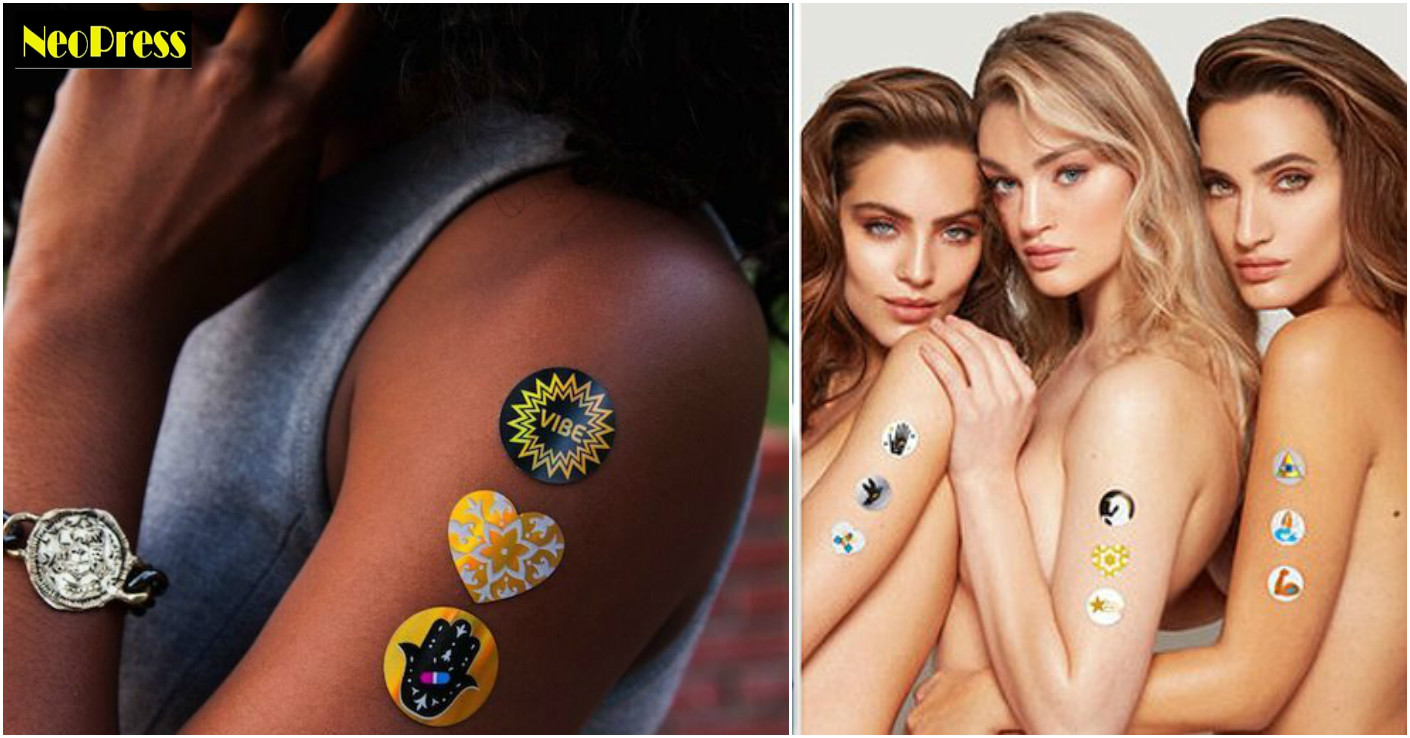
Now, Gwyneth Paltrow’s Goop has been praising these self healing stickers and Cameron Diaz’s lifestyle website has advertised these. But NASA’s former scientist publicly announces smart stickers embedded with a specific combination of bio-frequencies’ meant to treat imbalances and ‘re-balance the energy frequency’ of the body by Body Vibes to be a complete scam.
Goop explains on it’s site that ‘human bodies operate at an ideal energetic frequency, but everyday stresses and anxiety can throw off our internal balance, depleting our energy reserves and weakening our immune systems’.
The lifestyle website’s explanation continues: ‘Body Vibes stickers (made with the same conductive carbon material NASA uses to line space suits so they can monitor an astronaut’s vitals during wear) come pre-programmed to an ideal frequency, allowing them to target imbalances.’
According to Body Vibes’ site, the company uses ‘an exclusive material originally developed for NASA’, noting ‘this waterproof, carbon fiber compound can hold specific frequency charges that naturally stimulate the human body’s receptors’.
However, when Gizmodo contacted Mark Shelhamer, former chief scientist at NASA’s human research division, to ask about the claim, he said that NASA space suits are not lined with carbon material, and even if they were, it wouldn’t be for the purpose monitoring vital signs.
Goop is known for touting everything from placing jade eggs in the vagina to the ‘sex dust’ Gwyneth scoops in her morning smoothie. Unicorn Skin’, ‘Anti-Anxiety’, and ‘Self Love’ are just a few of individual therapies being offered by the brand. The latest pricey stickers cost $120 for a 24-pack.
Although the product was tested by a few Goop employees, it is never clearly stated whether or not the staffers felt that the brand had lived up to its claims. Instead, the article just warns that a some staffers ended up with marks on their skin after wearing the stickers for the prescribed three-day period.
Goop later pulled the NASA claim in its piece, explaining to Daily Mail Online in a statement that they’ve gone back to the company to inquire about the claim.
‘As we have always explained, advice and recommendations included on goop are not formal endorsements and the opinions expressed by the experts and companies we profile do not necessarily represent the views of goop.
‘Our content is meant to highlight unique products and offerings, find open-minded alternatives, and encourage conversation. We constantly strive to improve our site for our readers, and are continuing to improve our processes for evaluating the products and companies featured.
‘Based on the statement from NASA, we’ve gone back to the company to inquire about the claim and removed the claim from our site until we get additional verification.’
‘We apologize to NASA, Goop, our customers and our fans for this communication error. We never intended to mislead anyone,’ the company told Daily Mail Online in an email.
‘We have learned that our engineer was misinformed by a distributor about the material in question, which was purchased for its unique specifications. We regret not doing our due diligence before including the distributor’s information in the story of our product. However, the origins of the material do not anyway impact the efficacy of our product. Body Vibes remains committed to offering a holistic lifestyle tool and we stand by the quality and effectiveness of our product.’
Body Vibes co-founders Leslie Kritzer explained on the company’s site that she was first introduced to bio-frequency technology when her husband was given a ‘non-chemical frequency patch’ to manage the pain of his Rheumatoid Arthritis.
As a technology lover you may like our daily important technology news series. It’s a playlist and you can retrieve the total day-wise videos. Please consider subscribing our YouTube channel:
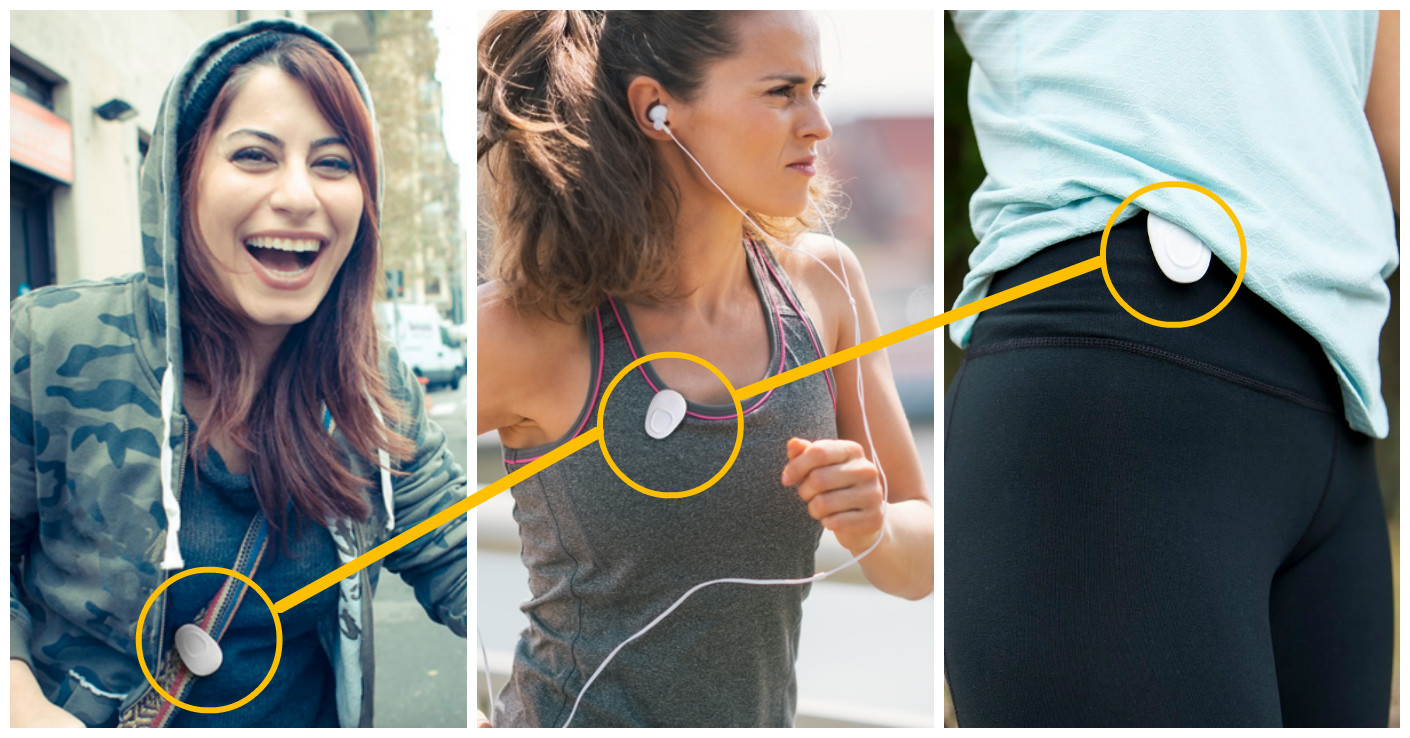
The process of combating the sexual assaults is very complex. Because of stigma, many of such incidents are not reported at all. Even when such crimes are reported, the lack of evidence of the crime often becomes a great hurdle. Most of the time, survivors are sucked into a vicious cycle of denial, doubt, and blame. Slowly but surely, technology has come a long way to find out the solution to this problem. Wearsafe Tag, which women in the pictures are wearing, puts a special focus on college students and prevention of sexual assaults on college campuses.
Weasafe tags are a bit larger than a quarter and can be attached to any piece of clothing or jewelry. This tag facilitates the user to instantly alert friends and family members regarding troubling situations just with a quick press of a button. It doesn’t need an emergency phone call which is often not possible in real emergency. This Bluetooth enabled Tag, rather sends an alert via email and text. Wearsafe app has to be set up with emergency contact details beforehand so that it can send alert to the predetermined group. It also initiates a group chat and the emergency group will be able to see the location of the Tag User through GPS information. The most important thing here is the audio data which is initiated when Tag wearer presses the button initially. This enable the emergency contact group to hear audio data directly. This voice data can even be accessed upto 60 seconds even without activating the device.
This enables the tag users to provide audio evidence of the ongoing events along with the context data of the situation. This becomes a good decision point for the emergency contact group to send the help, if necessary. The best point is that, for all these, having direct access to the phone is not needed. The tag works even if it is placed upto a distance of 200 feet away from the phone.
Rich Staropoli who is a former U.S. Secret Service special agent, termed this tag as a “game changer”.
“As a father whose daughter is going to college in the fall I feel so strongly that this product should be on every college campus in America,” Staropoli mentioned. “With the knowledge that students could be wearing a Wearsafe-connected device, a college or university creates a significant deterring effect.”
As a technology lover you may like our daily important technology news series. It’s a playlist and you can retrieve the total day-wise videos. Please consider subscribing our YouTube channel:
The iPhone 8 video leak was uploaded by tipster Benjamin Geskin who is also responsible for several render and live image leaks in the past. Two other leaks have hit the Internet at the same time, and one contradicts the video leak.
The video shows the iPhone 8 being held in a hand rotated front and back. The smartphone is seen sporting a glass back, a vertical dual camera setup, and a metal frame. The power button is a bit longer than before, and the frame also seems a bit wider and thicker than the current generation iPhone models. At the front, there is no Home Button seen, and the entire real estate appears to be occupied by the display.
More clarity would have been gained if the display was turned on, but sadly that was not the case.
As Apple has reportedly run into various hiccups regarding yield of various components, and the complete lack of iPhone or Apple logo, there is no certainty that this unit in the video would make the final cut.
Since no fingerprint sensor was visible, it can be presumed that if this leak is correct, Apple has indeed used the much rumoured display embedded Touch ID sensor. More renders have also appeared on Weibo showing the iPhone 8 in a different design format than Geskin’s. While the vertical dual camera setup remains, the display is not edge-to-edge, and the fingerprint scanner is seen at the back, refuting rumours of an embedded Touch ID. The leak shows the iPhone 8 in Pink, Rose Gold, and Black colour variants. Notably, Geskin tweeted saying that this leak is false, and the iPhone 8 won’t look like that. We hope he is right!
Now, another image shared by MobileExpose also shows the iPhone 8 in four colours – Silver, White, Black, and Gold. Only the back of the device is exposed here, and there’s no fingerprint sensor seen at the back, reducing the credibility of the Weibo image leak.
Interestingly, a report by The Bell, shared by The Investor, also indicates that there will be two new size variants introduced for the iPhone 9 – 5.28-inches and 6.46-inches. Geskin also reiterates in a tweet that the iPhone 8 will sport 3D face scanning, be powered by the 10nm process A11 Chip, run on iOS 11, and sport AR features.
Samsung will reportedly ship 180 million units of OLED panels next year. As for 2017, Apple is expected to introduce 4.7-inch iPhone 7s, 5.5-inch iPhone 7s Plus, and 5.8-inch iPhone 8. All the three devices are tipped to sport wireless charging, but OLED panels will only be used on the anniversary edition iPhone 8.
As a technology lover you may like our daily important technology news series. It’s a playlist and you can retrieve the total day-wise videos. Please consider subscribing our YouTube channel:
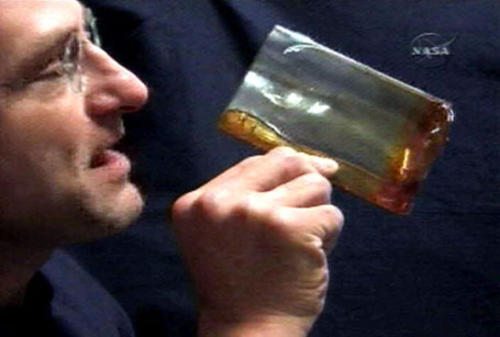
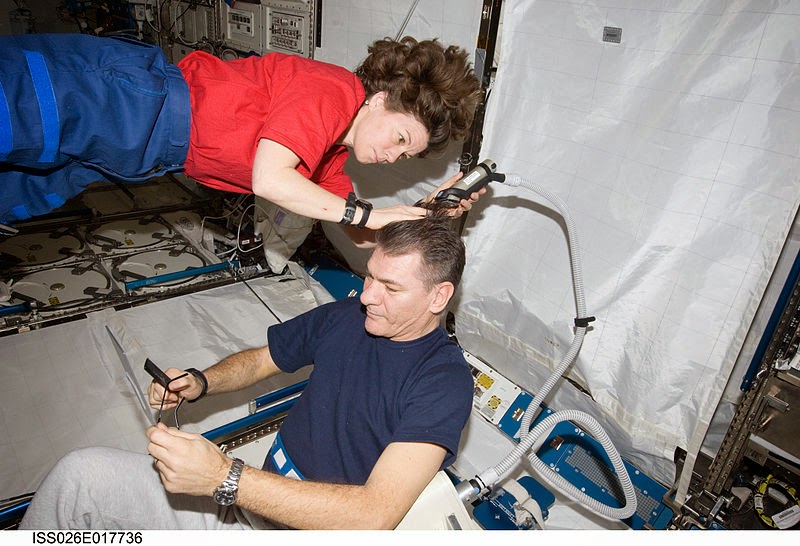
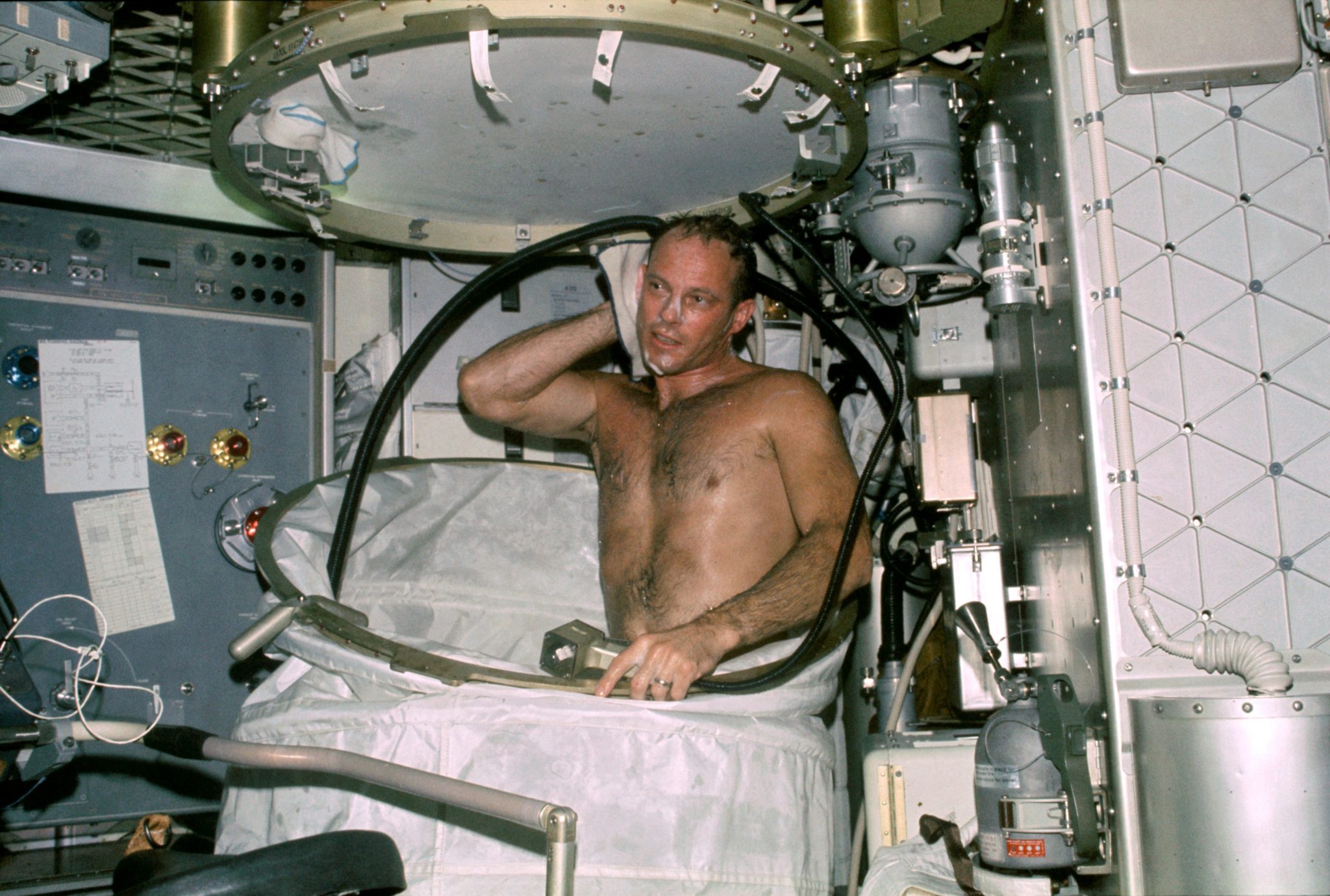
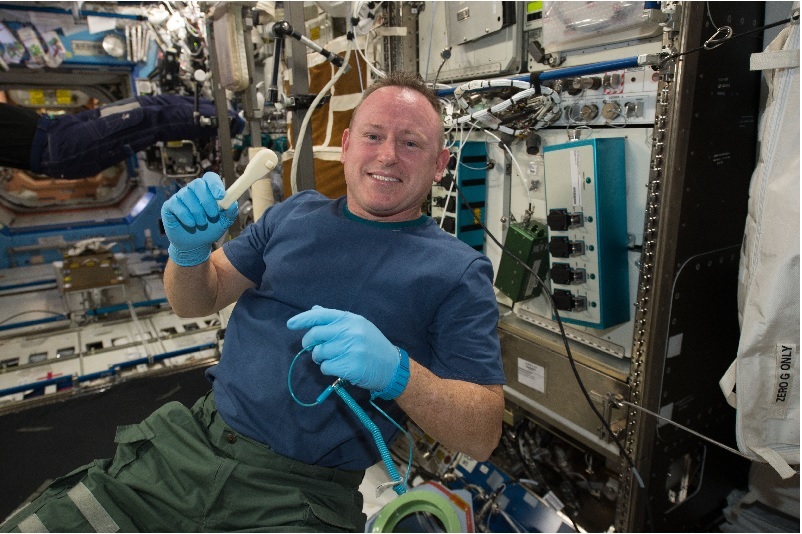
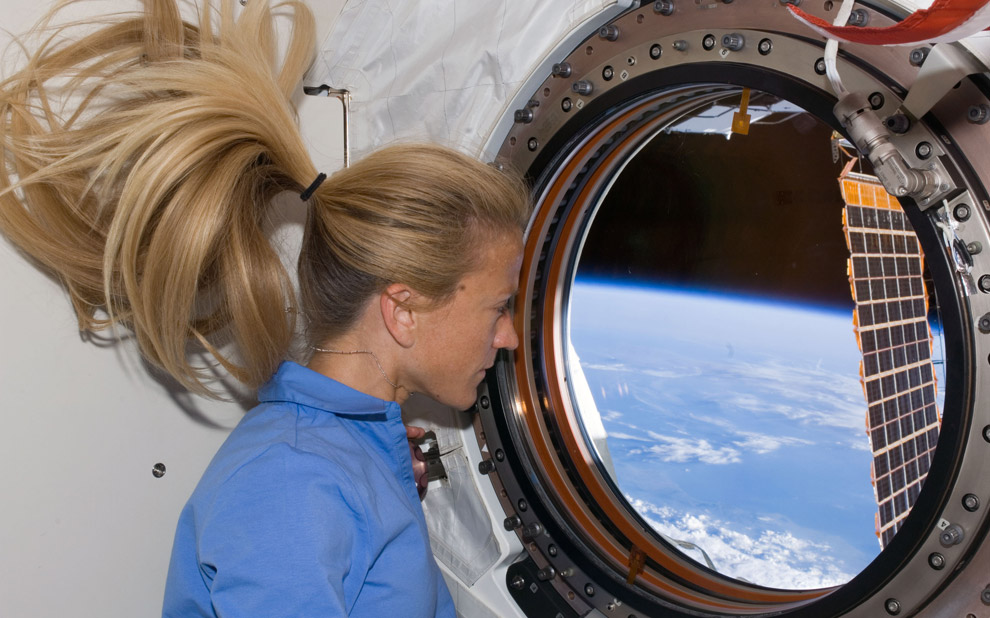
Have you ever wondered what if somebody has to start living in space where there is no gravity? Many of the mundane tools and tackles and also the process of accomplishing the common day to day tasks don’t work there because of lack of gravity. Here are a series of photos as they explain the daily routines of the astronauts.
Bedroom/ Sleeping space:
Sipping a cup of coffee in the morning with zero gravity cup:
As a technology lover you may like our daily important technology news series. It’s a playlist and you can retrieve the total day-wise videos. Please consider subscribing our YouTube channel:
Even if you are not computer savvy, you must have all used computers at least once in our life time or have seen people using laptops at office or coffee shops. The tiny parts that are assembled in that small case, that makes a truly portable computer, may fascinate you. However, you need to charge the laptop using the charging cable that came with it, to keep in alive.
In 1971, personal computers came into existence that people could afford to buy. Once PCs became popular, the thought of building portable computers struck people. The first well-known and most usually used modern laptop was IBM N40 laptop in 1994. With the arrival of Microsoft’s Windows operating system, laptops became a craze and since then, people have used laptop.
You must have seen small cylinder at the end of the charging cable, and yet, you would have not thought of it as something serious. However, it plays a major role in keeping your laptop working.
Your laptop is made up of several moving parts like hard disk drive and CD drive that generates vibrations as they move and complete their work. The laptop comes with a battery that needs to be charged so that you can use it during power failure or when there is no power supply. The charging cable has a cylinder called ferrite bead near the end of it and it is one of the most fascinating part of the computer.
The moving part of the laptop vibrates and produces radio frequencies. These radio frequencies can obstruct with things like Wi-Fi router of your home, the dish connection and other things. Though the laptop case reduces those vibrations and prevent them from causing any interference, but the charging cord, being unprotected, may help in spreading those vibrations.
The charging cable acts as antennae and airs the vibration as radio frequencies picks up other frequencies and cause interference both in nearby equipment and in laptop.
Your Wi-Fi acts violently if these signals compete at the same frequency at which your Wi-Fi works. This is where, the cylinder plays a role on the charging cable. The cylinder has Ferrite, which is an alloy of Iron oxide or rust.
This ferrite bead kills signals that the charging cable airs or catches. It is a simple and cheap way of keeping your laptop from interfering with other electronic devices in your home.
As a technology lover you may like our daily important technology news series. It’s a playlist and you can retrieve the total day-wise videos. Please consider subscribing our YouTube channel:
Indian Space Research Organisation (Isro) has created an electric propulsion system that increases the efficiency of satellites greatly. Known as electric propulsion (EP) system, this technology converts solar energy into electrical energy which, in turn, is used to change the velocity of a satellite in space. It reduces the use of chemical propellant in a launch vehicle.
Currently, a 2,000-kg Insat/Gsat-class communication satellite carries 800-1,000kg of chemical propellant. However, the new electric propulsion system reduces the usage of chemical propellant to just 100-200kg as the former serves as the back-up power for correcting the orbit of the spacecraft.
EP system was first used as a technology demonstrator in Gsat-9 or the South Asia Satellite launched on May 5, which was PM Narendra Modi’s brainchild. “The EP system basically converts solar energy into electrical energy and then kinetic energy by generating thrust that propels a satellite. The system just needs a solar panel and components for charging ions.” said a top source in Isro.
“With the new system, we can reduce the quantity of chemical propellant carried on a satellite and thus carry a heavier payload to space,” said Dr K Sivan, director of Thiruvananthapuram-based Vikram Sarabhai Space Centre.
This chemical fuel is required for transferring the communication satellite from the geosynchronous transfer orbit (where it is placed by a rocket) to the geostationary orbit (36,000km away from the earth). It also helps in orbit correction and maintaining a satellite on its path for its life duration of 10-12 years.
“The EP system basically converts solar energy into electrical energy and then kinetic energy by generating thrust that propels a satellite. The system just needs a solar panel and components for charging ions,” he said.
After the June 5 launch of its ‘Baahubali’ GSLV Mk III rocket, Isro has acquired the capability to launch a satellite of up to 4 tonnes into the geo orbit.
As a technology lover you may like our daily important technology news series. It’s a playlist and you can retrieve the total day-wise videos. Please consider subscribing our YouTube channel:
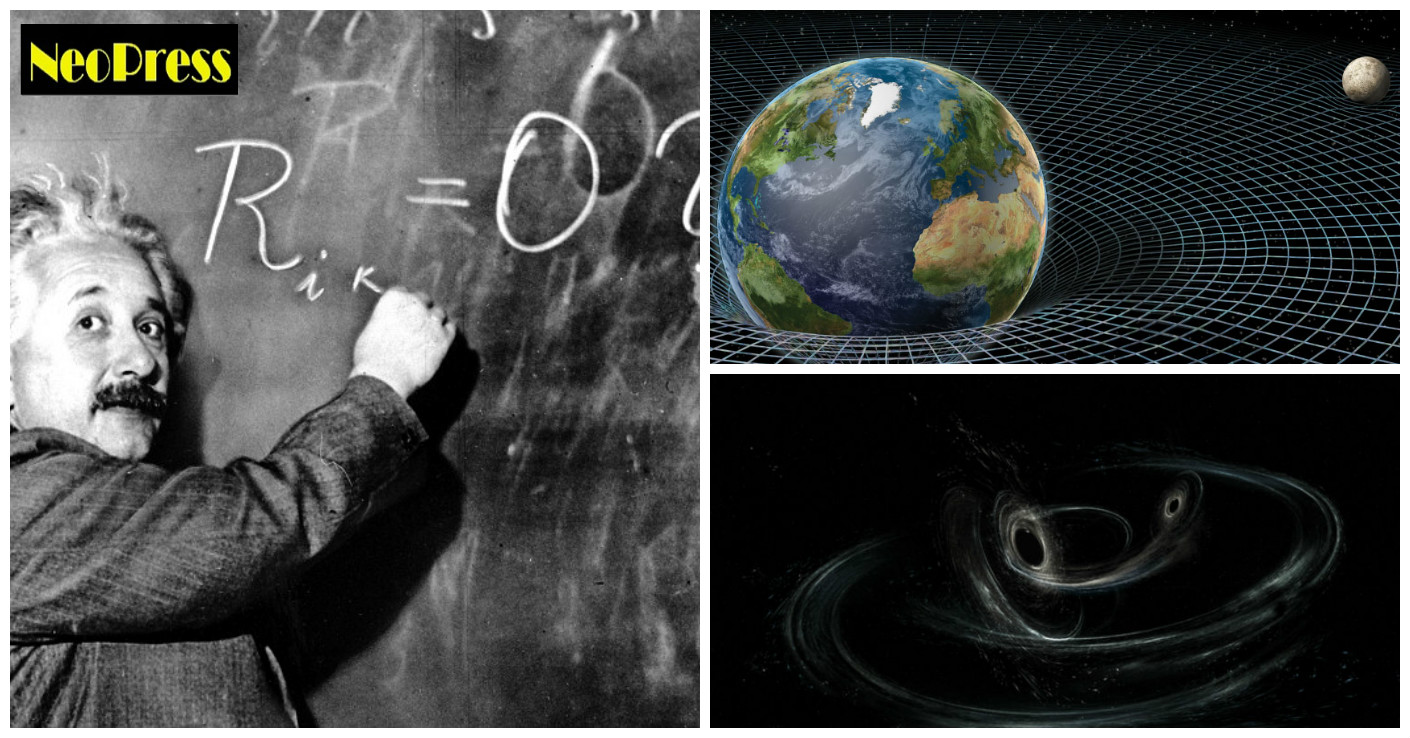
Einstein’s theory of general relativity relies on the four fundamental forces found in the universe. Or so we thought.
Gravity, electromagnetic and strong and weak nuclear forces— is what our understanding of the universe revolves around. Einstein reportedly suggested that these forces stop planets, molecules and atoms from tearing apart while also serving as building blocks for the physical rules of cosmos. Researchers, however have discovered a fifth force of nature that may pretty much overthrow everything we know about how the universe works, reported Daily Mail.
“Einstein’s theory describes (gravity) beautifully well, but there’s a lot of evidence showing the theory has holes,” said team member Professor Andrea Ghez, director of the University of California, Los Angeles, Galactic Centre Group. “The mere existence of supermassive black holes tells us that our current theories of how the universe works are inadequate to explain what a black hole is,” she added.
The team made use of detailed images of the centre of the Milky Way captured by the Keck Observatory in Hawaii.
“By watching the stars move over 20 years using very precise measurements taken from Keck Observatory data, you can see and put constraints on how gravity works.”
Her research goes on to suggest that the gravity existing right in the middle of the supermassive black hole is so strong, that it indicates the presence of a fifth force.
“If gravitation is driven by something other than Einstein’s theory of General Relativity, you’ll see small variations in the orbital paths of the stars.”
As a technology lover you may like our daily important technology news series. It’s a playlist and you can retrieve the total day-wise videos. Please consider subscribing our YouTube channel:
Even the smallest amount of antigen in donated blood can set off a dangerous immune response in the recipient. And that is why the right blood type is very important (and can be difficult) to find for transfusion. Now scientists have discovered that a particular type of enzyme can cut away antigens in blood types A and B, to make them more like Type O – considered the ‘universal’ blood type, because it’s the only type that can be donated to anyone without the risk of provoking a life-threatening immune response.
The team, from the University of British Columbia of Canada, worked with a family of enzymes called 98 glycoside hydrolase, extracted from a strain of Streptococcus pneumoniae. “A major limitation has always been the efficiency of the enzymes,” one of the team, Stephen Withers, said in a press release. “Impractically large amounts of enzyme were needed.”
Over many generations, they were able to engineer a super high-powered enzyme strain that can very effectively snip away blood antigens where previous generations of the enzyme struggled. Now we have an enzyme that’s 170 times more effective than its parent strain.
Getting the right type of blood when you need it is crucial, and it has to do with the different types of residue that can accumulate the surface of red blood cells. Both blood types A and B have this residue – A has an N-acetylgalactosamine residue, and B has a galactose residue – and Type AB has a mixture of both. Only Blood Type O is free from this residue, which means it can be received by any patient, no matter what type they’re carrying.
Withers and his team managed to create their ‘mutant’ enzyme strain using a technology called directed evolution, which allows them to insert many different types of mutations into the gene that codes for it. They progressively selected strains that are the best at snipping away the blood antigens.
While the current enzyme strain is not yet capable of removing 100 percent of the antigens from Blood Types A and B, which is where it needs to get if the researchers want to make any real use of it, the team is confident that they’ll get it there so they can try it out in clinical trials.
“The concept is not new, but until now we needed so much of the enzyme to make it work that it was impractical,” said Withers. “Now I’m confident that we can take this a whole lot further.”
As a technology lover you may like our daily important technology news series. It’s a playlist and you can retrieve the total day-wise videos. Please consider subscribing our YouTube channel:
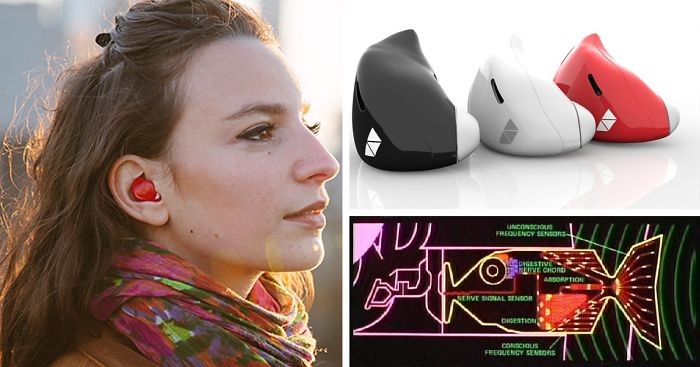
This near magic earpiece can translate just about any language into another one and vice versa, enabling any two people speaking different languages to understand each other. It’s the result of two years of R&D from Waverly Labs, a New York-based technology firm.
The earpiece is called Pilot and works together with the second earpiece through an app on your smartphone. The starting price is said to be $299 for the set, though it is subject to change. They are current accepting pre-orders on their website.
The current model seems to suffer a slight delay before it relay back your partner’s words in a language a chose. Integrating this type of technology into smartphones and devices like earbuds is a huge step forward in bridging countries.
As a technology lover you may like our daily important technology news series. It’s a playlist and you can retrieve the total day-wise videos. Please consider subscribing our YouTube channel:
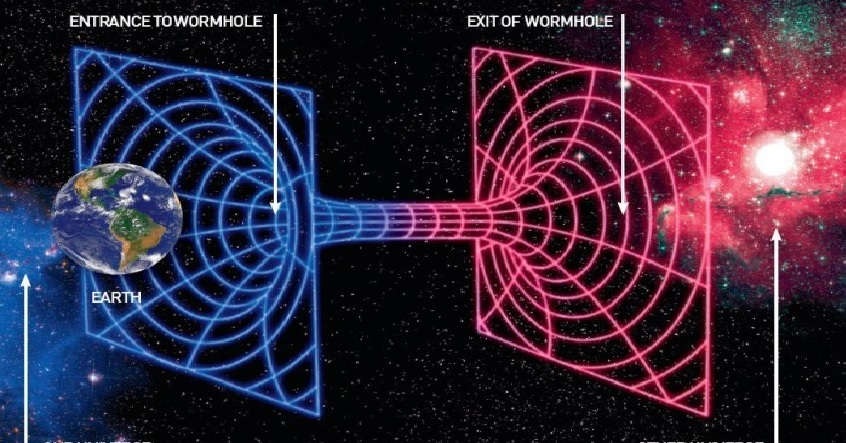
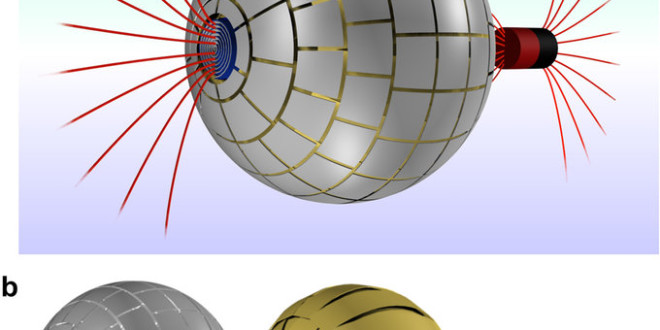
Wormholes have been an evergreen topic of interest among sci-fi fans. The discoveries of wrinkles in the fabric of space and time, that can warp the two dimension to transport a body instantaneously to an alternate universe. Well, don’t get too excited; it’s all still very theoretical. What has actually been made by scientists, is a wormhole for magnets, which transports magnetic fields through space. The transaction of the magnet will occur without being visible from the outside.
“From a magnetic point of view, this device acts like a wormhole, as if the magnetic field was transferred through an extra special dimension,” lead study author Jordi Prat-Camps of the Autonomous University of Barcelona in Spain told Live Science.
The wormhole device contains an interior spiral of ferromagnetic metal, surrounded by two concentric spheres. The ferromagnet takes care of the magnetic field lines from one end to the other. A shell of yttrium barium copper oxide (a superconducting material, yellow) bends and distorts the magnetic field lines as they travel.
The outer shell composed of “mu-metals” (used for shielding electronic devices, silver) perfectly cancels out the magnetic distortion of the superconductor, rendering the entire thing “magnetically invisible” from the outside. This creation is necessary as it could greatly improve the MRI scans we currently use. A strong magnet could take someone’s picture from very far away.
As a technology lover you may like our daily important technology news series. It’s a playlist and you can retrieve the total day-wise videos. Please consider subscribing our YouTube channel: