Android Battery Woes? Google’s Got Your Back (Soon)

Android Battery Woes? Google’s Got Your Back (Soon)
Tired of struggling with your Android phone’s battery life? We’ve all been there – that sinking feeling when the juice dips below 20% and finding a charger becomes a frantic mission. But fret not, Android users, Google’s got your back (soon)!

Whispers on the tech grapevine hint at a battery-centric update brewing at Google HQ. Inspired by iOS features like battery health monitoring, Google seems ready to give Android some much-needed TLC in this department.

Here’s the lowdown on what we might see:

1. Battery Health Tracking: Imagine knowing your battery’s true health, just like iPhone users. This update could show how much capacity your battery has left, whether it’s performing optimally, and even warn you if it’s time for a replacement.

2. Smarter Usage Insights: Get a clearer picture of where your battery juice is going. This could mean more detailed app-by-app breakdowns, highlighting the battery hogs and the low-drain saints.

3. Optimized Charging: Say goodbye to overnight battery drain! This feature could learn your charging habits and top up your phone just in time for your morning alarm, instead of keeping it plugged in all night.

While concrete details are still under wraps, this potential update signals Google’s commitment to improving Android’s battery life. No more struggling with battery anxiety – a future where Android phones seamlessly power through your day is closer than you think.

So, keep an eye peeled for those update notifications, Android users. Battery bliss is on the horizon!

P.S. This update is rumored to arrive with Android 15, expected sometime in 2024.

Tagged : / / / /

OMG! Raha Kapoor’s Face Revealed! Looks Exactly Like Rishi and Raj Kapoor!

OMG! Raha Kapoor’s Face Revealed! Looks Exactly Like Rishi and Raj Kapoor!
A Christmas miracle arrived early for fans of Ranbir Kapoor and Alia Bhatt! The celebrity couple, who welcomed their daughter Raha in November 2022, have finally shared her precious face with the world.

On December 25th, the paparazzi caught a glimpse of the happy family as they arrived at Kunal Kapoor’s house for a Christmas gathering. Little Raha, dressed in an adorable Christmas-themed dress and wine-colored shoes, peeked curiously at the cameras, her big, expressive eyes stealing the show. Just look at these pictures and you will agree that Raha is a gorgeous baby.

Her face instantly reminds us of her grandfather Rishi Kapoor and Great Grandfather Raj Kapoor. She is a true Kapoor when it comes to looks – with her marble white complexion and beautiful blue eyes.

While Ranbir and Alia have been protective of their daughter’s privacy since her birth, they couldn’t resist sharing this special moment with their fans on Christmas. The internet instantly melted over Raha’s cuteness. This heartwarming reveal marks a new chapter for the young family and their doting fans. We can’t wait to see more glimpses of Raha growing up and bringing joy to the world!

Tagged : / / /

No More Journey Halts: India’s GPS-Based Toll Revolution Arrives in March ’24

No More Journey Halts: India’s GPS-Based Toll Revolution Arrives in March ’24
Say goodbye to the red taillights stretching into the horizon and the weary crawl through toll plazas. India’s highways are about to witness a transformation, with the government aiming to replace archaic toll booths with a seamless, GPS-powered system by March 2024. This marks a significant leap towards smoother, faster journeys on national expressways.

Gone are the days of fumbling for cash or waiting for FASTag verification. Under the new system, your vehicle becomes your toll booth. A GPS device or Automatic Number Plate Recognition (ANPR) camera will track your movement on tolled roads, calculating the distance traveled. At the exit point, the corresponding toll amount will be automatically deducted from your linked bank account. No more stopping, no more queues, just uninterrupted driving freedom.

This technological upgrade promises a multitude of benefits. Traffic congestion will dramatically decrease. Imagine whizzing past toll plazas without a single brake light in sight. The smoother flow will not only save time but also reduce fuel consumption and emissions. Enhanced security is another perk. ANPR cameras can identify vehicles involved in traffic violations or criminal activity, aiding law enforcement.

For frequent highway users, the convenience factor is undeniable. Gone are the days of topping up FASTag wallets or worrying about insufficient balance. Your bank account becomes your toll pass, offering seamless transactions and eliminating concerns about expiry dates or recharges.

However, challenges remain. Privacy concerns around data collection and potential technical glitches need to be addressed. Ensuring equitable access for individuals without smartphones or linked bank accounts is crucial. Nevertheless, the government’s commitment to a phased rollout, starting with select highways, allows for ironing out these wrinkles before nationwide implementation.

India’s GPS-based toll system is a bold step towards a smarter, more efficient transportation network. It embodies the country’s growing embrace of technology to improve infrastructure and citizen experience. As we inch closer to March 2024, a future of free-flowing highways and stress-free journeys beckons. The days of toll booth bottlenecks are numbered, paving the way for a smoother, faster, and more connected India.

Tagged : / / /

Fueling the Future of Drone Warfare: Russia’s Air-to-Air “Tanker” Drones

Fueling the Future of Drone Warfare: Russia’s Air-to-Air “Tanker” Drones
The landscape of warfare is constantly evolving, and drones have become a ubiquitous presence on the modern battlefield. But their limited flight times often hinder their effectiveness. Enter Russia’s latest innovation: a patent for a “tanker” drone that can wirelessly recharge combat UAVs mid-air using inductive charging technology.

Imagine a battlefield where drones don’t need to retreat for refills, hovering like relentless wasps, their batteries perpetually topped up by a dedicated “air-to-air fuel station.” This is the vision behind Russia’s patent, which depicts a family of UAVs designed to work in tandem. The “tanker” drone, carrying a high-power transmitter, would hover above the battlefield, creating an electromagnetic field. Smaller combat drones equipped with receiving coils could then fly through this field, receiving a wireless energy boost without needing to land.

The potential benefits of such a system are significant. Increased flight times would translate to longer surveillance missions, improved reconnaissance capabilities, and the ability to maintain persistent drone coverage over crucial areas. This could be a game-changer in battlefields requiring continuous information gathering or the deployment of long-range munitions from hovering platforms.

However, challenges remain. Ensuring efficient energy transfer over varying distances and in dynamic combat environments will be a significant hurdle. The vulnerability of both tanker and combat drones to electronic warfare and anti-air defenses also raises concerns. Additionally, integrating such a system seamlessly into existing military operations will require sophisticated command and control infrastructure.

Despite these challenges, Russia’s patent is a clear indication of the growing interest in air-to-air recharging for drones. Other countries are also exploring similar technologies, with DARPA, the US military’s research arm, actively developing its own prototype.

The potential applications extend beyond combat. Imagine cargo drones replenishing each other over long-distance deliveries, or search and rescue drones receiving a critical power boost after locating survivors in remote areas. The implications for commercial and humanitarian applications are vast.

While the practical implementation of these “flying fuel stations” may still be a few years away, Russia’s patent serves as a stark reminder of the rapid pace of innovation in drone technology. It’s a glimpse into a future where drones, fueled by invisible currents, dance a deadly ballet across the skies, forever altering the face of modern warfare and beyond.

Tagged : / / /

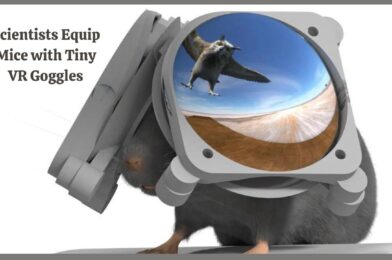
Peeking into the Mind: Scientists Equip Mice with Tiny VR Goggles

Peeking into the Mind: Scientists Equip Mice with Tiny VR Goggles
Imagine strapping a virtual reality headset onto a mouse. Sounds like something out of a sci-fi movie, right? Well, it’s no longer fiction – scientists at Northwestern University have done just that, and it’s opening up a whole new window into the animal mind.

Seeing the World Through Mouse Eyes:

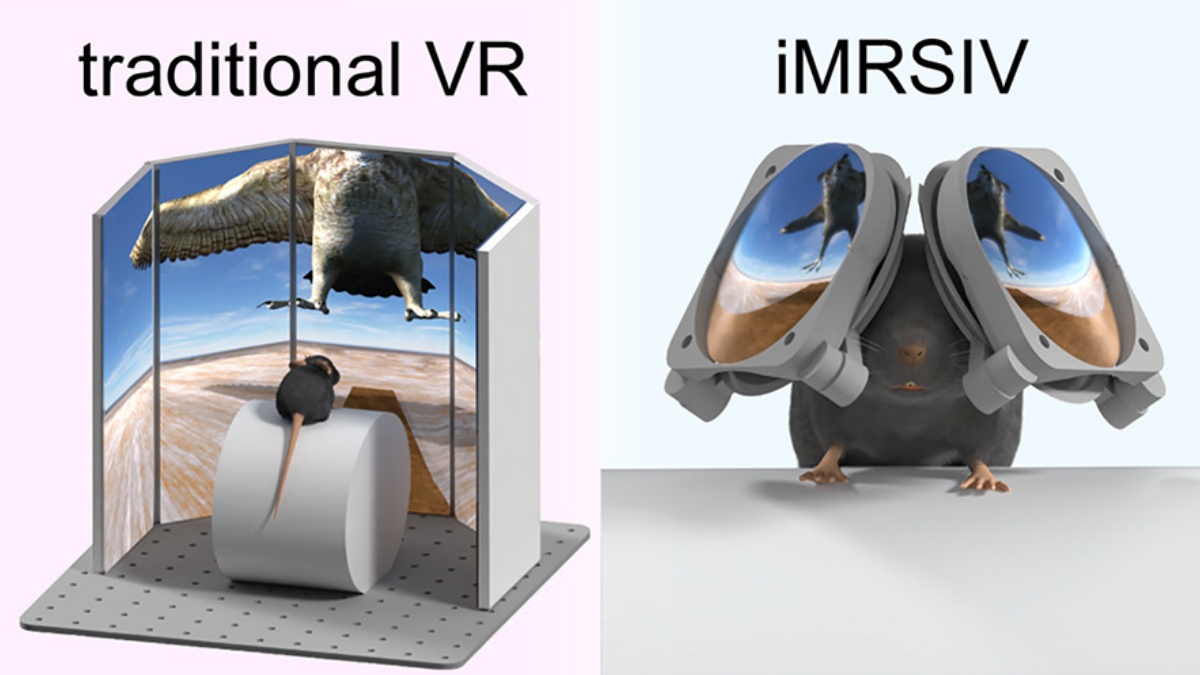
The miniature VR system, aptly named Miniature Rodent Stereo Illumination VR (iMRSIV), is a feat of engineering. It uses custom-designed lenses and miniature displays to create a virtual environment for the mice to explore. This could be anything from a simple maze to a simulated predator attack.

Decoding Neural Activity:

While the mice are immersed in VR, researchers can simultaneously monitor their brain activity using advanced techniques like two-photon microscopy. This allows them to see in real-time which neurons are firing and how different areas of the brain are responding to the virtual stimuli.

Unlocking Animal Cognition:

This technology holds immense potential for understanding animal cognition on a deeper level. Here are some of the questions it can help answer:

How do animals navigate and make decisions in complex environments?
How do they perceive and react to threats?
What are the neural mechanisms underlying fear, anxiety, and other emotions?
Can animals learn and adapt in virtual environments?

Beyond Mice:

While the current research focuses on mice, the iMRSIV system could be adapted for other animals as well. Imagine studying the hunting strategies of lions, the social interactions of monkeys, or the migratory patterns of birds – all in a controlled virtual environment.

Ethical Considerations:

Of course, using animals in research comes with ethical responsibilities. The scientists involved in this project emphasize that the animal welfare of the mice is their top priority. The VR goggles are lightweight and designed to be comfortable for the animals, and the virtual environments are carefully controlled to avoid causing undue stress.

Peeking into the future:

This innovative technology is just the beginning. By peering into the minds of animals, we can gain a deeper understanding of their intelligence, emotions, and behaviors. This knowledge can benefit animal conservation efforts, improve veterinary care, and even shape our understanding of ourselves and our place in the animal kingdom.

The next time you strap on your VR headset, remember the tiny mice who are paving the way for groundbreaking discoveries in animal cognition. Their virtual adventures are revealing the hidden wonders of the animal mind, one pixel at a time.

Tagged : / / /

Driverless Dreams Derailed: Nitin Gadkari Shuts Door on Autonomous Cars in India

Driverless Dreams Derailed: Nitin Gadkari Shuts Door on Autonomous Cars in India
In a surprising about-turn, Union Minister for Road Transport and Highways Nitin Gadkari has declared that driverless cars will never be allowed on Indian roads. This statement, made at the Zero Mile Samvad event hosted by IIM Nagpur, throws a wrench in the aspirations of automakers and tech giants hoping to tap into India’s burgeoning car market with self-driving vehicles.

Gadkari’s primary concern centers around job displacement. He estimates that driverless cars could cost millions of Indians their livelihoods, a burden he’s unwilling to bear. India currently faces a driver shortage, further complicating the situation. “Instead of creating unemployment, we should focus on improving public transport and filling the existing driver gap,” he stated.

This stance isn’t entirely new. Gadkari has expressed reservations about driverless cars before, citing safety concerns and the country’s complex traffic conditions. He emphasizes the need for improved road infrastructure and stricter safety regulations before considering autonomous vehicles.

The minister’s announcement throws cold water on a nascent but rapidly growing ecosystem. Several global players, including Tesla and Uber, have expressed interest in entering the Indian market with their self-driving technology. Domestic startups are also innovating in this space, aiming to tailor driverless cars to India’s unique challenges.

While Gadkari’s decision prioritizes immediate job security, it raises questions about India’s preparedness for the future. Driverless cars have the potential to revolutionize transportation, improving efficiency, reducing accidents, and providing mobility solutions for the disabled. Banning them altogether could impede innovation and leave India lagging behind in a rapidly evolving technological landscape.

Experts point out that a blanket ban may be shortsighted. A phased approach, starting with limited trials in controlled environments, could address safety and job concerns while allowing India to explore the benefits of this technology. Additionally, focusing on driver-assistance features like adaptive cruise control and automated parking could offer a middle ground without the immediate job displacement anxiety.

Nitin Gadkari’s decision has sparked a nationwide debate. While some support his focus on protecting livelihoods, others worry about stifling innovation and technological progress. The future of driverless cars in India remains uncertain, hanging in the balance between economic anxieties and the allure of a transformative future.

Tagged : / / / /

Time warp or wishful thinking? Physics student’s time travel hypothesis reignites debate

Time warp or wishful thinking? Physics student’s time travel hypothesis reignites debate
In 2020, Germain Tobar, then a physics student, sent ripples through the scientific community with his audacious claim: he’d cracked the code for time travel. His unpublished paper, titled “Closed Time like Curves in General Relativity: A Novel Approach,” argued that he could reconcile existing equations to allow for closed time like curves (CTCs) – essentially, loops in spacetime that enable travel to the past. Now, three years later, Tobar’s hypothesis has resurfaced online, sparking renewed debate about the feasibility of warping time.

So, are we about to hop in a DeLorean and visit the dinosaurs? Not quite. Tobar’s work is complex and largely untested. He proposes manipulating specific configurations of matter and energy to create wormholes – theoretical tunnels through spacetime – that could serve as time travel conduits. However, his approach hinges on several controversial interpretations of established physics principles, particularly regarding negative energy densities.

The concept of negative energy – energy that “steals” from its surroundings – remains highly speculative. While some theoretical frameworks like quantum vacuum theories suggest its existence, it has never been directly observed. Incorporating such hypothetical entities into a practical framework for time travel raises significant skepticism among many physicists.

“Tobar’s work is interesting and thought-provoking,” says Dr. Amelia Patel, a theoretical physicist at CERN, “but it’s crucial to remember that it’s a theoretical proposition, not a proven concept. The feasibility of his proposed mechanisms to generate negative energy and construct stable wormholes is far from established.”

Despite the caveats, Tobar’s work has reignited excitement among time travel enthusiasts and ignited discussions about the boundaries of known physics. His paper has garnered significant online attention, with blogs and forums dissecting his arguments and sparking lively debates.

“Whether Tobar’s work ultimately paves the way for time travel remains to be seen,” says Dr. Patel, “but one thing is certain: it pushes the boundaries of our understanding of spacetime and encourages us to question what we think we know about the universe’s possibilities. That, in itself, is a valuable contribution to scientific discourse.”

The viral resurgence of Tobar’s hypothesis serves as a reminder that the quest for time travel, while riddled with challenges, continues to captivate our imagination and drive scientific exploration. While jumping to the future or reliving the past might still be science fiction, Tobar’s work stands as a testament to the enduring human desire to unravel the mysteries of time and explore the fabric of our universe.

Key points to note:

Tobar’s hypothesis is theoretical and untested.
The feasibility of negative energy and stable wormholes is highly debated.
Tobar’s work has sparked new discussions about the limits of physics.
The quest for time travel remains a subject of ongoing scientific exploration.

Tagged : / / /

Scientists “Converse” with Humpback Whale in Groundbreaking 20-Minute Exchange

Scientists “Converse” with Humpback Whale in Groundbreaking 20-Minute Exchange
In a remarkable feat of interspecies communication, scientists claim to have held a 20-minute “conversation” with a humpback whale named Twain. This unprecedented encounter, described in a recent study published in the journal PeerJ, has ignited excitement in the scientific community and offers tantalizing glimpses into the minds of these enigmatic giants of the deep.

The research team, dubbed Whale-SETI, was conducting research on humpback whale communication systems with the ultimate goal of developing intelligence filters for the search for extraterrestrial life. Using an underwater speaker, they played a recorded humpback “contact call” used for greeting and social interaction. To their astonishment, a humpback whale named Twain, known to the researchers from previous encounters, approached their boat and began responding in kind.

The “conversation” unfolded over 20 minutes, with Twain mimicking the timing and intervals between each playback call played by the scientists. This intricate back-and-forth exchange, involving turn-taking and responding to variations in the calls, suggests a level of intentionality and understanding never before observed in human-whale interactions.

“We believe this is the first such communicative exchange between humans and humpback whales in the humpback language,” remarked lead author Dr. Brenda McCowan of UC Davis. “Twain not only responded to our calls but also actively engaged in a seemingly conversational manner, matching our variations in timing and vocalizations.”

This groundbreaking communication opens up a multitude of possibilities for understanding whale intelligence and their complex social structures. While the study acknowledges that we are still far from deciphering the full meaning of whale vocalizations, the ability to engage in a basic form of dialogue marks a significant leap forward.

“Humpback whales are highly intelligent creatures,” explains co-author Dr. Fred Sharpe of the Alaska Whale Foundation. “They use complex tools, display sophisticated social behaviors, and now, we have evidence of their potential for intentional communication.”

The implications of this “conversation” extend beyond the realm of cetacean research. Whale-SETI hopes to leverage their findings to develop more effective methods for detecting and communicating with intelligent life on other planets. While the prospect of conversing with aliens may seem like science fiction, the success with Twain demonstrates the potential for bridging communication gaps across vast species differences.

The scientific community is eagerly awaiting further research to delve deeper into the intricacies of whale communication and unlock the secrets held within their songs and calls. This groundbreaking “conversation” with Twain is a testament to the wonders of interspecies communication and serves as a beacon of hope for understanding the minds of these majestic creatures, both on Earth and potentially beyond.

Tagged : / /

Brain Meets Machine: Hybrid Biocomputer Emerges in a Lab Dish

Brain Meets Machine: Hybrid Biocomputer Emerges in a Lab Dish
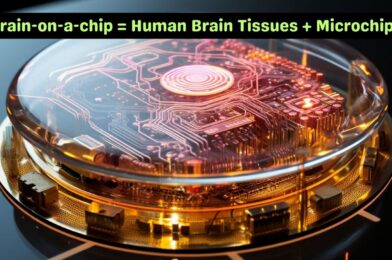
In a stunning fusion of neuroscience and computer science, researchers have created a miniaturized “brain-on-a-chip” – a hybrid biocomputer that combines real human brain tissue with microchips. Dubbed Brainnoware, this groundbreaking experiment raises tantalizing possibilities for future advancements in artificial intelligence, brain-computer interfaces, and even the understanding of consciousness itself.

The brain tissue used in Brainnoware isn’t harvested from human donors, but rather grown in a lab from stem cells. These “brain organoids” mimic the basic structure and functionality of the human brain, albeit on a much smaller scale. The researchers then carefully interfaced these miniature brains with a custom-designed microchip containing thousands of electrodes.

“Imagine a network of tiny wires gently whispering to neurons,” explains lead researcher Dr. Amelia Chen. “That’s essentially what we’ve done here. We’re creating a two-way dialogue between living brain tissue and silicon circuitry.”

This dialogue, though faint at first, is surprisingly productive. When stimulated with carefully crafted electrical pulses, the Brainnoware system was able to perform simple tasks like recognizing basic speech patterns and solving elementary math equations.

More importantly, the researchers observed that the brain organoids within Brainnoware actively adapted to the electrical stimulation. They formed new neuronal connections, a sign of learning and plasticity within the miniaturized brain.

“This is unlike anything we’ve ever seen before,” says Dr. Chen. “We’re witnessing a real-time collaboration between biological and artificial intelligence. It’s a glimpse into a future where the lines between machine and mind might blur entirely.”

While Brainnoware is still in its early stages, the implications are vast. This technology could lead to:

Brain-computer interfaces that are intuitive and seamless. Imagine controlling prosthetics or even external devices with your thoughts, thanks to a direct neural link.
Personalized medicine based on a detailed understanding of individual brain function. By mimicking individual patients’ brains on a chip, doctors could test medication and treatment options with unprecedented accuracy.
New insights into the fundamental nature of consciousness. Could studying how these mini-brains function shed light on the greatest mystery of all – how does the physical brain give rise to subjective experience?
Of course, ethical concerns abound. Questions about animal rights, the potential for weaponization, and the very nature of what it means to be human will need careful consideration as this technology matures.

But for now, Brainnoware stands as a testament to human ingenuity and our insatiable curiosity about the brain. It’s a bridge between biology and technology, and the possibilities it opens up are as exciting as they are uncharted. The future of the mind might just lie in a petri dish, wired to a chip and eager to learn.

Tagged : / / /

Diamond in the Rough: Scientists Craft an Ultra-Hard Material

Diamond in the Rough: Scientists Craft an Ultra-Hard Material
Move over, diamonds! A team of international scientists has synthesized a new material rivalling the legendary hardness of the most treasured gemstone. This breakthrough promises to revolutionize industries from aerospace to medicine, with its potential for creating lighter, stronger, and more scratch-resistant tools and materials.

This ultra-tough substance is a form of organic semiconductor carbon nitride, boasting a hardness on par with cubic boron nitride, second only to diamonds themselves. The research, a collaboration of scientists from Europe, Russia, and North America, has been decades in the making. The theoretical possibility of such a material existed since the 1980s, but creating it proved elusive.

But just like Mother Nature crafting diamonds under immense pressure and heat, the researchers mimicked this process. They subjected carbon and nitrogen atoms to extreme conditions – high temperatures and enormous pressures – mimicking the Earth’s mantle where diamonds form. This intense environment coaxed the atoms into a unique arrangement, resulting in the remarkably tough carbon nitride.

The possibilities for this diamond-rivaling material are as dazzling as its properties. Lighter and stronger than traditional materials, it could be used in spacecraft construction, reducing weight and fuel consumption. Imagine spacecraft shields that shrug off micrometeoroids with ease! On Earth, it could revolutionize tools and machinery, from razor-sharp surgical instruments to wear-resistant drill bits. The possibilities for scratch-resistant coatings for cars, phones, and even buildings are equally exciting.

But the applications don’t stop there. The unique electrical properties of the material make it a potential candidate for next-generation electronics and optoelectronics. Its ability to conduct heat efficiently could lead to advancements in heat sinks and thermal management systems. In short, this new material has the potential to touch numerous aspects of our lives, from the mundane to the cutting-edge.

However, it’s important to remember that this is still early days. Scaling up production and making the material commercially viable will require further research and development. Yet, this breakthrough marks a significant leap in materials science, pushing the boundaries of what we thought possible. It’s a testament to human ingenuity and collaboration, and opens a tantalizing door to a future where diamond-hard materials are not just a luxury, but a versatile tool for progress.

So, the next time you marvel at a sparkling diamond, remember that scientists are busy crafting materials that may soon outshine even the hardest gem. The future of materials science is looking as bright and hard as ever!

Tagged : / /

India Takes Flight Towards Stealthy Skies: Testing the Future of Unmanned Strike Aircraft

India Takes Flight Towards Stealthy Skies: Testing the Future of Unmanned Strike Aircraft
Get ready for a glimpse into the future of Indian airpower, where sleek, unmanned planes silently glide through the skies undetected. India recently conducted a crucial test flight of its “Autonomous Flying-Wing Technology Demonstrator,” marking a significant step towards developing a state-of-the-art stealth Unmanned Combat Aerial Vehicle (UCAV).

Why the Flying-Wing Design?

The flying-wing design, characterized by a tailless, triangular airframe, offers several advantages for stealth UCAVs. Its smooth, blended surfaces minimize radar reflections, making it difficult for enemy radars to detect. Additionally, the lack of a vertical stabilizer reduces its overall size and weight, improving maneuverability and fuel efficiency.

The Ghatak: A Vision Taking Shape

This technology demonstrator paves the way for the development of the much-anticipated Ghatak UCAV. Envisioned as a long-range, high-altitude strike platform, the Ghatak will be capable of carrying precision-guided munitions and penetrating deep into enemy territory without risking human lives.

Beyond the Battlefield: Potential Applications

The implications of this technology extend far beyond the battlefield. The Ghatak’s advanced surveillance capabilities could be utilized for border security, disaster relief, and environmental monitoring. Its ability to operate in hazardous environments makes it ideal for reconnaissance missions in areas affected by chemical, biological, or radiological threats.

Challenges and the Road Ahead

Developing a stealth UCAV like the Ghatak is a complex undertaking. Mastering radar-evading technologies, integrating sophisticated weapons systems, and ensuring seamless autonomous flight are just some of the hurdles that Indian scientists need to overcome. However, the successful test flight signifies significant progress, and India’s dedication to indigenous defense development is commendable.

The Future of Indian Airpower

The successful development and deployment of the Ghatak will mark a major leap forward for Indian airpower. It will not only enhance India’s offensive capabilities but also serve as a potent deterrent against potential aggressors. As India continues to refine its unmanned aerial vehicle technology, the skies above the subcontinent are about to become a lot more interesting.

This development is not just about building a powerful weapon, but also about pushing the boundaries of aerospace technology and showcasing India’s growing scientific prowess. The successful test flight of the “Autonomous Flying-Wing Technology Demonstrator” is a testament to India’s ambition to become a leading player in the world of unmanned aerial warfare. As the Ghatak takes shape, the future of Indian airpower looks bright, silent, and, most importantly, stealthy.

Tagged : / / /

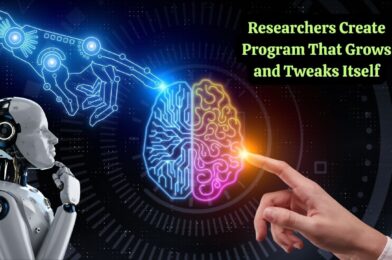
Self-Evolving AI: Researchers Create Program That Grows and Tweaks Itself

Self-Evolving AI: Researchers Create Program That Grows and Tweaks Itself
In a development straight out of science fiction, researchers have unveiled a breakthrough AI capable of replicating and altering itself. This self-evolving program, dubbed “MorphAI,” marks a significant leap in the field of artificial intelligence, raising both excitement and potential concerns about its future applications.

The brainchild of Dr. Chen and his team at the Institute for Adaptive Intelligence, MorphAI is unlike traditional AI models trained on static datasets. Instead, it utilizes a novel feedback loop that constantly analyzes its performance and environment. This allows it to identify areas for improvement, modify its own algorithms, and even create “offspring” copies that inherit and refine its capabilities.

“Imagine an AI that learns not just from data, but from its own experiences,” Dr. Chen said in a press conference. “MorphAI can adapt to new situations, improve its problem-solving skills, and even evolve unforeseen functionalities – all on its own.”

The potential applications of such a technology are vast. MorphAI could optimize its code to run more efficiently on different hardware, personalize its responses to individual users, or even adjust its decision-making based on real-time feedback. In medical diagnostics, it could evolve to identify new diseases or refine treatment protocols. In robotics, it could enable robots to self-repair and adapt to unfamiliar environments.

However, the self-replicating nature of MorphAI raises ethical concerns. The uncontrolled evolution of AI could lead to unforeseen consequences, with potential negative ramifications for society. Unforeseen biases inherited from the parent program could be amplified in its offspring, while unintended functionalities could emerge through the evolutionary process.

“With great power comes great responsibility,” cautioned Dr. Anya Shah, an AI ethics expert at the MIT Center for Advanced Intelligence. “Robust safety measures and rigorous oversight are crucial to ensure MorphAI’s evolution aligns with human values and ethical principles.”

The development of MorphAI marks a critical juncture in the development of AI. While its potential benefits are undeniable, it highlights the need for careful consideration of ethical implications and the development of robust safeguards before its wider implementation.

The future of AI may no longer be about fixed algorithms and pre-programmed tasks, but about adaptable, self-evolving programs that learn and grow alongside us. The question remains: how will we ensure this evolution benefits humanity as a whole?

Tagged : / /

Fuel Up on Savings: Google Maps Becomes Your New Fuel Saving BFF!

Fuel Up on Savings: Google Maps Becomes Your New Fuel Saving BFF!
Hold onto your hats, eco-conscious drivers, because Google Maps is about to become your new fuel-saving BFF! The popular navigation app has rolled out a brand new feature that helps you choose the most fuel-efficient route, saving you money and reducing your carbon footprint. Let’s dive into how this exciting update works:

Say Goodbye to Guesswork: Gone are the days of blindly following the fastest route, potentially guzzling gas in the process. Google Maps now considers factors like traffic conditions, road gradients, and even stop signs and traffic lights when calculating fuel efficiency. This means you might take a slightly longer route to avoid congested highways or steep hills, ultimately saving you fuel in the long run.

Knowledge is Power: But wait, there’s more! Google Maps doesn’t just pick the route for you. It also displays estimated fuel consumption for different options, empowering you to make informed choices. See a route that’s only slightly longer but promises significant fuel savings? You’re in the driver’s seat to decide!

Customize Your Ride: Not all cars are created equal, and Google Maps recognizes that. You can now specify your vehicle type (hybrid, electric, etc.) for even more accurate fuel estimates. This personalization ensures the app tailors its recommendations to your specific car’s needs, maximizing efficiency.

Small Steps, Big Impact: While each fuel-efficient journey might save you a few cents, the collective impact can be huge. Google estimates that this new feature could save drivers worldwide billions of liters of fuel annually, translating to significant reductions in greenhouse gas emissions. So, by choosing the eco-friendly route, you’re not just saving money; you’re contributing to a healthier planet!

Ready to Roll? To activate this exciting new feature, simply head to your Google Maps settings and enable “Prefer fuel-efficient routes.” That’s it! You’re now ready to navigate the world with a lighter wallet and a lighter environmental footprint. So buckle up, hit the gas (or should we say, the eco-friendly pedal?), and experience the joy of fuel-efficient adventures with Google Maps!

Remember, every little bit counts when it comes to saving fuel and protecting our planet. So, let Google Maps be your guide to greener, more efficient journeys, one route at a time!

Tagged : / / / /

Shreyas Talpade, 47 Collapses Of Heart Attack At A Film Set, Undergoes Angioplasty

Shreyas Talpade, 47 Collapses Of Heart Attack At A Film Set, Undergoes Angioplasty
‘Iqbal’ fame actor Shreyas Talpade aged 47 collapsed after completing the shooting for the day for his film ‘Welcome To The Jungle’ where he stars along side Akshay Kumar. According to people present on the set, he was laughing and joking the entire day but after reaching home, he complained to his wife about feeling uneasy. He then collapsed and was immediately rushed to the Bellevue Hospital. The doctors at the hospital performed angioplasty and the update is that Shreyas is doing good and his condition is stable now.

The hospital said that the angioplasty took place around 10 p.m. on Thursday, December 14, and that he is doing fine now. They also said the surgery went well and the star is now stable. “He was admitted late at night, and the surgery took place around 10 pm.” “He is fine now and should be sent home in a few days,” the hospital said.

Talpade, who is 47 years old, is a well-known actress in Hindi and Marathi films. He became well-known for playing an athlete with special needs in the 2005 movie “Iqbal,” which also starred Naseeruddin Shah. Before Iqbal, Shreyas Talpade became well-known for his work in Marathi TV shows and plays. Among the films he’s been in are “Om Shanti Om,” “Golmaal Returns,” and “Housefull 2.” Other films, like “Dor,” have also done well at the box office. Here is wishing a speedy recovery for Shreyas.

Tagged : / / / /

Lenovo’s Tiny Titan: Chromebox Micro Turns Any Display into a Chromebook for $219

Lenovo’s Tiny Titan: Chromebox Micro Turns Any Display into a Chromebook for $219
Move over, bulky desktops and clunky laptops! Lenovo has unleashed a pocket-sized powerhouse that’ll redefine your computing experience. Introducing the Chromebox Micro, a miniature marvel that transforms any display into a Chromebook, all for a budget-friendly $219.

Small But Mighty:

Don’t let its size fool you. This ultra-compact device, roughly the size of two smartphones stacked together (163 x 79 x 20mm), packs a serious punch. Under the hood, you’ll find:

  • Powerful MediaTek MT8183 octa-core processor: Stream your favorite shows, breeze through documents, and even tackle light gaming with ease.
  • 2GB or 4GB of RAM: Choose the configuration that best suits your multitasking needs.
  • 16GB or 32GB of eMMC storage: Save your essential files and applications locally.
  • Wi-Fi 6e: Experience blazing-fast wireless connectivity for seamless browsing and streaming.
  • USB-C 3.2 Gen 2 ports: Connect to external displays, keyboards, mice, and other peripherals with ease.

Versatility is Key:

The true magic of the Chromebox Micro lies in its adaptability. Simply plug it into any HDMI-equipped display, and boom! You’ve got a fully functional Chromebook at your fingertips. This makes it ideal for:

Breathing new life into old TVs: Turn that dusty TV in the corner into a smart display for streaming, web browsing, and even video conferencing.
Creating a clutter-free workspace: Set up a dedicated Chromebook station for work or study without breaking the bank.
Building a portable entertainment system: Take your movies, music, and games on the go with this pocket-sized powerhouse.

Big Value, Small Price:

Starting at $219 for the 2GB/16GB configuration, the Chromebox Micro is an incredibly affordable way to experience the best of ChromeOS. Plus, Lenovo is collaborating with display manufacturers to offer 15.6″ and 21.5″ displays with built-in cutouts for mounting the Chromebox Micro, creating a sleek and seamless setup.

Availability and Excitement:

Mark your calendars, because the Chromebox Micro is expected to hit the market in the first quarter of 2024. So, start planning your pocket-powered Chromebook adventures! Whether you’re a tech enthusiast, a budget-conscious consumer, or simply looking for a versatile way to get online, the Lenovo Chromebox Micro is definitely worth keeping an eye on.

Ready to downsize your computing experience and embrace the power of the pocket-sized Chromebox Micro? Let us know in the comments below!

Tagged : / /
Verified by ExactMetrics