Discard your old damaged tooth and grow a new one in just 9 weeks!

Dental implants were made to make our lives easier and a lot of people today are grateful for the same.

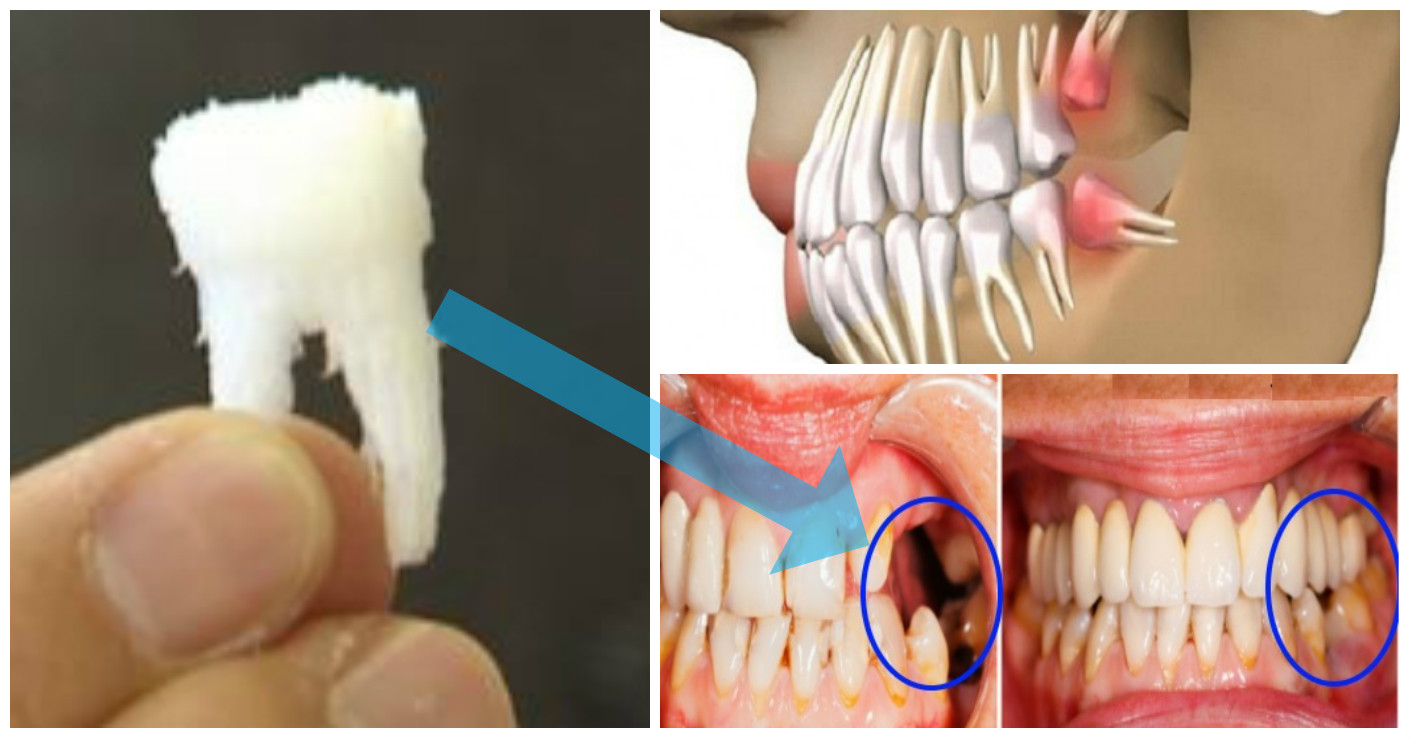
Now a group of dental experts intend to change the way every one of us see teeth. The group’s new findings along with advances in the dental implant technologies have now paved way for humans to grow new human teeth in oral cavities.

The research, led by Dr. Jeremy Mao, Columbia University, has come across some pretty substantial discoveries. Mao essentially designed one type of framework that will help teeth regenerate tissue. The scaffolding contains stem cells and uses DNA to grow the new teeth.

The implications for this technology are huge, as it would lead to an end of traditional methods of teeth extraction, which are notoriously agonizing.

“Your missing tooth gets replaced with stem cells that are from your own body itself. And this merges with the tissues that surround it. It doesn’t get simpler as it will ease the regeneration process and will recover faster”

So, if you’re suffering from missing teeth or are thinking about dental implants, this new technology is perhaps the best solution. After all, wouldn’t you rather grow your own, new teeth, instead of replacing them with fake ones?

At the moment, the dental growth operations are under study. Keep an eye out for this developing story and you might as well be the first to witness it on happening!

As a technology lover you may like our daily important technology news series. It’s a playlist and you can retrieve the total day-wise videos. Please consider subscribing our YouTube channel:

Author: Technology and Beyond

Tagged : /

Expert’s Verdict: This should be the shape of a human body in order to survive a car crash

Although the makers are doing the best they can do to make modern vehicles safer, it is saddening that accidents still happen continuously, that lead to bad injuries and in worse situations, also deaths.

Studies show that one of the most common reasons for these road accidents is the use of cellphones while driving.

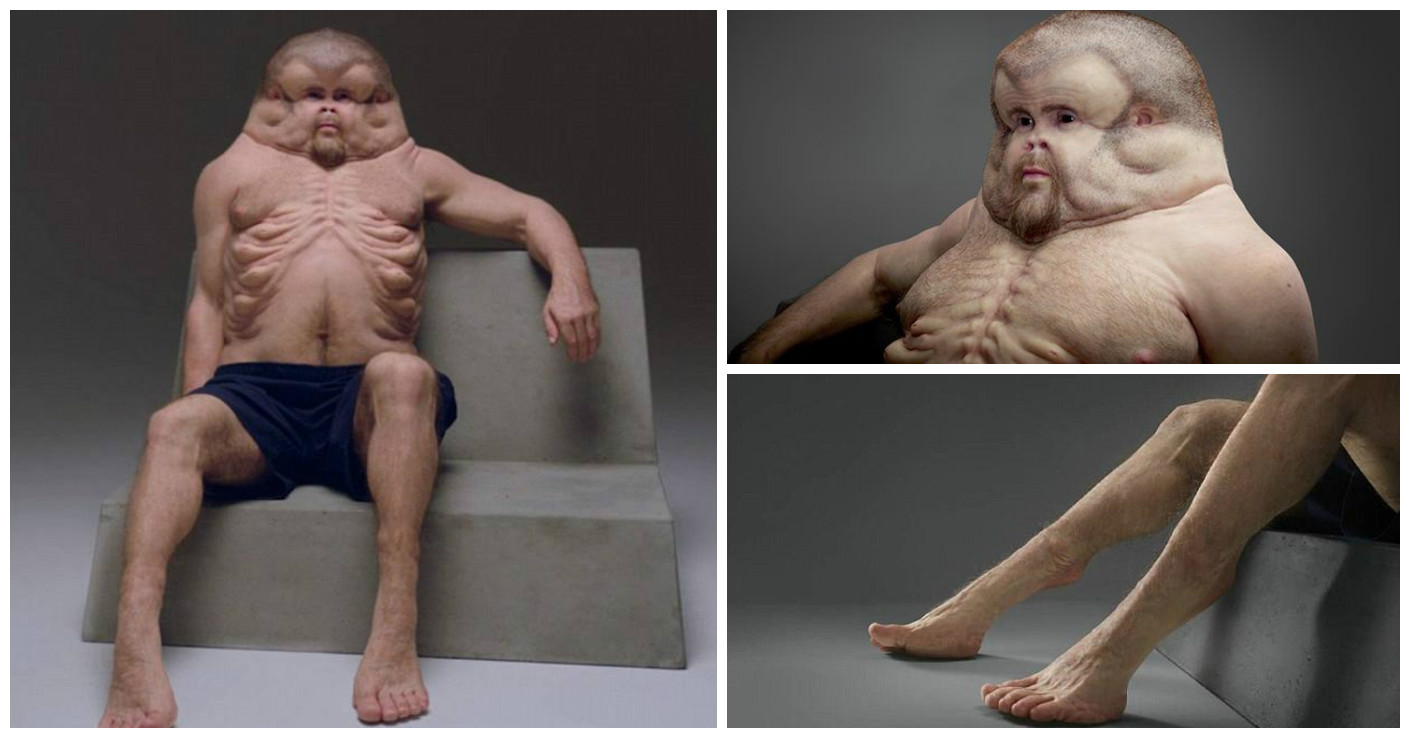
Keeping this in mind, Australian government introduced a new road safety initiative to portray how real accidents are and how delicate the human body is. Victoria’s Transport Accident Commission worked together with Patricia Piccinini, a sculptor from Melbourne, for this project to “create” a human that could survive a car crash – they called this sculpture Graham.

Christian Kenfield, a renowned trauma surgeon states that humans aren’t able to survive trauma. This is why Graham is built without a neck at all to avoid it from breaking and he is given a fat-filled, chubby face to shield his nose and ears. He is made with extra nipples to serve the purpose of air bags around the rib cage. He is also given a very thick skin as well.

Looking at his characteristics, you may also notice his feet to be very rabbit-like. This is to equip him to jump the oncoming vehicles should the occurrence of an accident.

His improbable anatomy and proportions , people should notice that human body falls weak to be able to withstand major car accidents. It is extremely important to be cautious about ourselves.

Dr Kenfield tells us that:

“The risks of low speeds such as 25,30, 35 kilometres an hour is quite massive.”

“The most prominent part of the body prone to accidents is the head. So on sudden stop of the head, the brain keeps moving forward, and smashes against the frontal part of the skull which then bounces backwards injuring the back of the skull as well.”

Dr David Logan, an expert on road safety at Monash University, pointed out:

“In the modern world as we subject ourselves to higher speeds while the body lacks the physiology to absorb the energy.

“When you stop the car suddenly as we crash that energy should be absorbed by the car and by the driver.”

The Transport Accident Commission made arrangements for people to “meet and greet” Graham in person at the State Library of Victoria from July 21 to August 8, 2016. Graham will be touring the country shortly after that. If this interests you, you may also check out http://www.meetgraham.com.au.

As a technology lover you may like our daily important technology news series. It’s a playlist and you can retrieve the total day-wise videos. Please consider subscribing our YouTube channel:

Author: Technology and Beyond

Tagged : /

This skydiver creates world record by jumping 25,000 feet without any parachute!

This 42 years old daredevil skydiver, Luke Aikins, set a world record as he jumped 25,000 ft (7,600 m) from a plane that too without wearing a parachute.

He recently completed the dangerous stunt called “Heaven Sent” and the Guinness Book of World Records documented it as “officially the highest skydive without a parachute ever.”

The Guinness website went on to report that during the freefall, Aikins only had “his body and a GPS unit to direct his movements towards the 10,000-square-foot net he needed to land on, in order to survive the freefall.”

More than thousands of people held their breaths as they witnessed the death-defying 2-minute jump aired on FOX TV’s live broadcast. The jump ended with Luke landing safely on a net in Simi Valley, Southern California.

When asked about his experience, Aikins described:

“I’m almost floating, it’s incredible. The thing is that it just happened. The words I want to say I can’t even get out of my mouth.”

As you can see in the video below, Aikins jumped with three other skydivers who assisted in collecting the discarded oxygen tank. All the skydivers released their parachutes at about 5,000 ft – except for Aikins, of course.

Michael Turoff, co-writer of the book “Parachuting: The Skydiver’s Handbook”, also a skydiver  called the dive “a ridiculously dangerous stunt that could have easily resulted in a fatality.”

Aikins spent 18 months preparing for the unbelievable leap. He presently runs a skydiving school and has also performed stunts for movies like Iron Man 3.

width="560" height="314" allowfullscreen="allowfullscreen">

As a technology lover you may like our daily important technology news series. It’s a playlist and you can retrieve the total day-wise videos. Please consider subscribing our YouTube channel:

Author: Technology and Beyond

Tagged : /

You should ditch iPhone7 and wait for this forthcoming all-glass iPhone!

An Apple patent spotted by Patently Apple suggests Apple is probably considering the idea of creating an iPhone that’s mostly glass.

The patent hints that Apple could be making an all-glass iPhone in 2017, reported one of Apple’s main suppliers of iPhone casings.

The patent describes iPhone with rounded glass that wraps around its side edges. It details how the glass edges act as a “mini flexible edge display” with customizable “active virtual buttons.”

It possibly means that the edges have customizable touch buttons for definite roles and shortcuts to features such as opening the camera, turn on the flashlight, or music controls.

If that seems familiar, that’s because you’ve seen the Samsung Galaxy Note Edge, release in 2014, which had curved glass edge that displayed information that could be tapped to open features and functions.

Patently Apple also mentioned a patent granted to Apple back in 2013 that had a very similar design concept:

As attractive as an all-glass iPhone might sound, it isn’t clear how durable it would be, as the surface of the phone would be at risk of being cracked. And case makers would potentially have a hard time making a case for a phone where it’s entire front and sides are made of touch screens.

While these patents seem more official than rumors filed by Apple, they’re not indicators of what Apple has in store for future products. As the company has been granted plenty of patents with new product ideas, but only so many of them have never seen the light of day.

As a technology lover you may like our daily important technology news series. It’s a playlist and you can retrieve the total day-wise videos. Please consider subscribing our YouTube channel:

Author: Technology and Beyond

Tagged : /

This Solar-Powered Pipe is capable of desalinate 1.5 billion gallons of drinking water for whole California city

As California is supposed to witness water scarcity in the coming years, the amount of energy required to produce water is sure to increase. Fortunately, designs such as ‘The Pipe’ can potentially solve California’s water shortage problems.

LAGI (Land Art Generator Initiative) reported to have received a design for the city of Santa Monica, The Pipe, designed by Abdolaziz Khalili and Associates, a Canadian engineering firm is a wonderful piece of art, and it also “represents a change in the future of water”. Khalili Engineers reported The Pipe can annually generate 10,000 MWh and also desalinate about 1.5 billion gallons of drinking water.

“Results are two products: pure drinkable water that can be directed to the city’s primary water piping grid, and clear water with less than twelve percent salinity. The drinking water piped to shore, and the salt water supply to the thermal baths before redirecting back to the ocean,” the design says.

pipe-1

pipe-2

pipe-3

pipe-5

As a technology lover you may like our daily important technology news series. It’s a playlist and you can retrieve the total day-wise videos. Please consider subscribing our YouTube channel:

Author: Technology and Beyond

Tagged : /

Meet Railgun, lethal, accurate and unbetable: The new form of strategic warfare

War has many things associated with it- politics, strategic alliances, demographics of various countries, conflicts over resources.  But for most people, war is about creating a political statement with the help of arms and ammunition. Considering this, General Atomics is writing a new war statement with the help of its new and futuristic warfare- the Blitzer Electromagnetic Railgun. This new ammunition is soon going to make waves in the war arena.

The railgun is basically an artillery piece which utilises electromagnetic fields in place of the conventional chemical propellants to launch projectiles at hypersonic speeds. Because of using the electromagnetic field, this railgun can achieve far higher speeds and range as compared to the conventional ones.

Test firings were held at the U.S. Army’s annual Maneuver and Fires Integration Experiment (MFIX) and the Blitzer performed successfully in all eleven test firings. The test projectiles contained a Guidance Electronics Unit (GEU), which beamed back telemetry indicating, the shells managed to attain an acceleration of over 30,000 gravities and encouragingly, all the components survived the multi-Tesla magnetic field that powers the launcher.

Nick Bucci, vice president of Missile Defence and Space Systems at General Atomics Electromagnetic Systems said: “We continue to perform risk reduction and technology maturation of projectile designs and components to culminate in an integrated demonstration of a manoeuvring railgun launched projectile.” The next step in this technology is to integrate the system into a mobile, truck based platform. You can get more information on this RAILgun in the following video.

width="560" height="314" allowfullscreen="allowfullscreen">

As a technology lover you may like our daily important technology news series. It’s a playlist and you can retrieve the total day-wise videos. Please consider subscribing our YouTube channel:

Author: Technology and Beyond

Tagged : /

This miracle eye drop will make you say goodbye to cataracts

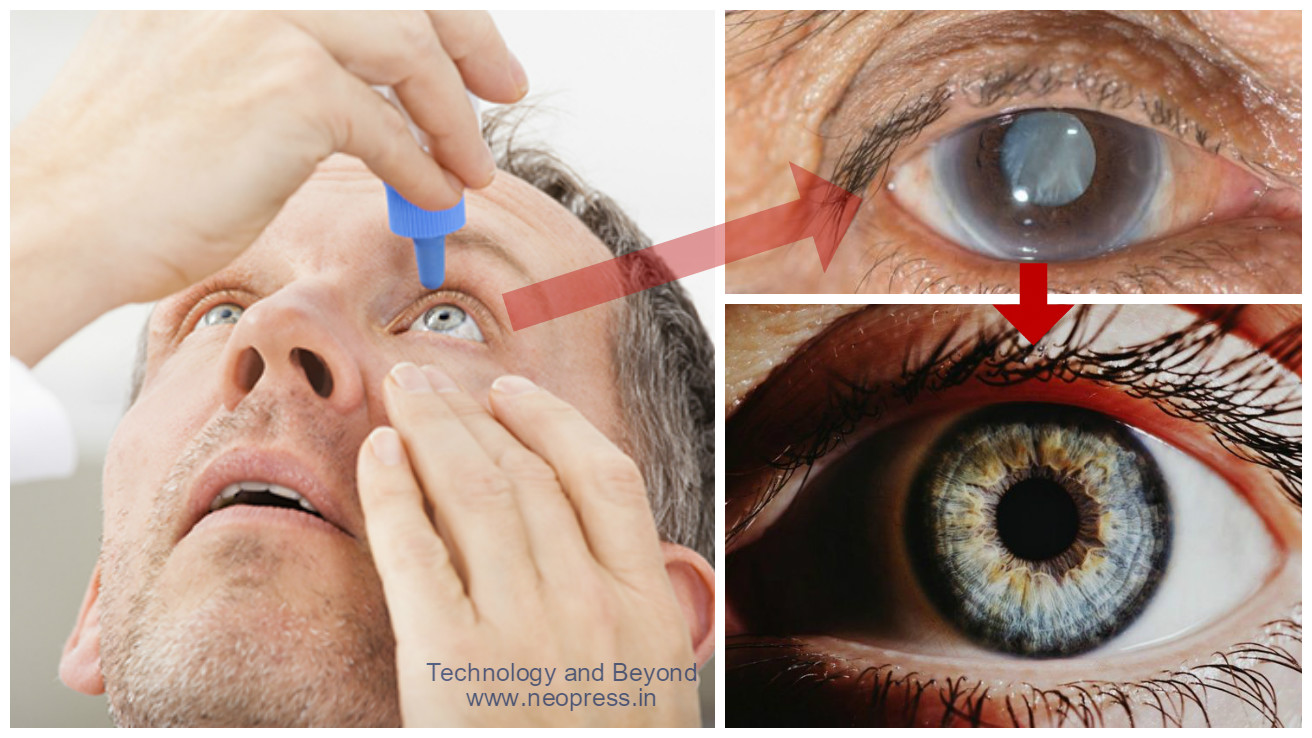
Cataracts are generally associated with old age though in some cases it develops at quite a young age owing to genetics. These develop when protein in the lens builds up and prevents light from getting through.  This is to be noted that cataracts are one of the leading causes of blindness throughout the world. Currently the only treatment available for cataracts is removing the clouded lens from the eye and then replacing it with an artificial one.

Now in a recent development scientists in California have discovered that the naturally occurring steroid lanosterol possesses the ability to melt away cataracts and prevent them from returning when administered to patients via eye drops. If this gets approval for use in humans, then there is a possibility that it would be available as a non-invasive treatment for individuals with moderate forms of cataracts.

The group of scientists first came to know about this steroid when they came across two children in China who had a hereditary form of this disease. When the team closely observed and examined these two children, they found that the children shared a mutation that blocked the production of the steroid lanosterol. Their parents never developed cataracts though as they lacked this mutation. The team hence deduced that the steroid must have some contribution in the formation of cataracts.

This observation was followed by a series of experiments and an in-depth study which involved testing lanosterol on donated human lenses and live rabbits and dogs. The result obtained from the tests showed that lanosterol contributed significantly in reducing the size of the cataracts. Though this sis till not completely clear as to how this happens, the scientists believe that the steroid prevents the proteins from building up.

It has been reported that if the drops prove to also work on humans, it could pave the way to offering a non-invasive treatment for humans too. If this happens, it would prove to be a good alternative treatment for cataract. The study is already creating quite a stir and everybody is hoping that it may have a very effective treatment in its kitty down the line.

As a technology lover you may like our daily important technology news series. It’s a playlist and you can retrieve the total day-wise videos. Please consider subscribing our YouTube channel:

Author: Technology and Beyond

Tagged : /

Wear this ring and feel the heartbeat of your loved one!

Love is beautiful and it is eternal as it comes in different forms – parents and their kids, siblings, husband-wife, friends, boyfriend-girlfriend, teacher-student. There are different and many beautiful forms of love and each one of them is special. Technology has made it possible to keep you connected to your loved ones, but aren’t there times when you miss the proximity of that person just to hear his or her heartbeat? Fret not because there are super special rings available now which can make you feel your loved one’s heartbeat.

The rings are called HB rings and have been created by TheTouch. These have a minimalist design but there is a solid rose gold variety available. All these HB rings come with a Unibody sapphire crystal surface. This surface makes sure that the rings are un-scratchable. The rings though aren’t easy to use. These rings are connected to an app via Bluetooth. So when you want to hear the heartbeat of your loved one, you just have to tap the ring whenever you are connected to data or Wi Fi.

The ring looks like a simple black band but has many things hidden inside it like charger connector, battery, heartbeat sensor, sensor housing, multidimensional PCB, Sapphire crystal and Rose gold cap. If you have fallen in love with this super cool ring and your loved one’s heartbeat is what you want to listen to sometimes, then you can visit TheTouch’s website where you can pre-order them. For more details, watch the video below:

width="560" height="314" allowfullscreen="allowfullscreen">

As a technology lover you may like our daily important technology news series. It’s a playlist and you can retrieve the total day-wise videos. Please consider subscribing our YouTube channel:

Author: Technology and Beyond

Tagged : /

These insect-like Robobees are all set to dominate agricultural, surveillance and environmental industries from now on!

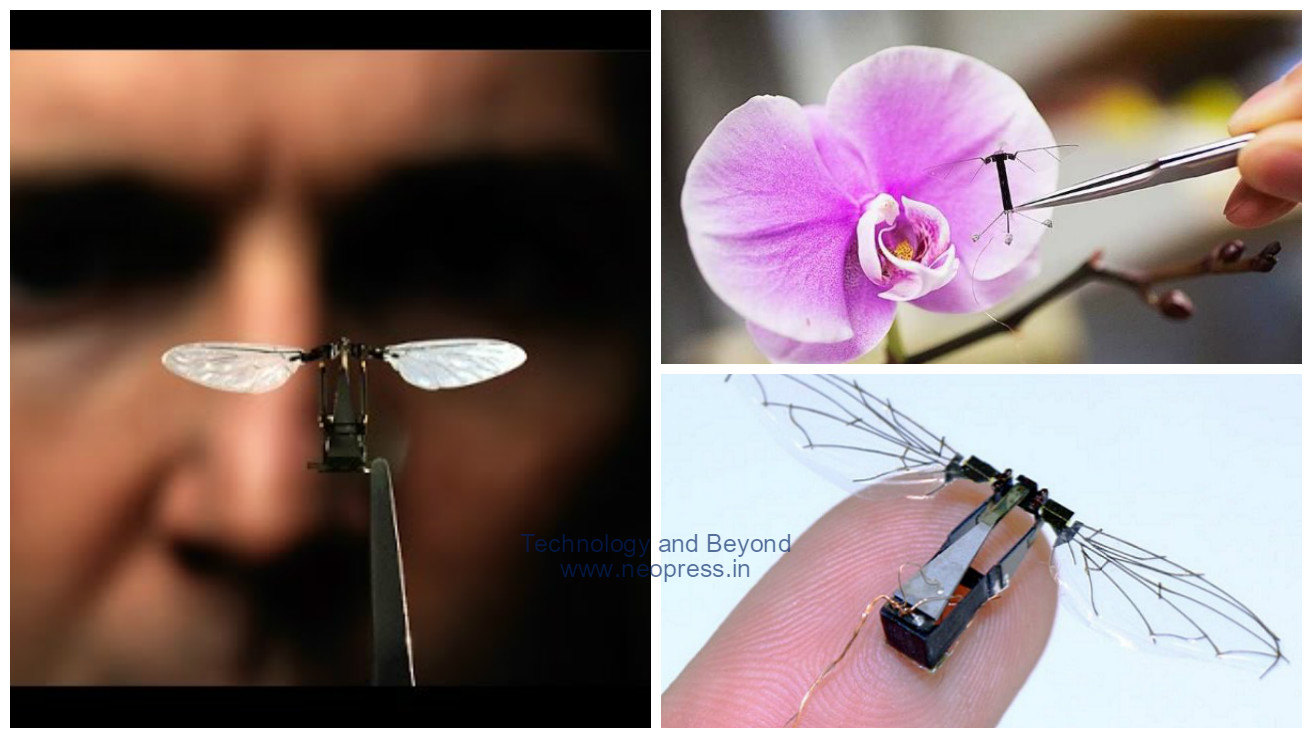
Robotics is the branch of science and technology which is evolving every day. The kinds of robots that are being made are becoming more and more versatile and more and more unique and innovative. Apart from experimenting with their abilities, scientists are also experimenting with the size of the robots. ‘Robobee’ is one such robot. It is a miniature robot which is equals the size of a penny and is inspired by the biology, movement and behaviour of the insects.

A team of researchers from MIT University and Harvard University, in their combined effort, have found a way to copy the way insects perch and they have also succeeded in incorporating it into ‘Robobee’s’ “perching abilities”. This is to note that when someone is making a device so small, due consideration has to be given to energy conservation. The perching of this robot like an insect proved to be difficult in reality.

In order to overcome this big hurdle, the combined team of Harvard and MIT found a way to dramatically extend the ‘Robobee’s’ operational life. They made use of the electrostatic adhesion which means that the Robobee uses a small electrode patch and shock-absorbing foam mount to make the tiny robot latch onto surfaces upside down. If the Robobee wants to let go of a surface, it can do so by simply switching off the power supply to the electrode. By utilising this technique, the Robobee is able to use 1/1000 of the energy required to keep it flying and hence conserve its energy supply considerably.

Robobee might seem very small and people may think that it is of no use. But contrary to this belief, these miniature robots find uses in autonomously pollinating crops, search and rescue operations after a calamity, hazardous environment exploration, military surveillance, high resolution weather and climate mapping and traffic monitoring.

Back in 2000’s The Robobee Project had started off as a mission that originally started as a proposed solution to the mysterious disappearance of honeybees. A team of researchers headed by Gu-Yeon Wei, Radhika Nagpal, and Robert Wood, professors and associate professor at the Harvard School of Engineering and Applied Sciences (SEAS), posed a technological solution to the effects of this strange mass epidemic afflicting the insects.

In 2009, the three of them joined hands with their colleagues at Harvard University and Northeastern University to consider what it would take to create a robotic bee colony. This was what had given birth to the Robobee Project and look how far it has come.

width="560" height="314" allowfullscreen="allowfullscreen">

As a technology lover you may like our daily important technology news series. It’s a playlist and you can retrieve the total day-wise videos. Please consider subscribing our YouTube channel:

Author: Technology and Beyond

Tagged : /

Scientists made accidental discovery of nanorods that harvest water from the air

Unbelievable scientific discoveries never fail to enthrall us. With each passing day we find ourselves standing with our jaws dropped looking at how many researchers stumble onto things that haven’t even been looking for while experimenting to find newer inventions. One such discovery is the new nanorods that have the potential to harvest water from air.

These carbon-rich microscopic, inadvertently produced rods absorb and release water in a different way to all kinds of material that we are aware about. They can absorb water at low humidity levels and later on oust it as the level increases to 50-80 percent while other resources just continue to take in the excessive liquid from the air.

Gizmag’s Michael Irving emphasizes that these nanorods can ultimately be used in array of applications, starting from low-energy water-harvesting structures to possible even in the fabrics that can absorb sweat from the body.

“Our unusual material possesses qualities a bit like sponge; it squeezes itself almost halfway before it’ completely saturates itself with water,” explained David Lao from the Pacific Northwest National Laboratory (PNNL), one of the material’s Inventors.

Here’s how this happy accident took place, the team was intending to produce magnetic nanowires, but instead ended up creating these carbon nanorods in the lab. A closer inspection detailed how these nanorods apparently lost weight as the humidity in the surrounding environment rose.

Initially, the Researchers doubted their instrument to be malfunctioning but to their surprise, they realized that it was the recap of a very similar phenomenon that was considered in 1990s.

The team then started going through papers from year 2012 and 2013 that referred to the theories of how water can automatically vaporize if it’s surrounded by hydrophobic components/ materials or kept in an area not more than 1.5 nanometres wide.

The team reports that water apparently condenses and forms a bridge between the nanorods, this process is called capillary condensation. This water between the rods causes tension on the surface and pulls adjacent rods, placing them very near to each other. When this gap gets as close as 1.5 nanometres, the water starts to evaporate.

The PNNL team calls it an impending paradigm shift in the process of purification of water and also talks about their futuristic thought of how someday the sheets of these nanorods may harvest water from even the desert air. Presently a mere 10-20 percent of the material is seen to spill out water and scientists are working to increase this number considerably high.

“We’ve started to imagine the many ways it could be harnessed so as to better the quality of life that we live, now that we’ve moved on the preliminary blow of this unexpected behavior of the material”, said David Heldebrant, team engineer. “But before we can put these nanorods to use, we need to figure out a way to control them and perfect their shape and size.”

As a technology lover you may like our daily important technology news series. It’s a playlist and you can retrieve the total day-wise videos. Please consider subscribing our YouTube channel:

Author: Technology and Beyond

Tagged : /

The amazing world of food scanners. We now know what’s in our plate for sure!

A question by a concerned mother whose kid was suffering from a nutrition deficiency led me to wonder if there could be any gadget in this high-tech world that could scan our plates and tell us what all nutrients we were hogging on. We also wonder what we’d do if we knew the food much closely that’s on our plate. During a research study, one of these respondents being an emotional mother of an eight year old girl left a question asking how technology will advance when it comes to food scanning.

She explained how difficult it was to find the right food for her daughter who was suffering from various food allergies at such a tender age. She had to ensure that it didn’t contain anything her daughter was allergic to by diligently checking the labels on food product and had to cook very deliberately. She was pregnant when she wrote the comment, and was extremely worried. She asked if there were any labeling advances or technological devices that could make her life a bit easier and she also asked if it was possible to scan food to determine the ingredients.

The Problem with our Food

Concluding from the statistics of Europe, around 220 to 250 million people suffer from various food allergies across the globe. In the US one out of three people possesses one kind of food allergy or modifies the family meals in fear of a susceptible food allergy in the family. 5% of children and 4% of teens and adults have clinically proven food allergy.

About 35 % of adults are overweight, with about half a billion being obese possessing a body mass index of more than 30, globally. The International Diabetes Federation report that half a billion people may suffer from diabetes by 2035; and half of them may remain undiagnosed. Obesity, diabetes and food allergies are just a few of the most prominent examples where awareness of the calorie intake and ingredients are crucial in managing medical issues day after day.

According to the European Commission launched  €1 million prize challenge to develop a mobile, affordable, non–invasive solution that will enable users to measure, calculate and analyze their food intake. This contest shall run until the end on 2016. Many other such initiatives are required to be brought up to help people get over the problems of diabetes or obesity.

We really have no Idea what we eat

We can only presume. Almost all the ingredients are come enlisted on the product’s label, but at the end every plate and every meal is different. One way to solve this would be to have a list of exact and correct ingredients and the number of calories a meal contains, also a list of all the toxins and allergens it contains. Not just the kind of food we eat but the actual meal that is on our plates with specific amount. Many companies have come up with ways to address this problem.

In 2013, Canadian TellSpec carried out a successful crowd funding campaign that managed to raise more than $380,000. It aimed to develop a mobile food scanner that informs the users just the specific ingredients and macronutrients on their plates. Spectroscopy is a technique that enables us analyze as to how a matter interacts with wavelengths of light that differ from each other, it can also very quickly determine the chemical compounds contained in a given food. Isabel Hoffmann, Founder of the company, had a similar story with that of the mother who commented on my blog. Hoffman’s daughter got sick after they moved to a new flat in Toronto. A few months later she was diagnosed to have developed various food allergies.

This drove Hoffman to recruit a team of designers to develop device that enabled the user to know what was in a definite food. They sent the primary versions of the device to beta testers in mid 2015 and now after gaining much popularity, they have promised to launch the device in 2016. Many critics have asked for the availability of the device and questioned its capabilities.

width="560" height="314" allowfullscreen="allowfullscreen">

The Promise and problems of Food Scanners

People with optical engineering backgrounds in Israel found SCiO and raised ove $2.7million in 2014 on Kickstarter. It used technology similar to that of TellSPec’s but was designed not only the molecular contents of medicines and food but also of plants. An optical sensor to detect the reflected light was illuminated by it on an object and it further analyzed the cloud based data using an algorithm. The user’s smartphone would display the molecular make up and contents of the food within seconds, as promised by the Company. The launch was scheduled to be in 2015 but it came as a major disappointment to backers a it hasn’t been shipped yet. Let alone the delay, critics also criticized the makers of both SCiO and Tell Space for overstating their inventions.

There were two major problems that was faced, one being the size as the device should not be bigger than a hand-held for the buyers which implied that engineers were asked to bargain the accuracy and sensitivity just to ensure that the size was not bigger than a mobile phone. The second issue was of the algorithm as SCiO used to operate with a cloud-based data by sending the specifics of the food – whether it is solid or in liquid form, or if it is a vegetable- to the cloud and then displaying the calculation on the device.

There aren’t many promising devices that are hand–held food scanners other than these on the horizon. It is a greater challenge to figure out what we would do with the large amount of information that any of these devices generate if and whenever they come into existence.

Next Page For More

Tagged : /

What Is NIKU? An Alien Object? This unexplained mystery object is in a orbit beyond Neptune

Our outer solar system is still something which keeps surprising us with its many mysteries and surprises. Because our solar system is huge and may be because we are too preoccupied with the idea of Mission Mars, many interesting things that are happening out there escape our eyes. This is why when we or astronomers to be precise notice something out of the line, it becomes a super-exciting matter for their community. In the recent case, a small object, the presence of which cannot be explained- travelling in a weird orbit beyond Neptune has made the astronomers go berserk with excitement.

A TNO or trans-Neptunian object has been discovered which sits beyond Neptune in the outer solar system. The object in question is 160,000 times fainter than Neptune hinting to the fact that it must be less than 200 kilometres in diameter. The object is currently above the plane of the solar system and with every passing day, it’s moving upwards- which is an odd thing.

Niku-5

The movement itself of the mysterious object seems rebellious. This is the reason why the team that discovered it has nicknamed it “Niku” after the Chinese adjective for rebellious. It is currently orbiting in a plane which is tilted 110 degrees to the plane of the solar system and it swings around the sun backwards unlike most other objects in the solar system. The movement of the object and its orbit means that because it is not orbiting within the plane of the solar system and is spinning in the opposite direction, there is a chance that it was knocked off course by something else.

The team’s members have gone to such an extent that they think that the new TNO appears to be a part of another group which is a part of a large undiscovered world called ‘Planet Nine’. But since it is too close to our solar system, the other world explanation seems much less likely. The team is still trying to figure out what may be the explanation behind this.

But till they arrive at a concrete explanation, they are loving all the guesswork and excitement. Michele Bannister, an astronomer at Queens University, Belfast tweeted last week: “I hope everyone has buckled their seatbelts because the outer solar system just got a lot weirder.”

As a technology lover you may like our daily important technology news series. It’s a playlist and you can retrieve the total day-wise videos. Please consider subscribing our YouTube channel:

Author: Technology and Beyond

Tim Cook Admits He’s Got The ‘Best Job In The World’ – But Says He’s No Steve Jobs

In a freewheeling chat, Apple’s present CEO, Tim Cook opened up about his job, his feelings about his work and his company and his personal life. Tim Cook had taken over from Steve Jobs in 2011, shortly before Jobs died of complications arising from pancreatic cancer. The month of August marks Cook’s completion of five years as Apple’s CEO.

When asked about his job as the CEO of such a huge company, Cook admitted that being the top gun can be a really lonely job but he still thinks he has the best job in the world and he doesn’t crave for any sympathy. He said: “You have to recognize that you have blind spots. We all do. Blind spots move, and you want to not just have really bright people around you, but people who will push on you and people to bring out the best in you. People that amplify whatever you’re good at. And then also the people who plug the parts that you’re not and may never be.”

Tim-Cook-and-Steve-Jobs

Talking about his predecessor, the legendary Steve Jobs, Cook said: “When I first took the job as CEO, I actually thought that Steve would be here for a long time. The day he died was sort of the worst day ever. To me Steve’s not replaceable. By anyone. He was an original of a species. I never viewed that was my role. I think it would have been a treacherous thing if I would have tried to do so.”

Talking about the recent dip in Apple sales, and people’s predictions about a rocky next few years, Cook said: “I have heard all of it before. We got to $60 billion in revenue and they said you can’t grow any more from this. Well last year we were $230 billion. And, yes, we are coming down this year. Every year isn’t an up you know.” Apart from this he also discussed about mistakes committed in the past year by the company and his personal life and decision of coming out as gay in open.

As a technology lover you may like our daily important technology news series. It’s a playlist and you can retrieve the total day-wise videos. Please consider subscribing our YouTube channel:

Tagged :

‘Transparent Transistor Technology’ To Make Its Way In Future

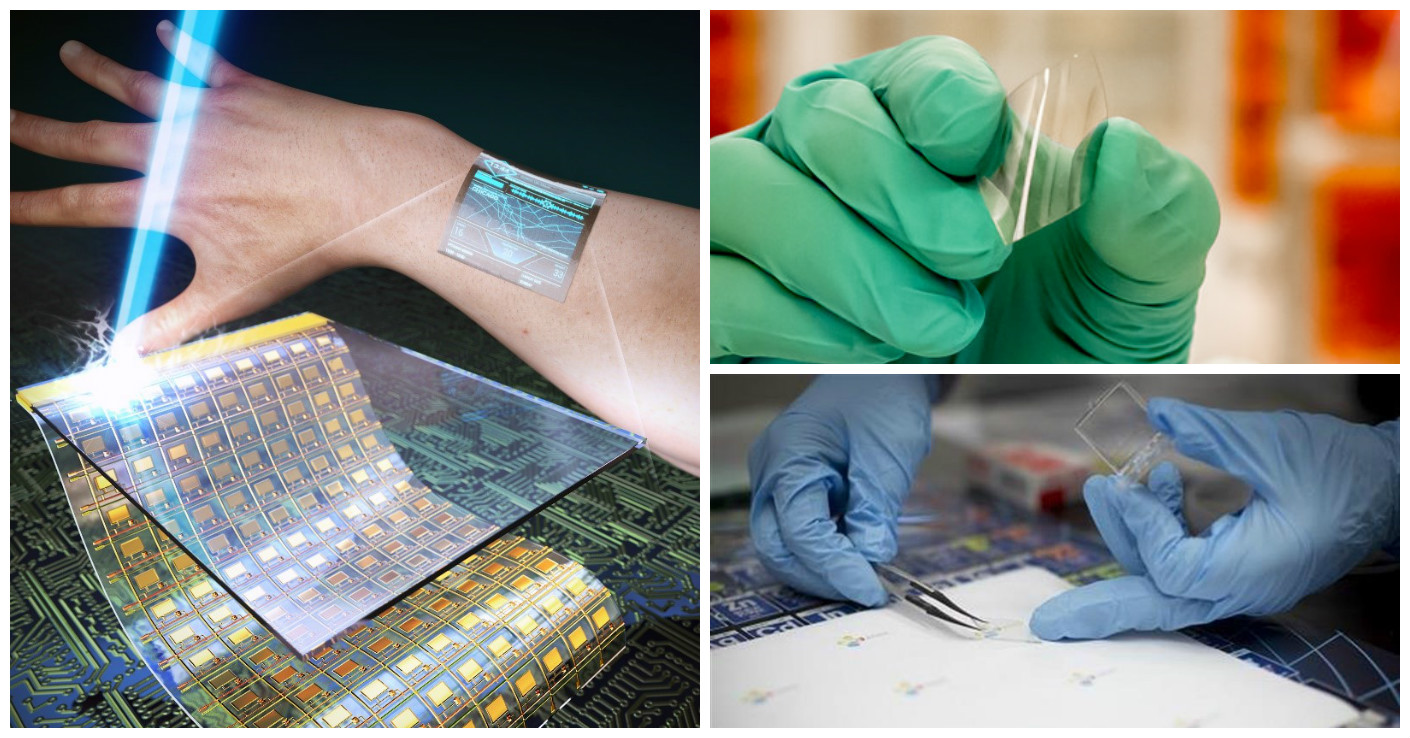
Scientists from the King Abdullah University of Science and Technology (KAUST) in Saudi Arabia have succeeded in finding a way to make transparent transistors and other essential components of electronic circuitry. This development can be really revolutionary as it may lead to displays on car windscreens, transparent TV sets and smart windows.

Currently, the material used for electronics is Indium tin oxide or ITO. ITO is the preferable material because it possesses the quality of both optical transparency and electrical conductivity. Ito finds use in touch-sensitive smartphone screens to light-harvesting solar panels.

transparent-e

The problem with ITO is that Indium is in short supply so as the demand increases for ITO containing devices, Indium also becomes pricier. There is a low cost alternative for ITO though which is known as aluminium-doped zinc oxide (AZO). But the problem with this alternative is that their performance is quite inferior as compared to devices made from ITO.

In order to overcome this limitation, the researchers used a high-precision technology called atomic layer deposition in which the circuitry is built up using a single layer of atoms at a time. The team used a transparent material called hafnium oxide to that was sandwiched between layers of zinc oxide to form the highly stable transistors used to fabricate the transparent circuits. Hope we get to see the amazing uses of transparent circuits very soon.

As a technology lover you may like our daily important technology news series. It’s a playlist and you can retrieve the total day-wise videos. Please consider subscribing our YouTube channel:

Author: Technology and Beyond

Robot Dragonflies And Lasers To Protect Britain In Future

Wars are getting high-tech and the future of war certainly has robots in it, not to forget the application of AI too. Britain’s Ministry of Defence (MoD) has unveiled its plans regarding the future tactics for Britain’s defences. The plans include the development of robotic dragonflies called “Skeeters”, virtual reality helmets and laser weapons.

The Innovation and Research Insights Unit (IRIS) of the country, which is part of a new defence innovation initiative with a view to speed the transition of new systems from the lab to the battlefield intends to identify emerging technologies and determine their potential military impact. All these innovations are part of the £800 million (US$1 billion) IRIS initiative which will stress on adopting a more risky approach when it comes to new defence technologies.

Skeeter 'Dragonfly' Drone - Britain invests £800m in next generation of military technology.
Skeeter ‘Dragonfly’ Drone – Britain invests £800m in next generation of military technology.

This has come to light that Skeeter is a tiny Unmanned Aerial System (UAS) from Oxford based Animal Dynamics. It is based on the dragonfly and is designed to use cutting-edge micro-engineering. It has embedded electronics in a composite structure and it flies by flapping its four wings in an insect-like manner when it encounters an obstacle.

There is another project under progress which involves development of robots and flying drones capable of seeking out particular chemicals in an area without exposing humans to danger. There is also a ‘hyper reality’ helmet under progress which helps soldiers to train in calling in airstrikes in a virtual environment.

Then there is the Quantum Gravimeter from the University of Birmingham which uses the quantum effect of extremely cold atoms in combination with paired gravimeters to make very precise measurements of the Earth’s local gravitational field with high resistance to external noise sources. Supposedly, this will allow soldiers to seek out enemy tunnels or hunt for survivors in disaster struck areas in a matter of few minutes. The initiative will help keep Britain safer says the ministry.

As a technology lover you may like our daily important technology news series. It’s a playlist and you can retrieve the total day-wise videos. Please consider subscribing our YouTube channel:

Author: Technology and Beyond

Tagged : / / /
Verified by ExactMetrics