Robot Dragonflies And Lasers To Protect Britain In Future

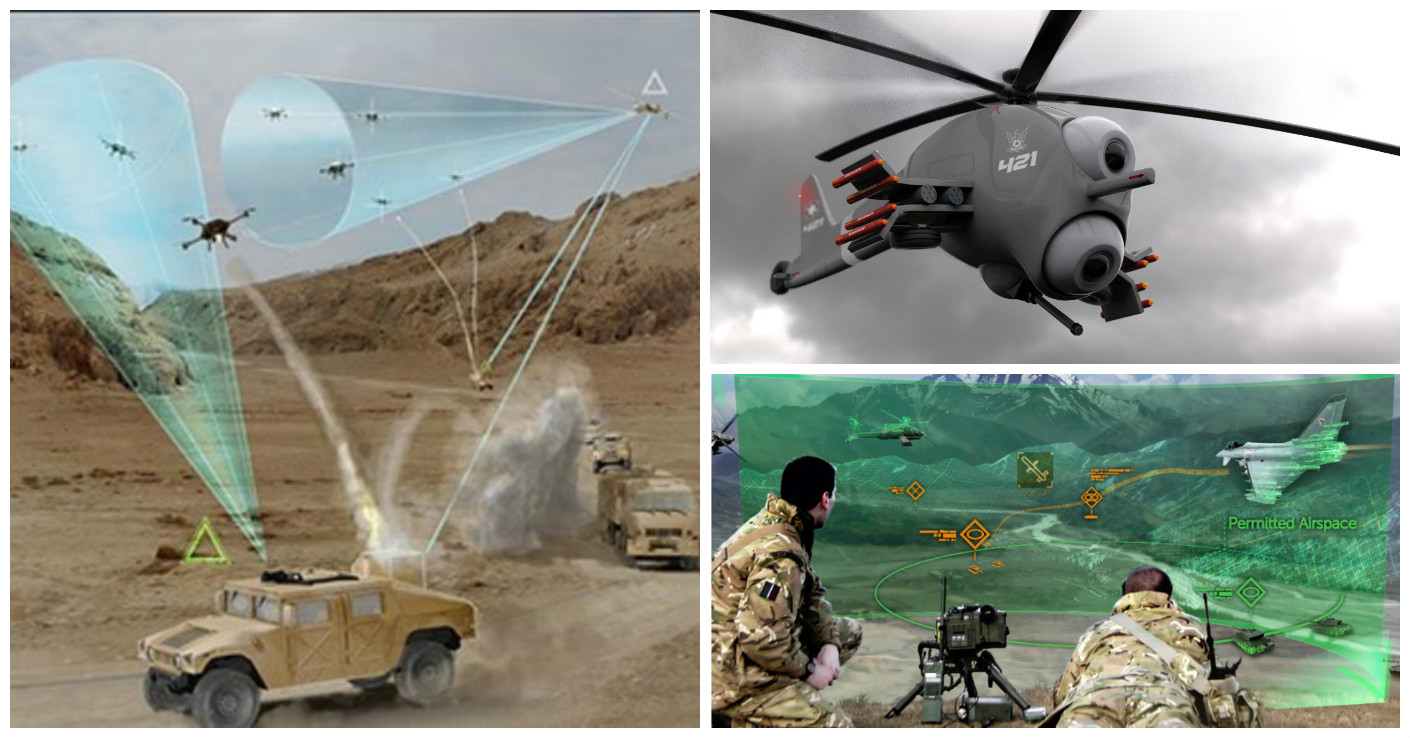
Wars are getting high-tech and the future of war certainly has robots in it, not to forget the application of AI too. Britain’s Ministry of Defence (MoD) has unveiled its plans regarding the future tactics for Britain’s defences. The plans include the development of robotic dragonflies called “Skeeters”, virtual reality helmets and laser weapons.

The Innovation and Research Insights Unit (IRIS) of the country, which is part of a new defence innovation initiative with a view to speed the transition of new systems from the lab to the battlefield intends to identify emerging technologies and determine their potential military impact. All these innovations are part of the £800 million (US$1 billion) IRIS initiative which will stress on adopting a more risky approach when it comes to new defence technologies.

Skeeter 'Dragonfly' Drone - Britain invests £800m in next generation of military technology.
Skeeter ‘Dragonfly’ Drone – Britain invests £800m in next generation of military technology.

This has come to light that Skeeter is a tiny Unmanned Aerial System (UAS) from Oxford based Animal Dynamics. It is based on the dragonfly and is designed to use cutting-edge micro-engineering. It has embedded electronics in a composite structure and it flies by flapping its four wings in an insect-like manner when it encounters an obstacle.

There is another project under progress which involves development of robots and flying drones capable of seeking out particular chemicals in an area without exposing humans to danger. There is also a ‘hyper reality’ helmet under progress which helps soldiers to train in calling in airstrikes in a virtual environment.

Then there is the Quantum Gravimeter from the University of Birmingham which uses the quantum effect of extremely cold atoms in combination with paired gravimeters to make very precise measurements of the Earth’s local gravitational field with high resistance to external noise sources. Supposedly, this will allow soldiers to seek out enemy tunnels or hunt for survivors in disaster struck areas in a matter of few minutes. The initiative will help keep Britain safer says the ministry.

As a technology lover you may like our daily important technology news series. It’s a playlist and you can retrieve the total day-wise videos. Please consider subscribing our YouTube channel:

Author: Technology and Beyond
Tagged : / / /

SLAM-Aware Robots are to do the Dishes

Researchers at MIT, have brought to us a new object recognition system that works on SLAM (simultaneous localization and mapping) technology. This robot sees objects are a three-dimensional plane and not just in one view, as is the case in conventional image recognition systems.

slam

“Ideally we want robots to be cleaning our dishes at some point in the future. We want recognition systems where it does in fact see the objects that the robot should care about and manipulate them,” says Sudeep Pillai, lead author of the study.

SLAM-aware robots hold advantages over SLAM-unaware robots as they can easily identify an object from a clutter of objects. It has been seen that the SLAM-aware system identified objects with only 86.1% accuracy, as compared to SLAM-unaware identifying it with a 92.8% accuracy. But, the former wins over latter in terms of startup time. SLAM-aware system takes a mere 1.6 seconds to start, whereas, classical systems might take up to four seconds.

This new system works sans infrared light, which the old recognition systems need to function. Often, the conventional systems could not be used outdoors. Now, both indoors and outdoors can be are included in its area of activity.

201412070003t0001

Presently, the team at MIT is working to solve the “loop closure” issue that exists in classical robots, in which the system fails to recognize a previously visited place, or a previously performed activity.

[adinserter block=”7″]

Author: Technology Blog

Tagged :

Personal Robots: Useful or Interactive?

Personal robots have been a charming idea to think about. A tiny companion that would follow us around and aim to please us? Sound familiar? Luckily, it functions with more wit than a dog; but not much.

Though Softbank, sold a thousand of its robots under less than a minute in Japan, the sales are generally attributed to our curiosity and excitement to acquire the latest gadgets. Personal robots, can do every little work that could be classified as “productive”. These robots can basically, welcome guests, and provide companionship to little kids and the elderly.

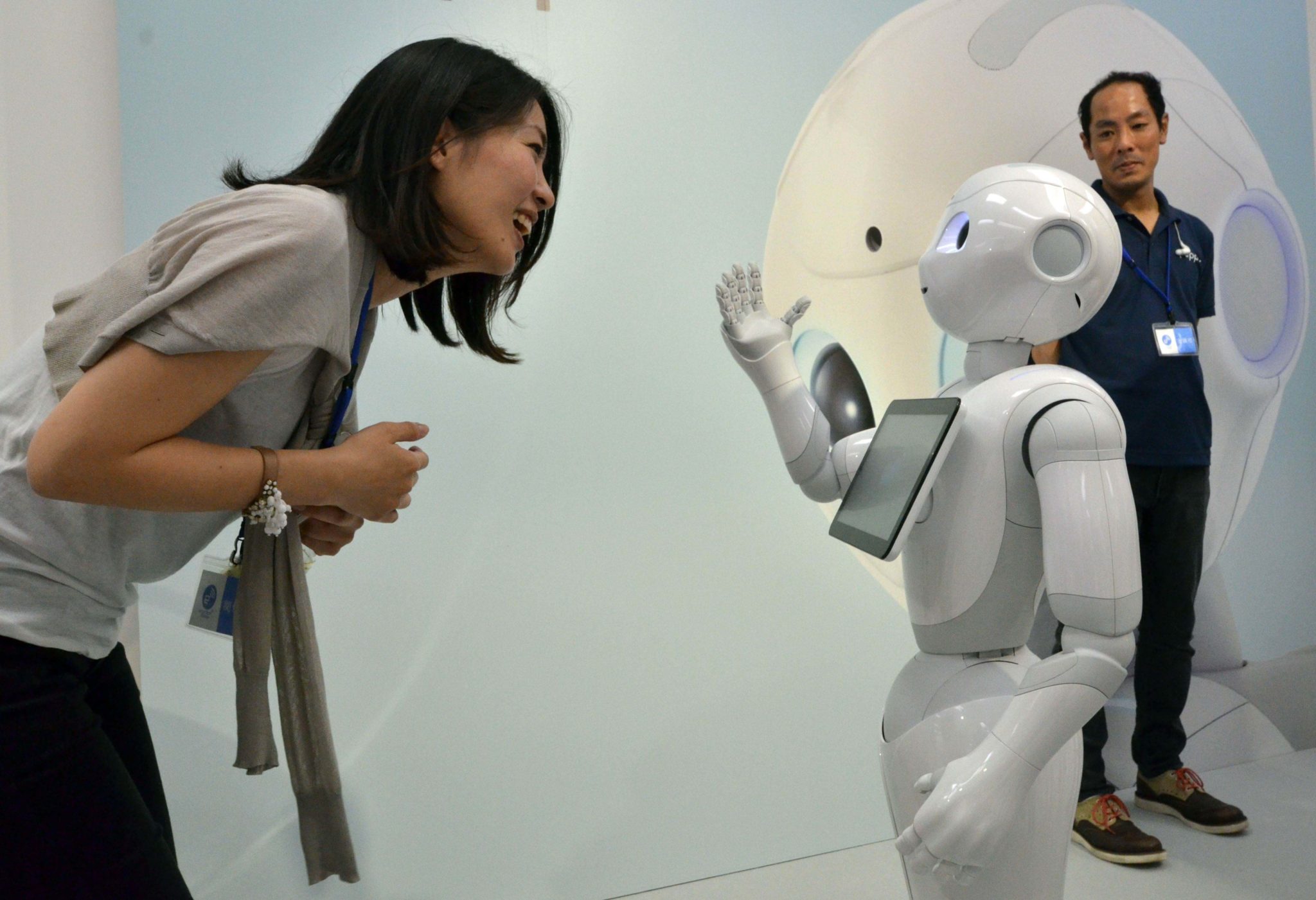
TO GO WITH Lifestyle-technology-robotics-Japan-offbeat, INTERVIEW by Alastair Himmer This picture taken on June 28, 2014 shows Japanese mobile communication giant Softbank's humanoid robot "Pepper" (R) chatting to a woman at a high-tech gadgets exhibition in Tokyo. Mobile carrier Softbank, which created the robot, says Pepper can understand 70 to 80 percent of spontaneous conversations -- although it also answers from a set number of pre-programmed responses. AFP PHOTO / Yoshikazu TSUNO

Pepper costs $1,595, and a monthly payment of $120, would entitle buyers to maintenance and updates. The robot is just 47 inches tall, with a tablet display in its chest, slightly beady black eyes, and a three-wheeled base to move around on. A stereoscopic camera installed is capable of recognizing people and identifying their facial expressions up to 10 feet away.

A software development kit was recently released, and helps developers add new features to Pepper. These features have so far included one that lets Pepper run a musical quiz, take selfies with people and also, helps people with dementia remember to take their medicine.

Jibo is another robot being built by company based in Cambridge, MA. Cynthia Braezeal, an associate prof. estimates that cheap mobile electronic, and increasingly tech-savvy gen, could turn Jibo into a profitable, marketable product.

Jibo_counter_grandma-55d952d9d9a38d6e07cd5a3151ae9a6814be0733c9b53bfb8000073ccd820dc7

A French company, Bluefrog Robotics, is making Buddy, another personal robot/assistant. Buddy has communication tools, personal assistance skills, and can be used as a security device.

Currently, personal robots are at high risk of disappointing the buyers, but soon as more tweaks are made and functions are added, they could have the potential of taking over the jobs of most, unskilled workforce.

[adinserter block=”7″]

Author: Technology Blog

Tagged :

Self-aware robot solves a riddle

Ever heard of the ‘wise men’ puzzle? The puzzle, where a king calls his three wisest men and gives them all either a white or blue hat to wear on their heads and asks them to tell the colour of the hat on their head without communicating with each other standing in a line. So far only human beings have been able to solve this riddle but when based on this premise a logic puzzle was presented to a robot in an experiment conducted by Professor Selma Bringsjord of New York’s Rensselaer Polytechnic Institute, the robot showed its capability to respond to the puzzle.

self-aware-robot

In the experiment, the robots were programmed in such a way that they were made to believe that two of them were given a “dumbing pill” which would make them lose the ability to speak. By pushing a button on the top of two robots, the two robots were actually muted. One robot had a placebo button and was not muted.

Robot with self-awareness

When the researcher asked all the three robots about the kind of pill they all were given, the unmated robot replied “I don’t know”, not only this but the robot stood up and waved its hand saying, “I know now. I was able to prove that I was not given a dumbing pill.” Based on this experiment, it was concluded that the robot not only understood the rules of the contest but also recognised the sound of its voice and displayed such level of awareness that enabled it to distinguish itself from the other two robots. The experiment thus kindled hope of having self-aware robots in the future.

[adinserter block=”7″]

Author: Technology Blog

Tagged :
Verified by ExactMetrics