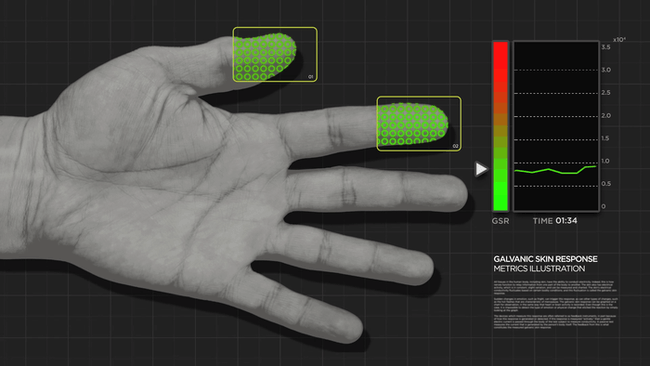
Biosensor data on your fingertips

The fields of therapeutics, regenerative medicine and biosensing are expected to get more efficient and smart in terms of the tools they use because of a new silk-based ink containing bacteria-sensing agents, developed by the researchers at Tufts University. This ink can withstand the rigors of inkjet printing thus providing a way to print bio molecules.

demo1-credit-john-rogers-1

 To develop this ink, a purified silk protein called fibroin was used which acts as a protective cocoon and stabilizes various types of compounds such as antibodies, enzymes, nanoparticles, antibiotics and growth factors. The researchers doped the silk ink base with different bio compounds to create a set of functional, inkjet printable silk inks and tested them. Their different creations included:

  1. An ink with bacterial-sensing polydiacetylenes (PDAs), which was used to print the word “contaminated” on surgical gloves. When the gloves were exposed to E. coli bacteria, the word changed from blue to red.
  2. A plastic dish imprinted with BMP-2 proteins that stimulate bone growth to control the direction of tissue growth.
  3. Sodium ampicillin printed on a bacterial culture printed to test the effectiveness of a topographical distribution of the antibiotic.
  4. Gold nanoparticles printed on paper, which has potential applications in a variety of areas, such as colour engineering, surface plasmon resonance based sensing and bio-imaging.
  5. Enzymes printed on paper, to test the ability of the ink to carry small functional biomolecules.
medium_AmloMFNRcanyJ21T6qEg

Fiorenzo Omenetto, Ph.D., the Frank C. Doble Professor of Engineering at Tufts School of Engineering opines that in addition to bio-sensing gloves, the ability to print antibiotics in topographical patterns would enable smart bandages in which therapeutics are custom incorporated into the bandage to match a specific injury. Researchers also believe that there is a possibility of using a multi-cartridge system to combine complex functions in one print.

[adinserter block=”7″]

Author: Technology Blog

Tagged :

A single molecule transistor!

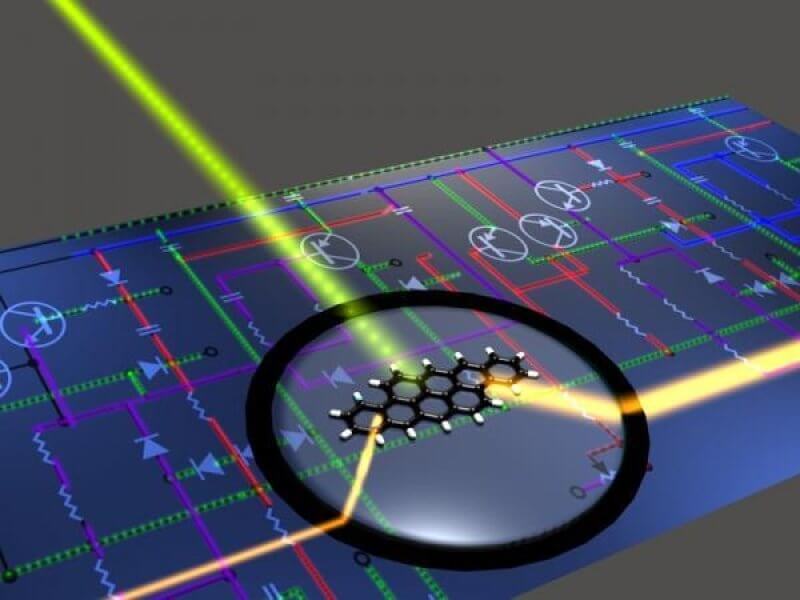
In a completely controlled atmosphere, a worldwide research team has built a transistor that consists of a single copper phthalocyanine molecule, a dozen Indium atoms and a backing material made of Indium arsenide. The transistor was created in a near-total vacuum, at a temperature barely above absolute zero.

090702080119_1_900x600

In a normal transistor, the current is controlled by modulating the gate voltage in favour of a field effect. In order to find a new way of doing this, this experiment was done and they found one. In this single molecule transistor, one just needs to vary the distance of the gate (the atoms, in this case) to modulate electricity.

transistor-1-820x420

Since the experiment was carried out in conditions that are extremely far-off from real world, it will take years to make transistors such small but even then it is a huge step in that direction.

[adinserter block=”7″]

Author: Technology Blog
Tagged :

Drones are now the Rage

Drones over your head with their horns blaring constantly, might be a possibility of the near future, as Google joins the likes of Amazon, Verizon, and around 10 other businesses in signing of an agreement with NASA to enforce safe and low altitude drone flights.

maxresdefault

The idea of widespread commercial drone use is evidently on the verge of being developed, with FAA (Federal Aviation Administration) changing its rules and NASA making groups with other firms to act essentially as traffic police- for the skies.

The initial rules that would be implemented by FAA would be strict and rigid, but a proper traffic system in place, over time, might bowl FAA over to a more lenient set of rules. For example, the drones with per-decided flight routes and destination, would be allowed to fly solo without any visual surveillance outside the line of sight. Amazon is particularly eager to access this feature, so it could help with speedy deliveries.

Google is working on another version of an unmanned aerial vehicle (UAV), different from the one previously attempted by Amazon, which would allow the drones to fly over to remote locations in case of emergencies, with supplies.

_74761326_74761240

The challenge at hand is to decide on a traffic management system that would allow drones to fly safely without collisions with obstacles, or other drones. Various small companies have already come up with technologies that could help in this regard and the final system would work with computers on land connected with the drones to guide them through safe pathways.

[adinserter block=”7″]

Author: Technology Blog

Tagged :

Personal Robots: Useful or Interactive?

Personal robots have been a charming idea to think about. A tiny companion that would follow us around and aim to please us? Sound familiar? Luckily, it functions with more wit than a dog; but not much.

Though Softbank, sold a thousand of its robots under less than a minute in Japan, the sales are generally attributed to our curiosity and excitement to acquire the latest gadgets. Personal robots, can do every little work that could be classified as “productive”. These robots can basically, welcome guests, and provide companionship to little kids and the elderly.

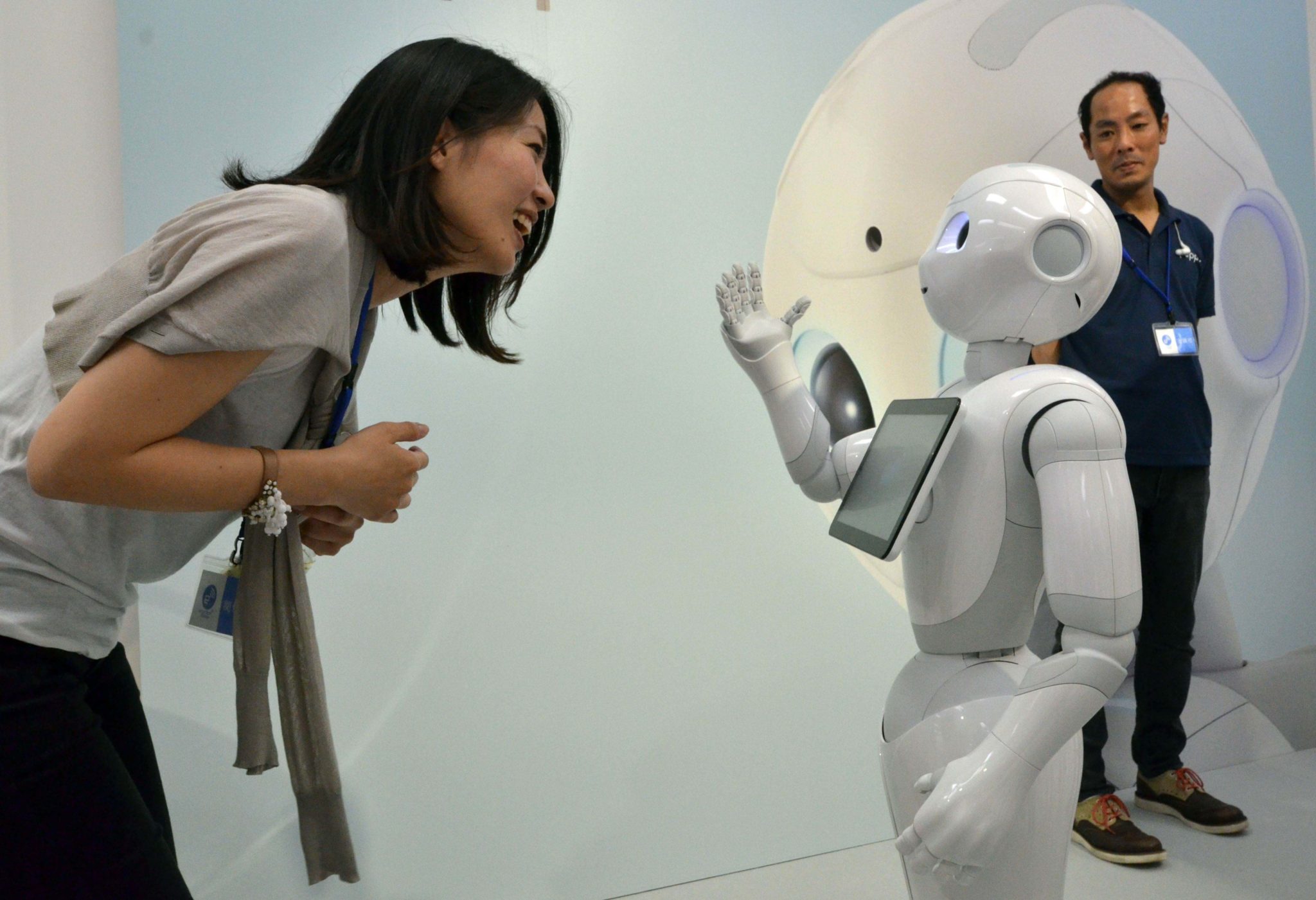
TO GO WITH Lifestyle-technology-robotics-Japan-offbeat, INTERVIEW by Alastair Himmer This picture taken on June 28, 2014 shows Japanese mobile communication giant Softbank's humanoid robot "Pepper" (R) chatting to a woman at a high-tech gadgets exhibition in Tokyo. Mobile carrier Softbank, which created the robot, says Pepper can understand 70 to 80 percent of spontaneous conversations -- although it also answers from a set number of pre-programmed responses. AFP PHOTO / Yoshikazu TSUNO

Pepper costs $1,595, and a monthly payment of $120, would entitle buyers to maintenance and updates. The robot is just 47 inches tall, with a tablet display in its chest, slightly beady black eyes, and a three-wheeled base to move around on. A stereoscopic camera installed is capable of recognizing people and identifying their facial expressions up to 10 feet away.

A software development kit was recently released, and helps developers add new features to Pepper. These features have so far included one that lets Pepper run a musical quiz, take selfies with people and also, helps people with dementia remember to take their medicine.

Jibo is another robot being built by company based in Cambridge, MA. Cynthia Braezeal, an associate prof. estimates that cheap mobile electronic, and increasingly tech-savvy gen, could turn Jibo into a profitable, marketable product.

Jibo_counter_grandma-55d952d9d9a38d6e07cd5a3151ae9a6814be0733c9b53bfb8000073ccd820dc7

A French company, Bluefrog Robotics, is making Buddy, another personal robot/assistant. Buddy has communication tools, personal assistance skills, and can be used as a security device.

Currently, personal robots are at high risk of disappointing the buyers, but soon as more tweaks are made and functions are added, they could have the potential of taking over the jobs of most, unskilled workforce.

[adinserter block=”7″]

Author: Technology Blog

Tagged :

China Builds FAST to Find Alien Life

China is allegedly in a race against time to build the world’s largest telescope, in order to join the ambitious search of alien life on NASA’s recently discovered, planet Earth 2.0. This telescope is funded by Russian billionaire Yuri Milner and physicist Stephen Hawking.

23C7470900000578-2862825-image-a-17_1417814045720

This giant of a telescope is reported to be of the size of 30 football fields, and makes the Puerto Rico’s Arecibo Observatory, 305 meters in diameter, seem positively miniscule. The construction site in located in the mountains of China’s Guizhou province. The diameter of the telescope’s reflector will be 500 meters and will be made up of 4,450 panels, and the perimeter of 1.5 km, would take 40 minutes to complete.

The creation of Five hundred meter Aperture Spherical Telescope, would allow China to obtain much of its space knowledge by its own means, rather than relying on external data.

This sensitive telescope, will make way to greater range of information of weak radio signals. To communicate with alien life out there, could be simpler.

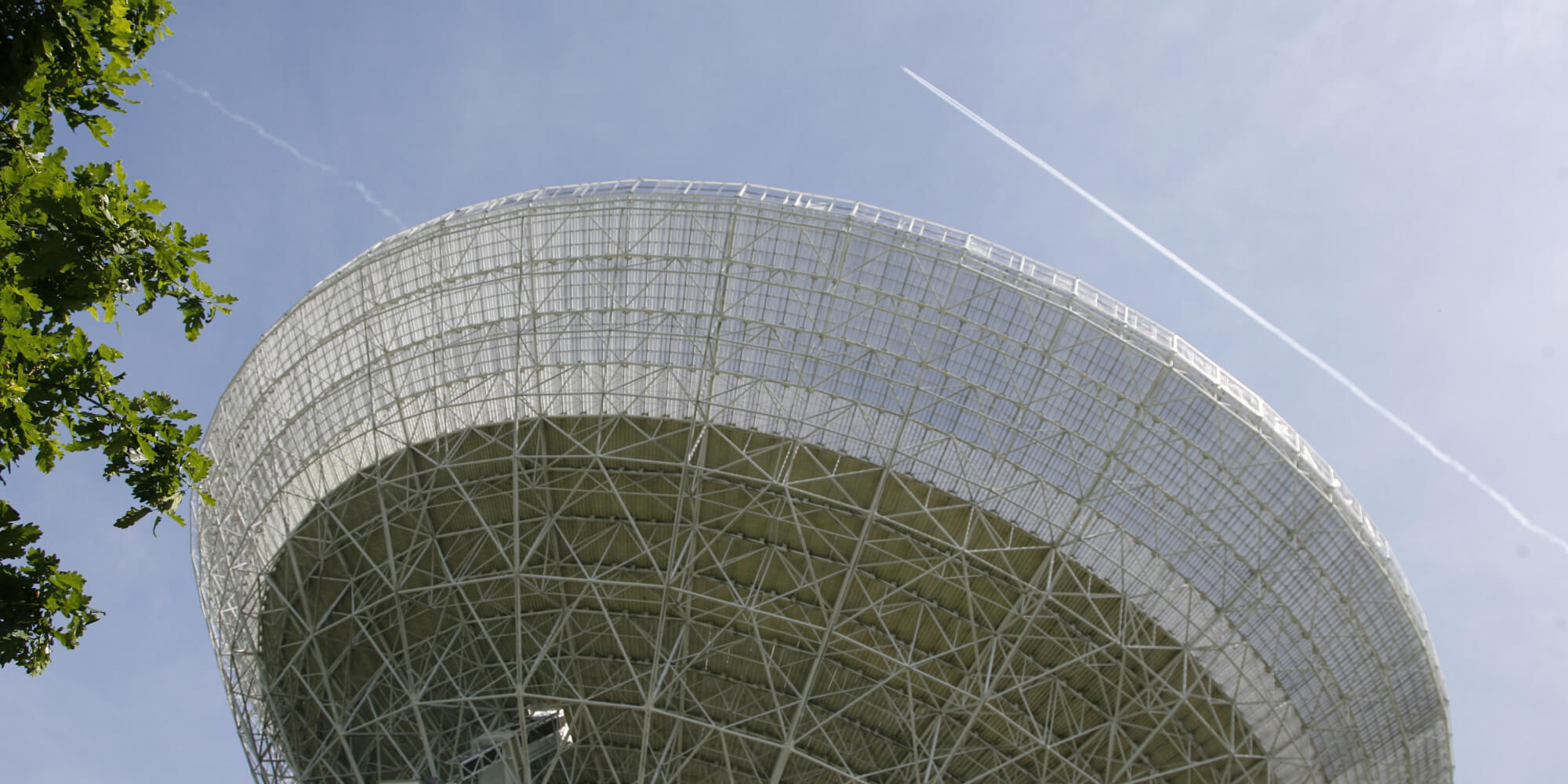
Ein Flugzeug fliegt am Mittwoch, 16. Juli 2010, ueber das Radioteleskop in der Eifelgemeinde Effelsberg, Nordrhein-Westfalen. Das vom Max-Planck-Institut betriebene Radioteleskop ist eines von zwei der weltgroessten, vollbeweglichen Teleskope und hat einen Durchmesser von 100 Metern. (apn Photo/Hermann J. Knippertz) --- An airplane flights over the Radio Telescope in Effelsberg, Germany, on Wednesday, June 16, 2010. With a diameter of 100 meters, the Radio Telescope Effelsberg is one of the largest fully steerable radio telescopes on earth. (apn Photo/Hermann J. Knippertz)

Initial funding of $100 million had been launched by Hawking and Milner.  This invention by China, would mark its status as one of the leading centers for extra-terrestrial research with Australia’s Green Bank Observatory and California’s Lick Observatory.

Speaking to the Russian Times, Milner said that the development of FAST is not only a great leap forward for China, but significantly aims to benefit space research in general.

[adinserter block=”7″]

Author: Technology Blog

Tagged :
Verified by ExactMetrics