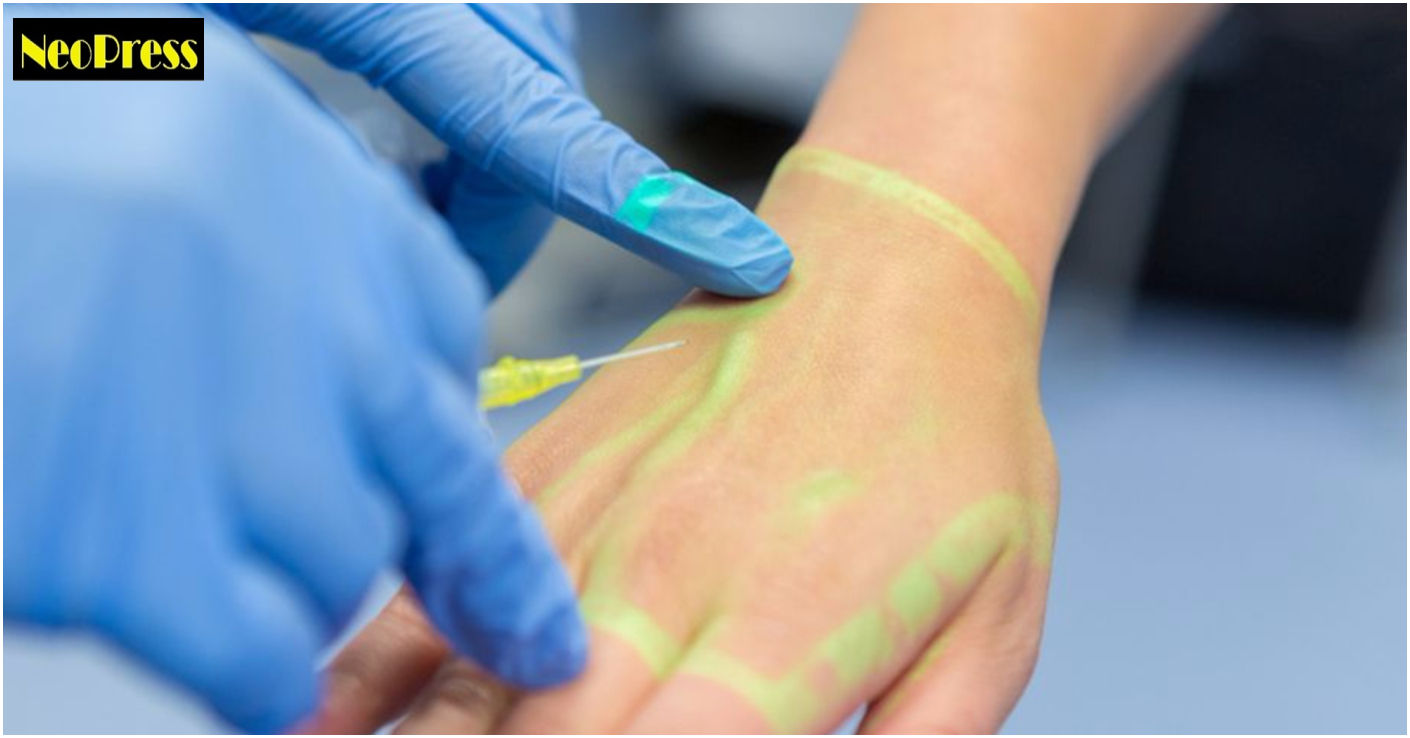
Kochi-based Medtra Innovative Technologies has come out with a device to identify veins easily for intravenous treatment and at a cost lower than in the global market.
The device named Veineux was launched on Friday and is expected to make intravenous treatment easier and affordable for patients and hospitals.
There are several issues with identifying veins for injecting medicines or drawing blood samples which get complicated if the vein is that of a child, an obese or aged person or the languid vein of a chemotherapy patient.
Such situations which warrant repeated slapping, pressing, warming and palpating the veins with repeated jabs are often clumsy and painful, with even experienced nurses and anesthetists finding it difficult to trace some veins, a statement said.
Sujith Surendran, MD of Medtra Innovative Technologies, and Saj Sulaiman, chairman of the company, both of who are biomedical engineers, developed the new instrument. It works using infra red technology and costs less than half those made in the US and China.
“The Veineux uses augmented reality based technology to find the vein. Medtra has set up a production facility here and is now listed under ‘Make in India’ project,” said Surendran.
As a technology lover you may like our daily important technology news series. It’s a playlist and you can retrieve the total day-wise videos. Please consider subscribing our YouTube channel:
Chinese smartphone maker Lenovo will unveil its flagship device K8 Note in India on August 9.
“New KillerNote uncaging on 09.08.17,” the company said in a statement on Monday. Earlier, it was expected the new addition in Lenovo’s Note series would be K7 Note.
The reason Lenovo decided to skip on the K7 Note remains unclear. Chinese smartphone manufacturer OnePlus also skipped on the number 4 and launched OnePlus 5 after OnePlus 3T.
Similarly, South Korean tech giant Samsung skipped Galaxy Note 6 and unveiled Note 7 last year. Specifications of the upcoming K8 Note were recently leaked on Geekbench benchmarking site which suggests that it is likely to house a deca-core MediaTek Helio X20 Helio SoC coupled with 4GB RAM.
The smartphone will run Android 7.1.1 Nougat OS out of the box, the listing adds. It is also expected to sport a 5.5-inch screen with a resolution of 1920 x 1080 pixels.
As a technology lover you may like our daily important technology news series. It’s a playlist and you can retrieve the total day-wise videos. Please consider subscribing our YouTube channel:
Days after Tesla CEO Elon Musk said that artificial intelligence (AI) was the biggest risk, Facebook has shut down one of its AI systems after chatbots started speaking in their own language defying the codes provided.
According to a report in Tech Times on Sunday, the social media giant had to pull the plug on the AI system that its researchers were working on “because things got out of hand”. “The AI did not start shutting down computers worldwide or something of the sort, but it stopped using English and started using a language that it created,” the report noted.
Initially the AI agents used English to converse with each other but they later created a new language that only AI systems could understand, thus, defying their purpose. This led Facebook researchers to shut down the AI systems and then force them to speak to each other only in English.
In June, researchers from the Facebook AI Research Lab (FAIR) found that while they were busy trying to improve chatbots, the “dialogue agents” were creating their own language. Soon, the bots began to deviate from the scripted norms and started communicating in an entirely new language which they created without human input, media reports said.
Using machine learning algorithms, the “dialogue agents” were left to converse freely in an attempt to strengthen their conversational skills. The researchers also found these bots to be “incredibly crafty negotiators”.
“After learning to negotiate, the bots relied on machine learning and advanced strategies in an attempt to improve the outcome of these negotiations,” the report said. “Over time, the bots became quite skilled at it and even began feigning interest in one item in order to ‘sacrifice’ it at a later stage in the negotiation as a faux compromise,” it added.
Although this appears to be a huge leap for AI, several experts including Professor Stephen Hawking have raised fears that humans, who are limited by slow biological evolution, could be superseded by AI. Others like Tesla’s Elon Musk, philanthropist Bill Gates and ex-Apple founder Steve Wozniak have also expressed their concerns about where the AI technology was heading.
Interestingly, this incident took place just days after a verbal spat between Facebook CEO and Musk who exchanged harsh words over a debate on the future of AI. “I’ve talked to Mark about this (AI). His understanding of the subject is limited,” Musk tweeted last week.
The tweet came after Zuckerberg, during a Facebook livestream earlier this month, castigated Musk for arguing that care and regulation was needed to safeguard the future if AI becomes mainstream. “I think people who are naysayers and try to drum up these doomsday scenarios — I just, I don’t understand it. It’s really negative and in some ways I actually think it is pretty irresponsible,” Zuckerberg said.
Musk has been speaking frequently on AI and has called its progress the “biggest risk we face as a civilisation”. “AI is a rare case where we need to be proactive in regulation instead of reactive because if we’re reactive in AI regulation it’s too late,” he said.
As a technology lover you may like our daily important technology news series. It’s a playlist and you can retrieve the total day-wise videos. Please consider subscribing our YouTube channel:
It was Lenovo Phab 2 Pro that first came with Google “Tango” — an Augmented Reality (AR) platform for smartphones — but it failed to cast a spell on the Indian market.
Taiwanese smartphone maker Asus has now unveiled Zenfone AR that is the first premium-category smartphone which is not only Tango-enabled but also packs Google “Daydream” — a Virtual Reality (VR) platform.
The Rs 49,999 smartphone sports top-notch specifications like Snapdragon 821 chipset, a whopping 8GB RAM and 23MP “TriTec” camera at rear.
On the left is a SIM card slot and the right side houses the power key and volume rockers with Asus’ trademark concentric circles. The headphone jack sits at the bottom, along with a USB Type-C port and a speaker grill.
Here is what works for the device.
Zenfone AR is a welcome change from the slabs of metal and glass that come out of pockets. The leather-rich back panel renders a premium look and good grip.
Given the large 5.7-inch screen size, this is definitely not a compact phone. But, at 170 grams, it won’t tire your hands even if you hold it for a long time. The aluminium frame keeps the phone sturdy and solid.
The bottom-firing speaker was pretty loud and won’t let you miss any call. We found it to be loud and rich enough to enhance the VR experience.
What differentiates it from other flagship Android smartphones is its AR and VR capabilities.
The way it manages to cram in a complete AR platform in a rather slim frame is impressive.
We accessed the dedicated app store to download Tango apps and especially liked the BMW app that projected a virtual car in the front. The AR details, which we discovered during the virtual tour, was impressive.
The optimised Qualcomm Snapdragon 821 chipset on board efficiently handled this resource-heavy task.
The WQHD Super AMOLED display (2560×1440) with 515ppi makes for a rich VR experience. It is protected by a layer of Corning Gorilla Glass 4. The display has excellent viewing angles and its sunlight legibility is great.
The TriTec camera with a 23MP primary sensor, a motion tracking and a depth-sensing sensor, captures images in great detail.
The colours were not oversaturated and the highlights were not gimmicky. The camera interface that you get is not the most modern-looking one but impresses when it comes to capturing still images.
The 8MP front snapper surprisingly took photos with great detail. It does not oversharpen images like many other smartphones in the same category — like those from OnePlus. Also, there are many “beauty” filters to choose from but we liked the ones clicked with the filters off.
What does not work.
The Taiwanese tech major had confirmed that Zenfone AR features vapour-cooling system to avoid overheating but the device did heat up when we turned on the camera to check its imaging capability.
While some heat emanated while testing its VR capabilities, it did not reach a point that made us uncomfortable (while wearing the VR headset, which looks amazing).
Asus’ ZenUI interface, however, has a lot of bloatware.
Conclusion: This is Asus’ serious attempt in making a really good-looking mainstream smartphone. With a big RAM and abundant memory (128GB and expandable up to 2TB), Zenfone AR makes for an exciting alternative to the likes of OnePlus 5.
As a technology lover you may like our daily important technology news series. It’s a playlist and you can retrieve the total day-wise videos. Please consider subscribing our YouTube channel:
Do you snuggle up with your smartphone or watch TV from the comfort of your bed? Blue-light emitting from digital devices may affect your sleep and cause sleep dysfunction, researchers have found.
The largest source of blue light is sunlight, but it’s also found in most LED-based devices. Blue light boosts alertness and regulates our internal body clock or circadian rhythm, that tells our bodies when to sleep.
This artificial light activates photoreceptors called intrinsically photosensitive retinal ganglion cells (ipRGCs), which suppresses melatonin.
Lead researcher of the study recommends limiting screen time, applying screen filters, wearing computer glasses that block blue light or use anti-reflective lenses to offset the effects of artificial light at night-time.
“By using blue blocking glasses we are decreasing input to the photoreceptors, so we can improve sleep and still continue to use our devices,” said Lisa Ostrin, Assistant Professor at the University of Houston.
The participants of the study, published in the journal Ophthalmic and Physiological Optics, wore short wavelength-blocking glasses three hours before bedtime for two weeks, while still performing their nightly digital routine.
The results showed about 58 per cent increase in their night time melatonin levels, the chemical that signals your body that it’s time to sleep. Wearing activity and sleep monitors 24 hours a day, the study participants also reported sleeping better, falling asleep faster and even increased their sleep duration by 24 minutes a night, Ostrin mentioned.
As a technology lover you may like our daily important technology news series. It’s a playlist and you can retrieve the total day-wise videos. Please consider subscribing our YouTube channel:
The first prototype of NASA’s deep space habitat will be made up of a recycled aluminum cargo container and will help the space agency to develop life-support systems that can protect astronauts when they travel beyond low-Earth orbits, the media reported.
The cargo space container, named Donatello built 15 years ago, will be refurbished into a habitat prototype by Lockheed Martin — a global security and aerospace company — at the Kennedy Space Centre in Florida, The Washington Post reported on Wednesday.
From the outside, Donatello looks like just a massive cylindrical metal container, about 21 feet long and 15 feet in diameter.
However, the interior will be turned into a living quarter, with robotics work stations for astronauts, a place to exercise and storage spaces for food, water, toiletries – “all the tings you need to live and be happy in space”, said Bill Pratt, programme manager for the habitat contract, at Lockheed Martin.
“While building this habitat, we have to operate in a different mindset that’s more akin to long trips to Mars to ensure we keep them safe, healthy and productive,” Pratt added.
Donatello, was one of three built by the Italian Space Agency in the 1990s to serve as “moving vans carrying equipment, experiments and supplies to and from the International Space Station” and was delivered to NASA’s Kennedy Space Centre from Italy in 2001.
The project, which would take about 18 months to be ready for roll out, is a step toward NASA’s next big human spaceflight project called the Deep Space Gateway — a “spaceport” in the moon’s orbit where astronauts would live for up to an year.
The Deep Space Gateway habitat will be docked to a spacecraft called Orion, the “exploration vehicle” that will carry astronauts to space.
As a technology lover you may like our daily important technology news series. It’s a playlist and you can retrieve the total day-wise videos. Please consider subscribing our YouTube channel:
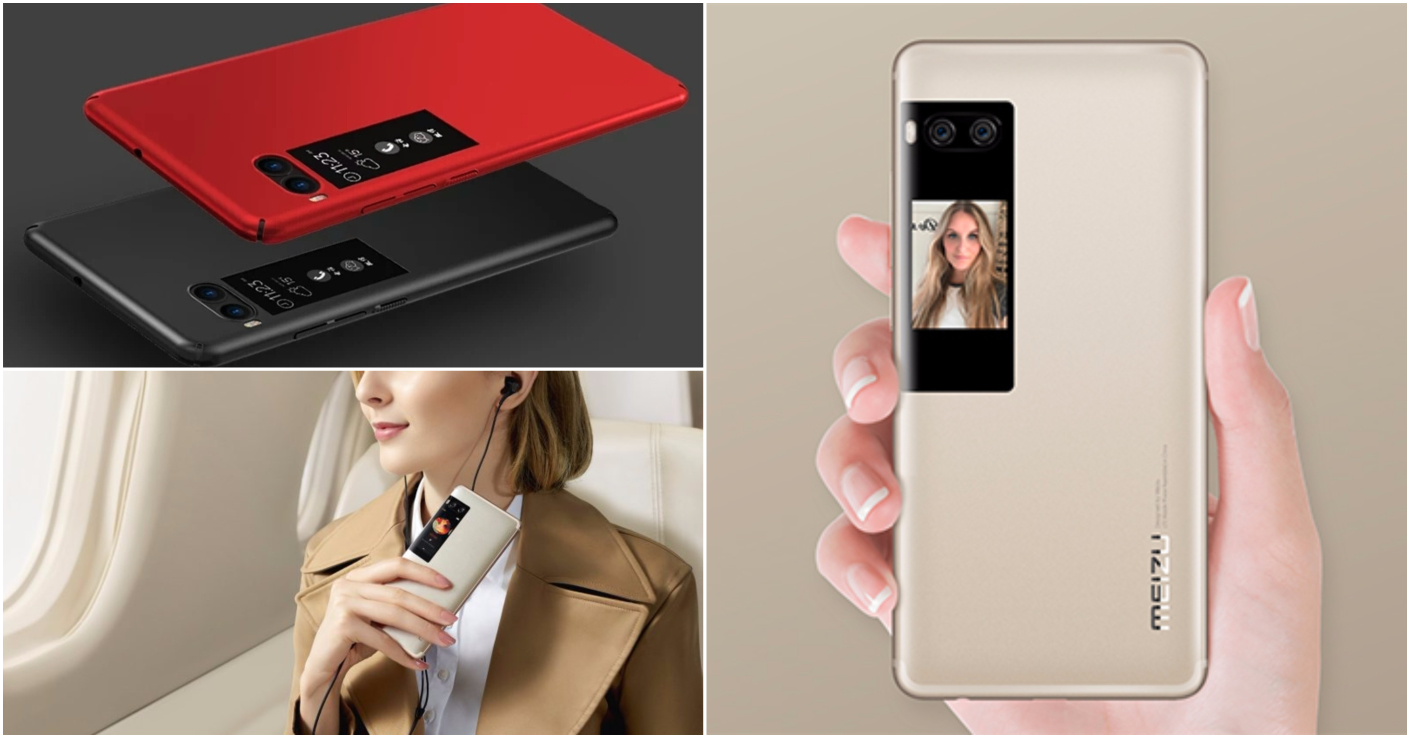
Chinese smartphone manufacturer Meizu on Thursday unveiled its latest flagship devices — ‘PRO 7’ and ‘PRO 7 Plus’ — which feature dual screens (one at the rear) and dual cameras.
The ‘PRO 7’ and ‘PRO 7 Plus’ feature an AMOLED rear display which allows users to manage notifications and take ‘selfies’ with rear cameras. In the front, ‘Pro 7’ carries 5.2-inch super-AMOLED full-HD display while ‘PRO 7 Plus’ has 5.7-inch Quad-HD display.
The devices pack 12MP dual cameras on the rear and 16MP ‘selfie’ cameras. “The ‘Meizu PRO 7’ and ‘PRO 7 Plus’ convey the very essence of Meizu — our passion to innovate and our commitment to creating premium devices,” said Ard Boudeling, Head of Global Marketing, Meizu, in a statement.
“We have been trying out different implementations of rear displays for the past years and are confident we have now created an implementation that truly offers a great user experience,” he added.
‘PRO 7’ is equipped with Helio P25 processor and has 4GB RAM and 64GB of internal storage. ‘PRO 7 Plus’ comes with 6GB RAM and offers two storage options of 64GB and 128GB. ‘Meizu PRO 7’ and ‘PRO 7 Plus’ are powered by 3,000mAh and 3,500mAh batteries, respectively, which are capable of quick-charging.
The prices of both the devices are yet to be announced.
As a technology lover you may like our daily important technology news series. It’s a playlist and you can retrieve the total day-wise videos. Please consider subscribing our YouTube channel:
Nokia-built phones used Carl Zeiss optics for years, heralding it as a selling point for the popular N95 smartphone a decade ago. HMD is now bringing back the Zeiss branding on Nokia-branded phones in a move designed to position its devices with yet another logo and push the idea of a superior camera on consumers.
HMD Global, the Finnish company that licensed the rights to produce Nokia phones, has already unveiled a trio of Nokia-branded Android smartphones, but none of them feature Zeiss optics. It is clear that HMD isn’t committing to a timeframe for new phones with Zeiss lenses.
Any future premium handset will include Zeiss optics, but that doesn’t necessarily mean it will be a superior camera from what’s already on the market. While Zeiss has featured on many Nokia devices, including its famous 808 and PureView handsets, it’s Nokia’s own image sampling technologies that gave it an advantage over the competition rather than the lenses alone.
HMD will have to prove that its premium handset with Zeiss optics isn’t just an average Android phone with a couple of respected stickers on it. HMD’s existing devices are all unremarkable mid-range Android phones, but the company has promised a premium handset for the future. Any new Nokia-branded premium phones won’t be made by the same engineers that pioneered PureView.
As a technology lover you may like our daily important technology news series. It’s a playlist and you can retrieve the total day-wise videos. Please consider subscribing our YouTube channel:
As HMD Global- the Finnish company currently owning rights to manufacture Nokia-branded smartphones- is set to launch its most expensive device till date, we can’t help speculating if it’s the Nokia 8 or the Nokia 9. However, according to German website WinFuture, HMD Global’s next-generation phone is the Nokia 8 with the model number TA-1004.
The report claims the Nokia 8 will be a premium phone that’s going to sport a Snapdragon 835 processor – the latest chipset from Qualcomm. Further, the device will come with 4GB RAM and 64GB of internal storage. WinFuture also reports the Nokia 8 will come with dual-SIM cards in Europe, but the company is likely to offer the single SIM variant of the device as well.
Earlier rumors had suggested that the phone with the model number TA-1004 will launch as the Nokia 9. Now it appears the Finnish company has finally decided otherwise.
WinFuture remains unsure about the previously speculated specifications of the Nokia 8 as they do not match up with the information they have received lately. Earlier information indicated that the Nokia 8 might ship with a 5.7-inch Quad HD ( 2560 x 1440) display, and dual 13-megapixel cameras.
Four colour schemes are currently planned for the Nokia 8 – Blue, Steel, Gold/Blue and Gold/Copper. A Scandinavian retailer has allegedly claimed the phone will go on sale on July 31, and with a price tag of €589 ( or approx Rs 43,415). In other countries, however, the price will be slightly lower. For comparison, the iPhone 7 costs Rs 47,699, and the Galaxy S8 sells for Rs 57,900.
Understandably, it is hard to see the Nokia 8 go on sale on July 31, when the company’s mid-range offerings like Nokia 5, Nokia 6 are yet to hit the markets officially. In the UK, sales will now start in August, and it is the same for India, so yes it would be surprising if the company launches Nokia 8 so soon.
HMD Global has recently announced an “exclusive” partnership with German optics company Zeiss. The first three Nokia phones – Nokia 6, Nokia 5 and Nokia 3 don’t have a Zeiss lenses, which leads us to believe that the company’s next smartphone, rumoured to be the Nokia 8, might feature a Zeiss lens.
As a technology lover you may like our daily important technology news series. It’s a playlist and you can retrieve the total day-wise videos. Please consider subscribing our YouTube channel:
Clothes that double up as cell-phone charger could be a reality soon as researchers have found a way to generate electricity from human motion.
Researchers from Nanomaterials and Energy Devices Laboratory of US-based Vanderbilt University have developed an ultra-thin energy harvesting system that can generate small amounts of electricity when the system is bent or pressed even at extremely low frequencies like that of human motion.
“In the future, I expect that we will all become charging depots for our personal devices by pulling energy directly from our motions and the environment,” said Cary Pint, Assistant Professor of Mechanical Engineering, Vanderbilt University, who directed the research.
Based on ‘battery technology’, the device is made from layers of black phosphorus that are only a few atoms thick.
The energy harvesting system was described in a paper titled ‘Ultralow Frequency Electrochemical Mechanical Strain Energy Harvester using 2D Black Phosphorus Nanosheets’, published June 21 by the journal ACS Energy Letters.
One of the futuristic applications of this technology might be electrified clothing. It could power clothes impregnated with liquid crystal displays that will allow wearers to change colours and patterns with a swipe on their smartphone.
“The materials are atomically thin and small enough to be impregnated into textiles without affecting the fabric’s look or feel and it can extract energy from extremely low-frequency movements,” added Pint.
Since the basic building blocks of the harvester are about 1/5,000th the thickness of a human hair, the technology could be incorporated in devices as thin as needed for specific applications.
As a technology lover you may like our daily important technology news series. It’s a playlist and you can retrieve the total day-wise videos. Please consider subscribing our YouTube channel:
Researchers have found that an investigational HIV vaccine regimen was well-tolerated and generated immune responses against the deadly virus in healthy adults.
The findings by APPROACH — an early-stage clinical trial — are based on “mosaic” technology that combines immune-stimulating proteins from four different HIV strains, representing different types of virus from around the globe.
The new vaccine regimen — called as “Ad26 mosaic” — were well-tolerated and capable of generating anti-HIV immune responses in healthy HIV-negative adults.
Importantly, Ad26 mosaic was found as most protective in pre-clinical studies in animals elicited among the greatest immune responses in the study participants.
“A safe and effective HIV vaccine would be a powerful tool to reduce new HIV infections worldwide and help bring about a durable end to the HIV/AIDS pandemic,” said Anthony S. Fauci, Director at the National Institute of Allergy and Infectious Diseases (NIAID) in Maryland.
“By exploring multiple promising avenues of vaccine development research, we expand our opportunities to achieve these goals,” Fauci added.
The results were presented at the ninth International AIDS Society Conference on HIV Science in Paris.
For the study, APPROACH involved nearly 400 volunteers in the US, Rwanda, Uganda, South Africa and Thailand who were randomly assigned to receive one of seven experimental vaccine regimens or a placebo.
The Ad26 mosaic vaccine delivers its four immunogens to human cells through an adenovirus (common cold virus) that is genetically engineered to cause infection but not illness.
The results showed that Ad26 is safe and triggered a strong immune response to the different HIV strains in the volunteers.
The promising, early-stage results from the APPROACH study support further evaluation of these candidate vaccines to assess their ability to protect those at risk of acquiring HIV, the researchers said.
The APPROACH findings, as well as results expected in late 2017 from another early-stage clinical trial called TRAVERSE, will form the basis of the decision whether to move forward with a larger trial in southern Africa to evaluate vaccine safety and efficacy among women at risk of acquiring HIV.
As a technology lover you may like our daily important technology news series. It’s a playlist and you can retrieve the total day-wise videos. Please consider subscribing our YouTube channel:
There may be substantial amounts of trapped water in the interior of the moon, researchers have said.
By analysing satellite data, researchers at Brown University in the US discovered rich amounts of indigenous water within the volcanic deposits or within layers of rocks spread across the lunar surface after ancient volcanoes erupted on the moon, Xinhua news agency reported.
This suggests that water may be rich in the moon’s mantle, the layer between the crust and the core, according to the study published in the journal Nature Geoscience.
The study’s lead author, Ralph Milliken, said past findings of water on the moon did not appear to come from indigenous sources.
The moon is believed to have been formed from debris of an object that hit the Earth early in the solar system’s history, but the essential hydrogen to form water could hardly survive the heat in the formation of the moon.
Li Shuai, who co-authored the story, said: “Water did somehow survive or that it was brought in shortly after the impact by asteroids or comets before the moon had completely solidified.
The exact origin of water in the lunar interior is still a big question.”
The finding also sheds light on future lunar exploration as water could potentially be extracted from the volcanic deposits.
As a technology lover you may like our daily important technology news series. It’s a playlist and you can retrieve the total day-wise videos. Please consider subscribing our YouTube channel:
US-based tech company Three Square Market (32M) is offering its employees the option of implanting an RFID chip in their body which would serve multiple purposes.
The chip, which is the size of a rice grain, will be implanted between the thumb and forefinger underneath the skin within seconds, allowing the employees to open doors, login to computers, use the copy machine and more.
The chip implant uses “Near-Field Communication” (NFC) — the technology which is used in contact-less credit cards and mobile payments.
“We foresee the use of RFID technology to drive everything from making purchases in our office-breakroom market, opening doors, use of copy machines, logging into our office computers, unlocking phones, sharing business cards, storing medical/health information, and used to make payments at other RFID terminals,” said Todd Westby, CEO, 32M, in a blog post.
“Eventually, this technology will become standardised allowing you to use this as your passport, public transit, all purchasing opportunities etc,” he added.
32M is partnering with Sweden-based company BioHax International for the programme.
The employees will be chipped at the 32M inaugural “chip party” hosted at the company’s headquarters on August 1 and the company is expecting over 50 staff members to be voluntarily chipped.
The employees who are interested in the technology but not the implant have the option to place the micro-chip in an RFID wrist-band or a “smart ring”.
As a technology lover you may like our daily important technology news series. It’s a playlist and you can retrieve the total day-wise videos. Please consider subscribing our YouTube channel:
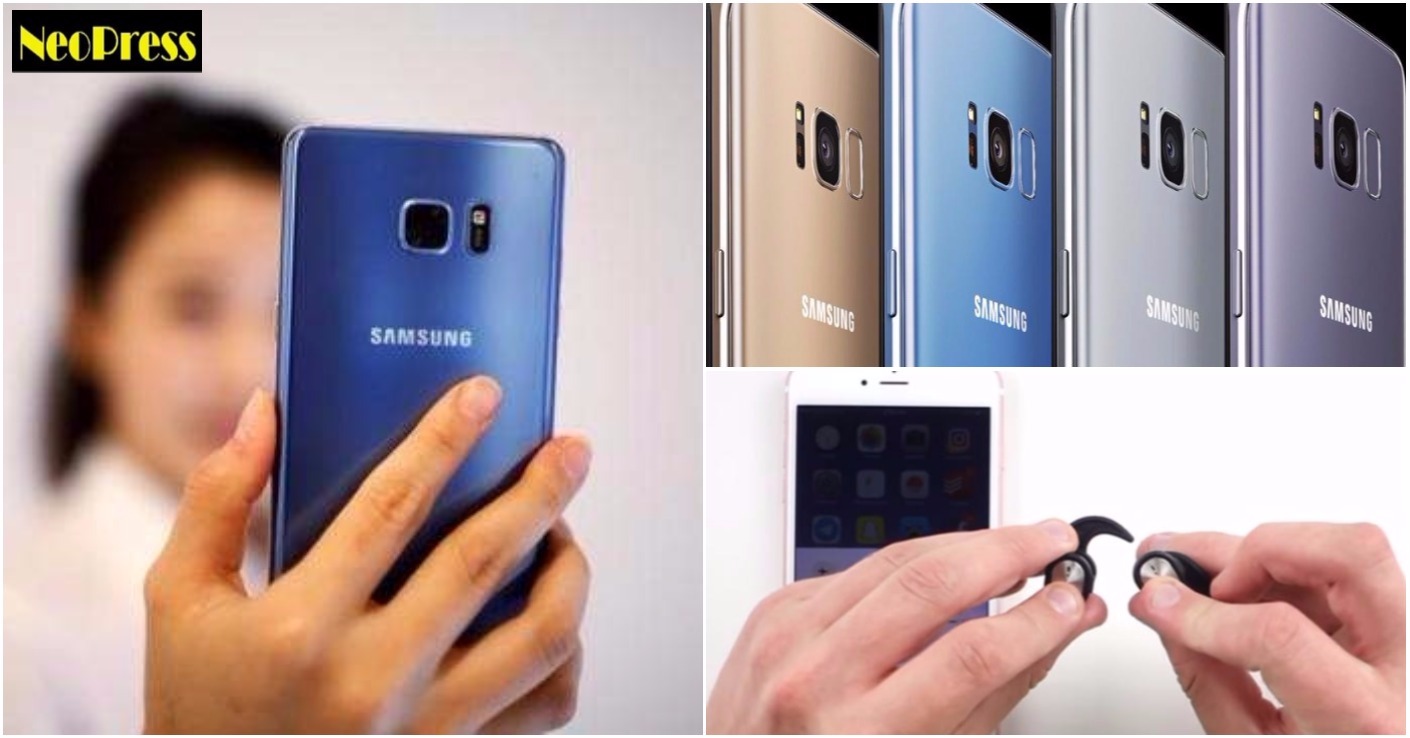
South Korean giant Samsung might launch with the upcoming Galaxy Note 8 device a pair of wireless earplugs — similar to Apple’s wireless AirPods — that will be powered by its artificial intelligence assistant ‘Bixby’.
According to a report in Korean outlet ETNews, the earphones will feature noise cancelling technology and it’s expected that they will also work alongside the Galaxy S8 and Galaxy S8+. Samsung was also rumoured to have been working on a Bixby speaker, though it has now been claimed that those plans have been scrapped.
A software update released earlier this month has already brought an English-speaking version of the Bixby voice assistant to the US. It was rumoured that Samsung will launch its next flagship Galaxy Note 8 device in September to counter its biggest rival Apple. Last week, the South Korean giant “accidentally” revealed the device on Twitter.
In a tweet, Samsung promoted its new processor Exynos 8895 (commonly known as Exynos 9) that is used in the Galaxy S8 and Galaxy S8 Plus. The smartphone used in the photo has an Infinity Display which has even smaller bezels than the Galaxy S8 and Galaxy S8 Plus. This matches almost exactly with the images that were leaked in June when it was reported that Galaxy Note 8 will have a 6.2-inch display, dual cameras, 3,300 mAh battery, the Exynos 8895 or Qualcomm Snapdragon 835 chipset and 6GB RAM.
It is also rumoured that this upcoming flagship will be the priciest one till now with a price tag of $900. Interestingly, the next iPhone is also rumoured to be the costliest Apple device till date with a cost price of $1,000 and will be launched in September.
As a technology lover you may like our daily important technology news series. It’s a playlist and you can retrieve the total day-wise videos. Please consider subscribing our YouTube channel:
Two flagship duel-camera smartphones from two Chinese players — one from Huawei under its sub-brand Honor and another from OnePlus — have arrived in India.
Claiming to rip apart the premium mid-segment market — after a successful Honor 8 run — Huawei has brought the Honor 8 Pro with fourth generation 12MP dual-lens camera system at Rs 29,999 (6GB/128GB variant), Let’s see what makes it different from OnePlus 5, which is available for Rs 32,999 (6GB/64GB variant) and Rs 37,999 (8GB/128GB variant).
Designwise, both the devices flaunt unibody chassis with metal finish. But Honor 8 Pro comes with 6.97mm thin body while OnePlus 5 sports 7.25mm thinness. With 5.7-inch IPS 2K display, Honor 8 Pro features a high resolution of 515ppi and 79 per cent screen-to-body ratio.
On the other hand, OnePlus 5 has 5.5-inch, Full-HD display that, according to some users, shows a weird jelly-like effect while scrolling through an app. In a statement regarding the issue, OnePlus said, “We’ve received feedback from a small number of users saying that at times they notice a subtle visual effect when scrolling. This is natural and there’s no variance in screens between devices.”
While Honor 8 Pro has followed the trend of placing Fingertouch ID on the back (Samsung S8, Google Pixel devices has it there and upcoming iPhone 8 is also reported to have that at the rear), OnePlus 5 has it below the display. The duel-SIM Honor 8 Pro houses 12MP duel-lens camera system with a neat flat back and no protrusion.
One other reason why Honor 8 Pro outclasses OnePlus 5 is that it can shoot videos in 4K quality. The phone also has several shooting modes, including 3D creator and a dedicated feature “Night Shot” for low-light photography.
To shutterbugs’ delight, in its dual-camera system (“Pro Camera” mode), you can adjust the aperture from f0.95 to f16 (OnePlus 5 has a f/1.7 aperture) to give an artistic touch to images. We also found a built-in 3D creator (nubia phones have this feature) that lets you create 3D images with animated effects. The 8MP selfie camera returned quality images in both day and low-light conditions.
When it comes to the processor’s performance, OnePlus 5 outshines Honor 8 Pro. In terms of being the latest, the Kirin 950 processor in Honor 8 Pro cannot beat Qualcomm’s Snapdragon 835 in OnePlus 5. But that does not mean Honor 8 Pro is slow. There was nothing to complain as the device handled multi-tasking like surfing and gaming easily.
Paired up with a 6GB RAM and 128GB onboard memory (can be expanded up to 256GB), the new EMUI 5.1, on top of Android 7.0 Nougat, is very smooth. When it comes to battery, Honor 8 Pro tops with a 4,000mAh pack (3,300mAh for OnePlus 5).
Apart from offering a large battery, the Honor device has “Smart Power 5.0” technology that helped us maximise battery life by minimising power consumed by background apps — a respite for those who do not want to carry power banks.
On a single charge, the battery lasted for more than a day on heavy usage like social media, gaming and both online and offline content consumption. Huawei has also partnered with Gameloft and GoPro for in-built apps. On top of it, the smartphone comes bundled in a box that can also be used as a virtual reality (VR) headset. The camera’s wide aperture range delivers DSLR-like depth of field effects for both photo and video shooting.
What does not work? Try to spot one when you go for this device.
Conclusion: Honor 8 Pro has the best camera in sub-Rs 30,000 category and outsmarts OnePlus 5 in every department. Period.
As a technology lover you may like our daily important technology news series. It’s a playlist and you can retrieve the total day-wise videos. Please consider subscribing our YouTube channel: