The sun is disappearing, and you have only 9 months to prepare for it!

Aug. 21, 2017, “may turn out to be the most popular vacation-day request in history,” Michael E. Bakich writes in Discover magazine. Why? Because on that date — for the first time in 99 years — a total eclipse of the sun will be visible across the United States, from sea to temporarily-not-shining sea. Millions of Americans will be in easy driving distance of a spectacle that has been called indescribable, unforgettable, even life-altering. So better book your date and take your leave.

The sun will disappear for about 2½ minutes, beginning in Oregon about 10:15 a.m. local time; the phenomenon will move eastward, ending an hour and a half later in South Carolina. In between, the eclipse will be visible from Grand Teton and the Great Smoky Mountains national parks, from St. Louis and Kansas City and Charleston, S.C., and all points in between. Look around the Internet and you’ll see that hotels and campgrounds along the 50-to-70-mile-wide path of “totality” have been booking up since May.

Bakich has these suggestions:

Find friends who have a solar telescope and watch with them. (You’ll see sunspots, the irregular profile of the moon’s edge, a glimpse of Venus.)

During the eclipse, remember to tear your eyes away from the sun and turn around: In every direction, you’ll see the painterly colors of a 360-degree sunset.

Get eclipse glasses — for just a few dollars you can get lenses made with optical Mylar, or #14 welder’s glass.

The last time a total eclipse was visible coast to coast was June 8, 1918, and it was front-page news nationwide. Everyone in the lower forty-eight will be able to see at least a partial eclipse — unless you’re under cloudy skies, where the sky will just grow darker. But as many passionate bloggers are pointing out, if you want to see it all, get a map and find yourself a spot where the eclipse will be total.

“Likening a partial eclipse to a total eclipse is like comparing almost dying to dying.” writes a grim blogger.

Try and choose the best spot. Close’ is NOT close enough!’ ” warns one site: “Just as the person who only smells the meal outside the steakhouse remains hungry, so too do those who observe the eclipse from outside the path of totality end the day wondering what, indeed, all the fuss was about.”

In “Plan Now for the 2017 Eclipse,” Bakich — a senior editor at Astronomy magazine — takes very seriously the idea that if you don’t plan ahead, you could miss out on a once-in-a-lifetime opportunity.

As a technology lover you may like our daily important technology news series. It’s a playlist and you can retrieve the total day-wise videos. Please consider subscribing our YouTube channel:

Author: Technology and Beyond

Tagged : /

Scientists reveal a secret, if you’re always late, you’re likely to be more creative than others

How many times have you tried to be on time before just conceding that “you just are this way”? If you’re a tidsoptimist, Science has something positive to say about you: this is probably because you are more creative.

Not just that, a scientific research shows that people who are late tend to be more optimistic, good at multitasking and more hopeful. It makes them bad time estimators, but for the long run, it proves very beneficial for them.

Feel better already? You’re better of shrugging away your boss’ angry glares.

Another research conducted by San Diego State University professes that lateness is associated with Type B people (people who are laid back, more easy going, not that stubborn and very adaptive to surroundings). In short, these kinds of people see the bigger picture in everyday things and don’t fret over smaller things in life.

Diana DeLonzor, the author of “Never be a Late Again”, and a Managerial Consultant says that, “Most late people have been late all their life, and they are late for every type of activity — good or bad.”

“Surprisingly little scientific research has been done on tardiness, but some experts subscribe to the theory that certain people are hardwired to be late and that part of the problem may be embedded deep in the lobes of the brain.”

Why isn’t that nice? You being late is nothing but a result of your psychology and personality.

As a technology lover you may like our daily important technology news series. It’s a playlist and you can retrieve the total day-wise videos. Please consider subscribing our YouTube channel:

Author: Technology and Beyond
Tagged : /

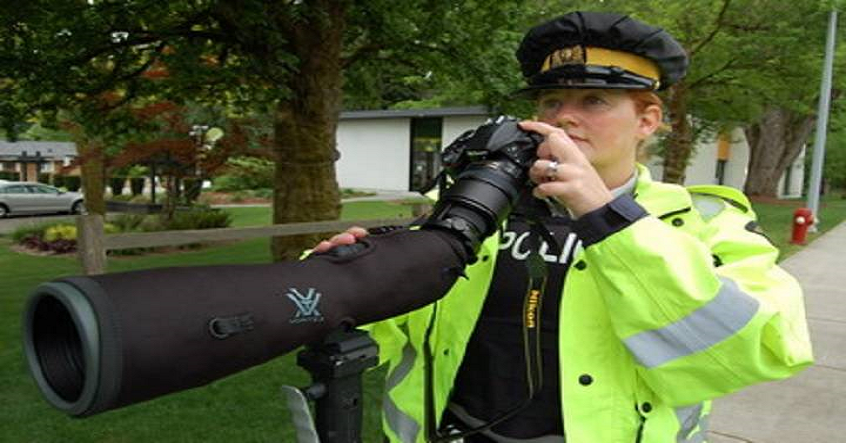
Don’t drive and text. This amazing new camera can catch texting drivers in seconds

Humans are great at spotting anomalies, but terrible at concentrating on what we’re supposed to be keeping an eye on. That’s why inspectors are able to sneak so many guns past TSA security agents. Machines have unlimited attention, but are often less good at detecting things like suspicious packages—in part because they need to know precisely what it is they’re looking for. A new camera from Movidius, however, defies this rule.

The new Hikvision camera uses neural networks to “automatically detect anomalies such as suspicious packages, drivers distracted by mobile devices, and intruders trying to access secure locations.”

Tech-wise, the breakthroughs are the camera’s stereo 3D imaging, and a new chip that’s powerful enough to do all the analysis in real time inside the camera itself, instead of connecting to a bigger computer in the cloud. According to the press release, the new camera managed 99% accuracy in tests, but the nature of those tests isn’t revealed.

Deep learning like this is what allows you to type something like “muffin” into your iPhone’s photo search field and get back not even just pictures of cakes, but specifically all the photos of muffins you’ve ever taken. But it’s also able to track activists and protestors, or pretty much anything else its owners, private or government, want it to track.

It’s both terrifying, and also a great new investigation technique for TV crime dramas.

When used as a security camera, it’s able to not only detect movement but to see what is moving, distinguishing tumbleweed from a car or a human intruder, say. But it has also been used to locate a lost senior citizen using facial recognition, which is an ability with obvious privacy concerns.

It’s ability to spot texting drivers coupled with license-plate reading, and automatic ticketing, could we finally have a solution to careless, law-flouting types on the road?

The University of Manchester now touts itself as the “Home of Graphene.”

As a technology lover you may like our daily important technology news series. It’s a playlist and you can retrieve the total day-wise videos. Please consider subscribing our YouTube channel:

Author: Technology and Beyond

Tagged : / /

We are now able to 3D print absolutely anything. Here are some examples that’ll surprise you

When he invented it 33 years ago, Chuck Hull couldn’t have known what weird and wonderful things 3D printing would end up being used for. Now we continue to make huge strides using the same technology. Here are some feats achieved by 3D printing that’re sure to amaze you:

The first ever 3D object ever built by 3D printing was the stereolithography to prototype plastic parts. Chuck Hull developed it in 1983.

This is a truly astonishing product of 3D printing. An artwork, by Dutch artist Diemut Strebe, is a replica of Vincent van Gogh’s left ear. It is not made of plastic, but living cells derived from tissue supplied by van Gogh’s great-grandson!

Musical instruments: The “3Dvarius” Laurent Bernadac plays is a 3D-printed violin made of transparent resin. The instrument was based on a model of a Stradivarius violin, then the design was modified to try and give it the best possible weight distribution and acoustic properties.

Bionic products, designed by Japanese company exiii, would have cost tens of thousands of dollars to make a decade ago  Now, using a 3D printer, it can be made for less than $300. The firm has made the 3D-model files for the arm, called HACKberry, available for anyone to download.

This is one invention the creators of 3d printing objected to. The first completely 3D-printed handgun was made by Cody Wilson in Austin, Texas, in 2013. However, the company was not happy about the use of its device to make weapons.

Even foods have been included! Marzipan figures have been printed at a conference in Germany in February. Other foods that lend themselves to 3D printing include chocolate, cookie dough and ice cream.

And even homes… This year, Chinese construction company HuaShang Tengda printed an entire two-storey house in Beijing. The company’s team built the frame of the house then covered it with concrete using its gigantic 3D printer. It took just 45 days from start to finish – traditional building methods would usually take months to achieve the same feat.

And of course, electric cars. The body of this electric car was made as a single piece by a giant 3D printer in Chicago in 2014. It took 45 hours to print, then the mechanical parts were made using conventional methods. Other vehicles have since been printed, including a nano racing car.

As a technology lover you may like our daily important technology news series. It’s a playlist and you can retrieve the total day-wise videos. Please consider subscribing our YouTube channel:

Author: Technology and Beyond
Tagged : / /

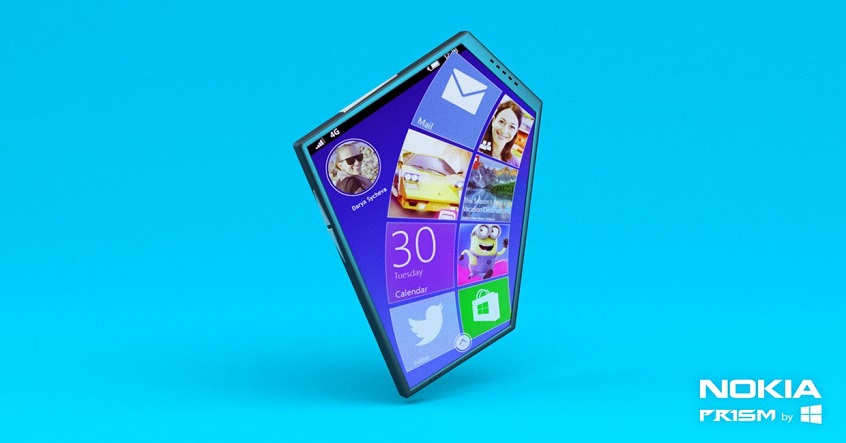
Nokia Prism – Is it Plain Weird or Simply the Future?

While Xiaomi has gone ahead and launched the first ever concept with almost zero bezels, a concept from an unknown source shows a Nokia phone and it looks incredibly… intriguing.

Most of us like “weird”. We like foldable phones, handsets made of crazy materials, smartphones with 64 GB of RAM and sporting endless battery lives. But this Nokia concept phone is a bit out there. It’s called Nokia Prism and it’s the creation of Vasili Sychev from Russia. As per the concept, the weird Nokia phone runs Windows Phone OS and there aren’t many leaks on this aspect.

As we all know and per several employees of Nokia itself, the Finnish smartphone giant will launch Android-powered smartphones by the end of this year or maybe early 2017 or by MWC 2017. If this concept is indeed what they have planned, it’s going to be quite a buzz.

Don’t get me wrong, the execution of the Nokia Prism phone is flawless, but in the end what’s the point? This prism-shaped phone looks good only as a piece of art nouveau and only when seen from the back. It feels like the time when you tried to cut a piece of paper and it ended up being a trapeze instead of a rectangle. And then you started cutting again…

he problem with the Nokia Prism is that it has those sharp and angular corners and edges, making it not very comfy to hold, actually, not comfy at all. And I’m not even talking about the resolution and the fitting of apps on the screen. It appears that the most prominent corner is reserved for the signal and notifications, while the “base” of the phone shows the rest of the UI and video playback screen.

This would work fine as a boomerang, but a phone? … Nope!

Users on 9gag have given extremely mixed, but nevertheless hilarious reactions:

“So what’s next? Cubicle phone? Sphere phone? Hexagonal phone?” speculates one comment.

While another practical one reads: “Does it come in lefty-mode?”

Other comments range from enquiring about its size and fit compared to their pockets to wondering if the YouTube clips with have parts of the screen cut off at weird angles.

At first glance itself, we admitted that the Nokia Prism doesn’t look like a phone in any angle. Instead, it looks like a tablet, however, the extra-large bezels don’t pave its way as a tablet either. In the camera department, the Nokia Prism’s concept images show that the rear camera will have two flashes, which is really awkward. Its shape proves that it won’t be easier to hold even with two hands.

“If I had a dollar for every application that would actually be compatible with the phone, I wouldn’t even have enough money to buy a different phone.” This one raises the whole new question.

“I think you would actually have less money.” is one of the less than enthusiastic replies.

width="560" height="314" allowfullscreen="allowfullscreen">

As a technology lover you may like our daily important technology news series. It’s a playlist and you can retrieve the total day-wise videos. Please consider subscribing our YouTube channel:

Author: Technology and Beyond
Tagged : / /

Cure at last! New Alzheimer’s Treatment Restores Memory Function Perfectly!

Alzheimer’s is a disease that affects 343,000 people in Australia, and 50 million worldwide. And as we don’t have any kind of vaccine or preventative measure to cure to stop it, it has been a race to to figure out how best to treat it. Publishing in Science Translational Medicine, a team from Queensland Brain Institute (QBI) at the University of Queensland have come up with a pretty promising solution.

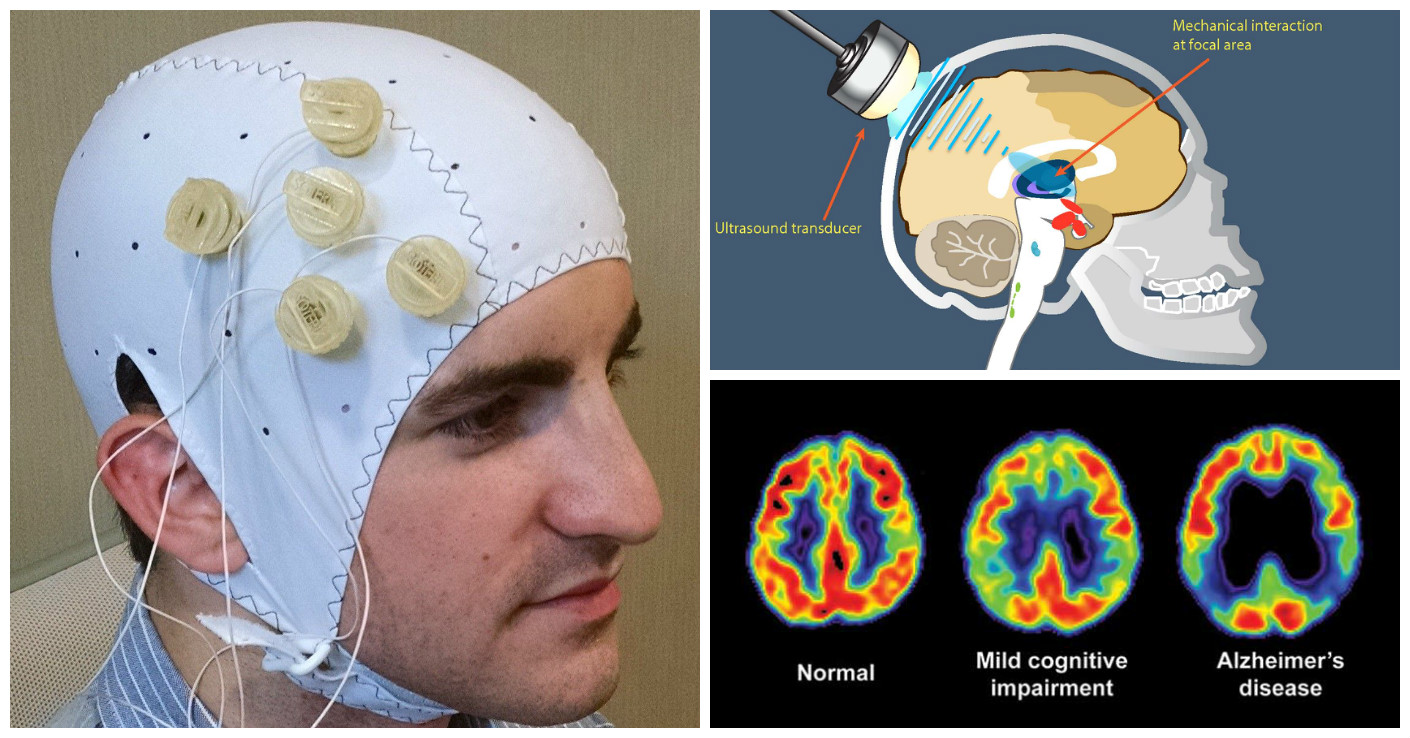
These Australian researchers have come up with a non-invasive ultrasound technology that clears the brain of neurotoxic amyloid plaques – structures that are responsible for memory loss and a decline in cognitive function in Alzheimer’s patients.

If a person has Alzheimer’s disease, it’s usually the result of a build-up of two types of lesions – amyloid plaques, and neurofibrillary tangles. Amyloid plaques sit between the neurons and end up as dense clusters of beta-amyloid molecules, a sticky type of protein that clumps together and forms plaques. And neurofibrillary tangles are found inside the neurons of the brain, and they’re caused by defective tau proteins that clump up into a thick, insoluble mass. This causes tiny filaments called microtubules to get all twisted, which disrupts the transportation of essential materials such as nutrients and organelles along them.

The team describes the technique as using a particular type of ultrasound called a focused therapeutic ultrasound, which non-invasively beams sound waves into the brain tissue. By oscillating super-fast, these sound waves are able to gently open up the blood-brain barrier, which is a layer that protects the brain against bacteria, and stimulate the brain’s microglial cells to activate. Microglial cells are basically waste-removal cells, so they’re able to clear out the toxic beta-amyloid clumps that are responsible for the worst symptoms of Alzheimer’s.

“We’re extremely excited by this innovation of treating Alzheimer’s without using drug therapeutics,” one of the team, Jürgen Götz, said in a press release. “The word ‘breakthrough’ is often misused, but in this case I think this really does fundamentally change our understanding of how to treat this disease, and I foresee a great future for this approach.”

The team reports fully restoring the memory function of 75 percent of the mice they tested it on, with zero damage to the surrounding brain tissue. The team says they’re planning on starting trials with higher animal models, such as sheep, and hope to get their human trials underway in 2017.

hey found that the treated mice displayed improved performance in three memory tasks – a maze, a test to get them to recognise new objects, and one to get them to remember the places they should avoid.

As a technology lover you may like our daily important technology news series. It’s a playlist and you can retrieve the total day-wise videos. Please consider subscribing our YouTube channel:

Author: Technology and Beyond

Tagged : / /

Why you shouldn’t bother to buy so-called organic foods!

This guy goes out of his way to avoid organic food every single time. He lays out his argument on the basis of three seriously considered factors:

  1. Informed confidence that we are safe buying “conventional” foods
  2. Recognizing that some of the best farming practices from an environmental perspective are not always allowed or practical under the organic rules
  3. An ethical problem with the tactics that some organic advocates and marketers employ which seriously misrepresents their “conventional” competition.

He goes on further to explain that for the last forty years, he and his wife have shared the shopping and cooking for their mostly home-based meals. They have always gardened, but also bought much of their fruit- and vegetable-rich diet from stores.

“I was a child of the generation influenced by “Silent Spring.” I was a dues-paying member of the Wilderness Society in high school. I grew up helping my beloved grandfather in his organic garden in the 1960s.  Some of our best friends in the late 1970s were pioneers in the development of the commercial organic industry. I’ve spent a significant proportion of my career developing biological and natural product-based pesticides which are applicable to organic. I fully appreciate the contribution that the organic movement made in the early 20th century when it highlighted the importance of fostering soil health. My problems with institutional organic are not at all about its founding ideals or about organic farmers, but rather about organic’s self-imposed limitations and about the ethics of a subset of its promoters.” he says.

Many consumers believe that the Organic label means the food has superior nutrition and is safer, especially in regard to pesticide residues.  This is not true. Studies have shown no appreciable difference in nutrition between crops grown either organically or conventionally.

The USDA, which oversees the foods labeled as “Certified Organic”, states quite clearly on its website about its role in organic,  that “Our regulations do not address food safety or nutrition.”  Foods labelled “Certified Organic” must adhere to certain rules and regulations but aren’t endowed with any particular nutritional or safety features.

Next Page For More

Tagged : /

Surprising Discovery : Scientists Amazed To Find Oldest-Known Planetary Disk

Astronomers believe they have found the oldest known planet-forming disk — a 45-million-year-old ring of gas and dust that orbits around a young star.

Circumstellar disks around red dwarfs like this one are rare to begin with, but this star, called AWI0005x3s, appears to have sustained its disk for an exceptionally long time, according to the study published in The Astrophysical Journal Letters.

“Most disks of this kind fade away in less than 30 million years,” said lead researcher Steven Silverberg from University of Oklahoma in the US.

“This particular red dwarf is a candidate member of the Carina stellar association, which would make it around 45 million years old (like the rest of the stars in that group). It’s the oldest red dwarf system with a disk we’ve seen in one of these associations,” Silverberg noted.

The discovery relied on citizen scientists from Disk Detective, a project led by NASA’s Goddard Space Flight Center’s Marc Kuchner that is designed to find new circumstellar disks.

“Without the help of the citizen scientists examining these objects and finding the good ones, we might never have spotted this object,” Kuchner said.

“It is surprising to see a circumstellar disk around a star that may be 45 million years old, because we normally expect these disks to dissipate within a few million years,” one of the researchers Jonathan Gagne from Carnegie Institution for Science said.

“More observations will be needed to determine whether the star is really as old as we suspect, and if it turns out to be, it will certainly become a benchmark system to understand the lifetime of disks,” Gagne noted.

This star and its disk are also interesting because of the possibility that it could host extrasolar planets, the study said.

As a technology lover you may like our daily important technology news series. It’s a playlist and you can retrieve the total day-wise videos. Please consider subscribing our YouTube channel:

Author: Technology and Beyond

Tagged : /

Why Saturn has rings and our Earth doesn’t!

The giant planets in our solar system have very diverse rings. Observations show that Saturn’s rings are made of more than 95 per cent icy particles, while the rings of Uranus and Neptune are darker and may have higher rock content.

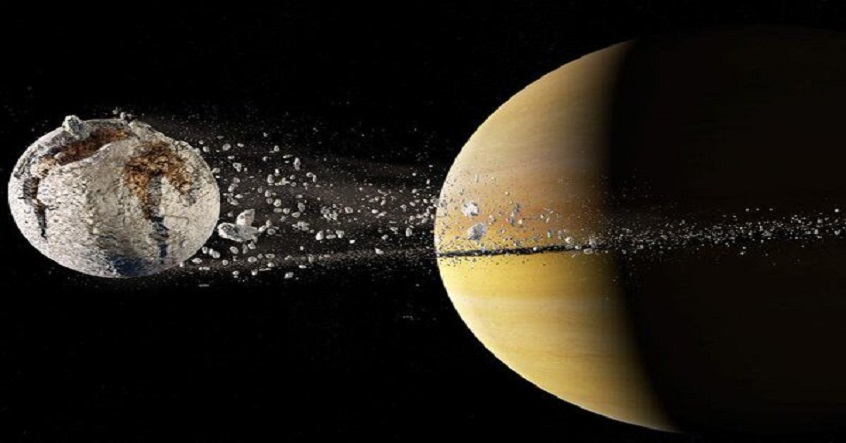
This study by researchers at Kobe University and Tokyo Institute of Technology in Japan focused on the period called the Late Heavy Bombardment that is believed to have occurred 4 billion years ago in our solar system, when the giant planets underwent orbital migration. Planetary rings that surround Saturn, Neptune and Uranus were formed four billion years ago when large objects passed very close to planets and got destroyed, scientists have found, solving the mystery behind the origin and diversity of these rings.

This model can also explain the compositional difference between the rings of Saturn and Uranus.

It is thought that thousands of Pluto-sized objects from the Kuiper belt existed beyond Neptune. Researchers calculated the probability that these large objects passed close to the giant planets and were destroyed by their tidal force during the Late Heavy Bombardment. Results showed that Saturn, Uranus and Neptune experienced close encounters with these large objects multiple times.

The team used computer simulations to study disruption of these Kuiper belt objects by tidal force when they passed the vicinity of the giant planets. They discovered that in many cases fragments comprising 0.1-10 per cent of the initial mass of the passing objects were captured into orbits around the planet. The combined mass of these captured fragments was found to be sufficient to explain the mass of the current rings around Saturn and Uranus.

Compared to Saturn, Uranus and Neptune have higher density. This means that objects can pass within close vicinity of the planet, where they experience extremely strong tidal forces. As a result, if Kuiper belt objects have layered structures such as a rocky core with an icy mantle and pass within close vicinity of Uranus or Neptune, in addition to the icy mantle, even the rocky core will be destroyed and captured, forming rings that include rocky composition.

However, if they pass by Saturn, only the icy mantle will be destroyed, forming icy rings. This explains the different ring compositions.

The researchers also simulated the long-term evolution of the captured fragments using supercomputers at the National Astronomical Observatory of Japan. From these simulations they found that captured fragments with an initial size of several kilometers are expected to undergo high-speed collisions repeatedly and are gradually shattered into small pieces. Such collisions between fragments are also expected to circularize their orbits and lead to the formation of the rings observed today.

As a technology lover you may like our daily important technology news series. It’s a playlist and you can retrieve the total day-wise videos. Please consider subscribing our YouTube channel:

Author: Technology and Beyond
Tagged : /

Beware! Hacker’s next target is your light bulb and this can destroy a society!

We’re all fascinated by the Internet of Things and the positive changes and conveniences it would offer. Its proponents claim it offers many benefits: energy efficiency, technology so convenient it can anticipate what you want, even reduced congestion on the roads. But then, what’s the catch?

Researchers report in a paper to be made public on Thursday that they have uncovered a flaw in a wireless technology that is often included in smart home devices like lights, switches, locks, thermostats and many of the components of the much-ballyhooed “smart home” of the future.

Putting a bunch of wirelessly connected devices in one area could prove irresistible to hackers. And it could allow them to spread malicious code through the air, like a flu virus on an airplane. And they wouldn’t have to have direct access to the devices to infect them: The researchers were able to spread infection in a network inside a building by driving a car 229 feet away.

The researchers focused on the Philips Hue smart light bulb and found that the wireless flaw could allow hackers to take control of the light bulbs, according to researchers at the Weizmann Institute of Science near Tel Aviv and Dalhousie University in Halifax, Canada.

That may not sound like a big deal. But imagine thousands or even hundreds of thousands of internet-connected devices in close proximity. Malware created by hackers could be spread like a pathogen among the devices by compromising just one of them.

“Even the best internet defense technologies would not stop such an attack,” said Adi Shamir, a widely respected cryptographer who helped pioneer modern encryption methods and is one of the authors of the report.

Just two weeks ago, hackers briefly denied access to whole chunks of the internet by creating a flood of traffic that overwhelmed the servers of a New Hampshire company called Dyn, which helps manage key components of the internet.

Security experts say they believe the hackers found the horsepower necessary for their attack by taking control of a range of internet-connected devices, but the hackers did not use the method detailed in the report being made public Thursday. One Chinese wireless camera manufacturer said weak passwords on some of its products were partly to blame for the attack.

The new risk comes from a little-known radio protocol called ZigBee. Created in the 1990s, ZigBee is a wireless standard widely used in home consumer devices. The researchers found that the ZigBee standard can be used to create a so-called computer worm to spread malicious software among internet-connected devices.

Next Page For More

Tagged : /

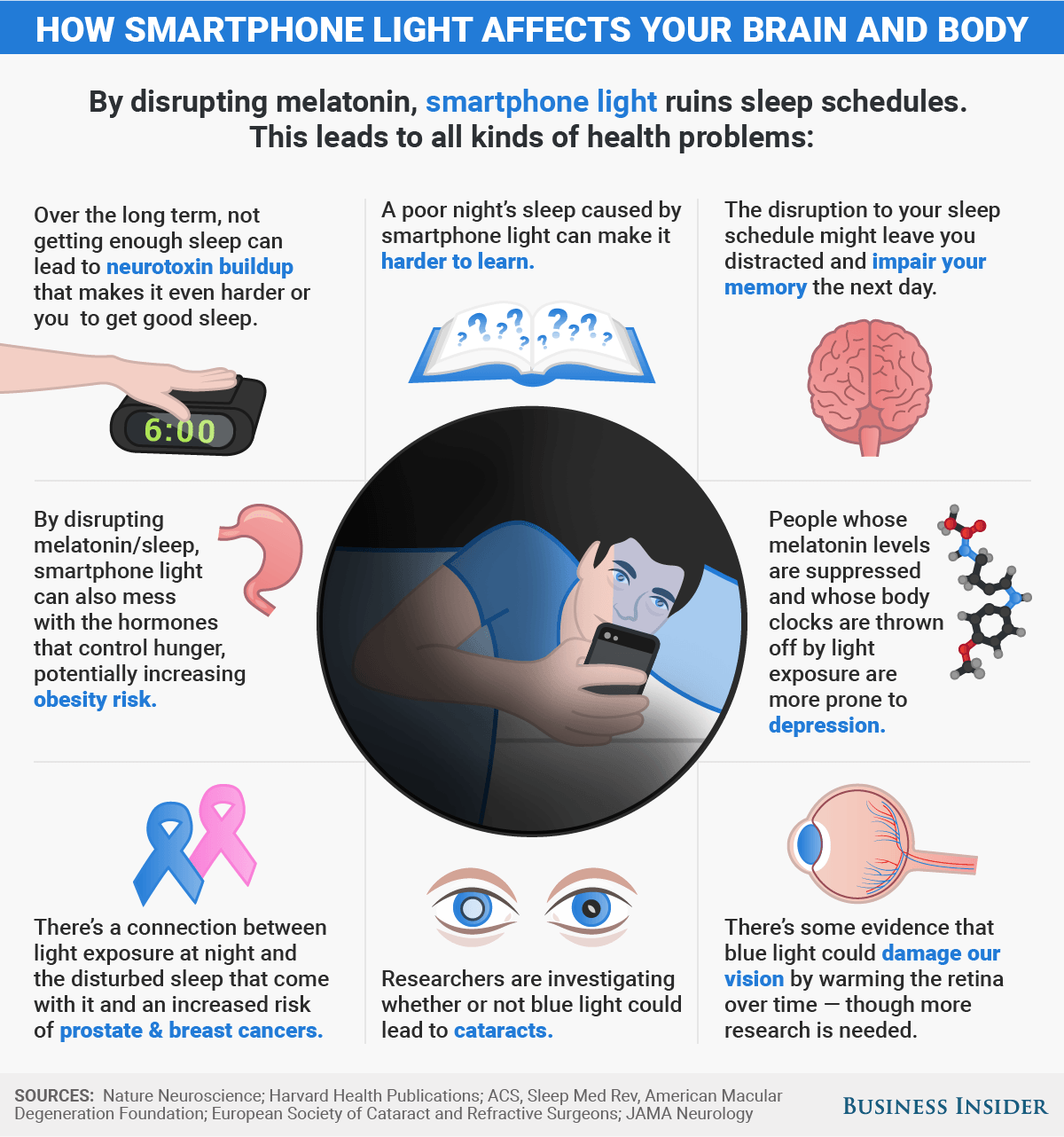
How Smartphone Lights Are Affecting Your Mind and Body

Of course we do the last notifications check right before falling asleep. And of course we do it again right after we wake up. For the majority of us, smartphones provide for at least 60% of our social, personal and professional needs. But what changes has this dependency bought on?

There’s something incredibly powerful about the blue lights that the designers of our smartphone, tablet, and laptop screens have been able to create. The lights in these screens glow so bright that we can see them even during a sunny day. At night, they’re bright enough that they’ve been compared to a “little window” that daylight can peer through.

bi-graphics_bluelight-effects

Our bodies naturally follow a cycle that helps us stay awake and alert during the day and helps us get essential rest at night. This is called our circadian cycle and it governed by melatonin. The main and probably worse proven effect of blue light is its disruption of our melatonin.

When we look at these screens as we’re getting ready for sleep, our brains get confused. That light has a similar effect to the sight of the morning sun, which causes the brain to stop producing melatonin, a hormone that gives your body “time to sleep” cues.

By disrupting melatonin production, smartphone light can disrupt your sleep cycle like an artificially induced sort of jet lag. This makes it harder to fall and stay asleep – and potentially causes serious health problems along the way.

By messing around with our sleep and melatonin levels, blue light also tampers with our hunger hormones that increase the chances of potential obesity. Moreover, people whose melatonin levels are suppressed and whose body clocks are thrown in discord are more susceptible to depression.

A bad night’s sleep also causes memory impairment and lack of focus. Basically, lack of sleep might be causing you to be scatterbrained. Neurotoxin buildup due to lack of sleep over time, may make it harder to fall asleep.

In physical effects, blue light can been linked by prostate and breast cancer chances. There is ongoing research about whether blur light warms up our retinas and damage our vision over time. Its link of cataracts is also being studied.

To combat this problem, app designers have created programs like f.lux and Apple’s Night Shift mode for iPhones, both of which adjust the light tones emitted by screens to remove bright blue light from the display at certain times of day. Many users swear by the effects of these apps and the orange tint they create does feel less harsh on the eyes. But while there’s some research indicating that the dimmer light may improve sleep, more study is needed on the topic in general.

Instant notification and updates and also causing us to desire faster gratification. Long story short, there are a lot of negative ways we are being affected in that we might have felt in our everyday lives. The least you can do is stop looking at your phones at least an hour before bedtime and keep them safely away for the night.

The University of Manchester now touts itself as the “Home of Graphene.”

As a technology lover you may like our daily important technology news series. It’s a playlist and you can retrieve the total day-wise videos. Please consider subscribing our YouTube channel:

Author: Technology and Beyond

Tagged : / /

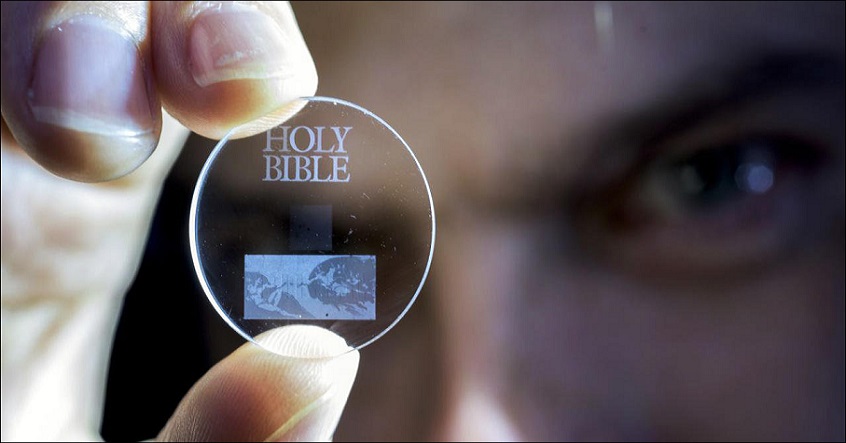
This Tiny Coin Will Store 360 Tb of Data…Forever. Even after the Sun is burnt out!

Were you surprised on hearing about the slivers of quartz glass that stored data for 300 million years? Not that we were worried, but for the people who wonder what will happen to their precious data after the 300 million years, there’s a new coin in town that will store your data essentially forever.

Let’s get some perspective. The Earth is 4.534 billion years old and the universe is a 13.82 billion. This upgradation will allow the quartz to store data safely for an even 14 billion years. That’s pretty much forever.

The storage system, in addition to being long lasting, is also pretty safe—the quartz can withstand up to 157 degrees Celsius (350 degrees Fahrenheit). Researchers at Southampton University in the UK have developed the technique of storing data digitally using laser light. 360 terabytes of information can fit on one sliver of nanostructured quartz. With this tech, we can store literally the whole of human history.

The technique uses femtosecond laser pulses to write data in the 3D structure of quartz at the nanoscale. The pulses create three layers of nanostructured dots, each just microns above the other. The changes in the structure can be read by interrogating the sample with another pulse of light and recording the orientation of the waves after they’ve passed through. Notably, this is referred to as a 5D storage device.

There are the three dimensions of space, which are responsible for describing the physical location of the dot, and two additional dimensions that are encoded by the polarity and intensity of the beam that creates the dot.

This new advance in storage makes the technique a genuine means of archiving vast quantities of information in perpetuity. We no longer have to fear the loss associated with tragedies like the Library of Alexandria.

In the same way that the Pioneer Plaque is meant to be a communication tool between us and any extraterrestrial life, these tiny storage systems could someday inform other beings (maybe our far, far, far off descendants) about Earth and humanity after we are long gone.

As a technology lover you may like our daily important technology news series. It’s a playlist and you can retrieve the total day-wise videos. Please consider subscribing our YouTube channel:

Author: Technology Vista

Tagged : / /

Believe it or not, Australia is drifting so fast that GPS can’t just keep up with the movement!

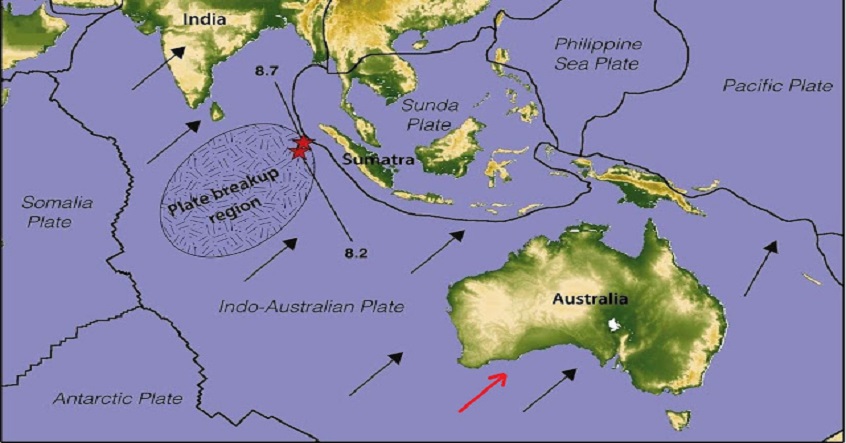
Australia is always a mystery. With its one-of-a-kind flora and fauna, it never fails to surprise. And if you haven’t been informed, the continent has shifted by 4.9 feet since the last adjustment was made to GPS coordinates in 1994, reports the New York Times.

Believe it or not, this is something very routine. All of the Earth’s continents float on tectonic plates, which glide slowly over a plastic-like layer of the upper mantle. And the plate that Australia sits on has been moving relatively fast, about 2.7 inches a year (northward and with a slight clockwise rotation). In contrast, the North American plate has been moving roughly one inch a year, though the Pacific plate moves three to four inches a year.

Australia has tended to move particularly fast due to its unique geology. Corrections have been made to its latitude and longitude four times over the past 50 years, the Times reports. The last adjustment there, in 1994, was about 656 feet. The next adjustment is said to be due by the end of this year, on the order of 4.9 feet.

“Some countries are more stationary than others,” says Damien Saunder, the director of cartography for National Geographic. “When there is a significant shift in land masses over time we need to revise the models of the Earth from which GPS coordinates are calculated, so for example your neighbor doesn’t end up with your old coordinates.” This type of shifting is coming more into focus as GPS systems get more accurate.

“It’s important to remember that the Earth is not a perfect sphere or ellipsoid, and continents are not all moving at the same rate,” Saunder says. “So sometimes we have to make adjustments to our models, both at the global and local levels.”

The most advanced technology can now pinpoint a location to a matter of inches. Although most consumer cellphones don’t have that level of accuracy (yet), the technology is being used in other ways, including by farmers who spray fields with precision agriculture and self-driving vehicles.

As a technology lover you may like our daily important technology news series. It’s a playlist and you can retrieve the total day-wise videos. Please consider subscribing our YouTube channel:

Author: Technology and Beyond

Tagged : / /

These Six Amazing Uses of Graphene Will Show You How Cool it is!

A quick introduction to Graphene. It is a super-strong, ultra-lightweight material that consists of bonded carbon atoms formed into sheets that measure just one atom thick. It has led to scores of technological innovations in recent years as its strength to weight ratio makes it ideal for all sorts of applications ranging from desalination filters that produce clean drinking water to batteries that charge up in seconds, and even next-gen LED bulbs.

Graphene has lead to the inception of various amazing products- even solar cells that produce electricity in the rain! Here are a few others…

Rechargeable batteries become less efficient over time and we know about the health hazards of Lithium batteries. Researcher Han Lin at Australia’s Swinburne University created a battery with a graphene supercapacitor that can be used time and time again without any loss in performance — and it charges up in mere seconds.

What’s more, it Graphene gives this new battery a major edge, beating out traditional batteries in charging time, lifespan and also environmental impact.

Lin used a 3D printer to build sheets of graphene for his energy storage device, which could one day replace the lithium-based batteries in smartphones, tablets and even electric cars.

Scientists from Yunnan Normal University and the Ocean University of China used graphene to develop a novel solar panel that is able to generate electricity in the rain. Now that’s something worth discussing!

A layer of graphene over the top of the solar cells generates energy as it reacts with naturally occurring salts in rainwater. The solar cells have an efficiency rate of around 6.5 percent, which isn’t much, but with improved efficiency, rain power could become a real thing in places where the weather isn’t exactly ripe for traditional solar cells.

Our resources of clean drinking water are largely scarce and the unusable water left in the oceans seems a major waste. So, there’s a major push for developing more efficient ways to turn saltwater into clean drinking water.

Lockheed Martin found that this atom-thick graphene filter could reduce the amount of energy needed for the desalination process. Because the filter is only one atom thick, saltwater flows through it without excess pressure — and since the holes in the filter are just 100 nanometers in diameter, they’re just large enough for water molecules to squeeze through, but too small to allow salt particles to pass.

The filtering material, dubbed Perforene, was originally patented for cleaning up oil spills. This desalination filter that cuts energy usage by 20 percent, making it more environmentally friendly and better suited for use in regions where electricity is as scarce as clean water.

Next Page For More

Tagged : /

These scanners could really show how your brain works

The newly refurbished Wolfson Brain Imaging Centre in the University of Cambridge has been equipped with some of the world’s most powerful magnetic resonance imaging (MRI) and positron emission tomography (PET) scanners and will give its researchers unprecedented power to make images of cancers, study the precise makeup of the cortex and analyse how chemicals in the brain – known as neurotransmitters – underpin the development of schizophrenia and depression.

At the heart of the refurbished centre – funded by the Medical Research Council, Wellcome Trust and Cancer Research UK – are three groundbreaking devices. Only a handful of these exist at institutions outside Cambridge and no institution – other than Cambridge – has all three.

One of them is a Siemens 7T Terra MRI scanner that will allow researchers to see details in the brain as tiny as a grain of sand. “The devices we have assembled are primarily for studying humans and will have a strong research focus,” Bullmore says. 

A key example is provided by the 7T MRI scanner. Current devices have magnetic fields that have strengths of around 3T (tesla) and can see structures 2-3 mm in size. By contrast, the new Cambridge scanner with its 7T field will have a resolution of around 0.5mm.

“That is a very important difference,” adds Bullmore. “The outer layer of the brain, the cortex, is about 3-4mm thick. That is the grey matter that provides us with our thoughts. Current scanners show it as a single strip.

Next Page For More 

Tagged : / /
Verified by ExactMetrics