Still On Torrent Sites? Beware of spending years in prison and a hefty fine!

According to the reports from India Today, visiting torrent sites and another website that is blocked by the government could land you in prison for 3 years along with Rs three lakhs ($4468) as fine. So, if you’re still browsing those torrent sites for free access of video games, movies… and other pirated material, you have been warned.

The Indian government has already blocked numerous websites with the help of Internet service Providers (ISP) but people do visit those blocked websites using various techniques like changing the IP Address or using VPN. Earlier most websites were banned in India using DNS-filtering which was actually easy to bypass using any third-party DNS services. However, Government has taken help of big companies like Tata Communications and Airtel in order to attain their “Blocking” Goal.

Visiting a blocked site without VPN displays the message, “This website/URL has been blocked under instructions of the Competent Government Authority or in compliance with the orders of Hon’ble Court.”

In its entirety, the message reads something like this:

“This URL has been blocked under the instructions of the Competent Government Authority or in compliance with the orders of a Court of competent jurisdiction. Viewing, downloading, exhibiting or duplicating an illicit copy of the contents under this URL is punishable as an offence under the laws of India, including but not limited to under Sections 63, 63-A, 65 and 65-A of the Copyright Act, 1957 which prescribe imprisonment for 3 years and also fine of upto Rs. 3,00,000/-. Any person aggrieved by any such blocking of this URL may contact at urlblock@tatacommunications.com who will, within 48 hours, provide you the details of relevant proceedings under which you can approach the relevant High Court or Authority for redressal of your grievance.”

Browse the web wisely, people of India.

As a technology lover you may like our daily important technology news series. It’s a playlist and you can retrieve the total day-wise videos. Please consider subscribing our YouTube channel:

Author: Technology and Beyond

Tagged : / /

Holding on to anger and resentment? You are formulating perfect recipe for cancer!

Has someone wronged you gravely? Have you ever felt completely betrayed, hurt or angry at something or someone to the point from where you feel there’s no going back?

You might want to back up a bit. Forgiveness is talked about everywhere- in spiritual texts, in mental detox courses…it might feel overrated by this point of time, but let me assure you, it’s not.

Over 15 years ago there lacked any research on the impact of forgiveness on our health. Thankfully to date, there are hundreds of scientific papers and clinicians ready to share their knowledge with us. And they show, if you refuse to forgive it not only makes you sick, but can keep you that way.

Let us start with the impact of staying angry, being frustrated or feeling negative about an event. Dr. Steven Standiford, chief of surgery at the Cancer Treatment Centers of America, says that holding onto these negative emotions creates a chronic state of anxiety. This produces a predictable excess of adrenaline and cortisol, which deplete the production of natural killer cells.

You’re literally killing your body’s chances of defending itself.

And since we are on the topic of cancer, a neat randomized controlled trial with over 83 cancer patients evaluated feelings of forgiveness, pessimism, and self-acceptance after taking a course in self-forgiveness. The course taught techniques such as reflection, expressive writing etc.  As expected, the patients that took the course had statistically significant higher scores for self-forgiveness, acceptance, self-improvement, and lower pessimism scores compared to the control group.

Recent studies show that participants who practice empathy and forgiveness to those who do them wrong have a lowered stress response. To further deepen this point, roughly 1,500 Americans who forgave reported greater satisfaction with their lives, less distress symptoms, less nervousness, and less sadness.

Forgiveness even helps in cases of severe emotional abuse. Women were placed into two treatment groups; the first using techniques such as anger validation, assertiveness, interpersonal skill building, and the second using forgiveness. Women in the forgiveness group had significant improvements in depression scores, post-traumatic stress symptom, self-esteem, less anxiety, and better overall mastery of their life. Months later all these gains were still present!

Next Page For More

Tagged : / /

VLC Media Player Is Enough to Download YouTube Videos! here is how!

We all love VLC Media Player, right? Especially movie lovers because it is the only media player which can play almost every video format without the need to install any additional codec packs. Previously, we shared an article where we had described how you can play YouTube videos in VLC media player. Now, we bring to you share another VLC trick which will let you download YouTube videos. Without any additional app, you can download videos directly off YouTube using just VLC media player.

  1. First of all, you need to download and install VLC media player if you haven’t installed it on your computer yet.
  2. Now you need to browse the video in the YouTube that you want to download it using VLC media player. Copy the link and have it ready.
  3. Now in VLC, you need to click on Media tab and then select the option “Open Network Stream”. Or the other way to open capture device is by pressing CTRL+N.
  4. Simply paste the video URL in the URL box there and click on Play. Once the video starts playing in VLC media player, you need to click on “Tool” tab and then select “Codec Information”.
  5. It will give you the location of the CODEC. Actually, the link is the download link. Simply copy it and paste it in your browser. Once you paste the URL in the browser, your video will automatically start downloading.

There, you have it! Go on try it out.

As a technology lover you may like our daily important technology news series. It’s a playlist and you can retrieve the total day-wise videos. Please consider subscribing our YouTube channel:

Author: Technology and Beyond

Tagged : /

Japan is desperately waiting for a massive Typhoon which can power Japan for next 50 years!

Back in 2013, Typhoon Usagi destroyed eight conventional turbines, while damaging eight. Atsushi Shimizu told CNN, “Japan actually has a lot more wind power than it does solar power, it’s just not utilized.” And after the energy shortage—a problem incited by the 2011 Fukushima disaster—Japan is currently dealing with, there comes an extremely welcome solution.

Atsushi Shimizu is the inventor of the world’s first typhoon turbine—an extremely durable, eggbeater-shaped device that can not only withstand the awesome forces generated by a typhoon, it can convert all that power into useable energy. Shimizu’s calculations show that a sufficiently large array of his turbines could capture enough energy from a single typhoon to power Japan for 50 years.

The typhoon turbine differs from conventional turbines in two important ways. It works on an omnidirectional axis that allows the machine to survive unpredictable wind patterns, and the speed of the blades can be adjusted to ensure they don’t spin out of control during a storm. It’s not immediately clear where all the incoming energy will be channeled, whether it be sent straight to the grid or stored in large batteries.

Shimizu is not wrong. Japan has already seen six typhoons this year. Also the founder of green tech firm Challenergy, he believes that Japan has the potential to become “a superpower of wind.”

Tests of a prototype yielded 30 percent efficiency, which is 10 percent lower than propeller-based turbines. The difference, of course, is that Shimizu’s turbines can actually survive a storm. A functional prototype was installed near Okinawa earlier this summer, and the next big step is to test the device under high-wind conditions.

All that’s needed now is a typhoon.

As a technology lover you may like our daily important technology news series. It’s a playlist and you can retrieve the total day-wise videos. Please consider subscribing our YouTube channel:

Author: Technology and Beyond

Tagged : / /

Full-Sized Beating Human Heart Grown from Stem Cells! Great News for Transplant Patients!

A team of scientists from Massachusetts General Hospital and Harvard Medical School has been able to regenerate functional human heart tissue using adult skin cells, according to a study published recently in the journal Circulation Research. This is not only a scientific marvel, but also a high-time necessity in the medical world.

Of the 4,000 Americans waiting for heart transplants, only 2,500 will receive new hearts in the next year. Even for those lucky enough to get a transplant, the biggest risk is the their bodies will reject the new heart and launch a massive immune reaction against the foreign cells. To combat the problems of organ shortage and decrease the chance that a patient’s body will reject it, researchers have been working to create synthetic organs from patients’ own cells.

Scientists had previously created a technique in which they use a detergent solution to strip a donor organ of cells that might set off an immune response in the recipient. They did that in mouse hearts, but for this study, the researchers used it on human hearts. They stripped away many of the cells on 73 donor hearts that were deemed unfit for transplantation. Then the researchers took adult skin cells and used a new technique with messenger RNA to turn them into pluripotent stem cells, the cells that can become specialized to any type of cell in the human body, and then induced them to become two different types of cardiac cells.

After making sure the remaining matrix would provide a strong foundation for new cells, the researchers put the induced cells into them. For two weeks they infused the hearts with a nutrient solution and allowed them to grow under similar forces to those a heart would be subject to inside the human body. After those two weeks, the hearts contained well-structured tissue that looked similar to immature hearts; when the researchers gave the hearts a shock of electricity, they started beating.

This isn’t the first time heart tissue has been grown in the lab, but, it’s the closest researchers have come to their end goal: Growing an entire working human heart. In the end, the researchers hope that they can create individualized hearts for their patients so that transplant rejection will no longer be a likely side effect.

The researchers admit that they’re not quite ready to do that. They are next planning to improve their yield of pluripotent stem cells, find a way to help the cells mature more quickly, and perfecting the body-like conditions in which the heart develops.

As a technology lover you may like our daily important technology news series. It’s a playlist and you can retrieve the total day-wise videos. Please consider subscribing our YouTube channel:

Author: Technology and Beyond

Tagged : / /

Soon a new sun in the sky? China Keeps Its Artificial Sun Going for A Whole Minute

Chinese Scientists have managed to create searing plasma by heating hydrogen gas three times hotter than our Sun’s core. In short, scientists were able to make a nuclear reactor plasma which reached a temperature of 50 million Kelvins.

This was back in February and they managed to keep the fusion alive for an entire minute. According to the statement on the institute’s website on Wednesday, the temperature was “roughly the same as the mid-sized thermonuclear explosion”.

The aim of this experiment is to create an exact copy of nuclear fusion happening deep within the Sun’s core. China’s Experimental Advanced Superconducting Tokamak (EAST) reactor create a hot ionized gas which is known as plasma (where atoms were fused together to create massive amount of energy). The complete process is somehow different from nuclear fission where atoms are divided instead of merging together.

This achievement makes China one step closer to the practical fusion power. As reported by en.people.cn, the whole experiment was conducted using China’s Experimental Advanced Superconducting Tokamak (EAST) which is housed at the institute of Plasma Physics in Hefei.

As a technology lover you may like our daily important technology news series. It’s a playlist and you can retrieve the total day-wise videos. Please consider subscribing our YouTube channel:

Author: Technology and Beyond

Tagged : / /

NASA official spokesperson confirms Alien presence and made candid confessions during a two hour long briefing!

According to reports, Trish Chamberson, an official spokesperson from NASA has confirmed the existence of extraterrestrial life and has claimed that aliens have been visiting planet Earth for thousands of years. “There are so many films, documentaries and TV programs on aliens, that we thought everyone was aware of them by now,” she reportedly claimed.

During the two-hour briefing, Chamberson confirmed that a number of theories which had previously been dismissed as groundless speculation from fringe enthusiasts are actually grounded in reality. Chamberson made various sensational allegations in the course of the interview, claiming that the alien species known as the Greys have been visiting Earth for thousands of years and that they may have had a hand in the construction of mega structures such as the ancient pyramids of Giza and various other buildings dotted around the world.

aliens-3

Chamberson also alleged that NASA is in regular contact with no less than four different and entirely separate alien species from various locations in the galaxy. She claimed that all contact with the alien species have been amicable. While the aliens have raised no serious bone of contention with humanity, Chamberson has alleged that they have expressed concern about the proliferation and testing of nuclear weapons which has serious consequences not only for life on Earth but for races of peoples all over the galaxy.

aliens

However, Chamberson did stop short of confirming that aliens are responsible for the abductions of human beings. She said that the aliens are completely harmless, and their only interest in Earth relates to the planet’s natural resources.

Crazy, or what? There’s more.

Next page For More

Tagged : / /

People who always point out grammatical mistake of others are simply Jerks!

We all find grammar nazis irritating (unless you’re one of them). It isn’t fun being fun high alert around them. Psychological testing reveals they’re generally less open, and are also more likely to be judging you for your mistakes than everyone else. In other words, they’re exactly who you thought they were. That sounds pretty obvious, but this is actually the first time researchers have been able to show that a person’s personality traits can actually determine how they respond to typos and grammatical errors.

“This is the first study to show that the personality traits of listeners/readers have an effect on the interpretation of language,” said lead researcher Julie Boland from the University of Michigan. “In this experiment, we examined the social judgments that readers made about the writers.”

The researchers took 83 participants and asked them all to read email responses to an ad for a housemate, which either contained no errors or had been altered to include typos (e.g. “teh” instead of “the”) or grammatical mix-ups, such as too/to or it’s/its.

Those 83 people then judged the person who’d written the email based on their perceived intelligence, friendliness, and other attributes, such as how good they’d be as housemates. They were also asked at the end of the experiment whether or not they’d spotted any grammatical errors or typos in the emails, and, if so, how much it had bothered them.

The researchers then asked the participants to complete a Big Five personality assessment – which rates where they are on a scale of openness, agreeableness, extraversion/introversion, neuroticism, and conscientiousness – as well as answer questions about their age, background, and attitude towards language.

The differences picked up in the research were pretty subtle – and it’s a small sample size in general, so we need to take the results with a grain of salt – but the results couldn’t be explained by people’s age or education, which suggests that personality traits were playing a role.

What was found was that overall, everybody rated the fictional housemate applicants with typos and grammatical errors in their emails as worse than those with perfect spelling and grammar. But there were definitely certain personality types that judged the typo-riddled applicants more harshly. For example, extraverts were generally much more likely to overlook both grammar mix ups and typos, whereas introverts were more likely to judge the applicants negatively because of them.

People who tested as being more conscientious but less open were more sensitive to typos, while those with less agreeable personalities got more upset by grammatical errors. “Perhaps because less agreeable people are less tolerant of deviations from convention,” the researchers write. Interestingly, how neurotic someone was didn’t affect how they interpreted mistakes.

As a technology lover you may like our daily important technology news series. It’s a playlist and you can retrieve the total day-wise videos. Please consider subscribing our YouTube channel:

Author: Technology and Beyond

Tagged : / /

Nobody knows why these Two-Headed Sharks Keep Popping Up

Two-headed sharks, believe it or not, are popping up more often than ever. And we still don’t have an answer as to why that is!

A few years ago off Florida, fishermen hauled in a bull shark whose uterus contained a two-headed fetus. In 2008, another fisherman discovered a two-headed blue shark embryo in the Indian Ocean. And a 2011 study described conjoined twins discovered in blue sharks caught in the Gulf of California and northwestern Mexico. Blue sharks have produced the most recorded two-headed embryos because they carry so many babies—up to 50 at at time, says study leader Felipe Galván-Magaña, of the National Polytechnic Institute in Mexico.

Now, Spanish researchers have identified an embryo of an Atlantic sawtail catshark with two heads, according to a new study in the Journal of Fish Biology. The catshark embyro was not your average two-headed beast—it’s the first such specimen known from an oviparous shark species, or a shark that lays eggs.

Two-headed sharks have been few and far between, so it’s tough to know what’s behind the mutations. Wild sharks’ malformations could come from a variety of factors, including viral infections, metabolic disorders, pollution, or a dwindling gene pool due to overfishing, which leads to inbreeding, and thus genetic abnormalities.

Sans-Coma and colleagues say a genetic disorder seems to be the most plausible cause for the two-headed catshark, since the embryos were grown in a lab among nearly 800 specimens.

To the best of their knowledge, the eggs were not exposed to any infections, chemicals, or radiation.

Ehemann, a master’s student at the National Polytechnic Institute in Mexico, believes that if the two-headed fetuses are more prevalent in nature, then overfishing is a strong culprit as it may cause the gene pool to shrink.

For another recent study, marine scientist Nicolas Ehemann examined two such specimens: A smalleye smooth-hound shark and a blue shark, found by fishermen off Venezuela’s Margarita Island. The animals, which would not have survived, are the first two-headed sharks found in the Caribbean Sea, according to Ehemann’s research bulletin.

Galván-Magaña has seen other bizarre sharks, too, including a “cyclops” shark, caught off Mexico in 2011, with a single, functioning eye at the front of its head. The dusky shark fetus’s single eye is the hallmark of a congenital condition called cyclopia, which occurs in several animal species, including people.

He doesn’t think two-headed sharks are more common—but rather that there are more scientific journals around to publish accounts.

As a technology lover you may like our daily important technology news series. It’s a playlist and you can retrieve the total day-wise videos. Please consider subscribing our YouTube channel:

Author: Technology and Beyond

Tagged : / /

Your Phone Is Ruining Your Posture and Pushing You to Depression

Maintaining a posture is not just recommended for aesthetic purposes; it also helps in the longterm alignment of your spine. Not only that, a bad posture doesn’t just mean a stiff neck- it can hurt us in insidious psychological ways.

So imagine what a disappointment it is to find out that our best virtual friend is harming us more than anything else.

If you’re in a public place, look around: How many people are hunching over a phone? Technology is transforming how we hold ourselves, contorting our bodies into what the New Zealand physiotherapist Steve August calls the iHunch. People also call it text neck and iPosture.

The average head weighs about 10 to 12 pounds. When we bend our necks forward 60 degrees, as we do to use our phones, the effective stress on our neck increases to 60 pounds — the weight of about five gallons of paint. When Mr. August started treating patients more than 30 years ago, he says he saw plenty of “dowagers’ humps, where the upper back had frozen into a forward curve, in grandmothers and great-grandmothers.” Now he says he’s seeing the same stoop in teenagers.

Studies have shown that people with clinical depression adopt a posture that eerily resembles the iHunch. One, published in 2010 in the official journal of the Brazilian Psychiatric Association, found that depressed patients were more likely to stand with their necks bent forward, shoulders collapsed and arms drawn in toward the body.

Slouching can also affect our memory: In a study published last year in Clinical Psychology and Psychotherapy of people with clinical depression, participants were randomly assigned to sit in either a slouched or an upright position and then presented with a list of positive and negative words.

When they were later asked to recall those words, the slouchers showed a negative recall bias (remembering the bad stuff more than the good stuff), while those who sat upright showed no such bias. And in a 2009 study of Japanese schoolchildren, those who were trained to sit with upright posture were more productive than their classmates in writing assignments.

In fact, there appears to be a linear relationship between the size of your device and the extent to which it affects you: the smaller the device, the more you must contract your body to use it, and the more shrunken and inward your posture, the more submissive you are likely to become.

Next Page For More

Tagged : /

This four year old girl suffers brain damage after visiting her dentist!

Nevaeh Hall, four, was a healthy little girl two months ago, when her parents took her to Diamond Dentistry in Houston, Texas to have a few teeth capped and pulled due to decay. While they waited in the waiting room for hours, their little girl started having seizures but her dentist, Dr Bethaniel Jefferson, didn’t raise the alarm and decided to treat her herself instead of calling 911.

Little Nevaeh ended up leaving the routine appointment in an ambulance, and has now been hospitalized for severe brain damage. She can no longer walk, talk, eat or see.

About two hours into the procedure, Clark says she heard her daughter crying so she went into the room to see how she was doing. At that point she wasn’t in the papoose yet, but she could see her flailing about in the dental chair.

“When I went back there and saw her, my first question was: ‘OK, do we need to call the ambulance or are you all going to call the ambulance?’”

“And they said: ‘We’re just going to try to get her to calm down. We’re going to monitor her. We’re going to watch her. You guys have nothing to worry about, but we do need you all to wait in the waiting room and let her rest so she can walk back out of here,’” Clark recalled.

“The whole time they just assured us that everything was OK. The next time we were allowed to come in is when the paramedics were actually coming back.”

An attorney for the family Jim Moriarity, held up a chart at the press conference, showing little Nevaeh’s vitals during the procedure. At one point the child’s oxygen levels got down to 49 per cent and her heartbeat went up to a racing 196 beats per minute.

“In essence what happened is this child was chemically and physically suffocated,” Jim Moriarty said. “This child suffered massive brain damage during that time period and that didn’t have to happen.”

Nevaeh’s parents are now threatening to sue the practice and Dr Jefferson, but they say no legal victory will reverse the damage Dr Jefferson has done.

So what truly went wrong in there?

At a press conference, Nevaeh’s mother Courissa Clark said she was threatening to sue the practice and Dr Jefferson for the botched procedure. The girl’s dentist, Dr Bethaniel Jefferson, has since had her medical license suspended.

Next Page For More

Tagged : /

Believe it or not! You Can Now Upload Information to Your Brain Matrix Style!

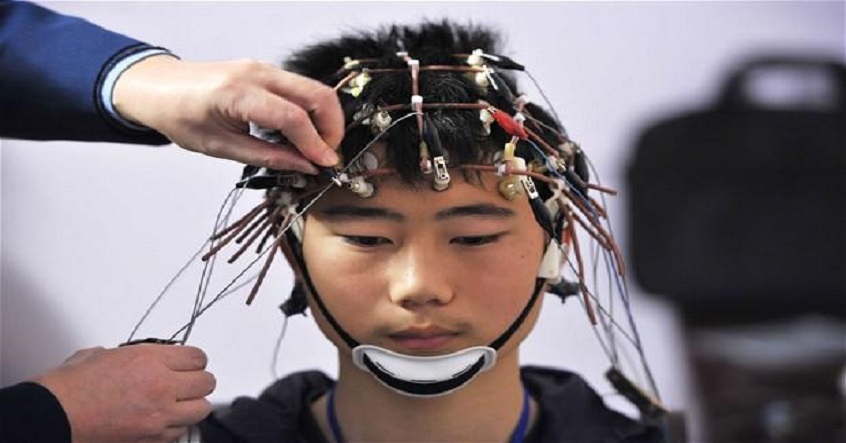
In the neo-noir sci-fi classic, protagonist Neo is able to learn kung fu in seconds after the martial art is ‘uploaded’ straight to his brain. Researchers from HRL Laboratories, based in California, say they have found a way to amplify learning, only on a much smaller scale than seen in the Hollywood film.

Researchers claim to have developed a simulator which can feed information directly into a person’s brain and teach them new skills in a shorter amount of time, comparing it to “life imitating art”. They studied the electric signals in the brain of a trained pilot and then fed the data into novice subjects as they learned to pilot an aeroplane in a realistic flight simulator.

“Our system is one of the first of its kind. It’s a brain stimulation system,” explained Dr Matthew Phillips.

The study, published in the journal Frontiers in Human Neuroscience, found that subjects who received brain stimulation via electrode-embedded head caps improved their piloting abilities and learnt the task 33 per cent better than a placebo group.

“The specific task we were looking at was piloting an aircraft, which requires a synergy of both cognitive and motor performance.

“When you learn something, your brain physically changes. Connections are made and strengthened in a process called neuroplasticity.

“It turns out that certain functions of the brain, like speech and memory, are located in very specific regions of the brain, about the size of your pinky.”

“What our system does is it actually targets those changes to specific regions of the brain as you learn,” he added.

Dr Matthews believes that brain stimulation could eventually be implemented for tasks like learning to drive, exam preparation and language learning. “Your brain is going to be very different to my brain when we perform a task. What we found is … brain stimulation seems to be particularly effective at actually improving learning.”

“The method itself is actually quite old. In fact, the ancient Egyptians 4000 years ago used electric fish to stimulate and reduce pain. Even Ben Franklin applied currents to his head, but the rigorous, scientific investigation of these methods started in the early 2000s and we’re building on that research to target and personalise a stimulation in the most effective way possible.”

As a technology lover you may like our daily important technology news series. It’s a playlist and you can retrieve the total day-wise videos. Please consider subscribing our YouTube channel:

Author: Technology and Beyond

Tagged : /

Stunning but our Earth has lungs and you can watch them breathe.

We have 3.1 trillion trees on our planet—that’s 422 trees per person. hat’s the latest census, published a few months ago in the science journal Nature  by Yale’s Thomas Crowther, a Climate and Energy Institute postdoctoral fellow. If he’s right, there are more trees on Earth than there are stars in the Milky Way.

Now imagine how many leaves might be on all those trees. It’s a very big number. The University of Washington tried to come up with a leaf count for a “mature oak,” but oaks are so variable that they could only give us a range: 200,000 to half a million leaves per tree.

Come winter, the leaves fall off, trees go bare. Without leaves, trees go quiet. Any extra CO2 is more likely to hang in the atmosphere—until June.

There’s a video from NASA. When you see it, I think your jaw is going to drop—just a little. It tracks the flow of carbon dioxide across the planet over 12 months, starting in January. Most of the action takes place in the Northern Hemisphere because that’s where most of the land is, and so that’s where most of the trees are. The biggest temperate forests are in Canada, Siberia, and Scandinavia…

width="560" height="314" allowfullscreen="allowfullscreen">

The leaves absorb air and gobble carbon dioxide, and then, with help from the sun, the carbon stays in the tree (as branches, trunks). Oxygen gets released.

Come June, trillions upon trillions of leaves are opening, growing, and starting to breathe, and what you will see in the video is their collective breath literally cleaning the sky. This video begins in January, but keep watching till we hit June (then July, then August). It’s like the world’s northern forests become a giant vacuum cleaner, scouring the air, sucking down the CO2 till around November.

But, when leaves fall, the situation reverses … and it feels a little scary. Just watch the video; you’ll know.

If we look closely at any oak leaf or any leaf (or, for that matter, the surface of any green plant, even a blade of grass) with a magnifying glass. You’ll find little breathing tubes called stomata. That’s “mouth” in Greek, because, like mouths, they’re openings that allow outside air in. Think of them more like lungs, often with squeezable openings. That’s where the carbon dioxide gets in and the oxygen slips out.

Next Page For More

Tagged : / /

Lose weight steadily by consuming this before going to bed

The University of Denmark found that people who drink everyday have slimmer waistlines than those that don’t. Harvard’s weight gain study of 20,000 people revealed that out of all of those that gained a large amount of weight, none of them were drinkers.

Over the past year, our social media feeds have blown up on more than one occasion over claims that drinking wine at bedtime could help you drop a few pounds. We’ve also been told over and over that alcohol has no place in a weight loss program. Not only does it provide empty calories, studies confirm that “having a few” tends to zap your inhibition and make you order midnight cheese fries — a phenomenon known as the “drunchies.”

We’ve all read that red wine is a healthy part of the Mediterranean Diet — the one that helps you live longer and maintain an enviable BMI. Even lifestyle guru Tim Ferris claims that two glasses of wine before bed each night helped him achieve his ripped physique. And recent research in mice showed that resveratrol, an antioxidant in red wine, can help turn regular white fat into energy-burning beige fat, which can contribute to weight loss and prevent obesity.

While you can also get resveratrol in fruits, such as blueberries, lead author Min Du, PhD, professor in the Department of Animal Sciences at Washington State University, explains that the fermentation process of wine makes the antioxidant compounds easier to absorb, which can help accelerate the fat-burning process. Although Du didn’t specifically test the effect of giving resveratrol to the mice at night, he concedes that there might be a metabolic advantage of consuming wine in the wee hours.

When you drink wine with food — whether at lunch, dinner or with a late-night snack — the antioxidant compounds interact with protein in a way that prevents the body from metabolizing them for weight loss. When you consume resveratrol on its own, however, the body is able to absorb the compounds more readily, and thus maximize the burning of beige fat. That said, he stops short of endorsing an unaccompanied glass of bedtime wine as a diet strategy.

Next Page For More

Tagged : / /

Can You Guess How These Common Fruits and Veggies Looked Like before domestication?

The cry and protests against GMOs and artificial superfoods have cropped up in the past decade or so. In reality, our ancestors have been tweaking and changing the genetic makeup of the foods they grew since the start of agriculture.

While GMOs may involve splicing genes from other organisms (such as bacteria) to give plants desired traits – like resistance to pests, selective breeding is a slower process whereby farmers select and grow crops with those traits over time. Next time you bite into a slice of watermelon or a cob of corn, consider this: these familiar fruits and veggies didn’t always look and taste this way.

Wild bananas, for starters. The first bananas may have been cultivated at least 7,000 years ago – and possibly as early as 10,000 years ago – in what is now Papua New Guinea. They were also grown in Southeast Asia. Modern bananas came from two wild varieties, Musa acuminata and Musa balbisiana, which had large, hard seeds.

The hybrid produced the delicious modern banana, with its handy, graspable shape and peelable covering. Compared to its ancestor, the fruit has much smaller seeds, tastes better, and is packed with nutrients.

Wild Watermelons are depicted perfectly in this 17th-century painting by Giovanni Stanchi. The watermelon- a cross-section of the one in the painting- was made between 1645 and 1672. It appears to have swirly shapes embedded in six triangular pie-shaped pieces.

The modern version we are so familiar with have a red, fleshy interior – which is actually the placenta. Some people think the watermelon in Stanchi’s painting may just be unripe or unwatered, but the black seeds in the painting suggest that it was, in fact, ripe.

Wild carrots are next on the list. They might be good for our eyes, but you would have to be blind to not seen how drastically this vegetable has changed over the years.

The earliest known carrots were grown in the 10th century in Persia and Asia Minor. These were thought to originally be purple or white with a thin, forked root – like those shown here – but they lost their purple pigment and became a yellow colour. Farmers domesticated these thin, white roots, which had a strong flavor and biennial flower, into these large, tasty orange roots that are an annual winter crop- the ones we’re used to.

Next Page For More

Tagged : / /
Verified by ExactMetrics