Scientists Suspect Aliens Are Trying to Reach Out

Scientists have heard unusual noises from space for quite some time now and suspect extraterrestrial beings are trying to make contact with earth. They have analysed strange modulations in a tiny set of stars that appear to be coming from aliens who might possibly want to alert Earthlings of their existence.

Two scientists, working on the research from Quebec’s Laval University, EF Borra and E Trottier, wrote in their research paper, “We find that the detected signals have exactly the shape of an [extraterrestrial intelligence] signal predicted in the previous publication and are therefore in agreement with this hypothesis.  The fact that they are only found in a very small fraction of stars within a narrow spectral range centered near the spectral type of the sun is also in agreement with the ETI hypothesis.”

The database is very low – this new study has analyzed modulation in only 234 of 2.5 million stars and a small slice of them seemed to be behaving strangely. However, they clarify that more research is required to affirm or deny the hypothesis. Currently there is not enough explanation to explain these strange modulations which has led the scientists to conclude that the messages are coming from aliens.

Their research will be published in the journal Publications of the Astronomical Society of the Pacific, titled Signals probably from Extraterrestrial Intelligence.

As a technology lover you may like our daily important technology news series. It’s a playlist and you can retrieve the total day-wise videos. Please consider subscribing our YouTube channel:

Author: Technology and Beyond

Tagged : / /

This is what will happen if asteroids hit our planet

In the 2011 movie Melancholia, there is a very scary situation in which a rogue planet is on its way to collide with Earth and it captures the last few days of the lives of the people on Earth, waiting for the predictable to happen.

The most usual answer to earth’s destruction after pollution is its collision with a huge asteroid. This scary scenario was replicated by lovely folks at the Discovery Channel and they have made a video that is a must watch.

Last time when the Earth was hit by an asteroid

Practically most scientific community accepts that dinosaurs were wiped off the face of Earth, when big time climate change took place credits to an asteroid impacting on the Earth’s surface.

The Chicxulub crater impact is found in the Yucatan Peninsula in Mexico. The crater hit Earth some 66 million years ago and its impact caused a massive climate change that wiped off the dinosaurs and other animal and plant that lived on Earth.

The crater was noticed in 1970s and experts came up with theories of the effect of the impact. They say that its impact had resulted in mega tsunamis and a cloud of superheated dust, ash and steam would have enclosed the Earth’s entire surface for more than a decade and made life impossible for dinosaurs and several other living organisms.

The Discovery channel just made a video that shows an asteroid almost the size of Earth and the impact alone generates massive waves in the Pacific Ocean, resulting in mega tsunamis.

The impact removes the 10 km crust off the Earth’s surface. The resulting shock waves travel at hypersonic speeds, destroying everything in their path. Some of the fragments will leave the Earth’s atmosphere and go into orbit. They will then come back to Earth at high speeds and devastate wherever they land.

The Earth’s crust, which is full of magma, will start a blaze that will slowly engulf the whole Earth, leaving nothing behind, but fire and fragments all over. All living beings like humans and animals will die almost within seconds of the impact, because of the superheated air and Earthquakes caused by the impact. It is a distressing scenario and the most feasible reason for how Earth will be destroyed billions of years in the future.

Author: Technology and Beyond

Disclaimer: All information, data and material contained, presented, or provided on neopress.in is for educational purposes only. It is not to be construed or intended as providing medical or legal advice. Decisions you make about your family’s healthcare are important and should be made in consultation with a competent medical professional. We are not physicians and do not claim to be. Any views expressed here-in are not necessarily those held by neopress.in.
Attributions: Some of the images are derived from http://www.wikihow.com under Creative Commons License: https://creativecommons.org/compatiblelicenses
Tagged : /

Water geysers on Jupiter’s moon Europa may indicate alien presence. NASA plans new mission in 2020

With the use of the Hubble Space Telescope in the last five years, NASA astronomers have observed water vapor plumes that erupted from the surface Europa which is of Jupiter’s moon. Out of 10 observation sessions, they spotted these water vapor emissions 3 times. The information was publicly released last September 26th 2016.

Scientists estimated the volume of these plumes to be 5,000 to 7,000 kg of water mass per second. That’s almost like spouting out an Olympic-sized swimming pool every minute!

William Sparks, the leading astronomer for this research endeavor with the Space Telescope Science Institute in Baltimore, says that “The chances of this occurring due to randomness is very low. The problem is that there may be something we don’t understand about the instrument or what Europa looks like in ultraviolet light. These are difficult wavelengths for Hubble. I’m not aware of any natural explanation for this besides water plumes.”

The scientists expect to collect better data about these plumes using James Webb Space Telescope, that will launch in 2018.

This matters because, it would enable scientists to study the oceans beneath the moon’s surface. In addition, this news comes in tandem with NASA taking steps to launch a pair of missions to Europa in the 2020s.

The same engineers who spearheaded Curiosity’s landing on Mars will start working on a plan to land a probe on Europa’s icy surface. Naturally, it is no easy feat as Jupiter’s gravity pushes and pulls the icy surface of Europa by several meters every few days. Gathering information on these underground oceans would be like drilling through kilometers of rock hard ice. On top of that, the radiation from nearby Jupiter could kill a human in a matter of hours.

width="560" height="314" allowfullscreen="allowfullscreen">

Author: Technology and Beyond

Tagged : /

Want night vision? This technology by IBM will add night vision to your glasses!

It takes us some time to adjust our eyesight on entering a dark room. This is because our eye consists of two kinds of photoreceptors namely, the rods and the cones. The rod cells are responsible for our ability to see in the dark. However, for the rods to completely adjust to darkness it takes nearly 30 minutes.

Although the idea of night vision involves a lot of biological processes, there are studies that say an effort can really help tweak and enhance the entire process. And this can be done without any kind of genetic manipulation. All we may need is glasses, for that matter.

The rod cells send higher vibes and contrasting images on seeing the red light, hence making it easy to make out the object. This is the reason behind keeping the red lights in places that are required to be kept dark (eg. Photography Labs) so as to make the objects visible to humans.

Lately, a technology that relies on this principle is patented by IBM. This will now be used in the Google Glass.

A projector that beams with red light is incorporated in the eyeglass lens. So that when the wearer of Google Glass enters into a dark environment, the projectors by itself projects red light into each eye so as to make the objects visible. This process guiles the rods to send higher contrast images to the brain, giving the glasses night-vision characteristics.

If you want to dig in deeper into this discovery you may also get more information on night vision and the chemicals behind it here.

As a technology lover you may like our daily important technology news series. It’s a playlist and you can retrieve the total day-wise videos. Please consider subscribing our YouTube channel:

Author: Technology and Beyond

Tagged : /

This Russian Scientist injected himself with Prehistoric Bacteria to gain eternal life. The result is shocking!

If there is anything that scientists are unable to do is discover a potion to become immortal. If there has ever been a Madagascar in test ride out of Marvel comic book then it is him – Anatoli Broushkov. The Russian scientist who is controversial experiments are going wild on the Internet. His experiments for so bizarre that the world is now astonished looking at him conduct all of these experiments on himself. Of late the scientist injected himself with Prehistoric bacteria that was more than 3.5 million years old which was derived from the Siberian permafrost. His reasons will shock you beyond order because according to him it is an elixir to immortality.

Prehistoric bacteria influenced immunity and vitality

After the experiment he says that the bacteria cell found in the permafrost have actually have him develop a heightened state of immunity two diseases and other negative factors of environment and bad health. He also claims that it has revitalized him to a really great extent.
The scientist earlier conducted a similar experiment on animals and observed almost the same result that is an increasing immunity and in the sense of power physically.

3.5 million year old Jurassic bacteria discovered in Siberian permafrost

It is talking to long path he is actually the head of Geo cryology department at State University Moscow. Since this time he has started to conduct the experiment of injecting prehistoric bacteria into the system, 2 years ago, he has never fallen ill.
The bacteria in focus is described as bacillus F dating back to almost 3.5 million years discovered in Siberian permafrost and it is also regarded as a vital ingredient that promotes longevity in humans. Russian scientist sequenced is DNA for further experiments on animal studies but Broushkov played a guinea pig where he injector himself with this bacteria. He claims to feel Stronger and more healthy than ever.

Next Page For More

Tagged : /

This Fabric Can Charge Your Smartphone using solar and wind power!!!

Have you ever imagined that your handkerchief can be used to charge you’re mobile as well?  Or just think that you will never have to stop at any motel during your journey just to charge your laptop or tab. How great that would be!!! Thanks to the scientist who have developed a new fabric that can harvest energy from sun and wind.

It is basically combination of two types of electricity generation modes knitted into a textile for developing garments that can provide their own source of energy to charge electronic devices like Smartphone.

As per professor  Zhong Lin Wang of Georgia Tech school of material science and engineering “This hybrid power textile presents a novel solution to charging devices in the field from something as simple as the wind blowing on a sunny day”.

For making this fabric, commercial textile machine was used to weave together solar cells which were constructed from light weight polymer fibers with triboelectric nanogenerators, which were also fiber based.

How these triboelectric  nanogenerators work? These use a combination of the triboelectric effect and electrostatic induction to produce small amount of electric power from mechanical motion like sliding, rotation or vibration.

As per professor wang the fabric is very flexible, breathable, light weight and can be adapted for various uses. It is 320micrometer thick, woven together with the strands of wool, and, it can be used and made into curtains, tents or wearable garments.

The manner in which these fibers based triboelectric nanogenerators work is that, they capture any energy produced when certain materials become electrically charged once they come into moving contact with different material. And for the sunlight harvesting photo anodes made in a wire shaped fashion was used that could be woven together with other fibers. The backbone of the fiber was made with inexpensive, environment friendly commonly used polymer fiber. The electrodes used in the fiber were also made through a low cost process aiming the possibility of large scale manufacturing.

Wang’s team did a primary experiment. In this they used the fabric in the size of the office sheet. It was then attached to a rod. It looked like a small flag. In a fast moving car they let it blow in the wind through windows. The fiber was able to generate significant power from a moving car and that too on a cloudy day. The output measured on a 4 by 5 centimeter piece -it could charge 2mF commercial capacitor to 2 volts in one minute.

Early test on this fabric indicated that it has a capability of working even in harsh environment and it can withstand repeated and rigorous use. And next they are focusing on its industrial use.

As a technology lover you may like our daily important technology news series. It’s a playlist and you can retrieve the total day-wise videos. Please consider subscribing our YouTube channel:

Author: Technology and Beyond

Tagged : /

This skydiver creates world record by jumping 25,000 feet without any parachute!

This 42 years old daredevil skydiver, Luke Aikins, set a world record as he jumped 25,000 ft (7,600 m) from a plane that too without wearing a parachute.

He recently completed the dangerous stunt called “Heaven Sent” and the Guinness Book of World Records documented it as “officially the highest skydive without a parachute ever.”

The Guinness website went on to report that during the freefall, Aikins only had “his body and a GPS unit to direct his movements towards the 10,000-square-foot net he needed to land on, in order to survive the freefall.”

More than thousands of people held their breaths as they witnessed the death-defying 2-minute jump aired on FOX TV’s live broadcast. The jump ended with Luke landing safely on a net in Simi Valley, Southern California.

When asked about his experience, Aikins described:

“I’m almost floating, it’s incredible. The thing is that it just happened. The words I want to say I can’t even get out of my mouth.”

As you can see in the video below, Aikins jumped with three other skydivers who assisted in collecting the discarded oxygen tank. All the skydivers released their parachutes at about 5,000 ft – except for Aikins, of course.

Michael Turoff, co-writer of the book “Parachuting: The Skydiver’s Handbook”, also a skydiver  called the dive “a ridiculously dangerous stunt that could have easily resulted in a fatality.”

Aikins spent 18 months preparing for the unbelievable leap. He presently runs a skydiving school and has also performed stunts for movies like Iron Man 3.

width="560" height="314" allowfullscreen="allowfullscreen">

As a technology lover you may like our daily important technology news series. It’s a playlist and you can retrieve the total day-wise videos. Please consider subscribing our YouTube channel:

Author: Technology and Beyond

Tagged : /

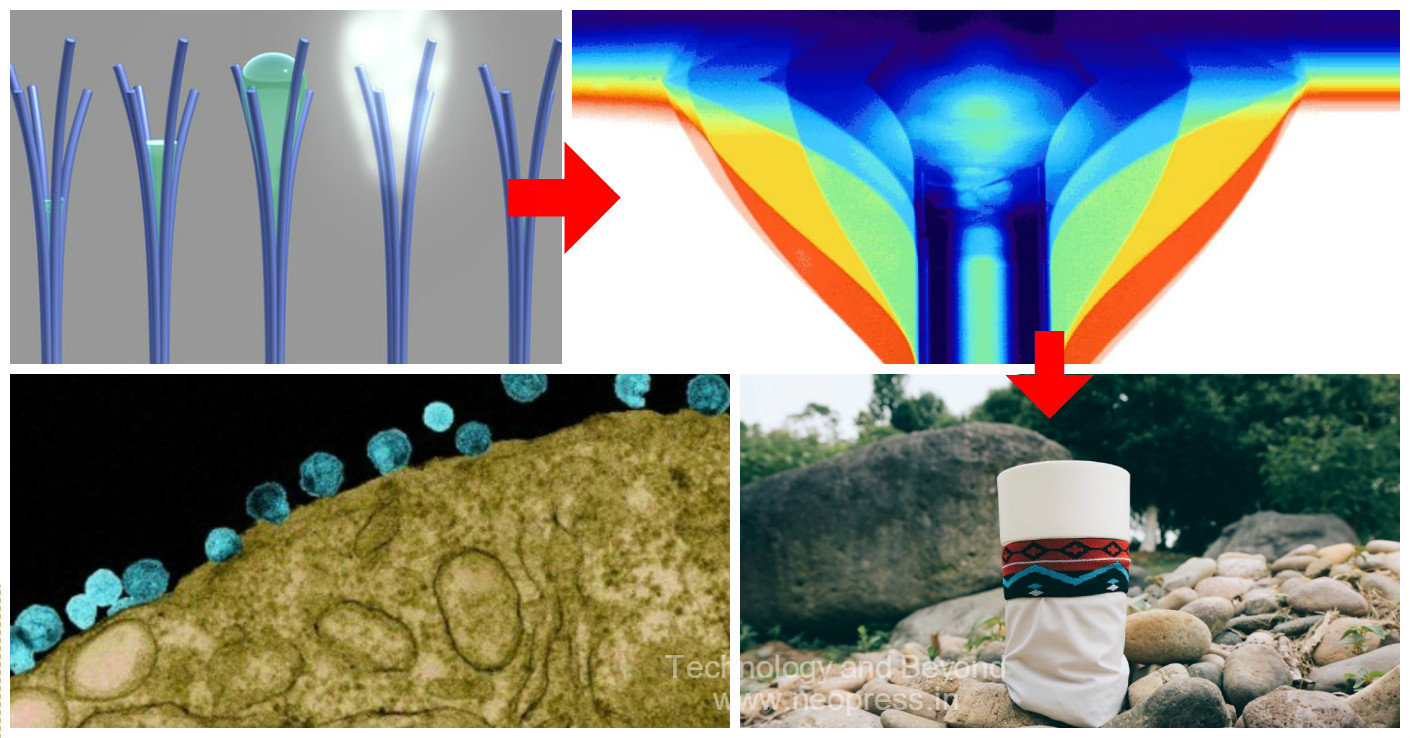
Scientists made accidental discovery of nanorods that harvest water from the air

Unbelievable scientific discoveries never fail to enthrall us. With each passing day we find ourselves standing with our jaws dropped looking at how many researchers stumble onto things that haven’t even been looking for while experimenting to find newer inventions. One such discovery is the new nanorods that have the potential to harvest water from air.

These carbon-rich microscopic, inadvertently produced rods absorb and release water in a different way to all kinds of material that we are aware about. They can absorb water at low humidity levels and later on oust it as the level increases to 50-80 percent while other resources just continue to take in the excessive liquid from the air.

Gizmag’s Michael Irving emphasizes that these nanorods can ultimately be used in array of applications, starting from low-energy water-harvesting structures to possible even in the fabrics that can absorb sweat from the body.

“Our unusual material possesses qualities a bit like sponge; it squeezes itself almost halfway before it’ completely saturates itself with water,” explained David Lao from the Pacific Northwest National Laboratory (PNNL), one of the material’s Inventors.

Here’s how this happy accident took place, the team was intending to produce magnetic nanowires, but instead ended up creating these carbon nanorods in the lab. A closer inspection detailed how these nanorods apparently lost weight as the humidity in the surrounding environment rose.

Initially, the Researchers doubted their instrument to be malfunctioning but to their surprise, they realized that it was the recap of a very similar phenomenon that was considered in 1990s.

The team then started going through papers from year 2012 and 2013 that referred to the theories of how water can automatically vaporize if it’s surrounded by hydrophobic components/ materials or kept in an area not more than 1.5 nanometres wide.

The team reports that water apparently condenses and forms a bridge between the nanorods, this process is called capillary condensation. This water between the rods causes tension on the surface and pulls adjacent rods, placing them very near to each other. When this gap gets as close as 1.5 nanometres, the water starts to evaporate.

The PNNL team calls it an impending paradigm shift in the process of purification of water and also talks about their futuristic thought of how someday the sheets of these nanorods may harvest water from even the desert air. Presently a mere 10-20 percent of the material is seen to spill out water and scientists are working to increase this number considerably high.

“We’ve started to imagine the many ways it could be harnessed so as to better the quality of life that we live, now that we’ve moved on the preliminary blow of this unexpected behavior of the material”, said David Heldebrant, team engineer. “But before we can put these nanorods to use, we need to figure out a way to control them and perfect their shape and size.”

As a technology lover you may like our daily important technology news series. It’s a playlist and you can retrieve the total day-wise videos. Please consider subscribing our YouTube channel:

Author: Technology and Beyond

Tagged : /

The amazing world of food scanners. We now know what’s in our plate for sure!

A question by a concerned mother whose kid was suffering from a nutrition deficiency led me to wonder if there could be any gadget in this high-tech world that could scan our plates and tell us what all nutrients we were hogging on. We also wonder what we’d do if we knew the food much closely that’s on our plate. During a research study, one of these respondents being an emotional mother of an eight year old girl left a question asking how technology will advance when it comes to food scanning.

She explained how difficult it was to find the right food for her daughter who was suffering from various food allergies at such a tender age. She had to ensure that it didn’t contain anything her daughter was allergic to by diligently checking the labels on food product and had to cook very deliberately. She was pregnant when she wrote the comment, and was extremely worried. She asked if there were any labeling advances or technological devices that could make her life a bit easier and she also asked if it was possible to scan food to determine the ingredients.

The Problem with our Food

Concluding from the statistics of Europe, around 220 to 250 million people suffer from various food allergies across the globe. In the US one out of three people possesses one kind of food allergy or modifies the family meals in fear of a susceptible food allergy in the family. 5% of children and 4% of teens and adults have clinically proven food allergy.

About 35 % of adults are overweight, with about half a billion being obese possessing a body mass index of more than 30, globally. The International Diabetes Federation report that half a billion people may suffer from diabetes by 2035; and half of them may remain undiagnosed. Obesity, diabetes and food allergies are just a few of the most prominent examples where awareness of the calorie intake and ingredients are crucial in managing medical issues day after day.

According to the European Commission launched  €1 million prize challenge to develop a mobile, affordable, non–invasive solution that will enable users to measure, calculate and analyze their food intake. This contest shall run until the end on 2016. Many other such initiatives are required to be brought up to help people get over the problems of diabetes or obesity.

We really have no Idea what we eat

We can only presume. Almost all the ingredients are come enlisted on the product’s label, but at the end every plate and every meal is different. One way to solve this would be to have a list of exact and correct ingredients and the number of calories a meal contains, also a list of all the toxins and allergens it contains. Not just the kind of food we eat but the actual meal that is on our plates with specific amount. Many companies have come up with ways to address this problem.

In 2013, Canadian TellSpec carried out a successful crowd funding campaign that managed to raise more than $380,000. It aimed to develop a mobile food scanner that informs the users just the specific ingredients and macronutrients on their plates. Spectroscopy is a technique that enables us analyze as to how a matter interacts with wavelengths of light that differ from each other, it can also very quickly determine the chemical compounds contained in a given food. Isabel Hoffmann, Founder of the company, had a similar story with that of the mother who commented on my blog. Hoffman’s daughter got sick after they moved to a new flat in Toronto. A few months later she was diagnosed to have developed various food allergies.

This drove Hoffman to recruit a team of designers to develop device that enabled the user to know what was in a definite food. They sent the primary versions of the device to beta testers in mid 2015 and now after gaining much popularity, they have promised to launch the device in 2016. Many critics have asked for the availability of the device and questioned its capabilities.

width="560" height="314" allowfullscreen="allowfullscreen">

The Promise and problems of Food Scanners

People with optical engineering backgrounds in Israel found SCiO and raised ove $2.7million in 2014 on Kickstarter. It used technology similar to that of TellSPec’s but was designed not only the molecular contents of medicines and food but also of plants. An optical sensor to detect the reflected light was illuminated by it on an object and it further analyzed the cloud based data using an algorithm. The user’s smartphone would display the molecular make up and contents of the food within seconds, as promised by the Company. The launch was scheduled to be in 2015 but it came as a major disappointment to backers a it hasn’t been shipped yet. Let alone the delay, critics also criticized the makers of both SCiO and Tell Space for overstating their inventions.

There were two major problems that was faced, one being the size as the device should not be bigger than a hand-held for the buyers which implied that engineers were asked to bargain the accuracy and sensitivity just to ensure that the size was not bigger than a mobile phone. The second issue was of the algorithm as SCiO used to operate with a cloud-based data by sending the specifics of the food – whether it is solid or in liquid form, or if it is a vegetable- to the cloud and then displaying the calculation on the device.

There aren’t many promising devices that are hand–held food scanners other than these on the horizon. It is a greater challenge to figure out what we would do with the large amount of information that any of these devices generate if and whenever they come into existence.

Next Page For More

Tagged : /

Low cost bio-foam purifies dirty water into drinkable water. A perfect solution for rural areas!

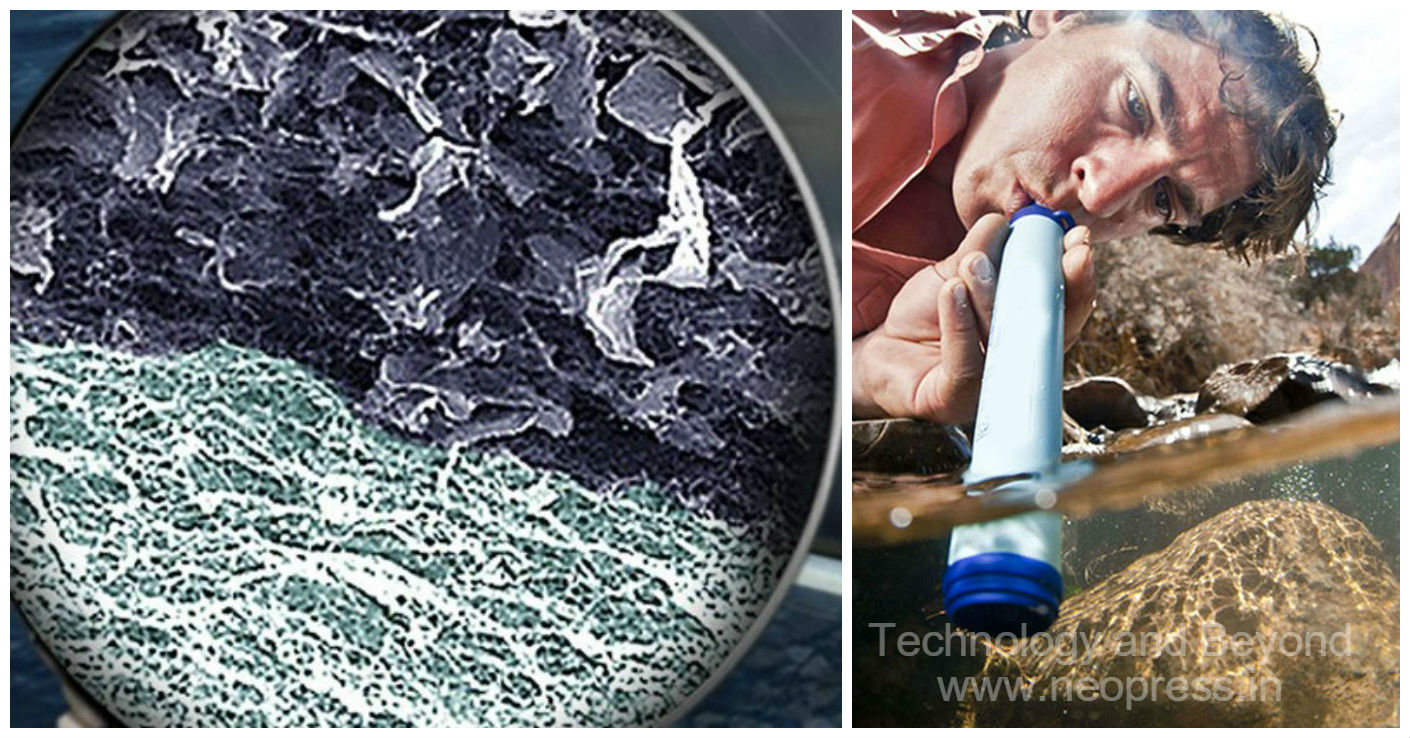
Engineers at Washington University have figured out a way to turn dirty water into drinkable water by using graphene oxide sheets.

This new approach chains graphene oxide and bacteria-produced cellulose to form one bi-layered biofoam, as detailed in their paper published in Advanced Materials.

“The process is extremely simple,” said Srikanth Singamaneni, an Associate Professor of Mechanical Engineering and material science.

 “The beauty of this is that the entire network of nanoscale cellulose fiber produced by bacteria has outstanding ability to move the water to the evaporative surface from bulk along with minimizing the heat, and the whole thing is produced in one go.”

The cellulose at the bottom of the biofoam acts like a sponge and soak water up to the graphene oxide. On rapid evaporation, the clean water is collected from the top of the sheet.

Fascinatingly, the process in which the biofoam is formed, functions in the same way as when an oyster makes a pearl. The bacteria develops layers of nanocellulose fibers, ehich is then embedded by the graphene oxide flakes.

The major benefit of this biofoam is that it’s extremely light and inexpensive to produce.

“Cellulose can be produced on a huge scale,” Singamaneni reports, “and graphene oxide is tremendously low-priced—people can produce loads, truly loads, of it. Both materials going into this are highly accessible. So one can easily produce huge sheets of the biofoam.”

Researchers have found, the properties of this synthesized foam material to have features that enhance solar energy harvesting, making it more effective at putting an end to the bacteria and contaminants in the water.

“We hope that for countries where there is abundant sunlight, such as India, you’ll be able to take some dirty water, evaporate it, and collect some fresh water, using our material,” Singamaneni states.

As a technology lover you may like our daily important technology news series. It’s a playlist and you can retrieve the total day-wise videos. Please consider subscribing our YouTube channel:

Author: Technology and Beyond

Tagged : /

Cloaking Technology: How it works and Why it is a promising technology!

atravesar las paredes 11

During April 2151, humanity encountered the first cloaking incident when Suliban used their cloaking device to approach Startship Enterprise and managed to inflict a close fight. Yes, you heard it right, we are talking about Star Trek stories. Suliban’s cloaking device was a particle generator which absorbs all the light making it invisible. In the scenario of dark space it may be possible but when it comes to its application on earth there is a major practical difficulty. The cloaking material may absorb the light but in turn, it will create a black patch and will obstruct  the background. That serves no purpose because the object can be identified by its dark patch.

Invisibility_Cloak_610

The major idea of invisibility came into forth when the idea of light bending the across the object came into picture. The whole idea was to pass the light across the periphery of the object and then clubbing the light together. This helps in seeing the background behind the object thus making the object completely invisible.

chamikawpblogspotcom2-141

Scientists has successfully tried this with a diamond-shaped cloak allowing the edges to match up. By this process, they were successful in bending light around their 1 centimeter high, 7.5 centimeter wide cylinder without reflections. When it comes to replicating such things with bigger objects it becomes almost achievable, let alone making a complete starship invisible.

flatinvisotiles2 cloak

invisble1

In the picture above, the object wearing the cloak appears invisible because the background visual is being displayed onto the retro-reflective material. At the same time, all other light rays are allowed to reach the user’s eye, making the person in the front completely invisible. [image : Howstuffworks]

Bending of light across the periphery of the object sounds simple but difficult to achieve. Scientists have come out with various meta-material structure with intricate slits and cuts across the periphery of the object to channelize the light streams in proper direction and then clubbing the same behind the object. Manufacturing such accurate and intricate meta-material structure is always costly and challenging and sometimes almost impossible. On top of that, It is easier to hide objects from other waves like heat, magnetic fields or acoustics. Scientists are not that successful replicating these incidents with Light waves having longer wavelengths

Wasser-Tarnkappe / Sonar

Invisibility-cloak-tsunami-stopper

Advent of 3D printer solves this problem and you can print such intricate structure accurately.  You will not be surprised if you hear scientists are cloaking bigger materials with the 3D printed meta-materials.

3d printed invisibility cloak

Recently Scientists are successful in creating a cloak in entirely different way. This is done by creating a time hole/ time gap in the light stream. It is more like fast forwarding the front of the wavelength and pulling back the trail of the wavelength. This is even effective in cloaking a total incident. it can be explained like this:

The rays emanating from the slits combine on the other side to create an intricate interference pattern of peaks and troughs. Talbot discovered that this pattern repeats at regular intervals, creating what is now known as a Talbot carpet. There is also a temporal version of this effect in which you manipulate light over time to generate regular periods with zero light intensity, says Lukens. Data can be then be hidden in these holes in time. [Nature]

Invisible Time

In simplistic term if you imagine the bus-scene in the movie Speed in which the good guys use a short loop of camera footage of all the passengers sitting still to fool the bad guy into thinking that everything is going his way. During that time, the hero was helping everyone to escape. The invisibility cloak with time gap will be able to do that when it will be available in scaled up version.

s3

  • Coming to the usage of cloaking technology, it will have various utilities in the form of:
  • Cloaking various vehicles during  war or to hide the supply chain in hostile location
  • Commando team can observe the hostage and the extremists beyond the wall in front and drive the operation accordingly
  • In medical field, it will be extremely useful for surgeons to see the actual part of the body/ tissue beyond the tools and/or equipment that comes in front
  • The time gap cloak will be extremely useful to hide events in future. In near future, we will see its practical application in secure data transmission by hiding the data partially or completely in time gap.

Possibilities are endless and endless are the practical challenges. But in all probability we have to wait a while before we see a flawless and practical demonstration of invisibility cloak.

As a technology lover you may like our daily important technology news series. It’s a playlist and you can retrieve the total day-wise videos. Please consider subscribing our YouTube channel:

Author: Technology and Beyond

Tagged : /
Verified by ExactMetrics