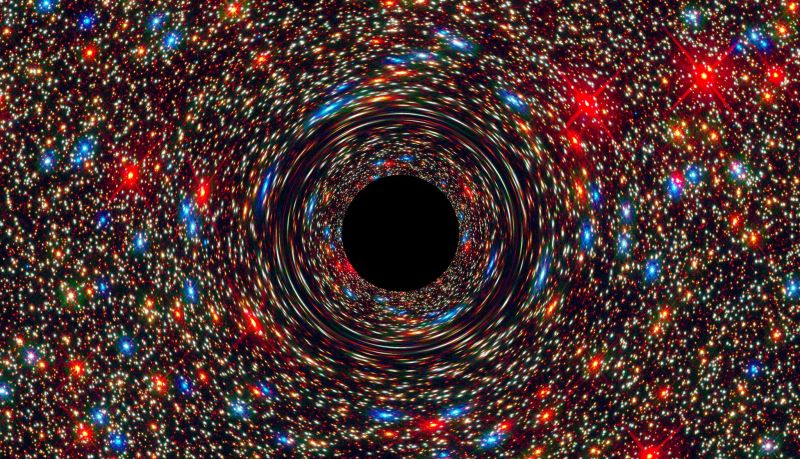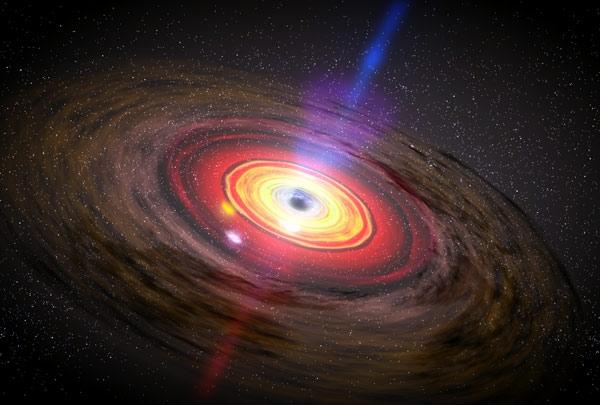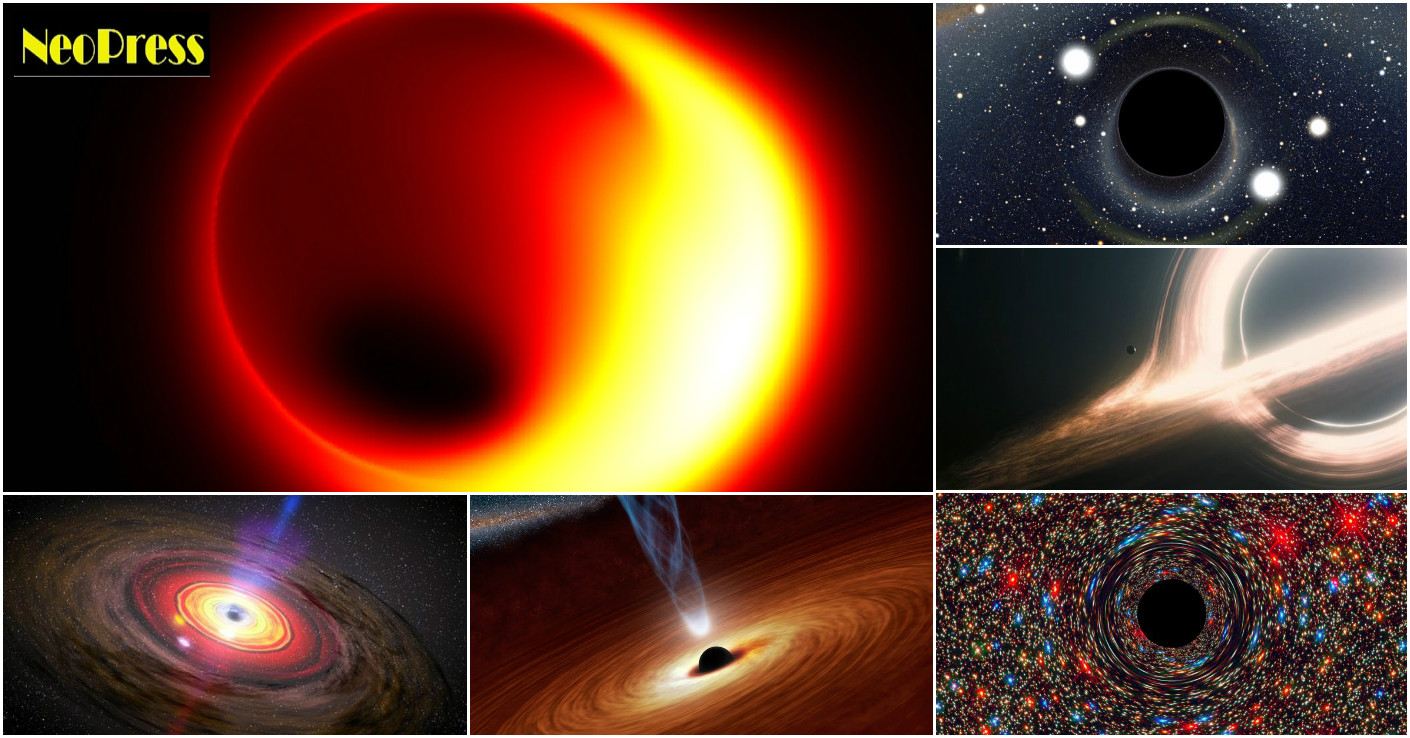
The Recent Photos of Black Holes- Are They Real or simulated picture?

While a network of telescopes across the world- the Event Horizon Telescope, has successfully completed its highly-anticipated ten-day-long observation period, only people really keen to spot the difference and science geeks will recognize that the pictures taken are not really the black hole.

In other words, we will maybe soon see a real image of a black hole but, not for at least a few months. The pictures we are currently seeing are just beautiful artist renderings and simulations.

Yes, the Event Horizon Telescope successfully collected data for the past week and a half. All of the scopes in the network recorded the radio waves emanating from the center of the galaxy, where the super-massive black hole Sagittarius A* is believed to reside. Things went well, with the exception of some bad weather here and there.

But now, the scientists must take their data back to supercomputers, line up those light sources, and run special algorithms to get the final picture. As we previously reported, this will happen later this year at the earliest, but we may need another cycle of observation before we get our first true image of a black hole.

Meanwhile, we need not worry. Whatever the telescope has seen will be truly amazing!

We have photos like a computer-generated image of what a black hole might look like, and how its gravity might distort the light around it and an artist’s depiction of how matter might be ripped and radiate energy as it orbits the black hole’s high-gravity center.

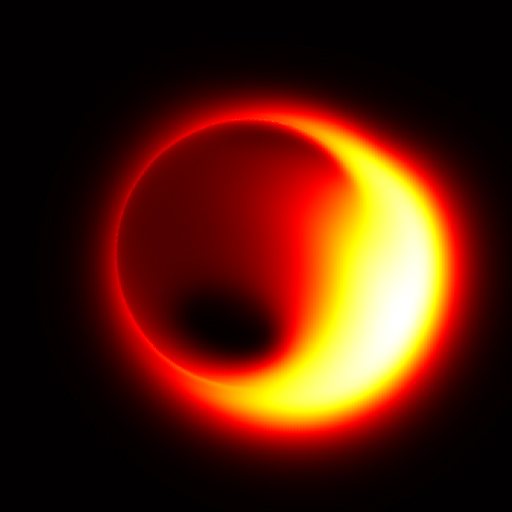
Alain Riazuelo: http://www2.iap.fr/users/riazuelo/index.php

Avery Broderick, The Perimeter Institute

NASA Goddard Space Flight Center

Interstellar

NASA/Dana Berry/SkyWorks Digital

NASA/JPL-Caltech

As a technology lover you may like our daily important technology news series. It’s a playlist and you can retrieve the total day-wise videos. Please consider subscribing our YouTube channel:

Author: Technology Vista

Tagged : /

Aliens Allergic to Heat? Might be Waiting for the Universe to Cool Before Contacting Us

A new study claims that alien lifeforms are most likely to have shifted to a digital-based existence. And while, living life as a machine would have many advantages, including being able to process information faster and being less vulnerable to disease and death, supercomputers capable of processing vast amounts of information are known to be more efficient at lower temperatures. Because of this, intelligent machine-based lifeforms might have chosen to go into hibernation until the climatic of the universe starts to cool down, according to the researchers.

Supercomputers need lower temperatures for optimal function as they need a large amount of energy is to cool down the processing activity.

‘If a civilization wants to maximize computation it appears rational to aestivate until the far future in order to exploit the low temperature environment,’ the scientists, led by Dr Anders Sandberg, said in the Journal of British Interplanetary Society.

‘We hence suggest the “aestivation hypothesis”: the reason we are not observing manifestations of alien civilizations is that they are currently (mostly) inactive, patiently waiting for future cosmic eras.’

Scientists from the University of Oxford call this theory the ‘aestivation hypothesis.’

As the universe expands and stars die out over the course of millions of years, it’s likely that the temperature will drop back to absolute zero. As of now, the level of background radiation of the universe is currently three degrees Kelvin above zero, which could be intolerably hot for machine-based life, the scientists said.

As a technology lover you may like our daily important technology news series. It’s a playlist and you can retrieve the total day-wise videos. Please consider subscribing our YouTube channel:

Author: Technology Vista
Tagged : /

Scientists Claim Aliens Might Have Been Here Before Us!

NASA has said it is on the brink of making the most “profound” discovery ever about alien life.

Pennsylvania State professor Jason Wright, penned a scientific paper entitled “Prior Indigenous Technological Species” and in it he explores the possibility of pre-existing life in space, and concludes that if aliens did exist before humans, they could have left undiscovered evidence beneath the surface of the planets or even in orbit.

He believes aliens would have visited several planets of our solar system- namely, Earth and Venus.

He wrote: “Ancient Venus would have had a much thinner atmosphere when the Sun was significantly fainter, and the surface may have been habitable. After Earth, it is thus also perhaps the most likely host for a prior indigenous technological species. Next, the icy moons, and even the asteroids, make obvious sites where an intelligent species may have arisen.”

NASA is identifying landing spots on Mars for a 2022 Red Planet mission, which will look at the three areas of the Red Planet it believes are most likely to contain evidence of alien life.

Professor Wright also mentions that, “Given the signatures humanity’s technology has already imprinted on our future geological record, we might expect such a prior species on Earth to have made a similar impact.

“It also may be that any such species that arose on Earth or Venus have left no trace that we can ever discover in-situ.”

As a technology lover you may like our daily important technology news series. It’s a playlist and you can retrieve the total day-wise videos. Please consider subscribing our YouTube channel:

Author: Technology Vista

Tagged : /

Yes, we may have alien friends in our Solar System: NASA

Seems like ET wasn’t just a movie at all – we may actually have some adorable alien friends in our Solar System. Okay, admit it! Even if you don’t want to believe, there is that small part of your brain which keeps asking “why there can’t be aliens in our solar system?” And that small part of our brains has been asking this question from a long time.

And why not! If we are here in this enormous Universe – living and breathing and doing things, there must be people like us or advanced than us. There can’t be just one Earth in this whole wide Universe- that’s too unlikely. So if you have always had that hunch, you have a supporter and that too of a big stature- NASA!

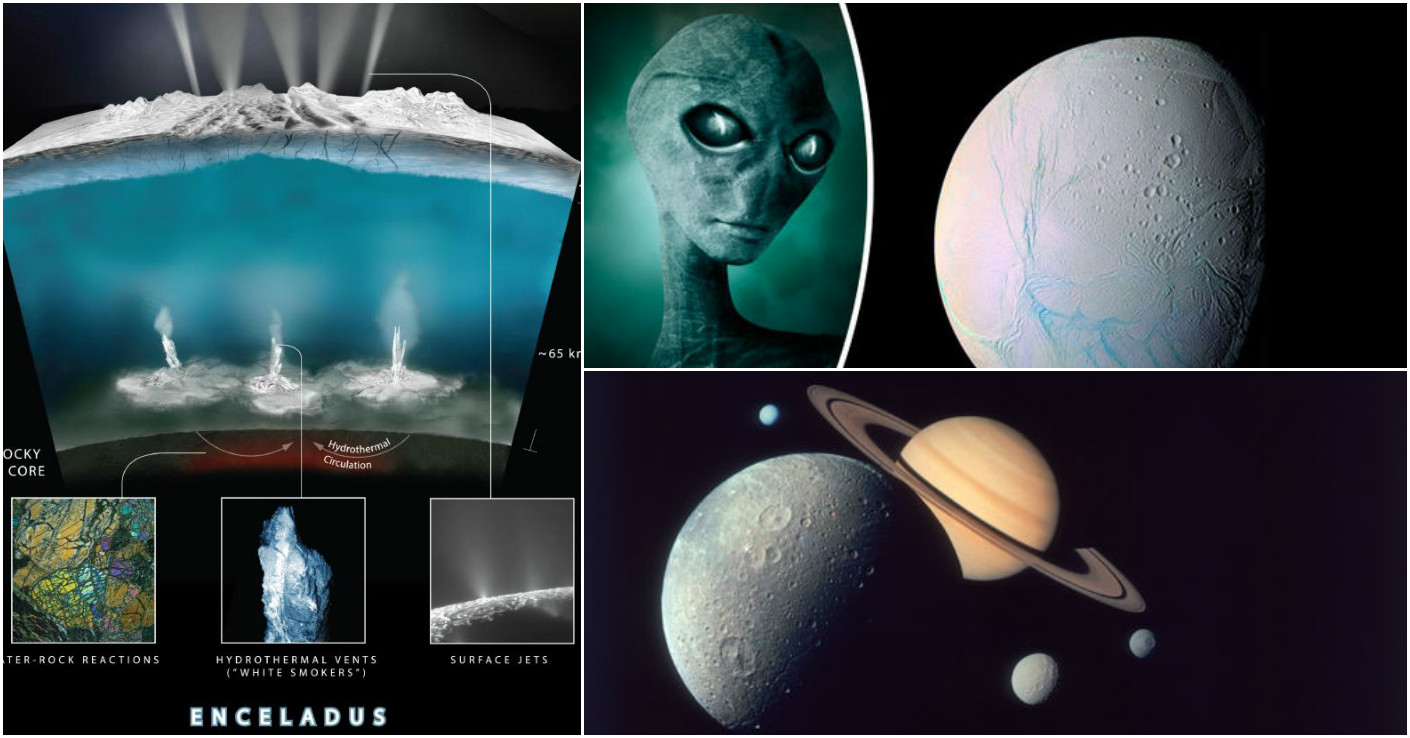
Basis the findings of its spacecraft Cassini and Hubble Space Telescope, NASA has arrived at the conclusion that there just might be alien life in our Solar System. The findings aren’t some vague things. In fact, these findings show that Enceladus, a moon of Saturn known for its icy white shell has some kind of chemical activity under its shell.

This activity is important to life on Earth suggesting some kind of life living there. And if you are wondering why this particular moon, then let us tell you that NASA that this moon has been under study for quite a while, owing to its massive underground oceans and icy outer shell which resemble the Earth’s protective ozone layer.

Add to this the confirmation from NASA that there are hydrothermal vents in the oceans on Enceladus. This piece of information is important because on earth, hydrothermal vents are found quite deep in the sea and are known to offer food and warmth to sea creatures that live at such depths. So if the hydrothermal vents are keeping creatures alive on the Earth, there is a strong possibility that the vents are keeping creatures alive on Enceladus too!

We are sorry to disappoint you though because if you thought this moon had some real cool Hollywood-style aliens, you are in for a let-down because basis the theory of NASA, this other life form maybe just some kind of shrimps or other little marine creatures. But a life form is a life or nevertheless. And it will still be called alien (though not as fancy as you saw in the movies)!

As a technology lover you may like our daily important technology news series. It’s a playlist and you can retrieve the total day-wise videos. Please consider subscribing our YouTube channel:

Author: Technology Vista
Tagged : / /

Saturn’s Moon Might Be Hosting Alien Life Since Long

New evidence from NASA suggests Saturn’s moon Enceladus may not be as hostile and inhospitable as it seems. Nasa’s Cassini spacecraft has picked up the first evidence that chemical reactions are happening deep below the ice which could be creating an environment capable of supporting microbes.

Liquid oceans exist miles below the surface on Enceladus, so to find out what is happening in the underground seas scientists must rely on the plumes of spray which shoot up into the atmosphere through cracks in the ice.

Life could be thriving in warm underground seas, scientists believe. All the more remarkable is that, this moon 887 million miles away from the Sun, might be harbouring the perfect conditions for life.

In October 2015 Nasa sent Cassini into a deep dive through one of those plumes and discovered hydrogen and carbon dioxide. In a report of their findings published today in the journal Science, scientists said that the ‘only plausible’ source for the hydrogen was chemical reactions between warm water and rocks on the ocean floor.

“Saturn’s moon Enceladus has an ice-covered ocean, and a plume of material erupts from cracks in the ice,” said Professor Hunter Waite, of Southwest Research Institute (SwRI) in San Antonio, Principal Investigator for Cassini’s Mass Spectrometer instrument which detected the hydrogen.

“The plume contains chemical signatures of water-rock interaction between the ocean and a rocky core. We find that the most plausible source of this hydrogen is ongoing hydrothermal reactions of rock containing reduced minerals and organic materials.

“On the modern Earth, geochemically derived fuels such as hydrogen support thriving ecosystems even in the absence of sunlight.”

Scientists had long suspected that liquid water could exist on the moon because of the extreme tidal forces acting on the satellite from Saturn’s gravity. Crucially, if hydrogen is present it can mix with carbon dioxide to form methane, which is consumed by microbes in the deep, dark seas of our own planet. If life is present, it could resemble single-celled tube-like extremophiles which have lived in hydrothermal vents on Earth for billions of years.

Next Page For More

Tagged : /

We might have estimated it wrong! 68% of the Universe might not actually exist!

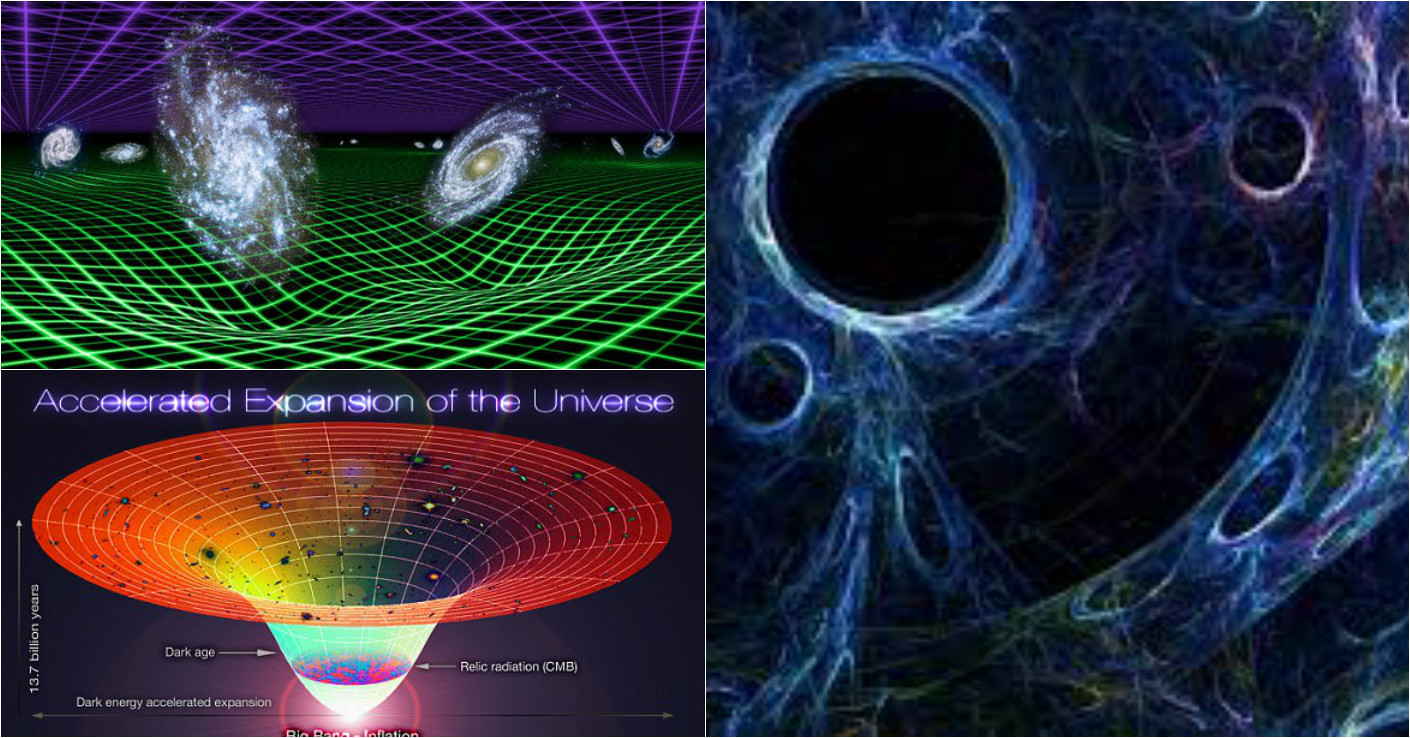
Dark energy is a mysterious, mostly unknown force said to be driving 68 percent of the universe, But, new simulations suggest that accelerated expansion can be explained without the need for dark energy – and, in a way that’s consistent with present observations and general relativity.

‘Einstein’s equations of general relativity that describe the expansion of the universe are so complex mathematically, that for a hundred years no solutions accounting for the effect of cosmic structures have been found,’ said co-author Dr László Dobos of Eötvös Loránd University.

‘We know from very precise supernova observations that the universe is accelerating, but at the same time we rely on coarse approximations to Einstein’s equations which may introduce serious side-effects, such as the need for dark energy, in the models designed to fit the observational data.’

n the new study, published in Monthly Notices of the Royal Astronomical Society, the researchers argue that the conventional models of the universe fail to address its changing structure. The researchers designed computer simulations to model the effect of gravity on the millions of particles of dark matter distributed throughout the universe.

The researchers designed computer simulations to model the effect of gravity on the millions of particles of dark matter distributed throughout the universe.

‘We know from very precise supernova observations that the universe is accelerating, but at the same time we rely on coarse approximations to Einstein’s equations which may introduce serious side-effects, such as the need for dark energy, in the models designed to fit the observational data.’

As a technology lover you may like our daily important technology news series. It’s a playlist and you can retrieve the total day-wise videos. Please consider subscribing our YouTube channel:

Author: Technology Vista
Tagged : /

Where Did All of Mars’ Water Go? NASA Finally Has an Answer!

The theory that Mars harbored vast oceans is a relatively new one, but a supported one nevertheless. This inevitably brought about the question: where did all that water go? NASA might finally have an answer.

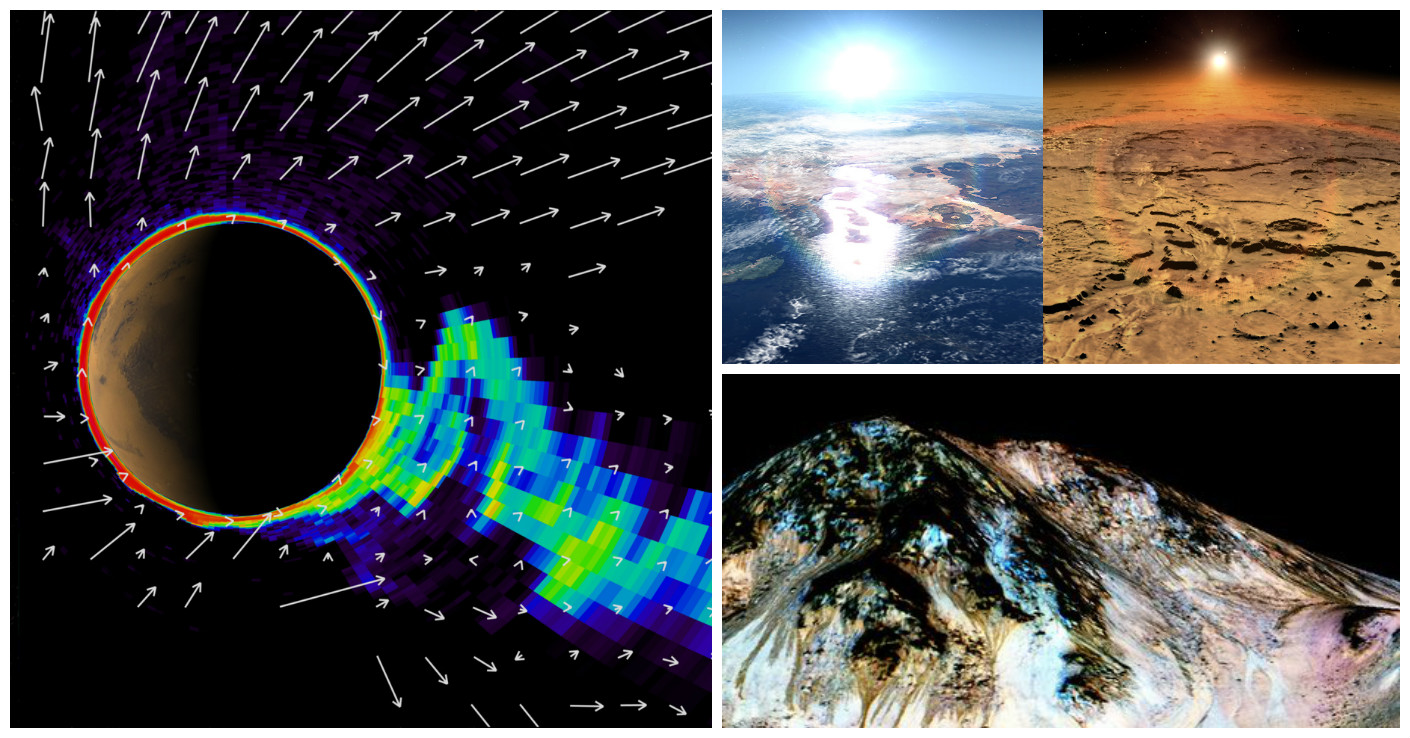
All thanks to new data from NASA’s MAVEN spacecraft, We’ve determined that most of the gas ever present in the Mars atmosphere has been lost to space,” Bruce Jakosky, principal investigator of the MAVEN mission, explains.

The researchers were able to make this determination based on the amount of argon, a noble gas, remains in the Martian atmosphere as compared with the levels that are believed to have once existed there. Atmospheric molecules are thought to have been slowly stripped away over time due to a process known as “sputtering” in which radiation and solar wind from the sun bump, knock, and drag them away from the planet.

That lost gas — somewhere in the neighborhood of 65% — greatly depleted the planet’s atmosphere, causing oceans, lakes, and rivers to dry up as the vital elements were swept away into space by intense radiation and solar wind.

If life did indeed exist on the surface of Mars at one time, NASA believes that the slowly depleting atmosphere — and the frigid temperatures in brought with it — would have gradually driven it to live primarily underground or in smaller habitable pockets tucked away around the planet. Let’s see what else they unearth in the future.

As a technology lover you may like our daily important technology news series. It’s a playlist and you can retrieve the total day-wise videos. Please consider subscribing our YouTube channel:

Author: Technology Vista
Tagged : /

NASA All set to use the Sun as a Telescope

We have come incredibly far and seem to make progress exploring farther reaches of our solar system and universe. Not that the modern telescopes such as the iconic Hubble Telescope and the James Webb Space Telescope that replaced it, are anything to scoff about, but NASA now plans to turn the sun into some sort of massive magnifying glass i.e., a telescope.

For this, they are using Einstein’s Theory of Relativity that says large objects (like the Sun) bend the space around them, and so anything traveling in that space (even light) bends as well.

In a phenomenon known as gravitational lensing, if light is bent around an object in a particular way, it can magnify the space (quite literally, space) behind it. Scientists have previously used gravitational lensing to help telescopes to be more effective, but now, researchers aim to use this distribution of matter as a “telescope.”

This new approach certainly has its pros and cons. In order to harness this lensing, the necessary instruments would need to approach pretty close to the sun, in order to reach a target 550 AU away. While humans and probes have traveled much closer to the sun than this, and plan to do so in the future, this difficult journey would take a long time and the equipment would have to be somehow “placed” into the middle of space.

We could finally get a closer, clearer look at Trappist-1, and would be that much closer to discovering life outside of Earth.

As mentioned previously, this “sun scope” is not the only highly advanced space-imaging technology that’s surfacing. The James Webb Space Telescope, set to launch in October of 2018, will hopefully continue and advance the incredible work of the Hubble Telescope. In fact, this telescope is so powerful that Lee Feinberg, an engineer and James Webb Space Telescope Optical Telescope Element Manager at Goddard, was quoted as saying. “The Webb telescope is the most dynamically complicated article of space hardware that we’ve ever tested.”

The technology that we use to capture the incredible images of space is improving every day.

As a technology lover you may like our daily important technology news series. It’s a playlist and you can retrieve the total day-wise videos. Please consider subscribing our YouTube channel:

Author: Technology Vista

Tagged : /

New controversy: This rare blood type might mean alien DNA! Is it there in you?

Eight common blood groups have long been identified and tested in humans- A, AB, B, and O with each having a positive or negative trait. These only vary based on the proteins found in each individual’s blood. However, a recent but controversial scientific discovery is blasting that theory out of the water. Now, scientists are claiming that they have discovered a new blood type in humans that stems from an unbelievable source!

It is suggested that as much as 38% of the US population has O-positive blood (the most common), while as little as 1% has AB-negative (the least common). The new blood type in question is known as RH-negative and it’s so rare that scientists claim people who have it could have alien DNA!

After performing studies, researchers found that RH blood does not carry the evolutionary gene found in rhesus monkeys that most other humans have. Meaning, they didn’t evolve from the same lineage as other people. Intriguing?

The research has also concluded that people with the RH blood type are more likely to be physically and emotionally aware, have a higher IQ, and have green or blue eyes. It is important to remember that it is extremely difficult for women who have RH-negative blood type to give birth to a baby who carries it, as well. As a result, the mother’s body will naturally attempt to get rid of the fetus. Doctors give these women  a sterilization solution that will prevent that from happening and keep both mother and baby safe.

Despite their best efforts, researchers still know so little about RH-negative blood. Perhaps, it suggests that in the past aliens have walked among us. Scientists are suggesting that between 10-15% of the population carries this RH blood type, and they are continuing to explore its possible origins. So far, they have discovered that this type could be connected to some tribes dating back 35,000 years.

As a technology lover you may like our daily important technology news series. It’s a playlist and you can retrieve the total day-wise videos. Please consider subscribing our YouTube channel:

Author: Technology Vista

Tagged : /

Difficult to believe but, NASA is all set to scan the Sun for aliens!!

While most scientists are focused in finding new alien life in the far reaches of the galaxy, some are hanging back to double check much closer to home. Yes, the sun. Scientists have a whole slew of reasons for wanting to make this unprecedented expedition, with heat-loving extremophiles being one of many.

Experts are planning on sending a spacecraft, named the Solar Probe Plus, to get as close as possible to the sun to get readings on a few things that some scientists have been yearning for answers about. NASA will be sending the probe some 90 million miles, which will get the probe close enough to get readings about emissions from beams of high-energy particles and solar wind speeds.

The craft will be able to get within 4 million miles from the sun, which may seem far to us, but will be significantly closer than any other spacecraft has ever been able to get and will be an adequate distance to answer quite a few questions. The significance of finding life able to withstand such an extreme environment would mean a lot to scientists everywhere. Even if this life is single-celled extremophiles, this could mean that we were wrong about many other solar systems and planets that we have rejected as being possible places for life.

These high-energy particles are being sprayed out from the sun at speeds that baffle researchers. The Solar Probe Plus should be able to get close enough and will be equipped to determine how these particles achieve the startling acceleration that they do. The craft will need to be unmanned because of the intense heat coming from the sun as well as the danger that these particles are hurtling through space at mind-boggling speeds present to astronauts.

The particles and heat can be dangerous to spacecraft as well, meaning that the Probe Plus will be armed with a nearly 5-inch thick hull made from a carbon alloy. Other systems will be put in place to ensure the safety of the vessel.

As a technology lover you may like our daily important technology news series. It’s a playlist and you can retrieve the total day-wise videos. Please consider subscribing our YouTube channel:

Author: Technology Vista

Tagged : /

A new theory! Here is how the land based dinosaurs faced mass extinction!

Researchers from Potsdam Institute for Climate Impact Research in Germany have another theory for why dinosaurs perished. New computer simulations have shown that tiny droplets of sulphuric acid resulted in long-lasting cooling, which was a likely contributor to the death of land-living dinosaurs.

The researchers reconstructed how tiny droplets of sulphuric acid formed high up in the air after the well-known impact of a large asteroid and blocking the sunlight for several years, had a profound influence on life on Earth.

“The big chill following the impact of the asteroid that formed the Chicxulub crater in Mexico is a turning point in Earth history,” said lead study author Julia Brugger.

An additional kill mechanism might have been a vigorous mixing of the oceans, caused by the surface cooling, severely disturbing marine ecosystems. Previous theories focused on the shorter-lived dust ejected by the impact.

The team used a specific kind of computer simulation normally applied in different contexts, a climate model coupling atmosphere, ocean and sea ice and built on research showing that sulphur- bearing gases that evaporated from the violent asteroid impact on our planet’s surface were the main factor for blocking the sunlight and cooling down Earth.

The dinosaurs were used to living in a lush climate. After the asteroid’s impact, the annual average temperature was below freezing point for about three years.

Evidently, the ice caps expanded. Even in the tropics, annual mean temperatures went from 27 degrees to mere five degrees.

It took the climate about 30 years to recover, the scientists found. Surface waters cooled down, thereby becoming denser and hence heavier.

“The long-term cooling caused by the sulphate aerosols was much more important for the mass extinction than the dust that stays in the atmosphere for only a relatively short time. It was also more important than local events like the extreme heat close to the impact, wildfires or tsunamis,” explained co-author Georg Feulner.

The final nail to the coffin might have been that while these cooler water masses sank into the depths, warmer water from deeper ocean layers rose to the surface, carrying nutrients that likely led to massive blooms of algae.

The scientists have been arguing on this and it is conceivable that these algal blooms produced toxic substances, further affecting life at the coasts.

In any case, marine ecosystems were severely shaken up and this likely contributed to the extinction of species in the oceans, like the ammonites. The dinosaurs, until then the masters of the Earth, made space for the rise of the mammals, and eventually humankind.

As a technology lover you may like our daily important technology news series. It’s a playlist and you can retrieve the total day-wise videos. Please consider subscribing our YouTube channel:

Author: Technology Vista

Tagged : /

Scientists explained the mystery of Déjà Vu! This is how our brains check the memories!

Most of us have experienced the eerie familiarity of déjà vu and it has been the subject of longstanding debate. Exactly how déjà vu works has long been a mystery, partly because its fleeting and unpredictable nature makes it difficult to study. Now, for the first time, brain scans of this phenomenon have revealed why we have this feeling at all- it’s a sign of our brain checking its memory.

Déjà vu was thought to be caused by the brain making false memories, but research by Akira O’Connor at the University of St Andrews, UK, and his team suggest this is wrong. The team’s technique uses a standard method to trigger false memories. It involves telling a person a list of related words – such as bed, pillow, night, dream – but not the key word linking them together, in this case, sleep. When the person is later quizzed on the words they’ve heard, they tend to believe they have also heard “sleep” – a false memory.

O’Connor and his colleagues developed a way to trigger the sensation of déjà vu in the lab. O’ Connor’s team first asked people if they had heard any words beginning with the letter “s”. The volunteers replied that they hadn’t. This meant that when they were later asked if they had heard the word sleep, they were able to remember that they couldn’t have, but at the same time, the word felt familiar.

“They report having this strange experience of déjà vu,” says O’Connor.

O’Connor presented these findings at the International Conference on Memory in Budapest, Hungary, last month. He thinks that the frontal regions of the brain are probably checking through our memories, and sending signals if there’s some kind of memory error – a conflict between what we’ve actually experienced and what we think we’ve experienced.

We still don’t know if déjà vu is beneficial, says Köhler. “It could be that déjà vu experiences make people cautious, because they might not trust their memory as much,” he says. “But we don’t have any evidence for that yet.”

Next Page For More

Tagged : /

Europa, Jupiter’s Moon Could Be Hiding Alien Life, Scientists Suspect

Humans have always looked for alien life with fascination, awe and unbridled excitement. But, as the Curiosity Rover is scouring the barren surface of Mars, it becomes even clearer that there is little possibility of intelligent life there. But are we close to giving up? Absolutely not!

Life thrives in the most extreme conditions. Bacteria and unicellular life thrive even in the geothermal vents where the temperatures can soar to hundreds of temperature. Bacteria have been detected in the extremely rarefied atmosphere even at a height of 100 kilometers. This has enthused scientists to look for life at the most unlikely places. Most recently, Europa, a moon of Jupiter.

Scientists predict that there is liquid water under Europa’s icy surface which could harbor primitive life. The possibility of life on the moons of Jupiter and Saturn are very high. It is for this reason that NASA has decided to crash one of the spacecraft orbiting the giant outer planets deliberately into Saturn to prevent any contamination of the Moons which could be harboring life.

Radio signals have in the past been thought to be some kind of alien communications from far off galaxies. However, most of these have been later found to be false calls and they were the byproducts of some cosmic activity during the formation of new stars or old neutron stars.

Scientists also hope that with the Cassini mission coming to a close this year it could throw up some incredible discovery of alien life in one of the cosmic bodies. Fingers crossed, UFO buffs? Although, Stephen Hawking certainly doesn’t seem to think this might be the best idea.

width="560" height="314" allowfullscreen="allowfullscreen">

As a technology lover you may like our daily important technology news series. It’s a playlist and you can retrieve the total day-wise videos. Please consider subscribing our YouTube channel:

Author: Technology Vista

Tagged : / /

Test Yourself: Which Direction Is This Dancer Spinning In?

This is not a simple video of a spinning dancer, but an unique optical illusion that plays with your brain’s visual perception – some see her spinning clockwise, counterclockwise or even switching between the two.

The optical illusion was created by the Japanese Flash designer Nobuyuki Kayahara in 2003 and for many years, was used to determine whether people are right-brain (creative) or left-brain (logical) dominant. And apparently, people with high IQs can see the figure spinning in both directions. But recent studies and opinions indicate otherwise:

Paul Spencer with Tonic contacted Arthur Shapiro and Niko Troje, a pair of scientists who dissect Kayahara’s spinning girl in the forthcoming Oxford Compendium of Visual Illusions, to understand the truth behind this theory.

‘That’s just gibberish,’ Shapiro, a computer science professor at American University in Washington D.C. and creator of the color wagon wheel illusion, told Spencer.

He explains that there is are much more complex reasons behind why we see her spinning in different directions. The duo explains that this ballerina is deemed a reversible image in the class of optical illusions, meaning, even though she spins, she displays ‘similarities to other static illusions’ – like the Necker cube. Just like the spinning dancer, the Necker cube can be viewed in two ways: either the lower right panel is in the front or people see it placed in the back.

Reversible images like the cube and dancer change at a moment’s notice because they can be viewed in more than one way, explained Troje, director for BioMotion Lab at Queens University. And the reason for the uncertainty is because these kinds of optical illusions do not reveal any clues about the image’s depth to help us make sense of it.

Simply put, When images aren’t clear, your brain takes the initiative to fill in the gaps where information is missing.

Next Page For More

Tagged : /

The World’s Smallest Radio is Just 2 Atoms Big

The world’s smallest radio receiver-whose building blocks are the size of two atoms – can withstand extremely harsh environments and is biocompatible, meaning it could work anywhere from a probe on Venus to a pacemaker in a human heart. It is made up of an assembly of atomic-scale defects in pink diamonds.

The radio uses tiny imperfections in diamonds called nitrogen-vacancy (NV) centres. To make NV centres, researchers replace one carbon atom in a diamond crystal with a nitrogen atom and remove a neighbouring atom – creating a system that is essentially a nitrogen atom with a hole next to it.

The research was led by Marko Loncar, the Tiantsai Lin Professor of Electrical Engineering at the Harvard John A Paulson School of Engineering and Applied Sciences (SEAS), and his graduate student Linbo Shao and has been published in Physical Review Applied.

The radio is extremely resilient, thanks to the inherent strength of diamond, and the team successfully played music at 350 degrees Celsius.

More about the science behind it, NV centres can be used to emit single photons or detect very weak magnetic fields. They have photoluminescent properties, meaning they can convert information into light, making them powerful and promising systems for quantum computing, phontonics and sensing. In the Harvard device, electrons in diamond NV centres are powered, or pumped, by green light emitted from a laser. These electrons are sensitive to electromagnetic fields, including the waves used in FM radio, for example.

“Diamonds have these unique properties,” said Loncar. “This radio would be able to operate in space, in harsh environments and even the human body, as diamonds are biocompatible.

Like any other radio. This one has five basic components – a power source, a receiver, a transducer to convert the high-frequency electromagnetic signal in the air to a low-frequency current, speaker or headphones to convert the current to sound and a tuner.

When NV centre receives radio waves it converts them and emits the audio signal as red light.

A common photodiode converts that light into a current, which is then converted to sound through a simple speaker or headphone. An electromagnet creates a strong magnetic field around the diamond, which can be used to change the radio station, tuning the receiving frequency of the NV centres.

Shao and Loncar used billions of NV centres in order to boost the signal, but the radio works with a single NV centre, emitting one photon at a time, rather than a stream of light.

As a technology lover you may like our daily important technology news series. It’s a playlist and you can retrieve the total day-wise videos. Please consider subscribing our YouTube channel:

Author: Technology and Beyond

Tagged : / /
Verified by ExactMetrics