Your Phone Is Ruining Your Posture and Pushing You to Depression

Maintaining a posture is not just recommended for aesthetic purposes; it also helps in the longterm alignment of your spine. Not only that, a bad posture doesn’t just mean a stiff neck- it can hurt us in insidious psychological ways.

So imagine what a disappointment it is to find out that our best virtual friend is harming us more than anything else.

If you’re in a public place, look around: How many people are hunching over a phone? Technology is transforming how we hold ourselves, contorting our bodies into what the New Zealand physiotherapist Steve August calls the iHunch. People also call it text neck and iPosture.

The average head weighs about 10 to 12 pounds. When we bend our necks forward 60 degrees, as we do to use our phones, the effective stress on our neck increases to 60 pounds — the weight of about five gallons of paint. When Mr. August started treating patients more than 30 years ago, he says he saw plenty of “dowagers’ humps, where the upper back had frozen into a forward curve, in grandmothers and great-grandmothers.” Now he says he’s seeing the same stoop in teenagers.

Studies have shown that people with clinical depression adopt a posture that eerily resembles the iHunch. One, published in 2010 in the official journal of the Brazilian Psychiatric Association, found that depressed patients were more likely to stand with their necks bent forward, shoulders collapsed and arms drawn in toward the body.

Slouching can also affect our memory: In a study published last year in Clinical Psychology and Psychotherapy of people with clinical depression, participants were randomly assigned to sit in either a slouched or an upright position and then presented with a list of positive and negative words.

When they were later asked to recall those words, the slouchers showed a negative recall bias (remembering the bad stuff more than the good stuff), while those who sat upright showed no such bias. And in a 2009 study of Japanese schoolchildren, those who were trained to sit with upright posture were more productive than their classmates in writing assignments.

In fact, there appears to be a linear relationship between the size of your device and the extent to which it affects you: the smaller the device, the more you must contract your body to use it, and the more shrunken and inward your posture, the more submissive you are likely to become.

Next Page For More

Tagged : /

This four year old girl suffers brain damage after visiting her dentist!

Nevaeh Hall, four, was a healthy little girl two months ago, when her parents took her to Diamond Dentistry in Houston, Texas to have a few teeth capped and pulled due to decay. While they waited in the waiting room for hours, their little girl started having seizures but her dentist, Dr Bethaniel Jefferson, didn’t raise the alarm and decided to treat her herself instead of calling 911.

Little Nevaeh ended up leaving the routine appointment in an ambulance, and has now been hospitalized for severe brain damage. She can no longer walk, talk, eat or see.

About two hours into the procedure, Clark says she heard her daughter crying so she went into the room to see how she was doing. At that point she wasn’t in the papoose yet, but she could see her flailing about in the dental chair.

“When I went back there and saw her, my first question was: ‘OK, do we need to call the ambulance or are you all going to call the ambulance?’”

“And they said: ‘We’re just going to try to get her to calm down. We’re going to monitor her. We’re going to watch her. You guys have nothing to worry about, but we do need you all to wait in the waiting room and let her rest so she can walk back out of here,’” Clark recalled.

“The whole time they just assured us that everything was OK. The next time we were allowed to come in is when the paramedics were actually coming back.”

An attorney for the family Jim Moriarity, held up a chart at the press conference, showing little Nevaeh’s vitals during the procedure. At one point the child’s oxygen levels got down to 49 per cent and her heartbeat went up to a racing 196 beats per minute.

“In essence what happened is this child was chemically and physically suffocated,” Jim Moriarty said. “This child suffered massive brain damage during that time period and that didn’t have to happen.”

Nevaeh’s parents are now threatening to sue the practice and Dr Jefferson, but they say no legal victory will reverse the damage Dr Jefferson has done.

So what truly went wrong in there?

At a press conference, Nevaeh’s mother Courissa Clark said she was threatening to sue the practice and Dr Jefferson for the botched procedure. The girl’s dentist, Dr Bethaniel Jefferson, has since had her medical license suspended.

Next Page For More

Tagged : /

Stunning but our Earth has lungs and you can watch them breathe.

We have 3.1 trillion trees on our planet—that’s 422 trees per person. hat’s the latest census, published a few months ago in the science journal Nature  by Yale’s Thomas Crowther, a Climate and Energy Institute postdoctoral fellow. If he’s right, there are more trees on Earth than there are stars in the Milky Way.

Now imagine how many leaves might be on all those trees. It’s a very big number. The University of Washington tried to come up with a leaf count for a “mature oak,” but oaks are so variable that they could only give us a range: 200,000 to half a million leaves per tree.

Come winter, the leaves fall off, trees go bare. Without leaves, trees go quiet. Any extra CO2 is more likely to hang in the atmosphere—until June.

There’s a video from NASA. When you see it, I think your jaw is going to drop—just a little. It tracks the flow of carbon dioxide across the planet over 12 months, starting in January. Most of the action takes place in the Northern Hemisphere because that’s where most of the land is, and so that’s where most of the trees are. The biggest temperate forests are in Canada, Siberia, and Scandinavia…

width="560" height="314" allowfullscreen="allowfullscreen">

The leaves absorb air and gobble carbon dioxide, and then, with help from the sun, the carbon stays in the tree (as branches, trunks). Oxygen gets released.

Come June, trillions upon trillions of leaves are opening, growing, and starting to breathe, and what you will see in the video is their collective breath literally cleaning the sky. This video begins in January, but keep watching till we hit June (then July, then August). It’s like the world’s northern forests become a giant vacuum cleaner, scouring the air, sucking down the CO2 till around November.

But, when leaves fall, the situation reverses … and it feels a little scary. Just watch the video; you’ll know.

If we look closely at any oak leaf or any leaf (or, for that matter, the surface of any green plant, even a blade of grass) with a magnifying glass. You’ll find little breathing tubes called stomata. That’s “mouth” in Greek, because, like mouths, they’re openings that allow outside air in. Think of them more like lungs, often with squeezable openings. That’s where the carbon dioxide gets in and the oxygen slips out.

Next Page For More

Tagged : / /

Lose weight steadily by consuming this before going to bed

The University of Denmark found that people who drink everyday have slimmer waistlines than those that don’t. Harvard’s weight gain study of 20,000 people revealed that out of all of those that gained a large amount of weight, none of them were drinkers.

Over the past year, our social media feeds have blown up on more than one occasion over claims that drinking wine at bedtime could help you drop a few pounds. We’ve also been told over and over that alcohol has no place in a weight loss program. Not only does it provide empty calories, studies confirm that “having a few” tends to zap your inhibition and make you order midnight cheese fries — a phenomenon known as the “drunchies.”

We’ve all read that red wine is a healthy part of the Mediterranean Diet — the one that helps you live longer and maintain an enviable BMI. Even lifestyle guru Tim Ferris claims that two glasses of wine before bed each night helped him achieve his ripped physique. And recent research in mice showed that resveratrol, an antioxidant in red wine, can help turn regular white fat into energy-burning beige fat, which can contribute to weight loss and prevent obesity.

While you can also get resveratrol in fruits, such as blueberries, lead author Min Du, PhD, professor in the Department of Animal Sciences at Washington State University, explains that the fermentation process of wine makes the antioxidant compounds easier to absorb, which can help accelerate the fat-burning process. Although Du didn’t specifically test the effect of giving resveratrol to the mice at night, he concedes that there might be a metabolic advantage of consuming wine in the wee hours.

When you drink wine with food — whether at lunch, dinner or with a late-night snack — the antioxidant compounds interact with protein in a way that prevents the body from metabolizing them for weight loss. When you consume resveratrol on its own, however, the body is able to absorb the compounds more readily, and thus maximize the burning of beige fat. That said, he stops short of endorsing an unaccompanied glass of bedtime wine as a diet strategy.

Next Page For More

Tagged : / /

Can You Guess How These Common Fruits and Veggies Looked Like before domestication?

The cry and protests against GMOs and artificial superfoods have cropped up in the past decade or so. In reality, our ancestors have been tweaking and changing the genetic makeup of the foods they grew since the start of agriculture.

While GMOs may involve splicing genes from other organisms (such as bacteria) to give plants desired traits – like resistance to pests, selective breeding is a slower process whereby farmers select and grow crops with those traits over time. Next time you bite into a slice of watermelon or a cob of corn, consider this: these familiar fruits and veggies didn’t always look and taste this way.

Wild bananas, for starters. The first bananas may have been cultivated at least 7,000 years ago – and possibly as early as 10,000 years ago – in what is now Papua New Guinea. They were also grown in Southeast Asia. Modern bananas came from two wild varieties, Musa acuminata and Musa balbisiana, which had large, hard seeds.

The hybrid produced the delicious modern banana, with its handy, graspable shape and peelable covering. Compared to its ancestor, the fruit has much smaller seeds, tastes better, and is packed with nutrients.

Wild Watermelons are depicted perfectly in this 17th-century painting by Giovanni Stanchi. The watermelon- a cross-section of the one in the painting- was made between 1645 and 1672. It appears to have swirly shapes embedded in six triangular pie-shaped pieces.

The modern version we are so familiar with have a red, fleshy interior – which is actually the placenta. Some people think the watermelon in Stanchi’s painting may just be unripe or unwatered, but the black seeds in the painting suggest that it was, in fact, ripe.

Wild carrots are next on the list. They might be good for our eyes, but you would have to be blind to not seen how drastically this vegetable has changed over the years.

The earliest known carrots were grown in the 10th century in Persia and Asia Minor. These were thought to originally be purple or white with a thin, forked root – like those shown here – but they lost their purple pigment and became a yellow colour. Farmers domesticated these thin, white roots, which had a strong flavor and biennial flower, into these large, tasty orange roots that are an annual winter crop- the ones we’re used to.

Next Page For More

Tagged : / /

Don’t drive and text. This amazing new camera can catch texting drivers in seconds

Humans are great at spotting anomalies, but terrible at concentrating on what we’re supposed to be keeping an eye on. That’s why inspectors are able to sneak so many guns past TSA security agents. Machines have unlimited attention, but are often less good at detecting things like suspicious packages—in part because they need to know precisely what it is they’re looking for. A new camera from Movidius, however, defies this rule.

The new Hikvision camera uses neural networks to “automatically detect anomalies such as suspicious packages, drivers distracted by mobile devices, and intruders trying to access secure locations.”

Tech-wise, the breakthroughs are the camera’s stereo 3D imaging, and a new chip that’s powerful enough to do all the analysis in real time inside the camera itself, instead of connecting to a bigger computer in the cloud. According to the press release, the new camera managed 99% accuracy in tests, but the nature of those tests isn’t revealed.

Deep learning like this is what allows you to type something like “muffin” into your iPhone’s photo search field and get back not even just pictures of cakes, but specifically all the photos of muffins you’ve ever taken. But it’s also able to track activists and protestors, or pretty much anything else its owners, private or government, want it to track.

It’s both terrifying, and also a great new investigation technique for TV crime dramas.

When used as a security camera, it’s able to not only detect movement but to see what is moving, distinguishing tumbleweed from a car or a human intruder, say. But it has also been used to locate a lost senior citizen using facial recognition, which is an ability with obvious privacy concerns.

It’s ability to spot texting drivers coupled with license-plate reading, and automatic ticketing, could we finally have a solution to careless, law-flouting types on the road?

The University of Manchester now touts itself as the “Home of Graphene.”

As a technology lover you may like our daily important technology news series. It’s a playlist and you can retrieve the total day-wise videos. Please consider subscribing our YouTube channel:

Author: Technology and Beyond

Tagged : / /

We are now able to 3D print absolutely anything. Here are some examples that’ll surprise you

When he invented it 33 years ago, Chuck Hull couldn’t have known what weird and wonderful things 3D printing would end up being used for. Now we continue to make huge strides using the same technology. Here are some feats achieved by 3D printing that’re sure to amaze you:

The first ever 3D object ever built by 3D printing was the stereolithography to prototype plastic parts. Chuck Hull developed it in 1983.

This is a truly astonishing product of 3D printing. An artwork, by Dutch artist Diemut Strebe, is a replica of Vincent van Gogh’s left ear. It is not made of plastic, but living cells derived from tissue supplied by van Gogh’s great-grandson!

Musical instruments: The “3Dvarius” Laurent Bernadac plays is a 3D-printed violin made of transparent resin. The instrument was based on a model of a Stradivarius violin, then the design was modified to try and give it the best possible weight distribution and acoustic properties.

Bionic products, designed by Japanese company exiii, would have cost tens of thousands of dollars to make a decade ago  Now, using a 3D printer, it can be made for less than $300. The firm has made the 3D-model files for the arm, called HACKberry, available for anyone to download.

This is one invention the creators of 3d printing objected to. The first completely 3D-printed handgun was made by Cody Wilson in Austin, Texas, in 2013. However, the company was not happy about the use of its device to make weapons.

Even foods have been included! Marzipan figures have been printed at a conference in Germany in February. Other foods that lend themselves to 3D printing include chocolate, cookie dough and ice cream.

And even homes… This year, Chinese construction company HuaShang Tengda printed an entire two-storey house in Beijing. The company’s team built the frame of the house then covered it with concrete using its gigantic 3D printer. It took just 45 days from start to finish – traditional building methods would usually take months to achieve the same feat.

And of course, electric cars. The body of this electric car was made as a single piece by a giant 3D printer in Chicago in 2014. It took 45 hours to print, then the mechanical parts were made using conventional methods. Other vehicles have since been printed, including a nano racing car.

As a technology lover you may like our daily important technology news series. It’s a playlist and you can retrieve the total day-wise videos. Please consider subscribing our YouTube channel:

Author: Technology and Beyond

Tagged : / /

Nokia Prism – Is it Plain Weird or Simply the Future?

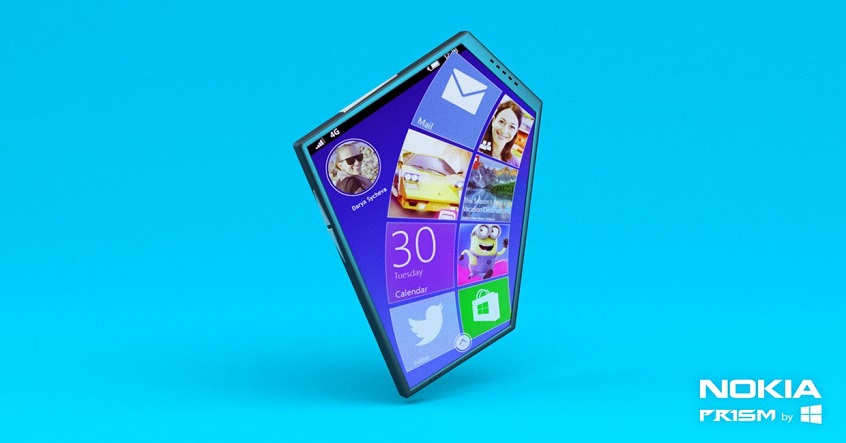
While Xiaomi has gone ahead and launched the first ever concept with almost zero bezels, a concept from an unknown source shows a Nokia phone and it looks incredibly… intriguing.

Most of us like “weird”. We like foldable phones, handsets made of crazy materials, smartphones with 64 GB of RAM and sporting endless battery lives. But this Nokia concept phone is a bit out there. It’s called Nokia Prism and it’s the creation of Vasili Sychev from Russia. As per the concept, the weird Nokia phone runs Windows Phone OS and there aren’t many leaks on this aspect.

As we all know and per several employees of Nokia itself, the Finnish smartphone giant will launch Android-powered smartphones by the end of this year or maybe early 2017 or by MWC 2017. If this concept is indeed what they have planned, it’s going to be quite a buzz.

Don’t get me wrong, the execution of the Nokia Prism phone is flawless, but in the end what’s the point? This prism-shaped phone looks good only as a piece of art nouveau and only when seen from the back. It feels like the time when you tried to cut a piece of paper and it ended up being a trapeze instead of a rectangle. And then you started cutting again…

he problem with the Nokia Prism is that it has those sharp and angular corners and edges, making it not very comfy to hold, actually, not comfy at all. And I’m not even talking about the resolution and the fitting of apps on the screen. It appears that the most prominent corner is reserved for the signal and notifications, while the “base” of the phone shows the rest of the UI and video playback screen.

This would work fine as a boomerang, but a phone? … Nope!

Users on 9gag have given extremely mixed, but nevertheless hilarious reactions:

“So what’s next? Cubicle phone? Sphere phone? Hexagonal phone?” speculates one comment.

While another practical one reads: “Does it come in lefty-mode?”

Other comments range from enquiring about its size and fit compared to their pockets to wondering if the YouTube clips with have parts of the screen cut off at weird angles.

At first glance itself, we admitted that the Nokia Prism doesn’t look like a phone in any angle. Instead, it looks like a tablet, however, the extra-large bezels don’t pave its way as a tablet either. In the camera department, the Nokia Prism’s concept images show that the rear camera will have two flashes, which is really awkward. Its shape proves that it won’t be easier to hold even with two hands.

“If I had a dollar for every application that would actually be compatible with the phone, I wouldn’t even have enough money to buy a different phone.” This one raises the whole new question.

“I think you would actually have less money.” is one of the less than enthusiastic replies.

width="560" height="314" allowfullscreen="allowfullscreen">

As a technology lover you may like our daily important technology news series. It’s a playlist and you can retrieve the total day-wise videos. Please consider subscribing our YouTube channel:

Author: Technology and Beyond

Tagged : / /

Cure at last! New Alzheimer’s Treatment Restores Memory Function Perfectly!

Alzheimer’s is a disease that affects 343,000 people in Australia, and 50 million worldwide. And as we don’t have any kind of vaccine or preventative measure to cure to stop it, it has been a race to to figure out how best to treat it. Publishing in Science Translational Medicine, a team from Queensland Brain Institute (QBI) at the University of Queensland have come up with a pretty promising solution.

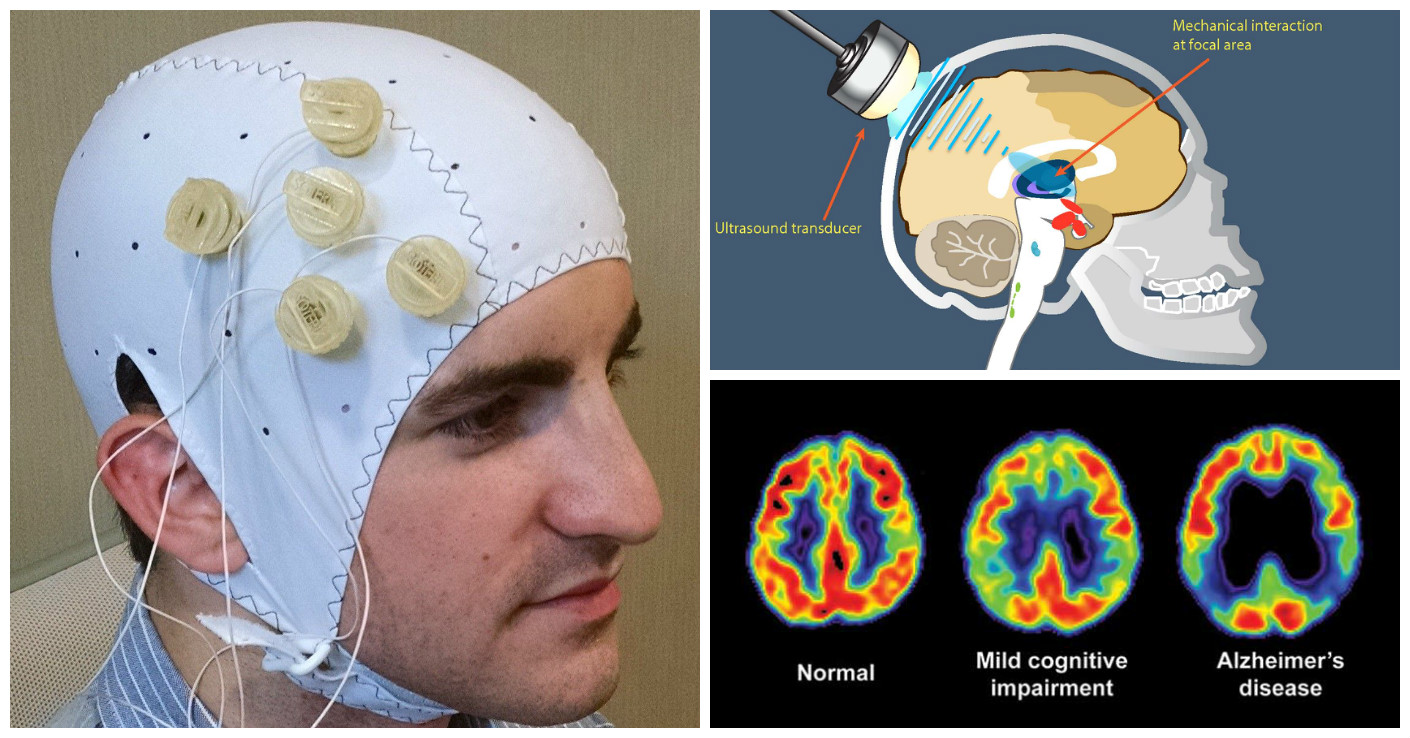
These Australian researchers have come up with a non-invasive ultrasound technology that clears the brain of neurotoxic amyloid plaques – structures that are responsible for memory loss and a decline in cognitive function in Alzheimer’s patients.

If a person has Alzheimer’s disease, it’s usually the result of a build-up of two types of lesions – amyloid plaques, and neurofibrillary tangles. Amyloid plaques sit between the neurons and end up as dense clusters of beta-amyloid molecules, a sticky type of protein that clumps together and forms plaques. And neurofibrillary tangles are found inside the neurons of the brain, and they’re caused by defective tau proteins that clump up into a thick, insoluble mass. This causes tiny filaments called microtubules to get all twisted, which disrupts the transportation of essential materials such as nutrients and organelles along them.

The team describes the technique as using a particular type of ultrasound called a focused therapeutic ultrasound, which non-invasively beams sound waves into the brain tissue. By oscillating super-fast, these sound waves are able to gently open up the blood-brain barrier, which is a layer that protects the brain against bacteria, and stimulate the brain’s microglial cells to activate. Microglial cells are basically waste-removal cells, so they’re able to clear out the toxic beta-amyloid clumps that are responsible for the worst symptoms of Alzheimer’s.

“We’re extremely excited by this innovation of treating Alzheimer’s without using drug therapeutics,” one of the team, Jürgen Götz, said in a press release. “The word ‘breakthrough’ is often misused, but in this case I think this really does fundamentally change our understanding of how to treat this disease, and I foresee a great future for this approach.”

The team reports fully restoring the memory function of 75 percent of the mice they tested it on, with zero damage to the surrounding brain tissue. The team says they’re planning on starting trials with higher animal models, such as sheep, and hope to get their human trials underway in 2017.

hey found that the treated mice displayed improved performance in three memory tasks – a maze, a test to get them to recognise new objects, and one to get them to remember the places they should avoid.

As a technology lover you may like our daily important technology news series. It’s a playlist and you can retrieve the total day-wise videos. Please consider subscribing our YouTube channel:

Author: Technology and Beyond

Tagged : / /

How Smartphone Lights Are Affecting Your Mind and Body

Of course we do the last notifications check right before falling asleep. And of course we do it again right after we wake up. For the majority of us, smartphones provide for at least 60% of our social, personal and professional needs. But what changes has this dependency bought on?

There’s something incredibly powerful about the blue lights that the designers of our smartphone, tablet, and laptop screens have been able to create. The lights in these screens glow so bright that we can see them even during a sunny day. At night, they’re bright enough that they’ve been compared to a “little window” that daylight can peer through.

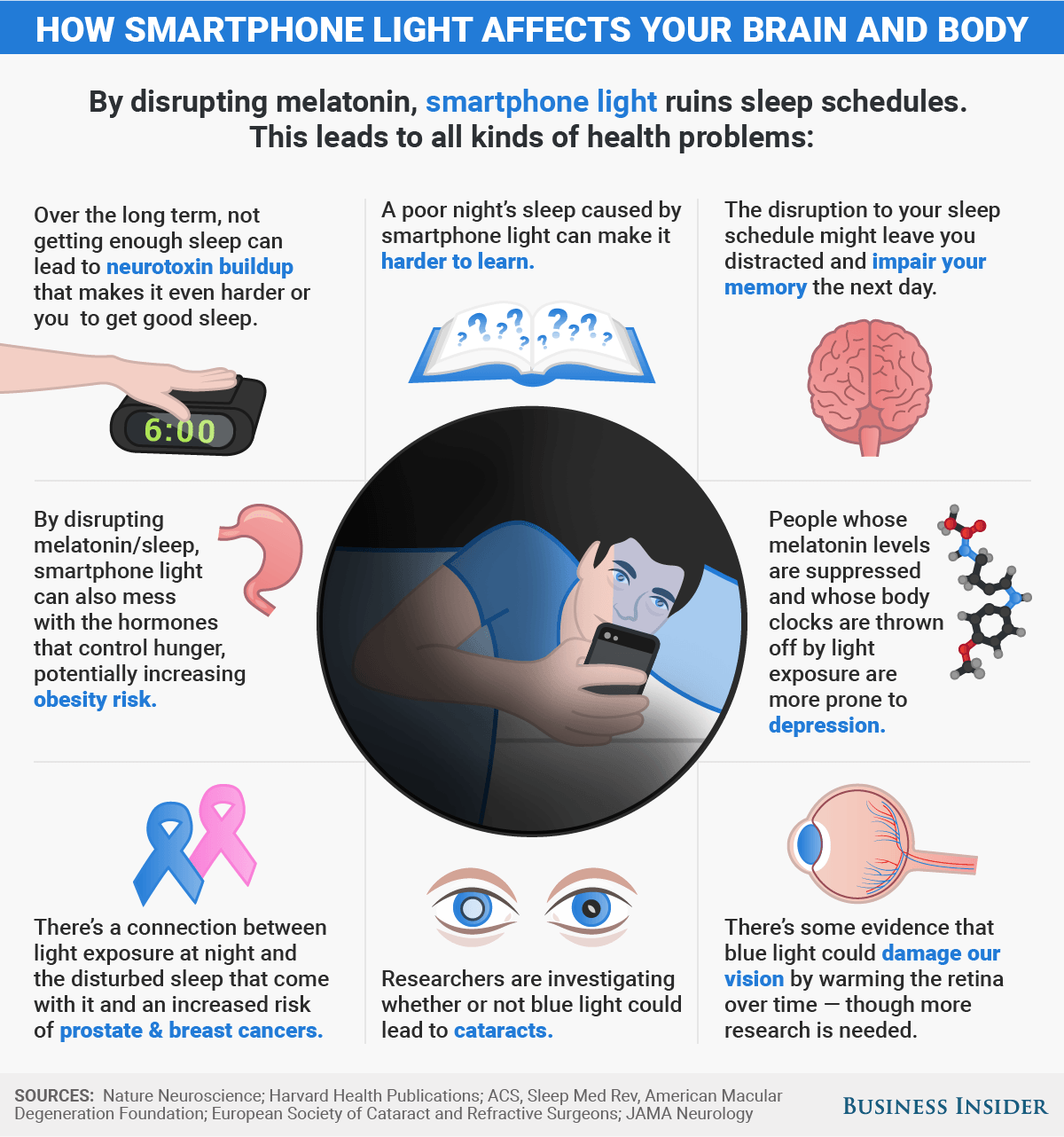
bi-graphics_bluelight-effects

Our bodies naturally follow a cycle that helps us stay awake and alert during the day and helps us get essential rest at night. This is called our circadian cycle and it governed by melatonin. The main and probably worse proven effect of blue light is its disruption of our melatonin.

When we look at these screens as we’re getting ready for sleep, our brains get confused. That light has a similar effect to the sight of the morning sun, which causes the brain to stop producing melatonin, a hormone that gives your body “time to sleep” cues.

By disrupting melatonin production, smartphone light can disrupt your sleep cycle like an artificially induced sort of jet lag. This makes it harder to fall and stay asleep – and potentially causes serious health problems along the way.

By messing around with our sleep and melatonin levels, blue light also tampers with our hunger hormones that increase the chances of potential obesity. Moreover, people whose melatonin levels are suppressed and whose body clocks are thrown in discord are more susceptible to depression.

A bad night’s sleep also causes memory impairment and lack of focus. Basically, lack of sleep might be causing you to be scatterbrained. Neurotoxin buildup due to lack of sleep over time, may make it harder to fall asleep.

In physical effects, blue light can been linked by prostate and breast cancer chances. There is ongoing research about whether blur light warms up our retinas and damage our vision over time. Its link of cataracts is also being studied.

To combat this problem, app designers have created programs like f.lux and Apple’s Night Shift mode for iPhones, both of which adjust the light tones emitted by screens to remove bright blue light from the display at certain times of day. Many users swear by the effects of these apps and the orange tint they create does feel less harsh on the eyes. But while there’s some research indicating that the dimmer light may improve sleep, more study is needed on the topic in general.

Instant notification and updates and also causing us to desire faster gratification. Long story short, there are a lot of negative ways we are being affected in that we might have felt in our everyday lives. The least you can do is stop looking at your phones at least an hour before bedtime and keep them safely away for the night.

The University of Manchester now touts itself as the “Home of Graphene.”

As a technology lover you may like our daily important technology news series. It’s a playlist and you can retrieve the total day-wise videos. Please consider subscribing our YouTube channel:

Author: Technology and Beyond

Tagged : / /

This Tiny Coin Will Store 360 Tb of Data…Forever. Even after the Sun is burnt out!

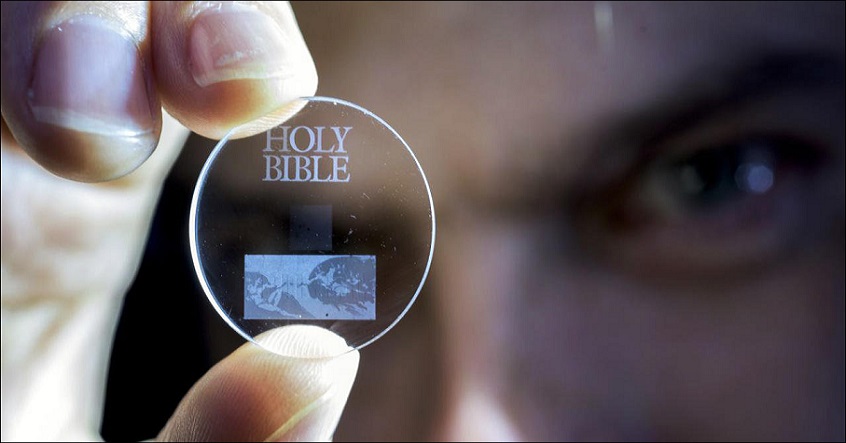
Were you surprised on hearing about the slivers of quartz glass that stored data for 300 million years? Not that we were worried, but for the people who wonder what will happen to their precious data after the 300 million years, there’s a new coin in town that will store your data essentially forever.

Let’s get some perspective. The Earth is 4.534 billion years old and the universe is a 13.82 billion. This upgradation will allow the quartz to store data safely for an even 14 billion years. That’s pretty much forever.

The storage system, in addition to being long lasting, is also pretty safe—the quartz can withstand up to 157 degrees Celsius (350 degrees Fahrenheit). Researchers at Southampton University in the UK have developed the technique of storing data digitally using laser light. 360 terabytes of information can fit on one sliver of nanostructured quartz. With this tech, we can store literally the whole of human history.

The technique uses femtosecond laser pulses to write data in the 3D structure of quartz at the nanoscale. The pulses create three layers of nanostructured dots, each just microns above the other. The changes in the structure can be read by interrogating the sample with another pulse of light and recording the orientation of the waves after they’ve passed through. Notably, this is referred to as a 5D storage device.

There are the three dimensions of space, which are responsible for describing the physical location of the dot, and two additional dimensions that are encoded by the polarity and intensity of the beam that creates the dot.

This new advance in storage makes the technique a genuine means of archiving vast quantities of information in perpetuity. We no longer have to fear the loss associated with tragedies like the Library of Alexandria.

In the same way that the Pioneer Plaque is meant to be a communication tool between us and any extraterrestrial life, these tiny storage systems could someday inform other beings (maybe our far, far, far off descendants) about Earth and humanity after we are long gone.

As a technology lover you may like our daily important technology news series. It’s a playlist and you can retrieve the total day-wise videos. Please consider subscribing our YouTube channel:

Author: Technology Vista

Tagged : / /

Believe it or not, Australia is drifting so fast that GPS can’t just keep up with the movement!

Australia is always a mystery. With its one-of-a-kind flora and fauna, it never fails to surprise. And if you haven’t been informed, the continent has shifted by 4.9 feet since the last adjustment was made to GPS coordinates in 1994, reports the New York Times.

Believe it or not, this is something very routine. All of the Earth’s continents float on tectonic plates, which glide slowly over a plastic-like layer of the upper mantle. And the plate that Australia sits on has been moving relatively fast, about 2.7 inches a year (northward and with a slight clockwise rotation). In contrast, the North American plate has been moving roughly one inch a year, though the Pacific plate moves three to four inches a year.

Australia has tended to move particularly fast due to its unique geology. Corrections have been made to its latitude and longitude four times over the past 50 years, the Times reports. The last adjustment there, in 1994, was about 656 feet. The next adjustment is said to be due by the end of this year, on the order of 4.9 feet.

“Some countries are more stationary than others,” says Damien Saunder, the director of cartography for National Geographic. “When there is a significant shift in land masses over time we need to revise the models of the Earth from which GPS coordinates are calculated, so for example your neighbor doesn’t end up with your old coordinates.” This type of shifting is coming more into focus as GPS systems get more accurate.

“It’s important to remember that the Earth is not a perfect sphere or ellipsoid, and continents are not all moving at the same rate,” Saunder says. “So sometimes we have to make adjustments to our models, both at the global and local levels.”

The most advanced technology can now pinpoint a location to a matter of inches. Although most consumer cellphones don’t have that level of accuracy (yet), the technology is being used in other ways, including by farmers who spray fields with precision agriculture and self-driving vehicles.

As a technology lover you may like our daily important technology news series. It’s a playlist and you can retrieve the total day-wise videos. Please consider subscribing our YouTube channel:

Author: Technology and Beyond

Tagged : / /

These scanners could really show how your brain works

The newly refurbished Wolfson Brain Imaging Centre in the University of Cambridge has been equipped with some of the world’s most powerful magnetic resonance imaging (MRI) and positron emission tomography (PET) scanners and will give its researchers unprecedented power to make images of cancers, study the precise makeup of the cortex and analyse how chemicals in the brain – known as neurotransmitters – underpin the development of schizophrenia and depression.

At the heart of the refurbished centre – funded by the Medical Research Council, Wellcome Trust and Cancer Research UK – are three groundbreaking devices. Only a handful of these exist at institutions outside Cambridge and no institution – other than Cambridge – has all three.

One of them is a Siemens 7T Terra MRI scanner that will allow researchers to see details in the brain as tiny as a grain of sand. “The devices we have assembled are primarily for studying humans and will have a strong research focus,” Bullmore says. 

A key example is provided by the 7T MRI scanner. Current devices have magnetic fields that have strengths of around 3T (tesla) and can see structures 2-3 mm in size. By contrast, the new Cambridge scanner with its 7T field will have a resolution of around 0.5mm.

“That is a very important difference,” adds Bullmore. “The outer layer of the brain, the cortex, is about 3-4mm thick. That is the grey matter that provides us with our thoughts. Current scanners show it as a single strip.

Next Page For More 

Tagged : / /

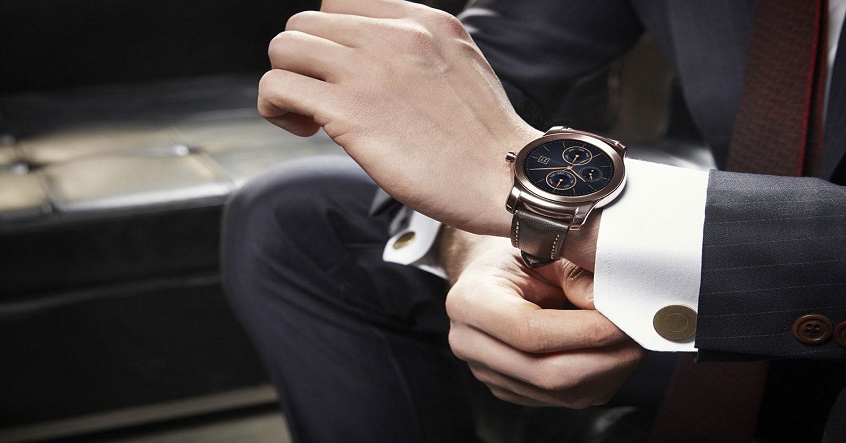
You’ll Be Surprised- No One’s Buying Smartwatches Anymore

We all thought smartwatches were the new big thing when it came to improvement in the quality of lifestyle and fitness, but guess what? The majority is proving this wrong.

The market intelligence firm IDC reported on Monday that smartwatch shipments are down 51.6 percent year-over-year for the third quarter of 2016. This is bad news for all smartwatch vendors (except maybe Garmin), but it’s especially bad for Apple, which saw shipments drop 71.6 percent, according to the IDC report.

Apple is still the overall smartwatch market leader, with an estimated 41.3-percent of the market, but IDC estimates it shipped only 1.1 million Apple Watches in Q3 2016, compared with 3.9 million in 2015. To a degree, that’s to be expected, since the new Apple Watch Series 2 came out at the tail-end of the quarter. But the news is still a blow, when you consider how huge the Apple Watch hype was just 18 months ago.

Why is this the current scenario? IDC thinks part of the reason is the lack of new hardware. Apple and Pebble’s new watches didn’t hit the market until late-Q3, and Google has delayed Android Wear 2.0 until next year, leaving many customers waiting for new gear.

But the bigger problem is that it’s difficult to justify buying a smartwatch. Jitesh Ubrani, a senior research analyst for IDC Mobile Device Trackers put it bluntly in the press release: It has also become evident that at present smartwatches are not for everyone. Having a clear purpose and use case is paramount, hence many vendors are focusing on fitness due to its simplicity.

However, moving forward, differentiating the experience of a smartwatch from the smartphone will be key and we’re starting to see early signs of this as cellular integration is rising and as the commercial audience begins to pilot these devices.

For all the promises of a smartwatch, actually living with one is often an underwhelming experience. That can get better with hardware and software improvements—and with a more concentrated focus on areas like health and fitness—but at the end of the day it’s still hard for most people to justify the cost of yet another gadget.

Looking at IDC’s data, the only company that really did well over the last year is Garmin. Its sales increased 324 percent, catapulting it to second-place among vendors. Garmin’s watches focus on health and fitness, two areas smartwatch owners actually seem to care about. Tellingly, Apple has re-focused its marketing and positioning of the Apple Watch away from fashion and more towards health and fitness with its new models.

As a technology lover you may like our daily important technology news series. It’s a playlist and you can retrieve the total day-wise videos. Please consider subscribing our YouTube channel:

Author: Technology and Beyond

Tagged : /

WARNING PARENTS: Why posting online pictures of your kids may turn risky

Parents, be carefull before posting your kid’s photo on social media as sharing with others about your child on digital platform may lead to unanticipated risks in future, according to new research.

Information shared can be stolen or repeatedly re-shared, unbeknownst to parents, potentially ending in the hands of pedophiles or identify thieves, the study suggested.

“The amount of information placed in the digital universe about our children in just a few short years is staggering,” said Bahareh Keith, Assistant Professor at the University of Florida College of Medicine, US.

Parents often consider how to best protect children while the child is using the internet. However, parents initially don’t always consider how their own use of social media may affect their children’s well-being.

“When we share on social media, we must all consider how our online actions affects our children’s well-being, both today and long into the future,” the author added.

They also advised never to share pictures that show their children in any state of undress or share their child’s actual location in a post.

“Even more likely, the child might one day want to have some privacy and control over his or her digital identity. Untangling the parent’s right to share his or her own story and the child’s right to enter adulthood free to create his or her own digital footprint is a daunting task,” said Stacey Steinberg, Law Professor, University of Florida Levin College of Law added.

The study suggested that paediatricians can advocate for increased awareness and healthy thumb rules among parents to protect a child’s online identity.

As a technology lover you may like our daily important technology news series. It’s a playlist and you can retrieve the total day-wise videos. Please consider subscribing our YouTube channel:

Author: Technology and Beyond

Tagged : /
Verified by ExactMetrics