Brain Meets Machine: Hybrid Biocomputer Emerges in a Lab Dish

Brain Meets Machine: Hybrid Biocomputer Emerges in a Lab Dish
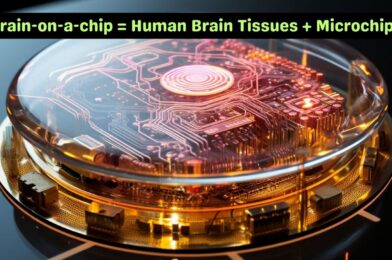
In a stunning fusion of neuroscience and computer science, researchers have created a miniaturized “brain-on-a-chip” – a hybrid biocomputer that combines real human brain tissue with microchips. Dubbed Brainnoware, this groundbreaking experiment raises tantalizing possibilities for future advancements in artificial intelligence, brain-computer interfaces, and even the understanding of consciousness itself.

The brain tissue used in Brainnoware isn’t harvested from human donors, but rather grown in a lab from stem cells. These “brain organoids” mimic the basic structure and functionality of the human brain, albeit on a much smaller scale. The researchers then carefully interfaced these miniature brains with a custom-designed microchip containing thousands of electrodes.

“Imagine a network of tiny wires gently whispering to neurons,” explains lead researcher Dr. Amelia Chen. “That’s essentially what we’ve done here. We’re creating a two-way dialogue between living brain tissue and silicon circuitry.”

This dialogue, though faint at first, is surprisingly productive. When stimulated with carefully crafted electrical pulses, the Brainnoware system was able to perform simple tasks like recognizing basic speech patterns and solving elementary math equations.

More importantly, the researchers observed that the brain organoids within Brainnoware actively adapted to the electrical stimulation. They formed new neuronal connections, a sign of learning and plasticity within the miniaturized brain.

“This is unlike anything we’ve ever seen before,” says Dr. Chen. “We’re witnessing a real-time collaboration between biological and artificial intelligence. It’s a glimpse into a future where the lines between machine and mind might blur entirely.”

While Brainnoware is still in its early stages, the implications are vast. This technology could lead to:

Brain-computer interfaces that are intuitive and seamless. Imagine controlling prosthetics or even external devices with your thoughts, thanks to a direct neural link.
Personalized medicine based on a detailed understanding of individual brain function. By mimicking individual patients’ brains on a chip, doctors could test medication and treatment options with unprecedented accuracy.
New insights into the fundamental nature of consciousness. Could studying how these mini-brains function shed light on the greatest mystery of all – how does the physical brain give rise to subjective experience?
Of course, ethical concerns abound. Questions about animal rights, the potential for weaponization, and the very nature of what it means to be human will need careful consideration as this technology matures.

But for now, Brainnoware stands as a testament to human ingenuity and our insatiable curiosity about the brain. It’s a bridge between biology and technology, and the possibilities it opens up are as exciting as they are uncharted. The future of the mind might just lie in a petri dish, wired to a chip and eager to learn.


Tagged : / / /

Diamond in the Rough: Scientists Craft an Ultra-Hard Material

Diamond in the Rough: Scientists Craft an Ultra-Hard Material
Move over, diamonds! A team of international scientists has synthesized a new material rivalling the legendary hardness of the most treasured gemstone. This breakthrough promises to revolutionize industries from aerospace to medicine, with its potential for creating lighter, stronger, and more scratch-resistant tools and materials.

This ultra-tough substance is a form of organic semiconductor carbon nitride, boasting a hardness on par with cubic boron nitride, second only to diamonds themselves. The research, a collaboration of scientists from Europe, Russia, and North America, has been decades in the making. The theoretical possibility of such a material existed since the 1980s, but creating it proved elusive.

But just like Mother Nature crafting diamonds under immense pressure and heat, the researchers mimicked this process. They subjected carbon and nitrogen atoms to extreme conditions – high temperatures and enormous pressures – mimicking the Earth’s mantle where diamonds form. This intense environment coaxed the atoms into a unique arrangement, resulting in the remarkably tough carbon nitride.

The possibilities for this diamond-rivaling material are as dazzling as its properties. Lighter and stronger than traditional materials, it could be used in spacecraft construction, reducing weight and fuel consumption. Imagine spacecraft shields that shrug off micrometeoroids with ease! On Earth, it could revolutionize tools and machinery, from razor-sharp surgical instruments to wear-resistant drill bits. The possibilities for scratch-resistant coatings for cars, phones, and even buildings are equally exciting.

But the applications don’t stop there. The unique electrical properties of the material make it a potential candidate for next-generation electronics and optoelectronics. Its ability to conduct heat efficiently could lead to advancements in heat sinks and thermal management systems. In short, this new material has the potential to touch numerous aspects of our lives, from the mundane to the cutting-edge.

However, it’s important to remember that this is still early days. Scaling up production and making the material commercially viable will require further research and development. Yet, this breakthrough marks a significant leap in materials science, pushing the boundaries of what we thought possible. It’s a testament to human ingenuity and collaboration, and opens a tantalizing door to a future where diamond-hard materials are not just a luxury, but a versatile tool for progress.

So, the next time you marvel at a sparkling diamond, remember that scientists are busy crafting materials that may soon outshine even the hardest gem. The future of materials science is looking as bright and hard as ever!

Tagged : / /

A Legacy of Genes: Traits Passed Down from Father to Child

A Legacy of Genes: Traits Passed Down from Father to Child
From eye color to personality quirks, children inherit a fascinating blend of traits from both parents. But when it comes to the paternal side, there’s a unique set of characteristics that can be traced back to Dad. Let’s delve into the world of genetics and explore some of the interesting traits children might inherit from their fathers.

Physical Features:

Facial features: Strong jawlines, prominent noses, and even dimples can be passed down from father to child. These traits are often determined by dominant genes, meaning one copy from Dad is enough for their expression.

Hair and eye color: The interplay of genes dictates the shade of your child’s locks and peepers. Brown and black hair colors are generally dominant, while blonde and red are recessive. Eye color follows a similar pattern, with brown being dominant over blue and green.

Height and body build: Dad’s genes play a significant role in determining a child’s height and overall physique. However, it’s important to remember that environmental factors like nutrition and exercise also have a significant impact.

Beyond the Physical:

Blood type: The ABO blood group system is another example of Mendelian inheritance. Children inherit one allele from each parent, and the combination determines their blood type. For instance, if Dad has type A blood and Mom has type B, their child could have type A, B, AB, or O.

Certain medical conditions: While not all diseases are purely genetic, some have a strong hereditary component. Conditions like color blindness, hemophilia, and cystic fibrosis can be passed from father to child, depending on the specific genes involved.

Personality traits: While personality is a complex interplay of genes and environment, some studies suggest that fathers may play a more significant role in shaping certain traits like risk-taking behavior and sociability.

It’s important to remember that genetics is not deterministic. Just because a child inherits a particular trait from their father doesn’t guarantee it will be expressed in the same way. The environment, lifestyle choices, and even chance can all play a role in shaping who a child becomes.

Understanding how traits are passed down from father to child can be a fascinating journey of self-discovery. It’s a testament to the incredible power of genetics and the unique blend of characteristics that make each individual who they are. So, the next time you catch yourself sharing a laugh or a physical feature with your dad, remember, it’s more than just coincidence – it’s the legacy of genes, passed down through generations, connecting you to your family history in a beautiful and intricate way.

Tagged : / / /

Our Body’s Symphony of Oxygen: How We Adapt to High and Low Levels

Our Body’s Symphony of Oxygen: How We Adapt to High and Low Levels
Oxygen, the lifeblood of our cells, plays a critical role in every function of our body. But what happens when its levels become imbalanced, soaring too high or dipping too low? A recent study delves into the fascinating ways our body adapts to these changes, orchestrating a complex symphony of physiological responses.

High on Oxygen: A Boost for Performance

Exposure to high oxygen levels, like during altitude training, triggers a cascade of adjustments. Red blood cell production ramps up, delivering more oxygen to tissues. Blood vessels contract, shunting blood to vital organs. And mitochondria, the powerhouses of our cells, rev up their engines, maximizing energy production. These adaptations enhance physical performance, allowing athletes to push their limits at higher altitudes.

The Flip Side: Diving into Low Oxygen

When oxygen levels drop, as during breath-holding or at high altitudes, the body switches gears. Heart rate slows, conserving precious oxygen. Blood vessels dilate, ensuring maximum delivery to vital organs. And metabolism shifts, relying on anaerobic pathways for energy, albeit at a lower efficiency. These adaptations allow us to survive in low-oxygen environments for short periods.

Beyond Survival: The Long-Term Impact

Chronic exposure to either high or low oxygen levels can have significant long-term effects. High oxygen may contribute to oxidative stress, damaging cells and potentially increasing the risk of certain cancers. Conversely, chronic hypoxia can impair brain function and lead to organ damage.

Understanding the Balance: Implications for Health and Medicine

The study’s findings have far-reaching implications. For athletes, understanding how the body adapts to varying oxygen levels can help optimize training strategies and improve performance. In medicine, it can aid in developing therapies for conditions like hypoxia-related diseases and even neurodegenerative disorders.

The Takeaway: A Breath of Fresh Perspective

This research sheds light on the remarkable adaptability of our bodies, constantly fine-tuning their responses to maintain the delicate balance of oxygen. By appreciating this intricate dance, we gain a deeper understanding of our own physiology and pave the way for better health and performance in diverse environments.

So, the next time you take a deep breath, remember the intricate symphony playing within your body, ensuring every cell receives the precious oxygen it needs to thrive. And whether you’re scaling a mountain or simply enjoying a brisk walk, appreciate the remarkable adaptability that allows us to dance with the rhythm of oxygen, the lifeblood of our existence.

Tagged : / / /

Why Do We Instantly Fall In Love With Some Faces? The Science Behind Instant Attraction!

Why Do We Instantly Fall In Love With Some Faces? The Science Behind Instant Attraction!
Love at first sight. It sounds romantic, almost magical. But beneath the fluttering heart and starry eyes lies a fascinating interplay of biology, evolution, and social conditioning. Why do we find certain faces instantly captivating, triggering a rush of attraction before we even exchange a word? Let’s delve into the science behind this phenomenon:

1. Evolutionary Advantage: Our ancestors faced a constant struggle for survival, and choosing a healthy mate was crucial. Certain facial features, like symmetrical proportions, clear skin, and bright eyes, signaled good genes and potential for healthy offspring. Over time, these features became subconsciously attractive, influencing our initial perceptions of potential partners.

2. Familiarity Bias: We tend to be drawn to faces that resemble familiar figures, like our parents or celebrities we admire. This familiarity triggers a sense of comfort and security, making us more receptive to potential connections.

3. Hormone Cocktail: When we encounter someone we find attractive, our brains release a potent cocktail of hormones. Dopamine ignites excitement, serotonin fuels euphoria, and oxytocin promotes bonding. This hormonal surge creates a powerful sense of attraction, almost like a natural high.

4. Nonverbal Cues: Beyond facial features, subtle nonverbal cues like eye contact, smiles, and open postures can also play a role. These signals indicate potential interest and receptivity, further fueling the flames of attraction.

5. Social Conditioning: Media and societal norms shape our perceptions of beauty. Celebrities with symmetrical features and flawless skin are often held up as ideals, influencing our subconscious preferences when it comes to potential partners.

It’s important to remember that while these factors contribute to initial attraction, they’re just one piece of the puzzle. True love requires more than just a pretty face. Shared values, intellectual compatibility, and emotional connection are equally important for building lasting relationships.

So, the next time you find yourself captivated by a stranger’s smile, take a moment to appreciate the complex interplay of biology, evolution, and social conditioning at work. While instant attraction may spark an initial connection, it’s the deeper qualities that truly ignite the flames of lasting love.

Remember, love is a journey, not a destination. So, enjoy the beauty of initial attraction, but keep your heart open to the deeper connections that develop over time.

Tagged : / / /

The Curious Case of Taste Buds: Why Do We Crave Sweet or Salty?

The Curious Case of Taste Buds: Why Do We Crave Sweet or Salty?
Have you ever wondered why your friend douses their popcorn in ketchup while you reach for the chili flakes? Or why some people swoon over a plate of Brussels sprouts while others recoil in horror? The fascinating mystery of taste preferences is as old as humanity itself, and the answer lies in a complex interplay of biology, environment, and even personal history.

The Science of Sweetness and Salt:

Our taste buds, those tiny bumps on our tongue, are equipped with specialized receptors for five basic tastes: sweet, salty, bitter, sour, and umami (savory). These receptors send signals to the brain, triggering the flavor sensations we experience.

Sweetness: Our love for sugar can be traced back to our evolutionary past. Sweet foods often indicate high energy content, essential for survival. Receptors for sweetness, located primarily on the tip of the tongue, trigger a pleasurable dopamine release, reinforcing our desire for sugary treats.

Saltiness: Our craving for salt is equally rooted in biology. Sodium is crucial for maintaining proper fluid balance and nerve function. Salt receptors, found across the tongue, alert us to potential deficiencies and drive us to seek out salty foods.

Beyond Biology: The Role of Experience and Environment:

While our taste buds play a crucial role, our preferences are far from preordained. Experience and environment play a significant role in shaping our palates.

Early Exposure: Babies exposed to a variety of flavors during breastfeeding and early weaning tend to have more diverse palates. Cultural and family food traditions also influence our preferences.
Learned Associations: If you associate a particular food with positive memories or emotional comfort, you’re more likely to develop a fondness for it. Conversely, negative experiences, like childhood food poisoning, can lead to aversions.
Sensory Cues: The color, aroma, and texture of food can also influence our perception of taste. Creamy textures often enhance sweetness, while bright colors can make salty foods more appealing.

The Genetic Factor:

Emerging research suggests that genetics may also play a part. Studies have identified genes linked to taste sensitivity, with some individuals possessing more or fewer taste receptors for specific flavors. This could explain why some people find bitter vegetables intensely unpleasant, while others find them surprisingly enjoyable.

The Takeaway: A Spectrum of Deliciousness:

Ultimately, taste preferences are unique and multifaceted. There’s no single answer to why some people crave sweet while others seek out salty. It’s a beautiful tapestry woven from biology, experience, and personal history. So next time you find yourself reaching for a different flavor than your friend, remember – there’s no right or wrong answer in the world of taste! Embrace the diversity and celebrate the unique flavor journey of each individual palate.

Tagged : / / /

Space Tomato Mystery Solved: The Tomato Was In Hiding It Seems!

Space Tomato Mystery Solved: The Tomato Was In Hiding It Seems!
After eight months, NASA astronauts finally found the lost tomato grown in space. It was in a corner of the International Space Station (ISS). After being carefully grown at the ISS, the tomato went missing on March 29, 2023. It quickly became a running joke among the team. Space.com says that astronaut Frank Rubio was blamed for eating the lost tomato. This tomato was grown in space as part of NASA’s VEG-05 project, which also grew cabbage, kale, and other vegetables. Each ISS astronaut got a sample of the tomatoes in March, after they were picked safely.

But the pilots were hesitant to eat the crops grown in space because they were afraid that fungi might be growing on them. Astronaut Frank Rubio lost his tomato, and his team made fun of the idea that he ate it and was not paying attention.

Last but not least, on Wednesday, astronauts on the International Space Station (ISS) talked about finding the lost tomato in a live-streamed event to honour the ISS’s 25th anniversary. During the video, NASA astronaut Jasmin Moghbeli said, “For a long time, our good friend Frank Rubio, who went home, has been blamed for eating the tomato.” We can clear him though. The tomato was found.

In September, Rubio talked to NASA Administrator Bill Nelson and Deputy Administrator Pam Melroy through a live stream about his long stay at ISS. He was asked in jest about the missing tomato during the talk. “I didn’t eat the tomato, and I wish I had at this point because I think everyone thinks I did,” the 47-year-old said. It took me hours and hours to find that thing.

Tagged : / / / /

Cotton Goes High-Tech: New Conductive Fiber Paves the Way for Smart Textiles

Cotton Goes High-Tech: New Conductive Fiber Paves the Way for Smart Textiles
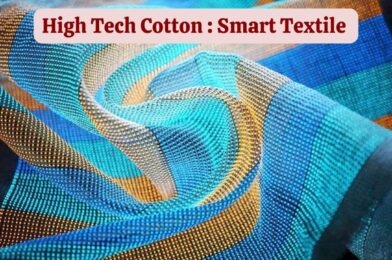
Move over, polyester and nylon, cotton is getting a tech makeover! Researchers at Washington State University (WSU) have developed a revolutionary new cotton-based fiber that combines the natural comfort of cotton with the electrical conductivity of a polymer, paving the way for a future of smart and functional textiles.

This innovative fiber, a single strand thinner than a human hair, holds immense potential for wearable electronics, healthcare applications, and even environmental monitoring. It’s made by coating natural cotton fibers with a thin layer of polyaniline, a conductive polymer, using a unique green chemistry process. This process preserves the breathability and softness of cotton while imbuing it with the ability to conduct electricity.

“This is a significant breakthrough,” says WSU professor Xinhai Lu, lead author of the study published in the journal Carbohydrate Polymers. “It allows us to create smart textiles that are comfortable to wear, unlike some existing options that can be stiff and irritating.”

Imagine a shirt that could monitor your heart rate and breathing, or a pair of socks that could track your steps and calories burned. This is the future that the WSU team envisions for their conductive cotton fibers. They have already successfully tested the fibers in prototypes for a system that powers an LED light and another that senses ammonia gas, showcasing their potential for real-world applications.

The benefits of this technology extend beyond wearable electronics. The conductive fibers could be used to create self-heating fabrics for cold weather gear or wound dressings that monitor healing progress. They could even be woven into sensors for environmental monitoring, tracking temperature, humidity, and pollution levels.

“The possibilities are endless,” says Lu. “This technology has the potential to revolutionize the textile industry and create a new generation of smart and functional fabrics.”

The WSU team is now working on scaling up the production process and exploring partnerships with textile manufacturers to bring their invention to market. While there are still some challenges to overcome, such as ensuring the long-term durability and wash-resistance of the conductive coating, the potential of this technology is undeniable.

Cotton, a natural and sustainable material, is poised to become the next frontier in smart textiles. This innovative fiber is a testament to the power of green chemistry and its potential to create sustainable and functional materials for a better future. So, the next time you slip on a cotton T-shirt, remember, it might not just be comfortable, it could be the future of technology woven into your skin.

Tagged : / / /

Tiny Robot Snail: Nature Inspires An Innovative Idea for Microplastic Cleanup

Tiny Robot Snail: Nature Inspires An Innovative Idea for Microplastic Cleanup
Microplastics, tiny plastic fragments less than 5 millimeters in diameter, have become a major pollutant in our oceans, posing a threat to marine life and potentially even entering our food chain. But researchers at Cornell University might have found a slimy solution: a tiny robot snail inspired by a real-life creature.

The robot, still in its prototype stage, is modeled after the Hawaiian apple snail. This slow-moving mollusk uses its muscular foot to create ripples on the water’s surface, drawing in food particles. The Cornell team replicated this motion with a 3D-printed, soft-bodied robot equipped with tiny hairs. As the robot undulates, it generates a current that funnels microplastics towards a collection chamber.

“We were inspired by how this snail collects food particles at the water and air interface to engineer a device that could possibly collect microplastics in the ocean or at a water body’s surface,” explains Sunghwan Jung, a professor in the department of biological and environmental engineering at Cornell University.

The robot, currently about the size of a large marble, is designed to be biodegradable and solar-powered, making it a sustainable solution for microplastic cleanup. The researchers envision fleets of these tiny snails patrolling polluted waters, their gentle movements mimicking their natural counterparts.

While the project is still in its early stages, it represents a promising step forward in the fight against microplastic pollution. The robot’s biomimetic design offers several advantages over traditional cleaning methods, such as nets or filters, which can harm marine life or be ineffective against smaller particles.

“This is a really exciting development,” says Dr. Sarah Gray, a marine biologist at the University of Plymouth. “Microplastics are a huge problem, and we need innovative solutions like this to tackle them. The biomimetic approach is particularly promising because it’s gentle on the environment and could potentially be very effective.”

Of course, challenges remain. Scaling up the production of the robot snails and ensuring their effectiveness in real-world scenarios will require further research and development. But the potential of this tiny technology to help clean up our oceans is undeniable. By harnessing the power of nature, researchers may have found a way to turn the tide on microplastic pollution.

So, the next time you see a snail inching its way across the ground, remember that its slow and steady pace could inspire a revolution in environmental cleanup. This tiny creature, a master of adaptation and survival, might just hold the key to a cleaner and healthier planet for generations to come.

Tagged : / / /

A Brain Without a Body: New Tech Keeps Neural Tissue Alive for Hours

A Brain Without a Body: New Tech Keeps Neural Tissue Alive for Hours
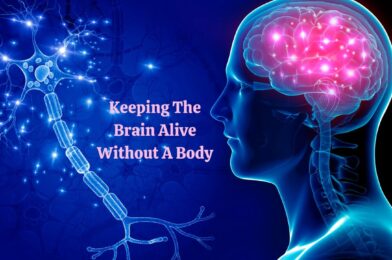
The boundaries of science and ethics are constantly being pushed, and a recent breakthrough in neuroscience has brought us a step closer to the realm of science fiction. Researchers have successfully developed a technology that can keep a disembodied brain alive and functioning for several hours.

This groundbreaking feat was achieved by scientists at the University of Texas Southwestern Medical Center, who used a device called the “Extracorporeal Pulsatile Circulatory Control” (EPCC) to restore blood flow to the brains of pigs shortly after their slaughter. The EPCC mimicked the natural functions of the heart and lungs, supplying the brain with oxygen and nutrients.

The results of the experiment were truly remarkable. The researchers observed that the disembodied brains exhibited a variety of neural activities, including electrical responses to stimuli and evidence of ongoing metabolic processes. This suggests that the brain tissue retained its basic functions even in the absence of a body.

While this research holds immense potential for advancements in neuroscience and medicine, it also raises significant ethical concerns. One major question is whether keeping a brain alive without a body is truly ethical, especially when the brain is capable of some level of sentience. Additionally, there are concerns about the potential misuse of this technology, such as for military purposes or mind control.

Despite the ethical challenges, the potential benefits of this research are undeniable. By studying brains outside the body, scientists can gain valuable insights into how the brain works and how diseases like Alzheimer’s and Parkinson’s develop. This knowledge could ultimately lead to new treatments and cures for these devastating diseases.

Furthermore, this technology could pave the way for organ transplantation by allowing doctors to preserve organs for longer periods of time. This could potentially save countless lives by increasing the availability of organs for transplant patients.

While the ethical implications of this research require careful consideration and ongoing discussion, there is no denying the potential benefits it holds for science and medicine. As we move forward, it is crucial to develop clear ethical guidelines for the use of this technology and to ensure that it is used for the benefit of humanity.

It is important to note that this research is still in its early stages, and there are many unanswered questions. However, the successful revival of a disembodied brain marks a significant step forward in our understanding of the brain and its potential. It remains to be seen what the future holds for this technology, but one thing is certain: it will continue to push the boundaries of what we thought possible.

Tagged : /

Chandrayaan 4: How ISRO Aims to Bring Samples Back from the Moon

Chandrayaan 4: How ISRO Aims to Bring Samples Back from the Moon
India’s ambitious Chandrayaan 4 lunar mission aims to achieve a historic feat: bringing back lunar samples to Earth. This complex endeavor will showcase India’s advanced space technology and provide invaluable scientific data for understanding the Moon’s composition and history.

Here’s a breakdown of the proposed Moon-to-Earth sample return process:

1. Landing and Sample Collection:

The Chandrayaan 4 mission will involve a lander module equipped with a robotic arm designed to collect and store lunar soil and rock samples. The landing site is yet to be finalized, but it will likely be a scientifically interesting region with diverse geological features.

2. Ascent to Lunar Orbit:

Once the lander has collected the samples, it will ignite its engines and ascend to lunar orbit. This crucial maneuver requires precise control to ensure a successful rendezvous with the orbiting module.

3. Docking and Sample Transfer:

In lunar orbit, the lander will dock with the orbiting module, a spacecraft designed to carry the samples back to Earth. The collected lunar material will be carefully transferred to a specially designed container within the orbiting module.

4. Return Journey and Earth Re-entry:

After a successful docking and sample transfer, the orbiting module will detach from the lander and begin its journey back to Earth. This journey will involve complex maneuvers and precise calculations to achieve a safe re-entry into Earth’s atmosphere.

5. Sample Recovery and Analysis:

Upon re-entry, the orbiting module containing the lunar samples will descend to a pre-determined location, where it will be recovered by Indian Space Research Organisation (ISRO) teams. The collected samples will then undergo meticulous analysis in specialized laboratories, revealing valuable insights into the Moon’s formation, evolution, and potential resources.

Challenges and Expectations:

Returning lunar samples is a complex undertaking, requiring sophisticated technology and precise execution. ISRO faces several challenges, including:

  • Landing and sampling in a harsh environment: The Moon’s surface is a challenging environment with extreme temperatures and radiation.
  • Precise docking and sample transfer in lunar orbit: Successfully docking the lander and transferring the samples in the microgravity environment of space requires meticulous planning and technological prowess.
  • Safe re-entry and recovery of the samples: The orbiting module must withstand the scorching heat of re-entry and safely deliver the precious lunar material.

    Despite the challenges, ISRO’s Chandrayaan 4 mission holds immense potential for scientific discovery and technological advancement. If successful, it will be a historic moment for India and a significant contribution to global lunar exploration efforts. By bringing back lunar samples, ISRO aims to unlock secrets of the Moon and inspire future generations of scientists and space enthusiasts.

Tagged : / / / / / /

Google Gemini: A Multimodal AI Powerhouse! Know Its Features And Limitations

Google Gemini: A Multimodal AI Powerhouse! Know Its Features And Limitations
Google’s AI journey has taken a giant leap with the introduction of Gemini, a family of multimodal large language models (LLMs). This successor to LaMDA and PaLM 2 promises to revolutionize how we interact with machines by understanding and processing information across various modalities, including text, images, videos, and audio.

What is Google Gemini?
Gemini is not just one model, but a family of three: Gemini Ultra, Gemini Pro, and Gemini Nano. Each model boasts varying levels of complexity and capability, catering to different needs. For instance, Gemini Ultra is the most powerful, designed for large-scale research and development. On the other hand, Gemini Nano is a more lightweight version, suitable for personal use and smaller projects.

What sets Gemini apart is its “multimodality.” Unlike previous LLMs that focused primarily on text, Gemini can process and understand information across various formats. This allows for a richer and more natural interaction, where users can communicate with the model using not just text but also images, audio, and even video.

How to Use Google Gemini?
Currently, Gemini is not yet publicly available for individual users. However, access can be granted through partnerships with Google or through research collaborations. Companies and organizations can leverage Gemini for various applications, such as:

  • Developing AI-powered assistants and chatbots that can understand and respond to complex queries, including those containing multimedia content.
  • Creating personalized learning experiences that adapt to individual needs and learning styles.
  • Generating content, such as marketing materials and product descriptions, in various formats.
  • Analyzing and interpreting data across different modalities, providing valuable insights for businesses and researchers.                                                                                                                                                                                              Features and Limitations of Google Gemini

Key Features:

  • Multimodal understanding: Processes text, images, videos, and audio seamlessly.
  • Sophisticated reasoning and decision-making: Can analyze complex situations and provide solutions or recommendations.
  • Code generation: Can generate high-quality code in various programming languages.
  • Creative content generation: Can create poems, scripts, musical pieces, and other forms of creative content.
  • Continuous learning: Adapts and improves over time based on new data and experiences.

Limitations:

  • Limited public availability: Currently only accessible through partnerships or research collaborations.
  • Bias and ethical considerations: Requires careful training and monitoring to prevent bias and ensure ethical use.
  • Limited interpretability: Can be difficult to understand how the model arrives at its decisions, especially for complex tasks.

    Conclusion
    Google Gemini represents a significant leap forward in AI development. Its ability to understand and process information across various modalities opens up a world of possibilities for how we interact with technology. While currently in its early stages, Gemini has the potential to revolutionize various industries and enhance our lives in countless ways. As the technology continues to evolve, we can expect even more transformative applications to emerge.

Tagged : / / / /

The Scary Thing That Happens To Astronauts’ Fingernails After A Walk In Space

The Scary Thing That Happens To Astronauts’ Fingernails After A Walk In Space
Imagine venturing into the vastness of space, leaving the familiar blue Earth behind. Sounds thrilling, right? But what if I told you that this adventure might come with a rather disturbing side effect – losing your fingernails?

Yes, you read that right. Astronauts who perform spacewalks, also known as Extravehicular Activities (EVAs), often experience a phenomenon called “onycholysis” – the detachment of their fingernails. While it may sound like something out of a sci-fi movie, this physiological quirk is a real consequence of space travel.

The culprit behind this unsettling phenomenon is the lack of atmospheric pressure in space. Compared to Earth’s pressure, the environment outside a spacecraft is almost a vacuum. This drastic difference in pressure can affect the delicate balance of fluids and tissues within the body, including those in the fingertips.

During an EVA, astronauts wear specially designed spacesuits that provide a pressurized environment. However, the gloves of these suits are often tight-fitting to ensure dexterity and control. This tightness, combined with the changes in pressure, can lead to micro-traumas on the fingernails, causing them to eventually detach.

While the exact mechanism behind onycholysis is still being researched, it’s not necessarily a painful experience. Astronauts often report feeling a tingling or numbness in their fingertips during and after an EVA, but the detachment itself usually occurs gradually and painlessly.

However, the psychological impact of losing fingernails can be significant. Seeing a part of your body fall off, no matter how small, can be unsettling. Additionally, the exposed nail beds can be vulnerable to infections and other complications.

So, what are scientists doing to prevent this spacewalk side effect? Researchers are exploring new glove designs that provide better pressure distribution and comfort. Additionally, astronauts are encouraged to wear special fingertip protectors during EVAs to minimize the risk of onycholysis.

While losing fingernails might seem like a bizarre and somewhat scary consequence of space travel, it serves as a reminder of the challenges and adaptations our bodies face in the extraordinary environment of space. As we continue to explore the cosmos, understanding and addressing these physiological changes will be crucial for ensuring the health and well-being of future astronauts.

Tagged : / / /

Could Tiny Black Holes End Our Future Energy Woes?

Could Tiny Black Holes End Our Future Energy Woes?
This blog explores the exciting possibility of harnessing the power of primordial black holes (PBHs) as a clean and sustainable energy source. We’ll delve into the science behind this concept, the challenges involved, and the potential rewards.

Primordial black holes are thought to have formed in the incredibly dense and hot conditions of the early universe. Unlike the large black holes found at the center of galaxies, PBHs are much smaller, with masses ranging from a few times the sun to mere grams.

Scientists have theorized that these tiny black holes or Primordial Black Holes (PBHs), could be used as a source of nuclear power. These black holes are thought to have formed in the very early universe and could be incredibly small, with masses just a few times that of the sun.

A new study by physicists at the University of California, Santa Barbara, suggests that these PBHs could be used to create miniature power plants. The researchers calculated that a PBH with a mass of just 10^15 grams could generate up to 10^24 watts of power, which is equivalent to the output of a large nuclear power plant.

The study’s authors say that their findings could lead to the development of a new generation of power plants that are much smaller and more efficient than existing technologies. However, they caution that there are still many challenges that need to be overcome before PBHs can be used as a practical source of energy.

One of the biggest challenges is that PBHs are very difficult to detect. They are so small and emit so little radiation that they are almost impossible to find. Even if a PBH were to be found, it would be very difficult to capture and contain it.

Another challenge is that PBHs are incredibly dangerous. If a PBH were to come into contact with Earth, it could cause a devastating explosion. For this reason, any attempt to harness the power of PBHs would need to be done with extreme caution.

Despite the challenges, the potential rewards of using PBHs as a source of energy are vast. If scientists can overcome the technical hurdles, PBHs could provide a clean and sustainable source of energy for centuries to come.

The study’s authors say that they are hopeful that their findings will inspire further research into the potential of PBHs. They believe that PBHs could one day revolutionize the way we generate power.

Tagged : / / /

Why is the Moon Sometimes Visible During the Daytime?

Why is the Moon Sometimes Visible During the Daytime?
The Moon is a natural satellite of Earth, and it revolves around our planet in a period of about 27.3 days. This means that the Moon is always in the sky, but we can’t always see it. The reason for this is that the Moon only reflects light from the Sun, and when the Sun is shining brightly, it can be difficult to see the Moon’s faint glow.

However, there are times when the Moon can be seen during the daytime. This is because the Moon’s orbit is tilted at an angle of about 5 degrees relative to Earth’s equator. This means that the Moon can be above the horizon even when the Sun is high in the sky.

In addition, the Moon’s brightness can vary depending on its phase. During a full Moon, the Moon is fully illuminated by the Sun, and it is therefore much brighter than during other phases. This means that the Moon is more easily visible during the daytime when it is a full Moon.

Here are some other reasons why you might see the Moon during the daytime:

  • The sky is overcast, and the clouds are blocking out the Sun’s light.
  • You are in a high altitude, where the air is thinner and the Sun’s light is weaker.
  • You are in a location where the Sun is much lower in the sky, such as near the Arctic or Antarctic Circle.
  • So, the next time you see the Moon during the daytime, don’t be surprised! It’s just a reminder that the Moon is always there, even when we can’t see it.

Here are some additional facts about the Moon:

  • The Moon is the fifth largest moon in the solar system.
  • The Moon is about 238,900 miles from Earth.
  • The Moon has a very thin atmosphere.
  • The Moon’s surface is covered in craters, which were created by meteorites and asteroids hitting the Moon over billions of years.
  • The Moon is the only celestial body that humans have ever walked on.
Tagged : / / /
Verified by ExactMetrics