The 7 Most Beautiful Ancient Temples in India You Must Visit In This Lifetime

The 7 Most Beautiful Ancient Temples in India You Must Visit In This Lifetime
India, a land of myriad cultures and traditions, is adorned with architectural marvels that stand as testaments to its rich heritage. Among these, ancient temples hold a special place, reflecting the spiritual fervor and artistic excellence of bygone eras. Let’s embark on a virtual journey through the corridors of time to explore the seven most captivating ancient temples in India.

1. Khajuraho Temples, Madhya Pradesh:
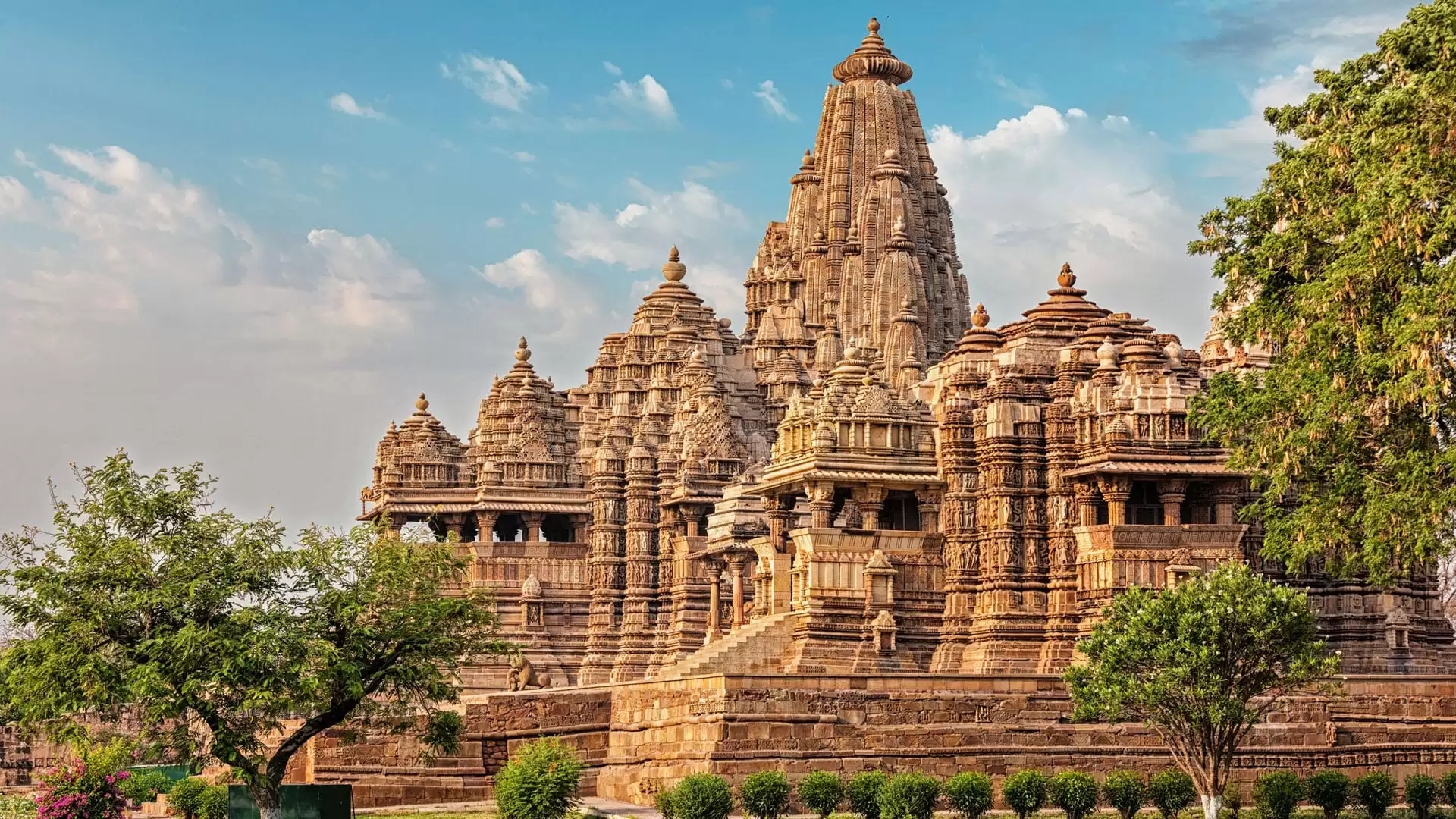
Khajuraho India Temple Complex

Specialties: The Khajuraho Group of Monuments, a UNESCO World Heritage Site, is renowned for its exquisite sculptures depicting various facets of life. These temples, built between 950 and 1050 CE by the Chandela dynasty, feature intricate carvings showcasing sensuality, spirituality, and everyday activities. The most famous among them are the Kandariya Mahadeva Temple, Lakshmana Temple, and Vishvanatha Temple.

2. Konark Sun Temple, Odisha:

Konark

Specialties: Dedicated to the sun god Surya, the Konark Sun Temple is a masterpiece of Odishan architecture. Built in the 13th century by King Narasimhadeva I, the temple is designed in the shape of a colossal chariot with intricately carved wheels, pillars, and walls. The temple’s Konark wheel, a UNESCO World Heritage Site, is an engineering marvel that serves as a sundial, accurately predicting time.

3. Brihadeeswarar Temple, Tamil Nadu:
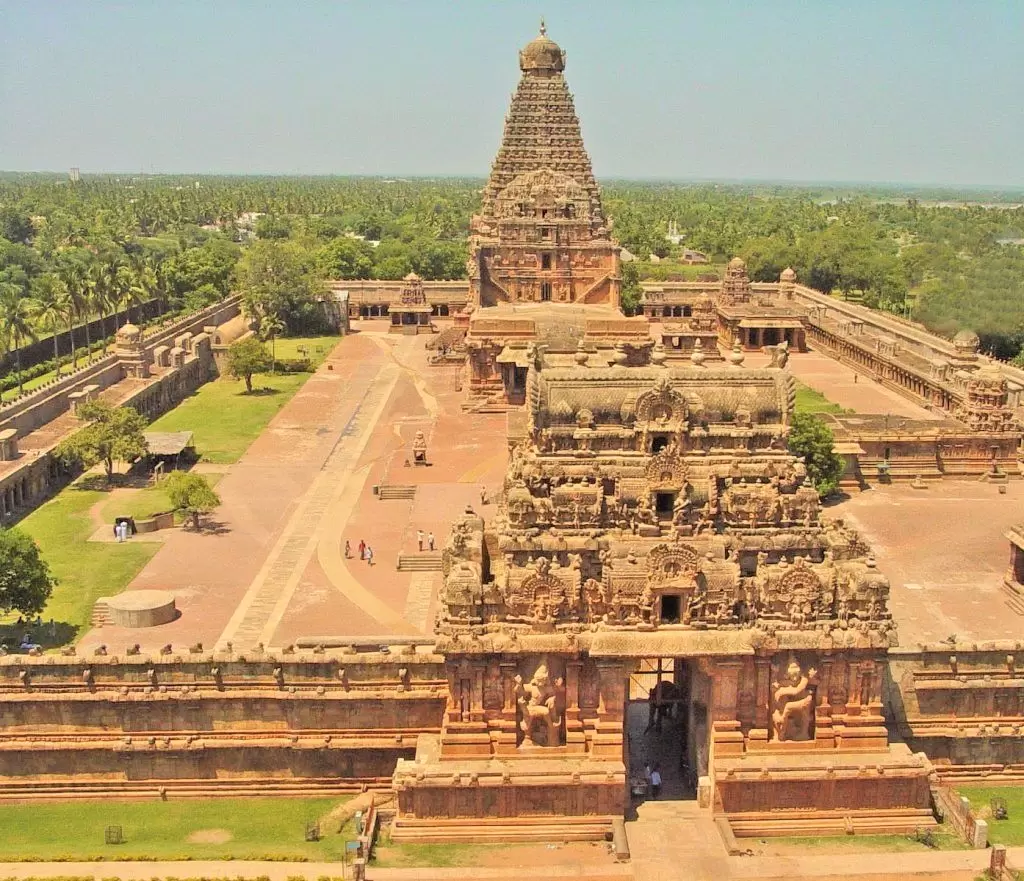
Brihadishvara Temple Tanjavur

Specialties: Also known as the Big Temple, the Brihadeeswarar Temple in Thanjavur is a testament to the architectural brilliance of the Chola dynasty. Built in the 11th century by King Raja Raja Chola I, this temple is renowned for its towering vimana (tower), which stands as one of the tallest in the world. The temple’s massive monolithic lingam and intricate frescoes add to its grandeur.

4. Meenakshi Amman Temple, Tamil Nadu:
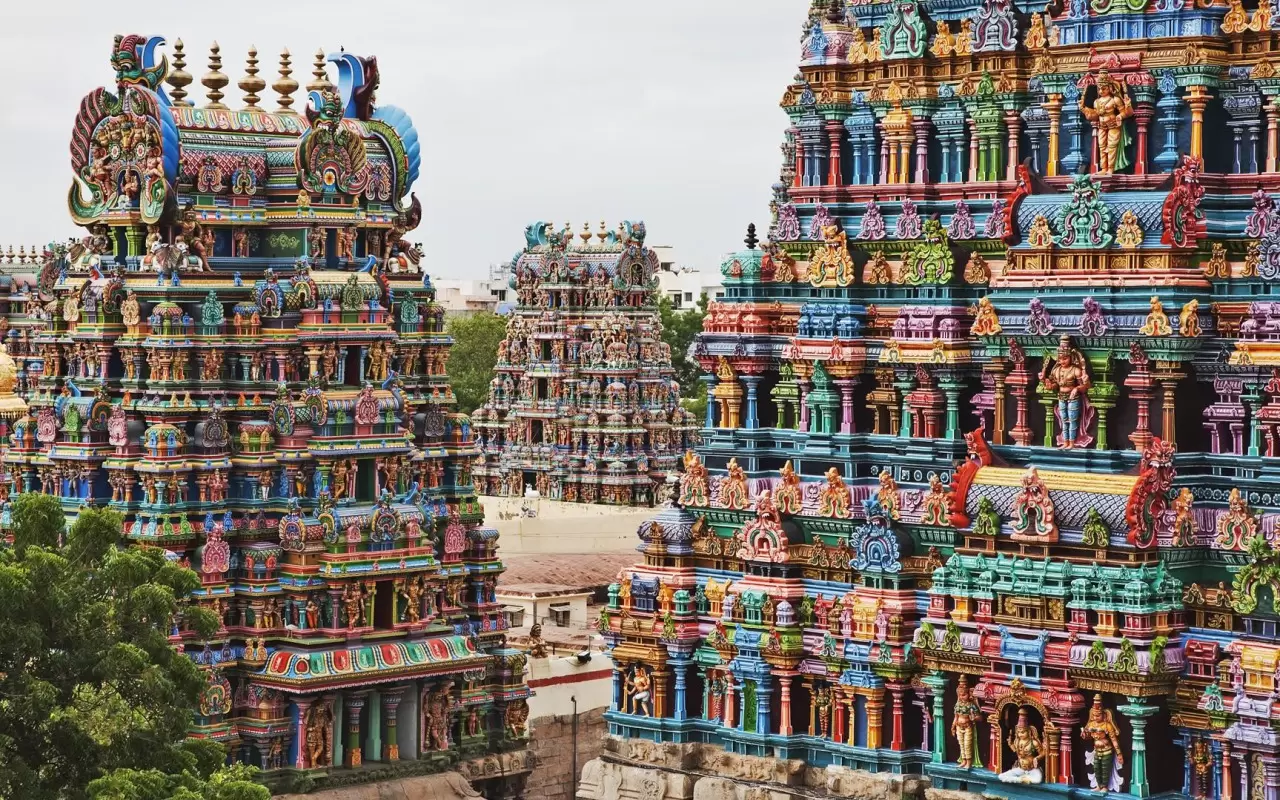
Meenakshi

Specialties: The Meenakshi Amman Temple in Madurai is a splendid example of Dravidian architecture and one of the most revered temples in South India. Dedicated to Goddess Meenakshi (an avatar of Parvati) and her consort Lord Sundareswarar (Shiva), this temple complex is adorned with towering gopurams (gateway towers) intricately carved with mythological figures and deities. The temple’s Hall of Thousand Pillars, with its exquisite sculptures and musical pillars, is a marvel of craftsmanship and engineering. Visitors are captivated by the vibrant rituals, festivals, and cultural performances that enliven the spiritual atmosphere of Meenakshi Temple.

5. Dilwara Temples, Rajasthan:

Dilwara Temple Mount Abu.jpg

Specialties: Nestled amidst the lush Aravalli hills in Mount Abu, the Dilwara Temples are architectural gems of the Jain community. Built between the 11th and 13th centuries, these temples are renowned for their intricate marble carvings, which exhibit remarkable craftsmanship and attention to detail. The Vimal Vasahi and Luna Vasahi temples are prime examples of Dilwara’s architectural splendor.

6.Kailasa Temple, Maharashtra:
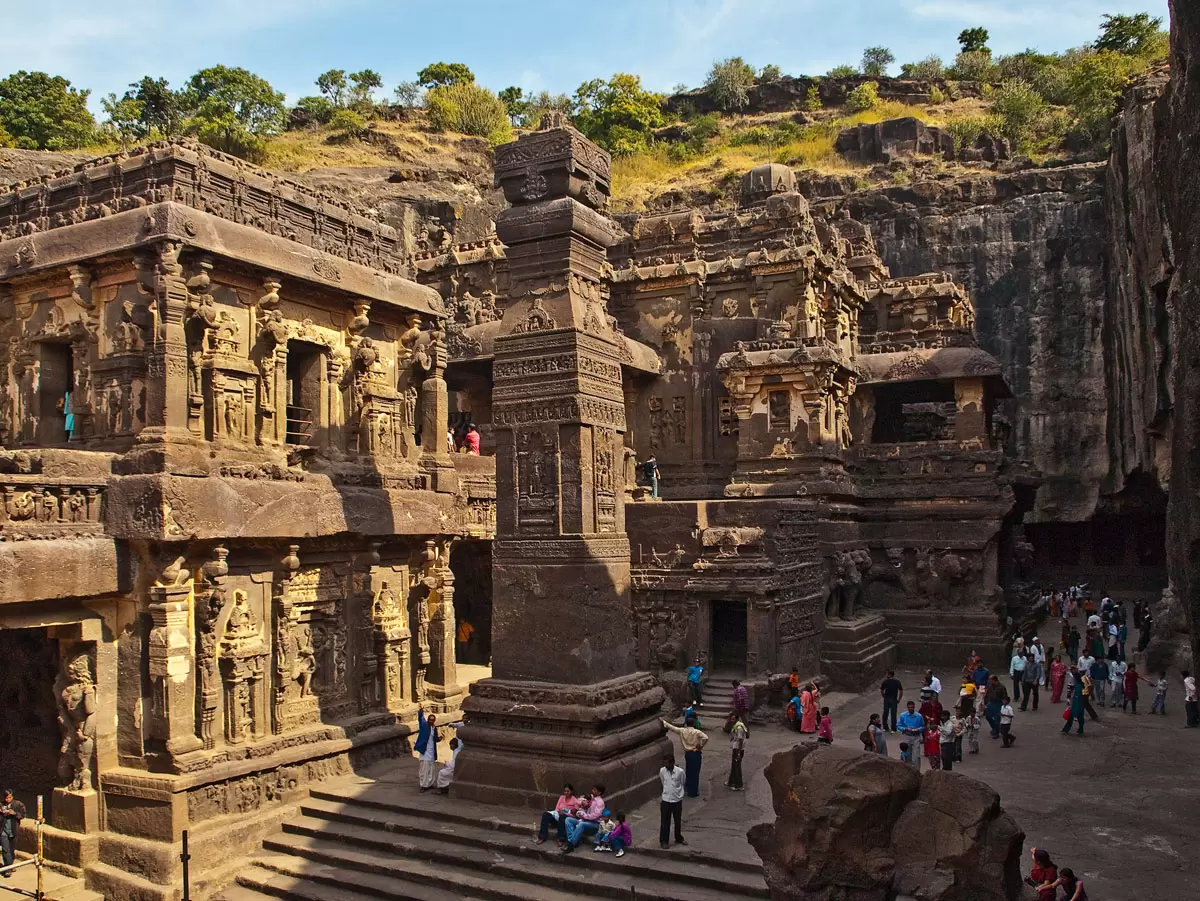
Kailasa

Specialties: Carved out of a single rock, the Kailasa Temple in Ellora is a stunning example of ancient rock-cut architecture. Built in the 8th century under the patronage of the Rashtrakuta dynasty, this monolithic marvel is dedicated to Lord Shiva. The temple’s intricate carvings, including depictions of deities, mythological scenes, and celestial beings, leave visitors spellbound.

7.Badami Cave Temples, Karnataka

Badami Scaled

The Badami Cave Temples, nestled in the picturesque town of Badami in Karnataka, stand as a testament to the architectural prowess and spiritual fervor of ancient India. Carved into the rugged sandstone cliffs that overlook the Agastya Lake, these rock-cut temples date back to the 6th century CE, during the reign of the Chalukya dynasty. The complex comprises four main cave temples dedicated to Hindu deities—Lord Shiva, Lord Vishnu, and the Jain Tirthankaras. Each cave is adorned with intricately carved sculptures and bas-reliefs depicting scenes from Hindu mythology and Jain iconography, showcasing a seamless blend of Dravidian and Nagara architectural styles. The highlight of the Badami Cave Temples is the exquisitely sculpted pillars, ceilings, and panels that captivate visitors with their fine craftsmanship and attention to detail. These temples serve as significant pilgrimage sites and cultural landmarks, offering a glimpse into the rich heritage and religious diversity of ancient India.

Each of these ancient temples not only showcases the architectural prowess of their respective eras but also serves as spiritual sanctuaries that continue to inspire awe and reverence in the hearts of millions. As custodians of India’s cultural heritage, these temples stand as living testimonials to the country’s rich and vibrant past, inviting visitors to immerse themselves in their timeless grandeur.

Tagged : / / / /

Atal Setu: Your Guide to Mumbai’s Trans Harbour Link

Atal Setu: Your Guide to Mumbai’s Trans Harbour Link
Mumbai, the City of Dreams, is notorious for its traffic congestion. But there’s good news! The Mumbai Trans Harbour Link (MTHL), now named Atal Setu after former Prime Minister Atal Bihari Vajpayee, promises to revolutionize travel between Mumbai and Navi Mumbai.

A Marvel of Engineering:

Inaugurated in January 2024, Atal Setu is a 22-km marvel of engineering, comprising a 16.5-km sea bridge and 5.5 km of viaducts on either end. It’s the longest sea bridge in India, boasting a 6-lane highway with a capacity of 70,000 vehicles per day.

Benefits Galore:

Atal Setu offers a plethora of benefits:

i. Reduced Travel Time: Imagine cutting your travel time between Mumbai and Navi Mumbai from 2 hours to just 20 minutes! Atal Setu makes it possible, decongesting existing roads and boosting productivity.
ii. Enhanced Connectivity: The bridge seamlessly connects Mumbai with Navi Mumbai, opening up new avenues for business, trade, and tourism.
iii. Economic Growth: Atal Setu is expected to spur economic growth in the region by attracting investments and creating job opportunities.
iv. Improved Quality of Life: Reduced traffic congestion translates to a better quality of life for residents, with less time spent commuting and more time for leisure and recreation.

Cruising at Speed:

So, how fast can you zoom across this magnificent bridge? The speed limit for four-wheelers is a thrilling 100 kmph, making the journey even swifter. However, remember to slow down to 40 kmph while ascending and descending the bridge for safety reasons.

More Than Just a Bridge:

Atal Setu isn’t just a bridge; it’s a symbol of progress and development. It showcases India’s engineering prowess and paves the way for a better-connected and more prosperous future.

Ready to Experience the Future?

With its stunning views of the Mumbai skyline and the Arabian Sea, Atal Setu promises a breathtaking journey. So, buckle up and get ready to experience the future of transportation in Mumbai!

Additional Features:

  • The bridge incorporates noise barriers and green spaces to minimize environmental impact.
  • It features advanced safety features like intelligent traffic management systems and emergency lanes.
  • Tolls are levied for using the bridge, with varying rates for different vehicle categories.

Atal Setu is a remarkable achievement that will transform Mumbai’s transportation landscape. If you’re planning a visit to the City of Dreams, be sure to include this marvel of engineering on your itinerary!

Tagged : / / /

Spice Up Your Senses: 5 Indian Cities Listed In “Best Food Cities in the World”

Spice Up Your Senses: 5 Indian Cities Crowned “Best Food Cities in the World”
Get ready for a culinary adventure, foodies! Five Indian cities have just stormed onto the global gastronomic scene, earning prestigious spots on the “Best Food Cities in the World” list. Buckle up as we unravel the flavors and delights these vibrant destinations offer:

1. Mumbai: A Melting Pot of Masala Magic: The City of Dreams doesn’t just dream big, it eats big too. From street-side sizzle of vada pav to upscale fusion marvels, Mumbai’s food scene is a kaleidoscope of influences. Dive into aromatic Marathi curries, explore coastal seafood thalis, and don’t miss the melt-in-your-mouth Irani chai – a legacy of the city’s Persian past. Mumbai is proof that diversity is the ultimate flavor enhancer.

2. Hyderabad: Biryani Paradise Found: The City of Nizams whispers its culinary secrets through layers of fragrant rice, tender meat, and aromatic spices. Hyderabad’s Biryani is a legend, each bite a symphony of flavors that will leave you wanting more. But venture beyond the biryani haven! Explore smoky Andhra-style curries, indulge in melt-in-your-mouth Osmania biscuits, and sample the vibrant street food scene – Hyderabad’s culinary tapestry is woven with rich traditions and bold tastes.

3. Delhi: A Mughal Legacy on Your Plate: The capital city’s food scene is a testament to its historical grandeur. Mughlai influences dance across plates with kebabs that sizzle and rotis that melt like butter. Delhi’s street food is a legend in itself, from chaats that tantalize your taste buds to creamy dahi bhalla that soothes your soul. Don’t forget the iconic butter chicken, a Delhi creation that has conquered hearts and stomachs worldwide.

4. Chennai: Dosa Delights and Beyond: The South Indian gem shines bright with its vegetarian offerings. Chennai’s dosa, a crispy rice and lentil crepe, is a canvas for endless variations, each bite a burst of flavor and texture. Idli, fluffy fermented rice cakes, are perfect for a healthy yet satisfying breakfast. But Chennai’s culinary repertoire extends far beyond these staples. Discover Chettinad curries, fiery and fragrant, and savor seafood specialties like prawn fry and fish curry – Chennai’s coastal location ensures the freshest catch.

5. Lucknow: Awaken Your Inner Nawab: Immerse yourself in the royal flavors of Lucknow, where Mughlai cuisine whispers stories of emperors and opulent feasts. Tundey kebabs, melt-in-your-mouth and legendarily tender, are a must-try. Awaken your sweet tooth with Malai Paan Gilauri, a decadent dessert filled with nuts and saffron, folded like a betel leaf. Lucknow’s street food scene is a treasure trove of flavors, from samosas that burst with filling to kachoris that tantalize your taste buds.

So, pack your appetite and a sense of adventure, because these five Indian cities are ready to take your taste buds on a journey. From creamy curries to fiery street food, each bite promises an explosion of flavors and a glimpse into India’s rich culinary heritage. Let the Indian food fiesta begin!

Tagged : / / / /

Carving Divinity: Why the ‘Krishna Shila’ Stone Was Chosen for the Ayodhya Ram Lalla Idol

Carving Divinity: Why the ‘Krishna Shila’ Stone Was Chosen for the Ayodhya Ram Lalla Idol
Deep within the heart of Karnataka, nestled amidst lush green hills, lies a treasure trove of captivating beauty – the ‘Krishna Shila’ stone. For centuries, this unique black granodiorite has captivated artisans and sculptors, but its recent rise to fame stems from a singular honor: being chosen to craft the sacred idol of Ram Lalla for the Ayodhya Ram Mandir.

But what makes this stone so special? Why was it deemed worthy of embodying the divine essence of Lord Rama? Let’s delve into the captivating qualities of the Krishna Shila and understand its crucial role in shaping the Ayodhya icon.

1. A Canvas for Eternity:

The Krishna Shila is renowned for its exceptional durability. Unlike many other stones, it weathers the elements with remarkable resilience, resisting wear and tear for centuries. This makes it the perfect medium for an idol destined to stand as a timeless testament to faith. Imagine, millennia from now, the Ram Lalla idol, sculpted from this enduring stone, still radiating its divine splendor – a testament to the unwavering devotion of generations.

2. A Symphony of Light and Shadow:

The Krishna Shila possesses a captivating deep black hue, punctuated by subtle flecks of grey and white. This unique color palette creates a mesmerizing play of light and shadow, adding depth and dimension to the sculpted figures. Think of the intricate details of Lord Rama’s attire, delicately carved from the Krishna Shila – the play of light on the dark canvas will accentuate every fold and curve, bringing the divine form to life in a breathtaking display of artistry.

3. A Whisper of Divinity:

Beyond its physical attributes, the Krishna Shila holds a deep cultural and spiritual significance. Its name itself, meaning “Krishna’s Stone,” evokes a sense of divine connection. Legend has it that Lord Krishna himself used this stone to build his celestial abode, Dwarka. Choosing the Krishna Shila for the Ram Lalla idol, therefore, imbues the sculpture with a sense of sacred lineage, connecting it to the rich tapestry of Hindu mythology and tradition. Also just like Rama, Krishna is also one of the avatars of Lord Vishnu hence the stone.

Rm Lala Mobile Wallpaer HD

4. A Tribute to Karnataka’s Artistic Legacy:

The selection of the Krishna Shila also recognizes the exceptional skill and dedication of Karnataka’s sculptors. For generations, artisans from this region have honed their craft on this very stone, breathing life into intricate carvings and awe-inspiring temple sculptures. Using the Krishna Shila for the Ram Lalla idol not only signifies its suitability but also celebrates the artistic heritage of Karnataka, showcasing its contribution to the grand vision of the Ayodhya Ram Mandir.

5. A Symbol of Unity and Harmony:

The journey of the Krishna Shila from Karnataka to Ayodhya transcends geographic boundaries. It serves as a powerful symbol of unity and harmony, bridging the cultural and spiritual landscapes of India. The presence of this stone in the heart of the Ayodhya Ram Mandir signifies the collective faith and devotion that binds diverse communities together.

The Ram Lalla idol, carved from the mystical Krishna Shila, is more than just a sculpture; it’s a confluence of artistry, resilience, and divine spirit. It’s a testament to the enduring power of faith and a symbol of unity that transcends geographical borders. In choosing this captivating stone, the Ayodhya Ram Mandir project has not only entrusted the divine form of Lord Rama to a worthy material but also woven a thread of Karnataka’s artistic heritage into the fabric of this national monument.

So, the next time you gaze upon the magnificent Ram Lalla idol, remember the captivating journey of the Krishna Shila – a journey that transcends time and space, carrying within it whispers of divinity and the echoes of generations of skilled artisans.

Tagged : / / / / /

Starlink Soars into India: Elon Musk’s Satellite Internet Granted Crucial License

Starlink Soars into India: Elon Musk’s Satellite Internet Granted Crucial License
Indian internet users might soon have a new option beaming down from the sky, thanks to Elon Musk’s Starlink. Reports say the Department of Telecommunications (DoT) has granted Starlink the coveted Global Mobile Personal Communication by Satellite (GMPCS) license, paving the way for the company to offer its satellite internet services in India.

This marks a significant development for Starlink’s India ambitions, which have faced regulatory hurdles for some time. The GMPCS license is crucial for offering satellite-based voice and data services, and its acquisition clears a major roadblock for Starlink’s entry into the Indian market.

What does this mean for India?

Starlink’s entry into the Indian market could potentially be a game-changer for internet access, particularly in remote and underserved areas. The company’s constellation of satellites orbiting the Earth promises high-speed, low-latency internet connectivity, even in regions where traditional terrestrial infrastructure is lacking.

This could be a boon for millions of Indians who currently lack reliable internet access. It could also boost education, healthcare, and economic development in remote areas. Additionally, Starlink’s competition could drive down internet costs for all users, benefiting consumers across the country.

7291starlink

Challenges remain

While the GMPCS license is a major step forward, Starlink still needs to overcome some hurdles before it can start offering its services in India. The company needs to secure additional licenses, such as a frequency allocation license, and set up ground stations to connect with its satellites.

Starlink also faces competition from other players in the satellite internet space, such as OneWeb and Jio Satellite Communications. Both companies have already received their GMPCS licenses and are planning to launch their services in India soon.

The future of internet in India

The entry of Starlink and other satellite internet providers is likely to shake up the Indian internet landscape. With increased competition and a wider range of options, Indian consumers can look forward to faster, more affordable, and more accessible internet in the years to come.

It will be interesting to see how Starlink fares in the Indian market, and how its presence impacts the existing players. One thing is for sure, the competition is heating up, and the future of internet in India is looking brighter than ever.

Stay tuned for further updates as Starlink navigates the remaining regulatory hurdles and prepares to launch its services in India. This could be the dawn of a new era for internet access in the country.

Tagged : / / / /

Marching into the Future: The Indian Army Ditches Mules for High-Tech Hardware

Marching into the Future: The Indian Army Ditches Mules for High-Tech Hardware
For over a century, the Indian Army relied on loyal but slow-moving mules for traversing treacherous terrain and delivering crucial supplies. But times are changing, and the stalwart mules are now making way for a high-tech brigade of drones, robots, and all-terrain vehicles. This progressive move signals a crucial modernization effort, aimed at increasing efficiency, reducing risk, and boosting the Army’s operational capabilities.

From Hobbling Hooves to Hovering Drones: The Army’s logistics game is set for a complete makeover. Logistics drones, with their ability to carry payloads over long distances and navigate challenging terrain, are emerging as game-changers. They can rapidly deliver essential supplies to remote outposts, evacuate the wounded from inaccessible areas, and even conduct aerial surveillance. Contracts have been signed for multiple types of drones, including those designed for high-altitude areas exceeding 12,000 feet.

Robotic Mules Taking the Reins: Remember the image of a soldier leading a line of mules? Soon, it might be replaced by a soldier controlling a robotic mule. These four-legged marvels, capable of carrying up to 350 kg of cargo, offer several advantages. They can autonomously navigate complex terrain, operate in extreme weather conditions, and avoid obstacles with built-in obstacle detection systems. The Army has already signed a deal for 100 of these intelligent beasts, paving the way for a future where robotic mules share the burden with human soldiers.

Taming the Toughest Terrains: From the snow-capped Himalayas to the scorching Thar Desert, the Indian Army operates in some of the world’s most diverse and challenging environments. To conquer these landscapes, the Army is bringing in a fleet of all-terrain and rough-terrain vehicles. These rugged machines can go where even mules struggle, ensuring uninterrupted supply lines and rapid troop movement. Additionally, these vehicles offer greater protection and comfort for soldiers compared to traditional trucks and jeeps.

Modernizing for a Secure Future: This shift towards technological solutions is driven by multiple factors. Firstly, it aims to reduce dependence on animals, minimizing reliance on their training and upkeep. Secondly, it addresses manpower concerns, as fewer soldiers are needed to operate and maintain drones and robots compared to managing an animal transport fleet. Finally, it enhances operational efficiency, speed, and accuracy, giving the Army a critical edge in a constantly evolving geopolitical landscape.

The gradual phasing out of mules is not about discarding tradition or belittling their service. It is about adapting to the demands of a modern battlefield, where agility, precision, and speed are paramount. As the Indian Army marches into the future, it does so with a strategic blend of respect for its past and a firm embrace of cutting-edge technology, ensuring its preparedness for any challenge that may lie ahead.

Tagged : / / /

1,500 Artisans, 26,500 Stones : Shri Ram Janmabhoomi Mandir, Built to Stand for a Millennium

1,500 Artisans, 26,500 Stones : Shri Ram Janmabhoomi Mandir, Built to Stand for a Millennium
The much-awaited consecration of the Shri Ram Janmabhoomi Mandir in Ayodhya on January 21st, 2024, marked a historic moment not just for India, but for the world. This magnificent temple, a symbol of faith and resilience, stands tall not only in its physical grandeur but also in its promise of enduring for a thousand years.

Larsen & Toubro (L&T), the engineering and construction giant entrusted with the temple’s design and construction, has declared its commitment to crafting a structure that will transcend centuries. This ambitious pledge is no small feat, requiring meticulous planning, cutting-edge technology, and the finest materials.

A Fusion of Tradition and Innovation

The temple’s design draws inspiration from the ancient Nagara style of architecture, characterized by its towering shikhars (spires) and intricate carvings. However, L&T has seamlessly integrated modern engineering techniques to ensure the structure’s longevity. The foundation, for instance, rests on 450 concrete piles driven 60 meters deep, providing unwavering support against earthquakes and the passage of time.

Built with Utmost Precision and Care

No detail has been overlooked in the construction process. The main material used is pink Bansi Paharpur stone, chosen for its strength and resilience. Over 1,500 artisans painstakingly hand-carved intricate designs onto each of the 26,500 individual stones, each meticulously tracked with QR codes for seamless assembly.

A Beacon of Hope and Unity

The Shri Ram Janmabhoomi Mandir transcends its religious significance. It stands as a testament to the unwavering faith and dedication of millions, a symbol of hope and unity for a nation. Its promised longevity signifies a commitment not just to the past but also to the future, a beacon of peace and harmony that is set to illuminate the world for generations to come.

Ultimately, the Shri Ram Janmabhoomi Mandir is a story of devotion, resilience, and architectural marvel. It is a testament to the power of faith and its ability to bring people together, leaving a legacy that will endure for centuries to come.

Tagged : / / / /

Adani Takes Flight: India’s First Indigenous Drone Takes Off

Adani Takes Flight: India’s First Indigenous Drone Takes Off
Marking a significant milestone in India’s defense and technological advancements, the Adani Group recently unveiled the country’s first indigenously manufactured medium-altitude, long-endurance (MALE) drone, the Drishti 10 Starliner. This sophisticated piece of technology signifies a giant leap forward in India’s self-reliance in the domain of unmanned aerial vehicles (UAVs).

The Drishti 10 is equipped with an array of impressive capabilities:

Endurance: With a staggering 36-hour flight time, this drone can stay airborne for extended periods, enabling long-range surveillance and reconnaissance missions.
Payload Capacity: Capable of carrying up to 450 kg of payload, the Starliner can be equipped with a variety of sensors and weapons, making it adaptable to diverse military requirements.
All-Weather Operations: Certified for all-weather flying, the drone can operate effectively in challenging weather conditions, ensuring uninterrupted mission execution.

Strategic Significance

The development and deployment of the Drishti 10 hold immense strategic significance for India. It strengthens the country’s maritime security posture, particularly along its vast coastline, by providing enhanced surveillance and intelligence gathering capabilities. Additionally, the drone’s potential applications extend beyond maritime operations, encompassing border security, disaster management, and communication relay.

Indigenous Development & Aatmanirbhar Bharat

The Drishti 10 stands as a testament to India’s growing prowess in indigenous defense technology development. This achievement aligns perfectly with the government’s “Aatmanirbhar Bharat” initiative, promoting self-reliance in critical sectors like defense. The successful development of this drone signifies India’s growing ability to design, manufacture, and deploy cutting-edge military technology, reducing dependence on foreign imports.

The Future of UAVs in India

The unveiling of the Drishti 10 marks a pivotal moment in India’s drone journey. It paves the way for further advancements in indigenous UAV technology and opens doors for a wider range of applications in various sectors. With continued focus on research and development, India is poised to become a leading player in the global UAV market, ensuring its strategic autonomy and technological leadership in the years to come.

Tagged : / / /

Lakshdweep: A Tropical Paradise Awaits, But Here’s What You Need to Know Before Booking

Lakshdweep: A Tropical Paradise Awaits, But Here’s What You Need to Know Before Booking
Lakshadweep, a string of 36 coral islands nestled in the Arabian Sea off the coast of Kerala, is a tropical paradise. Pristine beaches, turquoise waters teeming with marine life, and swaying coconut palms paint a picture-perfect postcard scene. But before you book your tickets and pack your bags, there are a few things you need to know about this unique Indian archipelago.

1. Getting There and Around:

Lakshadweep is only accessible by air or sea. Flights from Kochi, Agatti, and Bangalore connect you to the islands, while ferries from Kochi take longer but offer a more budget-friendly option. Once there, inter-island travel is primarily by local boats or helicopters.

2. Permits and Regulations:

Lakshadweep is a protected area, and entry requires a Protected Area Permit (PAP) issued by the Lakshadweep Administration. The PAP costs INR 300 and is valid for 30 days. Additionally, alcohol and non-vegetarian food (except for fish) are prohibited on the islands.

Thinnakara Island Kavaratti

3. Choosing Your Island:

Each of Lakshadweep’s islands has its own charm. Agatti is the gateway island, with good air and ferry connectivity. Kadmat is known for its stunning lagoon and water sports. Bangaram is a haven for birdwatchers, while Minicoy boasts pristine beaches and a laid-back vibe. Choose an island that suits your interests and travel style.

4. Accommodation and Activities:

Lakshadweep offers a range of accommodation options, from beachside resorts and homestays to eco-friendly cottages. Kayaking, snorkeling, scuba diving, and fishing are popular activities, while dolphin watching and island hopping are unforgettable experiences.

5. Respecting the Local Culture:

Lakshadweep is a Muslim-majority community with a strong cultural identity. Dress modestly, especially when visiting villages. Be mindful of local customs and traditions, and avoid littering or harming the fragile marine ecosystem.

Lakshdweep is a dream destination, but mindful planning is essential. By following these tips and respecting the local culture, you can ensure a truly unforgettable vacation in this tropical paradise. Remember, Lakshadweep is not just a beach destination; it’s a chance to experience a unique way of life and connect with nature in its purest form. So pack your bags, grab your sunscreen, and get ready to discover the magic of Lakshadweep!

Tagged : / / / / /

India’s Bullet Train Dreams Gain Momentum as Land Acquisition Hurdles Clear

India’s Bullet Train Dreams Gain Momentum as Land Acquisition Hurdles Clear
After facing years of delays and land acquisition roadblocks, India’s ambitious high-speed railway project, popularly known as the “bullet train,” finally seems to be picking up steam. The National High-Speed Rail Corporation (NHSRCL) recently announced the completion of 100% land acquisition for the Mumbai-Ahmedabad corridor, a major milestone that paves the way for faster project advancement.

This achievement wasn’t easy. Over five and a half years, the project navigated complex social and bureaucratic landscapes, facing resistance from farmers, environmental concerns, and legal disputes. Yet, the NHSRCL’s perseverance and the revised Land Acquisition Act of 2013 helped clear the path.

Speeding into the Future:

With the land hurdle overcome, the project is now in full swing. Over 270 kilometers of groundwork have been completed, and all civil engineering contracts awarded for Gujarat and Maharashtra. The 508-kilometer corridor, once operational, will significantly reduce travel time between Mumbai and Ahmedabad, from seven hours to just over two.

More Than Just Speed:

Beyond speed, the bullet train promises economic benefits. It’s estimated to create over 90,000 jobs during construction and boost tourism and trade along the route. The project also represents a technological leap, incorporating Japanese Shinkansen technology and creating a knowledge transfer opportunity for India’s engineering sector.

Challenges Remain:

While the progress is undeniable, challenges remain. The section crossing Dadra and Nagar Haveli still needs land acquisition, and completing the project within the revised deadline of 2027 appears ambitious. Moreover, concerns about cost overruns and environmental impact need to be addressed with transparency.

Despite these challenges, the bullet train project symbolizes India’s aspirations for a faster, more connected future. Its success or failure will not only be measured in miles per hour but also in its ability to deliver economic prosperity, technological advancement, and a sustainable mode of transportation. As the train hurtles towards its destination, India’s eyes are firmly fixed on the tracks, anticipating the day when the dream of high-speed travel becomes a reality.

Tagged : / /

India Takes Flight: DRDO’s Anti-Drone Tech Soars into Production

India Takes Flight: DRDO’s Anti-Drone Tech Soars into Production
The Indian skies are getting safer, thanks to a major leap by the Defence Research and Development Organisation (DRDO). Their comprehensive anti-drone system, capable of detecting, identifying, and neutralizing aerial threats, is now ready for mass production. This technology is being transferred not only to state-owned Bharat Electronics Limited (BEL) but also to private firms like Adani, Larsen & Toubro, and ICOMM, marking a significant step towards self-reliance in counter-drone defense.

This system is a game-changer for border security and internal defense. Imagine a shield that can identify a rogue drone buzzing near a sensitive installation, track its movements, and then take it down – silently and effectively. That’s the power of DRDO’s anti-drone technology. It encompasses diverse solutions, including radars for early detection, jammers to disrupt communication, and laser and net-based neutralization methods to bring down the drone itself.

But the story doesn’t end there. While industry giants will focus on producing this advanced technology, DRDO itself is setting its sights on a new frontier: High endurance Unmanned Aerial Vehicles (UAVs). These long-range drones will serve as India’s eyes in the sky, patrolling vast stretches of borders and gathering critical intelligence. Think of them as persistent guardians, providing a continuous aerial presence wherever needed.

This strategic shift highlights DRDO’s forward-thinking approach. Instead of getting bogged down in producing smaller drones, a task well-suited for private players, they are focusing on developing cutting-edge technology that will give India a decisive edge in future conflicts. These high-end UAVs will not only offer unparalleled surveillance capabilities but also open doors for offensive drone warfare, a rapidly evolving domain.

However, challenges remain. Developing complex UAVs requires expertise in advanced materials, avionics, and AI-powered autonomous systems. DRDO will need to collaborate with domestic research institutions and private players to bridge these technological gaps. But with their proven track record and the government’s support, there’s no doubt that DRDO will successfully navigate these challenges and ensure India’s skies remain safe and secure.

In conclusion, the transfer of DRDO’s anti-drone technology to production and their focus on high-end UAVs mark a significant leap in India’s defense capabilities. It’s a testament to the country’s growing self-reliance in the crucial realm of aerial defense. As DRDO takes flight with advanced UAVs, one thing is clear: India’s skies are in good hands

Tagged : / / / /

India Joins Elite Group Of Nations With “Pseudo-Satellites”: Keeping an Eye on the Stratosphere and Beyond

India Joins Elite Group Of Nations With “Pseudo-Satellites”: Keeping an Eye on the Stratosphere and Beyond
India’s ambitions are reaching new heights with the development of “pseudo-satellites,” a game-changing technology placing it among the elite nations exploring the stratosphere. These innovative platforms, also known as High-Altitude Platform Systems (HAPS), promise not only to revolutionize surveillance and communication but also hold strategic implications for regional dynamics.

Imagine solar-powered drones, the size of airplanes, cruising at breathtaking altitudes of 65,000 feet, above weather and air traffic. That’s the essence of HAPS: persistent aerial platforms capable of staying aloft for months, offering a unique vantage point for observation and communication.

For India, HAPS offer a multitude of benefits. Firstly, they provide a cost-effective and persistent surveillance capability. Unlike traditional satellites, HAPS operate closer to Earth, offering higher image resolution and the ability to monitor specific areas continuously. This could prove invaluable for border security, especially along the contested Himalayan border with China.

Secondly, HAPS open new avenues for communication in remote areas. Their high altitude allows them to cover vast distances, providing internet connectivity to underserved regions and disaster-stricken zones. This could be a game-changer for disaster relief efforts and bridging the digital divide.

HAPS A Leap Into The Future Of ISR SSA

Thirdly, HAPS hold immense potential for scientific research. Their long endurance and ability to carry specialized equipment make them ideal platforms for atmospheric studies, environmental monitoring, and even disaster prediction.

The successful test flights of a prototype HAPS developed by Bengaluru-based NewSpace Research and Technologies Pvt. Ltd., under the Ministry of Defense’s Innovation for Defense Excellence (iDEX) initiative, mark a significant milestone in India’s HAPS journey. With plans for the first operational flight in 2024, India is poised to join the ranks of nations like the United States, China, and Japan in exploiting this cutting-edge technology.

Of course, challenges remain. Regulatory frameworks for operating HAPS at such high altitudes need to be established. Integration with existing communication systems and addressing potential security concerns are also crucial steps.

However, the potential benefits of HAPS are undeniable. As India takes to the stratosphere with these pseudo-satellites, it not only strengthens its strategic capabilities but also opens doors to novel applications in communication, research, and disaster management. This is a giant leap forward, not just for India’s technological prowess, but for the future of aerial technology itself.

So, keep an eye on the sky, for India’s HAPS are just the beginning of a new era in aerospace, filled with possibilities as limitless as the stratosphere itself.

Tagged : / / / /

Lakshadweep Takes Center Stage: Modi’s Visit Sparks a Tropical Trend

Lakshadweep Takes Center Stage: Modi’s Visit Sparks a Tropical Trend
The pristine beaches of Lakshadweep, India’s emerald archipelago, have rarely been out of the spotlight. But this January, they experienced a surge in interest unlike any before, thanks to a high-profile visitor: Prime Minister Narendra Modi.

Modi’s two-day trip in early January wasn’t just a vacation. He inaugurated development projects, interacted with locals, and even took up snorkelling in the crystal-clear waters. But it was his social media posts that truly set the trend. Sharing stunning photos of the islands and his experiences, Modi declared himself “in awe of the stunning beauty” and touched by the “incredible warmth” of the people.

Lak1

The internet took notice. Lakshadweep skyrocketed to the top of trending searches, with Google reporting over 100,000 daily searches at its peak. Social media buzzed with comments like “adding Lakshadweep to my bucket list” and “thanks PM Modi for showing us this hidden gem.”

This sudden surge in interest is more than just a fleeting fad. It highlights the power of celebrity endorsement, particularly when coupled with stunning visuals and a touch of personal experience. Modi’s visit not only put Lakshadweep on the map for potential tourists but also reminded everyone of its unique cultural heritage and ecological importance.

But there’s more to this story than just tourism. Modi’s visit was part of the BJP’s “Mission South” campaign, aimed at boosting the party’s presence in southern India. Lakshadweep, with its Muslim-majority population, holds strategic importance in this endeavor. While the political implications are complex, there’s no denying that Modi’s visit has brought much-needed attention to the island chain.

Laks 1

Whether you’re a travel enthusiast drawn by the turquoise waters and swaying palm trees, or someone interested in the political landscape of India, one thing is clear: Lakshadweep is in the spotlight. Thanks to Prime Minister Modi’s visit, this hidden paradise has stepped out of the shadows and into the hearts and minds of people across the country.

So, will Lakshadweep become the next big tourist destination? Only time will tell. But one thing’s for sure: thanks to PM Modi and his snorkel, the islands are no longer a secret.

Tagged : / /

Diving Deep: Samudrayaan, India’s Voyage into the Ocean’s Heart, Things You Need To Know

Diving Deep: Samudrayaan, India’s Voyage into the Ocean’s Heart, Things You Need To Know
India’s ambitious Deep Ocean Mission has a shining star: Samudrayaan, meaning “Sea Chariot” in Sanskrit. This isn’t your average boat; it’s a state-of-the-art manned submersible designed to carry three explorers 6,000 meters beneath the ocean’s surface, into a world shrouded in mystery and teeming with untapped resources.

Samudrayaan, also known as MATSYA 6000, is being developed by the National Institute of Ocean Technology (NIOT) in Chennai. Its sleek titanium hull, built to withstand immense pressure, will house a sophisticated life-support system and scientific instruments. These instruments will allow the crew to study the ocean floor, collect samples, and conduct research on everything from deep-sea minerals to bioluminescent creatures.

But why venture into the inky depths? The answer lies in the ocean’s vast potential. Samudrayaan‘s mission is multifaceted:

1. Unlocking mineral resources: The deep ocean holds treasures like cobalt, nickel, and manganese, vital for various industries. Samudrayaan will help assess these resources and pave the way for sustainable deep-sea mining.
2. Mapping the unknown: Vast swathes of the ocean floor remain unexplored. Samudrayaan will map these areas, uncovering new geological formations and potentially even undiscovered life forms.
3. Boosting the “Blue Economy”: India’s vision for the Blue Economy focuses on harnessing the ocean’s resources for sustainable economic growth.

ImageForNews 32926 16759550708057228

Samudrayaan will contribute to this by providing valuable data and research for various ocean-based industries.

Samudrayaan also holds immense scientific significance. Its research will shed light on climate change, ocean currents, and marine ecosystems, contributing to a better understanding of our planet’s health.

The first manned dive is expected sometime in 2024-2025. The success of this mission will not only be a scientific triumph but also a testament to India’s growing technological prowess. It will propel the country into the elite club of nations capable of deep-sea exploration, opening doors to a new era of oceanographic research and resource utilization.

So, keep your eyes on the horizon, for Samudrayaan is poised to take us on a breathtaking journey into the ocean’s deepest secrets. The future of scientific exploration lies not just in the stars but also in the depths of the sea, and India is ready to dive in.

Tagged : / / / /

5 Indian Foods That Are Surprisingly Banned in Other Countries

5 Indian Foods That Are Surprisingly Banned in Other Countries
India’s culinary scene is a vibrant tapestry of flavors, spices, and traditions. But did you know that some of our beloved dishes are actually banned in other countries? It’s true! From the humble samosa to the exotic chyawanprash, here are five Indian foods that have faced the banhammer abroad:

1. Samosas: These crispy, golden triangles filled with spiced potatoes are a ubiquitous street food in India. But in Somalia, samosas are considered a symbol of Western cultural influence and are therefore prohibited.

AlooSamosa3

2. Chyawanprash: This ancient Ayurvedic jam made with a blend of herbs and fruits is revered for its health benefits in India. However, in Canada, chyawanprash was banned for containing high levels of lead and mercury.

Chyawanprash – Satmya – 470gm

3. Ghee: Clarified butter, or ghee, is a staple in Indian kitchens, adding richness and flavor to countless dishes. However, the European Union has banned ghee because it exceeds the permitted levels of saturated fat.

Ghee Scaled

4. Poppy Seeds: These tiny black seeds are used in various Indian sweets and breads. But in some countries, like Australia and Singapore, poppy seeds are banned due to their potential to contain trace amounts of opiates.

Poppyseed

5. Jelly Cups: These wobbly treats, beloved by children across India, have been banned in the United States due to concerns about choking hazards posed by the gelatin sheets used to seal them.

6572d8218ad9681aa739da51 Jelly Snack Fruit Jelly Candy Bag Of 20

These are just a few examples of how cultural and regulatory differences can lead to unexpected bans on certain foods. So, the next time you enjoy a plate of samosas or a spoonful of chyawanprash, remember that these culinary delights are not universally embraced!

Beyond the Bans: A Celebration of Indian Food

While these bans may seem strange or even unfair, they highlight the fascinating diversity of food cultures around the world. They also serve as a reminder of the importance of appreciating and respecting our own culinary heritage.

So, let us continue to celebrate the unique flavors and traditions of Indian food, both at home and abroad. And who knows, maybe someday these banned foods will find their way back onto menus around the world, bringing a taste of India to new and unexpected corners of the globe.

Tagged : / / / / /
Verified by ExactMetrics