Black Turmeric: The Spice of Life? 5 Benefits You Probably Didn’t Know

Black Turmeric: The Spice of Life? 5 Benefits You Probably Didn’t Know
Move over, regular turmeric, there’s a new player in town—black turmeric. This rare, deep-hued spice, also known as Kali Haldi, has been used in traditional medicine for centuries, but its recent scientific exploration is revealing incredible potential for promoting longevity and preventing cancer.

At the heart of this buzz lies curcumin, a bioactive compound found in both regular and black turmeric. However, black turmeric boasts a significantly higher concentration, sometimes up to eight times as much. This elevated potency is what makes black turmeric such a promising candidate for improving health and longevity.

1. Longevity Booster:

Black turmeric’s high curcumin content translates to several potential benefits for aging well. Its potent anti-inflammatory properties can combat chronic inflammation, a major contributor to age-related diseases like arthritis and Alzheimer’s. Additionally, curcumin’s antioxidant activity helps scavenge free radicals, the rogue molecules that damage cells and accelerate aging. Studies suggest that curcumin may also boost longevity by activating sirtuins, genes associated with increased lifespan.

2. Cancer Shield:

Black turmeric’s cancer-fighting potential is particularly exciting. Curcumin has been shown to inhibit the growth and spread of cancer cells in various types of cancer, including breast, lung, and colon cancers. Its anti-inflammatory and antioxidant properties play a crucial role here, along with its ability to interfere with cancer cell signaling pathways. While research is still ongoing, early results are promising, hinting at black turmeric’s potential as a complementary therapy alongside conventional cancer treatments.

3. Beyond the Hype:

It’s important to remember that black turmeric, while brimming with potential, is not a magic bullet. A healthy lifestyle with a balanced diet, regular exercise, and proper sleep remains paramount for longevity and cancer prevention. Additionally, research on black turmeric’s specific benefits is still in its early stages, and more clinical trials are needed to confirm its efficacy in humans.

4. Adding the Spice to Life:

So, how can you incorporate black turmeric into your routine? You can use it in place of regular turmeric in cooking, adding its earthy, slightly musky flavor to curries, soups, and stews. Alternatively, consider taking black turmeric supplements, following recommended dosages. However, consult your doctor before taking any supplements, especially if you have any underlying health conditions.

5. The Final Bite:

Black turmeric, with its high curcumin content, emerges as a promising player in the quest for a longer, healthier life. While further research is needed, its potential benefits for longevity and cancer prevention are too intriguing to ignore. So, whether you sprinkle it on your food or explore supplements, adding a touch of black magic to your life just might be the spice of life after all.

Tagged : / / / /

Driverless Dreams Derailed: Nitin Gadkari Shuts Door on Autonomous Cars in India

Driverless Dreams Derailed: Nitin Gadkari Shuts Door on Autonomous Cars in India
In a surprising about-turn, Union Minister for Road Transport and Highways Nitin Gadkari has declared that driverless cars will never be allowed on Indian roads. This statement, made at the Zero Mile Samvad event hosted by IIM Nagpur, throws a wrench in the aspirations of automakers and tech giants hoping to tap into India’s burgeoning car market with self-driving vehicles.

Gadkari’s primary concern centers around job displacement. He estimates that driverless cars could cost millions of Indians their livelihoods, a burden he’s unwilling to bear. India currently faces a driver shortage, further complicating the situation. “Instead of creating unemployment, we should focus on improving public transport and filling the existing driver gap,” he stated.

This stance isn’t entirely new. Gadkari has expressed reservations about driverless cars before, citing safety concerns and the country’s complex traffic conditions. He emphasizes the need for improved road infrastructure and stricter safety regulations before considering autonomous vehicles.

The minister’s announcement throws cold water on a nascent but rapidly growing ecosystem. Several global players, including Tesla and Uber, have expressed interest in entering the Indian market with their self-driving technology. Domestic startups are also innovating in this space, aiming to tailor driverless cars to India’s unique challenges.

While Gadkari’s decision prioritizes immediate job security, it raises questions about India’s preparedness for the future. Driverless cars have the potential to revolutionize transportation, improving efficiency, reducing accidents, and providing mobility solutions for the disabled. Banning them altogether could impede innovation and leave India lagging behind in a rapidly evolving technological landscape.

Experts point out that a blanket ban may be shortsighted. A phased approach, starting with limited trials in controlled environments, could address safety and job concerns while allowing India to explore the benefits of this technology. Additionally, focusing on driver-assistance features like adaptive cruise control and automated parking could offer a middle ground without the immediate job displacement anxiety.

Nitin Gadkari’s decision has sparked a nationwide debate. While some support his focus on protecting livelihoods, others worry about stifling innovation and technological progress. The future of driverless cars in India remains uncertain, hanging in the balance between economic anxieties and the allure of a transformative future.

Tagged : / / / /

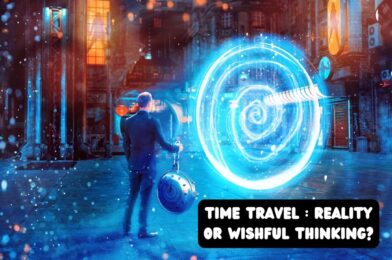
Time warp or wishful thinking? Physics student’s time travel hypothesis reignites debate

Time warp or wishful thinking? Physics student’s time travel hypothesis reignites debate
In 2020, Germain Tobar, then a physics student, sent ripples through the scientific community with his audacious claim: he’d cracked the code for time travel. His unpublished paper, titled “Closed Time like Curves in General Relativity: A Novel Approach,” argued that he could reconcile existing equations to allow for closed time like curves (CTCs) – essentially, loops in spacetime that enable travel to the past. Now, three years later, Tobar’s hypothesis has resurfaced online, sparking renewed debate about the feasibility of warping time.

So, are we about to hop in a DeLorean and visit the dinosaurs? Not quite. Tobar’s work is complex and largely untested. He proposes manipulating specific configurations of matter and energy to create wormholes – theoretical tunnels through spacetime – that could serve as time travel conduits. However, his approach hinges on several controversial interpretations of established physics principles, particularly regarding negative energy densities.

The concept of negative energy – energy that “steals” from its surroundings – remains highly speculative. While some theoretical frameworks like quantum vacuum theories suggest its existence, it has never been directly observed. Incorporating such hypothetical entities into a practical framework for time travel raises significant skepticism among many physicists.

“Tobar’s work is interesting and thought-provoking,” says Dr. Amelia Patel, a theoretical physicist at CERN, “but it’s crucial to remember that it’s a theoretical proposition, not a proven concept. The feasibility of his proposed mechanisms to generate negative energy and construct stable wormholes is far from established.”

Despite the caveats, Tobar’s work has reignited excitement among time travel enthusiasts and ignited discussions about the boundaries of known physics. His paper has garnered significant online attention, with blogs and forums dissecting his arguments and sparking lively debates.

“Whether Tobar’s work ultimately paves the way for time travel remains to be seen,” says Dr. Patel, “but one thing is certain: it pushes the boundaries of our understanding of spacetime and encourages us to question what we think we know about the universe’s possibilities. That, in itself, is a valuable contribution to scientific discourse.”

The viral resurgence of Tobar’s hypothesis serves as a reminder that the quest for time travel, while riddled with challenges, continues to captivate our imagination and drive scientific exploration. While jumping to the future or reliving the past might still be science fiction, Tobar’s work stands as a testament to the enduring human desire to unravel the mysteries of time and explore the fabric of our universe.

Key points to note:

Tobar’s hypothesis is theoretical and untested.
The feasibility of negative energy and stable wormholes is highly debated.
Tobar’s work has sparked new discussions about the limits of physics.
The quest for time travel remains a subject of ongoing scientific exploration.

Tagged : / / /

5 Zodiac Signs That Are Notorious For Their Negative Thinking

5 Zodiac Signs That Are Notorious For Their Negative Thinking
While astrology shouldn’t define us, it can offer intriguing insights into personality traits and tendencies. And let’s face it, we all have our moments of negativity. But some zodiac signs, due to the inherent characteristics associated with their celestial alignments, seem particularly prone to negative thinking. Here are 5 signs that often find themselves dwelling on the dark side:

1. Scorpio: The enigmatic Scorpio, known for their intensity and depth, can also be prone to suspicion and cynicism. Ruled by Pluto, the planet of transformation and darkness, Scorpios can see through rose-colored glasses and delve into the shadows, readily uncovering potential problems and lurking negativity. While their caution can be a valuable asset, their tendency to fixate on the worst-case scenario can lead to unnecessary stress and missed opportunities.

2. Virgo: The detail-oriented Virgo, ruled by Mercury, the planet of communication and analysis, possesses a keen eye for flaws and imperfections. This meticulousness can be a blessing when applied to tasks and projects, but in their personal lives, Virgos can get bogged down in overthinking and negative self-talk. Their constant striving for perfection can lead to anxiety and disappointment, as they focus on what they haven’t achieved rather than celebrating their accomplishments.

3. Cancer: Cancers, the sensitive souls ruled by the Moon, are deeply connected to their emotions. While their empathy makes them great friends and confidantes, it can also leave them vulnerable to negativity. They absorb the emotions of others like sponges, and can easily fall prey to rumination and pessimism, especially when things don’t go as planned. Learning to set boundaries and prioritize self-care is crucial for Cancers to maintain a positive outlook.

4. Capricorn: Driven and ambitious, Capricorns, ruled by Saturn, the planet of discipline and responsibility, often put immense pressure on themselves to succeed. This relentless pursuit of goals can lead to negativity when setbacks occur. Capricorns can be their own harshest critics, dwelling on mistakes and shortcomings. Learning to practice self-compassion and acknowledge their progress, rather than solely fixating on the next milestone, is key for Capricorns to break free from negative thought patterns.

5. Pisces: The dreamy and imaginative Pisces, ruled by Neptune, the planet of illusion and intuition, can sometimes get lost in their own emotional world. Their tendency to romanticize and idealize can lead to disappointment when reality doesn’t live up to their expectations. Pisces can easily get swept away by negative emotions, drowning in worries and anxieties. Grounding themselves in the present moment and engaging in creative pursuits can help Pisces escape the negativity and embrace their inherent optimism.

Remember, regardless of your zodiac sign, we all have the power to cultivate a positive mindset. While these tendencies may be associated with certain signs, they are not set in stone. By recognizing your negative thought patterns and actively challenging them, you can choose to focus on the bright side and create a more fulfilling life.

Tagged : / / / / /

Rise and Shine, Early Bird: Could Neanderthals Be the Reason You Love Mornings?

Rise and Shine, Early Bird: Could Neanderthals Be the Reason You Love Mornings?
Do you greet the sunrise with a spring in your step, while others groggily stumble into the day? If so, you might have your long-lost Neanderthal ancestors to thank. A recent study published in Genome Biology and Evolution suggests that genes inherited from Neanderthals could be the reason some people are naturally early risers, while others are night owls.

The research compared DNA from modern humans with genetic material retrieved from Neanderthal fossils. They found that Neanderthals carried several variants of genes related to circadian rhythms, the biological clock that governs our sleep-wake cycle. These same variants were also present in some modern humans, particularly those who reported being “definitely a morning person” or “more a morning than evening person.”

The study suggests that when early humans migrated out of Africa around 70,000 years ago, they interbred with Neanderthals in Eurasia. This interbreeding introduced Neanderthal genes, including those associated with circadian rhythms, into the human gene pool. These genes may have given our ancestors an evolutionary advantage by allowing them to hunt and gather when prey was most active in the morning hours.

While the “morning person” gene isn’t solely responsible for your preferences, it does seem to play a role. Other factors, like sunlight exposure, lifestyle choices, and individual differences in brain chemistry also contribute to whether you’re a lark or a night owl.

But if you find yourself energized by the crack of dawn, relish the quiet mornings while sipping your coffee, and secretly judge those who hit snooze countless times, you might have a little prehistoric DNA to thank. It’s a fascinating reminder that the traits we carry today can be woven from threads of our distant past.

So the next time you’re up before the sun, greeting the day with a smile, remember: you might not just be an early riser, you might be a Neanderthal whisperer!

Here are some additional interesting points to consider:

  • While the study focused on morning preferences, researchers believe similar findings may apply to evening chronotypes and their Neanderthal connections.
  • Understanding the genetic basis of chronotypes could lead to more targeted treatments for circadian rhythm disorders like insomnia and night shift work-related sleep problems.
  • This research is just one piece of the puzzle in understanding the complex factors that shape our sleep-wake cycles. There’s still much to be discovered about the role of genes, environment, and lifestyle in determining our inner alarm clock.

    So, whether you’re a sunrise seeker or a moonlit meanderer, embrace your internal rhythm and remember, your sleep-wake preferences might just have a fascinating link to your ancient relatives. Now, go forth and conquer the day (or night), whichever suits your clock!

Tagged : / /

The 9-1 Rule: Your Ultimate Guide to Staying Fit (Without Breaking a Sweat)

The 9-1 Rule: Your Ultimate Guide to Staying Fit (Without Breaking a Sweat)
Forget crash diets and grueling gym sessions! Achieving lasting fitness doesn’t have to be complicated or time-consuming. Enter the 9-1 Rule, a simple yet powerful principle that can help you build healthy habits and feel your best, both physically and mentally.

So, what exactly is the 9-1 Rule?

It’s based on the idea that for every 9 hours of focused activity (work, study, chores, etc.), you should dedicate 1 hour to self-care and rejuvenation. This 1-hour investment can be broken down into smaller, manageable actions throughout the day, focusing on these nine key areas:

1. Walk 9,000 steps: Aim for at least 9,000 steps daily (a brisk walk for about an hour) to boost your cardiovascular health, mood, and energy levels.

2. Drink 8 glasses of water: Staying hydrated is crucial for various bodily functions. Aim for eight glasses of water throughout the day to keep your body and mind functioning optimally.

3. Sleep for 7-8 hours: Quality sleep is essential for physical and mental well-being. Aim for 7-8 hours of uninterrupted sleep each night for optimal rejuvenation.

4. Meditate for 6 minutes: Dedicate 6 minutes each day to mindfulness meditation. This simple practice can reduce stress, improve focus, and enhance overall well-being.

5. Eat 5 servings of fruits and vegetables: Include plenty of fruits and vegetables in your diet for essential vitamins, minerals, and fiber, which contribute to good health and prevent chronic diseases.

6. 4 Short Breaks: If you are someone who sits for long hours for work, take at least four breaks for getting up, moving around, stretching etc.

7. 3 Healthy Meals : Have 3 balanced and nutritious meals every day for your overall health and well being.

8. 2-Hour Gap: Make sure there is a 2 hour gap between dinner and sleeping. Don’t hit the bed as soon as you finish your meal.

9. One favourite activity or hobby : DO atleast one thing everyday that makes you happy be it reading, writing, singing, meeting with friends, talking to family members, etc. It will destress you like anything.

Remember, the 9-1 Rule is not about drastic changes or quick fixes. It’s about incorporating small, sustainable habits into your daily routine for long-term health and well-being. Start with one or two actions that resonate with you and gradually build from there.

The beauty of the 9-1 Rule lies in its flexibility. You can adjust the specific activities and time durations to fit your lifestyle and preferences. What matters most is consistency and finding simple ways to invest in your physical and mental health each day. So, give the 9-1 Rule a try! You might be surprised at how small changes can lead to big results in your overall fitness and well-being.

Tagged : / / /

Beyond Hydration: Demystifying the Optimal Time to Drink Water After Meals in Ayurveda

Beyond Hydration: Demystifying the Optimal Time to Drink Water After Meals in Ayurveda
Drinking water is essential for our health, but Ayurveda, the ancient Indian system of holistic medicine, emphasizes the “when” just as much as the “what” when it comes to hydration, especially after meals. Forget chugging a glass right after your plate is cleared! In Ayurvedic wisdom, the timing of water intake plays a crucial role in supporting optimal digestion and overall well-being.

Why Wait? Understanding Agni, the Digestive Fire:

Ayurveda views digestion as a transformative process governed by “Agni,” the digestive fire. Water, according to this philosophy, can either dampen or support Agni depending on when it’s consumed. Drinking immediately after meals dilutes the digestive juices, potentially weakening Agni and hindering its ability to efficiently break down and absorb nutrients. This can lead to indigestion, bloating, and incomplete digestion, leaving you feeling sluggish and uncomfortable.

The Ayurvedic Guidelines:

So, when is the optimal time to quench your thirst after a meal? Ayurveda suggests waiting for a specific window depending on your individual constitution and digestive strength:

Vata Dosha: Individuals with Vata dominance, known for their airy and quick nature, are advised to wait at least 30 minutes after meals to drink warm water. This helps balance their tendency towards dryness and gas.
Pitta Dosha: Pitta individuals, fiery and intense, should wait for at least 1 hour before sipping on cool or room-temperature water. This helps avoid aggravating their internal heat and potential heartburn.
Kapha Dosha: Those with Kapha, the heavy and slow dosha, are recommended to wait for at least 2 hours before drinking a moderate amount of warm water. This helps stimulate their sluggish digestion and prevent Kapha accumulation.

Beyond Doshas:

Remember, these are general guidelines. Your individual digestive capacity and the type of meal you consumed also play a role. Avoid large quantities of water after heavy meals, and opt for small sips if you feel truly thirsty. Certain herbs like ginger and fennel can be infused in water after meals to aid digestion.

Hydration Beyond Meals:

Don’t neglect regular water intake throughout the day. Ayurveda recommends sipping warm water throughout the morning, especially on an empty stomach, to kindle Agni and prepare your body for digestion. Avoid cold water directly from the fridge, as it can shock your system and disrupt Agni.

Listen to Your Body:

Ultimately, the most important guide is your own body. Pay attention to how you feel after drinking water at different times. If you experience discomfort, adjust your timing accordingly. Remember, Ayurveda is a personalized approach, so what works for one person might not be ideal for another.

By understanding the Ayurvedic principles behind water intake after meals, you can optimize your digestion, enhance your well-being, and cultivate a deeper connection with your body’s innate wisdom. So, ditch the automatic post-meal gulp and embrace a mindful approach to hydration for a truly transformative experience.

Tagged : / / / /

The Great Satcom Scramble: Why Everyone Wants a Piece of the Satellite Skies

The Great Satcom Scramble: Why Everyone Wants a Piece of the Satellite Skies
Forget gold rushes, the 21st century’s hottest race is happening above us – in the realm of satellite internet, or “satcom” as it’s called. From tech titans like Elon Musk’s Starlink and Amazon’s Kuiper, to telecom giants like Mukesh Ambani’s Jio Satellite Communications and Sunil Mittal’s OneWeb, everyone’s scrambling to launch constellations of satellites and capture a slice of the burgeoning satcom market. But why such a fervent pursuit of the pixelated heavens?

Firstly, satcom offers connectivity where terrestrial infrastructure can’t, bridging the digital divide in remote regions, rural areas, and even across oceans. This promises access to education, healthcare, and economic opportunities for millions still left behind by fiber cables and cell towers. For governments, it’s a game-changer for national security and disaster response.

Secondly, satellite internet holds the key to unleashing the full potential of the Internet of Things (IoT). Think billions of connected devices, from sensors in farms to cars on smart roads, all sending and receiving data. Existing networks simply can’t handle the sheer volume, and satcom offers a low-latency, ubiquitous solution. Imagine real-time crop monitoring or autonomous trucks traversing remote highways – both rely on reliable, high-speed satcom connections.

Thirdly, it’s a cash cow waiting to be milked. With the global internet user base projected to reach 5.3 billion by 2025, the potential revenue stream for satcom providers is immense. Offering broadband to underserved areas, maritime internet for cargo ships, or in-flight WiFi are just a few lucrative avenues.

However, the great satcom scramble isn’t without its challenges. Launching and maintaining thousands of satellites is a mammoth undertaking, requiring billions of dollars in investment. Concerns about space debris and potential interference with astronomy also abound. Regulatory hurdles and spectrum allocation issues add another layer of complexity.

Yet, despite the hurdles, the allure of satcom’s potential is undeniable. As Musk has said, “SpaceX views access to the internet as a fundamental right.” Others see it as a key driver of economic growth and global connectivity.

So, who will win the great satcom race? It’s too early to say. But one thing’s certain: the battle for the skies is on, and the consequences for internet access, global connectivity, and even the future of industries are immense. Buckle up, it’s going to be a wild ride.

Tagged : / / /

Scientists “Converse” with Humpback Whale in Groundbreaking 20-Minute Exchange

Scientists “Converse” with Humpback Whale in Groundbreaking 20-Minute Exchange
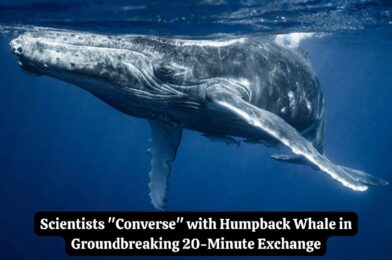
In a remarkable feat of interspecies communication, scientists claim to have held a 20-minute “conversation” with a humpback whale named Twain. This unprecedented encounter, described in a recent study published in the journal PeerJ, has ignited excitement in the scientific community and offers tantalizing glimpses into the minds of these enigmatic giants of the deep.

The research team, dubbed Whale-SETI, was conducting research on humpback whale communication systems with the ultimate goal of developing intelligence filters for the search for extraterrestrial life. Using an underwater speaker, they played a recorded humpback “contact call” used for greeting and social interaction. To their astonishment, a humpback whale named Twain, known to the researchers from previous encounters, approached their boat and began responding in kind.

The “conversation” unfolded over 20 minutes, with Twain mimicking the timing and intervals between each playback call played by the scientists. This intricate back-and-forth exchange, involving turn-taking and responding to variations in the calls, suggests a level of intentionality and understanding never before observed in human-whale interactions.

“We believe this is the first such communicative exchange between humans and humpback whales in the humpback language,” remarked lead author Dr. Brenda McCowan of UC Davis. “Twain not only responded to our calls but also actively engaged in a seemingly conversational manner, matching our variations in timing and vocalizations.”

This groundbreaking communication opens up a multitude of possibilities for understanding whale intelligence and their complex social structures. While the study acknowledges that we are still far from deciphering the full meaning of whale vocalizations, the ability to engage in a basic form of dialogue marks a significant leap forward.

“Humpback whales are highly intelligent creatures,” explains co-author Dr. Fred Sharpe of the Alaska Whale Foundation. “They use complex tools, display sophisticated social behaviors, and now, we have evidence of their potential for intentional communication.”

The implications of this “conversation” extend beyond the realm of cetacean research. Whale-SETI hopes to leverage their findings to develop more effective methods for detecting and communicating with intelligent life on other planets. While the prospect of conversing with aliens may seem like science fiction, the success with Twain demonstrates the potential for bridging communication gaps across vast species differences.

The scientific community is eagerly awaiting further research to delve deeper into the intricacies of whale communication and unlock the secrets held within their songs and calls. This groundbreaking “conversation” with Twain is a testament to the wonders of interspecies communication and serves as a beacon of hope for understanding the minds of these majestic creatures, both on Earth and potentially beyond.

Tagged : / /

Anemia during pregnancy? 5 vegetarian foods to overcome iron deficiency

Anemia during pregnancy? 5 vegetarian foods to overcome iron deficiency
Anemia is a common condition, especially during pregnancy. It occurs when your body doesn’t have enough red blood cells to carry oxygen. Iron deficiency is the most common cause of anemia, and pregnant women are at higher risk because they need more iron for both themselves and their developing baby.

Symptoms of anemia in pregnancy

If you’re pregnant and anemic, you may experience the following symptoms:

Fatigue
Pale skin
Dizziness
Headache
Shortness of breath
Cold hands and feet
Why are vegetarians more prone to anemia during pregnancy?

Vegetarians are more likely to be iron deficient than meat-eaters because the iron found in plant-based foods is not as easily absorbed by the body. Additionally, pregnant women need more iron than non-pregnant women, so vegetarians may struggle to meet their iron needs through diet alone.

5 vegetarian foods to overcome iron deficiency during pregnancy

If you’re a vegetarian pregnant woman who is anemic, don’t worry! There are plenty of delicious and nutritious foods you can eat to boost your iron intake. Here are five of the best:

1. Lentils: Lentils are a great source of iron, with one cup of cooked lentils containing about 6.6 milligrams of iron. They’re also a good source of protein, fiber, and folate, which are all important nutrients for pregnant women.

2. Quinoa: Quinoa is a complete protein, meaning it contains all nine essential amino acids. It’s also a good source of iron, with one cup of cooked quinoa containing about 2.8 milligrams of iron. Quinoa is a versatile grain that can be used in salads, soups, and main dishes.

3. Tofu: Tofu is a plant-based food made from soybeans. It’s a good source of protein and iron, with one half-cup serving containing about 2 milligrams of iron. Tofu is a versatile ingredient that can be used in stir-fries, curries, and even breakfast scrambles.

4. Dark leafy greens: Dark leafy greens are packed with nutrients, including iron. One cup of cooked spinach contains about 6.7 milligrams of iron. Other good options include kale, collard greens, and Swiss chard.

5. Dried fruits: Dried fruits are a convenient way to get a boost of iron and other nutrients. One cup of raisins contains about 1.4 milligrams of iron. Other good options include prunes, apricots, and figs.

Tips for boosting iron absorption

In addition to eating iron-rich foods, there are a few things you can do to boost iron absorption:

Eat vitamin C-rich foods with your iron-rich foods. Vitamin C helps your body absorb iron. Good sources of vitamin C include citrus fruits, tomatoes, and bell peppers.
Avoid drinking coffee or tea with meals. Coffee and tea can interfere with iron absorption.
Cook in a cast iron skillet. Cast iron cookware can leach iron into food.
Talk to your doctor

If you’re concerned about anemia during pregnancy, talk to your doctor. They can check your iron levels and recommend the best course of treatment.

In conclusion

Anemia is a common condition during pregnancy, but it’s usually treatable. By eating a healthy diet that includes plenty of iron-rich foods, you can help prevent or overcome anemia and ensure a healthy pregnancy.

Tagged : / / / / / /

8 Little-Known Signs of Heart Disease That Appear at Night

8 Little-Known Signs of Heart Disease That Appear at Night
While we often associate heart disease symptoms with daytime activities like chest pain or shortness of breath during exercise, some surprising warning signs can manifest themselves at night. These nighttime symptoms can be easily mistaken for other conditions, making it even more crucial to be aware of them.

1. Chest Discomfort:

Waking up with a feeling of tightness or pressure in your chest is not always due to indigestion. If this discomfort is accompanied by pain radiating to your arms, jaw, or back, and persists for more than a few minutes, it could be a sign of angina, a reduced blood flow to the heart.

2. Sleep Apnea:

Snoring is often considered a harmless nuisance, but loud, gasping, or interrupted breathing could indicate sleep apnea. This condition, where your breathing repeatedly stops and starts during sleep, can disrupt oxygen flow to the heart and worsen existing heart disease.

3. Frequent Urination:

Needing to urinate more than usual at night, especially if accompanied by swelling in your ankles or feet, could be a sign of fluid buildup due to heart failure. The weakened heart struggles to pump blood efficiently, leading to fluid accumulation in the lower extremities and frequent urination at night.

4. Difficulty Lying Flat:

Experiencing breathlessness or discomfort when lying flat can be another sign of heart failure. As gravity pulls fluid towards your lungs when lying down, it can make breathing difficult for people with weakened hearts. Propping yourself up with pillows or sleeping in a recliner might ease this symptom.

5. Sweating at Night:

Waking up in a cold sweat for no apparent reason can be a sign of heart disease. This night sweat is often unrelated to the room temperature and can be accompanied by other symptoms like heart palpitations or anxiety.

6. Coughing:

A persistent cough, especially one that produces white or pink mucus, can be a symptom of heart failure. Fluid buildup in the lungs due to weakened heart function can irritate the airways and trigger coughing.

7. Restless Legs Syndrome:

While restless legs syndrome is a common condition, it can also be a symptom of underlying heart disease, especially in women. The urge to move your legs due to uncomfortable sensations can disrupt sleep and worsen daytime fatigue.

8. Nighttime Palpitations:

Feeling your heart flutter or race at night, especially when lying down or trying to sleep, can be a sign of an underlying heart rhythm disorder. These irregular heartbeats, known as arrhythmias, can be a risk factor for heart disease, particularly if they are frequent or accompanied by other symptoms like dizziness or chest pain.

Remember, these nighttime symptoms can occur due to various reasons and shouldn’t be solely interpreted as signs of heart disease. However, if you experience any of these symptoms regularly, especially in combination with other known risk factors like high blood pressure or diabetes, it’s crucial to consult a doctor for a proper diagnosis and timely intervention. Early detection and treatment of heart disease are vital for improving prognosis and preventing complications.

By being aware of these less-recognized nighttime symptoms and taking proactive steps, you can safeguard your heart health and ensure a good night’s sleep.

Tagged : / / /

‘Why Do Daughters Are Attached more to their fathers and sons to their mothers?

‘Why Do Daughters Are Attached more to their fathers and sons to their mothers?
The idea that daughters are more attached to their fathers and sons to their mothers is a popular belief, but is it actually true? The answer, like most things in life, isn’t black and white. While there may be some general tendencies, individual bonds and family dynamics play a much bigger role.

Early interactions:

In the early years, the primary caregiver often becomes the child’s main source of comfort and security. This is usually the mother, due to breastfeeding and traditional caregiving roles. However, fathers who actively participate in childcare can develop equally strong bonds with their sons and daughters.

Differing needs:

As children grow, their needs evolve. Daughters often seek emotional support and validation, which fathers can provide through acts of affirmation, encouragement, and playful interactions. This can create a special connection. Meanwhile, sons might gravitate towards mothers for nurturing and practical help, areas where mothers traditionally excel.

Gender roles:

Societal expectations can also play a part. Fathers are often seen as role models and disciplinarians, while mothers are viewed as nurturers and confidantes. This can lead to daughters seeking advice and emotional support from their fathers, while sons might turn to their mothers for comfort and understanding.

Individual personalities:

Ultimately, the strength of any relationship, including those between parents and children, comes down to individual personalities and shared experiences. Some children, regardless of gender, might naturally connect more with one parent than the other. Shared interests, communication styles, and emotional compatibility all contribute to creating unique bonds.

It’s important to remember that generalizations about parent-child relationships can be misleading. Every family is unique, and the strength of bonds between parents and children depends on a variety of factors. Some daughters might have the closest relationship with their mothers, while some sons might be incredibly close to their fathers. What matters most is that each child feels loved, supported, and understood by both parents.

So, the next time you hear someone say “daughters are daddy’s girls,” remember, the world of parent-child relationships is rich and diverse. Celebrate the unique connections within each family, and nurture the bonds that make your own family special.

Tagged : / / / / /

The Astrological Brain Trust: 5 Zodiac Signs with Razor-Sharp Intellects

The Astrological Brain Trust: 5 Zodiac Signs with Razor-Sharp Intellects
While all signs possess unique intelligence, some zodiac constellations seem to have a particular affinity for the brainy stuff. Let’s delve into the minds of five such signs, those renowned for their exceptional intellect, and discover what makes their neurons fire like fireworks.

1. Aquarius: The rebel intellectuals, Aquarians are natural-born problem solvers. Their minds hum with a symphony of unconventional ideas, and their thirst for knowledge is unquenchable. They’re the ones questioning everything, dissecting problems from bizarre angles, and coming up with solutions that leave everyone else scratching their heads (in awe, of course).

2. Virgo: Don’t underestimate the analytical prowess of a Virgo. These meticulous minds are like finely tuned instruments, dissecting information with laser-like precision. They’re masters of organization, effortlessly weaving together complex strands of data into a tapestry of understanding. Their critical thinking skills are legendary, making them invaluable assets in any brainstorming session.

3. Gemini: Two heads are better than one, and Geminis have two brilliant minds residing in one quick-witted package. Their dual nature allows them to see multiple perspectives, switch gears in the blink of an eye, and process information at lightning speed. Their minds are kaleidoscopes of ideas, bouncing from one brilliant thought to the next, keeping everyone around them intellectually entertained.

4. Scorpio: Scorpios possess a depth of intellectual curiosity that borders on obsession. They delve into the mysteries of the universe with the intensity of a black hole, devouring knowledge and dissecting it with their sharp, analytical minds. Their strategic thinking makes them chess masters of life, always three moves ahead, anticipating and manipulating circumstances with a brilliance that can be both intimidating and inspiring.

5. Capricorn: Capricorns are the architects of the intellectual world. Their minds are meticulous blueprints, meticulously planning every step towards their goals. They possess an ironclad work ethic and a laser focus, fueled by an insatiable ambition to learn and conquer. Their intellect is practical, applied, and always in service of their grand designs.

Remember, dear reader, this is just a glimpse into the astro-intellectual landscape. Every sign possesses its own unique brand of brilliance, waiting to be unleashed. So, embrace your own sign’s strengths, nurture your intellectual curiosity, and let your mind soar! Because when it comes to intelligence, the stars may point the way, but the real fireworks happen inside your own remarkable brain.

Tagged : / / / / /

Brain Meets Machine: Hybrid Biocomputer Emerges in a Lab Dish

Brain Meets Machine: Hybrid Biocomputer Emerges in a Lab Dish
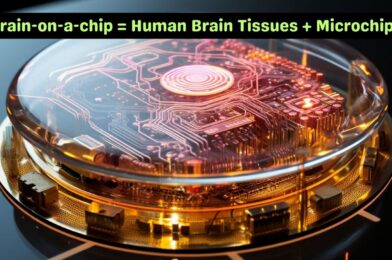
In a stunning fusion of neuroscience and computer science, researchers have created a miniaturized “brain-on-a-chip” – a hybrid biocomputer that combines real human brain tissue with microchips. Dubbed Brainnoware, this groundbreaking experiment raises tantalizing possibilities for future advancements in artificial intelligence, brain-computer interfaces, and even the understanding of consciousness itself.

The brain tissue used in Brainnoware isn’t harvested from human donors, but rather grown in a lab from stem cells. These “brain organoids” mimic the basic structure and functionality of the human brain, albeit on a much smaller scale. The researchers then carefully interfaced these miniature brains with a custom-designed microchip containing thousands of electrodes.

“Imagine a network of tiny wires gently whispering to neurons,” explains lead researcher Dr. Amelia Chen. “That’s essentially what we’ve done here. We’re creating a two-way dialogue between living brain tissue and silicon circuitry.”

This dialogue, though faint at first, is surprisingly productive. When stimulated with carefully crafted electrical pulses, the Brainnoware system was able to perform simple tasks like recognizing basic speech patterns and solving elementary math equations.

More importantly, the researchers observed that the brain organoids within Brainnoware actively adapted to the electrical stimulation. They formed new neuronal connections, a sign of learning and plasticity within the miniaturized brain.

“This is unlike anything we’ve ever seen before,” says Dr. Chen. “We’re witnessing a real-time collaboration between biological and artificial intelligence. It’s a glimpse into a future where the lines between machine and mind might blur entirely.”

While Brainnoware is still in its early stages, the implications are vast. This technology could lead to:

Brain-computer interfaces that are intuitive and seamless. Imagine controlling prosthetics or even external devices with your thoughts, thanks to a direct neural link.
Personalized medicine based on a detailed understanding of individual brain function. By mimicking individual patients’ brains on a chip, doctors could test medication and treatment options with unprecedented accuracy.
New insights into the fundamental nature of consciousness. Could studying how these mini-brains function shed light on the greatest mystery of all – how does the physical brain give rise to subjective experience?
Of course, ethical concerns abound. Questions about animal rights, the potential for weaponization, and the very nature of what it means to be human will need careful consideration as this technology matures.

But for now, Brainnoware stands as a testament to human ingenuity and our insatiable curiosity about the brain. It’s a bridge between biology and technology, and the possibilities it opens up are as exciting as they are uncharted. The future of the mind might just lie in a petri dish, wired to a chip and eager to learn.

Tagged : / / /

Diamond in the Rough: Scientists Craft an Ultra-Hard Material

Diamond in the Rough: Scientists Craft an Ultra-Hard Material
Move over, diamonds! A team of international scientists has synthesized a new material rivalling the legendary hardness of the most treasured gemstone. This breakthrough promises to revolutionize industries from aerospace to medicine, with its potential for creating lighter, stronger, and more scratch-resistant tools and materials.

This ultra-tough substance is a form of organic semiconductor carbon nitride, boasting a hardness on par with cubic boron nitride, second only to diamonds themselves. The research, a collaboration of scientists from Europe, Russia, and North America, has been decades in the making. The theoretical possibility of such a material existed since the 1980s, but creating it proved elusive.

But just like Mother Nature crafting diamonds under immense pressure and heat, the researchers mimicked this process. They subjected carbon and nitrogen atoms to extreme conditions – high temperatures and enormous pressures – mimicking the Earth’s mantle where diamonds form. This intense environment coaxed the atoms into a unique arrangement, resulting in the remarkably tough carbon nitride.

The possibilities for this diamond-rivaling material are as dazzling as its properties. Lighter and stronger than traditional materials, it could be used in spacecraft construction, reducing weight and fuel consumption. Imagine spacecraft shields that shrug off micrometeoroids with ease! On Earth, it could revolutionize tools and machinery, from razor-sharp surgical instruments to wear-resistant drill bits. The possibilities for scratch-resistant coatings for cars, phones, and even buildings are equally exciting.

But the applications don’t stop there. The unique electrical properties of the material make it a potential candidate for next-generation electronics and optoelectronics. Its ability to conduct heat efficiently could lead to advancements in heat sinks and thermal management systems. In short, this new material has the potential to touch numerous aspects of our lives, from the mundane to the cutting-edge.

However, it’s important to remember that this is still early days. Scaling up production and making the material commercially viable will require further research and development. Yet, this breakthrough marks a significant leap in materials science, pushing the boundaries of what we thought possible. It’s a testament to human ingenuity and collaboration, and opens a tantalizing door to a future where diamond-hard materials are not just a luxury, but a versatile tool for progress.

So, the next time you marvel at a sparkling diamond, remember that scientists are busy crafting materials that may soon outshine even the hardest gem. The future of materials science is looking as bright and hard as ever!

Tagged : / /
Verified by ExactMetrics