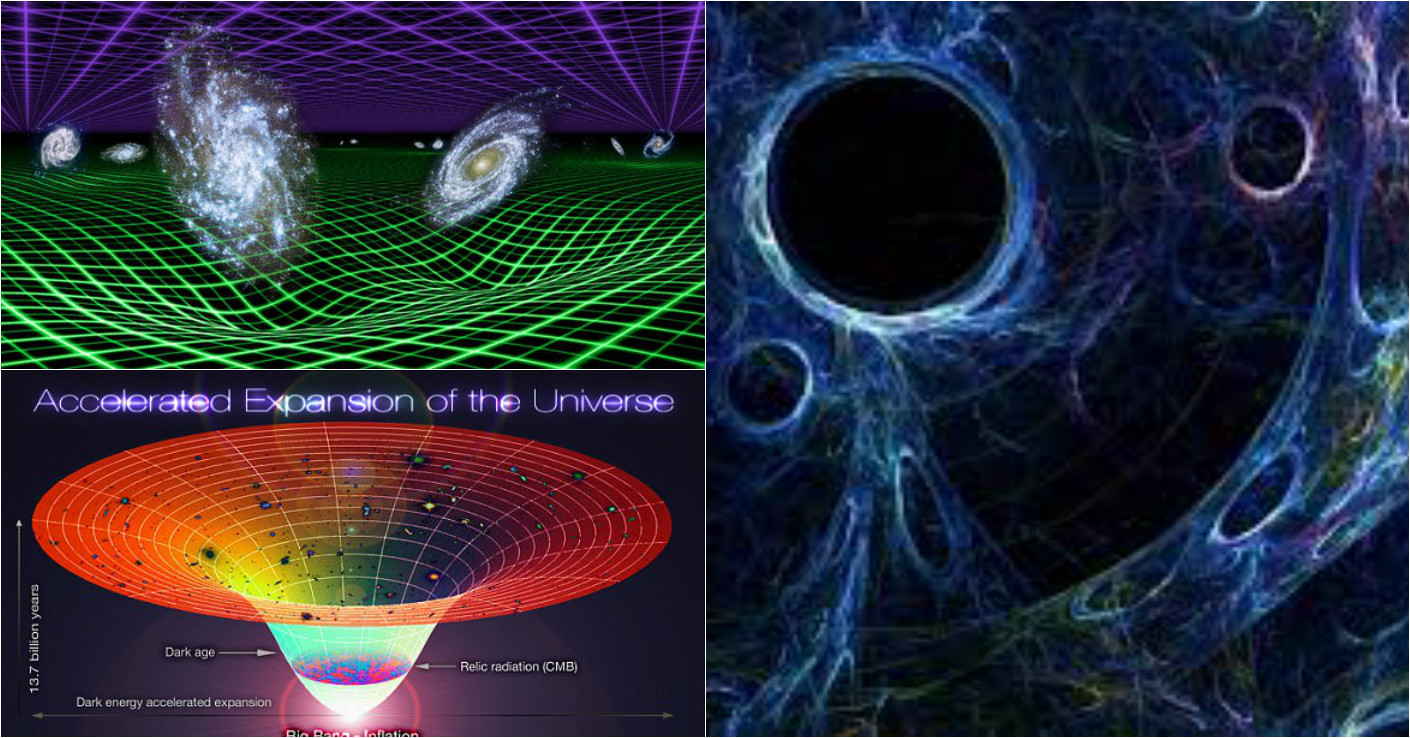
We might have estimated it wrong! 68% of the Universe might not actually exist!

Dark energy is a mysterious, mostly unknown force said to be driving 68 percent of the universe, But, new simulations suggest that accelerated expansion can be explained without the need for dark energy – and, in a way that’s consistent with present observations and general relativity.

‘Einstein’s equations of general relativity that describe the expansion of the universe are so complex mathematically, that for a hundred years no solutions accounting for the effect of cosmic structures have been found,’ said co-author Dr László Dobos of Eötvös Loránd University.

‘We know from very precise supernova observations that the universe is accelerating, but at the same time we rely on coarse approximations to Einstein’s equations which may introduce serious side-effects, such as the need for dark energy, in the models designed to fit the observational data.’

n the new study, published in Monthly Notices of the Royal Astronomical Society, the researchers argue that the conventional models of the universe fail to address its changing structure. The researchers designed computer simulations to model the effect of gravity on the millions of particles of dark matter distributed throughout the universe.

The researchers designed computer simulations to model the effect of gravity on the millions of particles of dark matter distributed throughout the universe.

‘We know from very precise supernova observations that the universe is accelerating, but at the same time we rely on coarse approximations to Einstein’s equations which may introduce serious side-effects, such as the need for dark energy, in the models designed to fit the observational data.’

As a technology lover you may like our daily important technology news series. It’s a playlist and you can retrieve the total day-wise videos. Please consider subscribing our YouTube channel:

Author: Technology Vista
Tagged : /

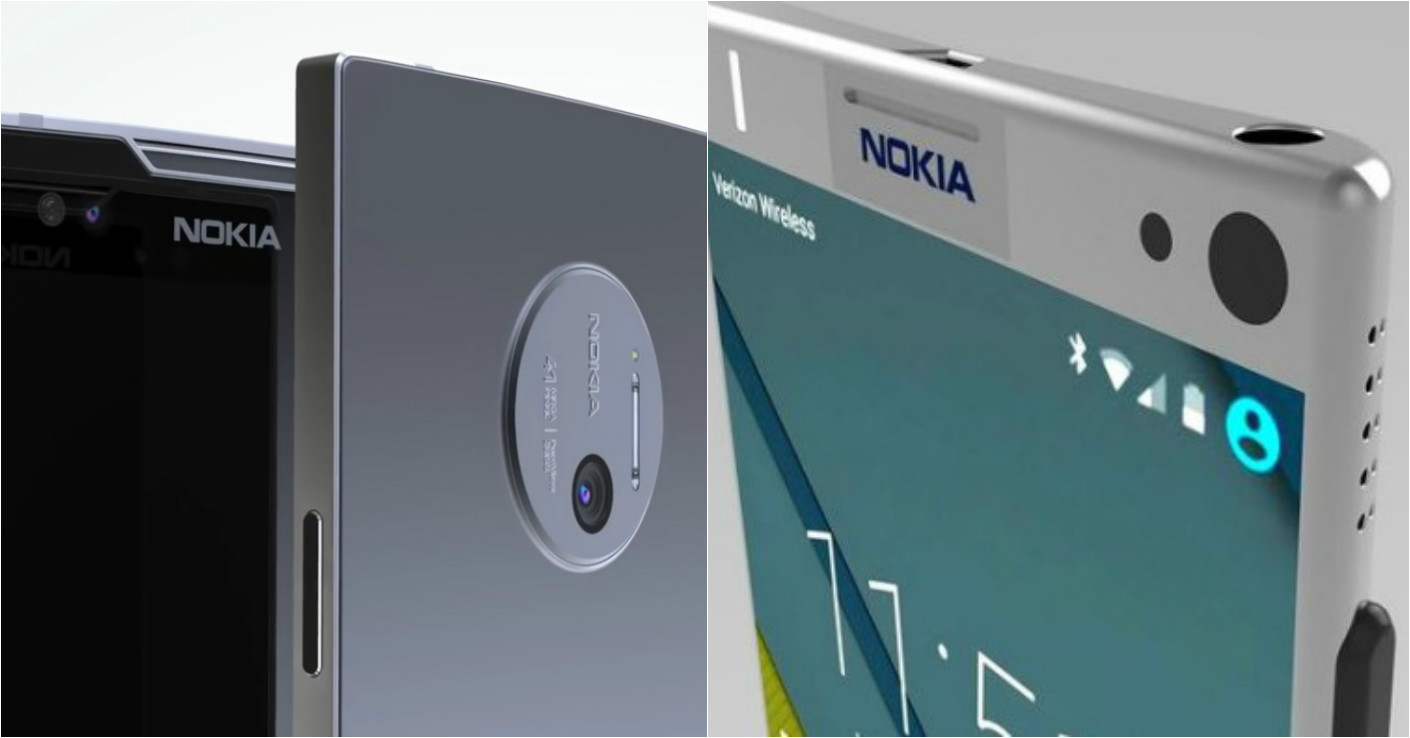
The news you were waiting for! Nokia 9 Specifications are Out!

The flagship Nokia Android phone, Nokia 9 specifications have once again been leaked. According to a new report, the Nokia 9 top-end smartphone – which was earlier called Nokia P1 – will sport industry-leading hardware, and pack features such as iris scanner and Nokia OZO audio enhancements.

Coming to the aforementioned highlights of the Nokia 9 – the smartphone will reportedly integrate an iris scanner, as well as the recently introduced advanced spatial audio tech called OZO Audio – developed by the OZO spherical camera. It’s unclear what this 3D audio experience will look to power. Other notable inclusions include IP68 certification and a fingerprint scanner.

As per a report by Nokia Power User, the Nokia 9 run Android 7.1.2 Nougat, and will sport a 5.5-inch QHD (1440×2560 pixels) OLED display. It is said to be powered by a Qualcomm Snapdragon 835 SoC coupled with 6GB RAM.

The smartphone will reportedly be available 64GB and 128GB storage variant, and is said to be powered by a 3800mAh battery with Quick Charge 4.0 fast charging technology.

The Nokia 9 is said to bear a 22-megapixel dual-lens rear camera setup with Carl Zeiss optics, and a 12-megapixel front-facing camera. Of course, this is not the first time there have been reports of a dual rear camera with Carl Zeiss optics on an anticipated Nokia phone, if one counts rumours surrounding the yet-to-be-launched Nokia 8.

As a technology lover you may like our daily important technology news series. It’s a playlist and you can retrieve the total day-wise videos. Please consider subscribing our YouTube channel:

Author: Technology Vista
Tagged : /

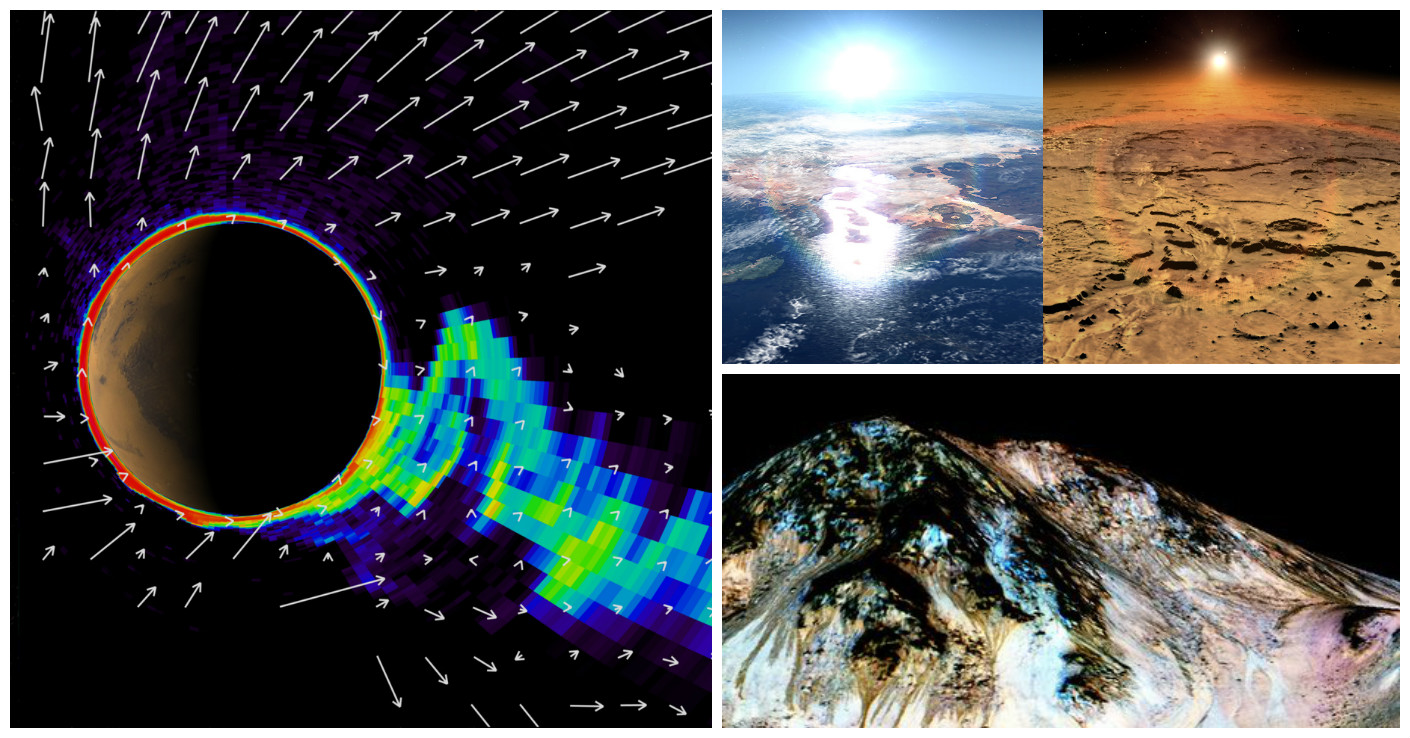
Where Did All of Mars’ Water Go? NASA Finally Has an Answer!

The theory that Mars harbored vast oceans is a relatively new one, but a supported one nevertheless. This inevitably brought about the question: where did all that water go? NASA might finally have an answer.

All thanks to new data from NASA’s MAVEN spacecraft, We’ve determined that most of the gas ever present in the Mars atmosphere has been lost to space,” Bruce Jakosky, principal investigator of the MAVEN mission, explains.

The researchers were able to make this determination based on the amount of argon, a noble gas, remains in the Martian atmosphere as compared with the levels that are believed to have once existed there. Atmospheric molecules are thought to have been slowly stripped away over time due to a process known as “sputtering” in which radiation and solar wind from the sun bump, knock, and drag them away from the planet.

That lost gas — somewhere in the neighborhood of 65% — greatly depleted the planet’s atmosphere, causing oceans, lakes, and rivers to dry up as the vital elements were swept away into space by intense radiation and solar wind.

If life did indeed exist on the surface of Mars at one time, NASA believes that the slowly depleting atmosphere — and the frigid temperatures in brought with it — would have gradually driven it to live primarily underground or in smaller habitable pockets tucked away around the planet. Let’s see what else they unearth in the future.

As a technology lover you may like our daily important technology news series. It’s a playlist and you can retrieve the total day-wise videos. Please consider subscribing our YouTube channel:

Author: Technology Vista

Tagged : /

This Spacecraft is Built to Fly Right Into the Sun’s Atmosphere

The Solar Probe Plus spacecraft by NASA is set to into right into the sun’s atmosphere: the outer corona. Why, you ask?

Every now and then, the sun releases giant eruptions of solar plasma and super-charged particles, and sometimes, these high-energy space outbursts collide with the Earth. Luckily, our planet’s magnetic field shields us from the worst of it, preventing the Earth from becoming a desolate wasteland like Mars, but some of this solar weather still makes it through. They are the cause of the Northern and Southern Lights, and occasionally they disrupt our satellites and power grids.

Remember in 1989, for example, a coronal mass ejection (CME) from the sun disrupted communications with multiple satellites and caused a power blackout for nine hours in Quebec that affected six million people.

Understandably, NASA wants to get better at predicting these CMEs and other types of volatile solar weather.

The Solar Probe Plus spacecraft will fly into the corona, an aura of plasma that surrounds the sun, that is actually hotter than the star’s surface! While, the sun’s surface has a temperature of between 4,500 and 6,000 degrees Kelvin, while the corona’s temperatures are more like 1,000,000 or 2,000,000 K and can blaze as hot as 20,000,000 K in the right conditions.

On the outer edge of this burning plasma around the sun, Solar Probe Plus won’t need to contend with temperatures quite that hellish, but it will be flying through about 1,650 K, or roughly 2,500 degrees Fahrenheit.

“Such a mission would require a spacecraft and instrumentation capable of withstanding extremes of radiation, high velocity travel and the harsh solar condition,” said Seamus Tuohy, Director of the Space Systems Program Office at Draper, an engineering and technology firm that is helping develop sensors and equipment for the craft.

Over the course of seven years, the Solar Probe Plus will measure the velocity, force, and abundance of ionized particles and electrons using a Faraday cup, which is a conductive metal cup designed to catch and measure particles in a vacuum. The Faraday cup is one of only two science instruments that will sit outside of the craft’s thick carbon fiber-reinforced carbon solar heat shield.

Next Page For More

Tagged : /

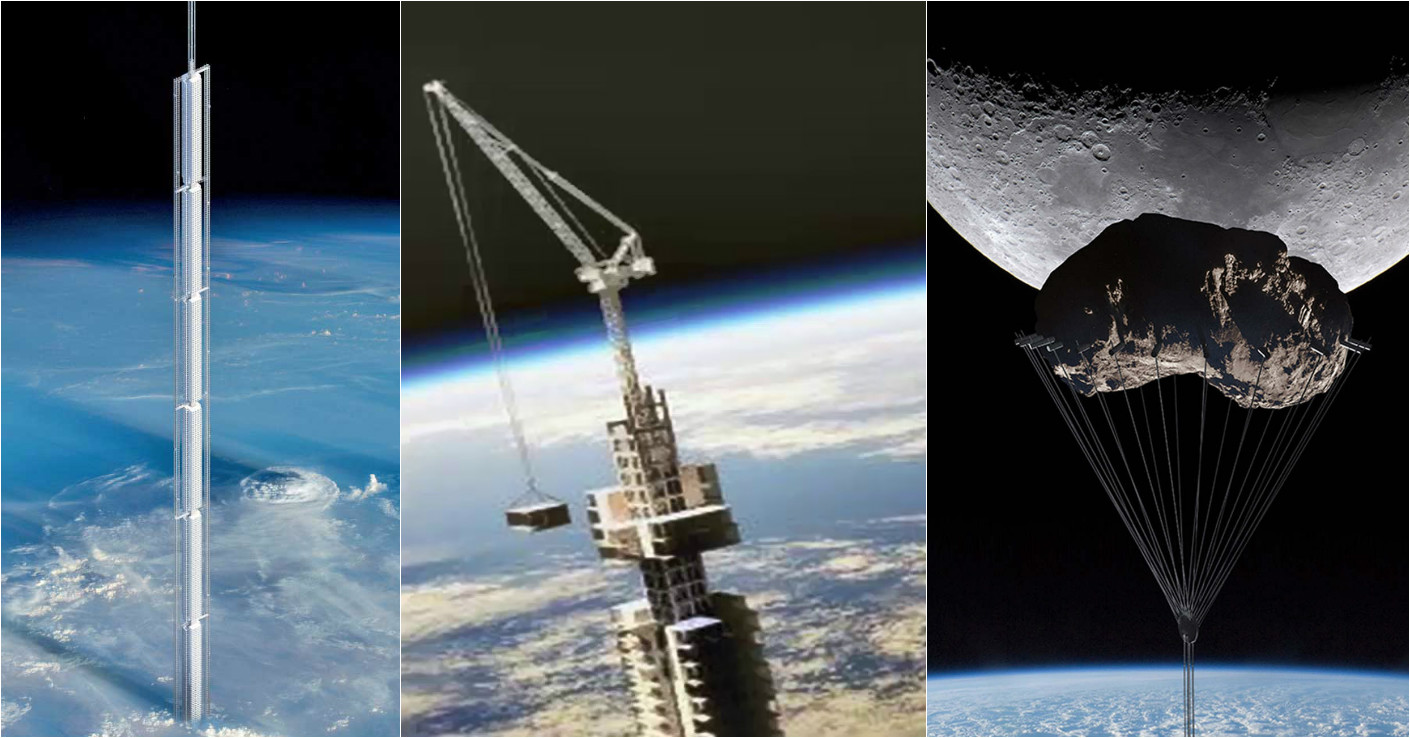
This Tower in Dubai Would be Dangling from Space!

The New York-based firm, Clouds Architecture Office has proposed Dubai be the site of a futuristic, asteroid-suspended skyscraper that orbits around the world.
The speculative Analemma Tower would be suspended downward on an asteroid orbiting 50,000km from earth.

On its website, the firm notes that “Analemma inverts the traditional diagram of an earth-based foundation, instead depending on a space-based supporting foundation from which the tower is suspended. “This system is referred to as the Universal Orbital Support System (UOSS).

“By placing a large asteroid into orbit over earth, a high-strength cable can be lowered towards the service of earth from which a super tall tower can be suspended,” the website noted. “Since this new tower typology is suspended in the air, it can be constructed anywhere in the world and transported to its final location.”

It would orbit in a figure-eight pattern across the northern and southern hemispheres in a 24-hour cycle each day. “The proposal calls for Analemma to be constructed over Dubai, which has proven to be a specialist in tall building construction at one-fifth of the cost of New York City construction,” the designers said.

To power the building, Analemma’s designers plan to instal space-based solar panels, which – “installed above the dense and diffuse atmosphere” – would receive constant sunlight. Water is to be filtered and recycled in a semi-closed loop, and re-filled with condensation captured from rain and clouds. Once built, the tower’s proposed orbit would take it in a figure-eight pattern around the world, “where the tower would move at its slowest speed at the top and bottom of the figure eight, allowing the possibility for the tower’s occupants to interface with the planet’s surface at these points”.

The initial design – which Clouds Architecture is billing as “the world’s tallest tower” – includes separate parts of the tower dedicated to business; sleeping quarters; devotional activities; a gardening and agricultural centre; “transfer stations” that allow for the transfer of people and goods between the earth’s surface and the orbiting structure; and space for dining, shopping and entertainment.

Next Page For More

Tagged : / /

Nokia 7 and 8 Leaks Hint at Carl Zeiss Lens and Dual Camera Setup

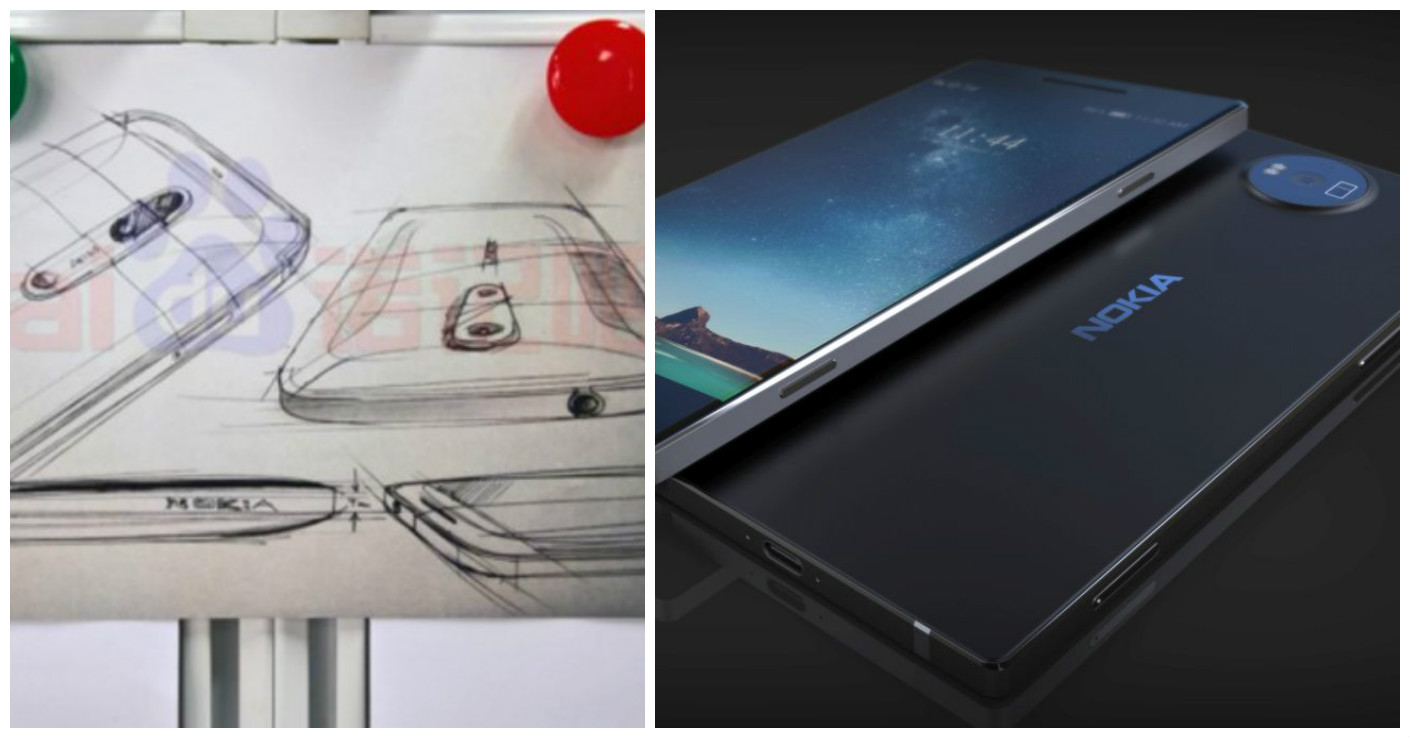
HMD Global is expected to release Nokia 7 and Nokia 8 in mid-range segment after the big reveal of the Nokia 3, Nokia 5, and Nokia 6. We already know that the former will sport the yet-to-be-released Snapdragon 660 processor, and now new sketches have surfaced online showing design and camera details of the two smartphone.

Leaked by a user named Nokibar on Chinese social site Baidu, these sketches show that the Nokia 7 and Nokia 8 both sport Carl Zeiss lenses, something that was absent in Nokia’s previous releases. Also, one sketch shows a dual camera setup, and that is expected to be the Nokia 8, which will be the more premium device of the two. The Nokia 7 will sport a single camera setup at the back.

The Nokia 7 and Nokia 8 will support a fingerprint sensor, and will come with fast charging support as well.

The Qualcomm Snapdragon 660 integration, the chip was expected to be integrated first into a Xiaomi handset, but now things seem a bit different. As per previous leaks, the as-yet-unveiled Qualcomm Snapdragon 660 SoC can have custom Kryo cores just like on Snapdragon 820 or might use a combination of four Cortex-A73 CPUs clocked at 2.2GHZ and four Cortex-A53 CPUs clocked at 1.9GHz. The Snapdragon 660 will reportedly go into mass production in second quarter of 2017 and is expected to power phones from Oppo and Vivo as well.

One smartphone will sport a smaller display with 1080p resolution, while the larger display variant will boast of a QHD display. Both the smartphones are tipped to sport a metallic unibody, and thin bezels.

As a technology lover you may like our daily important technology news series. It’s a playlist and you can retrieve the total day-wise videos. Please consider subscribing our YouTube channel:

Author: Technology Vista
Tagged : / /

Is Human Poop a Good Fertilizer for Martian Crops?

Turns out, yes! But there are some things that need to be taken care of first to make this fertilizer a success.

“If you’re ever going to have a tomato on Mars, you’re going to have to grow it there,” says Bruce Bugbee, a Utah State ­University professor who helps NASA develop life-support systems for ­astronauts in space.

Long story short, if humans ever settle on Mars, getting reliable food will be one of the major challenges they face.

Setting aside light and water issues, plants still need nitrogen to grow. Human feces contains nitrogen as well as bacteria that break it down into nitrate, which plants prefer for growth. That’s one problem solved but, lingering alongside those useful bacteria will be any bad bacteria the crew brought with them.

If they were to dump the waste directly onto the plants, the harmful bacteria could thrive and proliferate and make people sick. To avoid this, says Bugbee, Martians will have to compost the feces over several months to weed out the bad microbes.

So, in order to make use of this natural fertilizer, we better have a contingency plan for the first few months!

As a technology lover you may like our daily important technology news series. It’s a playlist and you can retrieve the total day-wise videos. Please consider subscribing our YouTube channel:

Author: Technology Vista
Tagged : /

Nokia 3. 5. 6 Set for Big Release in 120 Markets Globally

It started with only Nokia 6 being available in markets of solely China, but now the global tech major will be branching out to the rest of the markets with not one, but three Nokia models.

Nokia missed out on the transformation of the mobile market to smartphones, whereafter, it chose Microsoft’s Windows operating system for its ‘Lumia’ range. After the Nokia-Microsoft deal in 2014, Microsoft continued to sell cheaper basic phones under Nokia’s name and Lumia smartphones by its own name but abandoned both the businesses last year.

Meanwhile, HMD last month took over the Nokia feature phone business and bagged the deal of Nokia brand (phones and tablets) for the next decade. HMD Global, announced that the smartphones will be launched in the second quarter this year. The phones will be released in almost 120 markets, and all at the same time. The company in a statement to NPU said, “HMD has ambitious plans to release Nokia 3, 5 and 6 in 120 markets at the same time in Q2 2017. This is ambitious because HMD is de facto a start-up, though it has support from Nokia and Foxconn.”

At the MWC event, Nokia CEO Rajeev Suri, had said, “We’ve achieved many things in our 150-year history. One thing for us is to create technology that will help connect the world.” Apart from the phones, the company also talked about Ozo, their 360-degree camera for virtual reality.

HMD had unveiled the Nokia 3 and Nokia 5 smartphones, alongside the worldwide release of Nokia 6 at the Mobile World Congress in Barcelona, Spain. It claimed that the comeback with Nokia 6 smartphone has been a hit as it was sold out in 23 seconds in China in its first sale. It added that customer satisfaction has been 97 per cent.

All the three devices run the latest pure Android Nougat. While, the Nokia 3 smartphone has a 5-inch HD display, Gorilla Glass, and comes with an 8MP selfie camera, the Nokia 6 has a special art black version which looks glossy just like the iPhone 7 Jet Black.

Nokia 5 device has also been announced but with a smaller 5.2-inch display. It comes in blue, copper, black and silver colours and has been priced at 189 Euros. When it comes to specifications the Nokia 6 is powered by Qualcomm Snapdragon 430 processor with 4GB RAM and 64GB internal storage (expandable up to 128GB via microSD card). It has dual amplifier speaker with Dolby Atmos technology for sound output. Nokia 6 features a 16MP PDAF rear camera with f/2.0 aperture and an 8MP front camera. It is backed by a powerful 3,000 mAh battery.

The home button in Nokia 6 doubles up as a fingerprint sensor. It is a 4G-enabled smartphone that supports Bluetooth v4.1, Wi-Fi, GPS and USB-OTG. According to a press statement by HMD Global, more Android smartphones will be unveiled in H1 2017.

As a technology lover you may like our daily important technology news series. It’s a playlist and you can retrieve the total day-wise videos. Please consider subscribing our YouTube channel:

Author: Technology Vista

Tagged : /

Superfast 5G Internet: India’s Jagadish Chandra Bose is probably the reason behind it!

5G is just yet to be introduced to the world and into mainstream tech communication, but it has an astonishingly ancient root in India. More precisely, Kolkata, India.

Italian inventor Guglielmo Marconi is credited with first inventing the telegraph in 1895, a device that used what we now know as radio waves to send an electromagnetic signal across distance. However, at the same time that Marconi was pioneering the first commercial use of telegraphy as a communication, Indian polymath Sir Jagadish Chandra Bose was working to understand the nature of the phenomenon.

Sir Jagadish Chandra Bose attended Cambridge after studying physics at Calcutta University. He was the first to demonstrate radio communication with millimetre wavelengths, which fall in the 30GHz to 300GHz spectrum.

The Institute of Electrical and Electronics Engineers (IEEE), the largest international body dedicated to advancement of technology, has recognised Bose’s 1895 experiment demonstrating short-wave communication as a milestone achievement nearly 120 years later. Bose generated 5mm electromagnetic waves, 60GHz, before instruments even evolved to measure frequencies that low.

“In the scientific community, Bose is now gaining recognition as the father of radio science and semiconductors technology,” remarked Suvra Sekhar Das, associate professor at the GS Sanyal School of Telecommunication at IIT-Kharagpur. “His experiments in the early 1890’s and early 1900’s with millimetre wave radio frequencies were much ahead of his time — so much so that the time has only come now. While advancement in semiconductor technology led to smartphones, millimetre wave communication technology may bring about a more wirelessly connected world tomorrow.”

Bose’s millimetre waves have found applications in a variety of fields since their discovery over a century ago — they’re used in everything from radio telescopes to radar and, more recently, for collision-warning systems and cruise control in modern day cars.

“I take a lot of inspiration from Bengal and Kolkata because it is here that radio communication was born,” said Ramjee Prasad, professor of Future Technologies for Business Ecosystem Innovation, Aarhus University, Denmark, on the sidelines of the IEEE International 5G Summit in Kolkata last week. “The millimetre wave that J C Bose worked on is the backbone of developing 5G. Marconi and Russian scientists Alexander Stepanovich Popov, who were also conducting similar experiments, were working with much lower frequencies. In fact, the technology that Marconi used was developed by Bose.”

As a technology lover you may like our daily important technology news series. It’s a playlist and you can retrieve the total day-wise videos. Please consider subscribing our YouTube channel:

Author: Technology Vista
Tagged : /

NASA All set to use the Sun as a Telescope

We have come incredibly far and seem to make progress exploring farther reaches of our solar system and universe. Not that the modern telescopes such as the iconic Hubble Telescope and the James Webb Space Telescope that replaced it, are anything to scoff about, but NASA now plans to turn the sun into some sort of massive magnifying glass i.e., a telescope.

For this, they are using Einstein’s Theory of Relativity that says large objects (like the Sun) bend the space around them, and so anything traveling in that space (even light) bends as well.

In a phenomenon known as gravitational lensing, if light is bent around an object in a particular way, it can magnify the space (quite literally, space) behind it. Scientists have previously used gravitational lensing to help telescopes to be more effective, but now, researchers aim to use this distribution of matter as a “telescope.”

This new approach certainly has its pros and cons. In order to harness this lensing, the necessary instruments would need to approach pretty close to the sun, in order to reach a target 550 AU away. While humans and probes have traveled much closer to the sun than this, and plan to do so in the future, this difficult journey would take a long time and the equipment would have to be somehow “placed” into the middle of space.

We could finally get a closer, clearer look at Trappist-1, and would be that much closer to discovering life outside of Earth.

As mentioned previously, this “sun scope” is not the only highly advanced space-imaging technology that’s surfacing. The James Webb Space Telescope, set to launch in October of 2018, will hopefully continue and advance the incredible work of the Hubble Telescope. In fact, this telescope is so powerful that Lee Feinberg, an engineer and James Webb Space Telescope Optical Telescope Element Manager at Goddard, was quoted as saying. “The Webb telescope is the most dynamically complicated article of space hardware that we’ve ever tested.”

The technology that we use to capture the incredible images of space is improving every day.

As a technology lover you may like our daily important technology news series. It’s a playlist and you can retrieve the total day-wise videos. Please consider subscribing our YouTube channel:

Author: Technology Vista

Tagged : /

VR Headsets Turn Invisible with this (Not So) Simple Trick by Google!

Have you ever watched someone with a VR headset on? They might be having the time of their lives, but watching them can be a tad bit awkward, to say the least. They just look odd with a high-tech blindfold on.

That’s not good for demonstrating the emerging technology, especially while it still has a lot to prove before it enters the mainstream. And that’s why Google’s Research arm and Daydream Labs have partnered to figure out a way to let spectators see VR headset users’ full faces while they’re immersed in an experience – as if the headsets were practically invisible.

End goal? To allow for less awkward demonstrations of VR technology and experiences on video.

In a blog post, Google noted that this solution will go beyond improving VR and mixed reality experiences: Headset removal is poised to enhance communication and social interaction in VR itself with diverse applications like VR video conference meetings, multiplayer VR gaming, and exploration with friends and family. Going from an utterly blank headset to being able to see, with photographic realism, the faces of fellow VR users promises to be a significant transition in the VR world, and we are excited to be a part of it.

Google’s trick, as you can imagine, is not that straightforward. The team first constructs a 3D model of the user’s face, using a color and depth camera in a process that takes about a minute to complete. Next, they’re handed a modified HTC Vive headset that’s capable of tracking eye-gaze. For a fully immersive video demo, the user is shot in front of a green screen while they’re engaged in a VR experience, with their VR environment composited into the background.

Additionally, the specialized camera setup for filming this is calibrated and time-synced with the headset, which makes it possible to replace the headset with the 3D face model and line it up with the visible portion of the user’s face.

Slapping on a digital top half of a person’s head onto a real image can look unnatural (the phenomenon is known as the ‘uncanny valley’); as such, the team decided to depict a ‘scuba mask effect’ that shows the 3D face model composited with a translucent headset. This reduces the chance of viewers getting distracted by imperfections and artifacts in the 3D model.

Confused? Let’s just say this is better than the blindfold look!

As a technology lover you may like our daily important technology news series. It’s a playlist and you can retrieve the total day-wise videos. Please consider subscribing our YouTube channel:

Author: Technology Vista

Tagged : /

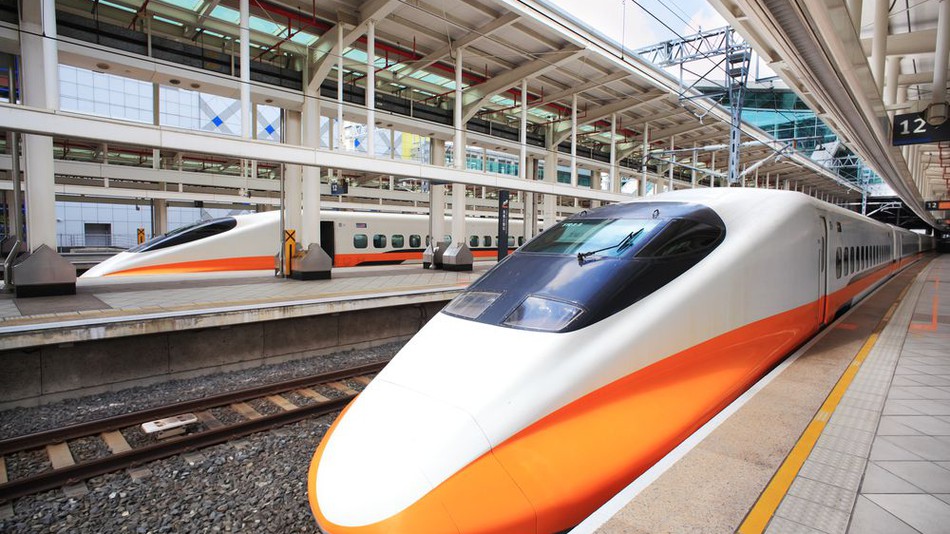
Works Have Begun on India’s First Undersea Bullet Train

Currently it takes about seven hours to travel between the Mumbai and Ahmedabad and the bullet train, which includes 7-kilometres (about 4.3 miles) undersea rail corridor between Mumbai and Ahmedabad in western India, aims to reduce it to about two hours. Construction of the corridor is expected to be completed by 2023 provided it starts next year.

Indian Prime Minister Narendra Modi who traveled to Japan last year traveled in the Shinkansen bullet train alongside Japanese Prime Minister Shinzo Abe. Estimated to cost about Rs 976 billion ($14.5 billion), 80% of the project’s funding will come by way of a loan from Japan that operates the Shinkansen bullet train between Tokyo and Osaka. India will replicate that system.

Drills for India’s first bullet train has begun and will help ascertain soil conditions under water. “Soil and rocks below the 70-meter-deep sea are being tested as part of the geo-technical and geophysical investigation undertaken for the entire project,” a senior Railway Ministry official reportedly said.

Japan’s decision to give virtually free finance for Modi’s pet program is reportedly part of its broader push back against China’s involvement in infrastructure development in South Asia over the past several years.

https://youtu.be/rSvA_vBlqGI

As a technology lover you may like our daily important technology news series. It’s a playlist and you can retrieve the total day-wise videos. Please consider subscribing our YouTube channel:

Author: Technology Vista

Tagged : /

New controversy: This rare blood type might mean alien DNA! Is it there in you?

Eight common blood groups have long been identified and tested in humans- A, AB, B, and O with each having a positive or negative trait. These only vary based on the proteins found in each individual’s blood. However, a recent but controversial scientific discovery is blasting that theory out of the water. Now, scientists are claiming that they have discovered a new blood type in humans that stems from an unbelievable source!

It is suggested that as much as 38% of the US population has O-positive blood (the most common), while as little as 1% has AB-negative (the least common). The new blood type in question is known as RH-negative and it’s so rare that scientists claim people who have it could have alien DNA!

After performing studies, researchers found that RH blood does not carry the evolutionary gene found in rhesus monkeys that most other humans have. Meaning, they didn’t evolve from the same lineage as other people. Intriguing?

The research has also concluded that people with the RH blood type are more likely to be physically and emotionally aware, have a higher IQ, and have green or blue eyes. It is important to remember that it is extremely difficult for women who have RH-negative blood type to give birth to a baby who carries it, as well. As a result, the mother’s body will naturally attempt to get rid of the fetus. Doctors give these women  a sterilization solution that will prevent that from happening and keep both mother and baby safe.

Despite their best efforts, researchers still know so little about RH-negative blood. Perhaps, it suggests that in the past aliens have walked among us. Scientists are suggesting that between 10-15% of the population carries this RH blood type, and they are continuing to explore its possible origins. So far, they have discovered that this type could be connected to some tribes dating back 35,000 years.

As a technology lover you may like our daily important technology news series. It’s a playlist and you can retrieve the total day-wise videos. Please consider subscribing our YouTube channel:

Author: Technology Vista
Tagged : /

Exciting news for Nokia fans- Nokia 7 and 8 midrangers are having Snapdragon 660 inside

We know for sure that brand license owner HMD Global will be releasing around 6 to 7 Nokia Android smartphones in the year 2017 as per a presentation slide that leaked some time ago. We figure HMD will be launching three more phones, and the Nokia 7 and Nokia 8 are rumored to be next in line.

We’ve already seen the Nokia 3, Nokia 5, and Nokia 6 announced officially (as well as a pretty adorable Nokia 3310 reboot). While, industry pundits are expecting the Nokia 7 and Nokia 8 to be flagship level phones, but if the rumors are true, we may see these next two as upper midrange phones, with the Nokia 9 probably the flagship phone we have been waiting for.

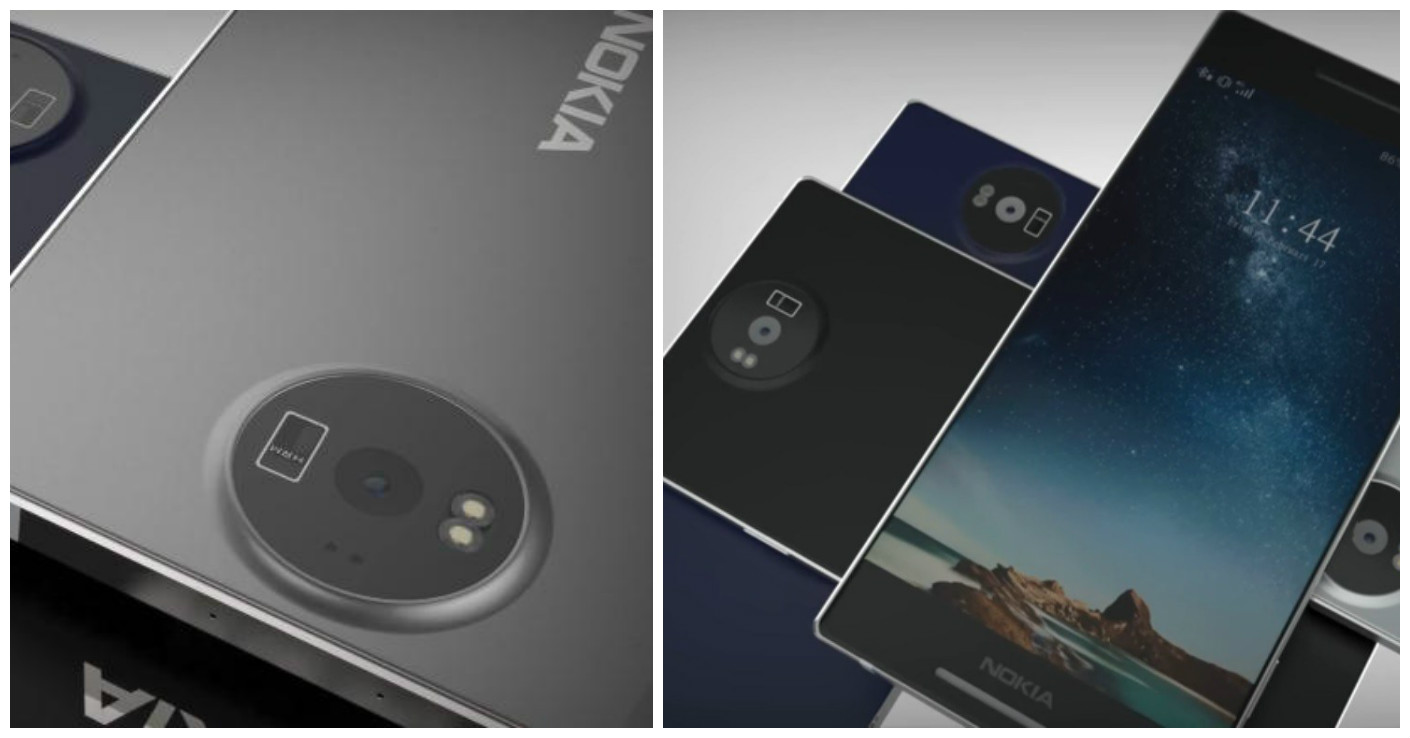
Rumors also suggest that the flagship phone (quite possibly Nokia 9), will be powered by an SD835 chipset and will sport Carl-Zeiss optics like the Nokia Lumias of old.

These two devices may differ in displays used – one will have a 1080p display and the other one QHD display. They are rumored to have a new metallic design different from what we’ve seen in the early Nokia models, with thinner bezels and a revamped camera design – dual cams might just be possible. These devices will be packing Qualcomm’s fast charging technology and fingerprint scanners.

Rumors say that these next two devices will be powered by Qualcomm’s Snapdragon 660 chipset – definitely a chipset targeted at top midrange models. The SD660 is rumored to pack as much power as last year’s SD820 chipsets, made from Samsung’s 14nm FinFET process.

width="560" height="314" allowfullscreen="allowfullscreen">

As a technology lover you may like our daily important technology news series. It’s a playlist and you can retrieve the total day-wise videos. Please consider subscribing our YouTube channel:

Author: Technology Vista

Tagged : /

Difficult to believe but, NASA is all set to scan the Sun for aliens!!

While most scientists are focused in finding new alien life in the far reaches of the galaxy, some are hanging back to double check much closer to home. Yes, the sun. Scientists have a whole slew of reasons for wanting to make this unprecedented expedition, with heat-loving extremophiles being one of many.

Experts are planning on sending a spacecraft, named the Solar Probe Plus, to get as close as possible to the sun to get readings on a few things that some scientists have been yearning for answers about. NASA will be sending the probe some 90 million miles, which will get the probe close enough to get readings about emissions from beams of high-energy particles and solar wind speeds.

The craft will be able to get within 4 million miles from the sun, which may seem far to us, but will be significantly closer than any other spacecraft has ever been able to get and will be an adequate distance to answer quite a few questions. The significance of finding life able to withstand such an extreme environment would mean a lot to scientists everywhere. Even if this life is single-celled extremophiles, this could mean that we were wrong about many other solar systems and planets that we have rejected as being possible places for life.

These high-energy particles are being sprayed out from the sun at speeds that baffle researchers. The Solar Probe Plus should be able to get close enough and will be equipped to determine how these particles achieve the startling acceleration that they do. The craft will need to be unmanned because of the intense heat coming from the sun as well as the danger that these particles are hurtling through space at mind-boggling speeds present to astronauts.

The particles and heat can be dangerous to spacecraft as well, meaning that the Probe Plus will be armed with a nearly 5-inch thick hull made from a carbon alloy. Other systems will be put in place to ensure the safety of the vessel.

As a technology lover you may like our daily important technology news series. It’s a playlist and you can retrieve the total day-wise videos. Please consider subscribing our YouTube channel:

Author: Technology Vista
Tagged : /
Verified by ExactMetrics