Nokia 9 may just be the next big thing in the flagship market!

HMD Global has been in news right from the day the talk of relaunch of Nokia started doing the rounds. Once- a favourite of all- Nokia made a pleasant comeback with its phones. And now it seems HMD Global is set to garner headlines once again with the rumours of the launch of its flagship smartphone- the Nokia 9! The rumours were strong from quite some time but there was no confirmation from the company’s side.

With more and more leaks making their way on different websites, it is no more a secret that a flagship phone is in the offing. And the leaks show that HMD Global will leave no stone unturned to give tough competition to giants like Samsung and Apple.

If the rumours are to be believed, the much-talked about Nokia 9 would have an impressive front with a 5.5-inch OLED display and 2k resolution. Just like the Apple iPhone soon to be launched, it will have an almost bezel-less display.

The phone is rumoured to be powered by a Qualcomm Snapdragon 835 chipset which will be paired with a massive 6GB RAM. The rumours also hint towards a fingerprint scanner on the back but then there are other strong reports of a probable iris scanner for unlocking the smartphone.

Other leaks hint 64GB and 128 GB variants, when it comes to storage. In all probability, the Nokia 9 will flaunt a 22 MP Carl Zeiss optics on the rear camera while selfie lovers may love the 8MP front camera. The phone may also come with an IP68 certification – making it water and dust resistant to a degree.

Priced at around Rs 44,999 in India, the flagship phone will have a 3800 mAh battery and will probably run Android 7.1.2 Nougat or Android O. If all these leaks and rumours turn out to be true, the Nokia 9 will surely be a winner. Let’s just wait and watch!

As a technology lover you may like our daily important technology news series. It’s a playlist and you can retrieve the total day-wise videos. Please consider subscribing our YouTube channel:

Author: Technology Vista
Tagged : /

iPhone 8 Leaks- What’s New This Time?

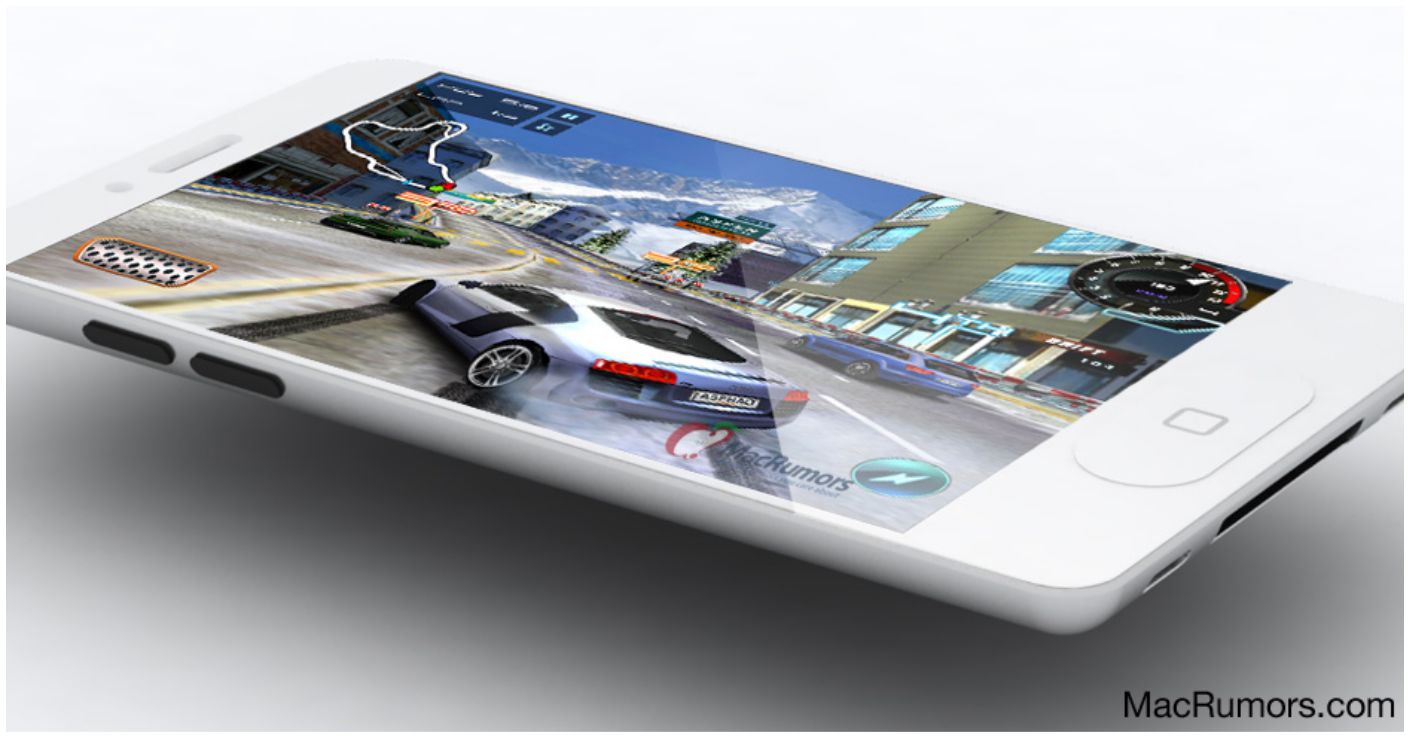
MacRumors spotted a leaked 3D design drawing of what seems to be the iPhone 8. The diagram was reportedly leaked by Weibo leaker KK who has a track record for outing accurate details of tech devices ahead of their launch.

If this new illustration is to be believed, the next flagship phone from the Cupertino giant will measure 137.54 mm tall by 67.54 mm wide — not too far from the iPhone 7’s 138.3 mm length by 67.1 mm width. It does not reveal the thickness of the upcoming Apple smartphone, but it does indicate that the device’s screen will run 5.768 inches diagonally.

The diagram also claims the bezels on all sides of the iPhone 8 would only be 4 mm. Thus, the handset would mostly be screen and the edges would be 2D curved glass. Should this be true, then it’s clear that Apple plans to overshadow the Galaxy S8’s Infinity Display.

Interestingly, the leaked document corroborates previous reports saying Apple is ditching the physical Home button this year by opting for a display-embedded Touch ID sensor. Samsung actually failed to realize this type of technology for its Galaxy S8, so expectations are high that Tim Cook’s company could deliver this type of technology within this year.

The emergence of this new diagram comes days after investors revealed last week that the Samsung’s biggest rival is having a difficult time developing display-embedded Touch ID.

Based on the illustration, Apple appears to be working on a vertical dual camera on the back, and in-between the two lenses is LED flash. There’s a possibility that Apple could be ditching the fingerprint sensor and let users rely solely on facial recognition, or just move the fingerprint scanner to the back of the handset just like what Samsung did. Another option that Apple has in its hands is to just delay the production of the iPhone 8 until it perfects the screen-embedded Touch ID technology for the device.

The almost bezel-less-on-all-sides look would not be free from challenges however. Since there would be no relatively large top bezels to accommodate the front-facing camera and other sensors, Apple appears to be embedding all of the components within the display. Sadly, the leaked diagram does not have an illustration on how the screen-embedded camera, proximity sensors, 3D sensor and others would look like on the iPhone 8.

width="560" height="314" allowfullscreen="allowfullscreen">

As a technology lover you may like our daily important technology news series. It’s a playlist and you can retrieve the total day-wise videos. Please consider subscribing our YouTube channel:

Author: Technology Vista
Tagged : /

By 2030, lunar dust may fulfill India’s energy needs

The day ISRO launched 104 satellites in one go, the world just couldn’t believe that a country termed as one of the “third world countries” could achieve such a feat. The world had to sit up and take note of the Indian talent in the field of science and technology. Silently and sincerely, Indian scientists have been doing exceptional work and making the country proud. Their wagon is running at full throttle and their projects and achievements are creating a legacy of their own.

In addition to the launch of 104 satellites, commercial roll-out of lithium-ion batteries and taking lead in providing energy security, the Indian space agency is planning for development of aircraft, manned missions to the Moon and Mars. In this list, ISRO has added another aim: helping India meet its energy needs from the Moon by 2030.

According to facts and reports, India plans to cut down import dependence in hydrocarbons by 10 percentage points by 2022. Also in the backdrop, is the successful testing of lithium-ion batteries developed by Vikram Sarabhai Space Centre by the Automotive Research Association of India (Arai).  

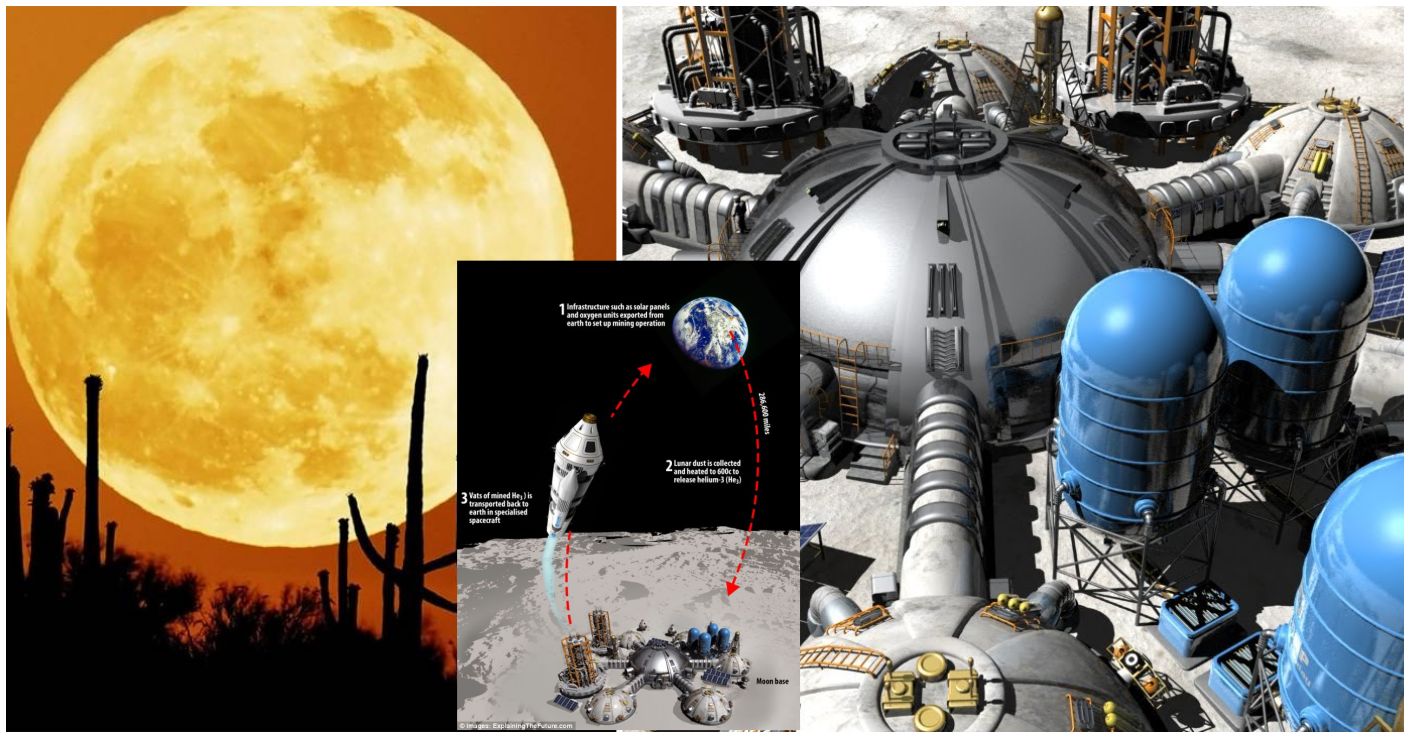
Dr. Sivathanu Pillai, professor at ISRO revealed the space agency’s lunar plans in February. The main aim is to mine Helium-3 rich lunar dust, generate energy and transport it back to Earth. Dr. Pillai informed that mining lunar dust was a priority programme for his organisation.

This is to note that India’s energy demand growth is expected to outpace that of the other Bric (Brazil, Russia, India and China). So, the success of ISRO’s new project concerning lunar dust will ensure reduction in pollutants and India’s fuel imports.

In terms of numbers, India’s energy bill of imports which stands at around $150 billion at present is expected to rise to $300 billion by 2030 (80% of India’s oil needs and 18% of its natural gas needs are fulfilled via imports). Considering the amount, the country spends on imports, the success of this project will surely bring down the expenditure on imports. Way to go India!

As a technology lover you may like our daily important technology news series. It’s a playlist and you can retrieve the total day-wise videos. Please consider subscribing our YouTube channel:

Author: Technology Vista
Tagged : /

F1 race lovers: Renault’s future car will make you go weak in the knees!

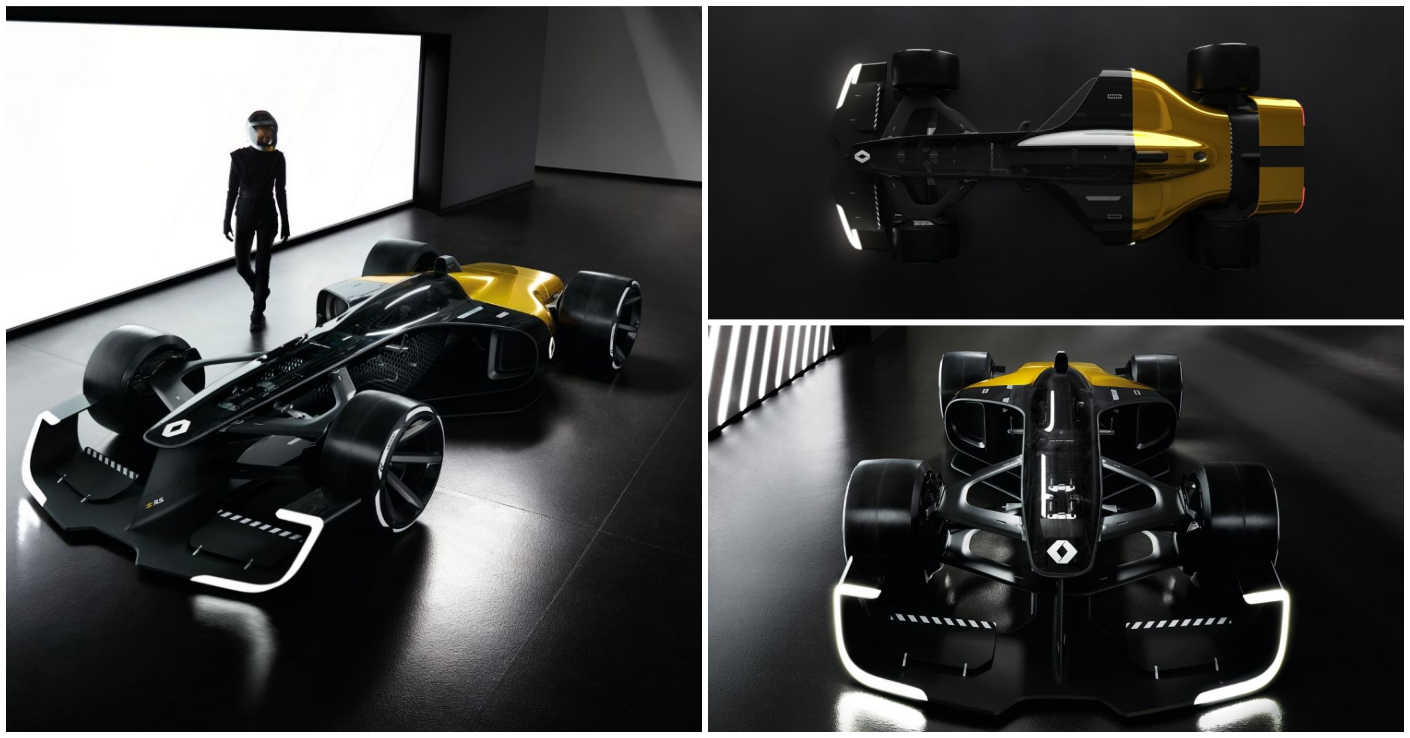
F1 races have everything that their enthusiasts vouch for- the speed, the thrill, the panache, the style, the hi-tech cars and the nail biting uncertainty. This year’s races will flaunt the open cockpits but if future is to be believed and that too from Renault’s perspective, then closed cockpits are going to be the ‘in’ thing. What you are about to see is the Renault RS 2027 Vision concept car.

The concept car that stole the thunder at the Shanghai Motor Show this year seems to be setting a design standard for future racing cars. And when the designers are from a company like Renault (a big player in the F1 game since last 40 years) , one knows that the insights are going to be a sure thing as far as future is concerned.

The new aesthetics and design revealed by the company are enough to take your breath away- yes, they are very stylish. The design shows the deliberate shift from aerodynamic designs to beautiful fluid forms that do not compromise on the speed parameter.

According to the design, the new closed cockpit will be 3D printed and will be completely transparent. Even the helmet of the driver is transparent. Not only will this improve the visibility for the driver, it will also allow fans to see their favourite racers. The car set to come in 2027 has already got everybody in the racing circuit excited. Enjoy the pictures till then!

As a technology lover you may like our daily important technology news series. It’s a playlist and you can retrieve the total day-wise videos. Please consider subscribing our YouTube channel:

Author: Technology Vista

Tagged : /

Yes, we may have alien friends in our Solar System: NASA

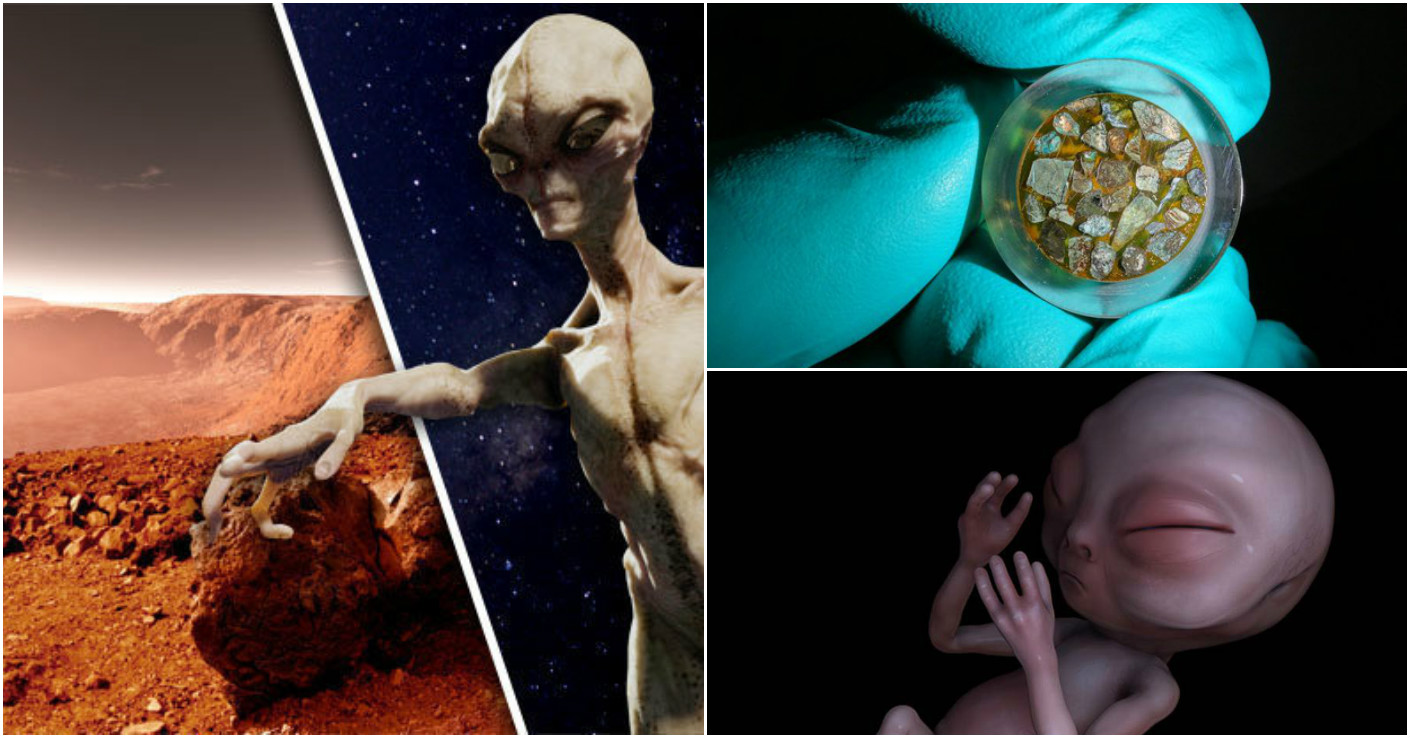
Seems like ET wasn’t just a movie at all – we may actually have some adorable alien friends in our Solar System. Okay, admit it! Even if you don’t want to believe, there is that small part of your brain which keeps asking “why there can’t be aliens in our solar system?” And that small part of our brains has been asking this question from a long time.

And why not! If we are here in this enormous Universe – living and breathing and doing things, there must be people like us or advanced than us. There can’t be just one Earth in this whole wide Universe- that’s too unlikely. So if you have always had that hunch, you have a supporter and that too of a big stature- NASA!

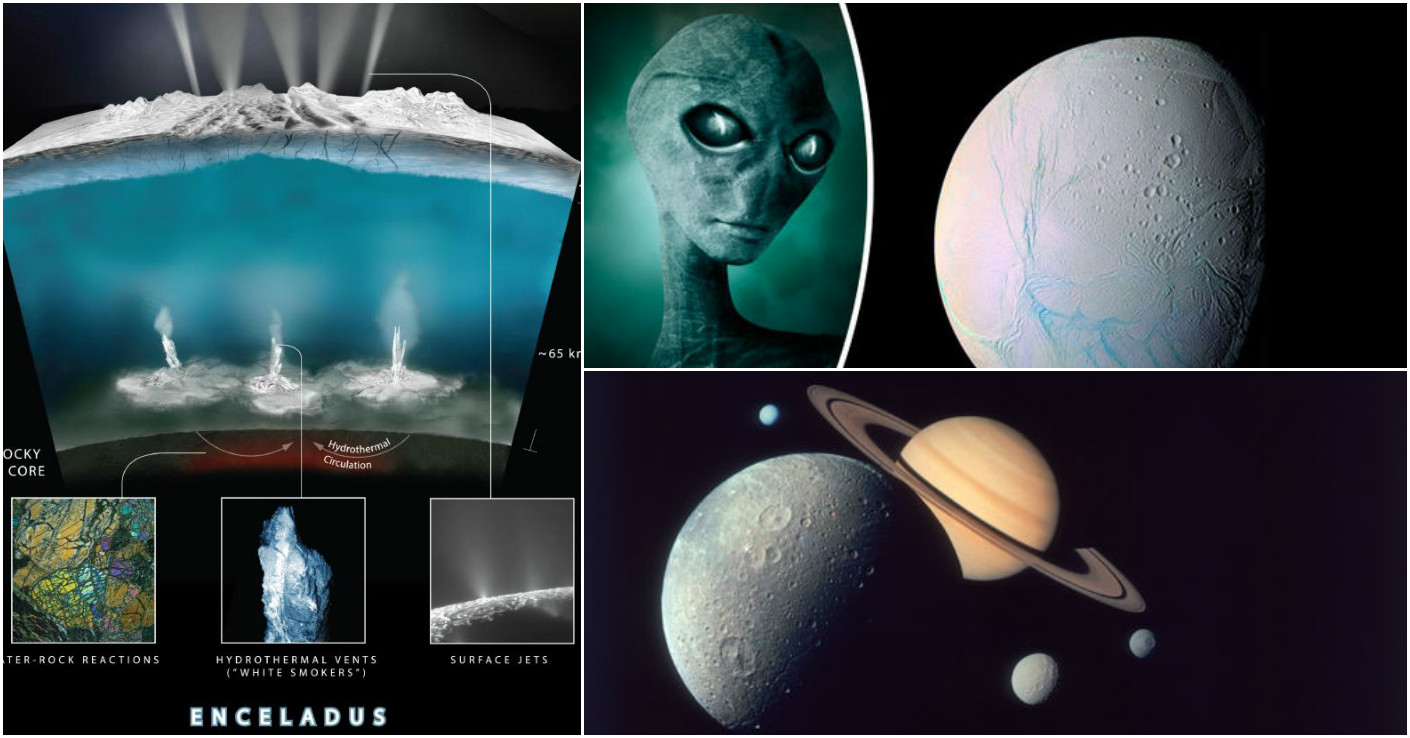
Basis the findings of its spacecraft Cassini and Hubble Space Telescope, NASA has arrived at the conclusion that there just might be alien life in our Solar System. The findings aren’t some vague things. In fact, these findings show that Enceladus, a moon of Saturn known for its icy white shell has some kind of chemical activity under its shell.

This activity is important to life on Earth suggesting some kind of life living there. And if you are wondering why this particular moon, then let us tell you that NASA that this moon has been under study for quite a while, owing to its massive underground oceans and icy outer shell which resemble the Earth’s protective ozone layer.

Add to this the confirmation from NASA that there are hydrothermal vents in the oceans on Enceladus. This piece of information is important because on earth, hydrothermal vents are found quite deep in the sea and are known to offer food and warmth to sea creatures that live at such depths. So if the hydrothermal vents are keeping creatures alive on the Earth, there is a strong possibility that the vents are keeping creatures alive on Enceladus too!

We are sorry to disappoint you though because if you thought this moon had some real cool Hollywood-style aliens, you are in for a let-down because basis the theory of NASA, this other life form maybe just some kind of shrimps or other little marine creatures. But a life form is a life or nevertheless. And it will still be called alien (though not as fancy as you saw in the movies)!

As a technology lover you may like our daily important technology news series. It’s a playlist and you can retrieve the total day-wise videos. Please consider subscribing our YouTube channel:

Author: Technology Vista
Tagged : / /

Saturn’s Moon Might Be Hosting Alien Life Since Long

New evidence from NASA suggests Saturn’s moon Enceladus may not be as hostile and inhospitable as it seems. Nasa’s Cassini spacecraft has picked up the first evidence that chemical reactions are happening deep below the ice which could be creating an environment capable of supporting microbes.

Liquid oceans exist miles below the surface on Enceladus, so to find out what is happening in the underground seas scientists must rely on the plumes of spray which shoot up into the atmosphere through cracks in the ice.

Life could be thriving in warm underground seas, scientists believe. All the more remarkable is that, this moon 887 million miles away from the Sun, might be harbouring the perfect conditions for life.

In October 2015 Nasa sent Cassini into a deep dive through one of those plumes and discovered hydrogen and carbon dioxide. In a report of their findings published today in the journal Science, scientists said that the ‘only plausible’ source for the hydrogen was chemical reactions between warm water and rocks on the ocean floor.

“Saturn’s moon Enceladus has an ice-covered ocean, and a plume of material erupts from cracks in the ice,” said Professor Hunter Waite, of Southwest Research Institute (SwRI) in San Antonio, Principal Investigator for Cassini’s Mass Spectrometer instrument which detected the hydrogen.

“The plume contains chemical signatures of water-rock interaction between the ocean and a rocky core. We find that the most plausible source of this hydrogen is ongoing hydrothermal reactions of rock containing reduced minerals and organic materials.

“On the modern Earth, geochemically derived fuels such as hydrogen support thriving ecosystems even in the absence of sunlight.”

Scientists had long suspected that liquid water could exist on the moon because of the extreme tidal forces acting on the satellite from Saturn’s gravity. Crucially, if hydrogen is present it can mix with carbon dioxide to form methane, which is consumed by microbes in the deep, dark seas of our own planet. If life is present, it could resemble single-celled tube-like extremophiles which have lived in hydrothermal vents on Earth for billions of years.

Next Page For More

Tagged : /

Is Nokia 9 on its way to topple Samsung Galaxy S8, iPhone 8 and Xiaomi Mi 6 from top slots?

Right from the day, the comeback of Nokia was announced, there is a great buzz around the brand that was once favourite of all. For a long time the brand had gone into oblivion but now it is coming back from the brink of extinction. HMD Global has already launched a few handsets called Nokia3, Nokia 5 and Nokia 6 in select countries. The good news is that more handsets are in the pipeline. In all probability, they are Nokia7, Nokia 8 and Nokia 9. Of these three, Nokia 9 is going to be the flagship phone. What makes it the talk of the town is the fact that it will have to compete with giants like Xiaomi Mi 6, Samsung Galaxy S8 and Apple’s iPhone 8.

All these flagship phones are eagerly awaited and with a clash of titans such as this, the users are in for a grand treat as they will have a wide variety to choose from. Rumours – about all these flagships have been doing the rounds and their specs are talk of the town. If experts are to be believed then Nokia 9 can very well give a tough time to its competitors. To understand this, let’s look at what each of these phones has in store for the users.

Xiaomi Mi 6: There is a possibility that this flagship phone will come in two variants- the regular model priced at 2,299 Yuan (around $333 or Rs 21,800) and the other one called Mi 6 Plus priced at 3,499 Yuan (around $508 or Rs 33,200). While the previous one sports a 5.15-inch display (1,920×1,080p resolution), powered by a Qualcomm Snapdragon 835 processor, run Android Nougat OS, packed with a 4GB/6GB RAM and a 32GB/64GB/128GB internal memory, a 19MP main camera with Sony IMX400 sensor and an 8MP front-snapper, with a 3,200mAH battery; the latter boasts of a 5.7 inch screen (2,560×1,440p resolution), powered by a Qualcomm Snapdragon 835 processor, and run Android Nougat OS. Siurces also hint towards a 4GB/6GB/8GB RAM, a 64GB/128GB/256GB internal storage, a 12MP dual lens camera with Sony IMX362 sensor on the rear, an 8MP front-snapper, and a 4,500mAh battery with Quick Charge 4.0 support. 

Samsung Galaxy S8: This flagship, priced at $720 in the US (around €669 / Rs 46,706) will flaunt a 5.8 inch Super AMOLED capacitive touchscreen with 1,440×2,960 pixels (570 ppi pixel density), powered by a Qualcomm Snapdragon 835 (US model) / Exynos 8895 processor (EMEA), and run Android 7.0 Nougat operating system. It will boast of a 4GB RAM, a 64 GB internal memory which is expandable upto 25 GB via micro SD card. The phone will have a 12MP main camera with f/1.7 aperture, 26mm lens, phase detection autofocus, OIS, LED flash, 1/2.5″ sensor size, 1.4 µm pixel size and 9MP image recording, an 8MP front snapper with f/1.7 aperture and autofocus, and a 3,000mAh battery.

Next Page For More 

Tagged : /

Are Terminator like machines just around the corner? Russia gives us reason to believe so!

The very first time when Arnold Schwarzenegger had appeared on screen as the expressionless, stony-faced ‘Terminator’, every person in the audience had goose bumps as it was a concept which was never presented before. Something that looked cool many years ago, is now a huge matter of concern for scientists. The concerns expressed by geniuses like Stephen Hawking, Elon Musk and Bill Gates are well known.

All these people have been very vocal about their concerns regarding artificial intelligence taking over humanity and one day destroying it. With advancements happening in robot technology world over, there is an atmosphere of fear amongst a scientist group. This group believes and fears that the day is not far when robots will start controlling human beings and will destroy them forever. Every other day something or the other happens which cements this belief.

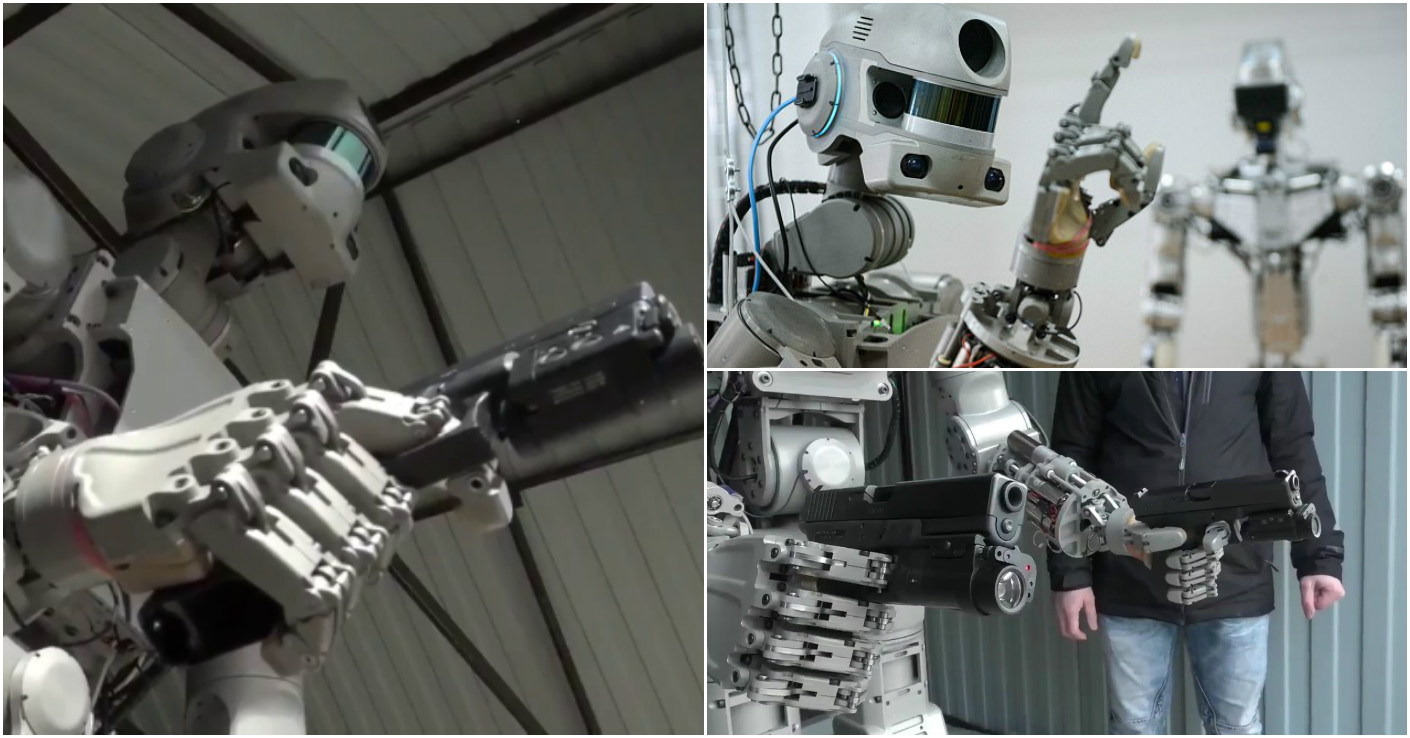
In a recent turn of events, Russia’s Deputy Prime Minister Dmitry Rogozin flaunted the new skills of their humanoid robot Fedor. It is this new skill which has raised an alarm. The Russian robot can shoot guns using both of its arms! Fedor – which stands for Final Experimental Demonstration Object Research- is a robot designed for space missions. It was designed to do tasks in the space which are considered too dangerous for astronauts.

Fedor is set for launch to the Space Station by 2021. Though Rogozin assured that Russia has no plans to create a Terminator like killing machine. He said in his defence: “Combat robotics is key to making intelligent machines. This is applicable to areas including aviation and space.” Though Fedor has also been trained to do tasks such as screwing a light bulb, operating a drill and driving a car, it is the new training given to the robot to hone its hooting skills is raising eyebrows.

Considering the concerns and fears of the likes of Hawking, Musk and Gates; efforts are underway around the world to prevent the rise of these killer robots. For example, developers from Google’s artificial intelligence division DeepMind and researchers from Oxford University have teamed up to develop a kill switch for artificial intelligence. Experts are of the view that there should be a ‘stop’ or ‘red button’ to stop AI from doing dangerous things. They say that one way could also be the way AI is coded- in a way that it never learns to ignore instructions from humans. Researchers and experts working in the field of AI have also called for a pre-emptive ban on autonomous weapons. These weapons are extremely dangerous as they can choose and engage targets without human intervention.  One can only imagine how dangerous this can turn out to be.

Bill Gates has really summed this up well. He said: “I am in the camp that is concerned about super intelligence. First the machines will do a lot of jobs for us and not be super-intelligent. That should be positive if we manage it well. A few decades after that though the intelligence is strong enough to be a concern.

I agree with Elon Musk and some others on this and don’t understand why some people are not concerned.” When brains like these are concerned about something, the seriousness of the matter can’t be ignored. So its high time the world opened its eyes to this impending danger looming large.

As a technology lover you may like our daily important technology news series. It’s a playlist and you can retrieve the total day-wise videos. Please consider subscribing our YouTube channel:

Author: Technology Vista

Tagged : /

4D Printing Technology Makes Objects That Assemble Themselves On Heating

4D printing creates 3D objects that change their shape over time in response to stimuli such as heat, moisture or light. It is useful for making structures that can adapt to their environment, but is often a laborious process. A new 4D-printing technique that creates complex structures in minutes could be used to make temperature-activated cardiac stents, drug capsules and flat-pack furniture.

The most common materials used in 4D printing, shape-memory polymers, normally require at least five steps to make them into adaptable objects. Hydrogels are simpler to use, but too soft to fashion into rigid structures. Zhen Ding at the Singapore University of Technology and Design and his colleagues have now developed a way to rapidly print rigid 4D objects with a commercial 3D printer and a heat source.

They created a variety of objects, including a delicate flower that closes its petals, a flat star shape that morphs into a dome, and lattices that contract and elongate. The structures were made from flat 3D-printed strips that were then heated to make them curve.

When heated to 45°C, the shape-memory polymer component relaxes and allows the elastomer to bend. As the strip cools, the shape-memory polymer stiffens again and locks the object into its new, curved configuration.

The strips, which can be printed in less than a minute, are made from layers of a stiff shape-memory polymer paired with a rubbery elastomer – a polymer with elastic properties. The problem is that it permanently fixes the structure in place after one heating cycle, says Geoff Spinks at the University of Wollongong in Australia. “This rules out applications that require reversible shape changes, like artificial muscles for robots and prosthetics,” he says.

Now, the technology could easily be used by people with other ideas, says Spinks. “No new chemistries, materials or equipment are involved, so it’s ready for anyone to start using immediately.” Thus, the method could be used to make complex structures that don’t require such shape-shifting.

For example, compact cardiac stents – tubes for placing in blood vessels to keep them open – could open up in an artery in response to body temperature. By fine-tuning the temperature transition point, medicine capsules could also be designed to bend and break open when body temperature rises with infection. And flat-pack furniture could assemble itself when heated.

As a technology lover you may like our daily important technology news series. It’s a playlist and you can retrieve the total day-wise videos. Please consider subscribing our YouTube channel:

Author: Technology Vista
Tagged : /

Finally an Apple Car! Apple Officially Enters Self-Driving Cars Race

Ending years of speculation, Apple’s late entry into a crowded field was made official on Friday with the disclosure that the California Department of Motor Vehicles had awarded a permit for the company to start testing its self-driving car technology on public roads in the state.

The Cupertino, California, company pointed to a statement that it issued in December: “Apple is investing heavily in machine learning and autonomous systems,” the company said then. “There are many potential applications for these technologies, including the future of transportation.”

Its interest in autonomous vehicle technology has long been clear.

The permit by DMV covers three vehicles – all 2015 Lexus RX 450h hybrid SUVs – and six individual drivers. California law requires people to be in a self-driving car who can take control if something goes wrong.

Like others, Apple believes self-driving cars could ease congestion, prevent millions of crashes and save thousands of lives annually in traffic accidents often caused by drunk or distracted motorists. Not only that, Apple has been searching for its next act for a while, one that will take it beyond its mainstay phones, tablets and personal computers.

The company hasn’t had a breakthrough product since the 2010 debut of the iPad, currently in the throes of a three-year sales slump. The dry spell has raised doubts as to whether Apple lost some of its trendsetting magic with the death of co-founder Steve Jobs in 2011.

iPhone’s ongoing popularity has helped Apple remain the world’s most valuable company. Apple will be vying against 29 other companies that already have California permits to test self-driving cars. Since Google began its work on self-driving vehicles eight years ago, Waymo’s fleet of self-driving cars has logged more than 2 million miles on the road.

With $246 billion in cash, Apple also could easily afford to buy technology that accelerates its development of self-driving cars. There has been recurring speculation that Apple might eventually acquire Tesla, which has a market value of about $50 billion. Neither Apple nor Tesla has given any inkling that they’re interested in joining forces, though.

Apple has a long way to catch up in self-driving technology, but then, it has often been a follower in markets that it eventually revolutionized. It wasn’t the first to introduce a digital music player, smartphone, or tablet before its iPod, iPhone and iPad came out.

As a technology lover you may like our daily important technology news series. It’s a playlist and you can retrieve the total day-wise videos. Please consider subscribing our YouTube channel:

Author: Technology Vista

Tagged : /

Water from Dry Air- This Device Will Make It Happen!

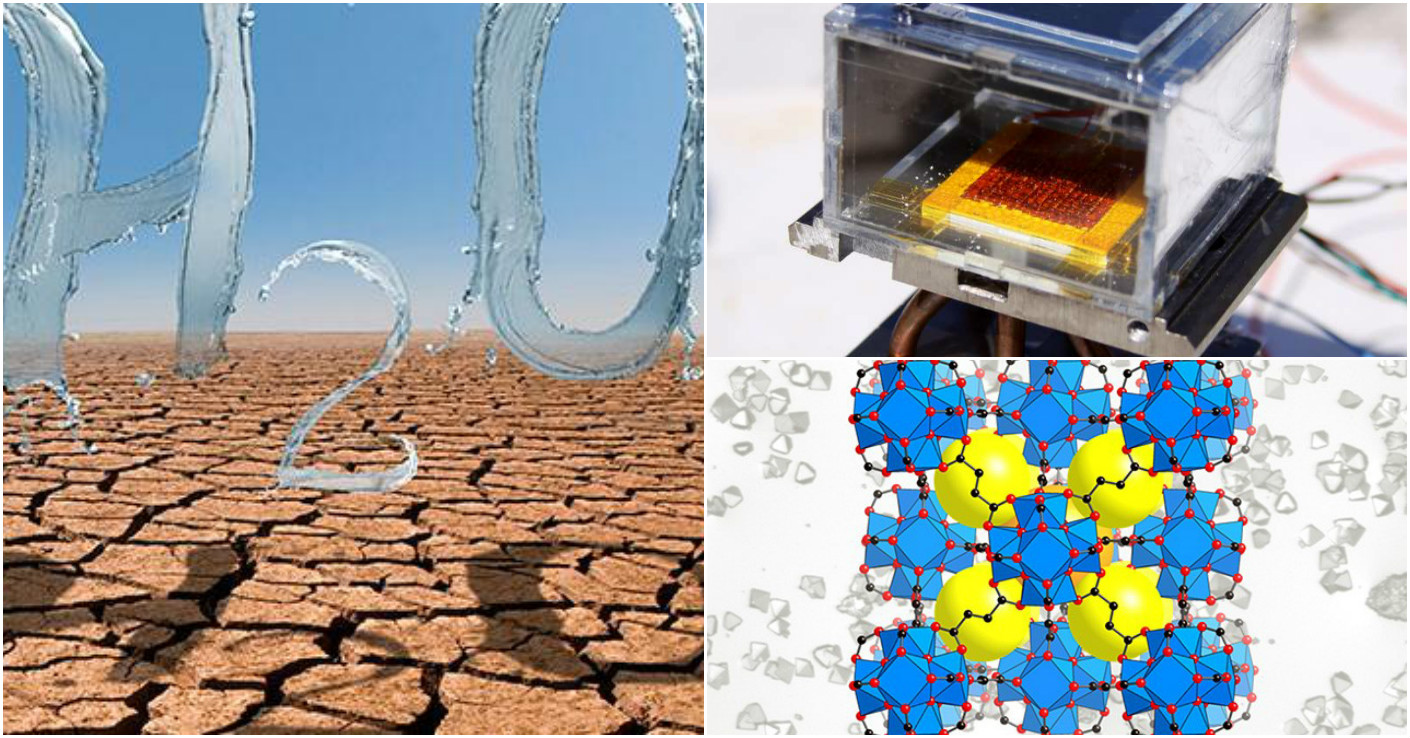
Constructed at the Massachusetts Institute of Technology (MIT) in the US, this solar-powered harvester can work in conditions as low as 20 per cent humidity to harvest litres of water from the air everyday using just ambient sunlight, even in dry or desert climates.

“There is no other way to do that right now, except by using extra energy. Your electric dehumidifier at home ‘produces’ very expensive water,” said Yaghi, also a faculty scientist at Lawrence Berkeley National Laboratory in the US.

Rooftop tests at MIT confirmed that the device works in real-world conditions, researchers said.

“One vision for the future is to have water off-grid, where you have a device at home running on ambient solar for delivering water that satisfies the needs of a household,” said Yaghi. “To me, that will be made possible because of this experiment. I call it personalised water,” he said.

“We wanted to demonstrate that if you are cut off somewhere in the desert, you could survive because of this device.” he said.

The prototype, under conditions of 20-30 per cent humidity, was able to pull 2.8 litres of water from the air over a 12-hour period, using one kilogramme of a metal-organic framework (MOF) – a special material produced at UC Berkeley. It consisted of dust-sized MOF crystals compressed between a solar absorber and a condenser plate, placed inside a chamber open to the air.

As ambient air diffuses through the porous MOF, water molecules preferentially attach to the interior surfaces. Sunlight entering through a window heats up the MOF and drives the bound water toward the condenser, which is at the temperature of the outside air. The vapour condenses as liquid water and drips into a collector.

This proof of concept harvester leaves much room for improvement, Yaghi said. The current MOF can absorb only 20 per cent of its weight in water, but other MOF materials could possibly absorb 40 per cent or more. The material can also be tweaked to be more effective at higher or lower humidity levels.

“To have water running all the time, you could design a system that absorbs the humidity during the night and evolves it during the day” Yaghi said.

As a technology lover you may like our daily important technology news series. It’s a playlist and you can retrieve the total day-wise videos. Please consider subscribing our YouTube channel:

Author: Technology Vista

Tagged : /

Producing Fuel to Fertilizers: This Bionic Leaf Can Do It All Using Sunlight and Bacteria

Artificial leaves take in sunlight to generate fuel, just like regular leaves, so that the solar energy can be used to break water down into hydrogen and oxygen, and that in turn has been used to create liquid fuels and electricity. Now, a Harvard team has added the feature of making fertilizers into the mix!

“The fuels were just the first step,” says Daniel Nocera, who first developed this artificial leaf at Harvard in 2011. “Getting to that point showed that you can have a renewable chemical synthesis platform. Now we are demonstrating the generality of it by having another type of bacteria take nitrogen out of the atmosphere to make fertilizer.”

The bacteria in question is Xanthobacter, which consumes the hydrogen produced by the leaf and, by also taking in carbon dioxide from the air around it, creates a bioplastic. That’s stored inside the bacteria as fuel, which they eventually use to create ammonia, a nitrogen-hydrogen compound that forms the basis of fertilizer.

“I can then put the bug in the soil because it has already used the sunlight to make the bioplastic,” says Nocera. “Then the bug pulls nitrogen from the air and uses the bioplastic, which is basically stored hydrogen, to drive the fixation cycle to make ammonia for fertilizing crops.”

The first bionic leaf absorbed sunlight to drive a chemical reaction that splits water into hydrogen and oxygen, before collecting those gases to produce a range of end products. In its first incarnation, the system fed a hydrogen-hungry bacteria to produce liquid fuels for use in fuel cells, and later versions let it work with impure water and eventually boosted its output to over 10 times the efficiency of natural photosynthesis.

The team tested the new system on radishes over five crop cycles, and found that plants that received fertilizer made by the bionic leaf grew to be 1.5 times bigger than a control group.

“When you have a large centralized process and a massive infrastructure, you can easily make and deliver fertilizer,” says Nocera. “But if I said that now you’ve got to do it in a village in India onsite with dirty water — forget it. Poorer countries in the emerging world don’t always have the resources to do this. We should be thinking of a distributed system because that’s where it’s really needed.”

As a technology lover you may like our daily important technology news series. It’s a playlist and you can retrieve the total day-wise videos. Please consider subscribing our YouTube channel:

Author: Technology Vista
Tagged : /

This Plant Will Help Create Self-Charging Smartphones

Our smartphone can do a lot of magical things, but at the end of the day, it always needs to be charged. However, Australian scientists at RMIT University have created a new electrode that might be the first step to self-powering smartphones, laptops, and cars — all thanks to ferns.

Ferns, you ask? Well, we have made amazing leaps in solar energy and all, but storage remains to be a problem. Supercaps are frequently combined with solar technologies to store and discharge harnessed energy. Supercaps are better than conventional batteries in most aspects but their limited capacity has made it hard to use them for larger scale storage solution.

The solution to increasing storage capabilities was found in the leaves of the western swordfern. PhD researcher Litty V. Thekkekar and professor Min Gu, authors of the research article, imitated patterns found in the plant to develop their electrode.

These electrodes can increase the capacity of supercaps by stunning 3,000 percent!

According to Gu, the leaves are an extremely efficient energy storage, with dense networks of veins. The efficiency is reached through repeated patterns called ‘fractals’. “Our electrode is based on these fractal shapes — which are self-replicating, like the mini structures within snowflakes — and we’ve used this naturally-efficient design to improve solar energy storage at a nano level.”

The experiments with supercaps are extremely promising, even for countries with shitty weather.

“Capacity-boosted supercapacitors would offer both long-term reliability and quick-burst energy release — for when someone wants to use solar energy on a cloudy day for example — making them ideal alternatives for solar power storage.”

It should be relatively easy to integrate the electrode into future breakthroughs as the prototype was based on flexible thin film technology. The new technology is still on research level so we won’t see it mass-produced anytime soon.

As a technology lover you may like our daily important technology news series. It’s a playlist and you can retrieve the total day-wise videos. Please consider subscribing our YouTube channel:

Author: Technology Vista

Tagged : /

These Smartphones Can Self-Heal Their Cracked Displays

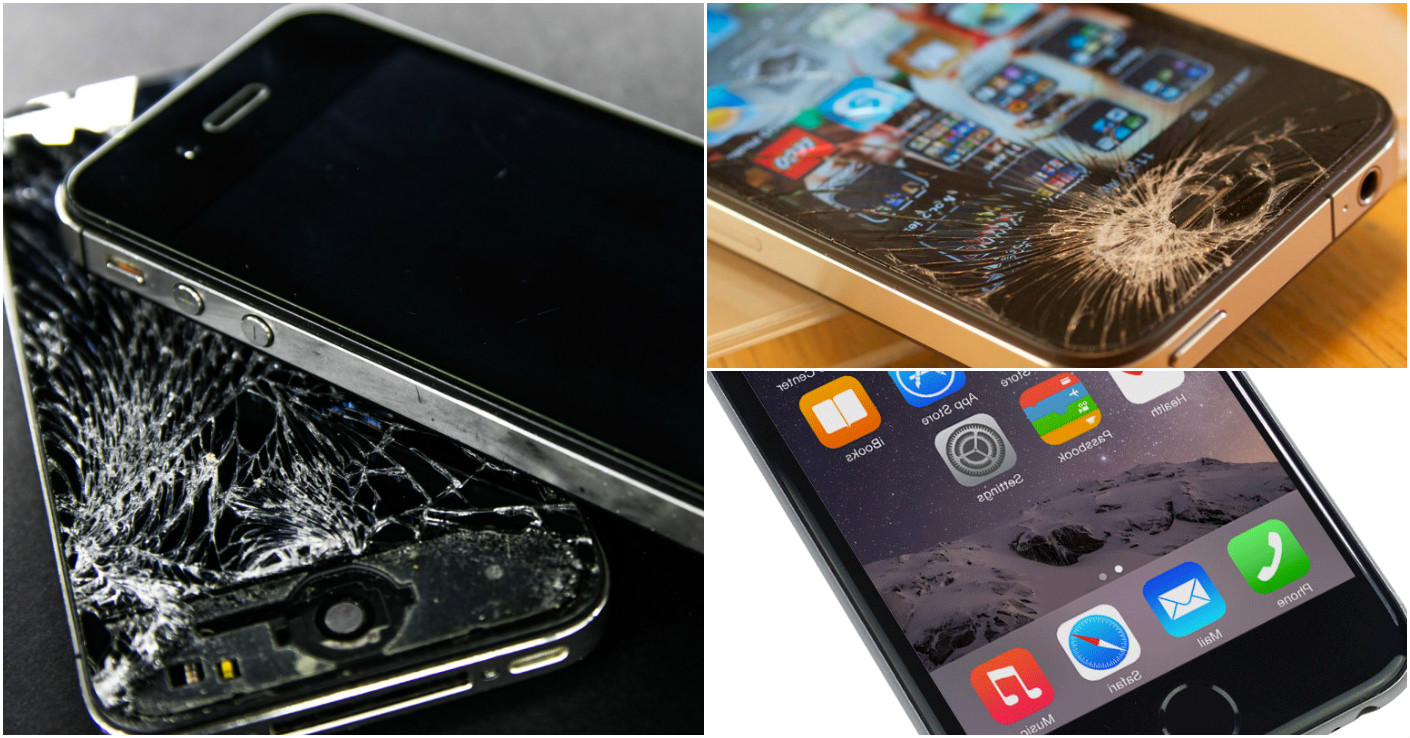
One of the most annoying things that can happen to your smartphone is screen damage. Today if such a scenario happens, handset users have two options at their disposal – either replace the phone’s screen for an additional fee or buy a new handset altogether. Chemists at the University of California, Riverside have made available a third option- a new self-healing smartphone screen material that will simply be able to self-heal the damage.

The group of scientists is expected to present their research findings during the American Chemical Society on April 4.

One of the scientists leading the research, Chao Wang claims his team was the first to create a self-healing material that can conduct electricity. Self-healing smartphone displays won’t become available immediately, as Wang predicts the new material will become available commercially in phones and batteries by 2020. He believes that within 3 years, more self-healing products will be made available on the market.

Self-healing materials aren’t exactly a novelty. Remember that the LG G Flex featured a self-healing back, which magically reformed any scratches within a few minutes?  The phone launched almost four years ago, but the problem with the material used to make up the back cover was that it could not conduct electricity.

Smartphone screens rely on a grid of electrons located beneath to interpret users’ taps and swipes, so LG couldn’t use the material for the phone display. But the new material invented by Wang’s team is a completely different story.

The new display material is made of a stretchable polymer and an ionic salt and can stretch up to 50 times its original size. The scientists conducting the self-healing material research performed several tests including tearing it in half and found it took under 24 hours for the material to stitch itself back together.

As a technology lover you may like our daily important technology news series. It’s a playlist and you can retrieve the total day-wise videos. Please consider subscribing our YouTube channel:

Author: Technology Vista

Tagged : /

Hidden Ecosystems on Earth Could Reveal Aliens!

While scientists are sending out probes and search missions to the far reaches of the universe to look for alien life (NASA launches a probe to Jupiter’s icy moon to search for aliens), space boffins believe some of the first living beings on Earth could have survived by living deep in the planet’s atmosphere.

A study found organic material in the deepest place on the planet in the Mariana Trench, in an underwater volcano. Geo microbiologist Matthew Schrenk revealed the microbes show how life could exist in some of the deepest environments in the galaxy.

Researcher Oliver Plumper who worked on study said: “This is another hint at a great, deep biosphere on our planet.

“It could be huge or very small, but there is definitely something going on that we don’t understand yet.”

The material provides evidence that life can survive in the most extreme environments, lending weight to life on other planets.

Matthew Schrenk said: “I think the main take-home of this paper is how this has the potential to place life at some of the deepest environments on the planet. If we’re looking for the depth limits of the biosphere, this could extend it by a lot.”

As a technology lover you may like our daily important technology news series. It’s a playlist and you can retrieve the total day-wise videos. Please consider subscribing our YouTube channel:

Author: Technology Vista
Tagged : /
Verified by ExactMetrics