Nokia 9 may just be the next big thing in the flagship market!

HMD Global has been in news right from the day the talk of relaunch of Nokia started doing the rounds. Once- a favourite of all- Nokia made a pleasant comeback with its phones. And now it seems HMD Global is set to garner headlines once again with the rumours of the launch of its flagship smartphone- the Nokia 9! The rumours were strong from quite some time but there was no confirmation from the company’s side.

With more and more leaks making their way on different websites, it is no more a secret that a flagship phone is in the offing. And the leaks show that HMD Global will leave no stone unturned to give tough competition to giants like Samsung and Apple.

If the rumours are to be believed, the much-talked about Nokia 9 would have an impressive front with a 5.5-inch OLED display and 2k resolution. Just like the Apple iPhone soon to be launched, it will have an almost bezel-less display.

The phone is rumoured to be powered by a Qualcomm Snapdragon 835 chipset which will be paired with a massive 6GB RAM. The rumours also hint towards a fingerprint scanner on the back but then there are other strong reports of a probable iris scanner for unlocking the smartphone.

Other leaks hint 64GB and 128 GB variants, when it comes to storage. In all probability, the Nokia 9 will flaunt a 22 MP Carl Zeiss optics on the rear camera while selfie lovers may love the 8MP front camera. The phone may also come with an IP68 certification – making it water and dust resistant to a degree.

Priced at around Rs 44,999 in India, the flagship phone will have a 3800 mAh battery and will probably run Android 7.1.2 Nougat or Android O. If all these leaks and rumours turn out to be true, the Nokia 9 will surely be a winner. Let’s just wait and watch!

As a technology lover you may like our daily important technology news series. It’s a playlist and you can retrieve the total day-wise videos. Please consider subscribing our YouTube channel:

Author: Technology Vista

Tagged : /

iPhone 8 Leaks- What’s New This Time?

MacRumors spotted a leaked 3D design drawing of what seems to be the iPhone 8. The diagram was reportedly leaked by Weibo leaker KK who has a track record for outing accurate details of tech devices ahead of their launch.

If this new illustration is to be believed, the next flagship phone from the Cupertino giant will measure 137.54 mm tall by 67.54 mm wide — not too far from the iPhone 7’s 138.3 mm length by 67.1 mm width. It does not reveal the thickness of the upcoming Apple smartphone, but it does indicate that the device’s screen will run 5.768 inches diagonally.

The diagram also claims the bezels on all sides of the iPhone 8 would only be 4 mm. Thus, the handset would mostly be screen and the edges would be 2D curved glass. Should this be true, then it’s clear that Apple plans to overshadow the Galaxy S8’s Infinity Display.

Interestingly, the leaked document corroborates previous reports saying Apple is ditching the physical Home button this year by opting for a display-embedded Touch ID sensor. Samsung actually failed to realize this type of technology for its Galaxy S8, so expectations are high that Tim Cook’s company could deliver this type of technology within this year.

The emergence of this new diagram comes days after investors revealed last week that the Samsung’s biggest rival is having a difficult time developing display-embedded Touch ID.

Based on the illustration, Apple appears to be working on a vertical dual camera on the back, and in-between the two lenses is LED flash. There’s a possibility that Apple could be ditching the fingerprint sensor and let users rely solely on facial recognition, or just move the fingerprint scanner to the back of the handset just like what Samsung did. Another option that Apple has in its hands is to just delay the production of the iPhone 8 until it perfects the screen-embedded Touch ID technology for the device.

The almost bezel-less-on-all-sides look would not be free from challenges however. Since there would be no relatively large top bezels to accommodate the front-facing camera and other sensors, Apple appears to be embedding all of the components within the display. Sadly, the leaked diagram does not have an illustration on how the screen-embedded camera, proximity sensors, 3D sensor and others would look like on the iPhone 8.

width="560" height="314" allowfullscreen="allowfullscreen">

As a technology lover you may like our daily important technology news series. It’s a playlist and you can retrieve the total day-wise videos. Please consider subscribing our YouTube channel:

Author: Technology Vista
Tagged : /

By 2030, lunar dust may fulfill India’s energy needs

The day ISRO launched 104 satellites in one go, the world just couldn’t believe that a country termed as one of the “third world countries” could achieve such a feat. The world had to sit up and take note of the Indian talent in the field of science and technology. Silently and sincerely, Indian scientists have been doing exceptional work and making the country proud. Their wagon is running at full throttle and their projects and achievements are creating a legacy of their own.

In addition to the launch of 104 satellites, commercial roll-out of lithium-ion batteries and taking lead in providing energy security, the Indian space agency is planning for development of aircraft, manned missions to the Moon and Mars. In this list, ISRO has added another aim: helping India meet its energy needs from the Moon by 2030.

According to facts and reports, India plans to cut down import dependence in hydrocarbons by 10 percentage points by 2022. Also in the backdrop, is the successful testing of lithium-ion batteries developed by Vikram Sarabhai Space Centre by the Automotive Research Association of India (Arai).  

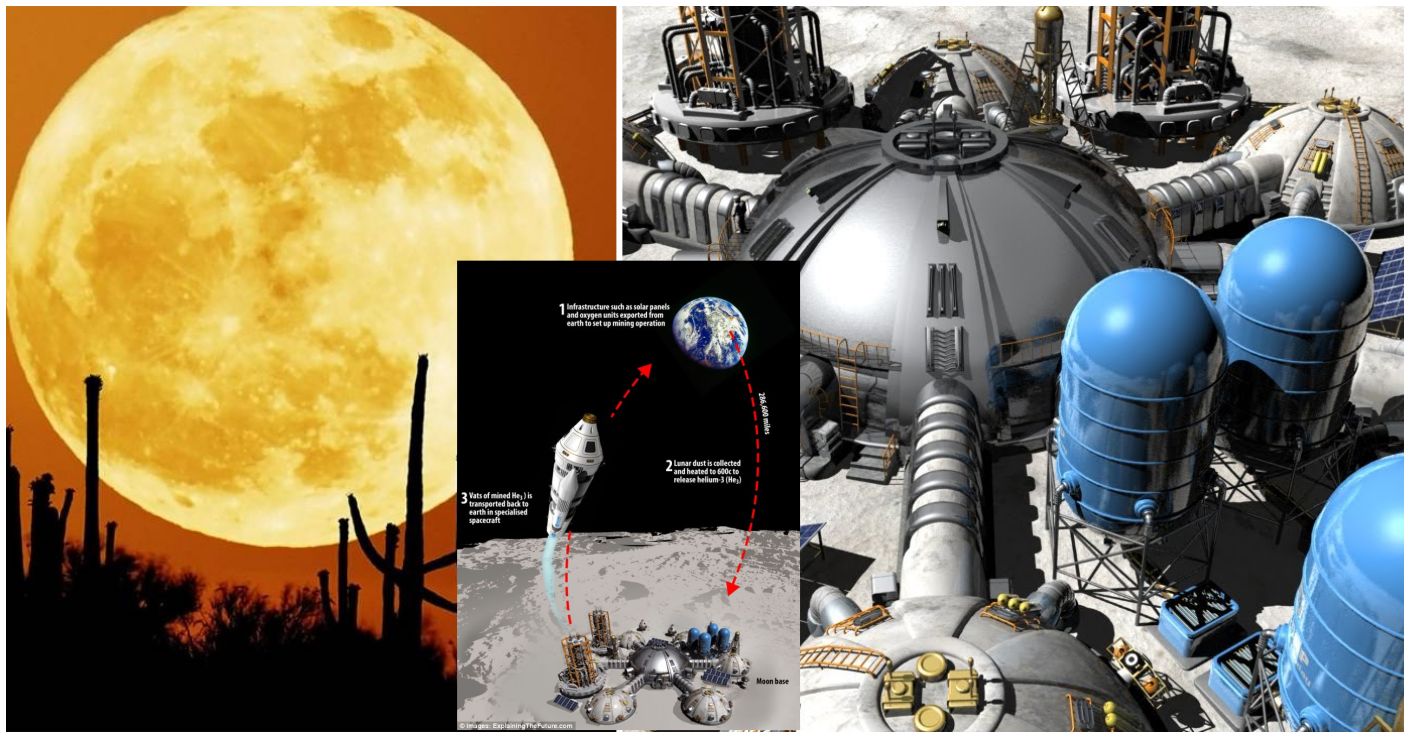
Dr. Sivathanu Pillai, professor at ISRO revealed the space agency’s lunar plans in February. The main aim is to mine Helium-3 rich lunar dust, generate energy and transport it back to Earth. Dr. Pillai informed that mining lunar dust was a priority programme for his organisation.

This is to note that India’s energy demand growth is expected to outpace that of the other Bric (Brazil, Russia, India and China). So, the success of ISRO’s new project concerning lunar dust will ensure reduction in pollutants and India’s fuel imports.

In terms of numbers, India’s energy bill of imports which stands at around $150 billion at present is expected to rise to $300 billion by 2030 (80% of India’s oil needs and 18% of its natural gas needs are fulfilled via imports). Considering the amount, the country spends on imports, the success of this project will surely bring down the expenditure on imports. Way to go India!

As a technology lover you may like our daily important technology news series. It’s a playlist and you can retrieve the total day-wise videos. Please consider subscribing our YouTube channel:

Author: Technology Vista

Tagged : /
Verified by ExactMetrics