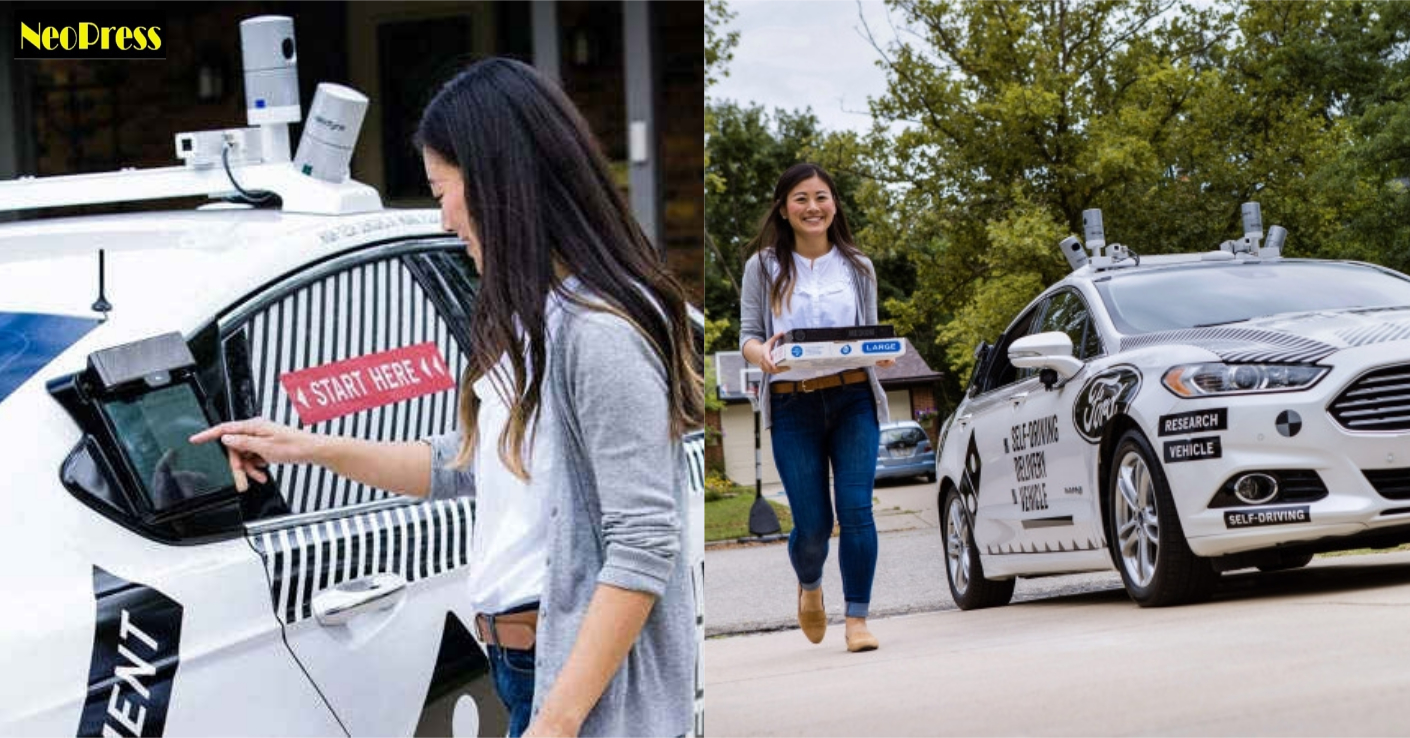
Domino’s testing Ford’s self-driving vehicle to deliver pizzas

Ford Motor and Domino’s Pizza have begun a test to use self-driving vehicles to deliver pizzas to customers.

The Detroit-based automaker is providing a self-driving Ford Fusion Hybrid car equipped with Ford’s full suite of cameras, sensors, radar for testing in Ann Arbor city of Michigan state for about a month and a half, Xinhua reported on Wednesday.

However, the car will not be operated in autonomous mode. One Ford engineer hidden behind tinted windows will drive the car and another will monitor inputs from the car’s hardware.

It will not be the first experiment with advanced pizza delivery technology. Australia-based Domino’s Pizza has tested delivery to customers in New Zealand through drones and self-driving robots.

“We’re interested to learn what people think about this type of delivery,” said Russell Weiner, President of Domino’s US.

Sherif Marakby, Ford Vice President, said that as a company focused on the customer experience, Domino’s shares their vision for a future enabled by smart vehicles in a smart environment that enhance people’s lives.

Previously, Ford CEO Jim Hackett had said the company expected to launch a self-driving vehicle for commercial ride-sharing fleets in 2021.

As a technology lover you may like our daily important technology news series. It’s a playlist and you can retrieve the total day-wise videos. Please consider subscribing our YouTube channel:

Author: Technology Vista
Tagged : /

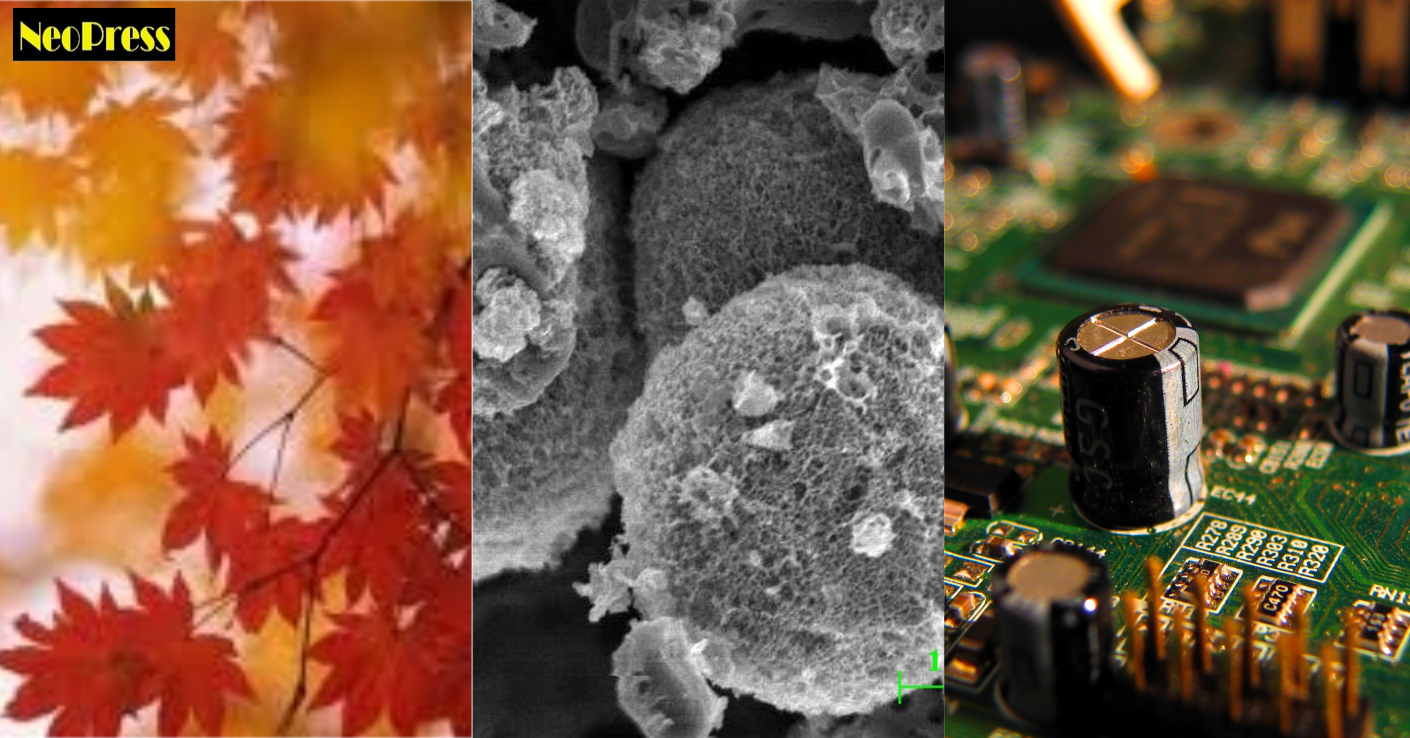
Making high-tech electronics from fallen tree leaves

Researchers in China have discovered a new method to convert fallen tree leaves into a porous carbon material that can be used to produce high-tech electronics.

In a study published in the Journal of Renewable and Sustainable Energy, the researchers described the process to convert tree leaves into a form that could be incorporated into electrodes as active materials.

The dried leaves were first ground into a powder, then heated to 220 degrees Celsius for 12 hours. This produced a powder composed of tiny carbon microspheres.

These microspheres were then treated with a solution of potassium hydroxide and heated by increasing the temperature in a series of jumps from 450 to 800 degrees Celsius.

The chemical treatment corrodes the surface of the carbon microspheres, making them extremely porous.

The final product, a black carbon powder, has a very high surface area due to the presence of many tiny pores that have been chemically etched on the surface of the microspheres.

The high surface area gives the final product its extraordinary electrical properties.

The investigators, led by Hongfang Ma of Qilu University of Technology in Shandong, ran a series of standard electrochemical tests on the porous microspheres to quantify their potential for use in electronic devices.

The current-voltage curves for these materials indicated that the substance could make an excellent capacitor.

Further tests showed that the materials were, in fact, supercapacitors, with specific capacitances of 367 Farads/gram, which are over three times higher than values seen in some graphene supercapacitors.

A capacitor is a widely used electrical component that stores energy by holding a charge on two conductors, separated from each other by an insulator.

Supercapacitors can typically store 10-100 times as much energy as an ordinary capacitor, and can accept and deliver charges much faster than a typical rechargeable battery.

For these reasons, supercapacitive materials hold great promise for a wide variety of energy storage needs, particularly in computer technology and hybrid or electric vehicles.

As a technology lover you may like our daily important technology news series. It’s a playlist and you can retrieve the total day-wise videos. Please consider subscribing our YouTube channel:

Author: Technology Vista

Tagged : /

Vivo ‘Y69’ with 16MP selfie camera launched at Rs 14,990 (USD 230)

Vivo on Friday added the “Y69” to its Y line-up of smartphones at Rs 14,990.

In terms of camera specifications, “Y69” features a 13MP rear camera with “Live Photo” feature. The 16MP “moonlight” selfie camera comes with f/2.0 aperture and “group selfie” mode.

“We are pleased to introduce the “Y69″ in the Y series and are confident that its premium design and superior camera features will offer great value to customers at an ideal price point,” said Kenny Zeng, CMO, Vivo India, in a statement.

The device has 5.5-inch HD IPS (1280 x 720 pixels) display with Corning Gorilla Glass 3 on top. It is powered by 1.5 GHz Octa-core MediaTek MT6750 processor, coupled with a 3GB RAM and 32GB storage.

It has dual SIM card slots and a separate micro SD card slot to expand storage up to 256GB. “Y69”, powered by a 3,000mAh battery, runs Vivo’s custom “Funtouch” OS 3.2, based on the Android 7.0 operating system.

The device will retail in “Champagne Gold” and “Matte Black” colours starting September 1 on e-commerce sites Amazon and Flipkart and will also be available in retail stores.

As a technology lover you may like our daily important technology news series. It’s a playlist and you can retrieve the total day-wise videos. Please consider subscribing our YouTube channel:

Author: Technology Vista

Tagged : /

NASA Mars probe captures stunning image of snowy dunes

NASA has released a stunning picture of dunes on the surface of Mars with snow and ice on ridges.

It was spring in the Northern hemisphere when this image was taken by the High Resolution Imaging Science Experiment (HiRISE) camera on Mars Reconnaissance Orbiter, NASA said.

Over the winter, snow and ice inexorably covered the dunes. But unlike on Earth, this snow and ice is carbon dioxide, better known to us as dry ice.

When the sun starts shining on it in the spring, the ice on the smooth surface of the dune cracks and escaping gas carries dark sand out from the dune below, often creating beautiful patterns.

On the rough surface between the dunes, frost is trapped behind small sheltered ridges.

The image was captured in May and NASA released it on Thursday.

As a technology lover you may like our daily important technology news series. It’s a playlist and you can retrieve the total day-wise videos. Please consider subscribing our YouTube channel:

Author: Technology Vista

Tagged : /

Facebook may launch chat device with face recognition ability

Social networking giant Facebook is reportedly working towards rolling out a video chat device that can recognise users’ faces.

The proposed device is said to be similar to the Amazon Echo Show, and will feature a camera, touchscreen and speakers, the Independent reported on Thursday.

But the device has also raised fears among consumers that it could be used by the social network to spy on them, thereby casting doubt on whether the device would have all the features as intended when it is finally launched.

Codenamed Project Aloha, the device is set to be released by Facebook in May 2018.

However, it may hit the market under a new brand name, the report said.

The device is likely to be marketed as a tool to help old people communicate with their families and friends.

As a technology lover you may like our daily important technology news series. It’s a playlist and you can retrieve the total day-wise videos. Please consider subscribing our YouTube channel:

Author: Technology Vista

Tagged : /

Microsoft patents augmented reality controller

A patent filing by software giant Microsoft has revealed that the company is working on a wand-like controller for augmented reality (AR) and “HoloLens”.

On Tuesday, Microsof published a new patent that revealed the design for “an AR input device”. The wand-like controller looks like a cross between a motion controller and a pen, The Verge reported.

Microsoft had originally filed the patent in June 2016 the same day when it published its Windows Mixed Reality vision video. The software major has been planning to introduce a range of Mixed Reality headsets from partners such as HP, Asus, Dell, Lenovo and Acer.

Fuelled by Snapchat Lenses and Facebook Stories, AR is gaining fast traction in the US. Facebook is also working on developing AR glasses that could blend digital objects with the physical world.

The company’s CEO Mark Zuckerberg had previously shown photos of similar glasses, saying that they would be the future of AR, but he did not reveal that it was developing such a product.

The Facebook CEO has been of the opinion that AR will be the next big consumer tech platform after smartphones.

As a technology lover you may like our daily important technology news series. It’s a playlist and you can retrieve the total day-wise videos. Please consider subscribing our YouTube channel:

Author: Technology Vista
Tagged : /

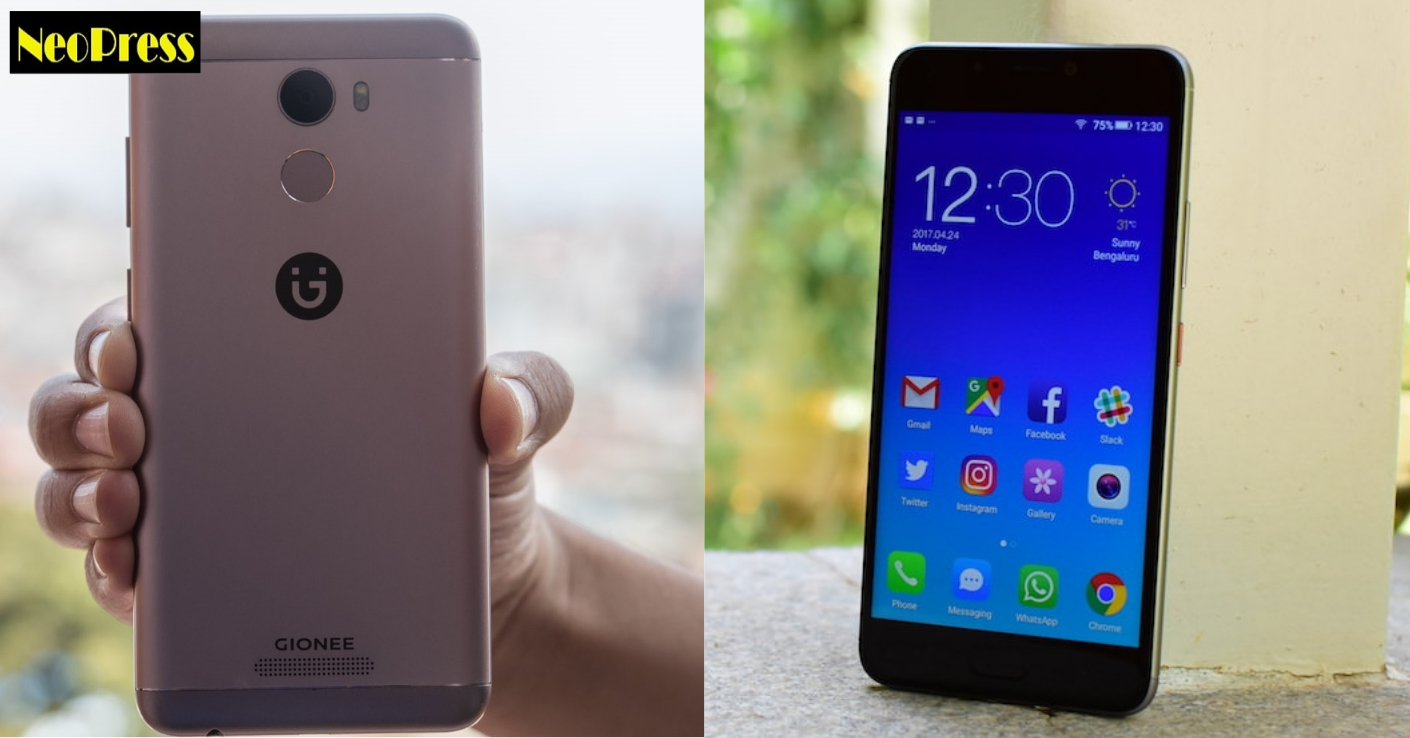
Gionee ‘A1 Lite’: Great ‘selfies’ but tough competition (Tech Review)

After receiving good response for ‘A1 Plus’ (at Rs 26,999), Gionee India has launched ‘A1 Lite’ for Rs 14,999, pinning its hopes on the 20MP selfie camera and a massive 4,000mAh battery.

With a nearly six per cent share in the domestic smartphone market, Gionee launched this device to compete in the mid-segment range where Motorola (Moto G5 Plus) and Xiaomi (Redmi Note 4) already have a strong hold.

Can Gionee A1 Lite dethrone the leaders? Let’s find out. The phone comes in two colours — gold and black. It has 5.3-inch HD display with 2.5D Gorilla Glass protection and sports a back cover that gleams metallic along with a sleek unibody design.

The 4G VoLTE-enabled A1 Lite runs on an octa-core 64-bit processor with 3GB RAM and 32GB internal storage that can be expanded up to 256GB. We tested it with a few games, opened multiple apps and did not experience any lag.

The device houses a 20MP selfie camera that is powered by four-cell technology. The result is better selfies than its predecessor. The 13MP rear camera, however, is not that good when it comes to image quality as compared with its competitors.

On the software front, the device runs on Android 7.0 Nougat with Amigo OS 4.0 skin which offers smooth transition. The toggles pop up from the bottom — just as in Apple devices — but too much bloatware is a bit of a turn-off. As far as the battery is concerned, the 4,000mAh pack will keep you connected all day long. The device returned a massive 23-hour running time when we used it to surf on social media, light gaming and almost 70 minutes of content consumption.

What doesn’t work?

The photos taken in low-light conditions are too grainy. Heating issues also need to be taken care of.

The company claims A1 Lite unlocks in just 0.3 second with the fingerprint sensor located under the rear camera. However, it took a bit longer.

Conclusion: With competitors like Xiaomi and Motorola (and now Coolpad has joined the fray with its 6GB Cool Play 6) in this price segment, it would be a daunting task for Gionee to stay ahead in the race.

If you need better selfies to charm your girlfriend and a longer battery life to stay connected, place your bet on the A1 Lite.

As a technology lover you may like our daily important technology news series. It’s a playlist and you can retrieve the total day-wise videos. Please consider subscribing our YouTube channel:

Author: Technology Vista

Tagged : /

Chinese scientists make breakthrough in super steel

Chinese scientists said on Thursday they have developed a super steel that has a high level of both strength and ductility, a breakthrough that may have a wide variety of industrial applications.

Furthermore, its material cost is just one-fifth of that of the steel used in the current aerospace and defence applications, they reported in the US journal Science, Xinhua news agency reported.

Strength and ductility are desirable properties of metallic materials for wide-ranging applications, but increasing strength often leads to the decrease in ductility, which is known as the strength-ductility trade-off.

A Hong Kong-Beijing-Taiwan mechanical engineering team led by Huang Mingxin from the University of Hong Kong adopted a new manufacturing technique called deformed and partitioned (D&P) to addressed the problem.

“Steels have been the most widely used metallic materials in the history of mankind and can be produced with much higher efficiency than any other metallic materials,” the team was quoted as syaing.

“Therefore developing a strong and ductile breakthrough steel has been a long quest since the beginning of Iron Age in mankind history.”

According to the team, the “breakthrough steel” belongs to the system of so-called medium manganese steel that contains 10 per cent manganese, 0.47 per cent carbon, 2.0 per cent aluminium and 0.7 per cent vanadium.

As a technology lover you may like our daily important technology news series. It’s a playlist and you can retrieve the total day-wise videos. Please consider subscribing our YouTube channel:

Author: Technology Vista

Tagged : /

After India, Google expands public Wi-Fi to Indonesia

After a successful run in India, Google has brought its public Wi-Fi programme ‘Google Station’ to Indonesia that will help improve access to Internet at railway stations and other locations.

“We are partnering with CBN and Fiberstar to bring high-speed public Wi-Fi to hundreds of locations across Indonesia,” Google said in a blog post on Friday.

“Soon, we will be bringing Google Station to even more places around the world. We are also continuing our work to expand Google Station across India,” it added.

Google, in collaboration with Railtel, has rolled out free Wi-Fi service at several railway stations in India, offering high-speed internet to millions of people.

Google launched its first free WiFi services at Mumbai Central station in January 2016.

The company would continue to deploy high speed Wi-Fi in 300 more stations across the country.

As a technology lover you may like our daily important technology news series. It’s a playlist and you can retrieve the total day-wise videos. Please consider subscribing our YouTube channel:

Author: Technology Vista

Tagged : /

Apples were not like what they are now! Here’s how modern juicy apples evolved

Tracing the evolutionary history of the crisp and juicy apples, scientists have found that modern apples originated in a mountainous region of Kazakhstan around 10,000 years ago.

The study showed that the modern domesticated apple — Malus domestica — emerged as a result of genetic exchange because of traders travelling back and forth along the Silk Road — ancient routes running from the far east to the Mediterranean sea.

“We narrowed down the origin of domesticated apple from very broad central Asia to Kazakhstan area west of Tian Shan Mountain,” said lead author Zhangjun Fei, Professor at Boyce Thompson Institute (BTI) — a research institute in the US.

For the study, published in the journal Nature Communications, the team sequenced and compared the genomes of 117 diverse apple accessions, including M. domestica and 23 wild species from North America, Europe and East and central Asia.

In addition, the first domesticated apple had also travelled to the east, hybridising with local wild apples along the way, yielding the ancestors of soft, dessert apples.

As the apple travelled west along the Silk Road in the hands of travellers, trees grew from dropped seeds and crossed with other wild apple varieties, including the incredibly sour European crabapple — Malus sylvestris.

M. sylvestris contributed extensively to the fruit’s genome, making the modern apple more similar to the sour crabapple than to its Kazakhstani ancestor — M. sieversii.

The hybridisation and M. sylvestris, followed by extensive human selection, resulted in new apples that are larger and fuller in flavour, and with a crispy firmness that gives them a longer shelf life, the researchers said.

Thus, “the modern domesticated apples have higher and well-balanced sugar and organic acid contents. That is how the apple started to become a popular and favoured fruit”, the researchers said.

As a technology lover you may like our daily important technology news series. It’s a playlist and you can retrieve the total day-wise videos. Please consider subscribing our YouTube channel:

Author: Technology Vista

Tagged : /

Galaxy Note 8 with dual cameras, ‘Infinity Display’ launched

Samsung on Wednesday officially launched the Galaxy “Note 8”, in a return for the South Korean smartphone major that recalled its Note 7 worldwide last year.

This is Samsung’s first smartphone to feature dual camera set-up at the rear with portrait mode and dual optical image stabilisation (OIS). It also comes with “Bixby” intelligent assistant, water and dust resistance and iris scanner.

Similar to the Galaxy S8 and the Galaxy S8+, the Note 8 also sports “Infinity Display” with an aspect ratio of 18.5:9. The 6.3-inch screen is Super AMOLED with a resolution of 1440 x 2960 pixels.

Note 8 sports top-notch features such as 64-bit Qualcomm Snapdragon 835 octa-core chipset with 6GB RAM and 64GB internal storage. Galaxy Note 8 will come with 64-bit Exynos 8895 octa-core processor in regions like India and other Asian countries. The dual cameras at the back include a 12MP wide-angle lens with an aperture of f/1.7 and a 12MP telephoto lens with aperture of f/2.4.

The 8MP front camera also comes with optical image stabilisation. The “S Pen” stylus with Galaxy Note 8 comes with a latency of less than 50 milliseconds. The smartphone also comes with USB Type-C port for charging and data transfer. A 3,300mAh battery powers the Note 8 with support for fast-charging and wireless fast charging.

The handset also houses a microSD card slot for expandable storage. Connectivity options include 4G VoLTE, Bluetooth 5.0, Wi-Fi 802.11ac and GPS. Note 8 runs Android 7.1.1 Nougat OS with Samsung’s TouchWiz UI on top.

The smartphone will be available in Midnight Black, Orchid Gray, Deep Sea Blue and Maple Gold colour options. To regain the customers’ trust, the company is believed to have enhanced safety checklist by using in-house ‘8-point battery test’. The fiasco over Samsung’s Note 7 caused the firm operating losses of some $5 billion.

As a technology lover you may like our daily important technology news series. It’s a playlist and you can retrieve the total day-wise videos. Please consider subscribing our YouTube channel:

Author: Technology Vista
Tagged :

Now, your sweat can power wearable devices

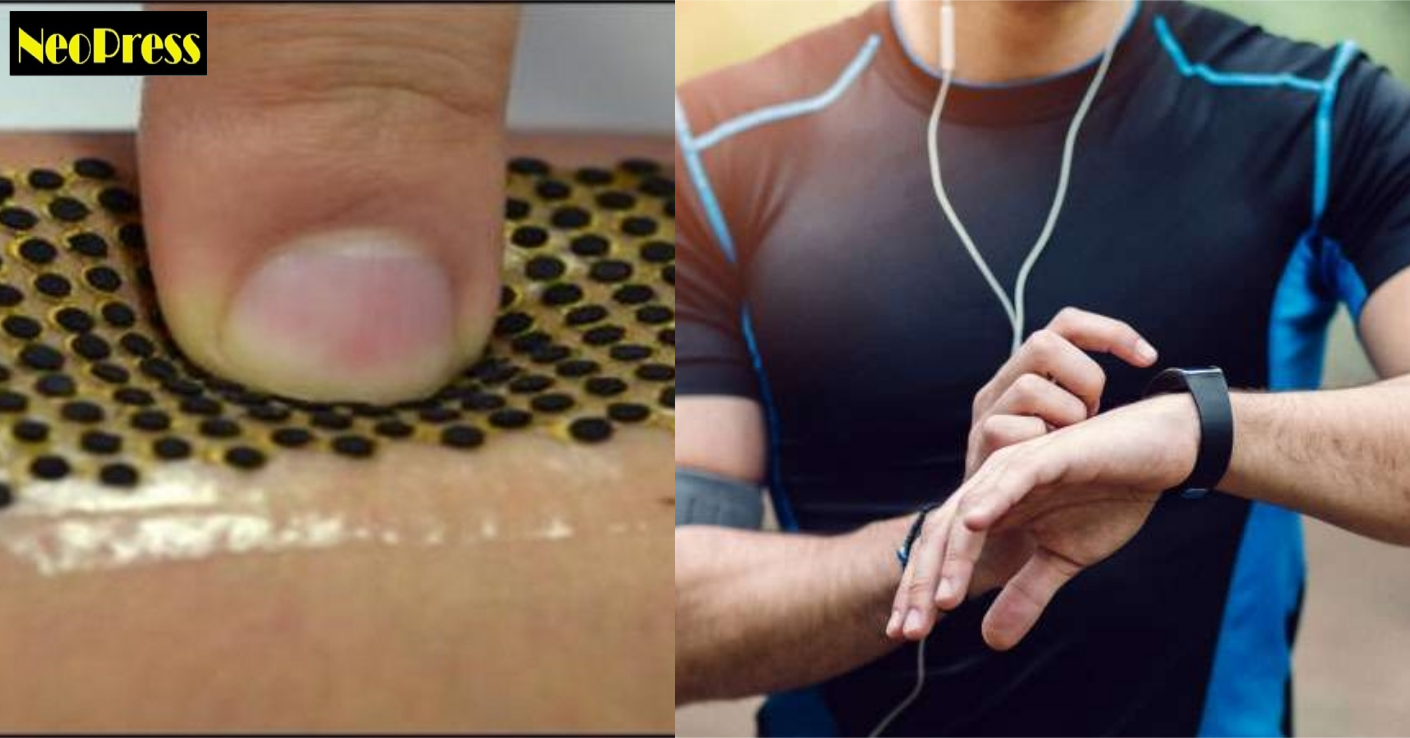
Researchers have developed stretchable fuel cells that extract energy from sweat and are capable of powering electronics, such as LEDs and Bluetooth radios.

In a paper, published in the journal Energy & Environmental Science, the researchers described how they connected the biofuel cells to a custom-made circuit board and demonstrated that the device was able to power an LED while a person wearing it exercised on a stationary bike.

The biofuel cell that the Engineers from the University of California San Diego in the US developed can stretch and flex, conforming to the human body.

The research led by Professor Joseph Wang, who directs the Center for Wearable Sensors at the university, used a combination of clever chemistry, advanced materials and electronic interfaces.

The researchers explained that biofuel cells were equipped with an enzyme that oxidises the lactic acid present in human sweat to generate current. This turned the sweat into a source of power.

To make the biofuel cells flexible and stretchable, the engineers decided to use what they call a “bridge and island” structure developed in Professor Sheng Xu’s research group.

Essentially, the cell is made up of rows of dots that are each connected by spring-shaped structures. Half of the dots make up the cell’s anode and the other half are the cathode. The spring-like structures can stretch and bend, making the cell flexible without deforming the anode and cathode.

The basis for the islands and bridges structure was manufactured via lithography and is made of gold. As a second step, researchers used screen printing to deposit layers of biofuel materials on top of the anode and cathode dots. The researchers’ biggest challenge was increasing the biofuel cell’s energy density, meaning the amount of energy it can generate per surface area.

Increasing energy density is key to increasing performance for the biofuel cells. The more energy the cells can generate, the more powerful they can be. To increase power density, engineers screen printed a 3D carbon nanotube structure on top the anodes and cathodes.

The structure allows engineers to load each anodic dot with more of the enzyme that reacts to lactic acid and silver oxide at the cathode dots. In addition, the tubes allow easier electron transfer, which improves biofuel cell performance, the study said.

As a technology lover you may like our daily important technology news series. It’s a playlist and you can retrieve the total day-wise videos. Please consider subscribing our YouTube channel:

Author: Technology Vista

Tagged : /

Promising kidney disease cure to undergo first human trial in Australia

A drug that successfully prevented kidney disease in diabetic mice is set to undergo its first human trial in Australia.

More than 140 Australians suffering from Type-1 or Type-2 diabetes will participate in the study to be run by the Baker Heart and Diabetes Institute, Xinhua news agency reported.

A drug developed by researchers at Monash University that blocks a pathway through which NOX enzymes cause damage to the kidneys will be tested in the trial, which will begin in September.

Blocking the pathway in mice had prevented kidney damage and the drug has shown promise in repairing eye and heart damage related to diabetes, said Mark Cooper from Monash University.

The rights to the drug are owned by Swiss pharmaceutical company Genkyotex.

“In the diabetic kidney, three things happen: it scars, it gets inflamed, and it leaks the protein albumin,” Cooper was quoted as saying by the Australian media on Wednesday.

“We were able to show this drug stopped the protein leaking, stopped the inflammation, and stopped the scarring. It’s the scarring, particularly, that causes kidney failure,” Cooper said.

The 142 study participants will have their urine tested for albumin and then be administered the NOX-inhibitor or a placebo for 12 months.

Kidney disease is one of the most common causes of death associated with diabetes.

“If we can slow down kidney disease, and also reduce heart and eye disease in the diabetes population, it will dramatically improve lifespan and quality of life,” Cooper said.

“These people (sufferers of both type 1 and 2 diabetes) can avoid dialysis, have fewer heart attacks, and suffer less blindness,” he added.

As a technology lover you may like our daily important technology news series. It’s a playlist and you can retrieve the total day-wise videos. Please consider subscribing our YouTube channel:

Author: Technology Vista
Tagged : /

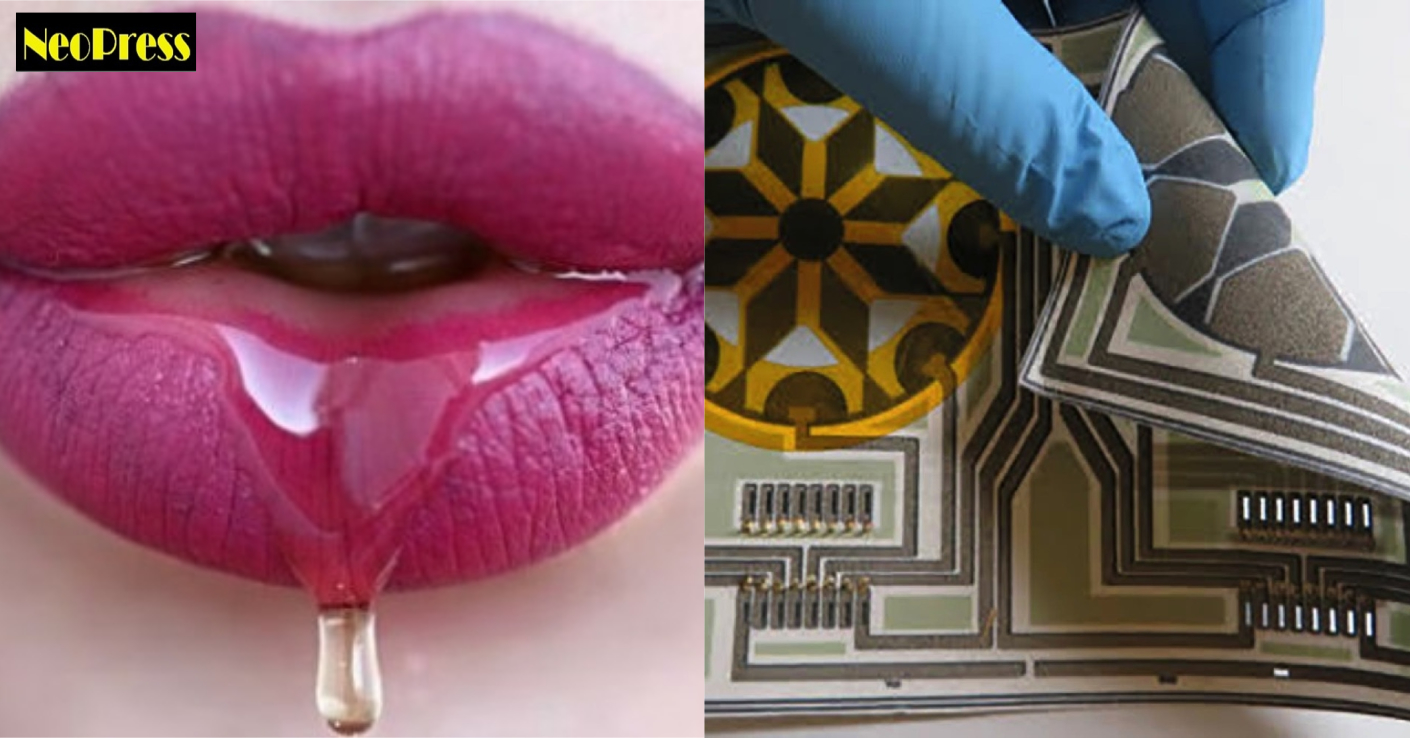
Saliva-powered battery could run diagnostic applications

Researchers have shown that a battery activated by spit has the potential to power point-of-care diagnostic applications in extreme conditions.

In a paper published in the journal Advanced Materials Technologies, the researchers described how they created a high-performance, paper-based, bacteria-powered battery which generates power within minutes of adding saliva.

They created the battery by building microbial fuel cells with inactive, freeze-dried exoelectrogenic cells.

“On-demand micro-power generation is required, especially for point-of-care diagnostic applications in developing countries,” said Seokheun Choi, Assistant Professor, Binghamton University, State University of New York.

“Typically, those applications require only several tens of microwatt-level power for several minutes, but commercial batteries or other energy harvesting technologies are too expensive and over-qualified. Also, they pose environmental pollution issues,” Choi added.

The battery generated reliable power with one drop of saliva, supplying on-board power that could be used by the next generation of disposable, paper-based point-of-care diagnostic platforms.

“The proposed battery has competitive advantages over other conventional power solutions because the biological fluid for on-demand battery activation is readily available even in the most resource-constrained settings, and the freeze-drying technology enables long-term storage of cells without degradation or denaturation,” wrote the researchers.

Choi now wants to improve the batter’s power density so that more applications can be powered.

“Now, our power density is about a few microwatts per centimetre square. Although 16 microbial fuel cells connected in a series on a single sheet of paper generated desired values of electrical current and voltage to power a light-emitting diode (LED), further power improvement is required for other electronic applications demanding hundreds of milliwatts of energy,” Choi said.

As a technology lover you may like our daily important technology news series. It’s a playlist and you can retrieve the total day-wise videos. Please consider subscribing our YouTube channel:

Author: Technology Vista

Tagged : /

Does probiotics work? Here is what the scientists say!

There is no clear evidence that probiotics, the “friendly” bacteria strain of lactobacillus, prevent eczema — a frequent precursor to asthma, a study has said.

Published in the journal Pediatrics on Monday, the study fuels the debate over whether probiotics, sold as dietary supplements, have protective effects against colds, tummy bugs and more serious conditions, Xinhua news agency reported.

Author Michael Cabana, director of the division of general pediatrics at the University of California, Benioff Children’s Hospital, worked with his colleagues to see if the probiotic would work among infants who were at high risk of developing asthma, due to one or both parents having the condition, which is caused by both hereditary and environmental factors.

Exactly half of the 184 newborns received capsules of the probiotic for the first six months of life, while the second group of 92 newborns received placebo capsules with the same look and feel as the probiotic.

The results showed little difference: At age two, 30.9 per cent of the placebo recipients were diagnosed with eczema, versus 28.7 per cent of the probiotic group.

Found in yogurt, kefir and fermented foods, and described by the World Health Organization (WHO) as “live micro-organisms which when administered in adequate amounts confer a health benefit on the host”, probiotics are believed to enhance the defensive action of the cells that line the gut by stimulating healthy immune function and inhibiting the growth of viral and bacterial pathogens.

Regarding the new study, Cabana said the absence of infectious exposure at a critical point in immune system development leads to a greater risk for eczema and asthma.

Additionally, lack of key bacteria in the infant intestinal microbiota has been associated with the later increased risk of allergic disease.

Therefore, supplementing with specific probiotic strains may modify the entire microbiota community patterns and decrease this risk.

However, in an editorial titled “Probiotics in the Child Care Center: Context Matters” and published in the same issue of Pediatrics, Cabana and Daniel Merenstein of Georgetown University Medical Centre in Washington, suggest that as breast milk contains natural compounds that act like prebiotics, the best source of influencing a child’s gastrointestinal tract is breast milk.

As a technology lover you may like our daily important technology news series. It’s a playlist and you can retrieve the total day-wise videos. Please consider subscribing our YouTube channel:

Author: Technology Vista

Tagged : /
Verified by ExactMetrics