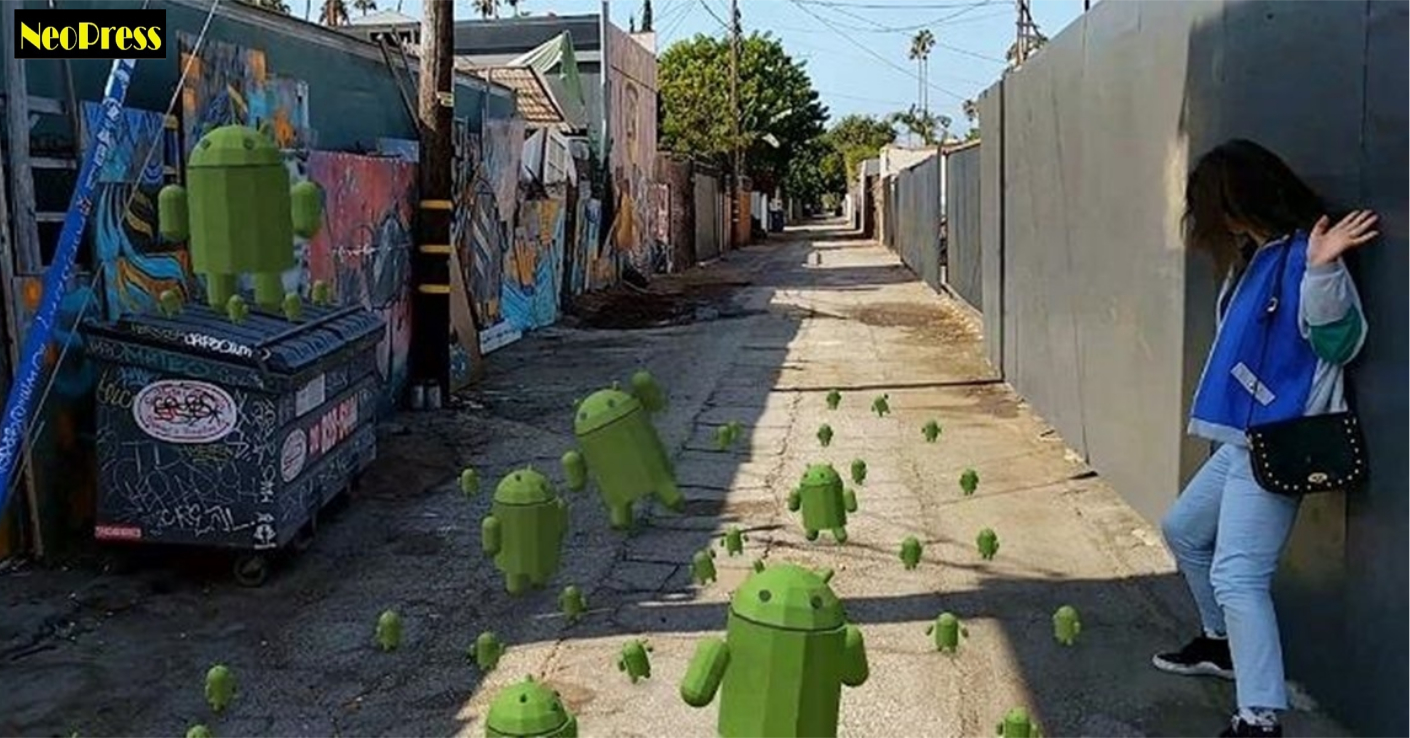
In a bid to bring the augmented reality (AR) experience closer to Android users, Google has released a new software development kit (SDK) called ARCore.
The platform, which is now available for developers to experiment with, will render augmented reality capabilities to existing and future Android phones, Google said in a statement late on Tuesday.
The company built on the fundamental technologies used in Tango, another AR platform by Google, but ARCore is scalable across the Android ecosystem as it doesn’t require any additional hardware.
The new AR platform has been rolled out to Google Pixel and Samsung S8 which run on Android 7.0 Nougat and above.
Google is working with manufacturers like Samsung, Huawei, LG, ASUS and other major smartphone makers for quality and performance checks.
ARCore, which works with ‘Java/OpenGL’, ‘Unity’ and ‘Unreal’ technologies mainly focuses on three features — motion tracking, environmental understanding and light estimation.
The tech giant has also built ‘Blocks’ and ‘Tilt Brush’ applications for creation of 3D content for use in AR apps.
Last month, Apple had unveiled its ARKit platform focussing on augmented reality applications at its annual Worldwide Developers Conference, to allow developers to build apps that could place virtual content on top of real-world scenes.
As a technology lover you may like our daily important technology news series. It’s a playlist and you can retrieve the total day-wise videos. Please consider subscribing our YouTube channel:
The 29-hour countdown for the launch of India’s eighth navigation satellite IRNSS-1H began at 2 p.m. on Wednesday at the Sriharikota rocket port, around 80 km from here, officials said.
The 1,425-kg satellite — part of Indian Regional Navigation Satellite System (IRNSS) — will be carried by Polar Satellite Launch Vehicle (PSLV) rocket XL variant that will blast off on Thursday evening at around 7 p.m., said an official of the Indian Space Research Organisation.
This will be the eighth IRNSS satellite and will be a replacement for IRNSS-1A as its rubidium atomic clocks have failed. The atomic clocks are important to provide the accurate positional data.
Simiply put, the IRNSS or NavIC (Navigation with Indian Constellation) is similar to the US-owned GPS.
The Rs 1,420-crore Indian satellite navigation system NavIC consists of nine satellites — seven in orbit and two as substitutes. One of the substitutes is the IRNSS-1H.
Each satellite has three clocks and a total of 27 clocks for the navigation satellite system (including the standby satellites) were supplied by the same vendor. The clocks are important to provide precise locational data.
Like its other IRNSS predecessors, IRNSS-1H also carries two types of payloads – navigation payload and ranging payload.
The navigation payload of IRNSS-1H will transmit navigation service signals to the users. This payload will be operating in L5-band and S-band.
The ranging payload of IRNSS-1H consists of a C-band transponder, which facilitates accurate determination of the range of the satellite. IRNSS-1H also carries Corner Cube Retro Reflectors for laser ranging.
The four stage/engine PSLV-XL stands 44.4 metres tall and weighs 321 tonne at the lift off stage.
Around 19 minutes 25 seconds after the lift off, the rocket will sling IRNSS-1H at an altitude of around 507 km.
According to ISRO, NavIC is useful for fishermen to reach the potential fishing area. The fishermen can also get alert messages relating to bad weather, high waves or when they approach international maritime boundary line.
These services are provided through a software application on a smart phone.
The Indian space agency also said NavIC is useful for merchant ships in their navigation and also during search and rescue operations.
In the road transport sector, NavIC helps commuters to traverse distances and also enable transport operators to track their vehicles.
According to ISRO, the navigation system is also helpful for railways in tracking trains and also giving an alert in the case of unmanned level crossing.
The Indian space agency said NavIC is also used for other applications like location-based services, survey and alignment, time synchronised services
NavIC provides two types of services — standard positioning service and restricted service. The former is for all users while the latter is an encrypted service for only authorised users.
Starting in July 2013, the Indian space agency has launched seven navigation satellites, with the last one launched on April 28, 2016. Each satellite has a life span of 10 years.
As a technology lover you may like our daily important technology news series. It’s a playlist and you can retrieve the total day-wise videos. Please consider subscribing our YouTube channel:
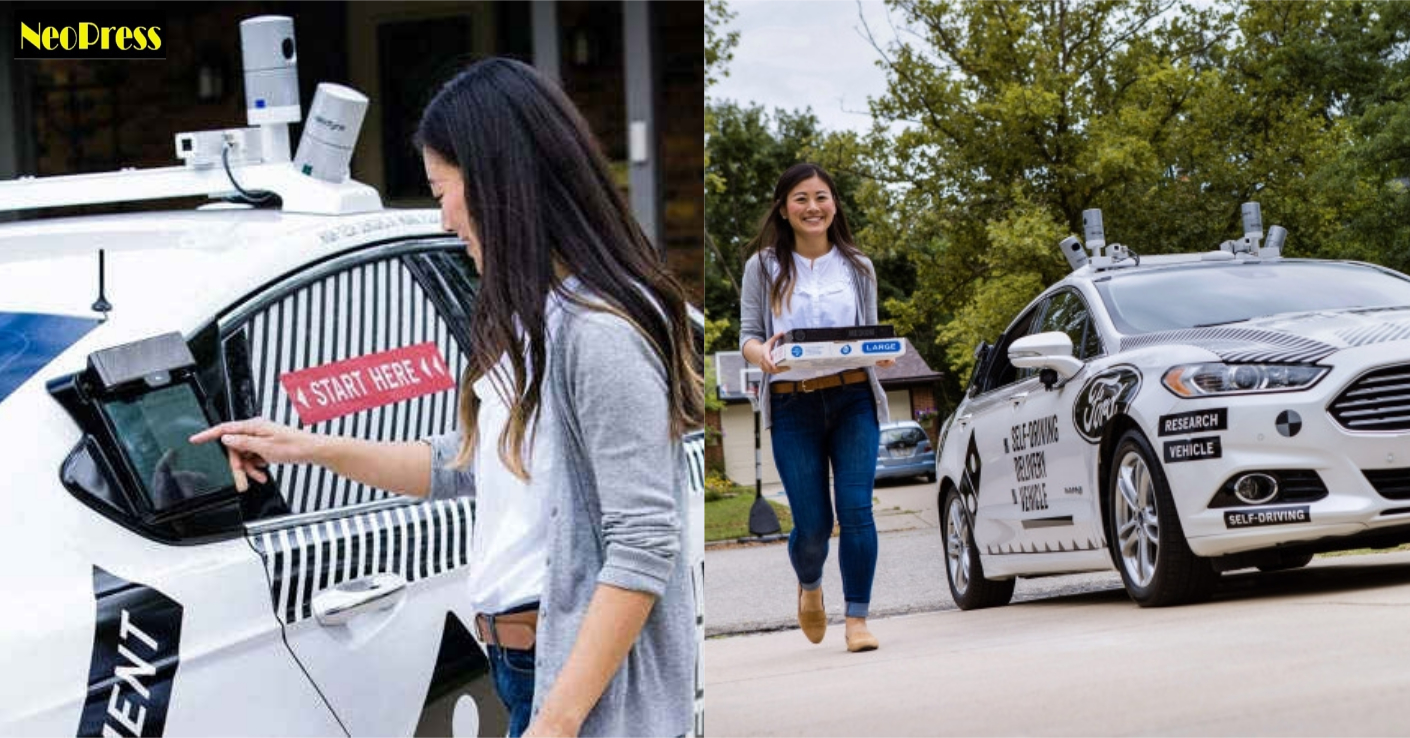
Ford Motor and Domino’s Pizza have begun a test to use self-driving vehicles to deliver pizzas to customers.
The Detroit-based automaker is providing a self-driving Ford Fusion Hybrid car equipped with Ford’s full suite of cameras, sensors, radar for testing in Ann Arbor city of Michigan state for about a month and a half, Xinhua reported on Wednesday.
However, the car will not be operated in autonomous mode. One Ford engineer hidden behind tinted windows will drive the car and another will monitor inputs from the car’s hardware.
It will not be the first experiment with advanced pizza delivery technology. Australia-based Domino’s Pizza has tested delivery to customers in New Zealand through drones and self-driving robots.
“We’re interested to learn what people think about this type of delivery,” said Russell Weiner, President of Domino’s US.
Sherif Marakby, Ford Vice President, said that as a company focused on the customer experience, Domino’s shares their vision for a future enabled by smart vehicles in a smart environment that enhance people’s lives.
Previously, Ford CEO Jim Hackett had said the company expected to launch a self-driving vehicle for commercial ride-sharing fleets in 2021.
As a technology lover you may like our daily important technology news series. It’s a playlist and you can retrieve the total day-wise videos. Please consider subscribing our YouTube channel:
Researchers in China have discovered a new method to convert fallen tree leaves into a porous carbon material that can be used to produce high-tech electronics.
In a study published in the Journal of Renewable and Sustainable Energy, the researchers described the process to convert tree leaves into a form that could be incorporated into electrodes as active materials.
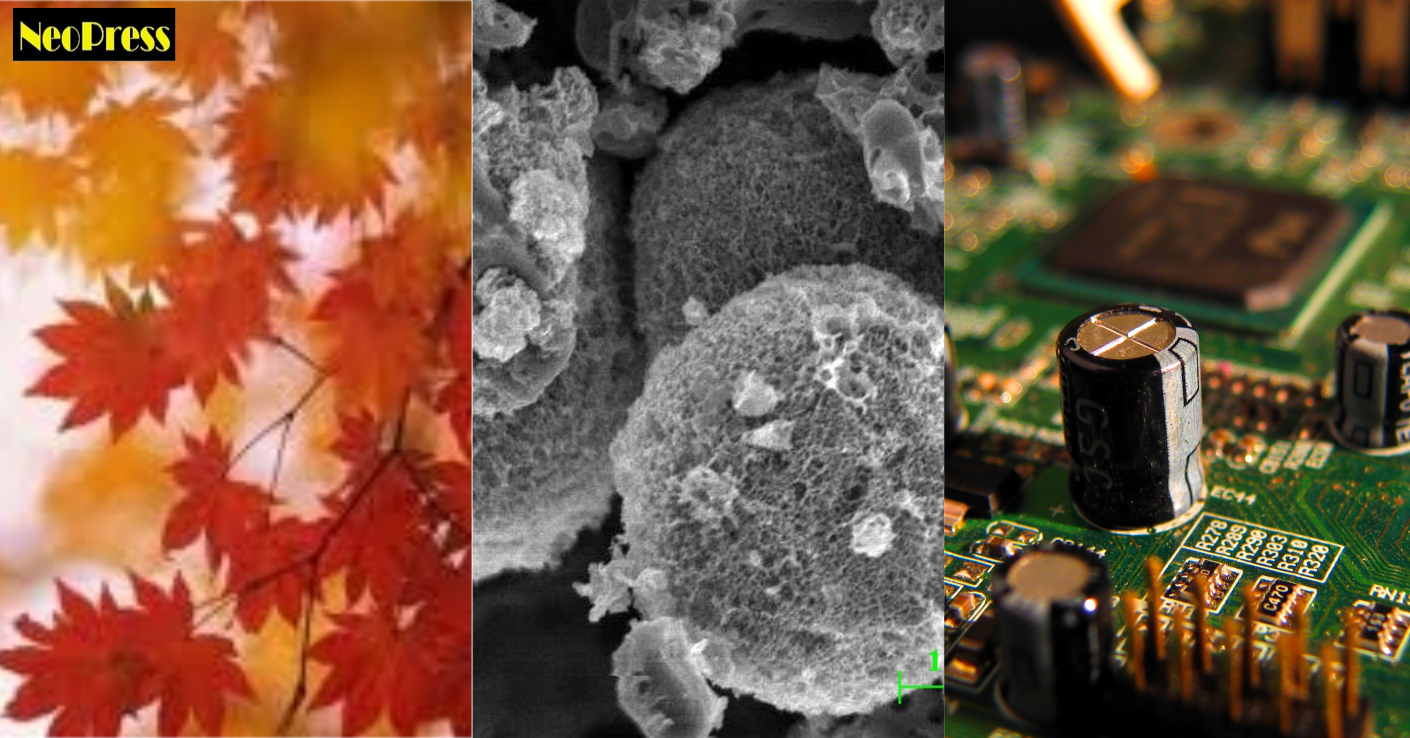
The dried leaves were first ground into a powder, then heated to 220 degrees Celsius for 12 hours. This produced a powder composed of tiny carbon microspheres.
These microspheres were then treated with a solution of potassium hydroxide and heated by increasing the temperature in a series of jumps from 450 to 800 degrees Celsius.
The chemical treatment corrodes the surface of the carbon microspheres, making them extremely porous.
The final product, a black carbon powder, has a very high surface area due to the presence of many tiny pores that have been chemically etched on the surface of the microspheres.
The high surface area gives the final product its extraordinary electrical properties.
The investigators, led by Hongfang Ma of Qilu University of Technology in Shandong, ran a series of standard electrochemical tests on the porous microspheres to quantify their potential for use in electronic devices.
The current-voltage curves for these materials indicated that the substance could make an excellent capacitor.
Further tests showed that the materials were, in fact, supercapacitors, with specific capacitances of 367 Farads/gram, which are over three times higher than values seen in some graphene supercapacitors.
A capacitor is a widely used electrical component that stores energy by holding a charge on two conductors, separated from each other by an insulator.
Supercapacitors can typically store 10-100 times as much energy as an ordinary capacitor, and can accept and deliver charges much faster than a typical rechargeable battery.
For these reasons, supercapacitive materials hold great promise for a wide variety of energy storage needs, particularly in computer technology and hybrid or electric vehicles.
As a technology lover you may like our daily important technology news series. It’s a playlist and you can retrieve the total day-wise videos. Please consider subscribing our YouTube channel: