Apples were not like what they are now! Here’s how modern juicy apples evolved

Tracing the evolutionary history of the crisp and juicy apples, scientists have found that modern apples originated in a mountainous region of Kazakhstan around 10,000 years ago.

The study showed that the modern domesticated apple — Malus domestica — emerged as a result of genetic exchange because of traders travelling back and forth along the Silk Road — ancient routes running from the far east to the Mediterranean sea.

“We narrowed down the origin of domesticated apple from very broad central Asia to Kazakhstan area west of Tian Shan Mountain,” said lead author Zhangjun Fei, Professor at Boyce Thompson Institute (BTI) — a research institute in the US.

For the study, published in the journal Nature Communications, the team sequenced and compared the genomes of 117 diverse apple accessions, including M. domestica and 23 wild species from North America, Europe and East and central Asia.

In addition, the first domesticated apple had also travelled to the east, hybridising with local wild apples along the way, yielding the ancestors of soft, dessert apples.

As the apple travelled west along the Silk Road in the hands of travellers, trees grew from dropped seeds and crossed with other wild apple varieties, including the incredibly sour European crabapple — Malus sylvestris.

M. sylvestris contributed extensively to the fruit’s genome, making the modern apple more similar to the sour crabapple than to its Kazakhstani ancestor — M. sieversii.

The hybridisation and M. sylvestris, followed by extensive human selection, resulted in new apples that are larger and fuller in flavour, and with a crispy firmness that gives them a longer shelf life, the researchers said.

Thus, “the modern domesticated apples have higher and well-balanced sugar and organic acid contents. That is how the apple started to become a popular and favoured fruit”, the researchers said.

As a technology lover you may like our daily important technology news series. It’s a playlist and you can retrieve the total day-wise videos. Please consider subscribing our YouTube channel:

Author: Technology Vista

Tagged : /

Galaxy Note 8 with dual cameras, ‘Infinity Display’ launched

Samsung on Wednesday officially launched the Galaxy “Note 8”, in a return for the South Korean smartphone major that recalled its Note 7 worldwide last year.

This is Samsung’s first smartphone to feature dual camera set-up at the rear with portrait mode and dual optical image stabilisation (OIS). It also comes with “Bixby” intelligent assistant, water and dust resistance and iris scanner.

Similar to the Galaxy S8 and the Galaxy S8+, the Note 8 also sports “Infinity Display” with an aspect ratio of 18.5:9. The 6.3-inch screen is Super AMOLED with a resolution of 1440 x 2960 pixels.

Note 8 sports top-notch features such as 64-bit Qualcomm Snapdragon 835 octa-core chipset with 6GB RAM and 64GB internal storage. Galaxy Note 8 will come with 64-bit Exynos 8895 octa-core processor in regions like India and other Asian countries. The dual cameras at the back include a 12MP wide-angle lens with an aperture of f/1.7 and a 12MP telephoto lens with aperture of f/2.4.

The 8MP front camera also comes with optical image stabilisation. The “S Pen” stylus with Galaxy Note 8 comes with a latency of less than 50 milliseconds. The smartphone also comes with USB Type-C port for charging and data transfer. A 3,300mAh battery powers the Note 8 with support for fast-charging and wireless fast charging.

The handset also houses a microSD card slot for expandable storage. Connectivity options include 4G VoLTE, Bluetooth 5.0, Wi-Fi 802.11ac and GPS. Note 8 runs Android 7.1.1 Nougat OS with Samsung’s TouchWiz UI on top.

The smartphone will be available in Midnight Black, Orchid Gray, Deep Sea Blue and Maple Gold colour options. To regain the customers’ trust, the company is believed to have enhanced safety checklist by using in-house ‘8-point battery test’. The fiasco over Samsung’s Note 7 caused the firm operating losses of some $5 billion.

As a technology lover you may like our daily important technology news series. It’s a playlist and you can retrieve the total day-wise videos. Please consider subscribing our YouTube channel:

Author: Technology Vista
Tagged :

Now, your sweat can power wearable devices

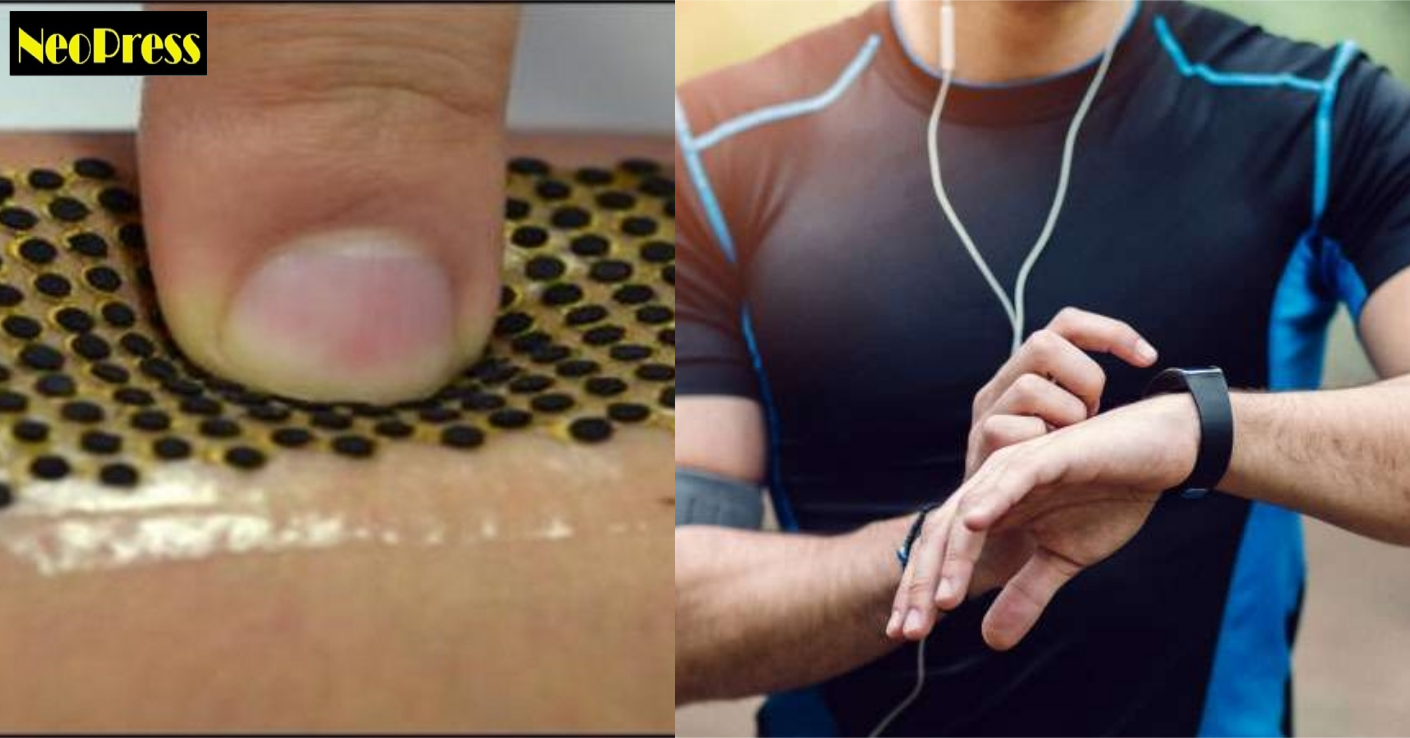
Researchers have developed stretchable fuel cells that extract energy from sweat and are capable of powering electronics, such as LEDs and Bluetooth radios.

In a paper, published in the journal Energy & Environmental Science, the researchers described how they connected the biofuel cells to a custom-made circuit board and demonstrated that the device was able to power an LED while a person wearing it exercised on a stationary bike.

The biofuel cell that the Engineers from the University of California San Diego in the US developed can stretch and flex, conforming to the human body.

The research led by Professor Joseph Wang, who directs the Center for Wearable Sensors at the university, used a combination of clever chemistry, advanced materials and electronic interfaces.

The researchers explained that biofuel cells were equipped with an enzyme that oxidises the lactic acid present in human sweat to generate current. This turned the sweat into a source of power.

To make the biofuel cells flexible and stretchable, the engineers decided to use what they call a “bridge and island” structure developed in Professor Sheng Xu’s research group.

Essentially, the cell is made up of rows of dots that are each connected by spring-shaped structures. Half of the dots make up the cell’s anode and the other half are the cathode. The spring-like structures can stretch and bend, making the cell flexible without deforming the anode and cathode.

The basis for the islands and bridges structure was manufactured via lithography and is made of gold. As a second step, researchers used screen printing to deposit layers of biofuel materials on top of the anode and cathode dots. The researchers’ biggest challenge was increasing the biofuel cell’s energy density, meaning the amount of energy it can generate per surface area.

Increasing energy density is key to increasing performance for the biofuel cells. The more energy the cells can generate, the more powerful they can be. To increase power density, engineers screen printed a 3D carbon nanotube structure on top the anodes and cathodes.

The structure allows engineers to load each anodic dot with more of the enzyme that reacts to lactic acid and silver oxide at the cathode dots. In addition, the tubes allow easier electron transfer, which improves biofuel cell performance, the study said.

As a technology lover you may like our daily important technology news series. It’s a playlist and you can retrieve the total day-wise videos. Please consider subscribing our YouTube channel:

Author: Technology Vista

Tagged : /

Promising kidney disease cure to undergo first human trial in Australia

A drug that successfully prevented kidney disease in diabetic mice is set to undergo its first human trial in Australia.

More than 140 Australians suffering from Type-1 or Type-2 diabetes will participate in the study to be run by the Baker Heart and Diabetes Institute, Xinhua news agency reported.

A drug developed by researchers at Monash University that blocks a pathway through which NOX enzymes cause damage to the kidneys will be tested in the trial, which will begin in September.

Blocking the pathway in mice had prevented kidney damage and the drug has shown promise in repairing eye and heart damage related to diabetes, said Mark Cooper from Monash University.

The rights to the drug are owned by Swiss pharmaceutical company Genkyotex.

“In the diabetic kidney, three things happen: it scars, it gets inflamed, and it leaks the protein albumin,” Cooper was quoted as saying by the Australian media on Wednesday.

“We were able to show this drug stopped the protein leaking, stopped the inflammation, and stopped the scarring. It’s the scarring, particularly, that causes kidney failure,” Cooper said.

The 142 study participants will have their urine tested for albumin and then be administered the NOX-inhibitor or a placebo for 12 months.

Kidney disease is one of the most common causes of death associated with diabetes.

“If we can slow down kidney disease, and also reduce heart and eye disease in the diabetes population, it will dramatically improve lifespan and quality of life,” Cooper said.

“These people (sufferers of both type 1 and 2 diabetes) can avoid dialysis, have fewer heart attacks, and suffer less blindness,” he added.

As a technology lover you may like our daily important technology news series. It’s a playlist and you can retrieve the total day-wise videos. Please consider subscribing our YouTube channel:

Author: Technology Vista

Tagged : /
Verified by ExactMetrics